
Reviewed · ROMAN CATACOMBS & CRYPTS TOURS
Catacombs of Saint Agnes Entry Ticket & Guided Tour
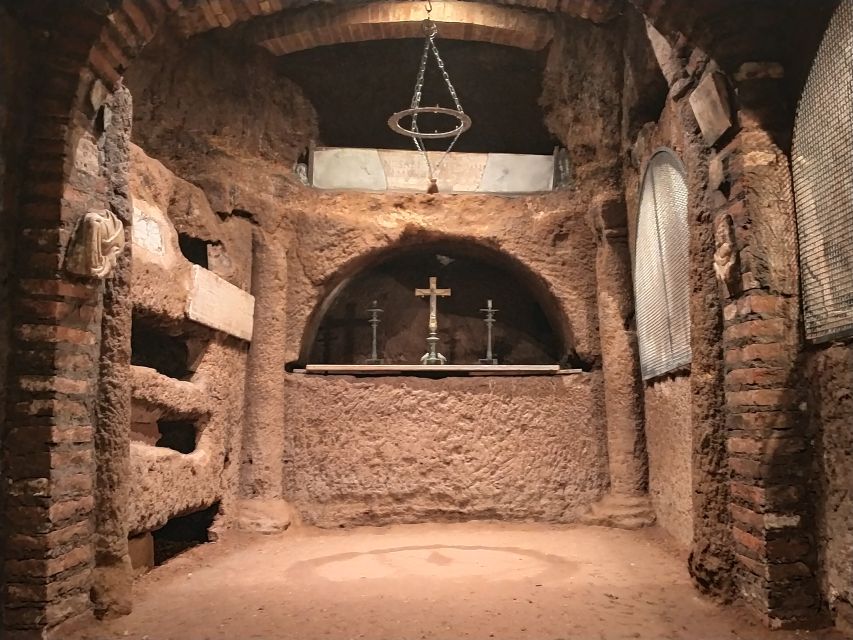
Under Rome, Saint Agnes waits for you. This short visit is interesting because an official guide walks you through the Saint Agnes catacombs and explains how a 3rd-century martyr story shaped Christian devotion for centuries. I love the way the tour blends theology and real archaeology, and I love the focus on Saint Agnes’ tomb and what later popes did with it. One drawback: it’s not a good fit if you deal with claustrophobia, since you go about 9 metres underground.
At 30 minutes for about $16, you’re paying for a guided experience that doesn’t eat your whole day. You also get your ticket by email and can show it on your smartphone, which keeps the whole start of the visit simple. It’s a smart add-on if you want something more meaningful than a quick photo stop.
Plan your timing. Go straight to the catacombs ticket office and show your reservation at least 10 minutes early. Bring comfortable clothes and shoes, and skip any camera plans since cameras aren’t allowed.
In This Review
- Quick hits before you go
- Entering the Catacombs of Saint Agnes: what you’re really buying
- The 30-minute flow: what the guided visit covers
- Who Saint Agnes was, and why the story survived centuries
- Agnes’ tomb and the clues embedded in stone
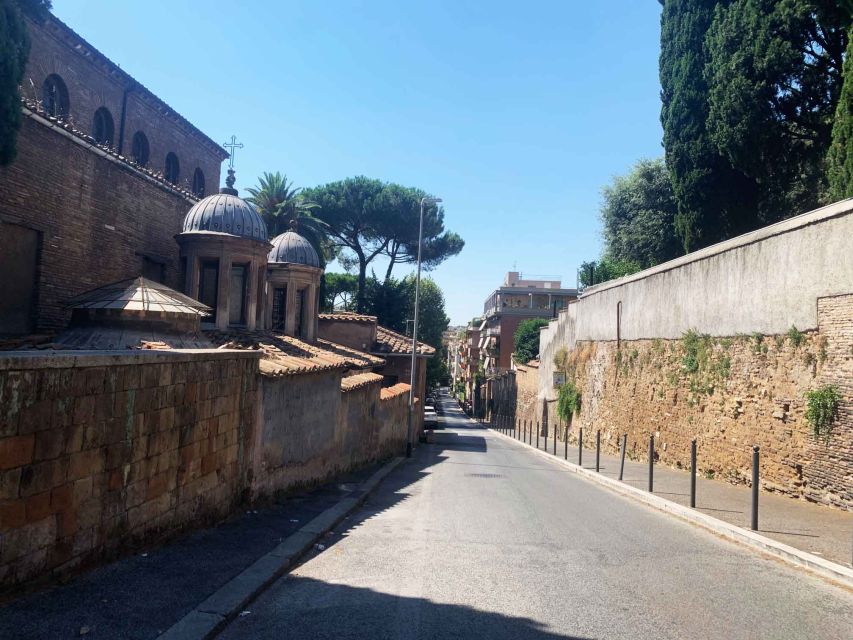
- Surface devotion on Via Nomentana: how the underground shaped the city
- Practical realities underground: space, shoes, and what’s not allowed
- Price and value: is $16 for 30 minutes fair?
- Who should book this tour (and who should skip it)
- Booking tips that actually help
- Bottom line: should you book this Catacombs of Saint Agnes tour?
- FAQ
- How long is the Catacombs of Saint Agnes guided tour?
- Where do I meet for the tour?
- What time should I arrive before the tour?
- Can I show my ticket on my smartphone?
- Which languages are available for the guide?
- Are cameras allowed inside the catacombs?
- Is transportation or hotel pickup included?
Quick hits before you go
- Official guide, internal tour: You get the story told by a live guide in English, Italian, or French.
- 30 minutes total: Enough time to understand the key sites without turning this into a half-day mission.
- Tickets on your phone: Email delivery, then smartphone check-in.
- Saint Agnes focus: The narrative centers on Agnes, her burial, and how the underground network grew.
- About 9 metres down: If you dislike enclosed spaces, take the claustrophobia note seriously.
- No cameras: You’ll enjoy it more if you go ready to observe, not record.
Entering the Catacombs of Saint Agnes: what you’re really buying
This is one of those Rome experiences where the “headline” sounds simple, but the details matter. You’re buying a guided entry into the catacombs connected to one of Rome’s most venerated martyrs, Saint Agnes. And because it’s guided, you’re not just walking around dark corridors hoping the plaques make sense.
The catacombs date back to the third century, and the guide frames what you see in a clear timeline: early burial practices, Agnes’ story, and the long devotion that followed. If you like history that has human stakes—people believing, grieving, honoring—this works well.
Also, the time is honest. 30 minutes means you get the core highlights without the drag. That’s a value point. Rome can tempt you into tours that balloon into hours. Here, you can slot it between other stops and still have energy for the rest of the day.
Deeper underground: more crypts and catacombs
- Rome: Capuchin Crypts and Catacombs Tour with Transfers
★ 4.6 · 6,456 reviews - The Original Roman Crypts and Catacombs Tour with Transfers
★ 4.5 · 4,896 reviews - Rome: Catacombs of St. Callixtus Entry Ticket & Guided Tour
★ 4.6 · 3,037 reviews - Rome: Guided Roman Catacombs Tour with Transfers
★ 4.6 · 1,830 reviews
The 30-minute flow: what the guided visit covers
Because the tour is designed to run for about half an hour, the guide keeps a tight pace. Here’s what that typically feels like on-site based on how this experience is structured:
1) Check-in and entry
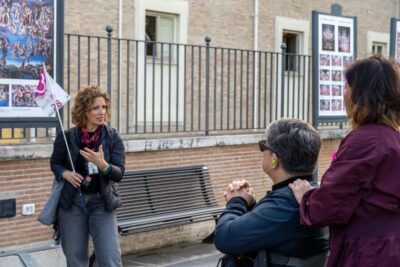
You head to the ticket office directly and present your reservation at least 10 minutes before the scheduled time. From there, the group enters with the official guide.
2) A guided walk underground
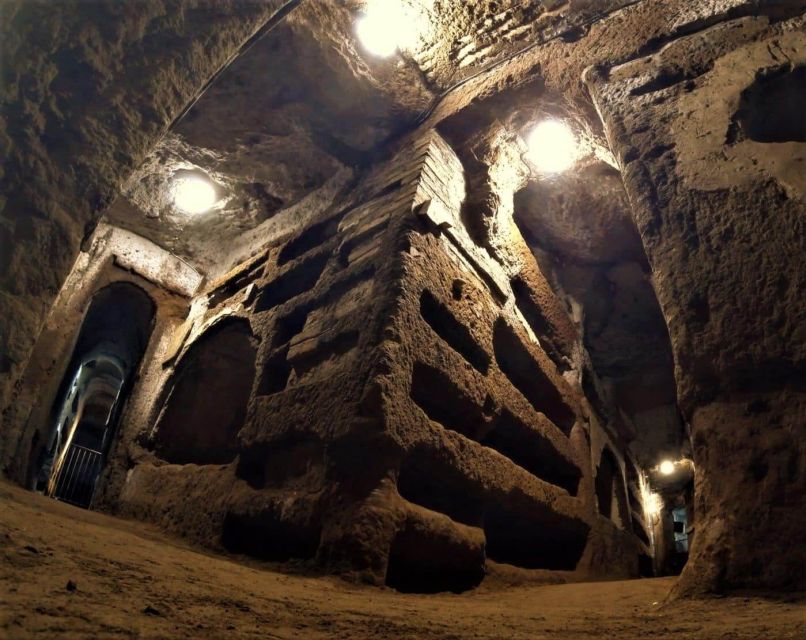
You’ll move through the catacomb spaces where the atmosphere changes quickly. The visit goes down roughly 9 metres underground, which is enough to trigger nerves for some people—even if the passage feels roomy.
3) History centered on Saint Agnes
The guide explains who Saint Agnes was, what the sources say about her martyrdom, and why her burial became a magnet for devotion. Expect a storyline, not random facts.
4) Key visual and symbolic details
Even within a short visit, the guide points out meaningful elements tied to Agnes’ tomb and later religious artwork and inscriptions.
What you won’t get is a slow, museum-style wander. What you will get is a focused guided pass that helps you understand why the place mattered, not just that it exists.
Who Saint Agnes was, and why the story survived centuries
The heart of this experience is Saint Agnes herself. The tour’s narrative is grounded in the idea that Agnes was likely a martyr during the persecutions attributed to Decius or Valerian, though some accounts connect her to persecution under Diocletian. The key point the guide emphasizes is that the details were debated, yet devotion didn’t fade.
Agnes is described as dying at only 12 years old. One account connects the martyrdom to a dramatic moment involving a stake—Pope Damasus is associated with the tradition that Agnes threw herself into it. Even if you’re not a sources-and-scholars person, hearing how her story spread helps you understand why later communities treated her burial as sacred ground.
After her martyrdom, her body was placed in a hypogeum (a family-owned underground space) on the left side of Via Nomentana, near a surface necropolis with individual tombs and mausoleums. That early burial setting matters because it becomes the seed for a larger catacomb community network underground.
Agnes’ tomb and the clues embedded in stone
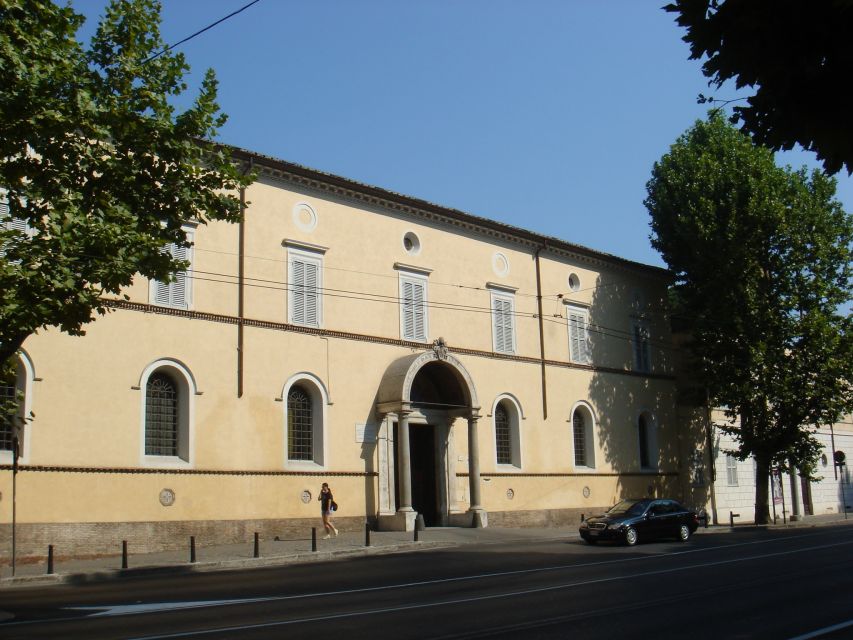
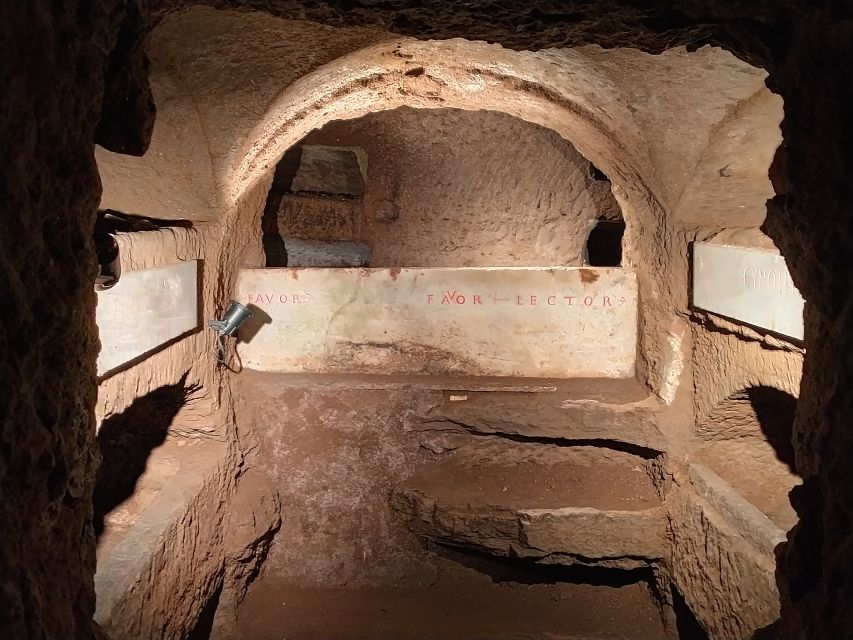
What makes this catacomb visit feel more than “just underground rooms” is the attention paid to specific memorial elements tied to Agnes’ tomb.
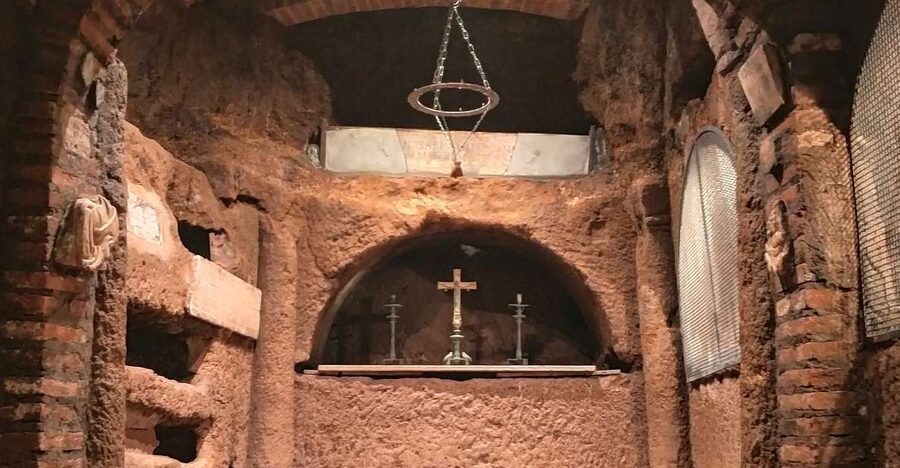
The tour explains that the tomb of Agnes received special decoration. At the time of Pope Liberius, her tomb was decorated with marble slabs. One slab is said to represent a young girl in a prayerful attitude between two panels with geometric motifs. The tour history also notes that one of these slabs is probably the one displayed in the entrance staircase of the Honorian basilica.
Another detail matters because it connects physical spaces across time. Pope Damasus also intervened on Agnes’ tomb, and his inscription honoring the martyr is now posted in the staircase area linked to the basilica complex. Hearing that sort of continuity makes the catacombs feel less like an isolated underground site and more like part of a whole living religious landscape on Via Nomentana—tied together by buildings, renovations, and repeated remembrance.
Even though your feet stay underground, the guide’s job is to make those connections clear: what once sat at Agnes’ tomb, what later popes added, and how those choices shaped what people experienced centuries later.
Worth a look next to this Rome booking:



Surface devotion on Via Nomentana: how the underground shaped the city
This is where the guide’s storytelling can really reward you. The catacombs weren’t an end point. Deep devotion in Rome encouraged the creation of major structures on the surface.
A short distance from Agnes’ venerated burial, a basilica was built in a shape associated with a Roman circus, with an atrium. The tour history links this construction to Constantine (or Constance, daughter of Constantine), who was described as a devotee of Agnes.
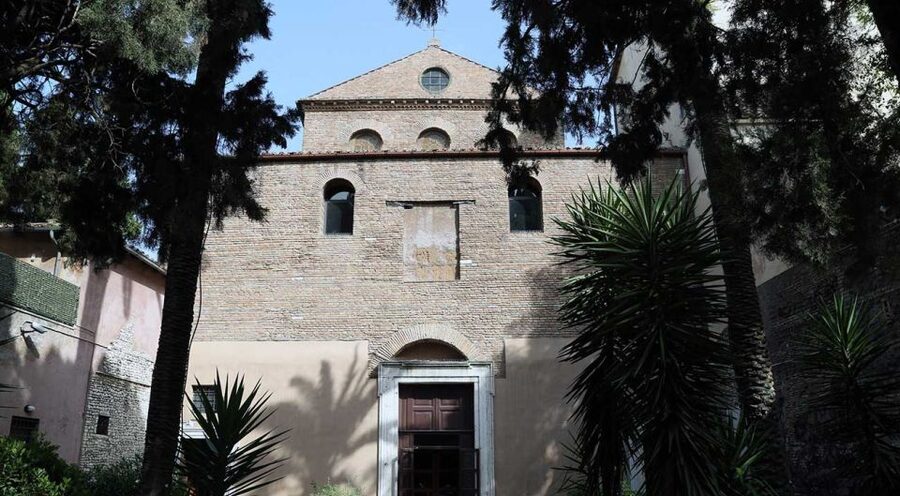
Later, Honorius I raised the basilica that visitors often think of today on Via Nomentana. The basilica is described as semi-underground and reachable from a majestic staircase. Inside, the structure includes a narthex, three naves, and a women’s gallery above.
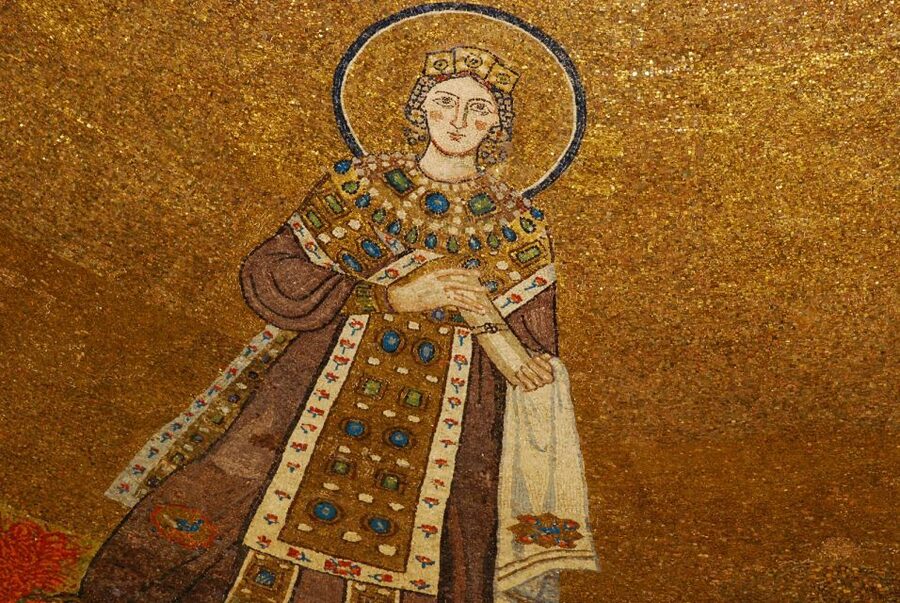
The apse mosaic is a highlight in the tour narrative, describing Agnes in the apse alongside Pope Honorius (holding a model of the church) and, likely, Pope Symmachus. Even if you’re not standing inside that mosaic during your catacombs walk, the guide uses these details to explain why Agnes’ cult grew. In other words: the underground tomb attracted buildings, and the buildings reinforced devotion back down into the catacombs.
If you want a reason to care, this is it. You’re seeing how belief created architecture, and then architecture helped belief last.
Practical realities underground: space, shoes, and what’s not allowed
The catacombs experience is small on paper—just 30 minutes—but it’s big on bodily reality.
Comfort items you should prioritize:
- Comfortable shoes (you’ll want stable footing)
- Comfortable clothes (you’ll be walking and standing in passage areas)
- A mindset that this is a structured visit, not a free wander
Now the important “you have to know this” items:
- No cameras are allowed.
- Oversize luggage isn’t allowed.
- It’s not suitable for people with mobility impairments.
- It’s not suitable for claustrophobia.
A key detail from recent firsthand experience: people report that it’s about 9 metres underground. One helpful nuance: the space isn’t described as tight in a physical sense, but the thoughts can still mess with your head. If your claustrophobia is triggered by the idea of being far below ground, don’t gamble with it.
If you’re fine with being underground and you treat this like a guided history lesson, you’ll likely come out with that satisfying feeling of understanding a place—not just seeing it.
Price and value: is $16 for 30 minutes fair?
For $16 per person with an official guide included, I think the value is solid—especially if you’re the type who likes context. You’re paying for two things that matter in Rome:
1) Human interpretation
These catacombs can be confusing without a guide. Even with signage, the story is layered across time—martyrdom traditions, tomb decoration, papal inscriptions, and later basilica development. A guide gives you the thread fast.
2) A time-managed entry
Because it’s timed and short, you’re less likely to lose your whole schedule. Rome days can get crowded. A 30-minute slot keeps you flexible.
Could you spend less by skipping a guided experience? Maybe. But for $16, you’re buying clarity. And clarity is what makes the underground feel meaningful instead of just dark.
Who should book this tour (and who should skip it)
This is a good match if:
- You care about early Christian history and Rome’s martyr traditions
- You like guided storytelling that links underground sites to later surface architecture
- You want a short, focused stop that fits into a busy day
This is a poor match if:
- You have claustrophobia (the visit is explicitly not suitable, and you go about 9 metres down)
- You need accessibility accommodations (it’s not suitable for mobility impairments)
- You want to take photos (cameras are not allowed)
If you’re in the “worried-but-curious” category, be honest about what triggers you: not the space itself, but the mental jump of being deep underground.
Booking tips that actually help
Here are a few practical moves that make this go smoothly:
- Arrive early enough to breathe. Show your reservation at least 10 minutes before the tour.
- Don’t bring camera gear you plan to use. You’ll just waste time.
- Wear shoes you trust on uneven or stone surfaces.
- If you’re picking a language, choose what you feel most comfortable with for historical details. English, Italian, or French are available.
Also, the ticket model is flexible: you can reserve and pay later, and you can cancel up to 24 hours in advance for a full refund. That’s useful if your Rome day plan is still in motion.
Bottom line: should you book this Catacombs of Saint Agnes tour?
If you want a short guided visit that explains why Saint Agnes mattered—and how her tomb shaped devotion—book it. The $16 price feels fair because the official guide gives you the story thread you’d otherwise miss.
Skip it if you’re even mildly uncomfortable about being underground. The tour’s not designed for claustrophobia, and going about 9 metres down is enough to make some people feel uneasy even when the space isn’t physically crammed.
If you’re comfortable underground and you like history with a human edge, this is a worthwhile Rome stop.
FAQ
How long is the Catacombs of Saint Agnes guided tour?
The tour lasts about 30 minutes.
Where do I meet for the tour?
Go directly to the ticket office of the catacomb.
What time should I arrive before the tour?
Show your reservation at least 10 minutes before the scheduled visit.
Can I show my ticket on my smartphone?
Yes. Your tickets are delivered by email, and you can show them on your smartphone.
Which languages are available for the guide?
The live guide is available in English, Italian, and French.
Are cameras allowed inside the catacombs?
No. Cameras are not allowed.
Is transportation or hotel pickup included?
No. Hotel pickup and drop-off, food and drink, and transportation to/from the catacombs are not included.
More Tours in Rome
- Vatican Museums, Sistine Chapel & St. Peter’s Basilica Tour
★ 4.3 · 73,970 reviews - Vatican Museums, Sistine Chapel & St Peter’s Basilica Guided Tour
★ 4.5 · 39,149 reviews - Rome: Colosseum, Palatine Hill and Roman Forum Guided Tour
★ 4.8 · 32,814 reviews - Rome: Guided Tour of Colosseum, Roman Forum & Palatine Hill
★ 4.7 · 27,897 reviews - Rome: Colosseum, Roman Forum and Palatine Hill Guided Tour
★ 4.5 · 23,903 reviews - Rome: Colosseum Arena Floor, Palatine & Forum Guided Tour
★ 4.5 · 20,180 reviews
More Tour Reviews in Rome
- Vatican Museums, Sistine Chapel & St. Peter’s Basilica Tour
★ 4.3 · 73,970 reviews - Vatican Museums, Sistine Chapel & St Peter’s Basilica Guided Tour
★ 4.5 · 39,149 reviews - Rome: Colosseum, Palatine Hill and Roman Forum Guided Tour
★ 4.8 · 32,814 reviews - Rome: Guided Tour of Colosseum, Roman Forum & Palatine Hill
★ 4.7 · 27,897 reviews - Rome: Colosseum & Forum with Audio Guide App -Optional Arena
★ 4.2 · 24,770 reviews - Rome: Colosseum, Roman Forum and Palatine Hill Guided Tour
★ 4.5 · 23,903 reviews
Further Below Rome
- Rome: Capuchin Crypts and Catacombs Tour with Transfers
★ 4.6 · 6,456 reviews - The Original Roman Crypts and Catacombs Tour with Transfers
★ 4.5 · 4,896 reviews - Rome: Catacombs of St. Callixtus Entry Ticket & Guided Tour
★ 4.6 · 3,037 reviews - Rome: Guided Roman Catacombs Tour with Transfers
★ 4.6 · 1,830 reviews - Rome: Catacombs Guided Tour with Transfer
★ 4.2 · 1,808 reviews - Rome EBike Tour: Appian Way, Catacombs & Roman Aqueducts
★ 5.0 · 1,766 reviews
Just added to our Rome reviews





Roman Catacombs & Crypts Tours, compared.
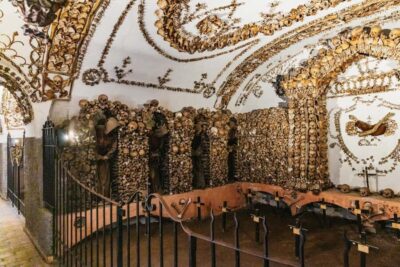 ★ 4.6Capuchin Crypts and Catacombs Tour with TransfersFrom $606,456 reviews
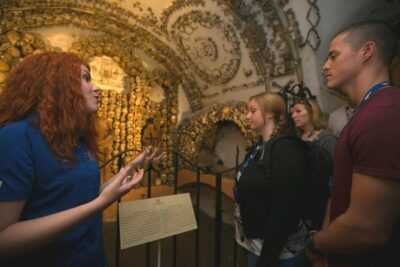 ★ 4.5The Original Roman Crypts and Catacombs Tour with TransfersFrom $664,896 reviews
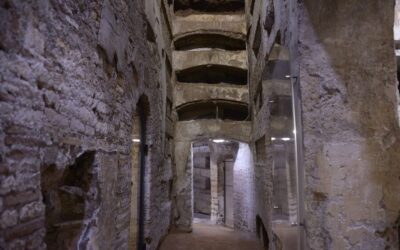 ★ 4.6Catacombs of St. Callixtus Entry Ticket & Guided TourFrom $163,037 reviews
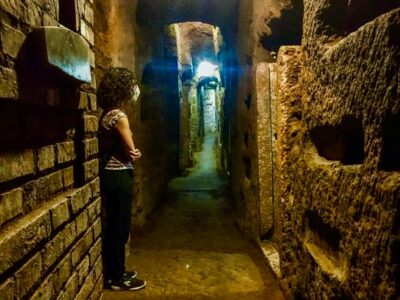 ★ 4.6Guided Roman Catacombs Tour with TransfersFrom $651,830 reviews
 ★ 4.2Catacombs Guided Tour with TransferFrom $541,808 reviews
 ★ 5.0Rome EBike Tour: Appian Way, Catacombs & Roman AqueductsFrom $1021,766 reviews
 ★ 4.6Catacombs and Capuchin Crypt Guided Tour with TransferFrom $411,606 reviews
 ★ 4.7St. Peter’s Basilica Priority Access Tour with Dome & CryptFrom $701,504 reviews
Browse the lists this tour appears in