
Reviewed · ROMAN CATACOMBS & CRYPTS TOURS
Catacombs and Appian way Tour
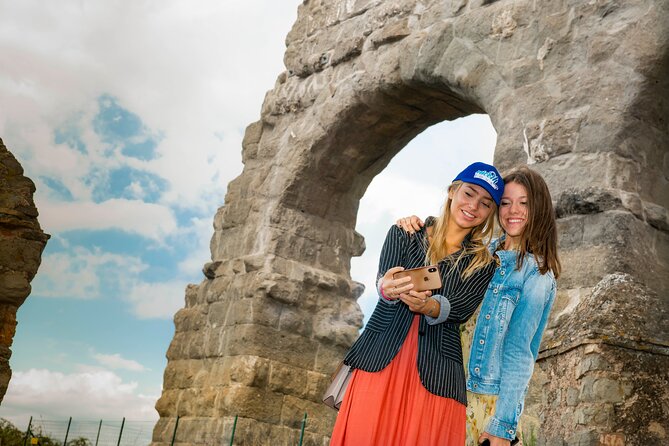
Rome’s underworld and ancient roads in one run. This 3-hour tour strings together the Appian Way’s surviving stretches with the Catacombs of San Callisto, plus a few standouts along the way: the Circus of Maxentius and the Claudian Aqueduct.
I love how the day feels efficient without feeling rushed. You get a guided hour underground at the Callixtus catacombs, then you’re outside seeing big, open-air archaeology like the Mausoleum of Cecilia Metella and the old aqueduct lines.
One thing to plan for: the catacombs are not the place to be claustrophobic, and once you’re down there, photos and videos are forbidden. Also, this is a “best-of” sampler, so you won’t get hours in any single site.
In This Review
- Key highlights at a glance
- Fast-track Rome: why Appian Way + catacombs works
- Getting to the Appian countryside from Via Cavour
- Catacombs of San Callisto: popes, ritual, and underground rules
- Circus of Maxentius: Rome’s big show in a quieter package
- Cecilia Metella’s tomb: a rare Appian Way stop worth the time
- Walking the Appian Way: 312 BC road math, minus the crowds
- Claudian Aqueduct: 52 AD engineering you can still sense
- Guides, headsets, and group size: what to expect day-of
- Price and value: why $77.14 can make sense
- Who should take this tour (and who should skip it)
- Should you book the Catacombs and Appian Way Tour?
- FAQ
- What’s the duration of the Catacombs and Appian Way Tour?
- Where is the meeting point?
- What time does the tour begin?
- Does the tour include transportation?
- Who leads the tour?
- Is admission included for the catacombs?
- Do you pay for entry to the other stops?
- Is the tour suitable for claustrophobic people?
- Is there a limit on group size?
- Can I cancel for a refund?
Key highlights at a glance
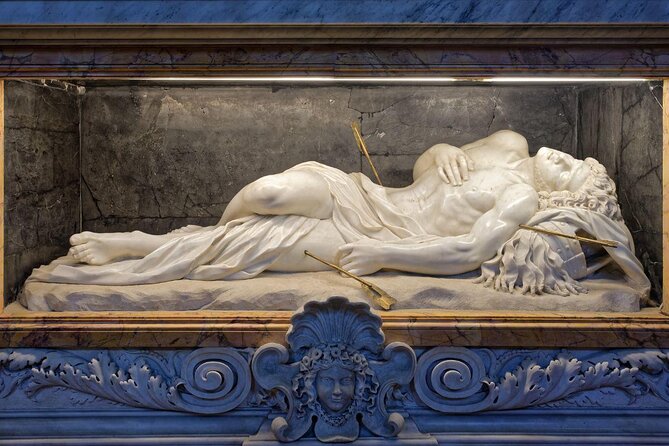
- San Callisto (Callixtus) Catacombs: a guided walk through burial tunnels tied to popes from the 2nd to 4th centuries
- Circus of Maxentius: a well-preserved arena built in the early 300s, less crowded than the big-name stadiums
- Mausoleum of Cecilia Metella: an external stop many Appian Way tours skip
- Appian Way (completed 312 BC): a road with both symbolic and military importance stretching from Rome toward Brindisi
- Claudian Aqueduct: a major engineering feat from 52 AD, with much of it still underground
Fast-track Rome: why Appian Way + catacombs works
The best Roman sightseeing days mix famous icons with a side of real place-specific atmosphere. This one does that. You start with San Callisto, one of the most important catacomb complexes for early Christian pilgrimage and burial traditions, then you come back to daylight on the Appian Way—Rome’s old “main line” road, built for supplies and military movement.
The value is in the pairing. Underground sites teach you how Romans and early Christians used space, faith, and ritual. Then the Appian Way shows you the opposite: movement, logistics, and the long view of empire—how Rome connected to other cities and kept things running.
Deeper underground: more crypts and catacombs
- Rome: Capuchin Crypts and Catacombs Tour with Transfers
★ 4.6 · 6,456 reviews - The Original Roman Crypts and Catacombs Tour with Transfers
★ 4.5 · 4,896 reviews - Rome: Catacombs of St. Callixtus Entry Ticket & Guided Tour
★ 4.6 · 3,037 reviews - Rome: Guided Roman Catacombs Tour with Transfers
★ 4.6 · 1,830 reviews
Getting to the Appian countryside from Via Cavour
The tour starts at Via Cavour, 224 (near central Rome), with departure at 9:45 am. You also return back to the same meeting point at the end, which is the kind of detail that saves you hassle after a half-day of walking.
Transport is included, and in practice that matters more than you might expect. You’re heading away from the dense center, and the Appian Way route is much easier when someone else handles the ride and timing. One review even called out a comfortable van and a small, almost private-feeling experience, which tells me the vehicle situation can be genuinely pleasant when group size stays low.
Catacombs of San Callisto: popes, ritual, and underground rules
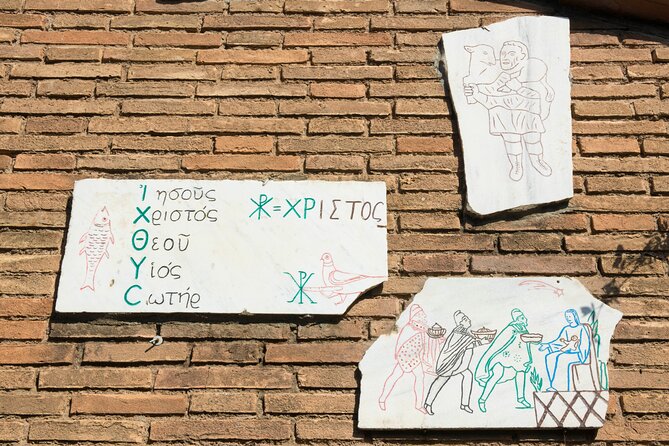
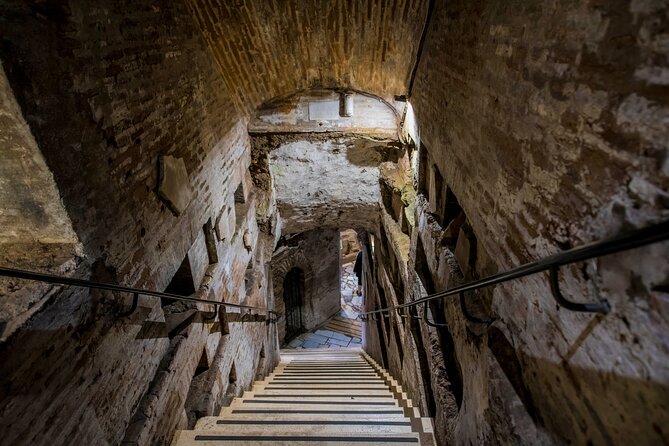
Stop one is the Catacombs of Saint Callixtus (San Callisto). Expect an hour of guided walking among underground burial areas. This isn’t a quick “look and leave” stop. The focus is on what you’re seeing: the catacombs were associated with the tombs of several popes from the 2nd to 4th centuries, and your guide walks you through burial customs and the stories people attach to these spaces.
What makes this stop especially worthwhile is that it’s not just names and dates. The guide connects the underground layout to why these places mattered as pilgrimage sites, and how early burial practices played out in tunnels like these.
A practical heads-up from the experience: photos and videos are forbidden inside the catacombs. So don’t count on phone shots to “save” the memory. Go in ready to watch, listen, and remember. Also note the tour is not recommended for claustrophobic people, because you’ll be moving through tight underground corridors.
Circus of Maxentius: Rome’s big show in a quieter package
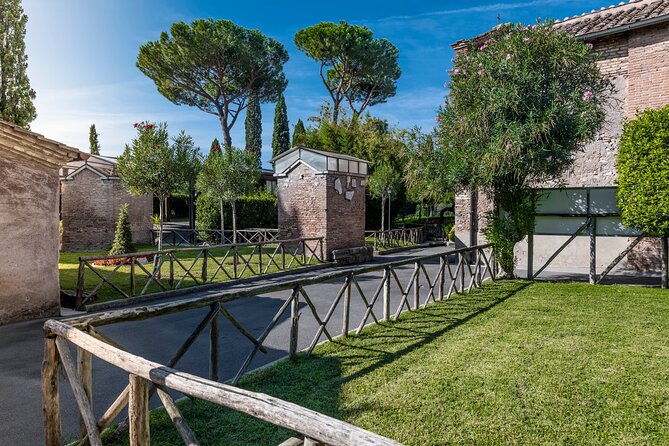
After the catacombs, you move to the Circus of Maxentius. This is one of those Roman structures that feels familiar even before you look closely: it’s a stadium arena shape, but it’s not as overloaded with crowds as Circus Maximus.
Key points to know before you arrive:
- It was built between 306 and 312
- It’s described as the second-largest circus after Circus Maximus
- It’s among the better-preserved circus sites in Rome
- It sits in an area tied to other ancient landmarks, including the basilica and catacombs of San Sebastiano and the Tomb of Cecilia Metella
This stop is a good palate cleanser after the underground portion. You trade ceilings and tunnels for sky, stones, and a clearer sense of ancient entertainment scale. Look for the way the space holds shape even in ruins—your guide can point out what still reads as the original arena plan.
Keep going down the Appian Way
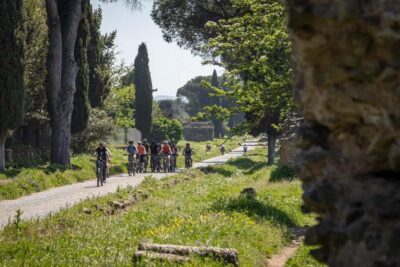
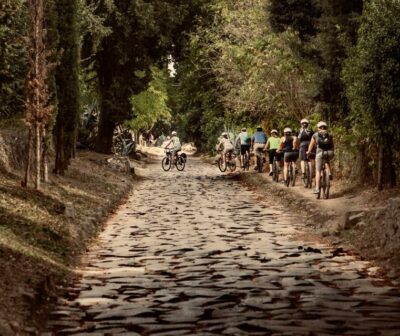
Cecilia Metella’s tomb: a rare Appian Way stop worth the time
This tour includes an external visit to the Mausoleum of Cecilia (Caecilia) Metella, in the Parco Archeologico dell’Appia Antica area, plus the Castrum Caetani context around it.
Why I like this stop: it’s the kind of landmark that makes the Appian Way feel like more than a walking track. Cecilia Metella’s mausoleum was built in the 1st century BC to honor the daughter of Quintus Caecilius Metellus Creticus, a prominent Roman noble. You’re seeing a monument that was meant to broadcast status and permanence.
And yes, this is a “rare” inclusion. Many Appian Way itineraries skip it, so you’ll likely feel like you’re getting extra value on top of the big-name catacombs. Expect this to be a short external visit (about 30 minutes) rather than a deep museum-style stop, so use the time to absorb the structure and ask your guide what to look for.
Walking the Appian Way: 312 BC road math, minus the crowds
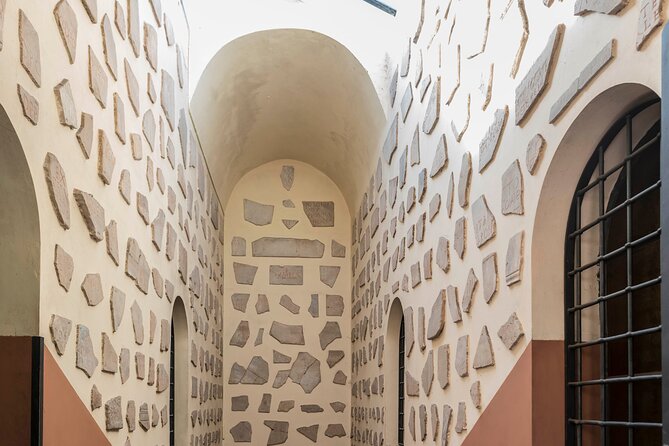
Then you’re on the Appian Way, completed in 312 BC. This road has two big themes, and your guide typically frames it that way:
- Symbolically, it reinforced the idea that roads led back to Rome
- Strategically, it was a main supply and military route connecting Rome to Brindisi in southeast Italy
In plain terms: this wasn’t just for tourists in togas. This was how Rome moved its stuff and its power.
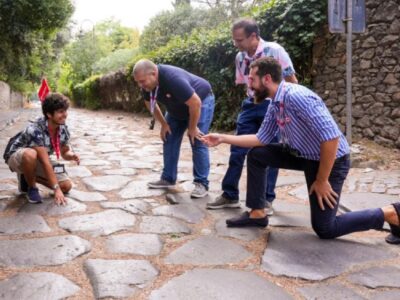
One review also mentioned the feeling of standing on cobblestones linked by tradition with the apostle Paul. I can’t verify the exact step-count of any ancient traveler, but the mood is real: you’re walking on a route that carries a long chain of use, rebuilding, and memory. If you like the “how did people actually live and travel?” angle, this part delivers.
Practical tip: wear shoes that can handle uneven historic ground. Even when it’s not a full-on “hiking” day, Appian Way walking can mean cobblestones and hard surfaces. And because you’re outdoors, it’s also a good day to think about sun and water.
Claudian Aqueduct: 52 AD engineering you can still sense
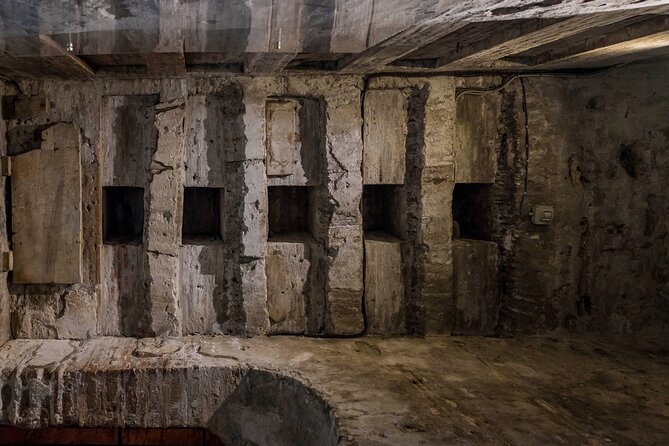
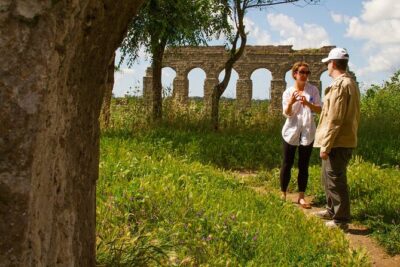
Stop three is the Claudian Aqueduct (Acquedotto Claudio). This one is impressive because it’s not just a single feature—it represents infrastructure at empire scale.
Here’s what you should know going in:
- Erected in 52 AD
- Spans over 40 miles (many sections were underground)
- Considered one of the four great aqueducts of Rome
Rome had a total of 11 aqueducts by the 3rd century AD, and the surviving pieces still show why aqueducts mattered so much. They weren’t decoration. They were lifelines—water for baths, fountains, industry, and daily life.
In a short tour format, you’re not touring every remaining segment of the aqueduct system. You’re more likely getting the “big picture” view: what it was, where it fits in Rome’s water network, and why the engineering is still jaw-dropping even now. If you like systems—roads, water, logistics—this stop clicks.
Guides, headsets, and group size: what to expect day-of
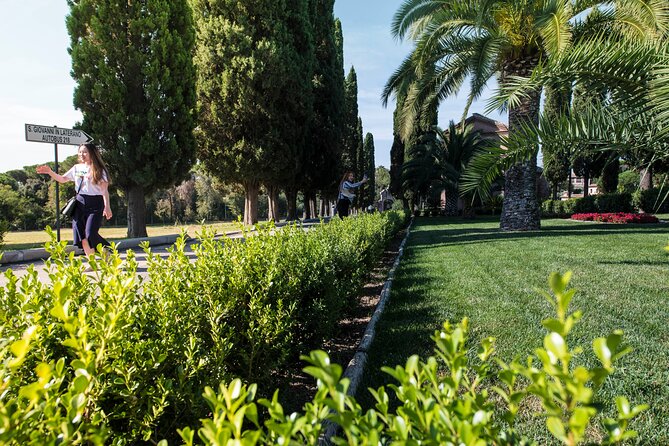
This tour uses a licensed guide and includes headsets, which is a big deal when you’re outside and the sound carries over open spaces. It helps you stay connected to the storytelling without straining your voice.
Group size tops out at 25 travelers. In the best-case scenario, you may feel like you have more attention per person. One review described an unexpectedly tiny group (only a family) and praised the guide and driver as especially lovely. Another review said their group was around five, calling the small group perfect.
On the other hand, a couple of details are worth knowing:
- The catacomb visit can feel like its own mini-group slot, and one review said the separate catacombs group was a bit too large.
- Timing can vary. One review mentioned the guide arrived about 15 minutes late before giving information.
In other words: don’t plan on a perfectly clockwork day where everything starts the second the start time hits. But do expect a structured route and a guide who keeps moving and explains what you’re seeing.
Also, guide names that showed up in feedback include Giuseppe and Cathia/Catia. That’s a good sign the tour puts effort into real humans, not just a script.
Price and value: why $77.14 can make sense
At $77.14 per person for roughly 3 hours, the “value” depends on what you’d otherwise do on your own. If you tried to DIY this, you’d be paying for:
- transport out to the Appian area
- admission logistics for the catacombs
- and the time you’d spend figuring out what matters most
Here, you’re paying for a guide-led route that hits several major anchors:
- Catacombs of San Callisto (admission included)
- Circus of Maxentius (external viewing)
- Mausoleum of Cecilia Metella (external visit; ticket listed as free)
- Appian Way walking segment (no separate ticket mentioned)
- Claudian Aqueduct (ticket listed as free)
Only the catacombs require the paid admission ticket in the tour flow, which helps keep the pricing simple. And because the tour is short, it’s a strong option if you’ve got limited time in Rome or you already saw the main city center sites and want something with a different rhythm.
The main tradeoff: you’re doing a “best-of” circuit. If you want ultra-deep time in one place, you might feel like the stops are brief—especially after the catacombs hour.
Who should take this tour (and who should skip it)
This tour is a good match if you:
- want a concentrated dose of Appian Way landmarks without planning transportation
- like seeing Roman engineering and public-space architecture in daylight (aqueduct and circus)
- are comfortable with catacombs and want the context behind what you’re walking through
You might want to skip or choose another option if:
- you’re claustrophobic (the catacombs are not recommended)
- you’re sensitive to rules like no photos/videos underground
- you need lots of slow time at fewer sites (this tour is designed for coverage)
It also suits people who like guided storytelling. Multiple reviews praised the guides for making the experience feel organized, clear, and meaningful—especially around the catacombs portion and the Appian Way walking.
Should you book the Catacombs and Appian Way Tour?
Yes, I’d book it if you want an efficient Roman day that goes beyond the usual “center-city hits.” The combo of San Callisto catacombs, the Appian Way, and major stops like the Claudian Aqueduct gives you variety in a short window, and the inclusion of catacombs admission plus headsets makes it feel more “put together” than a loose pickup tour.
I’d think twice only if the catacombs scare you, if you hate guided timing, or if you’re the type who needs hours in one museum-level site. Otherwise, this is a solid way to see the Appian Way’s most memorable pieces without spending your whole day commuting and guessing.
FAQ
What’s the duration of the Catacombs and Appian Way Tour?
It’s about 3 hours (approx.).
Where is the meeting point?
The tour starts at Via Cavour, 224, 00184 Roma RM, Italy.
What time does the tour begin?
Start time is 9:45 am.
Does the tour include transportation?
Yes. Round-trip transportation is included from central Rome (Via Cavour).
Who leads the tour?
A licensed guide leads the experience, and headsets are provided so you can hear clearly.
Is admission included for the catacombs?
Yes. Admission ticket for the Catacombs of Saint Callixtus is included.
Do you pay for entry to the other stops?
No entry ticket is required according to the tour info for the mausoleum and the Claudian Aqueduct stops (they are listed as free).
Is the tour suitable for claustrophobic people?
No. It is not recommended for claustrophobic people.
Is there a limit on group size?
Yes. The maximum is 25 travelers.
Can I cancel for a refund?
Free cancellation is available if you cancel up to 24 hours in advance for a full refund.
More Tour Reviews in Rome
- Vatican Museums, Sistine Chapel & St. Peter’s Basilica Tour
★ 4.3 · 73,970 reviews - Vatican Museums, Sistine Chapel & St Peter’s Basilica Guided Tour
★ 4.5 · 39,149 reviews - Rome: Colosseum, Palatine Hill and Roman Forum Guided Tour
★ 4.8 · 32,814 reviews - Rome: Guided Tour of Colosseum, Roman Forum & Palatine Hill
★ 4.7 · 27,897 reviews - Rome: Colosseum & Forum with Audio Guide App -Optional Arena
★ 4.2 · 24,770 reviews - Rome: Colosseum, Roman Forum and Palatine Hill Guided Tour
★ 4.5 · 23,903 reviews
The Appian Way, Continued
- Rome EBike Tour: Appian Way, Catacombs & Roman Aqueducts
★ 5.0 · 1,766 reviews - Rome: Appian Way & Aqueducts E-Bike Tour (Catacombs & Food)
★ 4.9 · 1,498 reviews - Rome: Appian Way, Catacombs, & Roman Aqueducts E-bike Tour
★ 4.9 · 1,421 reviews - Rome Underground: Catacombs Tour, Aqueducts and Appian Way
★ 5.0 · 1,007 reviews - Appian Way Aqueducts Bike Tour (Catacombs & Lunch Option)
★ 5.0 · 975 reviews - Rome: Appian Way, Aqueducts, and Catacombs Tour
★ 4.7 · 942 reviews
Further Below Rome
- Rome: Capuchin Crypts and Catacombs Tour with Transfers
★ 4.6 · 6,456 reviews - The Original Roman Crypts and Catacombs Tour with Transfers
★ 4.5 · 4,896 reviews - Rome: Catacombs of St. Callixtus Entry Ticket & Guided Tour
★ 4.6 · 3,037 reviews - Rome: Guided Roman Catacombs Tour with Transfers
★ 4.6 · 1,830 reviews - Rome: Catacombs Guided Tour with Transfer
★ 4.2 · 1,808 reviews - Rome EBike Tour: Appian Way, Catacombs & Roman Aqueducts
★ 5.0 · 1,766 reviews
Just added to our Rome reviews





Roman Catacombs & Crypts Tours, compared.
 ★ 4.6Capuchin Crypts and Catacombs Tour with TransfersFrom $606,456 reviews
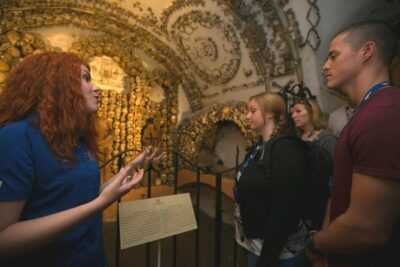 ★ 4.5The Original Roman Crypts and Catacombs Tour with TransfersFrom $664,896 reviews
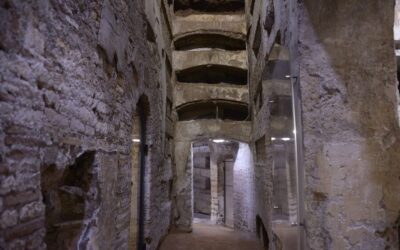 ★ 4.6Catacombs of St. Callixtus Entry Ticket & Guided TourFrom $163,037 reviews
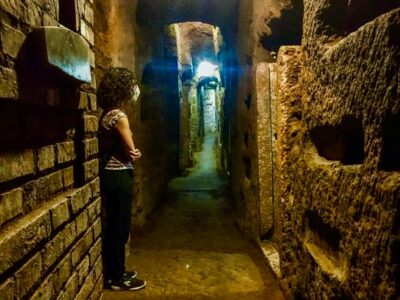 ★ 4.6Guided Roman Catacombs Tour with TransfersFrom $651,830 reviews
 ★ 4.2Catacombs Guided Tour with TransferFrom $541,808 reviews
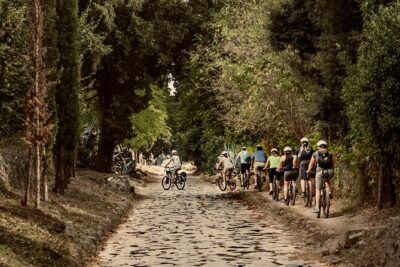 ★ 5.0Rome EBike Tour: Appian Way, Catacombs & Roman AqueductsFrom $1021,766 reviews
 ★ 4.6Catacombs and Capuchin Crypt Guided Tour with TransferFrom $411,606 reviews
 ★ 4.7St. Peter’s Basilica Priority Access Tour with Dome & CryptFrom $701,504 reviews
Browse the lists this tour appears in