
Reviewed · MUSEUMS
Capitoline Museums Marvels Private Tour
Rome’s oldest museum is waiting. A private Capitoline Museums tour turns marble and bronze into a real story of how Rome grew.
I like that this is private and timed to your day, so you can move at a comfortable pace instead of getting swept along. I also really love the Roman-theme focus: you’re not just looking at famous objects, you’re learning how they fit into the city’s politics, religion, and everyday life. One consideration: museum entry tickets are not included, so you’ll need to budget extra on site.
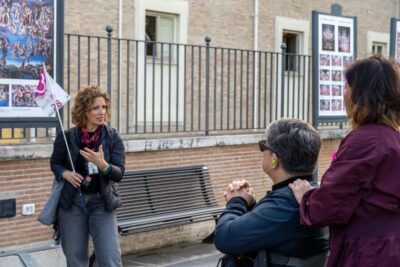
Expect a guide who works like a translator for the ancient world—either an art historian or archaeologist helping you make sense of what you see. You’ll start at Piazza del Campidoglio (Capitol Square), then explore the Musei Capitolini area on the hill where the Temple of Jupiter once stood. The tour ends near Tiber Island, which is handy if you’re planning to keep walking afterward.
In This Review
- Key highlights worth your attention
- Capitoline Museums: why this museum makes Rome feel smaller
- Your 2.5-hour flow: from Campidoglio Square to the museum rooms
- Piazza del Campidoglio: the Michelangelo square that anchors the whole visit
- Stop inside Musei Capitolini: going century to century in a few steps
- Roman “everyday” for the upper classes: more than famous statues
- Temple-of-Jupiter foundations: seeing power as a physical footprint
- The talking fountain moment and other museum treats
- Tickets and value: what you’re paying for (and what you aren’t)
- Getting answers, keeping pace, and staying for more
- Accessibility and mobility support: it can be handled, case by case
- Who should book this Capitoline Museums private tour
- Should you book? My take on the smart decision
- FAQ
- How long is the Capitoline Museums private tour?
- Is the tour offered in English?
- Are museum entry tickets included in the price?
- Where do we meet, and where does the tour end?
- Is this tour private?
- What is the cancellation policy?
Key highlights worth your attention
- A guide who connects objects to Roman life: you’ll go century to century, with context that makes sculptures feel less random
- Capitoline Hill views before you even enter: Michelangelo’s design for the square sets the stage fast
- Sculptures you’ll recognize by subject: the wounded queen of the Amazons, Venus, and the dying Galata are part of the story
- Temple-of-Jupiter clues: you’ll get a peek at foundations tied to Rome’s biggest religious power point
- Real flexibility for your group: private means you can ask questions and slow down when something catches your eye
Capitoline Museums: why this museum makes Rome feel smaller
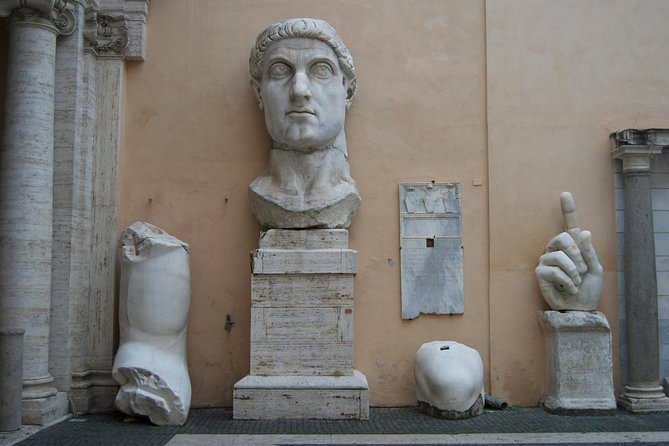
The Capitoline Museums sit right on the top of Capitoline Hill, where Rome’s story was always meant to be told loudly. This tour is a smart way to start because the hill itself acts like a timeline. You begin with the 16th-century design by Michelangelo, then move into museum rooms that link back to Rome’s earliest eras—generals, philosophers, senators, heroes, gods, and emperors rendered in marble and bronze.
I like that the focus is straightforward: Roman history and art, explained in a way that helps you connect one room to the next. Instead of standing in front of a sculpture and guessing what it means, you’ll get guided context that clarifies why the object mattered in its own time.
One more reason this museum works so well as a guided experience: Rome’s museums can overwhelm you with famous names. A guide helps you see patterns—how power shows up in public spaces, how religion is tied to civic life, and how the “everyday” world of upper-class Romans is preserved through art and objects.
Worth a look next to this Rome booking:
- Rome by Golf Cart Private Tour: Beyond the Landmarks
★ 5.0 · 4,361 reviews - Early Morning Vatican, Sistine, St. Peter’s Semi or Private Tour
★ 5.0 · 3,779 reviews - Rome on a Golf Cart Semi-Private Tour Max 6 with Private Option
★ 5.0 · 2,502 reviews - Rome Private Arrival Transfer: Fiumicino Airport to Hotel in Rome
★ 4.5 · 2,492 reviews
Your 2.5-hour flow: from Campidoglio Square to the museum rooms
You’ll meet at Campidoglio square (Piazza del Campidoglio), right by the heart of the Capitoline area. From there, the tour is built so you get situated quickly. You’re not wandering first and learning later. The goal is to get your bearings, then start making sense of the hill and its collection without wasting time.
Timing-wise, plan on about 2 hours of guided museum time, with the full experience around 2 hours 30 minutes (approx.). That’s a good length for a Rome museum morning or afternoon because it gives you depth without turning into an all-day marathon.
Also, choose your tour time with intent. If you go in the morning, you’ll often have an easier time maintaining a relaxed pace on the hill. If you go later, you’ll still get the same content, but you may feel the museum’s rhythm change as the day gets busier. Either way, private tour format helps because you can ask for pauses when you need them.
Piazza del Campidoglio: the Michelangelo square that anchors the whole visit
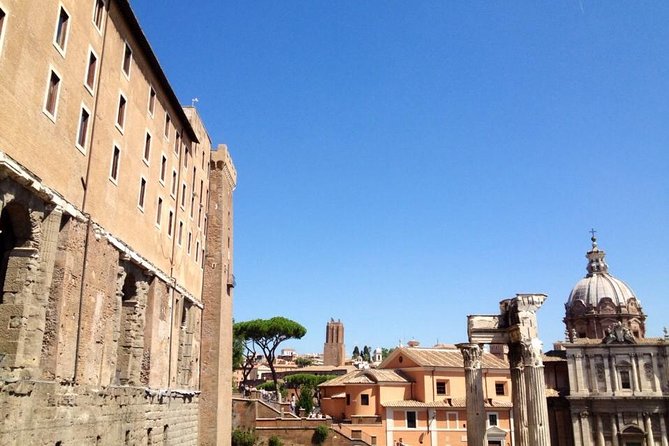
Before you’re inside the Musei Capitolini, you get the benefit of seeing the top of the hill—the part that people photograph for a reason. Michelangelo’s 16th-century design turns the space into a stage. As you look around, you get a “why here?” feeling that’s hard to replicate if you just treat the museum as a separate stop.
This matters because the Capitoline Museums aren’t floating in space. They’re tied to the idea that Rome’s power was centered here. Even if you don’t know every historical detail on arrival, you’ll understand something quickly: the hill has been important for centuries, and the layout reflects that.
A nice practical upside: seeing the square first helps you orient your legs and your brain. When you move into the museum spaces afterward, your sense of place stays strong. It’s less like “enter and hope” and more like “walk a timeline.”
Stop inside Musei Capitolini: going century to century in a few steps
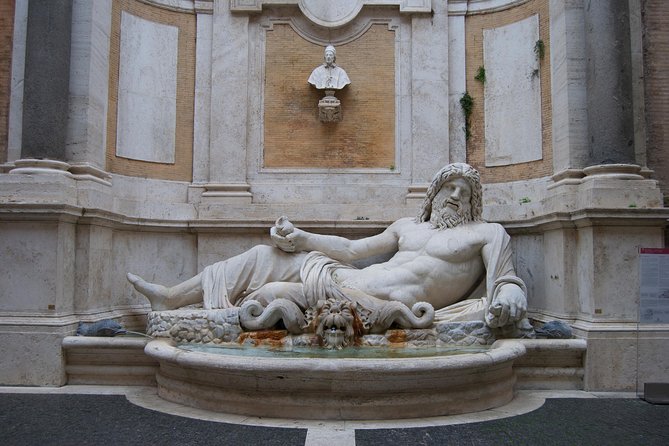
The heart of the experience is Musei Capitolini, the big museum on the hill that tells the story of Rome. The guided approach here is the value. The tour is designed so you move through eras rapidly, but with explanation attached. That’s how you avoid the common museum problem: lots of art, little meaning.
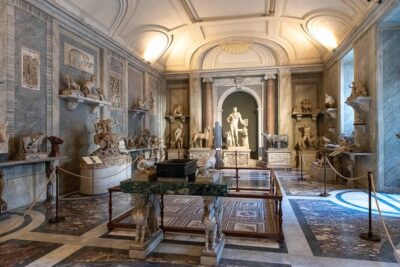
You’ll learn about Roman leaders and cultural figures—generals, philosophers, senators, heroes, gods, and emperors—through the objects in front of you. The guide helps translate the themes behind the statues and reliefs, so the collection reads like a narrative rather than a checklist.
Here are some of the subjects you’ll focus on as the tour moves through the museum:
- the wounded queen of the Amazons, which helps explain how myth and power mix in Roman art
- Venus, which connects beauty, desire, and Roman cultural identity
- the dying Galata, where emotion and realism are used to communicate drama and status
These aren’t random “wow” moments. They’re chosen because they show how Romans used sculpture to tell stories about fate, conquest, mythology, and the look of authority.
Worth a look next to this Rome booking:
Roman “everyday” for the upper classes: more than famous statues
One of my favorite ways to learn history is to see how the powerful lived, not just how wars were fought. This tour includes time aimed at the elegant everyday life of upper-class Romans—exactly the kind of detail that makes the ancient world feel less like a museum label and more like a society.
When guides point out how daily life appears in art and collections, you start noticing the difference between “art as decoration” and “art as social communication.” In this museum, that distinction becomes easier to grasp as you go room to room.
You’ll also get a sense of how Roman culture used both real-world status and mythic symbolism. That blend is one reason the museum feels so Roman. Even when the subject is myth, the style and context are tied to real Roman ambition.
Temple-of-Jupiter foundations: seeing power as a physical footprint
The tour includes a peek at the foundations of the largest Roman temple in the ancient world, dedicated to Jupiter. This is one of those moments that clicks because it turns history into something you can almost picture. Even without turning every stone into a lecture, the idea is clear: you’re standing in the vicinity of where Rome’s religious-political authority would have been staged.
In practical terms, it’s also a great break from staring at objects. Foundations and architectural context add variety to the pacing, and they give your brain a new way to connect the collection back to the city.
This is also where you start thinking less like a tourist and more like a visitor from the past. If a temple was that big, it wasn’t just a building. It was a statement about who mattered and who held the center of civic life.
The talking fountain moment and other museum treats
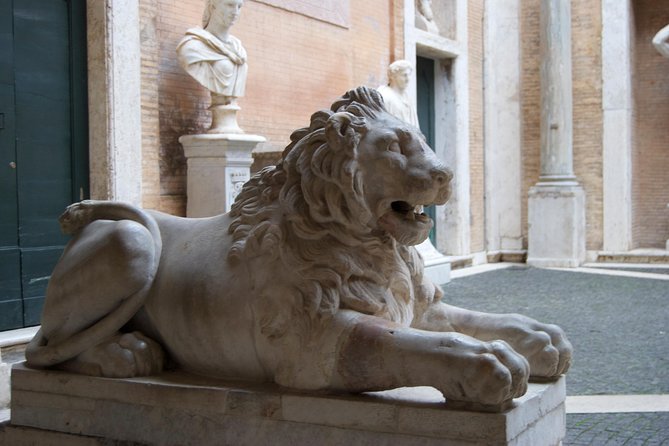
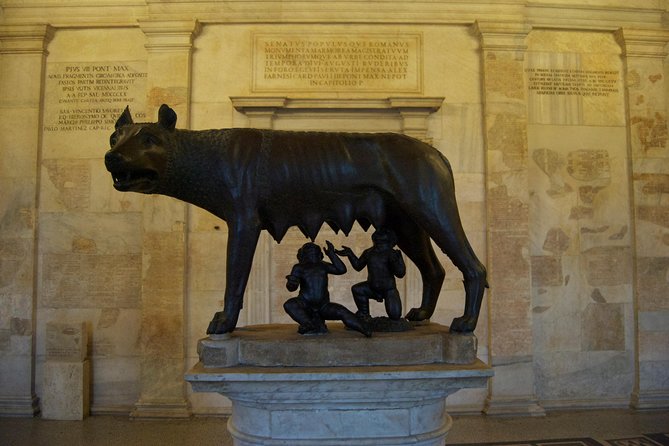
One of the most memorable museum details from this experience is the talking fountain mentioned in guide-led visits to the museum. It’s the kind of playful, unexpected feature that breaks up all the serious marble and makes the place feel alive.
This is why a guided tour helps. You’re more likely to notice these details when someone tells you what they are and why they’re there. The tour also points you toward other standout art and objects, including sculpture and even textile-related works referenced as part of the museum’s collection.
If you’re the type who likes to take a few photos and then understand the story behind the subject, you’ll appreciate how the guide steers attention. You don’t need to be an art expert to enjoy it—you just need help reading what you’re seeing.
Tickets and value: what you’re paying for (and what you aren’t)
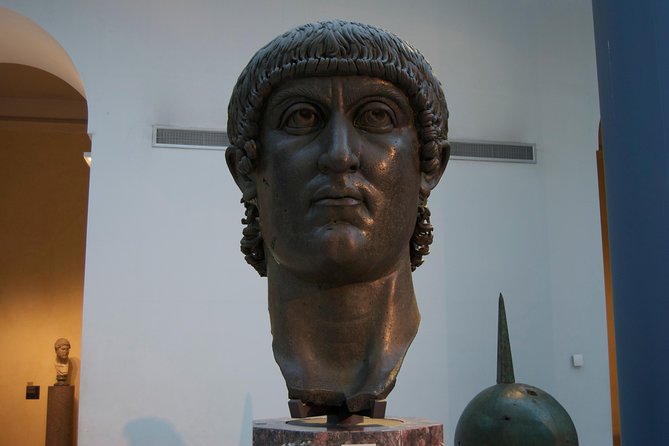
Here’s the simple budgeting reality: entry tickets aren’t included. You pay on site—listed as 16€ for adults and 14€ for under 18.
So what are you paying the tour for? Mainly for the guide’s time and expertise, plus the private format. That’s the value call. If you’d otherwise wander the Capitoline Museums alone, you’d miss the connections: which object matters for which Roman theme, and how the hill and its civic/religious role fit together.
A private guide is especially worth it if:
- you want a “timeline” experience rather than random browsing
- you’re traveling with kids and need clearer explanations
- your group has mobility or pacing needs and you’d rather have someone coordinate around you
One practical tip: since tickets are purchased on site, don’t let your entire plan rely on “we’ll just walk in.” Show up early enough to handle ticketing smoothly and start the tour without stress.
Getting answers, keeping pace, and staying for more
A private tour changes the tone of a museum visit. You can stop for questions. You can ask for clarification when a term like Galata or Amazons pops up. And if you’re the kind of person who keeps thinking of follow-up questions later, you’ll like that the guide gives you enough context to keep exploring after the tour ends.
Also, plan to linger. The museum is big and the hill is interesting even outside the main rooms. One of the best outcomes of a guided visit is that it gives you a mental map, so you’re not stuck doing the “What should I look at next?” dance.
A neat detail from past experiences with this tour format: guides have been praised for being patient and accommodating with the group’s pace. That matters because museum learning isn’t only about facts. It’s about letting your attention catch on to things as you go.
Accessibility and mobility support: it can be handled, case by case
The information you have here says that most travelers can participate, but the more useful part is what a guide can do when mobility needs come up. In a past experience, guide Serena coordinated with museum personnel to arrange ramps and elevators access for wheelchairs, and even obtained police permission for a taxi to pull up near the museum exit so the group could get back to the hotel.
I can’t promise every visit will be identical, because access sometimes depends on current conditions and staffing. But this does tell you something important: the human side of the tour matters, and the guide can respond quickly when you need real logistics support.
If you have a mobility need, consider sharing it ahead of time so the team can be prepared.
Who should book this Capitoline Museums private tour
This is a great fit if you:
- care about archaeology and art history and want it explained in plain language
- want to understand Roman society, not just see famous sculptures
- prefer morning or afternoon flexibility and like a structured tour that still feels personal
- are visiting Rome for a limited time and want high signal in two and a half hours
It may be less ideal if you:
- want a completely unguided museum wander
- dislike paying extra for entry tickets and prefer tours where everything is bundled
- only want broad highlights and no historical context
Should you book? My take on the smart decision
If you like your Rome archaeology with context, I’d book this Capitoline Museums private tour. The biggest reason is simple: you’re not just paying for entry. You’re paying for a guide to connect the museum’s objects to the story of Rome, and that connection is what makes the visit stick.
The museum itself can be overwhelming if you show up cold. This tour helps you read what you’re seeing—everything from myth figures like the wounded queen of the Amazons to civic power tied to Jupiter’s temple foundations. And if you get a guide like Serena (not guaranteed, but she’s been highlighted for her calm help), you also gain the comfort of real problem-solving.
Budget for entry tickets, plan for about 2.5 hours, and go in ready to ask questions. Do that, and you’ll leave with a clear sense of what the hill and its art are telling you.
FAQ
How long is the Capitoline Museums private tour?
It lasts about 2 hours 30 minutes (approx.). The main museum time is around 2 hours.
Is the tour offered in English?
Yes, it’s offered in English.
Are museum entry tickets included in the price?
No. You’ll pay on site: 16€ for adults and 14€ for under 18.
Where do we meet, and where does the tour end?
You start at Campidoglio square (Piazza del Campidoglio, 00186 Roma RM, Italy) and the tour ends near Tiber Island (00186 Rome).
Is this tour private?
Yes. It’s a private tour/activity, so only your group participates.
What is the cancellation policy?
You can cancel for a full refund up to 24 hours before the experience starts. If you cancel within 24 hours of the start time, there’s no refund.
More Private in Rome
- Rome by Golf Cart Private Tour: Beyond the Landmarks
★ 5.0 · 4,361 reviews - Early Morning Vatican, Sistine, St. Peter’s Semi or Private Tour
★ 5.0 · 3,779 reviews - Rome on a Golf Cart Semi-Private Tour Max 6 with Private Option
★ 5.0 · 2,502 reviews - Rome Private Arrival Transfer: Fiumicino Airport to Hotel in Rome
★ 4.5 · 2,492 reviews - Rome Highlights by Golf Cart Private Tour
★ 5.0 · 2,379 reviews - Private Pompeii, Positano & Amalfi coast Tour from Rome
★ 4.5 · 1,888 reviews
More Tours in Rome
- Vatican Museums, Sistine Chapel & St. Peter’s Basilica Tour
★ 4.3 · 73,970 reviews - Vatican Museums, Sistine Chapel & St Peter’s Basilica Guided Tour
★ 4.5 · 39,149 reviews - Rome: Colosseum, Palatine Hill and Roman Forum Guided Tour
★ 4.8 · 32,814 reviews - Rome: Guided Tour of Colosseum, Roman Forum & Palatine Hill
★ 4.7 · 27,897 reviews - Rome: Colosseum, Roman Forum and Palatine Hill Guided Tour
★ 4.5 · 23,903 reviews - Rome: Colosseum Arena Floor, Palatine & Forum Guided Tour
★ 4.5 · 20,180 reviews
More Tour Reviews in Rome
- Vatican Museums, Sistine Chapel & St. Peter’s Basilica Tour
★ 4.3 · 73,970 reviews - Vatican Museums, Sistine Chapel & St Peter’s Basilica Guided Tour
★ 4.5 · 39,149 reviews - Rome: Colosseum, Palatine Hill and Roman Forum Guided Tour
★ 4.8 · 32,814 reviews - Rome: Guided Tour of Colosseum, Roman Forum & Palatine Hill
★ 4.7 · 27,897 reviews - Rome: Colosseum & Forum with Audio Guide App -Optional Arena
★ 4.2 · 24,770 reviews - Rome: Colosseum, Roman Forum and Palatine Hill Guided Tour
★ 4.5 · 23,903 reviews
Just added to our Rome reviews





Museums, compared.
 ★ 4.5Vatican: Museums & Sistine Chapel Entrance TicketFrom $38144,003 reviews
 ★ 4.3Vatican Museums, Sistine Chapel & St. Peter’s Basilica TourFrom $7273,970 reviews
 ★ 4.5Vatican Museums, Sistine Chapel & St Peter’s Basilica Guided TourFrom $2239,149 reviews
 ★ 4.3Vatican Museums, Sistine Chapel and Basilica TourFrom $7316,039 reviews
 ★ 4.4Vatican Museums & Sistine Chapel Skip-the-Line Entry TicketFrom $4313,838 reviews
 ★ 4.7Vatican Museums, Sistine Chapel & Basilica TourFrom $7213,217 reviews
 ★ 4.3Vatican Museums & Sistine Chapel Guided TourFrom $11812,117 reviews
 ★ 4.2Vatican Museums & Sistine Chapel Skip-The-Line TicketFrom $4111,708 reviews