
Reviewed · ROMAN CATACOMBS & CRYPTS TOURS
Bone Crypts & S. Clemente ENGLISH tour – tickets included
Rome can be loud and bright above ground. This tour slows you down and takes you where the city keeps its darker stories, starting with the Capuchin Crypts and then dropping into San Clemente Underground. I especially like the way you get both the macabre (almost 4,000 monks’ remains) and the beautiful (Byzantine mosaics and early Christian art) in the same morning, plus the guide quality—names I’ve seen mentioned include Mike, Heather, Divan, Peter, and John, all with a fun, joke-friendly way of explaining serious themes. One consideration: the tone is heavy, and the experience involves stairs and a moderate walk, so it’s not a great fit if you need an easy, fully accessible route.
You’re also not paying just for entry tickets—you’re paying for context. For $61 per person and about 2.5 hours, you get skip-the-line access, a guided visit to the crypts and underground basilica areas, and outside looks at the Colosseum, Nero’s Domus Aurea, and the gladiator training grounds. Just note that some audio/headset time may be focused on the bone church portion rather than every single stop.
In This Review
- Key highlights you’ll actually feel during the tour
- Meeting at Piazza Barberini and getting oriented fast
- Capuchin Crypts: six chapels and the story of burial laws
- A balanced note before you go
- The quick transfer: from crypt darkness to Colosseum daylight
- Colosseum and Ludas Magnus: gladiator training you won’t see on a standard walk
- Nero’s Domus Aurea ruins: a taste of Rome’s “golden palace” past
- Basilica of San Clemente Underground: four levels of faith and art
- Why this stop is worth the ticket price
- Caravaggio’s masterpiece and the art that adds a different kind of wow
- What you’re really paying for: $61 for access, guidance, and smart pacing
- Who should book this tour, and who should skip it
- Practical tips: shoes, photos, and how to make the most of 2.5 hours
- Should you book Bone Crypts and San Clemente?
Key highlights you’ll actually feel during the tour
- Capuchin Crypts with six chapels and bone displays tied to real burial rules and relocations
- Crypt-of-the-three-skeletons style stops plus an iconic Skulls chapel with its hourglass symbol
- A quick black cab transfer that keeps things moving without turning the morning into a long slog
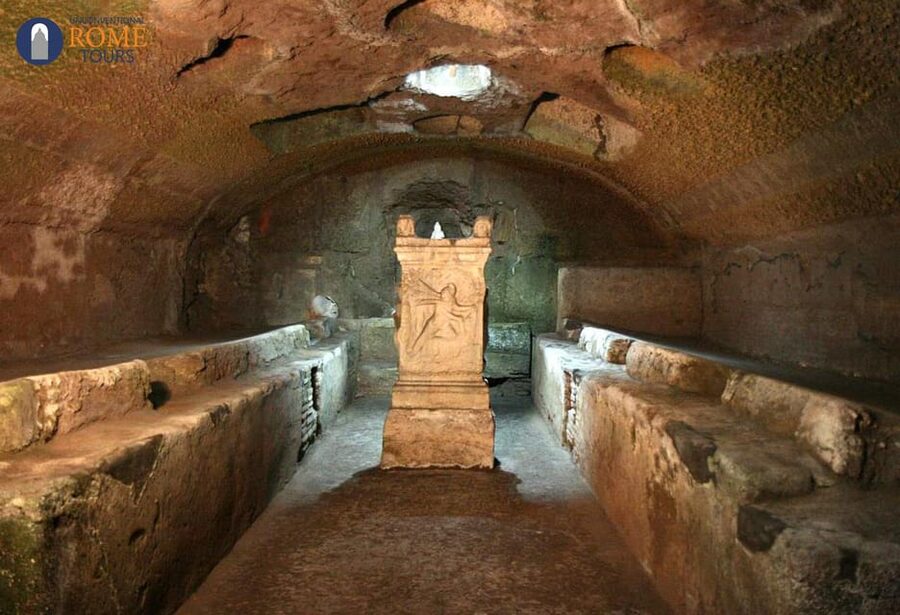
- San Clemente Underground as a multi-layer site: 12th-century basilica down to a 2nd-century Mithraic temple
- Outside views of the Colosseum, Domus Aurea (Nero’s Golden Palace), and Ludas Magnus
Meeting at Piazza Barberini and getting oriented fast
The tour meets at the Face side of the Triton Fountain in Piazza Barberini. Do yourself a favor and arrive at least 10 minutes early, because this is one of those Rome starts where security checks and group logistics can slow things down if you’re late.
If you show up early, there’s a practical setup right across the street: Bar Gusto has bathrooms and you can grab drinks/snacks while you wait. This matters more than you might think. Between the walking and the stair-down sections, you’ll be glad you handled the little comfort items before the tour starts.
Also, wear comfortable shoes. Even though the total duration is only about 2.5 hours, you’ll move through compact spaces and down into underground levels where standing still for photos can be limited.
Deeper underground: more crypts and catacombs
- Rome: Capuchin Crypts and Catacombs Tour with Transfers
★ 4.6 · 6,456 reviews - The Original Roman Crypts and Catacombs Tour with Transfers
★ 4.5 · 4,896 reviews - Rome: Catacombs of St. Callixtus Entry Ticket & Guided Tour
★ 4.6 · 3,037 reviews - Rome: Guided Roman Catacombs Tour with Transfers
★ 4.6 · 1,830 reviews
Capuchin Crypts: six chapels and the story of burial laws
You’ll head first to the Capuchin Museum area, where the guide frames the Capuchin and Franciscan orders and why this site exists at all. This short preface is one of the reasons the visit lands better than a quick “wow, bones” stop. You get the belief system and the burial idea before you’re suddenly surrounded by human remains.
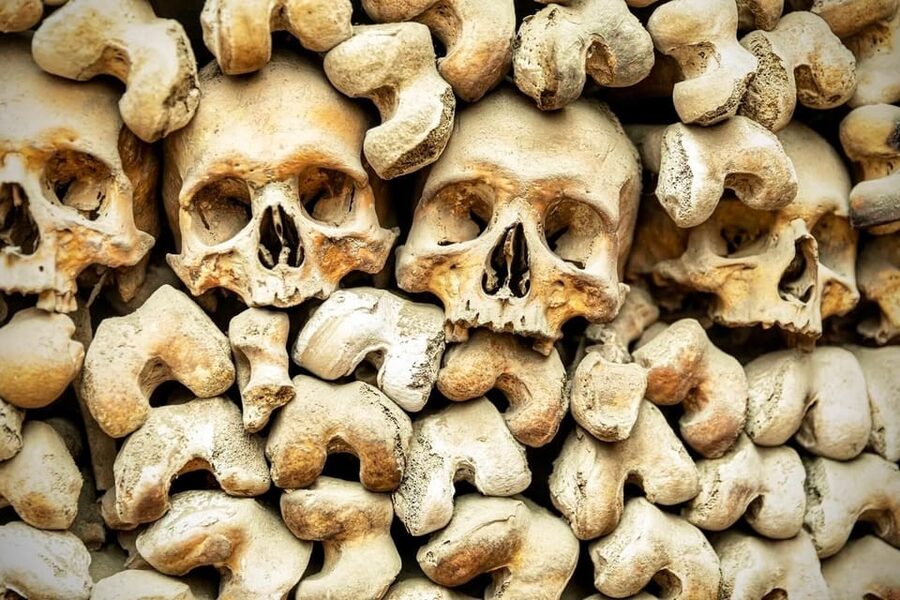
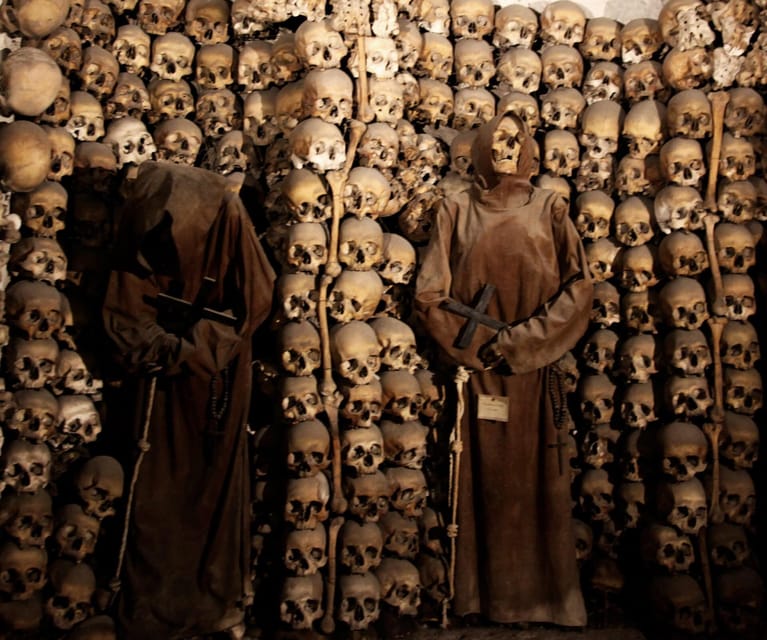
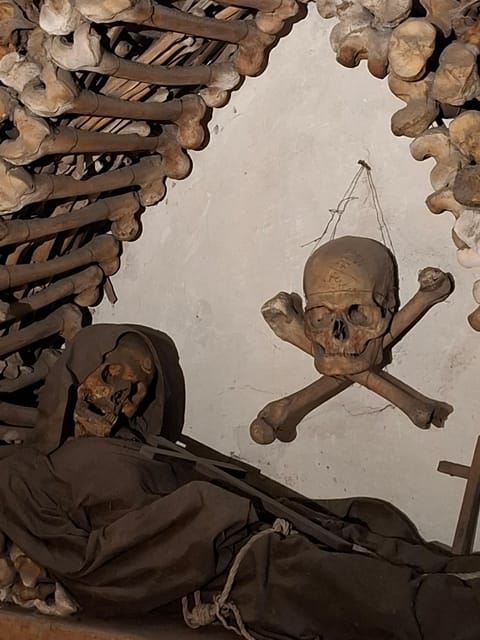
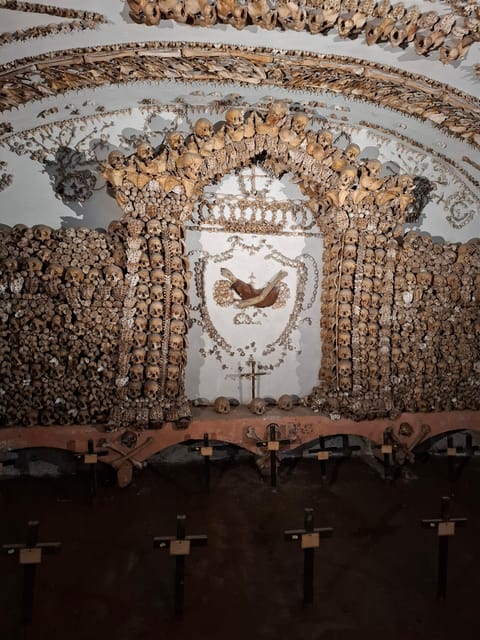
Then comes the part most people remember: the Capuchin Crypts themselves. The tour goes into six chapels, and the bone decorations come from the remains of nearly 4,000 Capuchin monks. You’re not just seeing a pile of bones—you’re watching an arrangement designed to communicate meaning.
A few specific rooms tend to hit hard:
- The Crypt of the Three Skeletons, often the first “how is this real?” moment
- Bone arrangements focused on leg bones and thigh bones—very deliberate, not random
- The Crypt of Pelvises, where friars appear in peaceful arches
- The Crypt of the Skulls, with its hourglass symbolism
What I appreciate is how the guide connects the physical layout to the “why.” There’s also a clear explanation of how remains were relocated from an earlier friary area near the Trevi Fountain zone, plus how Capuchin burial laws helped create this unusual underground cemetery.
In parts of the visit, you may use an audio guide for added context. The result is respectful, and it also gives your brain something to do besides just stare.
A balanced note before you go
This is a cemetery space. It can be emotionally intense even if you’re not squeamish. If you’re traveling with kids, the tone depends heavily on the guide and on your child’s comfort level with death-themed art. I’d call it best for families who can handle a serious theme without needing a “party atmosphere.”
And yes, there’s one more practical point: flash photography isn’t allowed in the crypt area. Keep your camera ready, but let the lighting rules and the guide’s instructions lead.
The quick transfer: from crypt darkness to Colosseum daylight
After the Capuchin stop, you’ll move by black cab for about 10 minutes. That short ride helps you avoid turning the morning into a long, stop-and-start walk through heavy Rome traffic and crowds.
Then the tour shifts to the Roman monuments in a more familiar key: the Colosseum area and nearby history tied to the games.
This part is outside-focused rather than an indoor museum visit. You’ll get a guided look from the street level, which can be a plus. Even if you’ve visited the Colosseum before, this angle tends to connect architecture to human stories—training, entrances, and what the site meant beyond the postcards.
Worth a look next to this Rome booking:

Colosseum and Ludas Magnus: gladiator training you won’t see on a standard walk
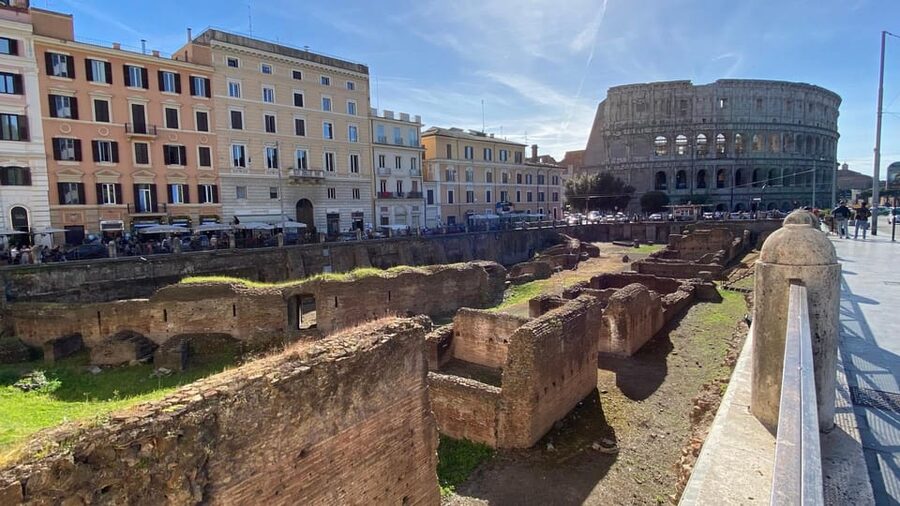
You’ll pass by the Colosseum from the outside, with your guide explaining how gladiators prepared and entered the games. The tour also includes viewing the Ludas Magnus gladiator training grounds from the area around it.
This is where you get something that many “Colosseum-only” visits miss: the training side of the story. Instead of focusing only on the arena spectacle, you connect the dots to how fighters learned discipline, technique, and survival in a city that loved competition and spectacle.
Even with a short Colosseum window, you’re not just looking at stone. You’re building a mental map of how daily life, violence, politics, and entertainment intersected.
If you like history that’s grounded in real places—streets, buildings, and the geometry of movement—this stop delivers more than you’d expect from a brief outside viewing.
Nero’s Domus Aurea ruins: a taste of Rome’s “golden palace” past
Next you’ll see the ruins of Emperor Nero’s Golden Palace, known as Domus Aurea, from the outside. You’re not going deep into the underground side here; the point is to place Nero’s world into your larger Rome picture.
This kind of outside ruin viewing matters because it teaches you to read Rome like a layered city. When you understand that much of what you see today is just the top layer of someone else’s empire, the rest of the day starts to make more sense.
And once you’ve been underground at the Capuchins, these ruined surfaces feel oddly connected—different themes, same idea: Rome keeps its past below the feet of the present.
Basilica of San Clemente Underground: four levels of faith and art
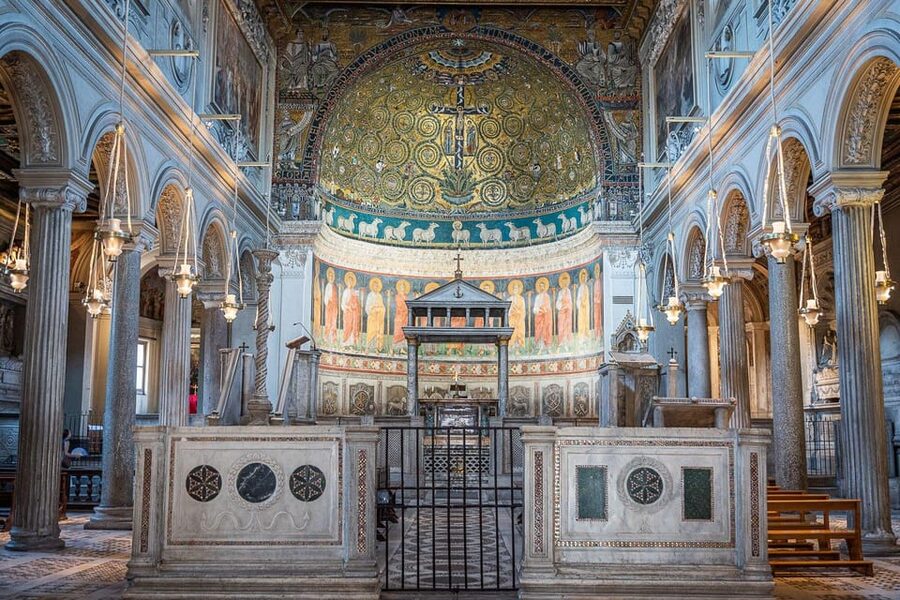
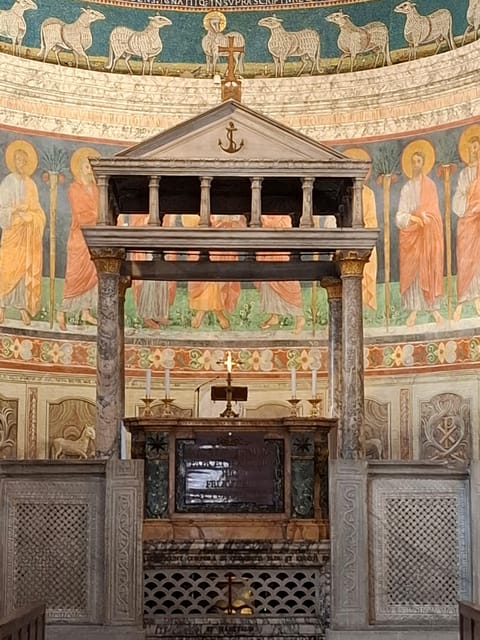
Then the tour’s biggest “how can one place have so much?” moment arrives: Basilica of San Clemente al Laterano with guided access to the underground levels.
You descend through a multi-layer complex that spans centuries:
- the 12th-century basilica level down to
- a 4th-century church
- and further down to a 2nd-century Mithraic temple
Your guide also points out what you’ll be looking for artistically:
- Byzantine mosaics
- early Christian frescoes
- and a 2,000-year-old fountain still flowing today
The tour mentions four underground levels, and the effect is cumulative. Each step down feels like switching the camera from one time period to another. The underground setting is also part of why it’s so memorable—you’re surrounded by fabric of old Rome rather than modern reconstructions.
One practical note: because this area is lit and managed differently than above-ground churches, photography rules can vary. The tour is clear that you should follow the guide’s instructions, and flash is generally restricted in sensitive areas—so keep your plan simple and respectful.
Why this stop is worth the ticket price
This isn’t just “a church with a cool basement.” It’s a rare chance to watch Rome stack cultures on top of each other in a single location. You get the shift from pagan worship (Mithraic temple) to Christian sacred art, plus the later layers that reused and reinterpreted older spaces.
When a site does that well, you end up leaving with a stronger sense of how Rome changed without needing a timeline lecture that bores you halfway through.
Caravaggio’s masterpiece and the art that adds a different kind of wow
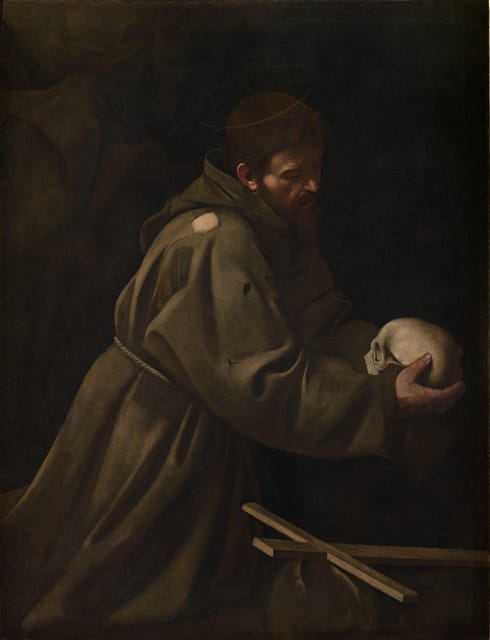
In addition to the bone chapels and underground mosaics, the tour includes time to view Caravaggio’s masterpiece.
That piece of the experience is smart because it balances the emotional mood. After the Capuchins, you get a different type of intensity—art that’s dramatic, human, and tied to the Baroque era’s obsession with realism and emotion.
Even if you’re not a museum person, this helps the tour breathe. It stops the whole day from feeling like one long “dark theme” sequence.
What you’re really paying for: $61 for access, guidance, and smart pacing
Let’s talk value in plain terms. For about $61 per person (with tickets included), you get:
- admission to the Capuchin Crypts
- guided visits across the major stops
- access to the San Clemente underground area
- outside guided context for the Colosseum, Domus Aurea, and Ludas Magnus
- viewing Caravaggio’s work
- an English mother-tongue guide
- a small group limited to 8 participants
- skip-the-line entry
That last part matters. Rome lines can eat half a day. Skip-the-line access helps you spend your time where you actually want it: inside the sites and on the stories that make them click.
Also, the group size keeps things human. With a max of 8, you’re more likely to ask questions, hear the guide clearly, and keep the pace reasonable when stairs and underground corridors start to feel tight.
One small heads-up from past experience with this style of tour: headset/audio support might be strongest in the bone church portion rather than every stop. If you’re the kind of person who wants audio for everything, ask ahead, or plan to rely on the guide’s live explanations for the upper parts.
Who should book this tour, and who should skip it
This is a strong match if you want Rome that’s more than monuments on a route. You’re getting:
- the Capuchins’ unsettling symbolism
- the Roman spectacle world (gladiator training and the Colosseum zone)
- and the layered San Clemente Underground with mosaics, frescoes, and a working fountain
It’s also a good choice for visitors who like history explained with humor and warmth. Guides like Mike, Heather, Divan, Peter, and John are described as funny, animated, and genuinely engaged with the culture—so the tour tends to stay lively instead of turning into a lecture.
You should think twice if:
- you need an easy, fully step-free itinerary (it’s not suitable for people with mobility impairments or wheelchair users)
- you get uncomfortable with death-themed spaces
- you prefer long museum time over guided “see the important parts” pacing
For families, it can work when the kids are curious and okay with serious themes. One guide has been noted as great with children, including an 11-year-old, which suggests the best outcomes come from groups that can handle a darker story told in a clear, respectful way.
Practical tips: shoes, photos, and how to make the most of 2.5 hours
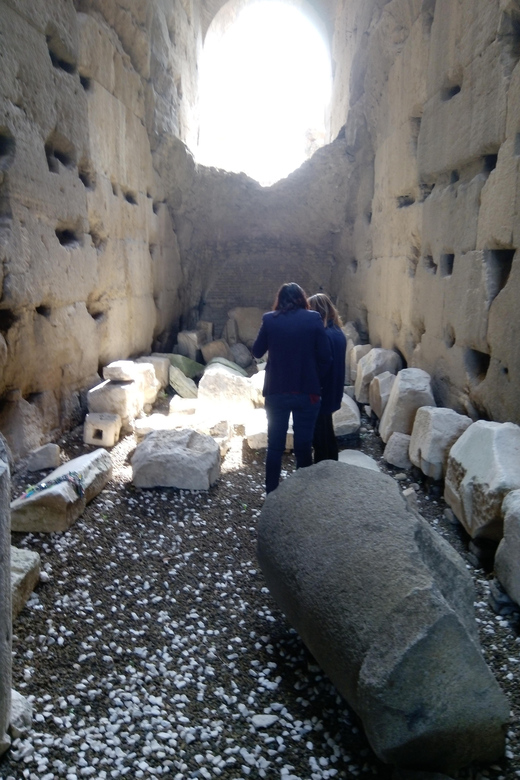
A few simple moves can make your tour smoother:
- Bring comfortable walking shoes. You’ll be on your feet for a moderate amount of walking plus underground stair sections.
- Have your camera ready, but expect flash photography restrictions.
- If you’re the type who hates rushing, remember the tour is structured to cover multiple major sites in about 2.5 hours. That pacing is part of the value, but you won’t have a full standalone “wander for an hour” experience.
- Use the tour’s small-group size to your advantage. If something doesn’t make sense—especially the burial rules in the Capuchins—ask. A good guide will translate it quickly.
And keep an eye on security checks at certain sites. It’s standard in Rome, but underground sites can add extra steps.
Should you book Bone Crypts and San Clemente?
I think you should book this tour if you want Rome’s under-the-surface side in one tight, well-paced package. Capuchin Crypts + San Clemente Underground is a rare pairing: one place turns death into art and meaning, the other turns time into a stacked architecture lesson. Add outside context for the Colosseum, Nero’s Domus Aurea, and gladiator training, plus Caravaggio, and you get a day that feels like more than the sum of its stops.
Skip it if you’re looking for a gentle, easy walk with zero stairs, or if death-themed art isn’t your thing. The subject matter is real, and the crypts don’t try to soften it.
If you do book, arrive early at Piazza Barberini, keep your shoes comfortable, and go in with curiosity. This is the kind of Rome experience that gives you stories you’ll still be thinking about on your flight home.
More Tours in Rome
- Vatican Museums, Sistine Chapel & St. Peter’s Basilica Tour
★ 4.3 · 73,970 reviews - Vatican Museums, Sistine Chapel & St Peter’s Basilica Guided Tour
★ 4.5 · 39,149 reviews - Rome: Colosseum, Palatine Hill and Roman Forum Guided Tour
★ 4.8 · 32,814 reviews - Rome: Guided Tour of Colosseum, Roman Forum & Palatine Hill
★ 4.7 · 27,897 reviews - Rome: Colosseum, Roman Forum and Palatine Hill Guided Tour
★ 4.5 · 23,903 reviews - Rome: Colosseum Arena Floor, Palatine & Forum Guided Tour
★ 4.5 · 20,180 reviews
More Tour Reviews in Rome
- Vatican Museums, Sistine Chapel & St. Peter’s Basilica Tour
★ 4.3 · 73,970 reviews - Vatican Museums, Sistine Chapel & St Peter’s Basilica Guided Tour
★ 4.5 · 39,149 reviews - Rome: Colosseum, Palatine Hill and Roman Forum Guided Tour
★ 4.8 · 32,814 reviews - Rome: Guided Tour of Colosseum, Roman Forum & Palatine Hill
★ 4.7 · 27,897 reviews - Rome: Colosseum & Forum with Audio Guide App -Optional Arena
★ 4.2 · 24,770 reviews - Rome: Colosseum, Roman Forum and Palatine Hill Guided Tour
★ 4.5 · 23,903 reviews
Further Below Rome
- Rome: Capuchin Crypts and Catacombs Tour with Transfers
★ 4.6 · 6,456 reviews - The Original Roman Crypts and Catacombs Tour with Transfers
★ 4.5 · 4,896 reviews - Rome: Catacombs of St. Callixtus Entry Ticket & Guided Tour
★ 4.6 · 3,037 reviews - Rome: Guided Roman Catacombs Tour with Transfers
★ 4.6 · 1,830 reviews - Rome: Catacombs Guided Tour with Transfer
★ 4.2 · 1,808 reviews - Rome EBike Tour: Appian Way, Catacombs & Roman Aqueducts
★ 5.0 · 1,766 reviews
Just added to our Rome reviews





Roman Catacombs & Crypts Tours, compared.
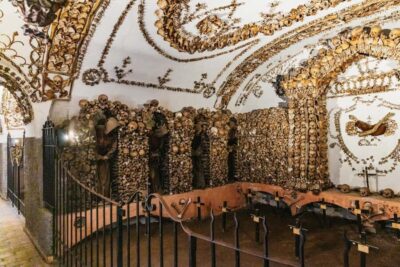 ★ 4.6Capuchin Crypts and Catacombs Tour with TransfersFrom $606,456 reviews
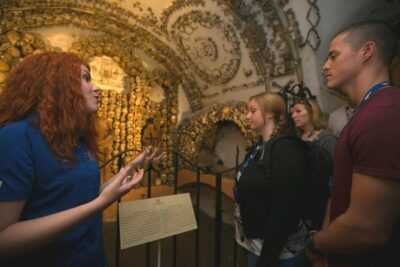 ★ 4.5The Original Roman Crypts and Catacombs Tour with TransfersFrom $664,896 reviews
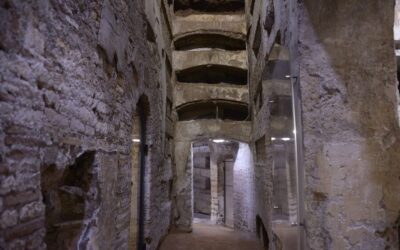 ★ 4.6Catacombs of St. Callixtus Entry Ticket & Guided TourFrom $163,037 reviews
 ★ 4.6Guided Roman Catacombs Tour with TransfersFrom $651,830 reviews
 ★ 4.2Catacombs Guided Tour with TransferFrom $541,808 reviews
 ★ 5.0Rome EBike Tour: Appian Way, Catacombs & Roman AqueductsFrom $1021,766 reviews
 ★ 4.6Catacombs and Capuchin Crypt Guided Tour with TransferFrom $411,606 reviews
 ★ 4.7St. Peter’s Basilica Priority Access Tour with Dome & CryptFrom $701,504 reviews
Browse the lists this tour appears in