
Reviewed · ROMAN CATACOMBS & CRYPTS TOURS
Appian Way & Aqueducts small group e-bike tour(catacombs & food)
Rome changes when you leave the center.
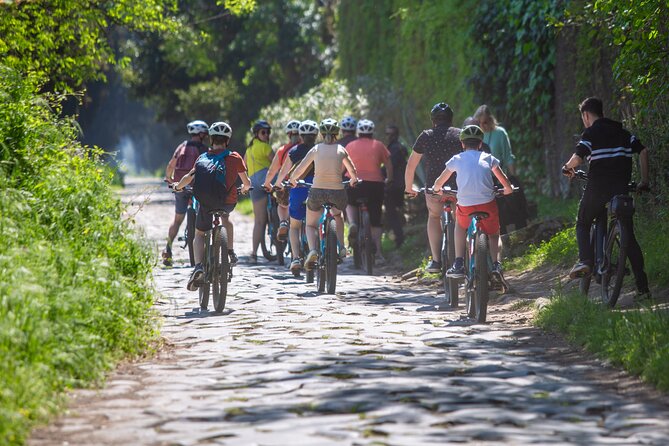
On this small-group Appian Way & aqueducts e-bike tour with catacombs and food, I love how the ride trades crowds for real stone roads and country air. I also like that you get a full catacombs visit plus ancient-water views in the same outing, so the history doesn’t stop when the bike ride ends.
One thing to take seriously: this is not a gentle cruise. You need solid bike comfort for cobbles, dirt patches, and short stretches of city traffic, and the most challenging moments come down to terrain and staying alert.
If you’re already the type who prefers doing something hands-on over another museum queue, you’ll probably have a great time here—especially with a max group size around 15 people and a guide who keeps everyone moving and safe.
In This Review
- Key takeaways before you pedal
- Appian Way by e-bike: why this route feels different
- Meeting at Via Marco Aurelio and rolling out of the city
- Porta San Sebastiano: imperial gates and a view from the walls
- Villa di Massenzio: where the last emperor’s life shows up in stone
- Passing ruins and the biggest ancient spa area
- Cecilia Metella: stopping for one of the Appian Way’s most striking monuments
- Mercato di Campagna Amica and Fonte Acqua Egeria: where the meal has a story
- Catacombe di San Callisto (and swaps): Christian origins underground
- Parco degli Acquedotti and Aqua Claudia: aqueducts at their most dramatic
- E-bike reality check: terrain and traffic you should plan for
- Price and value: what about $90.70 actually covers
- Should you book this Appian Way e-bike catacombs and food tour?
- FAQ
- Do I need experience riding an e-bike before this tour?
- What’s included in the tour price?
- How long is the tour?
- Which catacombs will I visit?
- Where does the tour start and end?
- Is this tour suitable for children?
Key takeaways before you pedal
- E-bike helps a lot, but you still need real cycling comfort for cobblestones and uneven ground
- Catacombs are a major anchor of the trip, timed for about an hour of visiting
- Roman countryside lunch or aperitivo is part of the value, not just a quick snack
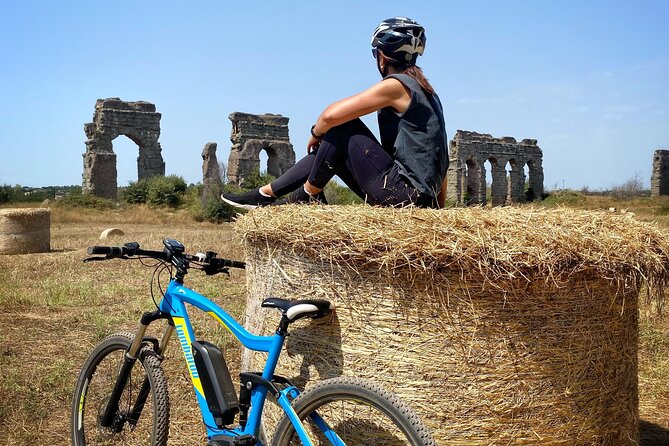
- Aqueduct park views hit hard, especially Aqua Claudia and Aqua Felix
- Small group feel: easier pacing, more attention, and fewer logistics headaches
Appian Way by e-bike: why this route feels different
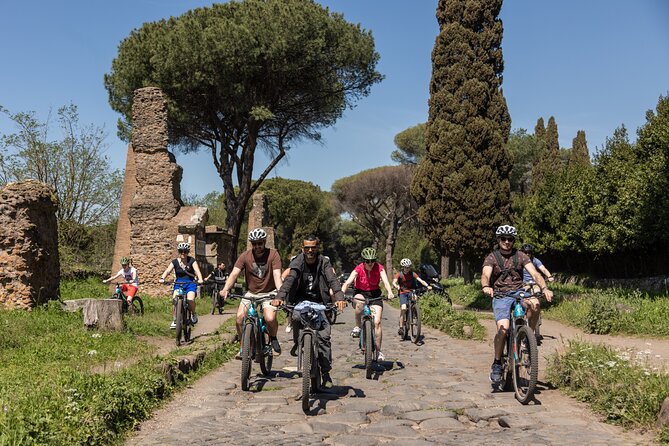
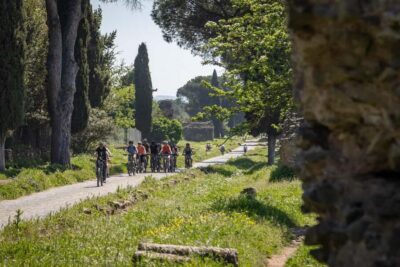
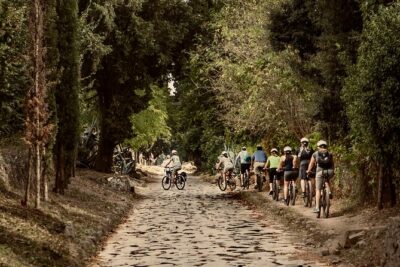
The Appian Way is one of those places where Rome stops feeling like a set of famous monuments and starts feeling like a lived-in place. On two wheels, you can actually move through the setting—gates, parks, ruins, and countryside—without spending your day hopping between far-apart sights on foot.
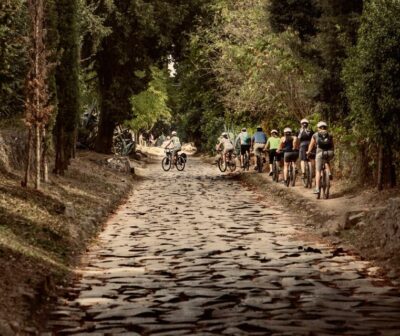
The e-bike matters more than it sounds. The assist makes long stretches more doable, but you’ll still feel the ground under you: pavement, cobblestones, and occasional rougher sections. That mix is why the best parts of the day don’t feel like a checklist.
You also get a practical rhythm: short sightseeing stops, then a ride that resets your attention. It’s a nice contrast after days of indoor museums or timed-entry stress.
Deeper underground: more crypts and catacombs
- Rome: Capuchin Crypts and Catacombs Tour with Transfers
★ 4.6 · 6,456 reviews - The Original Roman Crypts and Catacombs Tour with Transfers
★ 4.5 · 4,896 reviews - Rome: Catacombs of St. Callixtus Entry Ticket & Guided Tour
★ 4.6 · 3,037 reviews - Rome: Guided Roman Catacombs Tour with Transfers
★ 4.6 · 1,830 reviews
Meeting at Via Marco Aurelio and rolling out of the city
You’ll meet at Via Marco Aurelio, 30a and ride back to the same spot at the end. The tour runs around 5 hours, so it’s long enough to feel like a real excursion but not so long that you end up dragging yourself back into the city.
Expect a group pace designed for togetherness. The guides are used to keeping cyclists safe when the route briefly touches city traffic, and that’s one of the reasons many people rate the experience so highly.
One small planning note: start time can affect the vibe. In later afternoon slots (especially in cooler months), you may be dealing with dusk by the time you finish, so if you want full daylight for photos, an earlier departure is the smart move.
Porta San Sebastiano: imperial gates and a view from the walls
Your first stop is Porta San Sebastiano, one of the gates of the imperial city. You’ll also see the imposing Arch of Drusus, and there’s an option to get a view of the Appian Way from above at the Museum of the Roman Walls area.
This stop works because it sets the tone instantly. You get a sense of how Rome controlled movement in and out of the city, and the gate creates a dramatic “before and after” moment as you transition into the countryside.
Time-wise, you’re there briefly—about 10 minutes—so you’ll want your camera ready and your questions lined up for the guide. Since it’s free admission, it’s a low-risk stop that still feels cinematic.
Villa di Massenzio: where the last emperor’s life shows up in stone
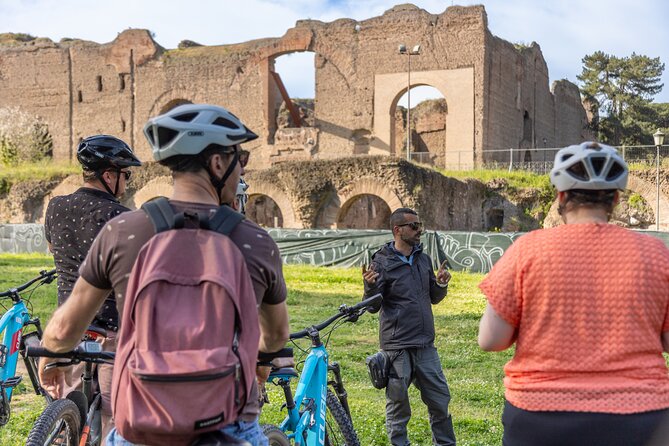
Next comes Villa di Massenzio, the grounds tied to the last emperor who spent his life in Rome. The feeling here is different from the gate: less dramatic, more atmospheric, like wandering through the outskirts of power.
You get roughly 15 minutes, enough time to notice the layout and absorb how the site sits within the larger Appian Way story. The villa also helps you understand that this area wasn’t only about travel and defense—it was tied to residences and rulers.
The drawback is the same as many archaeological stops: you’ll want to pay attention to what the guide points out, because the remains can look subtle if you’re just strolling alone.
Keep going down the Appian Way
Passing ruins and the biggest ancient spa area
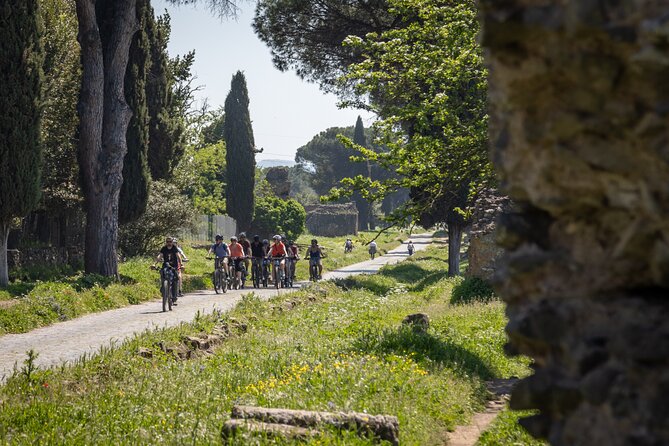
After leaving the city center, the tour heads to the ruins of what’s described as the largest spa in ancient Rome. This is one of those “blink and you miss it” moments for self-guided visitors, but on a guided ride you get the context for why it mattered.
You don’t get a long linger here; it’s more of a quick, purposeful stop. That can be a plus if you like momentum, but it’s not the place to expect a deep, slow museum-style pace.
If you’re the kind of person who enjoys infrastructure—water, movement, public spaces—this short segment can be a highlight because spas connect daily life to empire-scale planning.
Cecilia Metella: stopping for one of the Appian Way’s most striking monuments
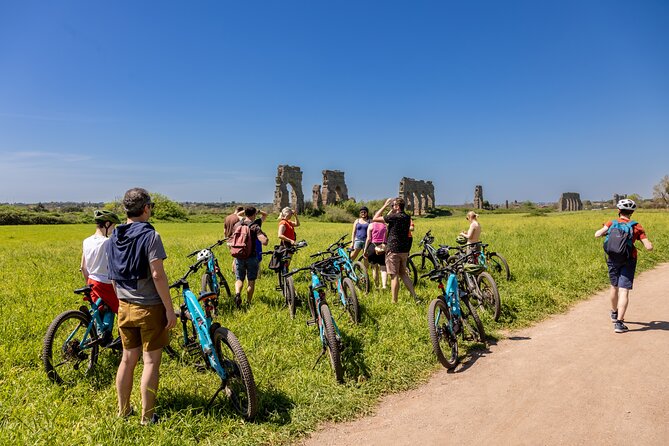
One of the most memorable landmarks on the route is the Mausoleum of Cecilia Metella. It’s a big visual anchor right along the Appian Way, and it’s exactly the sort of thing you’d probably drive past or skip if you only toured the major downtown sights.
The stop is brief, but it’s timed well: you’ve been riding long enough to feel the change in pace, and then you get a solid moment of stillness to take it in. Even better, the setting makes it feel like you’re inside the ancient corridor rather than outside it.
If you care about photos, this is a good moment to pull ahead for a couple of minutes—as long as you don’t break the group’s flow. The guides generally keep traffic controlled where needed, but you’ll still want to stay close.
Mercato di Campagna Amica and Fonte Acqua Egeria: where the meal has a story
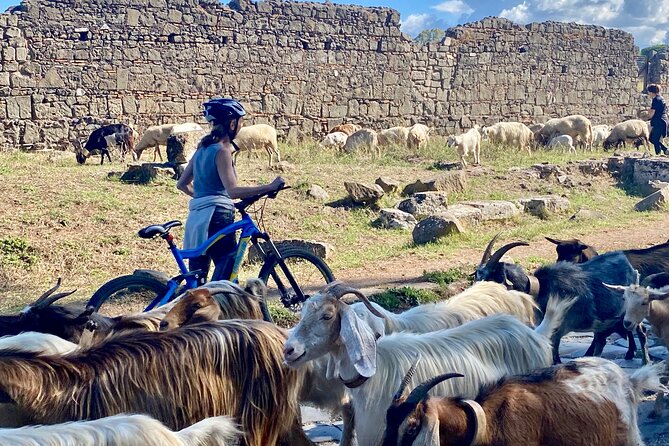
The food break happens at Mercato di Campagna Amica – Fonte Acqua Egeria, described as a water bottling plant that local Romans use to buy mineral water. That matters because the site isn’t just a backdrop for lunch—it’s tied to everyday Roman habits and the water theme running through the rest of the tour.
You’ll typically have about 50 minutes here. It’s a long-enough break to reset after cycling, and the setting gives you a chance to sit without feeling like you’re stuck at a tourist trap.
Dietary options are built in: there’s a vegetarian option and a gluten-free option for lunch or aperitivo. One review mentioned hearty items like chicken thighs, ribs, sausages, salad, burrata, and bread, with coffee options. At the same time, not every lunch is equal in quality, so I’d treat the meal as a satisfying regional break, not a fine-dining event.
Practical tip: do a bathroom break before the ride if you can. Facilities near the food stop are not always what you’d hope for after a long underground segment in the catacombs area.
Catacombe di San Callisto (and swaps): Christian origins underground
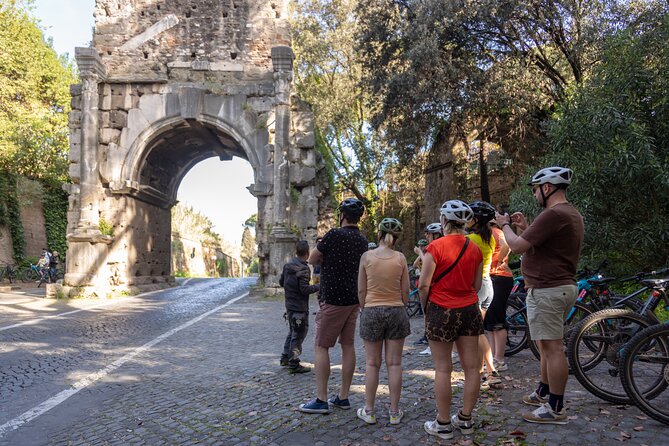
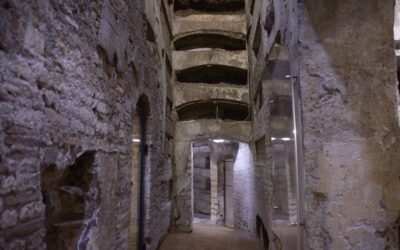
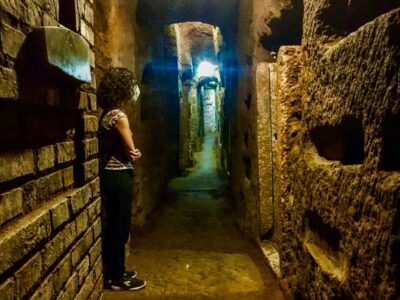
Catacombs are the emotional center of the trip. You’ll visit Catacombe di San Callisto in many schedules, and the site is presented as an early example of a Christian cemetery and church. The visit lasts about 1 hour, and it’s included.
There are a few “if this, then that” rules you should know up front:
- On Christmas, Easter, and January 1, the catacombs are closed.
- Wednesdays switch things up: the Saint Callixtus catacombs are closed, so the tour goes to Catacombe di San Sebastiano.
- If those are also closed, the plan can shift to Catacombe di Domitilla.
That’s a lot of switching, but it’s common for Rome. The key is you still get a catacombs experience—just in the closest available option.
One detail worth respecting: the catacombs part can involve a different set of logistics at the site. In other words, even if your bike group is small, underground visits can feel larger and more formal than the ride above ground. Still, if you want a Rome experience that’s not just above-ground sightseeing, this is the part that delivers.
Parco degli Acquedotti and Aqua Claudia: aqueducts at their most dramatic
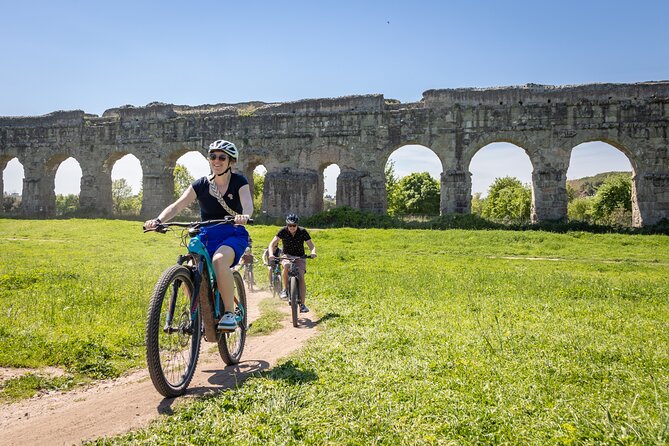
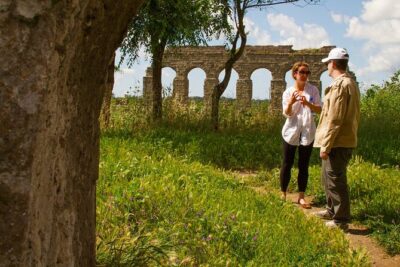
The final “wow” phase is the Parco degli Acquedotti / Parco Archeologico dell’Appia Antica. Here you see major remains of the Aqua Claudia and Aqua Felix—ancient water infrastructure that looks even more impressive when you’re not fighting street crowds.
You’ll have around 20 minutes in this area. That’s enough time to walk a bit, take photos from key viewpoints, and understand how the aqueduct network shaped the city. It’s also a good moment to recharge mentally before you bike back.
This stop pairs well with what you saw earlier. By now you’ve already touched gates, villas, tombs, and underground history. Aqueducts pull it all together as a story about how Rome moved water, people, and power.
E-bike reality check: terrain and traffic you should plan for
Even though the tour emphasizes that you don’t need prior e-bike experience, you do need good cycling skill. The tour is not recommended if you don’t know how to ride a bike, and it’s listed as requiring moderate physical fitness.
Here’s what that means on the ground:
- Expect cobblestones and uneven surfaces that demand attention.
- Expect short periods of city traffic where you must stay focused and follow the guide closely.
- Expect to keep moving and not stop constantly for sightseeing.
Many guides in the reviews (like Sylvia, Felipe, Bruno, and Iman) are praised for safe, patient riding management—especially when someone in the group is newer to biking. That’s reassuring, but it doesn’t eliminate the need for personal confidence.
If you’re deciding whether this tour is for you, I’d use this test: can you ride comfortably at a steady pace on rough pavement without panicking? If the answer is no, choose a different Rome experience and save yourself stress.
Price and value: what about $90.70 actually covers
At about $90.70 per person, this tour feels like a value when you break down what’s included. You get bicycle use, helmets, bottled water, and a live guide. You also get the big-ticket history piece: catacombs admission (when open) plus a meal (lunch in the morning option or an aperitivo in the afternoon option, depending on the schedule).
That’s a lot of services bundled into one outing, which matters in Rome where transportation time can quietly eat your day.
The small-group size (max around 15) also pushes the value in your favor. More attention, safer pacing, and fewer waiting moments between stops tend to make the whole experience feel smoother.
Potential downside on value: if the lunch doesn’t match your expectations, that’s the one included component that can feel uneven. Still, the main value driver is the combination—ride + catacombs + aqueducts—handled by a guide so you don’t have to piece it together yourself.
Should you book this Appian Way e-bike catacombs and food tour?
I’d book this if you want a Rome day that mixes real riding with real history you can’t easily reproduce on your own—especially if you’re already past the first big “wow” phase and want something more specific.
You should think twice if:
- you’re not comfortable cycling on rough, uneven ground
- you hate surprises in scheduling (catacomb sites can swap based on closures)
- you’re expecting a calm, fully flat ride with minimal traffic exposure
If you fit the sweet spot—confident cyclist, history-leaning, and hungry for an outdoor Roman day—this tour is one of the more satisfying ways to see the Appian Way corridor without turning your day into a transit marathon.
FAQ
Do I need experience riding an e-bike before this tour?
The tour says you can hop on with no prior e-bike experience required, but it also states you need good cycling skills and it is not recommended if you do not know how to ride a bike. So you should be comfortable on a bicycle first; the e-bike assist helps, but the route still includes varied terrain.
What’s included in the tour price?
The tour includes bicycle use, helmets, bottled water, a live guide, and either lunch (morning tour) or aperitivo (afternoon tour with catacombs and food option). It also includes the catacombs visit except on certain closed dates, and it offers vegetarian and gluten-free options for the meal.
How long is the tour?
The duration is about 5 hours. It includes multiple stops and about an hour for the catacombs visit.
Which catacombs will I visit?
It’s typically Catacombe di San Callisto, but on Wednesdays it’s closed so the tour goes to Catacombe di San Sebastiano. If both Saint Callixtus and Saint Sebastian are closed, the tour goes to Catacombe di Domitilla. The catacombs are closed on Christmas, Easter, and January 1.
Where does the tour start and end?
The meeting point is Via Marco Aurelio, 30a, 00184 Roma RM, Italy. The tour ends back at the same meeting point.
Is this tour suitable for children?
No. It is not accessible for children under 12 years.
Pedal Through More of Rome
- Rome EBike Tour: Appian Way, Catacombs & Roman Aqueducts
★ 5.0 · 1,766 reviews - Rome: Top Highlights & Hidden Gems Tour by Cannondale E-Bike
★ 4.9 · 1,760 reviews - Rome: Appian Way & Aqueducts E-Bike Tour (Catacombs & Food)
★ 4.9 · 1,498 reviews - Rome: Appian Way, Catacombs, & Roman Aqueducts E-bike Tour
★ 4.9 · 1,421 reviews - Rome City Small Group Bike Tour with quality Cannondale EBike
★ 5.0 · 1,380 reviews - Rome by Night – Ebike Small Group Tour – Food and Wine (Option)
★ 5.0 · 1,275 reviews
The Appian Way, Continued
- Rome EBike Tour: Appian Way, Catacombs & Roman Aqueducts
★ 5.0 · 1,766 reviews - Rome: Appian Way & Aqueducts E-Bike Tour (Catacombs & Food)
★ 4.9 · 1,498 reviews - Rome: Appian Way, Catacombs, & Roman Aqueducts E-bike Tour
★ 4.9 · 1,421 reviews - Rome Underground: Catacombs Tour, Aqueducts and Appian Way
★ 5.0 · 1,007 reviews - Appian Way Aqueducts Bike Tour (Catacombs & Lunch Option)
★ 5.0 · 975 reviews - Rome: Appian Way, Aqueducts, and Catacombs Tour
★ 4.7 · 942 reviews
Further Below Rome
- Rome: Capuchin Crypts and Catacombs Tour with Transfers
★ 4.6 · 6,456 reviews - The Original Roman Crypts and Catacombs Tour with Transfers
★ 4.5 · 4,896 reviews - Rome: Catacombs of St. Callixtus Entry Ticket & Guided Tour
★ 4.6 · 3,037 reviews - Rome: Guided Roman Catacombs Tour with Transfers
★ 4.6 · 1,830 reviews - Rome: Catacombs Guided Tour with Transfer
★ 4.2 · 1,808 reviews - Rome EBike Tour: Appian Way, Catacombs & Roman Aqueducts
★ 5.0 · 1,766 reviews
Just added to our Rome reviews



Roman Catacombs & Crypts Tours, compared.
 ★ 4.6Capuchin Crypts and Catacombs Tour with TransfersFrom $606,456 reviews
 ★ 4.5The Original Roman Crypts and Catacombs Tour with TransfersFrom $664,896 reviews
 ★ 4.6Catacombs of St. Callixtus Entry Ticket & Guided TourFrom $163,037 reviews
 ★ 4.6Guided Roman Catacombs Tour with TransfersFrom $651,830 reviews
 ★ 4.2Catacombs Guided Tour with TransferFrom $541,808 reviews
 ★ 5.0Rome EBike Tour: Appian Way, Catacombs & Roman AqueductsFrom $1021,766 reviews
 ★ 4.6Catacombs and Capuchin Crypt Guided Tour with TransferFrom $411,606 reviews
 ★ 4.7St. Peter’s Basilica Priority Access Tour with Dome & CryptFrom $701,504 reviews
Browse the lists this tour appears in