
Reviewed · WORKSHOPS
Ancient Art Workshop: Fresco
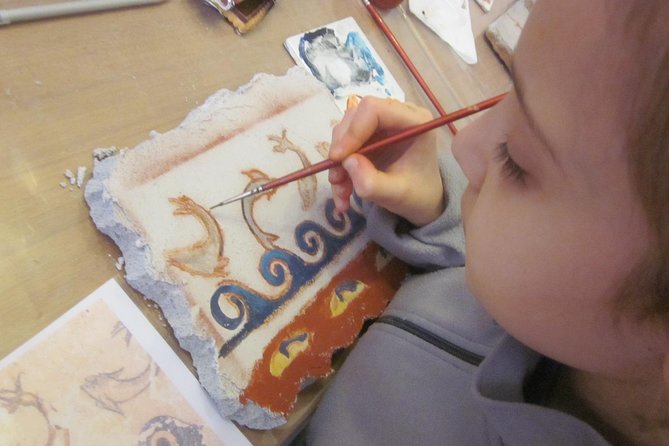
Fresco painting makes Rome feel hands-on. In a studio on the Appian Way, you’ll recreate an ancient-style subject using materials like those from the past, then leave with your own finished piece you can take home right away.
I really like that the class is built for real results, not just watching art happen. You’re using natural pigments and colored marble mosaic pieces, and the workshop aims at a recognizable fresco or mosaic look you can actually see and keep.
One thing to factor in: this is a small, teacher-led studio experience. That means there is always a slim chance of a last-minute change if a teacher can’t make it, so don’t schedule it as your only plan on a tight day.
In This Review
- Key Things to Know Before You Go
- Rome’s Appian Way Studio: Why This Fresco Class Feels Special
- Choosing Your Design: Sistine Chapel Ideas and Roman Floor Details
- Materials That Match the Traditional Look: Pigments, Plaster, and Marble Tiles
- The Two-Hour Flow: What Happens From Start to Finish
- Fresco Technique, Plain Language: Bonding, Marks, and Color Mixing
- Your Instructor Matters: Cecelia and Nina’s Teaching Style
- Take-Home Artwork: A Souvenir You’ll Actually Use
- Who Should Book This Fresco Workshop in Rome
- Price and Value: $246.90 per Group for Up to Two
- Getting There: Appian Way Location and Easy Metro Access
- What If Plans Change: Late Cancellations and Your Best Backup Move
- Should You Book the Ancient Art Workshop: Fresco?
- FAQ
- How long is the fresco workshop in Rome?
- Is this a private experience?
- What is the group size for this class?
- Where do we meet for the workshop?
- What languages are available?
- What’s included in the price?
- What is not included?
- Does the workshop provide a ticket you can use on your phone?
- Can I bring a service animal?
- What is the cancellation window for a full refund?
Key Things to Know Before You Go
- Take-home artwork immediately so you don’t end up with a souvenir you have to ship later
- Natural pigments and colored marble tiles that match the traditional approach
- Private format for your group (up to 2 participants), with close guidance
- Works for beginners and kids, with step-by-step support
- English instruction available, plus other languages listed by the provider
- Appian Way location near Metro A which keeps logistics simpler than you might expect
Rome’s Appian Way Studio: Why This Fresco Class Feels Special
Rome is amazing when you slow down and make something with your own hands. This workshop takes you to an art studio on the Appian Way, a calmer corner of the city than the historic center chaos. It’s a great match for a hot afternoon break too, since you’re indoors and focused on one creative project.
What makes this class feel different from a typical “craft activity” is the materials and mindset. You’re not just painting on paper. You’re doing work that connects to the way frescoes are built—how color bonds and why traditional techniques lasted for centuries. And yes, it’s approachable. The workshop is suitable for adults and children, so it works when you’ve got mixed ages in your group.
The other practical win: it’s offered in English and several other languages, so you’re less likely to feel lost if your Italian is rusty. And because it’s a private experience, you get more direct help when you hit a problem (like getting the color mix you expected).
Worth a look next to this Rome booking:
- 3 in 1 Cooking Class near Navona: Fettuccine, Ravioli & Tiramisu
★ 5.0 · 7,376 reviews - Rome: Pasta & Tiramisu Class with Fine Wine by the Vatican
★ 4.9 · 4,852 reviews - Rome: Pasta Making Class with Wine, Limoncello, and Dessert
★ 4.9 · 3,177 reviews - Rome Cooking Class: Make Pasta and 3 Spritz Cocktails
★ 5.0 · 2,937 reviews
Choosing Your Design: Sistine Chapel Ideas and Roman Floor Details
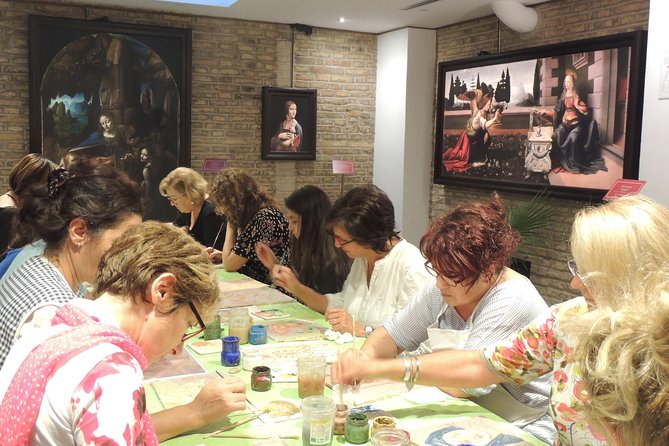
You start by choosing what you’ll reproduce. You can pick a subject in the style of a Michelangelo Sistine Chapel image (or a detail inspired by it), or choose something based on a Roman floor detail. The point is simple: you get a clear reference, and that reference gives your project shape.
This matters more than it sounds. When you have a defined subject, you spend your effort on technique instead of staring at a blank space. Fresco work rewards patience and repetition—those are easier when you’re following a specific plan.
You’ll also get guidance on how to transfer marks and build the image step by step. In plain terms, they’re helping you “map” your subject so you don’t waste time trying to reinvent layout from scratch.
Materials That Match the Traditional Look: Pigments, Plaster, and Marble Tiles
Here’s the part that makes the workshop feel legit: the class uses natural pigments and traditional-style components. Fresco isn’t about shiny, modern poster paint. The idea is to use mineral-based color and apply it in a way that bonds to the prepared surface.
From the way instructors explain it, the process centers on how paint connects to plaster to form a long-lasting layer. One instructor highlighted how the paint bonds to the plaster to create a lasting, waterproof effect. Another mentioned the sand used to make the plaster and minerals used for pigments. Even if you don’t remember every technical detail, you’ll come away understanding the “why” behind what your hands are doing.
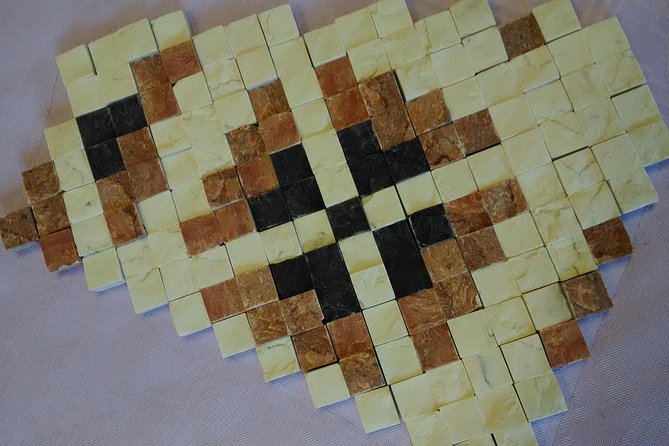
For mosaic elements, the class uses colored marble tiles. That’s a big difference from cheap craft mosaics. Marble carries weight and presence, and it changes how you place pieces and how the final image reads.
The Two-Hour Flow: What Happens From Start to Finish
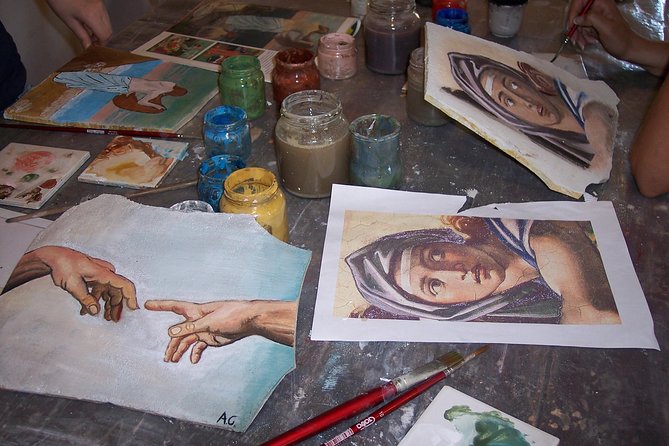
The session runs about 2 hours, and it’s structured so you get both instruction and time to finish. Because it’s a private group setup, you’re not waiting your turn in a crowded classroom.
A typical flow looks like this:
- You meet at the studio, get oriented, and choose your subject.
- The instructor walks you through the core fresco/mosaic steps and demonstrates key technique points.
- You start working on your own piece, with hands-on help when you need it.
- You keep moving until your design is complete enough to take home immediately.
The most useful moments tend to be the “how to do it” parts: transferring the image cleanly, blending color in the way the instructor recommends, and getting placement right so the artwork looks coherent. Many people find the technique easier than expected because the guidance is step-by-step, not vague.
Also, this timing is a practical sweet spot. It’s long enough to learn how the process works, but short enough that it won’t swallow an entire day.




Fresco Technique, Plain Language: Bonding, Marks, and Color Mixing
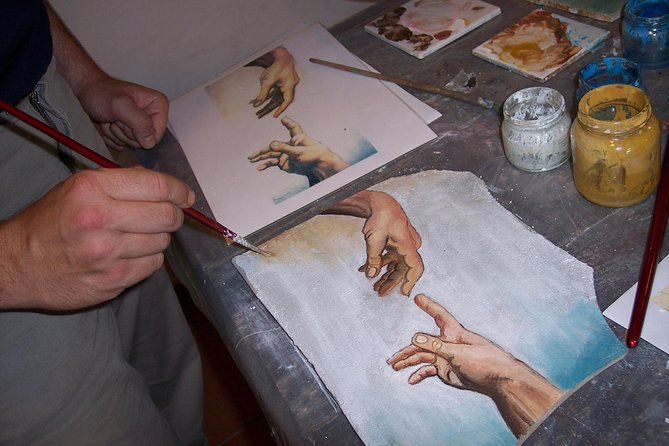
Even if you’re not an artist, you can succeed here. The instruction focuses on repeatable actions rather than talent. And the explanation style matters. Instructors named in past sessions, like Cecelia and Nina, are described as patient and encouraging, with clear directions and strong English.
You’ll likely hear talk about transferring marks, applying pigment, and why the paint behaves differently when it’s meant to bond to plaster. One instructor discussed how the process creates a lasting layer, which is exactly the kind of context that makes the technique feel meaningful instead of random.
Color mixing is another big focus. If you’ve ever tried to copy a painting and ended up with the wrong shade, you’ll appreciate the practical tips. The goal is not to match Michelangelo’s palette perfectly. The goal is to get you to a finished piece that looks right and reads as fresco or mosaic style.
Your Instructor Matters: Cecelia and Nina’s Teaching Style
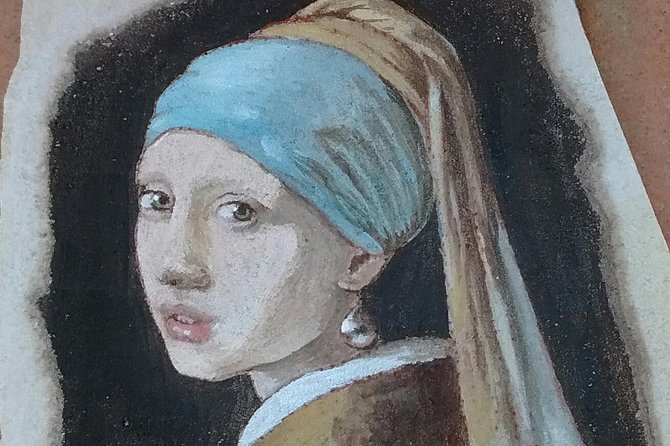
This is the kind of workshop where your instructor changes the whole experience. People using this class in past seasons described instructors as:
- Patient and attentive, even when participants were brand-new to art
- Able to explain the technique clearly, including the “restoration specialist” angle some instructors bring
- Willing to help you choose the right project and keep you on track
Cecelia is described as sweet, attentive, and fun, with English strong enough to guide you through the process and even help you with a bit of Italian along the way. Nina is described as upbeat, personable, and very patient, with helpful guidance tied to restoration knowledge and fresco materials.
That teaching approach pays off fast. You spend less time stuck, and you spend more time actually finishing something you’re proud to carry out of the studio.
Take-Home Artwork: A Souvenir You’ll Actually Use
The best souvenirs are the ones with a memory attached. Here, you take your work away immediately, so the piece becomes a true Rome artifact, not something you forget on a shelf after the trip.
Because you’re using materials designed to replicate fresco and mosaic results, your final piece has texture and weight in the way typical “paint-and-pray” crafts don’t. Marble tile placement (when included in your chosen project) also gives your art a tactile quality you can feel even after you get home.
Practical tip: treat it like a delicate artwork. Don’t toss it into the bottom of a bag where it gets crushed. If you’re traveling with kids or multiple stops planned, plan a safe way to transport it so it stays intact.
Who Should Book This Fresco Workshop in Rome
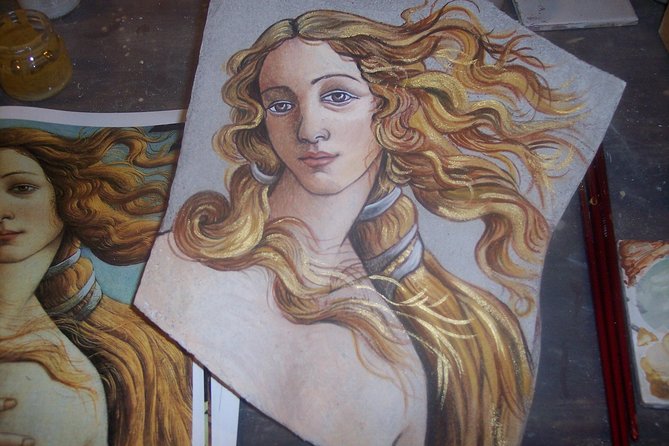
This workshop fits a lot of travel styles.
Families tend to love it because it’s suitable for children and adults, and the step-by-step guidance helps younger participants stay engaged. One parent pairing a child with an adult noted that the instruction worked well for an 8-year-old, with the kid enjoying it a lot.
Beginner art lovers also do well. Multiple accounts describe people who didn’t think of themselves as artists still turning out impressive results with the support provided. The workshop is structured so you can follow along, make decisions, and still finish within the time.
Couples and friends are a strong fit too, especially since it’s private for your group and up to 2 participants. If you’re traveling with a partner, sibling, or a second adult who will actually paint, this is an efficient way to get real attention.
If you’re the kind of traveler who loves museum masterpieces but wants to do something physical instead of just looking, you’ll probably find this a very satisfying use of time.
Price and Value: $246.90 per Group for Up to Two
The price is $246.90 per group (up to 2) for about 2 hours. That might sound steep at first if you compare it to casual crafts back home. But value is better when you look at what’s included.
All materials are included: colors, brushes, marble tiles, and what you need to complete your chosen project. You’re also getting private instruction rather than learning alongside a larger class where attention is diluted. Add the take-home artwork, and it becomes less like a ticket and more like paying for a guided art session plus a finished souvenir.
A practical way to judge if it’s worth it for you:
- If you’d pay to have materials and an expert show you what to do, this feels reasonable.
- If you only want a quick “look and touch” without finishing anything, a shorter or cheaper activity might fit better.
For couples, parent-child groups, and anyone who likes doing one meaningful thing each day, the price tends to make sense.
Getting There: Appian Way Location and Easy Metro Access
You meet at Bsocial, Via del Commercio 12 G, 00154 Roma. The workshop ends back at the same point, so you don’t have to plan a second transfer.
The studio is on the Appian Way and is described as easily reachable by Metro A. That’s helpful because you can arrive without complicated navigation, then concentrate on the class instead of the logistics.
Since it runs through the day, it’s also easy to slot in. The hours are listed as Monday through Friday 10:00 AM to 6:00 PM, within the overall season window provided by the operator. If you want an escape from Rome’s mid-day heat, this timing is a very workable option.
What If Plans Change: Late Cancellations and Your Best Backup Move
Even with good planning, small studios sometimes face human issues. One past instance mentioned a cancellation happening about an hour before class time. That’s not something you can control.
The smart traveler move is to treat this as a strong plan, but not your sole anchor. If you can, keep one flexible block in your day for changes. And since refunds are available when you cancel early enough, you can also reduce risk by booking when your schedule is stable.
Should You Book the Ancient Art Workshop: Fresco?
Book it if you want a hands-on Rome day that produces a real take-home work, not just photos. The combination of natural pigments, marble mosaic tiles, and private guidance makes this class feel authentic in a practical way. It’s also a strong choice for mixed skill levels and family groups, especially if you’re excited by fresco technique and Roman art details.
Skip it only if you dislike structured projects, want something super casual with no commitment to finishing, or you’re trying to squeeze in the class as the single risk point of an already tight itinerary. In that case, add a backup plan so your day won’t collapse if timing changes.
If you want Rome in your hands for a couple of hours, this is one of the clearer ways to do it.
FAQ
How long is the fresco workshop in Rome?
The workshop runs for about 2 hours.
Is this a private experience?
Yes. It’s a private tour/activity, and only your group participates.
What is the group size for this class?
The price is per group for up to 2 participants.
Where do we meet for the workshop?
The meeting point is Bsocial, Via del Commercio 12 G, 00154 Roma RM, Italy.
What languages are available?
The workshop is offered in English (and the provider indicates it can be carried out in Italian, English, French, German, and Spanish).
What’s included in the price?
All materials needed for the workshop are included, including colors, brushes, and marble tiles.
What is not included?
Transportation, food, and drinks are not included.
Does the workshop provide a ticket you can use on your phone?
Yes, it offers a mobile ticket.
Can I bring a service animal?
Service animals are allowed.
What is the cancellation window for a full refund?
You can cancel up to 24 hours in advance of the experience for a full refund.
More Workshops in Rome
- 3 in 1 Cooking Class near Navona: Fettuccine, Ravioli & Tiramisu
★ 5.0 · 7,376 reviews - Rome: Pasta & Tiramisu Class with Fine Wine by the Vatican
★ 4.9 · 4,852 reviews - Rome: Pasta Making Class with Wine, Limoncello, and Dessert
★ 4.9 · 3,177 reviews - Rome Cooking Class: Make Pasta and 3 Spritz Cocktails
★ 5.0 · 2,937 reviews - Rome: 3-in-1 Fettuccine, Ravioli, and Tiramisu Cooking Class
★ 4.9 · 2,704 reviews - Rome: Fettuccine Pasta Cooking Class in Rome’s City Center
★ 4.8 · 2,414 reviews
More Tour Reviews in Rome
- Vatican Museums, Sistine Chapel & St. Peter’s Basilica Tour
★ 4.3 · 73,970 reviews - Vatican Museums, Sistine Chapel & St Peter’s Basilica Guided Tour
★ 4.5 · 39,149 reviews - Rome: Colosseum, Palatine Hill and Roman Forum Guided Tour
★ 4.8 · 32,814 reviews - Rome: Guided Tour of Colosseum, Roman Forum & Palatine Hill
★ 4.7 · 27,897 reviews - Rome: Colosseum & Forum with Audio Guide App -Optional Arena
★ 4.2 · 24,770 reviews - Rome: Colosseum, Roman Forum and Palatine Hill Guided Tour
★ 4.5 · 23,903 reviews
Just added to our Rome reviews





Workshops, compared.
 ★ 5.03 in 1 Cooking Class near Navona: Fettuccine, Ravioli & TiramisuFrom $837,376 reviews
 ★ 4.9Pasta & Tiramisu Class with Fine Wine by the VaticanFrom $414,852 reviews
 ★ 4.9Pasta Making Class with Wine, Limoncello, and DessertFrom $483,177 reviews
 ★ 5.0Rome Cooking Class: Make Pasta and 3 Spritz CocktailsFrom $992,937 reviews
 ★ 4.93-in-1 Fettuccine, Ravioli, and Tiramisu Cooking ClassFrom $812,704 reviews
 ★ 4.8Fettuccine Pasta Cooking Class in Rome’s City CenterFrom $462,414 reviews
 ★ 5.0Become a Masterchef in Rome: Pasta, Ravioli and Tiramisù ClassFrom $472,156 reviews
 ★ 4.9Fettuccine & Tiramisù: Cooking Class with Wine & LimoncelloFrom $662,103 reviews
Browse the lists this tour appears in