
Reviewed · ROMAN CATACOMBS & CRYPTS TOURS
Walking Tour at Catacombs as the Coolest Underground
Rome’s catacombs do not feel like dusty history. This 2-hour underground walk at Catacombe di Domitilla keeps things moving with an English-speaking guide and a smart story arc, from the first Christian communities to the burial world beneath the city. I especially love the cool 16°C air that makes a summer day feel instantly calmer, while still giving you something real to look at.
My second favorite part is how the tour links symbols, places, and people instead of listing dates. You’ll see the underground spaces used for worship and burial—plus frescoes tied to key Christian scenes—and it all gets brought to life with an energetic guide (Sean, in one of the most praised performances). One drawback to keep in mind: this is an underground route, so plan on cool temperatures and bring a layer even if Rome is hot above ground.
In This Review
- Key things I’d bet on before you go
- Underground and oddly personal: what this tour is really like
- Finding your way: start point and getting there without stress
- Stop 1 at Catacombe di Domitilla: garden intro and the 16°C shock
- The semi-underground basilica: martyrs, secret signs, and worship under pressure
- The 17 kilometers beneath Rome: tunnels, burials, and the fresco walls
- Aquiferium and Refigerium: cleansing and meals for the dead
- Cubiculum of the Fossors: the gravediggers’ union tomb
- Reading tombstones and learning to see what you’re looking at
- The guide matters: why Sean’s style can make or break it
- Price and value: is $57.19 a fair deal?
- Who should book this tour (and who might not)
- Comfort tips: what to wear for the cool underground route
- Final verdict: should you book Catacombe di Domitilla underground?
- FAQ
- How long is the Catacombe di Domitilla walking tour?
- Where does the tour start?
- Is the tour offered in English?
- Is the admission ticket included?
- Can I bring a stroller or baby carrier?
- Is this tour dependent on weather, and is cancellation free?
Key things I’d bet on before you go
- Small group size (max 12) keeps the pace human in tight underground spaces
- 16°C underground temps make it comfortable when Rome is sweltering
- Only semi-underground Basilica in Rome, tied to martyrs and secret early worship
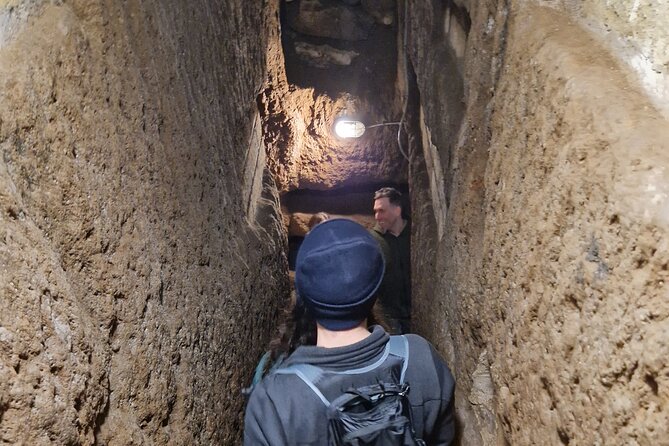
- 17 kilometers of tunnels with about 150,000 burials across four levels
- Ritual spaces like the Aquiferium cleansing area and the Refigerium meals for the dead
- Fresco highlights including an ancient Last Supper depiction and apostle scenes tied to the tour
Underground and oddly personal: what this tour is really like
Catacombe di Domitilla is not just a look-and-photos stop. It’s laid out like a guided story you can follow with your feet, moving through different zones where early Christians (and the wider Roman burial culture) lived, worried, prayed, and were ultimately laid to rest.
What makes this experience worth your time is the mix of practical viewing and meaningful context. You aren’t only told what to see. You’re taught why it mattered—especially when Christianity was illegal and people had to be careful.
You’ll also appreciate the format. The tour runs about 2 hours, with a clear rhythm: a start with background, then the semi-underground basilica, then a long block in the tunnels where the big visuals and burial-room details come thick and fast.
Deeper underground: more crypts and catacombs
- Rome: Capuchin Crypts and Catacombs Tour with Transfers
★ 4.6 · 6,456 reviews - The Original Roman Crypts and Catacombs Tour with Transfers
★ 4.5 · 4,896 reviews - Rome: Catacombs of St. Callixtus Entry Ticket & Guided Tour
★ 4.6 · 3,037 reviews - Rome: Guided Roman Catacombs Tour with Transfers
★ 4.6 · 1,830 reviews
Finding your way: start point and getting there without stress
The tour meets at Via delle Sette Chiese, 282, 00147 Roma RM, Italy, and the activity ends back at the same meeting point. That round-trip setup is helpful because it means you’re not left scrambling in a maze of streets when you’re done underground.
It’s also designed for real travel days. This is a mobile ticket experience, in English, and it’s noted as near public transportation, so you can build it into a normal sightseeing plan rather than treating it like a whole separate logistics project.
Stop 1 at Catacombe di Domitilla: garden intro and the 16°C shock
The tour begins with a brief introduction before heading underground. The key immediate perk is the temperature: you’ll drop into a cooler zone around 16°C, which is genuinely noticeable and makes the rest of the route feel more manageable.
This first stretch is where your guide sets the framework. You’ll learn the “genesis” arc for Christianity and how it shifted from the surrounding world of ancient Roman pagan beliefs into a society that eventually shaped what later became Catholic Rome. It’s not just theology. You’ll also connect it to burial practices and the everyday routines of the period.
And there’s a theme that becomes crucial as the tour progresses: persecution. You’ll hear how Christian persecution affected behavior, social risk, and how people adapted when they couldn’t worship openly.
Practical note: because this is the entry phase, it helps to arrive ready to listen. Even though you’ll be underground, the explanation still matters for understanding what the symbols and spaces mean later.
The semi-underground basilica: martyrs, secret signs, and worship under pressure
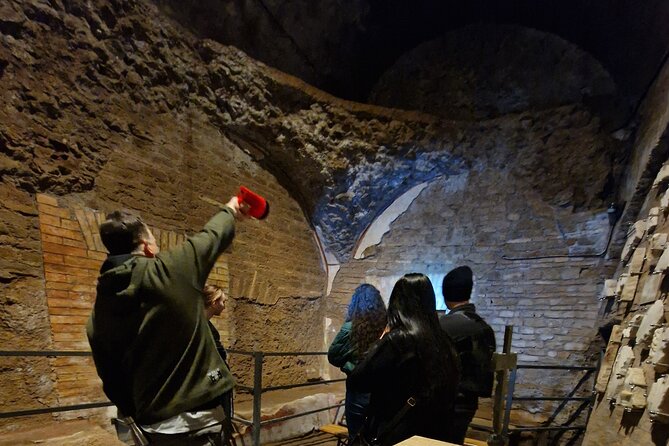
Next you enter the semi-underground basilica dedicated to Nereus and Achilleus, along with Saint Petronilla, identified here as the daughter of Saint Peter. The tour emphasizes that this is the only semi-underground Basilica in Rome, which gives you a concrete reason to treat it as more than a quick stop.
The guide then frames the location in the context of danger. The basilica is described as being built during a time when Christianity was illegal, so it becomes a real lens on secrecy. You’ll learn about the secret signs and symbols early Christians used, how they avoided detection, and where/how they worshipped in hidden ways.
What I like about this part is that it turns the term secret into something specific. You’re not just told people hid. You’re walked through the logic of symbols and how a community could stay connected while staying out of trouble.
You’ll also get stories tied to people and power in ancient Rome—who they were, what happened to them, and how those fates influenced the society that came after. It’s a strong section if you like learning history as human stakes, not as a timeline.
Worth a look next to this Rome booking:


The 17 kilometers beneath Rome: tunnels, burials, and the fresco walls
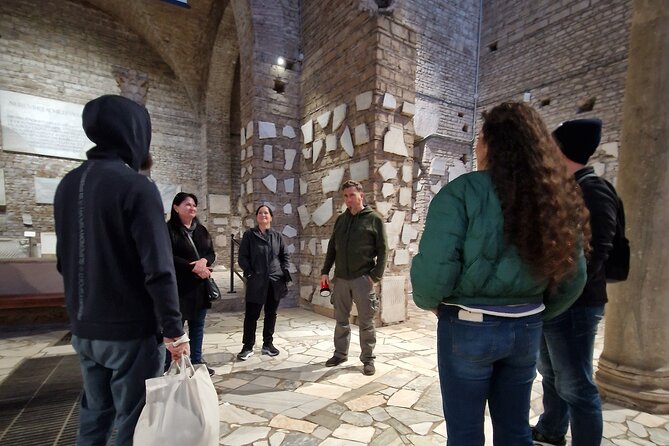
Then comes the longest part of the experience. You move into the tunnels described as 17 kilometers of underground passages, spread across four underground levels, with around 150,000 burials. That number can feel abstract until your eyes start connecting spaces: small rooms, burial zones, and the kinds of surfaces where early Christians left visual messages.
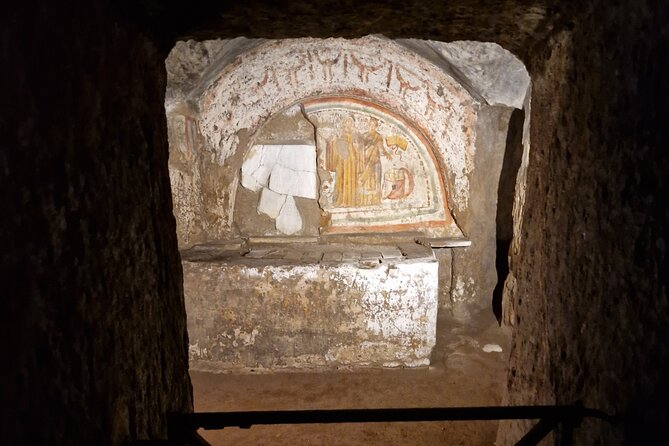
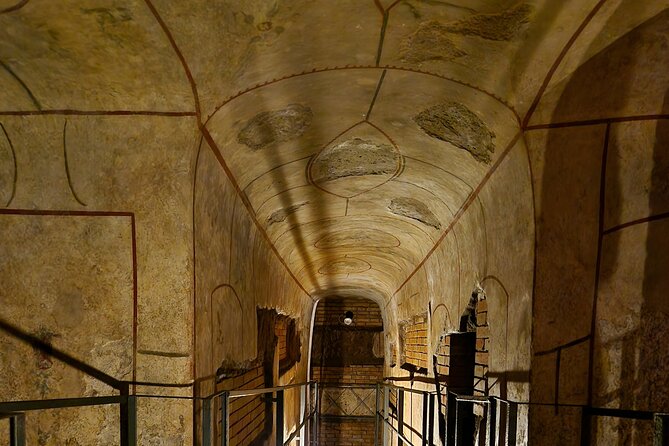
A big highlight here is the fresco focus. You’ll see what the tour describes as the oldest fresco depicting the Last Supper, along with apostle scenes for Peter and Paul. Even if you’ve seen Christian art before, the fact that it’s placed inside this burial landscape changes how you read it. It stops being only art history and becomes a clue to belief under pressure.
You’ll also learn about gravediggers—the people involved in preparing bodies for burial—and how they laid groundwork for tunneling techniques used in later times. That practical angle is one of the tour’s clever details because it shifts the story from only religious meaning to engineering and work culture underground.
Aquiferium and Refigerium: cleansing and meals for the dead
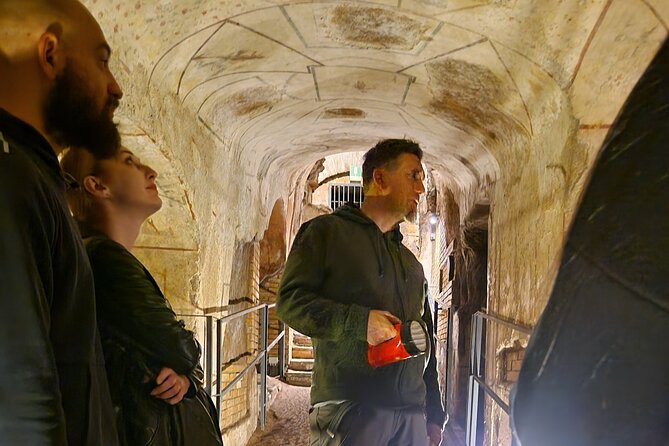
One of the most memorable parts of the route is the attention to ritual spaces. You’ll visit the Aquiferium, described as the area where bodies were ritually cleansed before burial. This isn’t framed as a spooky add-on; it’s explained as part of a real process tied to respect, readiness, and the beliefs around what came next.
Then you’ll move to the Refigerium, described as a space for commemorative meals and memorial gatherings for the dead. That detail matters because it highlights continuity. Even in a place of burial, the community still came together—remembering, honoring, and reinforcing bonds.
These stops make the catacombs feel less like a storage basement and more like a system. You understand the workflow: cleanse, bury, remember, repeat.
Cubiculum of the Fossors: the gravediggers’ union tomb
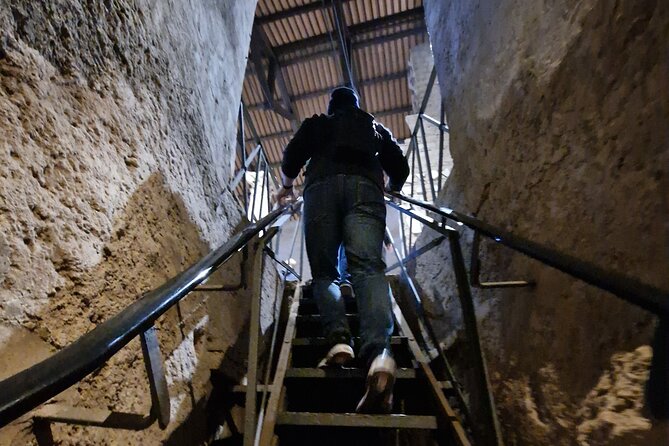
The tour also includes entering the Cubiculum connected to the Fossors, described as the gravediggers union tomb itself. This is one of those moments that turns “workers” into characters.
When your guide frames gravediggers as organized and essential, you get a clearer picture of how early underground life could run on skilled labor and shared roles—not just on anonymous suffering. It’s a good reminder that major religious movements are powered by ordinary people doing demanding work.
Reading tombstones and learning to see what you’re looking at
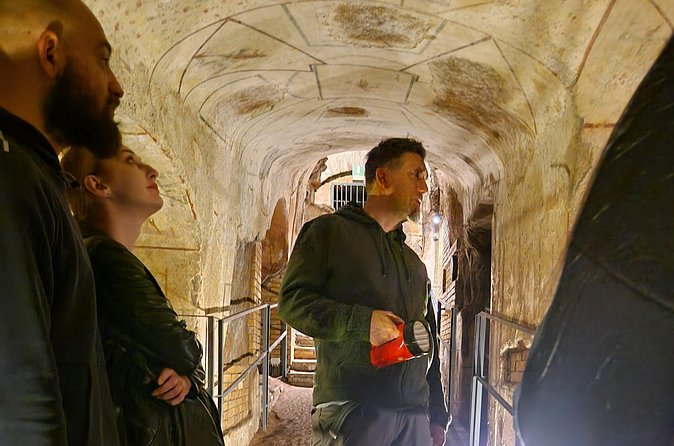
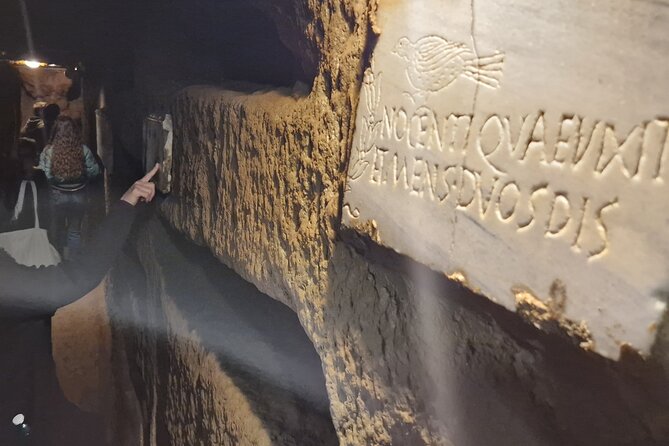
You’ll also be encouraged to read ancient tombstones and interpret what they say about the people who lived and died in ancient Rome. That’s a subtle but valuable skill-building moment: you stop thinking like a tourist scanning for big sights and start looking for evidence of real lives.
Even if you don’t catch every detail, the guide’s explanations help you notice how inscriptions and burial markings were part of identity and memory. It makes the underground spaces feel less like a set and more like a record.
The guide matters: why Sean’s style can make or break it
This is the kind of tour where your guide’s voice and performance style really change the experience. One of the strongest notes from an English guide performance (Sean) is the way he used theatrical animation to hold the group’s attention.
That approach fits the setting. Underground spaces can make people tune out. With a lively narrative, you stay oriented and keep learning instead of just staring at walls.
If you’re picky about tours that feel like lectures, this one has a chance to work better than you expect—because the guide is actively shaping how you pay attention.
Price and value: is $57.19 a fair deal?
At $57.19 per person for about 2 hours, this tour competes well with other major Rome sights because you get more than entry. You’re buying a guided sequence through multiple meaningful areas: the semi-underground basilica, long tunnel sections, and specific ritual zones like the Aquiferium and Refigerium.
Also, the tour includes the admission ticket as part of the stops, so you’re not juggling extra costs mid-day. With only up to 12 travelers, you’re less likely to feel lost in a crowd, and the guide can keep explanations tied to what you’re seeing right now.
Is it pricey for a catacomb visit? Maybe, depending on what you want. If you only want a quick self-guided walk and a couple of photos, you could spend less elsewhere. If you want the story explained clearly and linked to exact spaces, this pricing makes more sense.
Who should book this tour (and who might not)
I’d point you toward this if you like:
- History with human stakes (secrecy, persecution, community survival)
- Art and symbolism connected to real places
- A tour that keeps moving, so you aren’t stuck listening for long stretches
It may be less ideal if:
- You dislike underground environments or cold conditions (the tour highlights 16°C)
- You want a super laid-back, unguided museum stroll
One more fit check: it’s in English, and the format is set up for most people to participate. If you’re coming with a lot of family gear, pay attention to the stroller detail below.
Comfort tips: what to wear for the cool underground route
Even though Rome can feel warm, you’ll be underground in a zone around 16°C, so dress like you’ll need a layer. Comfortable shoes help because you’re walking through tunnels and moving between areas in one continuous route.
If you’re traveling with kids, the tour notes that baby carriers (front/back) are allowed. Strollers can be left in the upstairs office, which is a helpful option if you want your hands free while inside.
Final verdict: should you book Catacombe di Domitilla underground?
If you want an underground Roman experience that’s more than a dark hallway of bones, this is a smart choice. The strongest part for me is the way the tour connects the places—basilica, tunnels, cleansing and memorial spaces—to the larger story of early Christians navigating a dangerous world.
Book it if you’re the type who likes details and wants the meaning explained as you go. Skip it if you’re only chasing a quick photo and don’t care about the why behind the symbols and burial rooms.
If the weather is shaky, remember the tour requires good weather, and if it’s canceled for poor conditions you’ll be offered a different date or a full refund.
FAQ
How long is the Catacombe di Domitilla walking tour?
It lasts about 2 hours (approximately), with different sections of time allocated to the intro, the basilica, and the longer tunnel portion.
Where does the tour start?
The tour starts at Via delle Sette Chiese, 282, 00147 Roma RM, Italy and returns to the same meeting point at the end.
Is the tour offered in English?
Yes. The tour is offered in English.
Is the admission ticket included?
Yes. Admission Ticket Included is stated for each stop in the experience.
Can I bring a stroller or baby carrier?
Baby carriers are allowed (front/back carriers). Strollers may be left in the upstairs office.
Is this tour dependent on weather, and is cancellation free?
The experience requires good weather. If canceled due to poor weather, you’ll be offered a different date or a full refund. There is free cancellation available up to 24 hours in advance for a full refund.
More Tours in Rome
- Vatican Museums, Sistine Chapel & St. Peter’s Basilica Tour
★ 4.3 · 73,970 reviews - Vatican Museums, Sistine Chapel & St Peter’s Basilica Guided Tour
★ 4.5 · 39,149 reviews - Rome: Colosseum, Palatine Hill and Roman Forum Guided Tour
★ 4.8 · 32,814 reviews - Rome: Guided Tour of Colosseum, Roman Forum & Palatine Hill
★ 4.7 · 27,897 reviews - Rome: Colosseum, Roman Forum and Palatine Hill Guided Tour
★ 4.5 · 23,903 reviews - Rome: Colosseum Arena Floor, Palatine & Forum Guided Tour
★ 4.5 · 20,180 reviews
More Tour Reviews in Rome
- Vatican Museums, Sistine Chapel & St. Peter’s Basilica Tour
★ 4.3 · 73,970 reviews - Vatican Museums, Sistine Chapel & St Peter’s Basilica Guided Tour
★ 4.5 · 39,149 reviews - Rome: Colosseum, Palatine Hill and Roman Forum Guided Tour
★ 4.8 · 32,814 reviews - Rome: Guided Tour of Colosseum, Roman Forum & Palatine Hill
★ 4.7 · 27,897 reviews - Rome: Colosseum & Forum with Audio Guide App -Optional Arena
★ 4.2 · 24,770 reviews - Rome: Colosseum, Roman Forum and Palatine Hill Guided Tour
★ 4.5 · 23,903 reviews
Further Below Rome
- Rome: Capuchin Crypts and Catacombs Tour with Transfers
★ 4.6 · 6,456 reviews - The Original Roman Crypts and Catacombs Tour with Transfers
★ 4.5 · 4,896 reviews - Rome: Catacombs of St. Callixtus Entry Ticket & Guided Tour
★ 4.6 · 3,037 reviews - Rome: Guided Roman Catacombs Tour with Transfers
★ 4.6 · 1,830 reviews - Rome: Catacombs Guided Tour with Transfer
★ 4.2 · 1,808 reviews - Rome EBike Tour: Appian Way, Catacombs & Roman Aqueducts
★ 5.0 · 1,766 reviews
Just added to our Rome reviews





Roman Catacombs & Crypts Tours, compared.
 ★ 4.6Capuchin Crypts and Catacombs Tour with TransfersFrom $606,456 reviews
 ★ 4.5The Original Roman Crypts and Catacombs Tour with TransfersFrom $664,896 reviews
 ★ 4.6Catacombs of St. Callixtus Entry Ticket & Guided TourFrom $163,037 reviews
 ★ 4.6Guided Roman Catacombs Tour with TransfersFrom $651,830 reviews
 ★ 4.2Catacombs Guided Tour with TransferFrom $541,808 reviews
 ★ 5.0Rome EBike Tour: Appian Way, Catacombs & Roman AqueductsFrom $1021,766 reviews
 ★ 4.6Catacombs and Capuchin Crypt Guided Tour with TransferFrom $411,606 reviews
 ★ 4.7St. Peter’s Basilica Priority Access Tour with Dome & CryptFrom $701,504 reviews
Browse the lists this tour appears in