
Reviewed · VATICAN MUSEUMS TOURS
Vatican: Gardens, Museums and Sistine Chapel Guided Tour
Quiet steps in the Vatican Gardens set the tone. You get skip-the-line entry plus a guided route that connects the gardens, the big museum highlights, and the Sistine Chapel in about three focused hours. It’s a smart way to see more than the usual highlights, with an expert steering you through the flow.
I especially like the garden portion. Walking the Vatican Gardens with your guide turns the Vatican from a pile of famous buildings into a real place with details, including stops like the Pope Emeritus’ House and the Vatican Radio Station, plus a surprising piece of the original Berlin Wall.
My other favorite part is the Sistine Chapel finish. When you arrive in the right rhythm, Michelangelo’s ceiling lands harder, because you’re not rushing in after a long, chaotic line. One drawback to plan for: this tour is not made for limited mobility, and you’ll stand and walk a lot while sticking to a strict time schedule.
In This Review
- Quick take: what matters most
- Timed entry value: why 3 hours works
- The Vatican Gardens walk: more than pretty grounds
- St. Peter’s Basilica from a special angle on the way through
- Vatican Museums route: Maps, woven hangings, Raphael Rooms, and Pio V
- Sistine Chapel: what to expect when the ceiling takes over
- Dress code and rules: small things that can ruin your day
- Meeting point, check-in, and the timing trap
- Value and price logic: what you’re paying for
- Who this tour suits best (and who should skip it)
- Should you book this Vatican Gardens, Museums and Sistine Chapel tour?
- FAQ
- How long is the Vatican Gardens, Museums and Sistine Chapel guided tour?
- Do I get skip-the-line access?
- Where do I meet for the tour?
- What languages is the guide available in?
- What can I expect to see during the tour?
- Are there dress code restrictions?
- Is this tour suitable for wheelchair users or limited mobility?
- What happens if the Sistine Chapel or another museum area closes?
- What is the cancellation policy?
Quick take: what matters most
- Skip-the-line access that’s designed to keep your day moving (but you still need to check in)
- Vatican Gardens on foot, including quiet, off-the-main-route stops like Vatican Radio and the Academy of Sciences
- Big museum hits in a timed route, with stops such as the Gallery of Maps and Raphael Rooms
- St. Peter’s Basilica viewing angle that includes a special perspective on the Cupola
- Sistine Chapel guided entry to help you focus on what you’re actually looking at
- Tight rules (dress and timing), plus the Vatican can close sections like the Sistine Chapel without refunds
Timed entry value: why 3 hours works
Three hours in Vatican City sounds short until you remember the reality: lines, security, and moving between sprawling areas. What makes this tour feel worth it is that it strings the day together with a guide, so you’re not wasting time trying to navigate the Vatican’s maze while also reading every sign like it’s a novel.
You also get a guided pace that helps you know where to look. The Vatican is full of “pretty stuff,” but the real win is learning what you’re seeing as you walk. In the garden route, for example, you’re not just passing greenery. You’re moving past specific spots connected to Vatican life.
The biggest “value” payoff is that you finish in the Sistine Chapel instead of spending your energy only in the museums. You get a balanced hit: gardens for atmosphere, museums for context, then the ceiling for impact.
Other ways through the Vatican Museums
- Skip the Line: Vatican & Sistine Chapel Ticket with Audio Guide
★ 4.0 · 3,271 reviews - Skip-the-Line Ticket with Host – Vatican Museums & Sistine Chapel
★ 5.0 · 1,267 reviews - Rome: Vatican Pass plus Top Attractions and Transport
★ 3.5 · 1,242 reviews - Skip The Line ticket to the Vatican Museums & the Sistine Chapel
★ 3.0 · 1,160 reviews
The Vatican Gardens walk: more than pretty grounds
The garden portion is where the tour often feels different from the standard Vatican loop. Instead of going straight from crowds and security into rooms of art, you start with a calmer, slower pace. You’re still walking, but the tone changes fast.
This route includes notable garden landmarks you can actually picture later, such as:
- the Pope Emeritus’ House
- the Vatican Radio Station
- the Academy of Sciences
- the Pope’s former Summer Residence
- a piece of the original Berlin Wall
- the Fontana dell’Aquilone
That Berlin Wall piece is a great example of why I like this garden segment. It reminds you the Vatican isn’t isolated from world history. You’re standing in one of the smallest “surprises” in Vatican space, and your guide can connect it to how the Vatican has witnessed major European shifts without turning it into a lecture hall.
A practical note: you’ll be on your feet for a while. Comfortable shoes matter more than you think, and this is not a sit-down, pause-everywhere kind of outing. If you’re the type who gets restless standing still, the gardens are a nice warm-up, because you’re constantly moving between points of interest.
St. Peter’s Basilica from a special angle on the way through
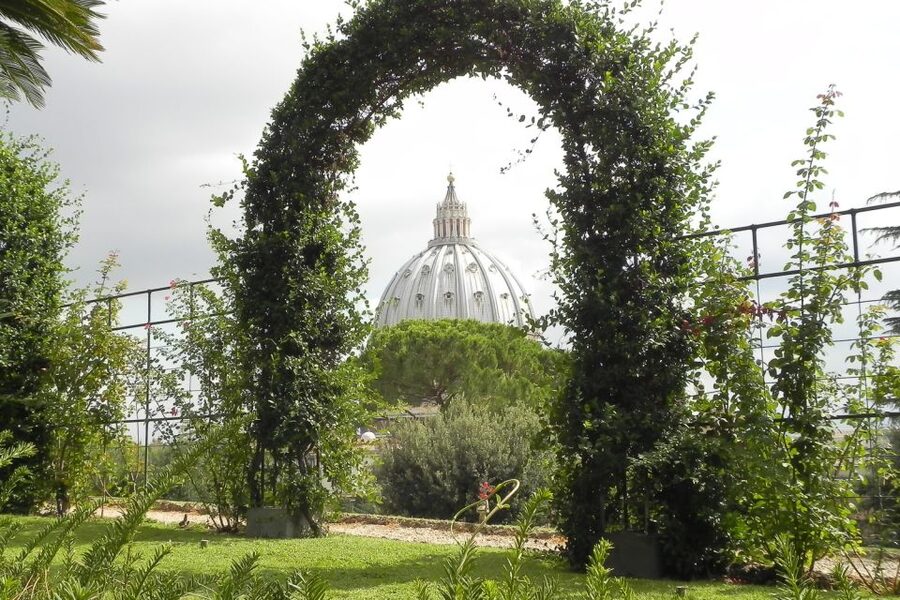
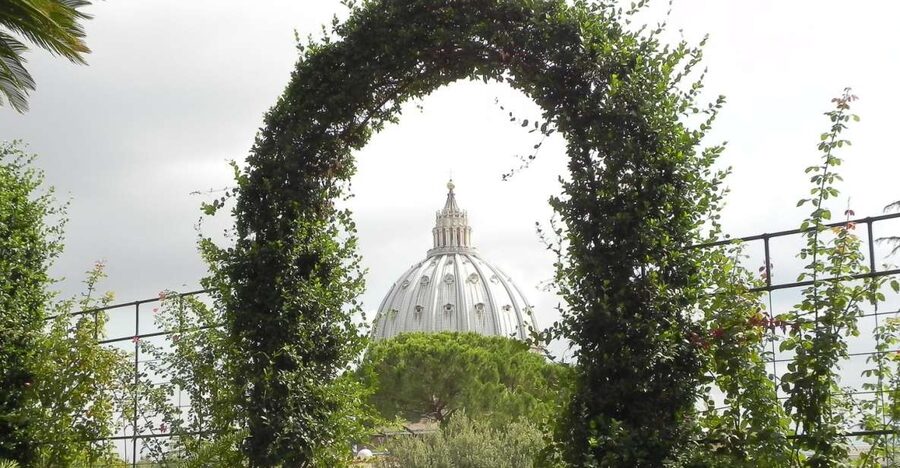
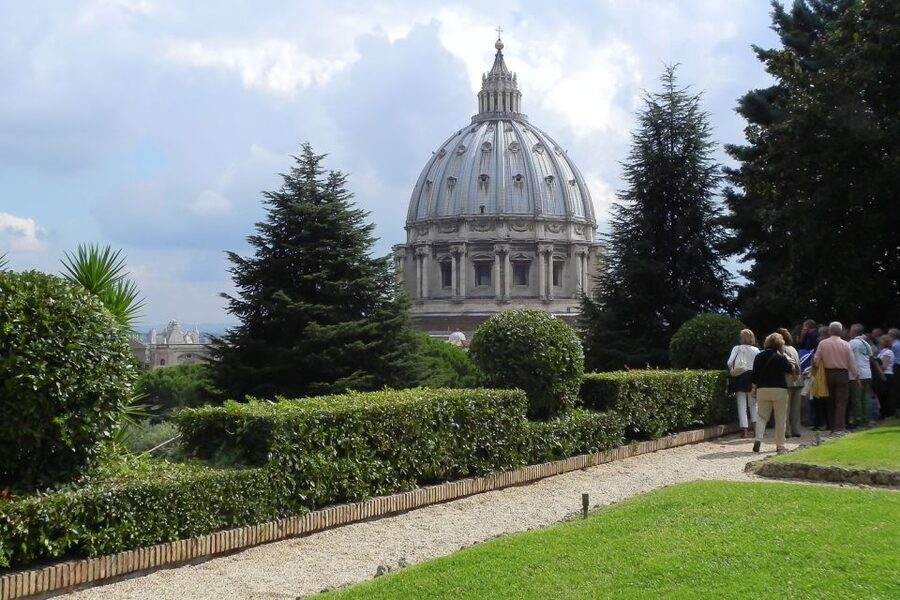
Right after the gardens, you get a behind-the-scenes-style look connected to St. Peter’s Basilica, including a special perspective of the Cupola. This part matters because the Cupola is the “big visual magnet” in the Vatican. If you only see it from the most crowded viewpoints, you miss how the sight lines change with where you stand and how high you are relative to the dome.
What you’re doing here is lining up your mental map before you hit the museums and, later, the Sistine Chapel. The guide’s context can help you understand why people react so strongly to the dome and the scale of the basilica even if they don’t consider themselves “church architecture people.”
The other benefit is momentum. You’re not stopping to re-orient yourself after long walks. You keep moving and your guide keeps connecting the dots between place, power, and art.
Vatican Museums route: Maps, woven hangings, Raphael Rooms, and Pio V
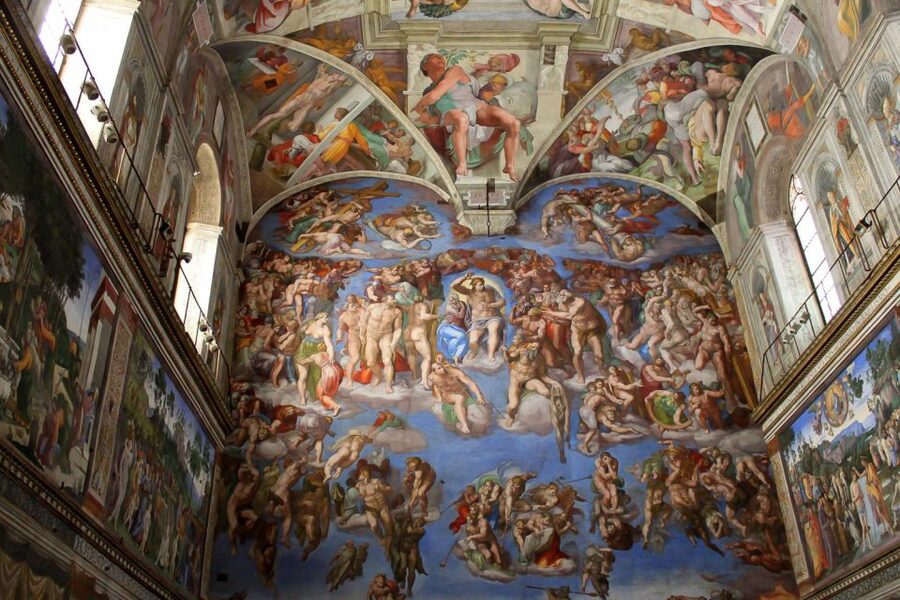
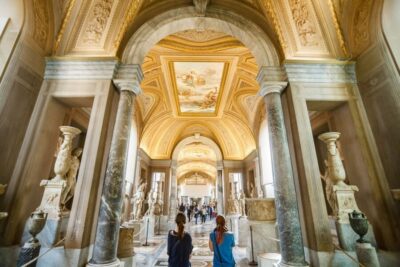
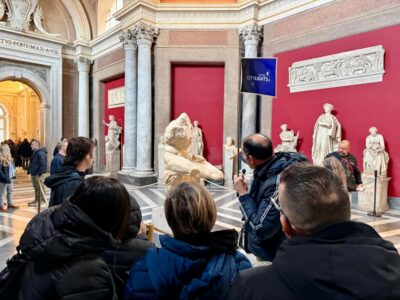
Once you’re in the Vatican Museums, you’ll start seeing how the Vatican organizes art like a story. This tour focuses on a route with the big crowd-anchors, but you also get help figuring out what matters in each room.
Your guided stops include:
- the Gallery of Maps
- the gallery of woven hangings and candelabras (the route name often appears as the Gallery of Tapestries and Candelabras)
- the Raphael Rooms (listed among the tour highlights)
- the Chapel of Pio V
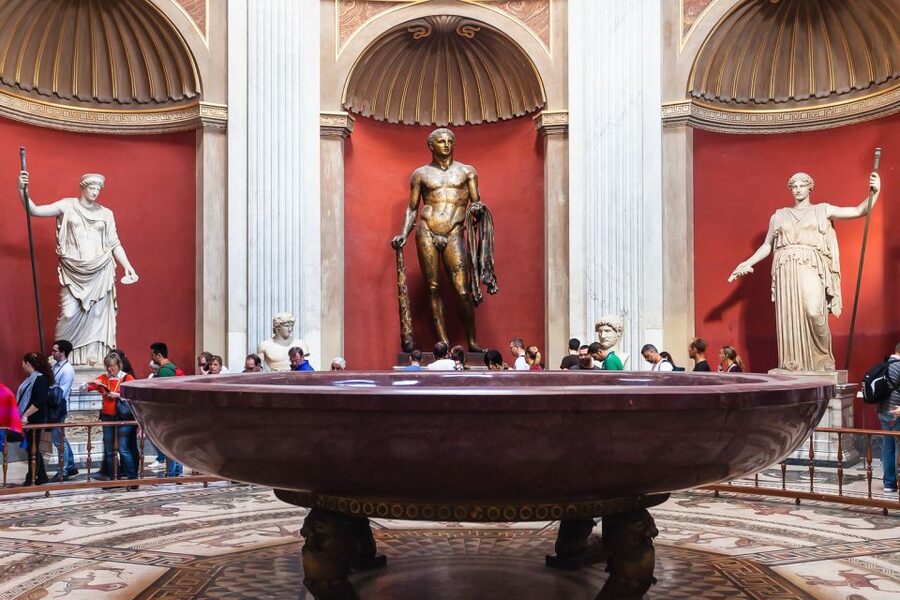
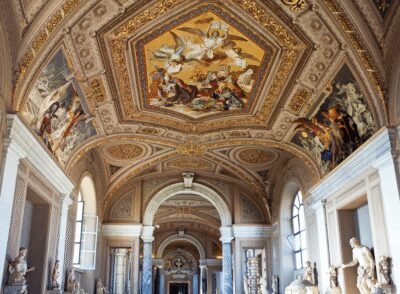
Here’s what I think is genuinely useful about that selection. It gives you variety. The Gallery of Maps helps you see how geography, politics, and worldview became part of the Vatican’s visual language. The woven hangings and candelabras shift you from “information” to “craft and display,” showing how art is staged to impress from a distance. The Raphael Rooms then drop you into a different register: painting as narrative, with artists shaping theology and power in visual form. And the Chapel of Pio V is a strong finishing beat before you go into the Sistine Chapel.
One caution: the museums are large, and even with skip-the-line access, you’ll feel the walking. You get a focused route, but you’re still in a big building with lots of surfaces and lots of people. If your goal is deep, slow, museum-studies reading, this tour won’t replace a full day. If your goal is smart highlights with explanation, it’s a strong fit.
Worth a look next to this Vatican City booking:



Sistine Chapel: what to expect when the ceiling takes over
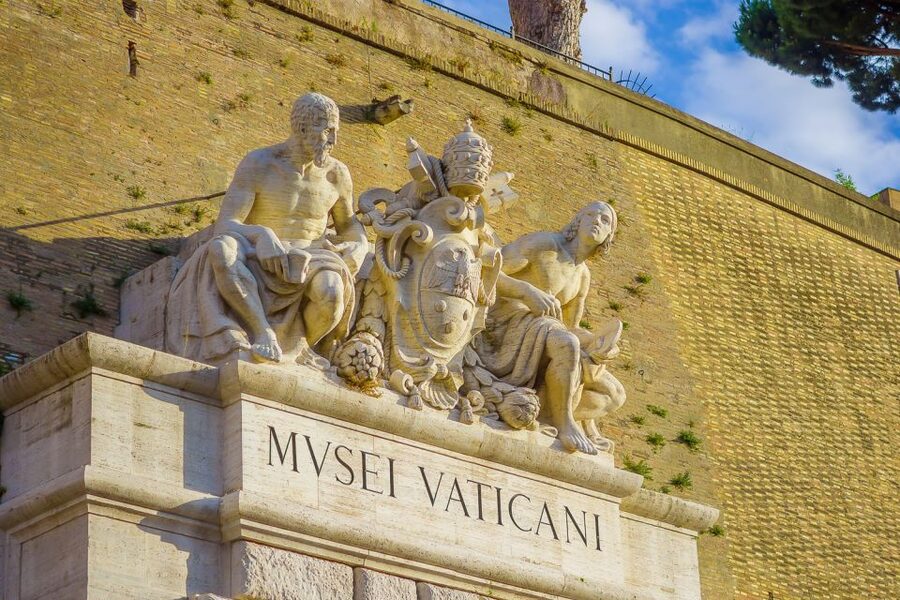
The Sistine Chapel is the headline. Your guide’s job here isn’t just to announce Michelangelo. It’s to help you look correctly—at the right moments, with the right context—so the art doesn’t blur into a single “ceiling moment.”
You can expect Michelangelo’s frescoes, and the guide’s focus on interpretation can help you notice themes and details you’d likely miss if you were just scanning for Instagram angles.
Also, know what kind of “behavior mode” the chapel requires. You’re going to want calm. This is one of the places in the Vatican where you’ll feel how quickly rules matter. Follow the guide’s instructions closely, because your group’s timing is tied to the flow into the chapel.
Important: the Vatican Museums reserve the right to close any section, including the Sistine Chapel, due to unforeseen circumstances. If that happens, there’s no refund tied to the closure. That’s not a reason not to book, but it is a reason to keep your expectations flexible.
Dress code and rules: small things that can ruin your day
This tour has clear restrictions. Plan your outfit around them, not around what you wish was acceptable.
Not allowed:
- shorts
- short skirts
- sleeveless shirts
- luggage or large bags
If you’re traveling light, that’s easy. If you’re used to carrying a day bag everywhere, you may need to rethink what counts as large. If you want zero stress, go with a compact bag you can manage and keep your clothing fully covered at the shoulders and knees.
And remember the tour is not designed for wheelchair users or mobility impairments. It involves long standing and a lot of walking. The route moves, you don’t pause everything, and the pace won’t bend.
Meeting point, check-in, and the timing trap
This part is where tours succeed or fail, and this one is strict. Your start time is tied to your entry window, so you need to treat lateness as a real problem.
You should report to the Touristation Office at Viale Vaticano 95 about 20 minutes before your selected time. Also, the meeting point can vary depending on the option you booked, so don’t assume the coordinates alone are where you’ll stand. The safe move is to use the listed office address as your anchor point.
Then comes the check-in detail. Some people get surprised by the process at the counter, where your ticket needs to be entered/validated before you can flow into the Vatican route smoothly. Build time for that step. If your plan is to show up right at the start time, you’re gambling.
One more timing warning: latecomers will not be accommodated. That means if you get held up crossing a street, taking a photo, or dealing with security, you could lose your place.
Also, there’s no indication of pickup service. You’re responsible for getting yourself to the meeting point.
Value and price logic: what you’re paying for
I look at this kind of tour as a time-saver plus a guidance package. Skip-the-line access is the obvious part. The less obvious part is the way the guide helps you transition between areas without getting stuck.
You’re paying for:
- structured timing across gardens, museums, and the Sistine Chapel
- an expert guide explaining what you’re seeing (Italian and English)
- less time figuring out where to go next
- a route that includes major “anchors” like Raphael Rooms
You’re not paying for luxury or a slow museum day. You’re paying for efficiency and context. That tends to be money well spent if you’re on a first or second Vatican visit, or if you want a guided route but don’t want to lose half your day to lines.
If you’re already comfortable moving independently through the Vatican and you want full freedom to linger, a self-guided approach might feel cheaper. But if your real goal is to see the garden-to-ceiling story without stress, this format often delivers strong value.
Who this tour suits best (and who should skip it)
Best fit:
- You want the Vatican Gardens experience, not just the museums
- You like having someone explain what you’re looking at
- You’re comfortable standing and walking for a few hours
- You want a single, guided route that ends with the Sistine Chapel
Not a great fit:
- You use a wheelchair or have mobility limitations
- You need frequent long breaks or step-free routes
- You get anxious about strict timing and rules like dress requirements
- You want to spend hours in one museum hall reading every wall label
If you’re traveling as a group, this tour can work well because everyone gets the same framework. If you’re traveling solo and want to keep your day efficient, it also makes sense, especially if you’re pairing this with other Rome plans afterward.
Should you book this Vatican Gardens, Museums and Sistine Chapel tour?
I’d book it if you want a guided, time-managed Vatican day that connects the gardens, the museum highlights, and the Sistine Chapel into one coherent route. The garden stops (including Vatican Radio Station and the Berlin Wall piece) plus the Cupola perspective give you variety beyond the typical “art rooms only” plan. And finishing in the Sistine Chapel with guidance is a big part of what makes the experience land.
I’d think twice if timing stress is your weakness, because the tour is strict about late arrivals and has clear dress and bag rules. Also, keep the closure policy in mind: the Vatican can close sections like the Sistine Chapel without refund if conditions force it.
If you want a practical recommendation: if you’re physically able to walk and stand, and you’re going to follow the rules on time and clothing, this is a strong way to see the Vatican highlights without burning your day in lines.
FAQ
How long is the Vatican Gardens, Museums and Sistine Chapel guided tour?
The tour lasts 3 hours.
Do I get skip-the-line access?
Yes. The tour includes skip-the-line access with a guided, timed ticket.
Where do I meet for the tour?
The meeting point may vary depending on the option booked. You should report to the Touristation Office at Viale Vaticano 95 about 20 minutes before your selected time.
What languages is the guide available in?
The tour guide is available in Italian and English.
What can I expect to see during the tour?
You visit the Vatican Gardens and walk through specific garden landmarks, then you see a behind-the-scenes view related to St. Peter’s Basilica with a Cupola perspective. Later you tour parts of the Vatican Museums, including the Gallery of Maps, the Raphael Rooms, and the Chapel of Pio V, and the tour ends at the Sistine Chapel.
Are there dress code restrictions?
Yes. Shorts, short skirts, and sleeveless shirts are not allowed. Luggage or large bags are also not allowed.
Is this tour suitable for wheelchair users or limited mobility?
No. It is not recommended for people with limited mobility, and it is not suitable for wheelchair users.
What happens if the Sistine Chapel or another museum area closes?
The Vatican Museums can close sections, including the Sistine Chapel, due to unforeseen circumstances. Closure does not entitle visitors to a refund.
What is the cancellation policy?
This activity is non-refundable.
More Tours in Vatican City
- Vatican, Sistine Chapel & St. Peter’s Skip-the-Line Tour
★ 4.0 · 1,140 reviews - Vatican Museums and the Sistine Chapel Skip-the-Line Tour
★ 4.5 · 789 reviews - Vatican Museums & Sistine Chapel Guided Tour
★ 4.5 · 763 reviews - Rome: Guided Tour of St. Peter’s Basilica, Grottoes & Square
★ 4.4 · 750 reviews - Rome: Skip-the-Line Vatican Museums and Sistine Chapel Tour
★ 4.3 · 719 reviews - Vatican: Sistine Chapel and Vatican Museums Guided Tour
★ 4.3 · 536 reviews
More Tour Reviews in Vatican City
- Skip the Line: Vatican & Sistine Chapel Ticket with Audio Guide
★ 4.0 · 3,271 reviews - Skip-the-Line Ticket with Host – Vatican Museums & Sistine Chapel
★ 5.0 · 1,267 reviews - Rome: Vatican Pass plus Top Attractions and Transport
★ 3.5 · 1,242 reviews - Skip The Line ticket to the Vatican Museums & the Sistine Chapel
★ 3.0 · 1,160 reviews - Vatican, Sistine Chapel & St. Peter’s Skip-the-Line Tour
★ 4.0 · 1,140 reviews - Vatican Museums and the Sistine Chapel Skip-the-Line Tour
★ 4.5 · 789 reviews
The Vatican, A Few More Ways In
- Skip the Line: Vatican & Sistine Chapel Ticket with Audio Guide
★ 4.0 · 3,271 reviews - Skip-the-Line Ticket with Host – Vatican Museums & Sistine Chapel
★ 5.0 · 1,267 reviews - Rome: Vatican Pass plus Top Attractions and Transport
★ 3.5 · 1,242 reviews - Skip The Line ticket to the Vatican Museums & the Sistine Chapel
★ 3.0 · 1,160 reviews - Vatican, Sistine Chapel & St. Peter’s Skip-the-Line Tour
★ 4.0 · 1,140 reviews - Vatican Museums and the Sistine Chapel Skip-the-Line Tour
★ 4.5 · 789 reviews
Just added to our Vatican City reviews



Vatican Museums Tours, compared.
 ★ 4.5Vatican: Museums & Sistine Chapel Entrance TicketFrom $38144,003 reviews
 ★ 4.3Vatican Museums, Sistine Chapel & St. Peter’s Basilica TourFrom $7273,970 reviews
 ★ 4.5Vatican Museums, Sistine Chapel & St Peter’s Basilica Guided TourFrom $2239,149 reviews
 ★ 4.3Vatican Museums, Sistine Chapel and Basilica TourFrom $7316,039 reviews
 ★ 4.4Vatican Museums & Sistine Chapel Skip-the-Line Entry TicketFrom $4313,838 reviews
 ★ 4.7Vatican Museums, Sistine Chapel & Basilica TourFrom $7213,217 reviews
 ★ 4.5Skip-the-Line Group Tour of the Vatican, Sistine Chapel & St. Peter’s BasilicaFrom $3012,779 reviews
 ★ 4.3Vatican Museums & Sistine Chapel Guided TourFrom $11812,117 reviews