
Reviewed · TRASTEVERE TOURS
Trastevere and Jewish Ghetto Private Walking Tour
Rome feels calmer in Rome’s neighborhoods. This private walking tour takes you off the main paths and into everyday squares, churches, and streets where the city’s stories overlap. I like that you can pick start times throughout the day, and I also like the focused route that avoids the crush of a big-group tour. One thing to plan for: a couple of key stops have admission not included, and places of worship enforce a strict dress code.
If you want Rome with texture, this is a strong match. You’ll spend real time at places like Santa Maria in Trastevere and then move toward the Jewish Ghetto with an expert guide who can connect architecture, streets, and lived experience.
Also, because it’s private, your group pace can be slower and more conversational than a standard sightseeing loop. That’s a plus for many people, but if you want a fast hit of highlights only, you might want to book a shorter, more general tour.
In This Review
- Key things you’ll enjoy
- Trastevere and the Jewish Ghetto: how the streets tell two stories at once
- Starting at Piazza Trilussa and the Hundred Priests fountain
- Santa Maria in Trastevere: mosaics, frescoes, and why this church matters
- Il Portico di Ottavia: the fish-market archaeology lesson you’ll remember
- Tempio Maggiore di Roma and the Jewish Ghetto viewpoint
- Teatro di Marcello: ancient scale, modern street angles
- The streets of Trastevere: river trade memories and Pope Julius II planning
- Where Tiber Island and the turtle fountain fit into the vibe
- Price and value: what you’re paying for at about $181 per person
- Guide quality: what you can look for on the day
- Dress code and practical prep (so you don’t lose time at the door)
- Who should book this tour (and who might want a different one)
- Should you book it? My decision guide
- FAQ
- Where does the tour start and end?
- How long is the tour?
- Is this a private tour?
- Are admission tickets included?
- What dress code do I need for religious sites?
- Can I choose a language other than English?
- Is free cancellation available?
Key things you’ll enjoy
- Private group pacing: you won’t be boxed into a crowd flow.
- Piazza Trilussa + Ponte Sisto fountain: local meeting energy plus the famous Hundred Priests.
- Santa Maria in Trastevere included entry: you get time where the visuals matter most.
- Jewish Ghetto storytelling: you hear how the community shaped daily Rome.
- Synagogue and theater look from the right angle: views and context even when entry costs extra.
- Small daily details like the turtle fountain that make the walk feel lived-in.
Trastevere and the Jewish Ghetto: how the streets tell two stories at once

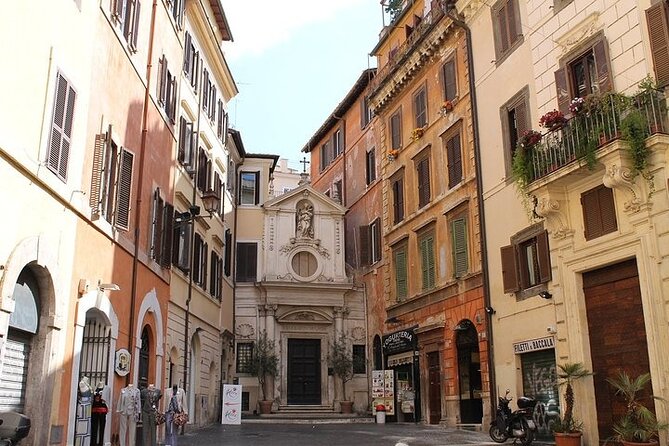
This tour makes sense because Trastevere and the Jewish Ghetto sit close enough to walk between, yet their stories feel very different. You’re not just ticking off landmarks. You’re moving through squares and church doorways that helped shape neighborhood life—then turning the corner to hear how a community built stability through worship, tradition, and resilience.
A good guide matters here, and the tour is set up for that. Your local expert will connect what you see—church mosaics, ancient structures, and major Roman sites—with what those places meant to the people who used them.
If you’re the kind of traveler who likes a few meaningful stops instead of a long list, this private format is a practical win. You get time to look closely, ask questions, and slow down when something catches your eye.
More lanes worth losing an evening in Trastevere
- Winner 2025 Rome Twilight Trastevere Food Tour by Eating Europe
★ 5.0 · 5,157 reviews - Rome Food Tour: Campo de’ Fiori, Ghetto, Trastevere Winner 2024
★ 5.0 · 3,205 reviews - Rome: Guided Food Walking Tour with Wine in Trastevere
★ 4.9 · 3,105 reviews - Rome: Trastevere Food tour with Free-Flowing Fine Wine
★ 5.0 · 2,853 reviews
Starting at Piazza Trilussa and the Hundred Priests fountain
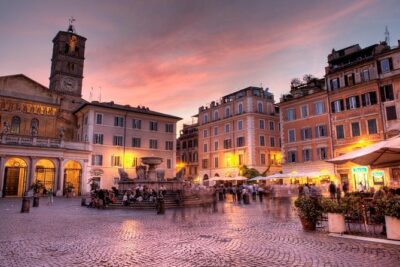
You begin at Piazza Trilussa, a spot where locals meet and hang out. It’s a nice starting point because it doesn’t feel staged. Instead of launching you from a tourist bus node, it drops you into a real neighborhood rhythm.
From there, you’ll head to the fountain on Ponte Sisto, commonly called the Fountain of the Hundred Priests. This is one of those Rome details that rewards curiosity: it’s famous enough to know, but once you’re standing in front of it, it feels surprisingly specific and human—like the city is showing you its character through stone and water.
This first stretch also helps you get bearings fast. You’re not just walking; you’re being oriented to what kind of Rome this is—small turns, close views, and stories that fit the scale of the streets.
Santa Maria in Trastevere: mosaics, frescoes, and why this church matters
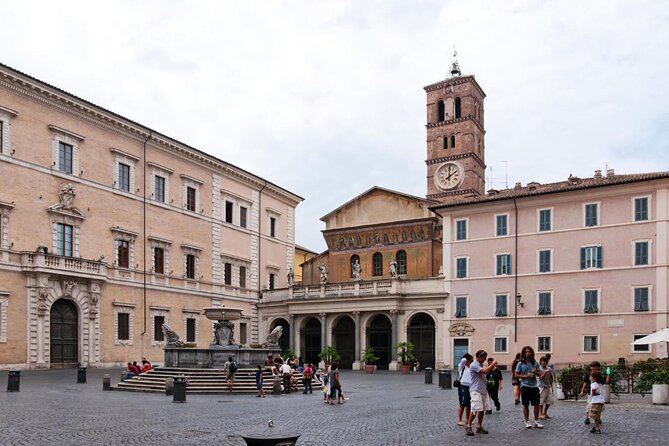
Next is Piazza di Santa Maria in Trastevere, home to Santa Maria Basilica in Trastevere. This church is described as one of the oldest in Rome, and you’ll see why people keep returning to it.
You’ll spend about 20 minutes inside, with admission included. The big payoff here is the visual language of the place: 13th-century bronze mosaics and frescoes. Even if you’re not a hardcore art person, you’ll likely feel the difference between a quick photo stop and actually spending a bit of time looking.
Practical note: houses of worship enforce a dress code—shoulders and knees covered. Bring a light layer if you’re traveling in warm weather and you tend to dress loosely. It’s an easy fix, but it can save you stress right before you enter.
Il Portico di Ottavia: the fish-market archaeology lesson you’ll remember
Then you shift from church splendor to archaeology with street-level drama at Il Portico di Ottavia. This structure has a story that goes back to 146 B.C., and it was once used as a fish market.
The setting is what makes this stop work. You stand in front of an outdoor archaeological area and hear how the space evolved. You’re not learning history in a vacuum—you’re learning it where daily life used to happen.
It’s only about 10 minutes, and that’s fine. This is a stop for focus: look at the structure, take in the layout, and then let your guide connect it to the neighborhood you’re walking through. If you like “one good historical scene” rather than ten fragmented facts, you’ll appreciate this pacing.
More of the Ghetto's quiet corners
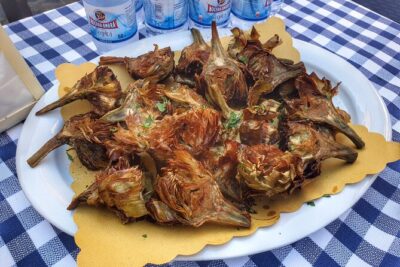
Tempio Maggiore di Roma and the Jewish Ghetto viewpoint
Next comes one of the tour’s emotional anchors: Tempio Maggiore di Roma. You’ll have a chance to view the largest synagogue in Rome and hear stories about its ancient past and how it remains a beloved place of worship for Jewish Romans.
Admission is not included for this stop, so plan on either seeing it from what’s accessible during the visit or paying for entry if your route requires it. Either way, the context your guide provides is the real value: it helps the synagogue feel like part of a living community, not just a historic building.
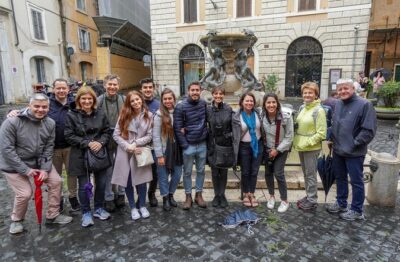
This is also where the tour’s private nature shines. It’s easier to ask a question—about tradition, neighborhood changes, or what certain spaces mean—when you’re not managing a group moving at the speed of a schedule.
One note from the tour’s description: your guide for the Trastevere and Jewish Ghetto portion may not be Jewish, but they will still bring meaningful perspective on the area’s history and culture. In my view, what matters is not the label—it’s whether the guide can connect details to your questions in a respectful way.
Teatro di Marcello: ancient scale, modern street angles
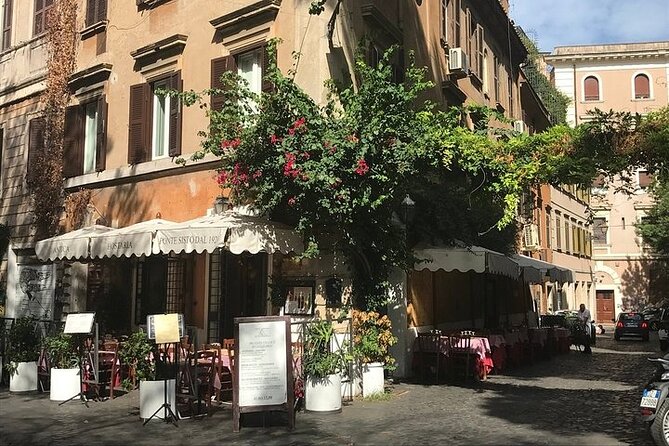
After the synagogue stop, you’ll head toward Teatro di Marcello, the ancient open-air theater built in the 1st century. This is a classic “how did they build this?” Rome sight, and even without long inside access, you can still understand the design.
Your visit here is about 10 minutes, and admission is not included. Still, you’ll get the benefit of a guide walking you through what you’re seeing—shape, scale, and why the theater mattered in Roman public life.
Even for first-time Rome visitors, this kind of stop is useful. It reminds you that Rome wasn’t just temples and palaces. It was noise, performance, crowds, and architecture designed to control how people watched and gathered.
The streets of Trastevere: river trade memories and Pope Julius II planning
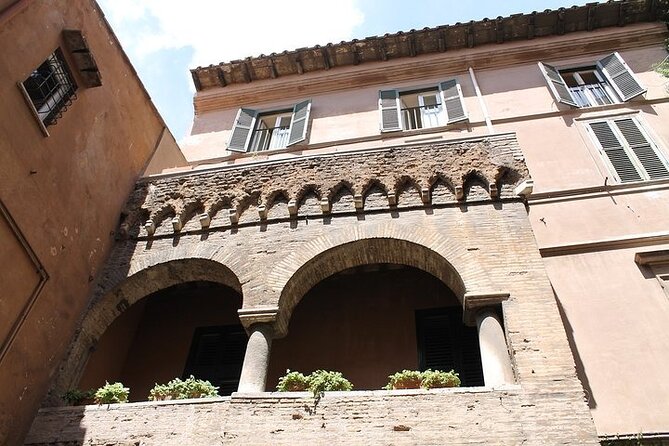
Between major landmarks, you’ll spend time wandering one of Rome’s oldest neighborhoods, known in part for its role in river trade. Your guide shares stories and anecdotes as you go, which is where Trastevere becomes more than a pretty backdrop.
You’ll also cover a stretch of street development dating to 1508, ordered as part of an urban plan by Pope Julius II. That kind of detail is great because it explains why some streets feel the way they do—why certain sections look the way they do, and how the city was actively shaped over time rather than “just growing.”
This walking portion is also when the private format helps most. Instead of racing from point A to point B, you get to slow down when you notice the small stuff: a church facade, a small square, or a view toward the river area.
Where Tiber Island and the turtle fountain fit into the vibe
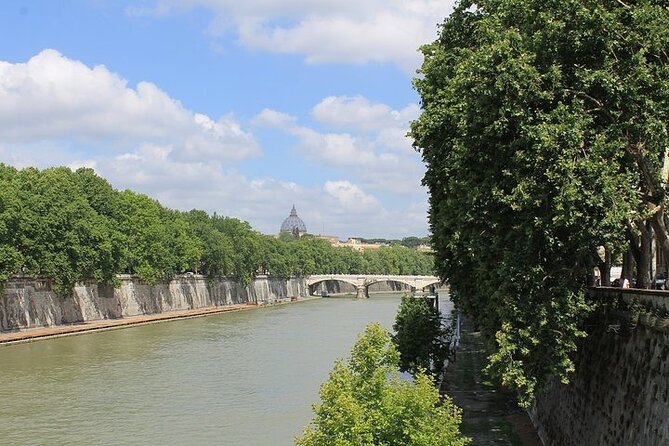
The tour route includes Tiber Island, so you’ll get at least some sense of Rome’s river geometry and how it threads through daily life and history. Even without focusing on river sightseeing as a standalone activity, that context makes the rest of the walk click.
You’ll also encounter the turtle fountain along the way (it’s listed as included). These are the sorts of street-level landmarks that make a neighborhood feel like a place locals actually use and talk about.
If you love those “I’ll remember this one spot” moments, you’ll probably enjoy this part more than you expect.
Price and value: what you’re paying for at about $181 per person
At $181.02 per person for about 2 hours, this is not a budget group-tours-only price. But it’s also not wildly priced for a private Rome neighborhood walk.
Here’s what you’re really buying:
- Private group access: only your party participates, which makes the experience calmer and easier to personalize.
- Local expert guiding: the tour isn’t just geography; it’s interpretation—church art, ancient structures, and how the Jewish community shaped life in Rome.
- Time in the right places: Santa Maria entry is included, so you get proper access where visuals matter.
- A route designed to avoid the crush: private usually means fewer bottlenecks and more freedom to pause.
One small consideration: because some admissions aren’t included, your final cost can rise if you want full entry at the synagogue or theater. If you’re sensitive to surprise add-ons, double-check which stops require separate tickets for the version of viewing you want.
The tour is also listed as commonly booked around 71 days in advance. That usually signals steady demand. If you have a tight schedule, I’d rather plan ahead than gamble on last-minute availability.
Guide quality: what you can look for on the day
The guide can make this tour feel either like a lecture or like a conversation with a local storyteller. The reviews you provided highlight exactly what to expect when it clicks: guides who are warm, attentive, and able to tailor the pace to your interests.
You may encounter guides like Francesca, Paul, Sara, or Christian—names that came up in the feedback. The common theme is clear: people felt the guide spoke with passion and stayed engaged, not just recited facts.
Also, since start times run throughout the day, you can choose one that fits your energy. If you’re arriving fresh in the morning, this can feel light and easy. If you’re coming later after museum days, it can still work because it’s a neighborhood walk, not a marathon.
Dress code and practical prep (so you don’t lose time at the door)
Because the tour includes churches and a synagogue, you’ll need to plan for a strict entry policy: shoulders and knees covered. No tank tops, no short dresses. This isn’t the moment to wear your most relaxing outfit if it’s too revealing.
A small strategy: wear comfortable layers that meet the rule. A light scarf, cardigan, or leggings can solve a lot. And wear shoes that handle uneven old-street surfaces because the walk is in classic Roman neighborhood terrain.
Also remember it’s an outdoor walking external tour, meaning the main “logistics” are simply where you walk and how quickly you can move between stops. Most people can participate, but if you have mobility limits, you’ll want to consider the neighborhood walking as a factor.
Who should book this tour (and who might want a different one)
This one fits best if you:
- want Trastevere + Jewish Ghetto in one coherent route
- prefer a private pace over a big-group sprint
- enjoy a mix of church art, ancient structures, and community-focused storytelling
- like asking questions and having your guide steer the day
It may not be ideal if you:
- want every ticket fully included (because synagogue and theater admissions are not included)
- only want the most famous “top ten” sights and nothing else
- don’t want any dress-code constraints tied to places of worship
If you’re in Rome for several days, this tour is also a smart “understanding” stop. It gives you neighborhood context that helps you make sense of other parts of the city later.
Should you book it? My decision guide
Book this tour if you want Rome that feels human: squares where people actually gather, churches with visual power, and the Jewish Ghetto told in a way that connects the street to the community. The combination of private pacing and a route that balances major sites with local streets makes it a strong value even at $181.02.
Skip or rethink it if you’re sensitive to extra admissions costs or you’re trying to avoid any dress code requirements. In that case, you might still enjoy the neighborhood on your own—but you’ll miss the guided connections that turn buildings into stories.
If you’re open to a thoughtful, neighborhood-scale walk, this is the kind of experience that makes Rome feel more understandable, not just bigger.
FAQ
Where does the tour start and end?
The tour starts at Piazza Trilussa, 00153 Roma RM, Italy. It ends back at the same meeting point.
How long is the tour?
It lasts about 2 hours.
Is this a private tour?
Yes. It’s a private tour/activity, and only your group participates.
Are admission tickets included?
Not all. Santa Maria Basilica admission is included, but Tempio Maggiore di Roma and Teatro di Marcello list admission not included.
What dress code do I need for religious sites?
Places of worship require shoulders and knees covered. That means no tank tops or short dresses.
Can I choose a language other than English?
Yes. The tour is offered in English, French, Spanish, Portuguese, and Italian. You should specify your language preference under additional notes.
Is free cancellation available?
Yes. You can cancel for a full refund if you cancel up to 24 hours in advance of the experience start time.
More Tour Reviews in Rome
- Vatican Museums, Sistine Chapel & St. Peter’s Basilica Tour
★ 4.3 · 73,970 reviews - Vatican Museums, Sistine Chapel & St Peter’s Basilica Guided Tour
★ 4.5 · 39,149 reviews - Rome: Colosseum, Palatine Hill and Roman Forum Guided Tour
★ 4.8 · 32,814 reviews - Rome: Guided Tour of Colosseum, Roman Forum & Palatine Hill
★ 4.7 · 27,897 reviews - Rome: Colosseum & Forum with Audio Guide App -Optional Arena
★ 4.2 · 24,770 reviews - Rome: Colosseum, Roman Forum and Palatine Hill Guided Tour
★ 4.5 · 23,903 reviews
More Around the Jewish Ghetto
- Rome Food Tour: Campo de’ Fiori, Ghetto, Trastevere Winner 2024
★ 5.0 · 3,205 reviews - Jewish Ghetto and Trastevere Tour Rome
★ 4.5 · 1,729 reviews - Rome: Eat Like a Roman Ghetto & Campo de’ Fiori Food Tour
★ 5.0 · 1,037 reviews - Jewish Ghetto and Synagogues with Jewish Roman Guide 3 Hours
★ 5.0 · 907 reviews - Jewish Ghetto & Piazza Navona: Food, Wine & Sightseeing Rome Tour
★ 5.0 · 460 reviews - Rome: Food & Wine Tour of Campo de Fiori, Ghetto, Trastevere
★ 4.8 · 413 reviews
Still in Trastevere? Keep Going
- Winner 2025 Rome Twilight Trastevere Food Tour by Eating Europe
★ 5.0 · 5,157 reviews - Rome Food Tour: Campo de’ Fiori, Ghetto, Trastevere Winner 2024
★ 5.0 · 3,205 reviews - Rome: Guided Food Walking Tour with Wine in Trastevere
★ 4.9 · 3,105 reviews - Rome: Trastevere Food tour with Free-Flowing Fine Wine
★ 5.0 · 2,853 reviews - Rome: Trastevere & Campo de Fiori Street Food Walking Tour
★ 4.9 · 2,768 reviews - Rome: Award Winning Trastevere Group Food Tour with Wine
★ 5.0 · 2,273 reviews
Just added to our Rome reviews





Trastevere Tours, compared.
 ★ 5.0Winner 2025 Rome Twilight Trastevere Food Tour by Eating EuropeFrom $1255,157 reviews
 ★ 5.0Rome Food Tour: Campo de’ Fiori, Ghetto, Trastevere Winner 2024From $883,205 reviews
 ★ 4.9Guided Food Walking Tour with Wine in TrastevereFrom $1003,105 reviews
 ★ 5.0Trastevere Food tour with Free-Flowing Fine WineFrom $1022,853 reviews
 ★ 4.9Trastevere & Campo de Fiori Street Food Walking TourFrom $512,768 reviews
 ★ 5.0Award Winning Trastevere Group Food Tour with WineFrom $812,273 reviews
 ★ 4.8Trastevere Street Food Walking Tour with Local ExpertFrom $571,784 reviews
 ★ 4.5Jewish Ghetto and Trastevere Tour RomeFrom $41,729 reviews
Browse the lists this tour appears in