
Reviewed · ROMAN CATACOMBS & CRYPTS TOURS
The Labyrinth of Rome between catacombs and ancient quarries
Rome gets darker underground, fast. This one starts above ground with a peaceful walk through Caffarella Park, then drops you into Roman tunnels where you can see chisel marks and burial spaces most visitors never find. I like that it feels hands-on and story-driven, not like a quick stop-and-photo routine. I also love the pacing: a mix of daylight quiet, then real darkness, then back out with your brain fully rewired.
One consideration: you’ll do a fair amount of walking before the underground part, and the caverns are often cold and damp, with some spots feeling stuffy. If you’re sensitive to air quality, plan for it.
In This Review
- Key highlights you’ll feel from the first hour
- Caffarella Park first: why the walk matters before you go underground
- Sotterranei di Roma: Roman work marks you can actually see
- The “what you should watch for” moment underground
- Catacombs and early Christians: darkness with a purpose
- A quick note on comfort
- Quarries, mushroom farms, and WWII traces: Rome’s underground kept changing
- A pagan temple and the Mithraeum: how religions shared the same real estate
- Group size, guide style, and why this tour feels personal
- How to plan your day: what to wear and how to pace yourself
- Price and value: what $114.14 buys you in real time
- Who should book this tour (and who might skip it)
- Should you book the Labyrinth of Rome tour?
- FAQ
- How long is the Labyrinth of Rome tour?
- Where does the tour start and end?
- Is the tour offered in English?
- What group size should I expect?
- Do I need to print anything, or can I use a mobile ticket?
- Is admission included in the price?
- What happens if the weather is bad?
- Is free cancellation available?
- Are service animals allowed?
Key highlights you’ll feel from the first hour
- A 1-kilometer nature break in Caffarella Park before you head underground
- Roman quarry tunnels with visible work marks in the stone
- Catacombs experience using ancient-style lighting as you move through darkness
- WWII-era traces, including a surviving fungus you’ll hear about in-context
- A pagan Mithraeum cut into the ground, tied to how religions spread
- Maximum 10 people, so your guide can keep the details coming
Caffarella Park first: why the walk matters before you go underground
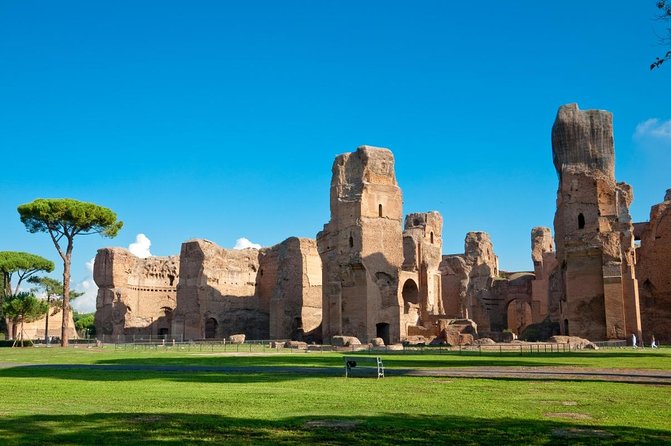
The best trick of this tour is that it does not start in Rome’s tourist crush. You meet at Via Amedeo Crivellucci, 8 (00179 Roma) and then cross the Caffarella Park area on a regenerating walk of about 1 kilometer. It’s a short stretch, but it changes the whole mood of the day. One minute you’re dealing with street noise; the next you’re focused on footsteps, plants, and the sense that you’re leaving the city center behind.
That transition also helps practically. When you finally reach the entrance, you’re not dragging yourself in tired and sweaty. You’ve had a reset, so the cold air underground feels like a proper switch—not a shock.
If you’re a “show up five seconds early” person, do the opposite here. The meeting spot can feel a bit plain and local, so I’d give yourself time to locate the group before the official start.
Deeper underground: more crypts and catacombs
- Rome: Capuchin Crypts and Catacombs Tour with Transfers
★ 4.6 · 6,456 reviews - The Original Roman Crypts and Catacombs Tour with Transfers
★ 4.5 · 4,896 reviews - Rome: Catacombs of St. Callixtus Entry Ticket & Guided Tour
★ 4.6 · 3,037 reviews - Rome: Guided Roman Catacombs Tour with Transfers
★ 4.6 · 1,830 reviews
Sotterranei di Roma: Roman work marks you can actually see
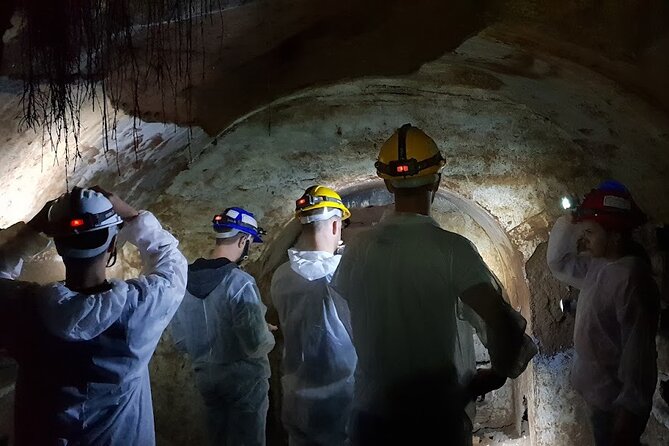
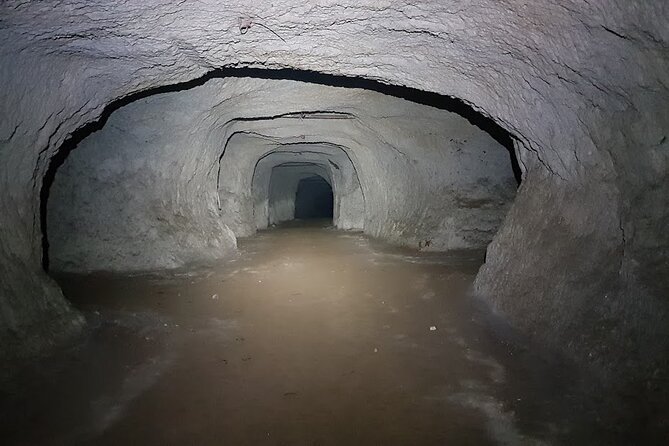
Once underground, the focus shifts to the engineering side of Rome. You’ll enter the Sotterranei di Roma world—tunnels dug for materials used to build the imperial city. The guide walks you through how the spaces were cut, reused, and layered through time.
What makes this stop special is the visual evidence. You can spot chisel marks in the walls, and the story connects those marks to the people who made them. It’s not a vague “ancient people lived here” moment. It’s more specific: quarry work done by enslaved laborers, with the harsh reality that survival wasn’t guaranteed.
As you move, the lighting and timing matter. You’re guided through light-and-shadow views—turn your attention and the stone reads differently. Look closer and you’ll understand how the tunnels functioned as both infrastructure and shelter over centuries.
The “what you should watch for” moment underground
You’ll be looking for details like niches and changes in construction. Some parts can feel visually similar because, well, it’s stone rock-work. But if you follow the guide’s points—where the stonework shifts, where passages narrow—you’ll see that the “same” darkness still has differences worth noticing.
Catacombs and early Christians: darkness with a purpose
After the quarry-tunnel section, the route moves into the catacombs area where early Christians buried their dead. This is where the tour turns emotional, not just educational.
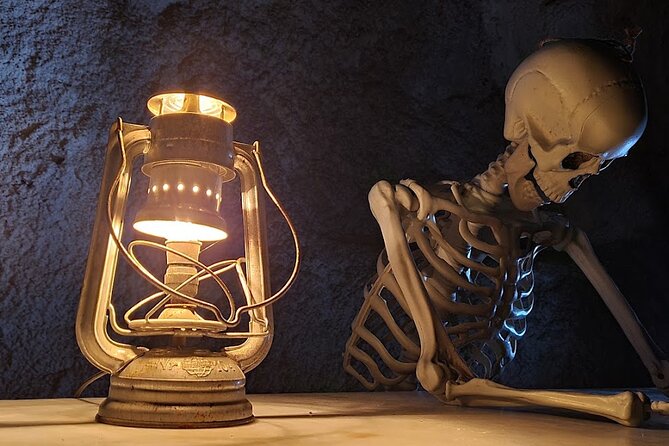
You’ll cross the darkness using an ancient Roman lamp (the experience is built around that style of lighting). Then you continue with exploration that includes using little oil lamps, which changes how you perceive the space. It’s a big difference from modern flashlights. Your light becomes the point. Shadows stretch and collapse as you turn.
At one stage, you’ll switch off the torches and stand in near-total black while the guide explains burial traditions. I like this part because it’s not performative. It’s the closest you’ll get to understanding what darkness means in a room built for people who had to live with it.




A quick note on comfort
The catacombs are damp. Expect a cool temperature even in warm months. One review-style tip I’d take seriously: bring a jumper or layer. Even if you start out fine above ground, you’ll likely want something warmer after the first underground stretch.
Quarries, mushroom farms, and WWII traces: Rome’s underground kept changing
Here’s one of the reasons this tour earns repeat attention: it doesn’t treat the underground as a single frozen time period. You’ll hear about how quarry systems were reused later, including as a mushroom farm. That might sound strange until it clicks—space designed for stone extraction can also become a controlled environment.
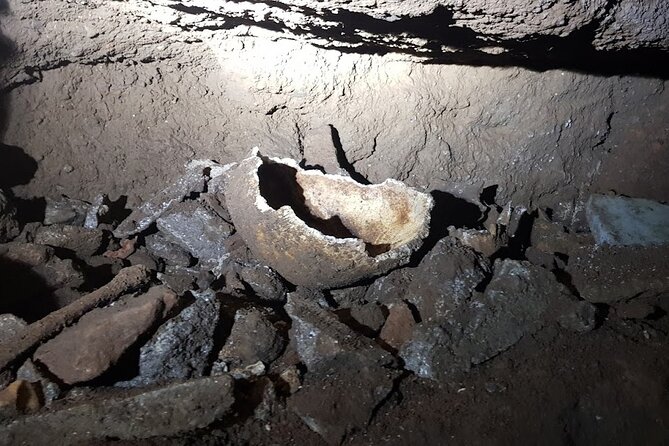
Then the story jumps again to the World War II era. You’ll reach what remains of a fungus dating back to WWII. It’s not just a spooky detail. It’s a way to show that the tunnels have kept breathing different lives, depending on what people needed above and below ground.
This stop can be the most memorable if you enjoy “time layering” as a theme. It also can be the least satisfying if you came hoping for only one type of site with one visual theme. The underground is still underground—stone, passages, and walls—but the guide helps you connect each section to a different chapter.
A pagan temple and the Mithraeum: how religions shared the same real estate
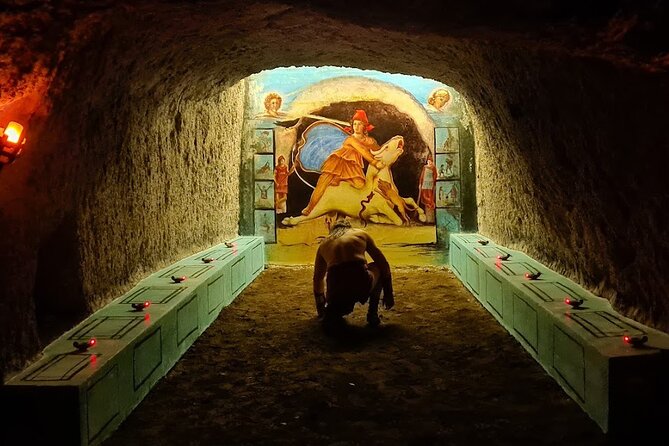
The final major underground component is a pagan temple dug into the ground, plus discussion tied to the spread of Christianity in ancient Rome. You’ll also encounter a Mithraeum in the experience.
This matters because it reframes what you think you know about religion in Rome. Instead of picturing separate worlds, you see overlap in physical spaces and in historical transitions. In other words: religions did not simply replace each other like a movie edit. People lived, worshiped, and adapted inside the same city—and sometimes inside the same kind of hidden architecture.
You may also be offered a drink experience during the tour, including mulsum, a Roman wine described with references to honey and spices. The point isn’t the souvenir vibe. It’s a sensory way to match the underground stories to something Roman-feeling.
Group size, guide style, and why this tour feels personal
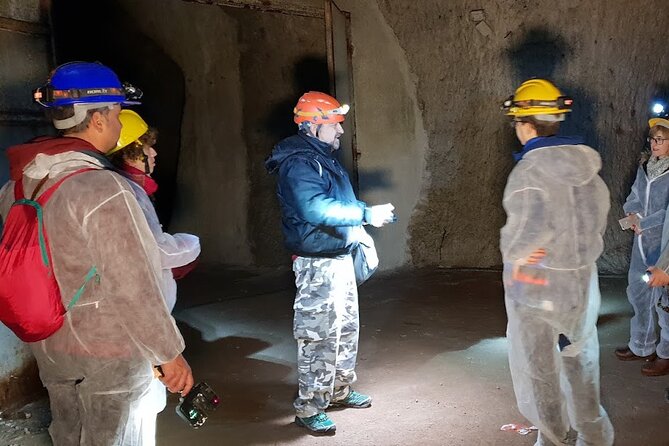
This activity caps at 10 travelers, and that changes everything. Smaller groups mean the guide can manage pacing in a space where getting lost would be easy. You’re also more likely to get direct answers when you ask about the stonework, the catacombs, or why a certain area mattered.
Guide names you might hear include Riccardo, Giuseppe, Daniella, Roberto, and Maurizio. Each guide brings a different tone, but the through-line is storytelling grounded in the site’s visible features—marks in stone, how spaces were cut, and what those spaces were used for.
If you’re the kind of traveler who likes your history with characters and not just dates, this style tends to work well.
How to plan your day: what to wear and how to pace yourself
Think of the tour as three parts in one: above-ground walking, then cold/damp underground movement, then return.
Wear shoes with good grip. The ground underground can be uneven, and you’ll be moving in close quarters. Plan layers, not one heavy coat. You might start warmer after the park walk and then need to adjust as you go deeper and cooler.
Also, plan for the possibility of stuffy air underground. One issue that can come up is poor air quality in some areas, so if you’re sensitive to that sort of environment, it’s worth taking your own health needs seriously.
If you hate long waits, you’ll still want to arrive early to the meeting point. The start is back at Via Amedeo Crivellucci, 8, and the meeting area can feel local and easy to miss if you’re not paying attention.
Price and value: what $114.14 buys you in real time
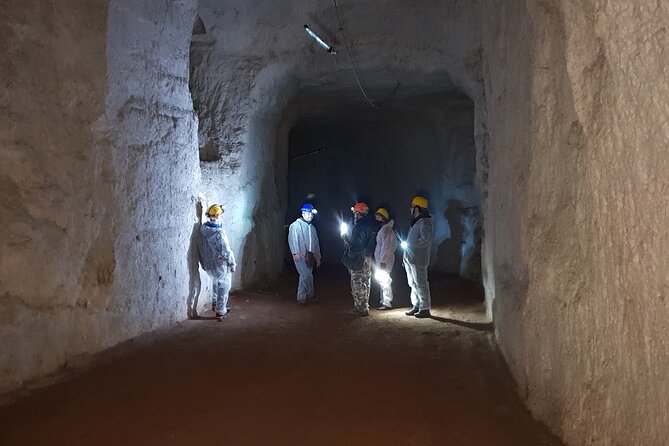
The price is $114.14 per person for an experience around 2 hours 30 minutes (approx.), and the admission ticket is included.
Is it worth it? For me, the value comes from three areas:
1) You’re not just seeing one underground room. You’re moving through multiple layers: quarry tunnels, catacomb spaces, a Mithraeum/pagan temple area, plus WWII-related traces.
2) You’re not doing it with a huge crowd. A maximum of 10 travelers means less shuffling and more guide attention.
3) You get an experience format, not just a walk-through: ancient-style lighting, periods of near-darkness, and a sensory add-on like mulsum.
Could it feel repetitive in the stone textures? Yes, if you only look at walls and ignore what the guide is pointing out. But if you treat it like a guided walk through changing functions of the same underground system, the price starts to make sense.
One practical demand signal: the tour is often booked about 59 days in advance on average. If your dates are fixed, book early enough that you can choose a time that fits your energy level for walking.
Who should book this tour (and who might skip it)
This is a strong match if you want Rome beyond the biggest-name sites, and if you like archaeology that feels lived-in. It’s also great for people who enjoy “how the same place changed jobs over time.”
You should be especially happy if you want:
- a small group experience
- actual guided movement through tunnels and catacombs
- a bit of darkness and atmosphere, not just a lecture
- a clear connection between stonework and human stories
You might hesitate if:
- you hate cold, damp spaces
- you’re sensitive to stuffy air
- you expect only one kind of underground look and nothing else
Should you book the Labyrinth of Rome tour?
If you’re craving an authentic Rome detour that actually changes your sense of the city, I’d book this. The combination of Caffarella Park walk, Roman tunnel work marks, catacombs in controlled darkness, and the Mithraeum/pagan-to-Christian context gives you a full underground arc in just a few hours.
Just go in prepared: bring a warm layer, wear grippy shoes, and expect a decent pre-underground walk. If you do that, you’ll likely come away feeling like you saw a side of Rome most people miss.
FAQ
How long is the Labyrinth of Rome tour?
It runs for about 2 hours 30 minutes (approx.).
Where does the tour start and end?
It starts at Via Amedeo Crivellucci, 8, 00179 Roma RM, Italy, and it ends back at the same meeting point.
Is the tour offered in English?
Yes, the tour is offered in English.
What group size should I expect?
The tour has a maximum of 10 travelers.
Do I need to print anything, or can I use a mobile ticket?
You’ll use a mobile ticket.
Is admission included in the price?
Yes, the admission ticket is included.
What happens if the weather is bad?
This experience requires good weather. If it’s canceled due to poor weather, you’ll be offered a different date or a full refund.
Is free cancellation available?
Yes. You can cancel up to 24 hours in advance for a full refund.
Are service animals allowed?
Yes, service animals are allowed.
More Tour Reviews in Rome
- Vatican Museums, Sistine Chapel & St. Peter’s Basilica Tour
★ 4.3 · 73,970 reviews - Vatican Museums, Sistine Chapel & St Peter’s Basilica Guided Tour
★ 4.5 · 39,149 reviews - Rome: Colosseum, Palatine Hill and Roman Forum Guided Tour
★ 4.8 · 32,814 reviews - Rome: Guided Tour of Colosseum, Roman Forum & Palatine Hill
★ 4.7 · 27,897 reviews - Rome: Colosseum & Forum with Audio Guide App -Optional Arena
★ 4.2 · 24,770 reviews - Rome: Colosseum, Roman Forum and Palatine Hill Guided Tour
★ 4.5 · 23,903 reviews
Further Below Rome
- Rome: Capuchin Crypts and Catacombs Tour with Transfers
★ 4.6 · 6,456 reviews - The Original Roman Crypts and Catacombs Tour with Transfers
★ 4.5 · 4,896 reviews - Rome: Catacombs of St. Callixtus Entry Ticket & Guided Tour
★ 4.6 · 3,037 reviews - Rome: Guided Roman Catacombs Tour with Transfers
★ 4.6 · 1,830 reviews - Rome: Catacombs Guided Tour with Transfer
★ 4.2 · 1,808 reviews - Rome EBike Tour: Appian Way, Catacombs & Roman Aqueducts
★ 5.0 · 1,766 reviews
Just added to our Rome reviews





Roman Catacombs & Crypts Tours, compared.
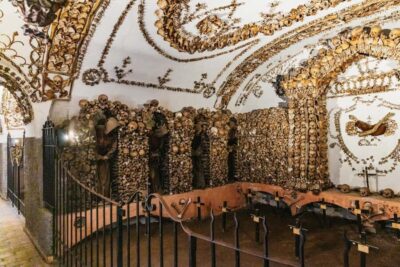 ★ 4.6Capuchin Crypts and Catacombs Tour with TransfersFrom $606,456 reviews
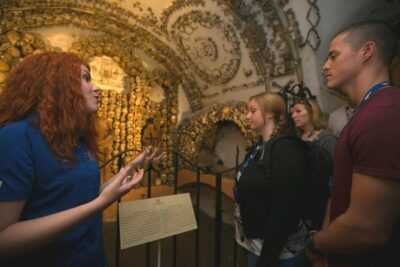 ★ 4.5The Original Roman Crypts and Catacombs Tour with TransfersFrom $664,896 reviews
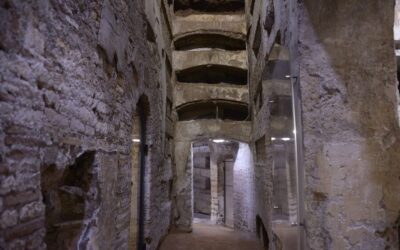 ★ 4.6Catacombs of St. Callixtus Entry Ticket & Guided TourFrom $163,037 reviews
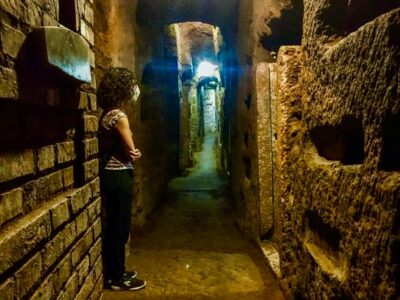 ★ 4.6Guided Roman Catacombs Tour with TransfersFrom $651,830 reviews
 ★ 4.2Catacombs Guided Tour with TransferFrom $541,808 reviews
 ★ 5.0Rome EBike Tour: Appian Way, Catacombs & Roman AqueductsFrom $1021,766 reviews
 ★ 4.6Catacombs and Capuchin Crypt Guided Tour with TransferFrom $411,606 reviews
 ★ 4.7St. Peter’s Basilica Priority Access Tour with Dome & CryptFrom $701,504 reviews
Browse the lists this tour appears in