
Reviewed · APPIAN WAY TOURS
The ancient aqueducts of Rome
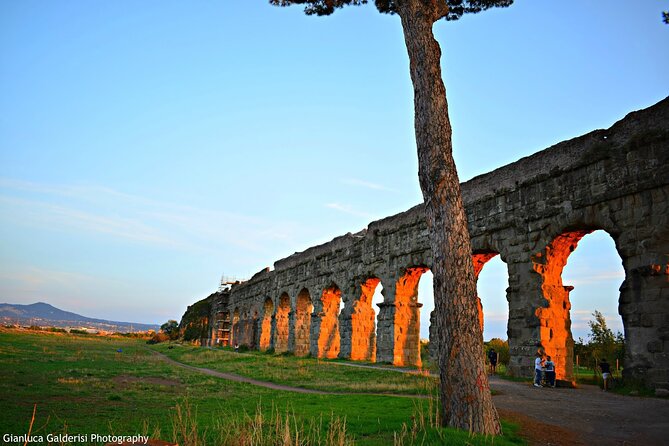
Rome’s aqueducts are hiding in plain sight.
This is a calm, guided walk through Parco degli Acquedotti (Appia Antica area), where you can trace how Romans engineered water, then reused it for centuries. I especially love the off-the-tourist-channel feel: you’re in a real park where locals cycle and stroll, not a fenced museum scene. I also like that the tour focuses on the “why” behind the structures, not just the dates, with guides such as Joseph, Riccardo, and Giuseppe bringing the engineering to life.
One heads-up: it’s a proper walk in a big park for about 2 hours, so you’ll want comfortable shoes and patience for lots of stops and explanation (even though the route is mostly flat).
In This Review
- Key things to notice before you go
- Entering Parco degli Acquedotti: the water park that feels local
- Stop 1: The Appia Antica edge and why this park is unique
- The aqueduct built in 144 BC: seeing reuse across Roman time
- The Sixtus V (Pope Felice) aqueduct: water engineering with a political twist
- The “Water Giant” stretch: healthiest water and massive height
- The Anio vetus aqueduct and Claudius: the highest line of them all
- What the guide adds: charts, photos, humor, and real archaeology energy
- Bonus moments in the park: Roman road fragments and small “touch” opportunities
- Meeting point to finishing point: how the route feels in real time
- Practicalities that make or break this walk
- Price and value: why $96.38 can be a good deal here
- Who this tour suits best (and who might want another plan)
- Should you book the ancient aqueducts of Rome walk?
- FAQ
- How long is the ancient aqueducts tour?
- Where does the tour start and end?
- What language is the tour offered in?
- Is a mobile ticket used?
- Is the walk difficult?
- What happens if the weather is bad?
Key things to notice before you go
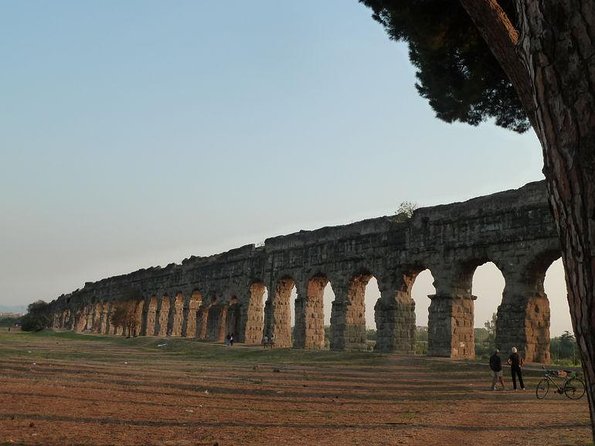
- Seven aqueducts in a small park: the scale feels impossible until you see how close the ruins sit together.
- Reuse is the theme: arches and even whole systems get repurposed across different eras.
- Water you can almost see doing its job: parts of later aqueducts still leak water from working channels.
- Claudius meets Pope Felice: you’ll connect imperial engineering to later papal construction using older arches.
- A quieter Rome: the park is less crowded and more lived-in than the classic sights.
- Small group size: capped at 10, which makes questions actually useful (and you’ll ask a lot).
Entering Parco degli Acquedotti: the water park that feels local
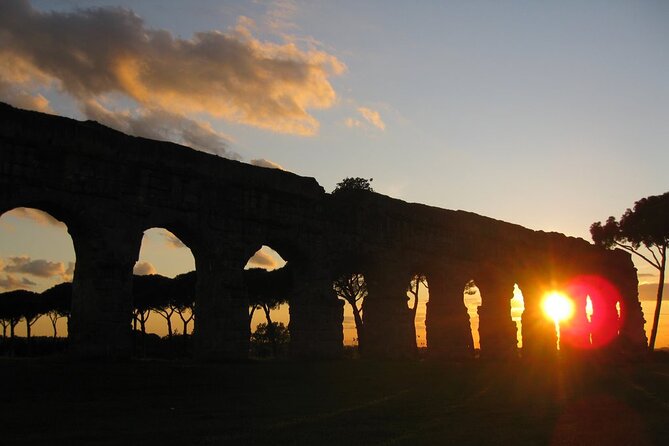
If you’ve seen Rome only from big-ticket monuments, this walk is a welcome reset. The Parco degli Acquedotti area is dedicated to Roman aqueducts, and the cool part is that multiple aqueduct lines show up close together. The setting is also practical: it’s outdoors, open-air, and easy to enjoy at a relaxed pace.
What makes this place special is the mix of “major archaeology” and “real neighborhood life.” You’re not just looking at ruins—you’re in a large park where people move around like they’ve always belonged there. That’s why this tour feels more like a guided stroll through Rome’s water backyard than a checklist stop.
Keep going down the Appian Way
- Rome EBike Tour: Appian Way, Catacombs & Roman Aqueducts
★ 5.0 · 1,766 reviews - Rome: Appian Way & Aqueducts E-Bike Tour (Catacombs & Food)
★ 4.9 · 1,498 reviews - Rome: Appian Way, Catacombs, & Roman Aqueducts E-bike Tour
★ 4.9 · 1,421 reviews - Rome Underground: Catacombs Tour, Aqueducts and Appian Way
★ 5.0 · 1,007 reviews
Stop 1: The Appia Antica edge and why this park is unique
Your walk starts in the Parco Archeologico dell’Appia Antica / Parco degli Acquedotti zone, where you’re set up to notice the aqueducts as a system, not isolated monuments. In this few-hectare area, you can see remnants from seven aqueducts, which is unusually concentrated for a Roman infrastructure story.
You’ll also get the “why Rome works” perspective. Aqueducts weren’t a single project; they were an evolving solution to a city’s needs. That’s part of what your guide will bring out: reuse, upgrades, and changes driven by practical water demands.
Possible drawback here: because the park is spread out and you’ll pause often, you won’t finish with the same “I snapped 100 photos in 20 minutes” feeling. This is slower, and it rewards attention.
The aqueduct built in 144 BC: seeing reuse across Roman time
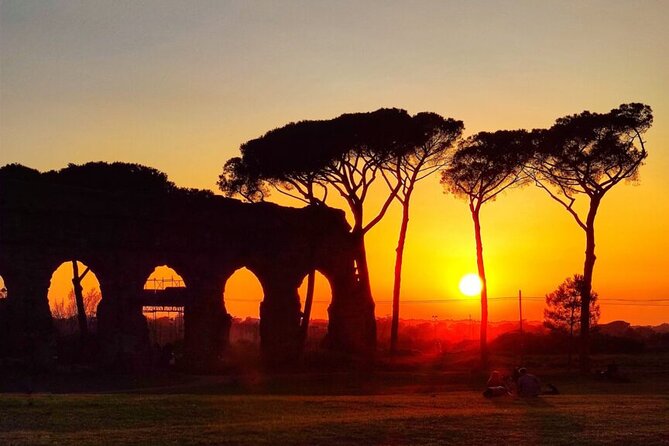
One stop zooms in on an aqueduct built in 144 BC, and the fascinating twist is that it wasn’t just abandoned when new systems arrived. It was partially used for a long time, because later work reused its routes and structures—specifically connecting to the Felice aqueduct era.
That reuse detail matters for you because it changes how you interpret what you see. You’re not viewing a single “ancient moment.” You’re looking at a long-running piece of infrastructure that got repaired, adapted, and folded into newer projects. Rome did not waste what could be reused—especially when the aqueduct already existed and the engineering already worked.
The Sixtus V (Pope Felice) aqueduct: water engineering with a political twist
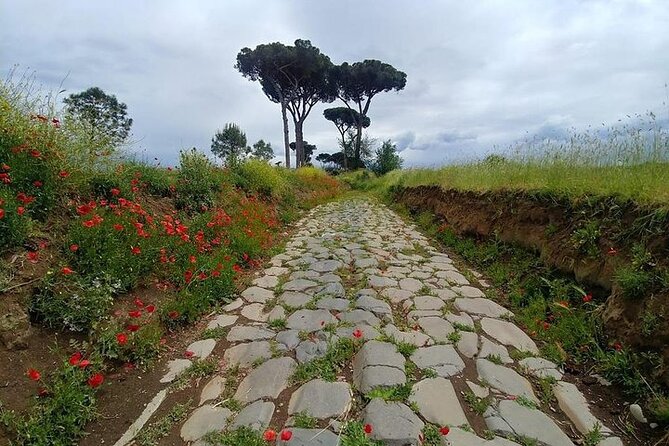
Another key moment involves the aqueduct built around the 1500s by Sixtus V, often tied to the name Pope Felice. The construction is described as reusing arches from the Marcio aqueduct—so you see older elements get pulled into a later plan.
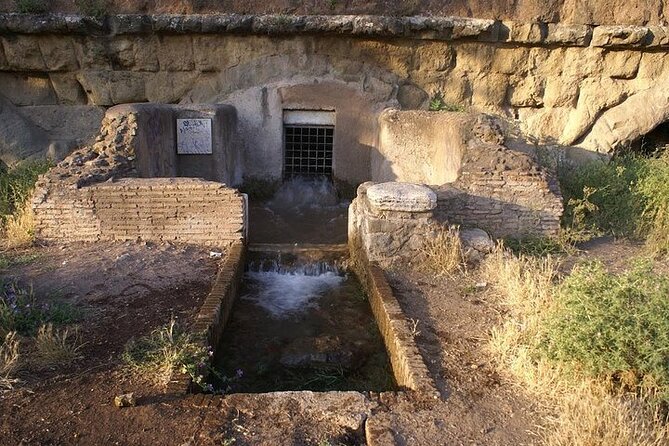
What makes this stop memorable is the sense that the aqueduct is not fully “dead.” The underground part still works, and you can see water leaking from the canal. It’s one of those rare travel moments where the past isn’t just in stone—it’s active behavior, still moving slowly through channels that made sense centuries ago.
And yes, this is the kind of thing you’ll talk about afterward. It’s hard to forget the image of functioning water logic tucked into ruins.
The “Water Giant” stretch: healthiest water and massive height
One of the most dramatic sections is tied to an aqueduct with the healthiest water—and with arches high enough in some stretches (up to about 30 meters) to supply water across much of Rome. The result is that you get what can only be described as a true Water Giant look.
For your trip, this matters because height changes everything: gravity flow needs elevation, and elevation forces architecture—bridges of stone built to do a job. In other words, it’s not just pretty masonry. It’s purposeful engineering made visible.
There’s also a practical angle. The higher stretches can be visually overwhelming at first, especially if you’re scanning for “what to photograph.” Slow down, though. Let your guide walk you through why the line is where it is, and suddenly the ruins make spatial sense.
The Anio vetus aqueduct and Claudius: the highest line of them all
Then you reach the Anio vetus aqueduct, built by Emperor Claudius, connected to the Claudian aqueduct story. Here the emphasis is on vertical ambition: among the aqueducts supplying Rome, this one is described as the highest in absolute terms.
That detail gives you a new way to appreciate Roman engineering. You can see why Romans treated water as a power source for city life. When you’re “pulling” water over distance and at height, you’re not just building pipes. You’re building a system that defines urban survival.
What the guide adds: charts, photos, humor, and real archaeology energy
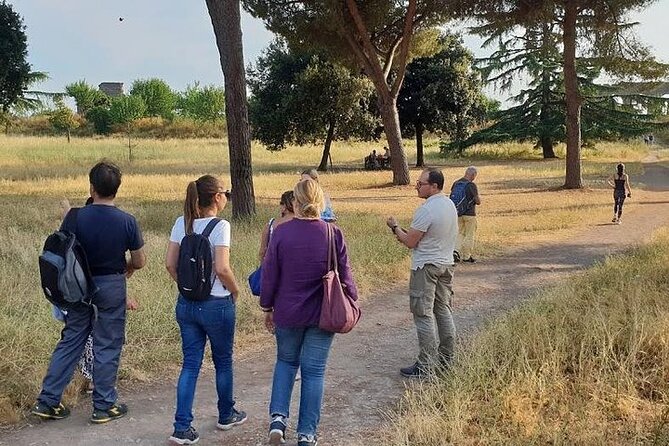
A big reason this tour scores so high is the guidance style. Several guides—Joseph, Riccardo, Giuseppe, Liviana, and Mauricio/Maurizio—come through with a mix of historical context and practical explanations. You’ll hear stories that connect emperors, popes, engineers, and everyday people to the waterworks.
Many guides also use charts and photos to help you visualize the aqueduct lines and how the systems connect. That’s a smart approach on a live walk: when you can’t “see the whole map,” visuals help your brain piece it together.
If you like asking questions, you’re in good shape. The guides are described as patient, and you can work through details like construction methods, stone types, and why different aqueducts ended up where they did.
Bonus moments in the park: Roman road fragments and small “touch” opportunities
This isn’t just aqueducts-on-repeat. Some guides incorporate extra context around the wider Appia Antica area.
For example, one guide (Joseph) reportedly pointed out a section of the ancient Roman road, the Latin road, described as the second oldest road in Rome. Seeing a road fragment in the same overall setting helps you understand the infrastructure logic of the Roman world: water and roads were two sides of how Rome moved people and resources.
One more detail to look for: some participants mention being able to touch the aqueducts. Whether you can do that safely depends on where you’re standing and what’s permitted in the moment, but the fact that it comes up at all tells you the tour aims to be tactile and observational, not just lecture-style.
Meeting point to finishing point: how the route feels in real time
The start point is Giulio Agricola (00174) and the tour ends around Lucio Sestio (00174). It’s also described as near public transportation, which is great news if you’re stacking this with other Rome days.
You’ll meet at the metro stop, and there’s mention of a short snack with us before you head into the park. That small thing helps because the timing can stretch with stops and explanations, and you don’t want low energy when you’re learning.
Time-wise, it’s about 2 hours. That’s enough for several aqueduct sections without turning into a half-day hike, but it’s long enough that shoes truly matter.
Practicalities that make or break this walk
A few details from the tour info and participant experience are worth taking seriously:
- Wear comfortable shoes. People specifically warn against sandals.
- The group is capped at 10 travelers, which usually means better conversation and fewer “listen from afar” moments.
- It’s offered in English, and you’ll get a mobile ticket.
- It works best with good weather, since it’s an outdoor walk. If weather cancels it, you should expect an option for a different date or a refund.
- Because it’s a park, you’ll be around locals, not only visitors—good for atmosphere, but keep an eye on common park paths and shared space.
One more tip: if you care about engineering details, ask early. If your guide uses charts or photos, ask where that aqueduct line fits in the overall system. You’ll enjoy the rest of the walk more once you understand the map in your head.
Price and value: why $96.38 can be a good deal here
At $96.38 per person for about 2 hours, this isn’t a “cheap and cheerful” add-on. But it can still be good value, because you’re paying for three things that most budget walks skip:
1) Specialized context: aqueduct archaeology is niche, and the tour aims to explain how and why the structures connect.
2) A quieter setting: you’re getting off the main tourist track into a park that’s less crowded and more lived-in.
3) Small group pacing: max 10 means you’re not just part of a loud stream.
Also, this kind of experience tends to be booked ahead. The average booking window is about 57 days, so if you want a specific day, don’t wait until the last minute.
Who this tour suits best (and who might want another plan)
This is a strong choice if you enjoy:
- Roman engineering and infrastructure
- walking tours that feel human-sized
- history explained with practical, visual context
- quieter Rome moments outside Colosseum and Vatican lines
It’s also described as fun for kids in at least some cases, because the park setting allows space to move around and explore. That said, it still involves walking and listening, so younger kids may need energy management.
If you’re the type who wants only big iconic sights in short photo stops, this one might feel too slow. But if you want Rome that works like a puzzle—water, elevation, reuse, and politics—this is your kind of walk.
Should you book the ancient aqueducts of Rome walk?
I’d book this if you want something practical and memorable: aqueduct ruins explained in the place where they still make sense, in a park you can feel as part of modern Rome. The standout strengths are the engineering-focused storytelling, the less-crowded atmosphere, and the chance to connect emperors and papal projects to the same water reality.
Skip it or consider alternatives if you have zero interest in infrastructure history and prefer only the headline monuments. And do plan for walking time—bring the right shoes and show up ready to pause.
If you’re staying in Rome for several days, this is a great way to end a day with peace: stonework above you, quiet paths around you, and water logic running in the background of the city’s story.
FAQ
How long is the ancient aqueducts tour?
It’s listed at about 2 hours (approx.), with multiple stops in the park.
Where does the tour start and end?
The start is at Giulio Agricola (00174, Rome) and the end is at Lucio Sestio (00174, Rome).
What language is the tour offered in?
The experience is offered in English.
Is a mobile ticket used?
Yes. The tour includes a mobile ticket.
Is the walk difficult?
It involves walking in a large park, and you should wear comfortable shoes. The walking is described as mostly flat, but it’s still a real walking tour.
What happens if the weather is bad?
This experience requires good weather. If it’s canceled due to poor weather, you’ll be offered a different date or a full refund.
More Tour Reviews in Rome
- Vatican Museums, Sistine Chapel & St. Peter’s Basilica Tour
★ 4.3 · 73,970 reviews - Vatican Museums, Sistine Chapel & St Peter’s Basilica Guided Tour
★ 4.5 · 39,149 reviews - Rome: Colosseum, Palatine Hill and Roman Forum Guided Tour
★ 4.8 · 32,814 reviews - Rome: Guided Tour of Colosseum, Roman Forum & Palatine Hill
★ 4.7 · 27,897 reviews - Rome: Colosseum & Forum with Audio Guide App -Optional Arena
★ 4.2 · 24,770 reviews - Rome: Colosseum, Roman Forum and Palatine Hill Guided Tour
★ 4.5 · 23,903 reviews
The Appian Way, Continued
- Rome EBike Tour: Appian Way, Catacombs & Roman Aqueducts
★ 5.0 · 1,766 reviews - Rome: Appian Way & Aqueducts E-Bike Tour (Catacombs & Food)
★ 4.9 · 1,498 reviews - Rome: Appian Way, Catacombs, & Roman Aqueducts E-bike Tour
★ 4.9 · 1,421 reviews - Rome Underground: Catacombs Tour, Aqueducts and Appian Way
★ 5.0 · 1,007 reviews - Appian Way Aqueducts Bike Tour (Catacombs & Lunch Option)
★ 5.0 · 975 reviews - Rome: Appian Way, Aqueducts, and Catacombs Tour
★ 4.7 · 942 reviews
Just added to our Rome reviews





Appian Way Tours, compared.
 ★ 5.0Rome EBike Tour: Appian Way, Catacombs & Roman AqueductsFrom $1021,766 reviews
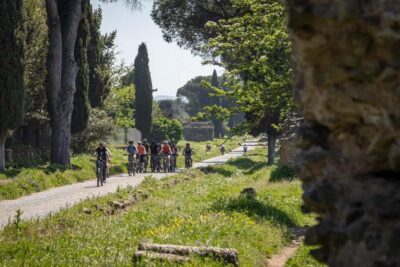 ★ 4.9Appian Way & Aqueducts E-Bike Tour (Catacombs & Food)From $881,498 reviews
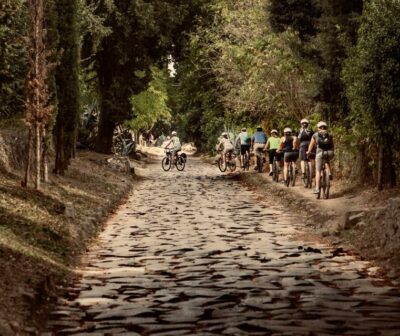 ★ 4.9Appian Way, Catacombs, & Roman Aqueducts E-bike TourFrom $851,421 reviews
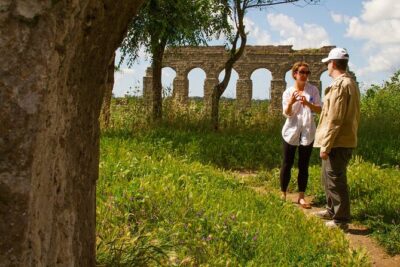 ★ 5.0Rome Underground: Catacombs Tour, Aqueducts and Appian WayFrom $651,007 reviews
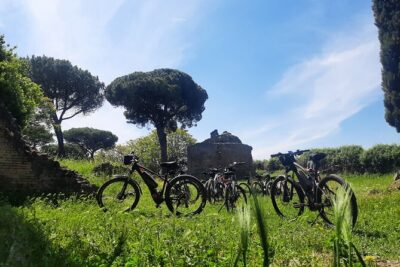 ★ 5.0Appian Way Aqueducts Bike Tour (Catacombs & Lunch Option)From $78975 reviews
 ★ 4.7Appian Way, Aqueducts, and Catacombs TourFrom $64942 reviews
 ★ 5.0Appian Way, Catacombs and Aqueducts Park Tour with Top E-BikeFrom $102735 reviews
 ★ 4.6Appian Way E-Bike Tour Catacombs, Aqueducts & PicnicFrom $89727 reviews
Browse the lists this tour appears in