
Reviewed · TRASTEVERE TOURS
Small Group Rome’s Jewish Ghetto and Trastevere Tour
Rome gets personal in this two-neighborhood walk.
This is a focused, small-group tour that links Roman ruins and everyday streets to the lived story of Rome’s Jewish community, then sends you into Trastevere’s maze of lanes with more history around every corner.
I like the small group size (max 15) because questions come up naturally, and the guide can answer them without rushing. I also like that most stops are built-in and free to visit, so you’re paying mainly for the guided storytelling and route.
One key consideration: the tour shows the synagogue area from the outside only. If you were hoping to step inside the Tempio Maggiore di Roma, plan something else for that.
In This Review
- Key things to look forward to
- What you’re really buying for $36.05
- Meeting point flow: starting in Campitelli, ending in Trastevere
- Teatro di Marcello: seeing Rome as a living stage
- Il Portico di Ottavia: one building, 2,000 years of layers
- Roman Ghetto: a 50-minute story you can actually follow
- Fontana delle Tartarughe and what that story adds
- Tempio Maggiore di Roma: synagogue context from the outside
- Trastevere’s lanes: where the walk turns fun
- Isola Tiberina break: gelato reset on Rome’s small island
- Pont Fabricius: one of Rome’s oldest bridges
- The guide makes or breaks it: Ben, Alethia, Alethea, and Alisha
- Practical tips to make this walk easy and worthwhile
- Who this tour fits best
- Should you book this Rome Jewish Ghetto and Trastevere tour?
- FAQ
- How long is the Small Group Rome Jewish Ghetto and Trastevere Tour?
- What does the tour cost?
- How large is the group?
- Is the tour offered in English?
- Are tickets included for the stops?
- Does the tour include entrance to the synagogue?
- Where does the tour start and end?
Key things to look forward to
- Max 15 travelers means a calmer, more conversational pace than big bus tours
- Ghetto focus for 50 minutes gives the Jewish quarter context, not just quick sightseeing
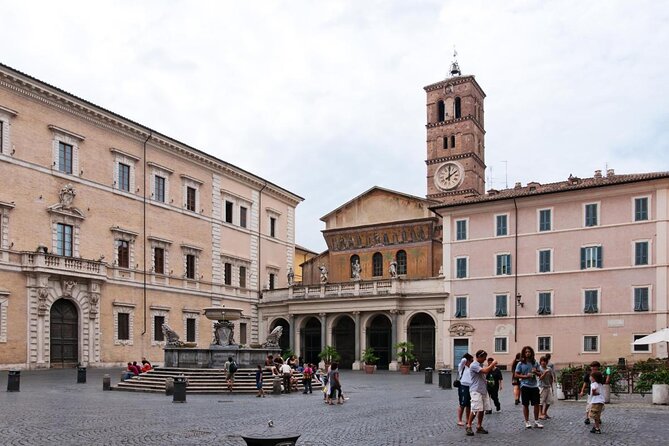
- Trastevere exploration for about an hour lets you feel the neighborhood vibe and not rush past it
- Outdoor views of Tempio Maggiore di Roma with explanation of design meanings
- Optional gelato/coffee break on Isola Tiberina to reset between themes
What you’re really buying for $36.05
For $36.05, you’re not just buying access to monuments. You’re buying a route that ties together themes: Roman architecture, a community under pressure, and then the everyday street life of Trastevere.
The big value point is how much is included for a set ticket price. The tour is about 2 hours 30 minutes, it’s guided, and the listed sights are marked as free (so there’s no surprise entry-cost pileup on the day). You also get a mobile ticket and the tour runs in English.
Where to be realistic: this is still a walking tour. The best outcome is when you treat it like a guided walk-through of ideas, not a checklist. If you want long indoor time or museum-style visits, you might find the outdoor approach limiting.
More lanes worth losing an evening in Trastevere
- Winner 2025 Rome Twilight Trastevere Food Tour by Eating Europe
★ 5.0 · 5,157 reviews - Rome Food Tour: Campo de’ Fiori, Ghetto, Trastevere Winner 2024
★ 5.0 · 3,205 reviews - Rome: Guided Food Walking Tour with Wine in Trastevere
★ 4.9 · 3,105 reviews - Rome: Trastevere Food tour with Free-Flowing Fine Wine
★ 5.0 · 2,853 reviews
Meeting point flow: starting in Campitelli, ending in Trastevere
The tour starts at Saint Rita of Cascia in Campitelli, on Via Montanara (00186). It finishes at Piazza Trilussa in Trastevere (00153). That end point matters because it drops you right where you’ll want to wander after the tour.
Because you’ll be moving between neighborhoods, the route is designed to keep things efficient: short stops for big context, then longer time where the story needs it. Also, you get information at the end about how to get to wherever you’re heading next.
One more small practical note: the tour is marked as near public transportation, which helps if you’re pairing it with other Rome plans. And since it’s service-animal allowed and “most travelers can participate,” it’s set up for a wide range of visitors.
Teatro di Marcello: seeing Rome as a living stage
The walk kicks off with Teatro di Marcello, a major Roman ruin. This stop is short (about 5 minutes), but it’s an important one because it frames how Rome built public life into stone.
What I love about starting here is that it gives you an immediate sense of scale. Before you hit the Ghetto, you’re reminded that these neighborhoods were part of a much bigger Roman city. That helps when the tour later discusses long-term change in the Jewish quarter.
If you tend to speed past ruins, slow down here. Look for the way the structure holds its shape across centuries. It’s the kind of sight that makes the rest of the walk feel anchored, not abstract.
Il Portico di Ottavia: one building, 2,000 years of layers
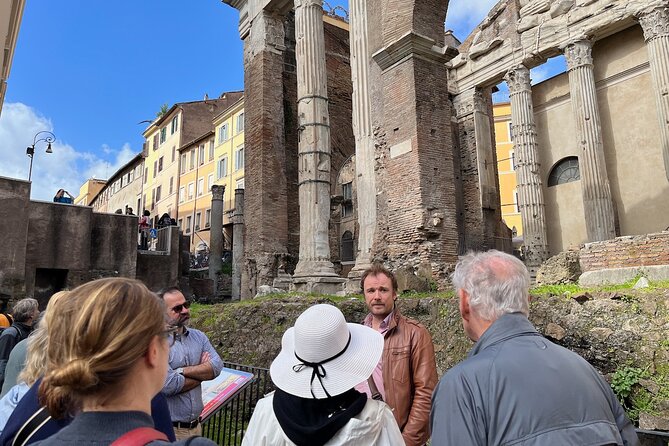
Next up is Il Portico Di Ottavia, also about 5 minutes. The tour frames it as a building with a changing history over more than 2,000 years, starting from its foundation in the 1st Century BC and continuing to today.
This is the kind of stop that pays off if you like cause-and-effect history. You’ll get the sense that Rome didn’t just preserve the past. It reused it, remodeled it, and built new meanings on top of old spaces.
The drawback is simple: with only a brief stop, you won’t get a slow, step-by-step architectural analysis. But that’s also why this tour works as a primer. It points you toward the right questions, then moves you onward.
More of the Ghetto's quiet corners

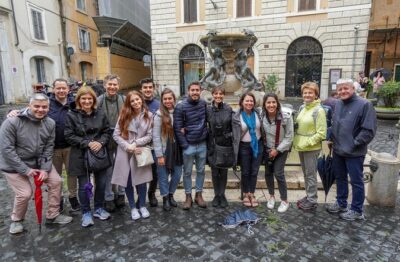
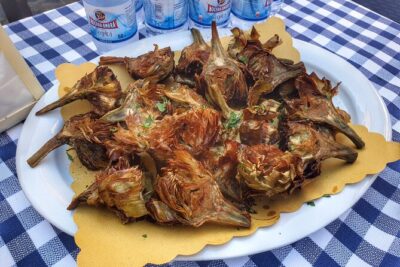
Roman Ghetto: a 50-minute story you can actually follow
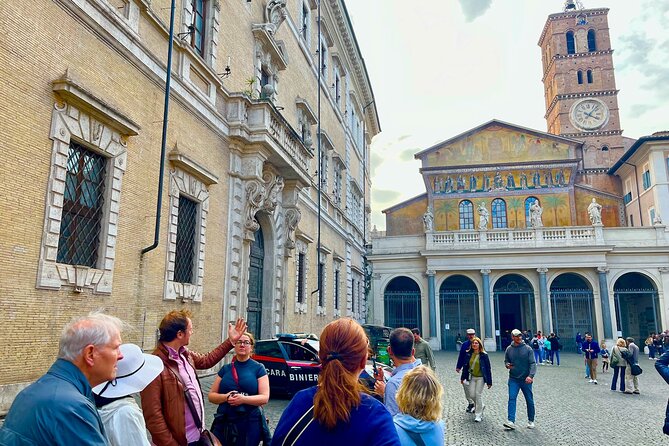
The heart of the tour is the Roman Ghetto, where you’ll spend about 50 minutes. This is where the route becomes more than sightseeing. You’re learning about the Jewish quarter’s history as part of Rome’s larger story, spanning over 2,000 years.
This section is what most people come for, and it’s also the part that can feel emotionally serious. The tour’s strength is that it aims to tell the difficult parts respectfully without turning them into a dry lecture. That matters in the Ghetto, where the details are not just academic.
If you’re the type who likes to ask questions, this is the time to do it. The small group format (max 15) helps here, because you’re more likely to get real answers tied to the places you’re standing in. And if you’re visiting Rome for the first time, this stop gives you a framework that makes later street-level exploration more meaningful.
Practical tip: bring a steady pace into this section. Even if you’re used to fast museum walking, the Ghetto part rewards slower attention—especially to signage and the small streets you’ll pass.
Fontana delle Tartarughe and what that story adds
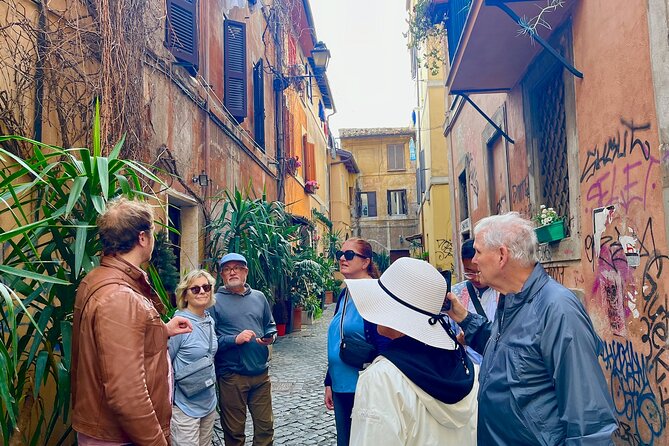
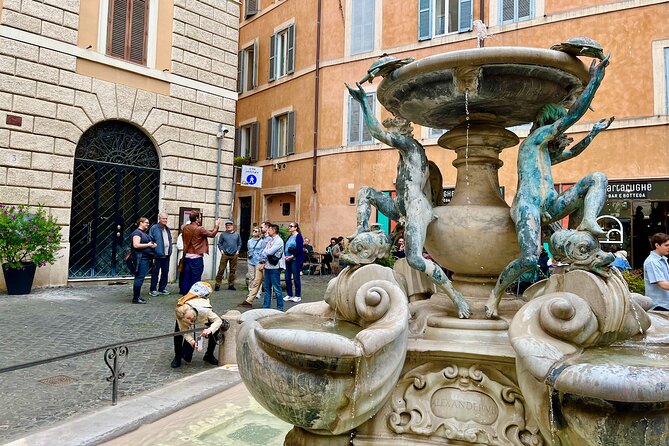
After the Ghetto, you hit Fontana Delle Tartarughe, one of Rome’s most beautiful small fountains. The stop is brief (about 5 minutes), but it’s a smart “breather” between heavier history and neighborhood strolling.
Fountains in Rome often work like public history: they carry stories through design and naming. The guide will explain the story behind this one, so you’re not just snapping photos. You’re learning how even a small landmark fits into the city’s bigger narrative.
If you like to photograph street details, this is a good stop to slow down. Look for how the fountain anchors the spot and how the surrounding streets funnel you back into walking mode.
Tempio Maggiore di Roma: synagogue context from the outside
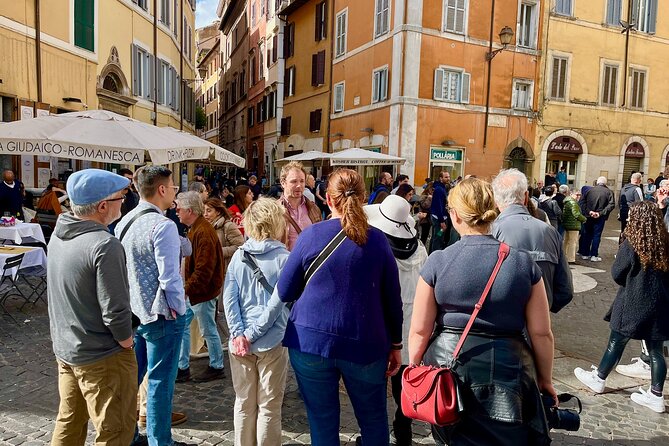
You’ll then reach the Tempio Maggiore di Roma. The approach here is outside viewing only, with a short explanation (about 5 minutes) of the Great Synagogue’s history and the subtle meanings behind its decoration and construction.
I appreciate this setup because you get context without needing to coordinate with an entrance ticket. But it also explains the earlier consideration: you’re not going inside on this tour.
Still, an outside viewing can be meaningful if you know what to look for. The guide’s focus on design meanings helps you read the building like a language, not just a backdrop.
If you’re especially curious about the synagogue interior or services, treat this tour as the perfect warm-up. You’ll come away with the context to make your own follow-up visit feel much more personal.
Trastevere’s lanes: where the walk turns fun
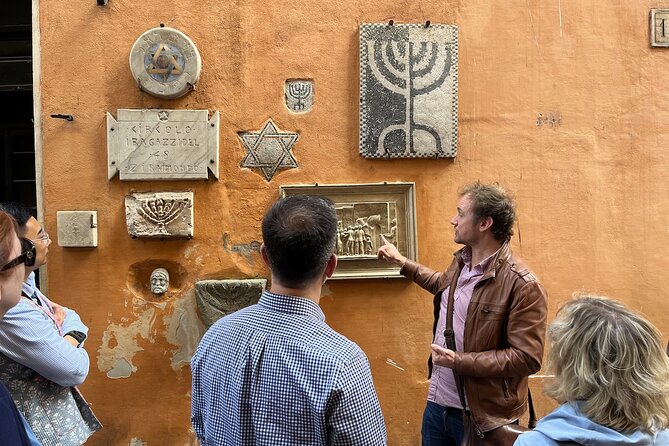
Next comes the shift that many people love: Trastevere. This lasts about 1 hour, and it’s where you get the neighborhood’s alleyways and charm, plus the reasons it still feels magical today.
This part is a different energy. In the Ghetto, you’re absorbing long-term community history. In Trastevere, you’re absorbing atmosphere—small streets, lively street-level details, and the sense that everyday Rome still runs through these blocks.
In my view, the value here is how Trastevere acts as a contrast without feeling like a detour. You’re still staying in the same city story. You just move from one kind of history to another: how people lived, gathered, traded, and shaped a neighborhood’s identity over time.
A practical upside: Trastevere is also where you can take advantage of the guide’s local instincts. Many tours give advice, but here it’s part of the experience since you end in Trastevere. You might even get specific food suggestions, like where to refuel afterward for things such as ricotta and cherry pie.
Isola Tiberina break: gelato reset on Rome’s small island
Around the middle-late stretch, you’ll reach Isola Tiberina, Rome’s small island in the middle of the Tiber. There’s an optional break for gelato or coffee/drinks (about 15 minutes).
This is a nice pacing tool. After the story weight of the Ghetto and then the neighborhood walk, you get a moment to breathe, hydrate, and reset. It also gives you a different visual angle on the river.
Then, the guide shares stories about this tiny corner of Rome spanning over 2,500 years. That’s the kind of time-jump that makes the whole tour feel like one continuous thread: big eras, small places.
If you’re sensitive to walking time, use the break. If you’re not, you can still take a short moment to look outward before you’re pulled back into the final stretch.
Pont Fabricius: one of Rome’s oldest bridges
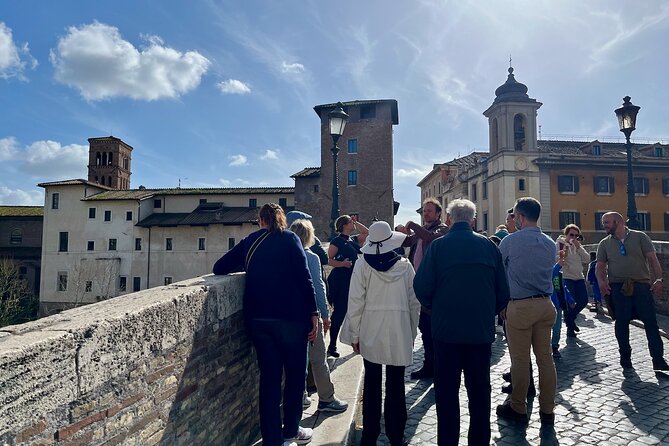
The last stop is Pont Fabricius, about 5 minutes. It’s presented as one of Rome’s oldest bridges and is a meaningful final note because it ties back to movement—how people crossed space in every era.
Ending here works well because it gives closure. You’ve spent the tour learning about institutions, streets, and communities. The bridge is a literal connection point.
Take this moment for photos if you like “last frame” viewpoints. Even if you don’t, the stop is quick and focused, and it leaves you ready to keep exploring on your own.
The guide makes or breaks it: Ben, Alethia, Alethea, and Alisha
The common thread in the best parts of this tour is the guide’s storytelling style. Guides such as Ben and Alethia are praised for being witty, respectful, and able to handle questions without turning the walk into a lecture.
I also like that the tone aims to honor difficult moments without becoming dull and dry. That is hard to do with heavy topics, especially when you’re also walking. Here, it helps that the route moves fast where it can and slows down where it matters.
A few guide-related strengths you can count on:
- clear explanations that connect buildings to the people who lived around them
- quick handling of questions from the group
- practical street-level storytelling, not just dates
If you want more than facts, you want this kind of guide. The tour becomes livelier, and your memory sticks longer.
Practical tips to make this walk easy and worthwhile
A couple of things will help you get the best version of the tour:
- Wear comfortable shoes. It’s a walking route with multiple short stops plus one longer neighborhood section.
- Bring water. Snacks aren’t included, but you’ll have chances to stop if you need a drink.
- During the Ghetto part, keep your tone respectful and your attention steady. The history is not just scenery.
- Use Trastevere time to think about your next meal. Your guide can point you toward good options, and the tour ends in the neighborhood where you’ll want to continue walking.
If you’re a first-time Rome visitor, I’d also consider doing this earlier in your trip. It gives you a map of meanings. Then when you revisit parts of the city on your own, you’re not starting from scratch.
Who this tour fits best
This works especially well if you want:
- a two-neighborhood overview that links Rome’s Jewish community history to everyday street life in Trastevere
- an experience that stays sensitive while still being interesting
- a guided walk with room for questions, thanks to the small group size
It may be less ideal if you:
- specifically want to enter the synagogue building (this tour is outside only)
- prefer long museum-style stops rather than short, story-driven viewing points
- dislike walking and would rather sit for most of the time
Should you book this Rome Jewish Ghetto and Trastevere tour?
If your goal is to understand Rome beyond postcard stops, I think this is a strong choice. For $36.05 you get an expert guide, a smart mix of Roman landmarks and neighborhood life, and a Ghetto segment that stays serious without losing momentum.
Book it if you want context you can carry with you as you explore on your own afterward, especially since the tour ends in Trastevere where you’ll likely want to keep going.
Skip it only if synagogue interior access is a must for you. Otherwise, this is a well-paced way to get oriented fast and to learn the kind of history that actually changes how you see the streets.
FAQ
How long is the Small Group Rome Jewish Ghetto and Trastevere Tour?
It runs for about 2 hours 30 minutes.
What does the tour cost?
The price listed is $36.05 per person.
How large is the group?
The tour is limited to a maximum of 15 travelers.
Is the tour offered in English?
Yes, it’s offered in English.
Are tickets included for the stops?
Admission tickets are listed as free for the stops on the route, and the tour includes an expert guide.
Does the tour include entrance to the synagogue?
No. The synagogue (Tempio Maggiore di Roma) is viewed from the outside only.
Where does the tour start and end?
It starts at Saint Rita of Cascia in Campitelli (Via Montanara, 00186 Roma) and ends at Piazza Trilussa in Trastevere (00153 Roma). The guide provides directions at the end.
More Tour Reviews in Rome
- Vatican Museums, Sistine Chapel & St. Peter’s Basilica Tour
★ 4.3 · 73,970 reviews - Vatican Museums, Sistine Chapel & St Peter’s Basilica Guided Tour
★ 4.5 · 39,149 reviews - Rome: Colosseum, Palatine Hill and Roman Forum Guided Tour
★ 4.8 · 32,814 reviews - Rome: Guided Tour of Colosseum, Roman Forum & Palatine Hill
★ 4.7 · 27,897 reviews - Rome: Colosseum & Forum with Audio Guide App -Optional Arena
★ 4.2 · 24,770 reviews - Rome: Colosseum, Roman Forum and Palatine Hill Guided Tour
★ 4.5 · 23,903 reviews
More Around the Jewish Ghetto
- Rome Food Tour: Campo de’ Fiori, Ghetto, Trastevere Winner 2024
★ 5.0 · 3,205 reviews - Jewish Ghetto and Trastevere Tour Rome
★ 4.5 · 1,729 reviews - Rome: Eat Like a Roman Ghetto & Campo de’ Fiori Food Tour
★ 5.0 · 1,037 reviews - Jewish Ghetto and Synagogues with Jewish Roman Guide 3 Hours
★ 5.0 · 907 reviews - Jewish Ghetto & Piazza Navona: Food, Wine & Sightseeing Rome Tour
★ 5.0 · 460 reviews - Rome: Food & Wine Tour of Campo de Fiori, Ghetto, Trastevere
★ 4.8 · 413 reviews
Still in Trastevere? Keep Going
- Winner 2025 Rome Twilight Trastevere Food Tour by Eating Europe
★ 5.0 · 5,157 reviews - Rome Food Tour: Campo de’ Fiori, Ghetto, Trastevere Winner 2024
★ 5.0 · 3,205 reviews - Rome: Guided Food Walking Tour with Wine in Trastevere
★ 4.9 · 3,105 reviews - Rome: Trastevere Food tour with Free-Flowing Fine Wine
★ 5.0 · 2,853 reviews - Rome: Trastevere & Campo de Fiori Street Food Walking Tour
★ 4.9 · 2,768 reviews - Rome: Award Winning Trastevere Group Food Tour with Wine
★ 5.0 · 2,273 reviews
Just added to our Rome reviews





Trastevere Tours, compared.
 ★ 5.0Winner 2025 Rome Twilight Trastevere Food Tour by Eating EuropeFrom $1255,157 reviews
 ★ 5.0Rome Food Tour: Campo de’ Fiori, Ghetto, Trastevere Winner 2024From $883,205 reviews
 ★ 4.9Guided Food Walking Tour with Wine in TrastevereFrom $1003,105 reviews
 ★ 5.0Trastevere Food tour with Free-Flowing Fine WineFrom $1022,853 reviews
 ★ 4.9Trastevere & Campo de Fiori Street Food Walking TourFrom $512,768 reviews
 ★ 5.0Award Winning Trastevere Group Food Tour with WineFrom $812,273 reviews
 ★ 4.8Trastevere Street Food Walking Tour with Local ExpertFrom $571,784 reviews
 ★ 4.5Jewish Ghetto and Trastevere Tour RomeFrom $41,729 reviews
Browse the lists this tour appears in