
Reviewed · PANTHEON TOURS
Rome Walking Tour: Pantheon, Trevi, Navona & Hidden Gems
Rome can feel like a museum you got lost inside.
This 2-hour small-group walk strings together the big Roman icons with a few curveballs, so you leave with a clearer sense of how the city fits together. I especially like the short stops that keep the pace friendly, and the local guide factor that turns famous landmarks into stories you can remember. One consideration: Pantheon access isn’t included, so if going inside matters to you, plan for that separately.
You’ll start near Piazza d’Aracoeli, weave through the Imperial-era core, then hit Trevi at night and finish in Piazza Navona with time to decide where to eat nearby. The group stays small (max 15 travelers) and the tour is offered in English with a mobile ticket, which keeps logistics simple on a first visit.
In This Review
- Key highlights you’ll actually feel during the walk
- Piazza Venezia and the Imperial core: the fast track to Rome’s layout
- Galleria Sciarra: a short courtyard break that feels like finding a secret room
- Trevi Fountain after dark: legends, timing, and the famous coin tradition
- Chiesa di Sant’Ignazio di Loyola: Baroque illusion art and the fake dome effect
- The Pantheon viewpoint: amazing architecture, without built-in admission
- Piazza Navona: finishing with fountains, Baroque façades, and dinner decisions
- The real value: small-group size and guides who keep you moving
- Price and value: why $30-ish can be a smart first Rome plan
- What about renovations and changes on the ground?
- Practical tips so the walk feels easy, not stressful
- Who this Rome walk suits best
- Should you book this Rome walking tour?
- FAQ
- Is Pantheon entry included?
- How long is the walk?
- How big is the group?
- Is it offered in English?
- Do I need a mobile ticket?
- Where does the tour start and end?
- Do I need good weather for the tour?
- Is the tour free of admission fees?
- Can I cancel for a full refund?
Key highlights you’ll actually feel during the walk
- Tight, doable pacing for a 2-hour orientation of central Rome
- Trevi Fountain in the evening light plus the legends behind the sculptures
- A Baroque church with illusion art (hello, fake dome effect)
- A secret-feeling courtyard stop at Galleria Sciarra
- Must-sees plus context from Piazza Venezia through to Navona
- Small group size that makes Q&A and crowd navigation easier
Piazza Venezia and the Imperial core: the fast track to Rome’s layout
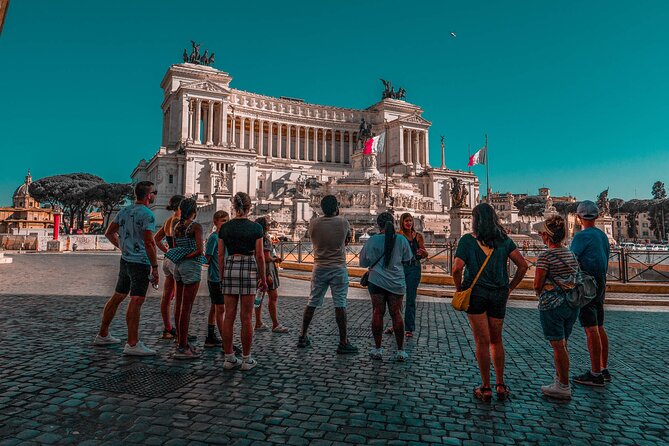
The walk begins around Piazza d’Aracoeli (meet near Via di S. Venanzio) and quickly moves you into the story of ancient power. You’re not just ticking off monuments. You’re being shown how this part of Rome changed over time—ancient center of force, later reshaped through Renaissance influence, and then marked again in the Napoleonic era.
That matters because Rome is layered. The same stone can have multiple “jobs” across centuries. With a guide, it clicks: why certain buildings sit where they do, and why some squares feel like they were designed for spectacle.
Practical note: this start area can be busy and a little confusing if you arrive late. I’d use the meeting-point details in your confirmation and double-check the exact spot before you commit to a taxi or a quick coffee.
The Pantheon, a couple more takes
- Rome: Pantheon Priority Entry Ticket & Interactive App
★ 4.1 · 5,114 reviews - Rome: Pantheon Priority Entry Tickets with Interactive App
★ 4.6 · 4,108 reviews - Rome: Pantheon Timeless Marvel Guided Tour with Entry Ticket
★ 4.9 · 4,002 reviews - Castel Sant’Angelo: Ticket with optional Vatican or Pantheon
★ 4.4 · 3,088 reviews
Galleria Sciarra: a short courtyard break that feels like finding a secret room
After the big-city backdrop, you step into Galleria Sciarra, a 19th-century courtyard that’s known for art nouveau frescoes and detailed paintings. It’s the kind of stop that works because it’s short—about 10 minutes—but it changes the tone of the tour.
Why you’ll like it: Rome can be loud. This is a visual breather. You get decorative artwork without the same level of exterior crowd pressure, and it gives you a contrast to the grand “postcard” sites.
Drawback to keep in mind: since it’s a courtyard stop, it won’t be the same kind of monument experience as the Pantheon or Trevi. Think of it as a mood-shift and a design lesson, not a major “wow, you must go inside for 45 minutes” site.
Trevi Fountain after dark: legends, timing, and the famous coin tradition
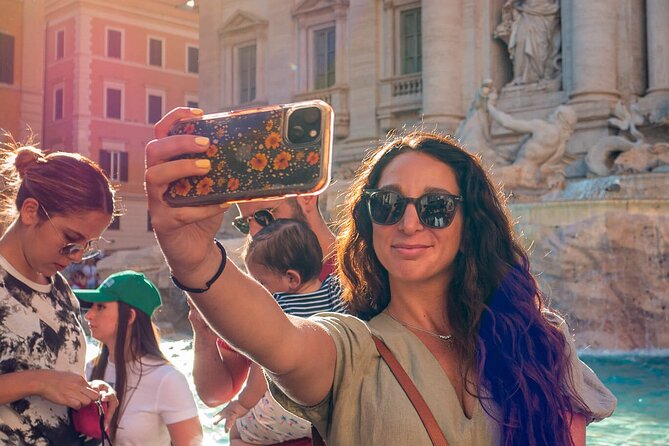
Trevi is the moment most people picture when they think of Rome. Here, the tour is timed so you experience the fountain as it glows at night. That light changes everything. At night, Trevi reads less like a tourist checklist and more like a staged piece of theater.
Your guide also ties together what you’re seeing with the legends behind the fountain’s sculpted beauty and the tradition of tossing a coin for good luck. The best part is how it connects art to storytelling—so when you look up close, you understand what you’re actually staring at instead of only noticing the crowd.
Small reality check: Trevi is Trevi. You should expect people, even on a guided walk. The value of having a guide is that you don’t have to guess where to stand for the best views and how to move without losing the group.
Chiesa di Sant’Ignazio di Loyola: Baroque illusion art and the fake dome effect
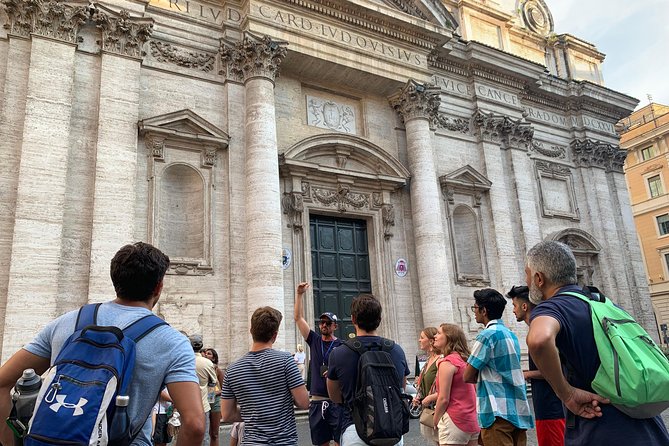
Next comes Chiesa di Sant’Ignazio di Loyola, a grand Baroque church known for illusionist art and an awe-inspiring fake dome. This stop can be surprisingly emotional in a quiet, practical way: once you understand what’s going on, the church becomes a magic trick you can see working.
What makes it special on a walking tour is the sequencing. You’ve gone from ancient/legend spectacle at Trevi to deliberate illusion design here. It’s a reset in how you see space—less “look at the landmark,” more “watch how the building plays with your eyes.”
Possible drawback: you’ll spend about 15 minutes here, so you’ll get the big moment, but not a slow, lingering, read-every-panel experience. If you’re the type who wants to sit and study, you’ll probably want to return on your own later.
Toss a coin, then look at these


The Pantheon viewpoint: amazing architecture, without built-in admission
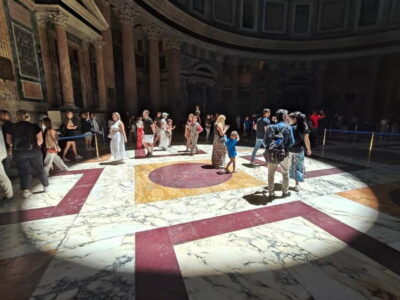
You’ll reach the Pantheon and learn why it’s considered one of Rome’s greatest architectural feats. Even when you’re not going inside, the place has serious gravity. You see the scale of the structure and you hear how it evolved from a Roman temple into a church, with the dome as the centerpiece.
Important for planning: access to the Pantheon isn’t included. That means your time at the Pantheon may be mostly outside viewing plus explanation, depending on what your ticket includes for your specific booking. If entering the building is a priority, confirm the exact wording in your materials before you show up expecting a full visit.
Why this still can be worth it:
- A guided stop helps you notice details faster, like proportions and how the dome “reads” from different angles.
- You can decide on the spot whether you want to hunt down entry tickets after the tour ends.
Piazza Navona: finishing with fountains, Baroque façades, and dinner decisions
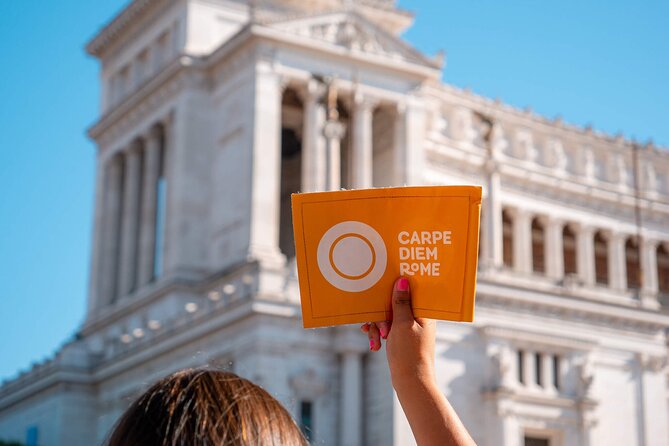
The tour ends at Piazza Navona, one of central Rome’s most photogenic squares, surrounded by Baroque beauty. You’ll see the fountains and the church of Sant’Agnese in Agone, and the timing is set so you can wrap the walk and then keep exploring on your own.
This ending is practical. Navona is a natural staging ground for the rest of your evening: you can grab dinner nearby, grab a drink, or just stroll and people-watch your way through the square’s side streets.
One consideration: Navona is popular. Even with a guided finish, you can end up in crowds. But crowds are part of the deal here. The real benefit is that you’ll have context in your head, so you’re not just walking in circles looking at photos.
The real value: small-group size and guides who keep you moving
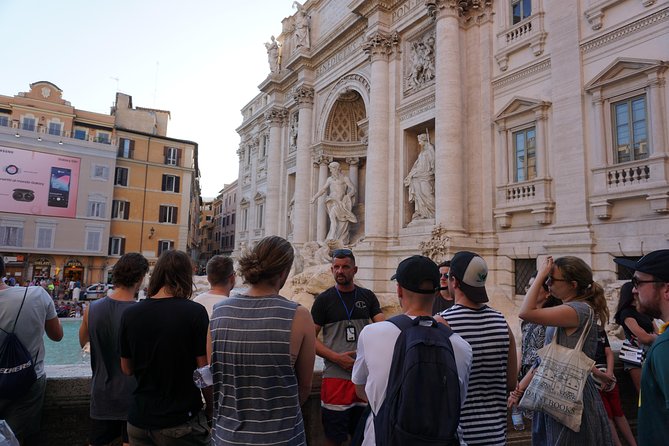
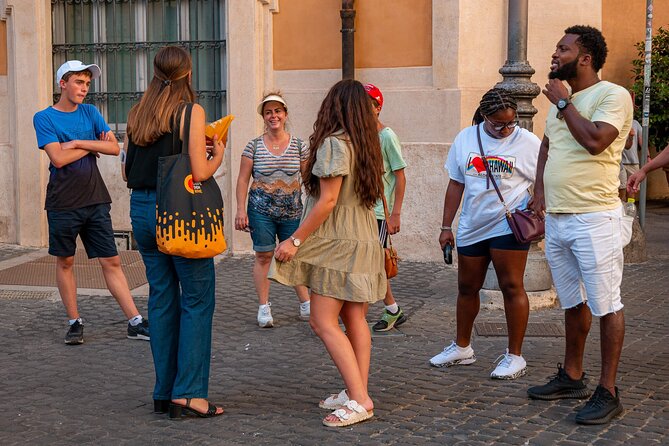
This is capped at 15 travelers, which is the sweet spot for a walking tour. Big tours feel like a conveyor belt. Small ones feel like you can ask a question and actually get an answer before the group moves on.
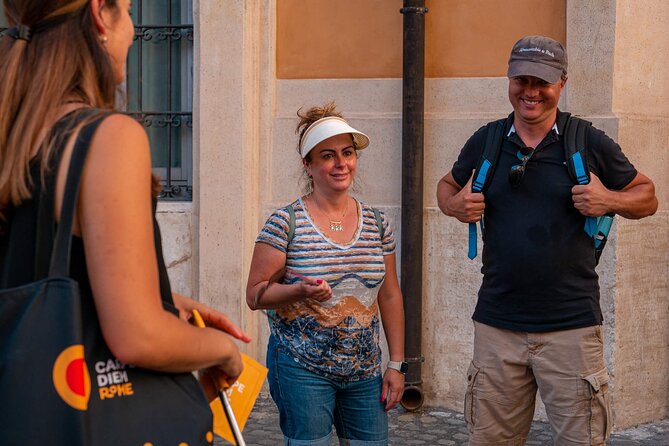
You’ll also notice how different guides emphasize different things. The overall pattern from past groups is consistent: guides like Sharon and Dan Salve have been praised for being organized, clear with instructions, and bringing the sites to life with history and culture. Other names that have come up for their style include Yussef, Sila, Domenica, and Vlad (Vladimir), with comments about pace, professionalism, and making it fun without rushing people.
And yes, there’s a comfort factor. On hot days, some guides are careful about shade and crowd timing, which can make the difference between enjoying the walk and feeling like you’re marinating in August.
Potential snag: one common issue is meeting-point confusion. If you’re relying on an app that shows a different meeting spot name, you can waste minutes sprinting across squares. My advice is simple: use the exact address details from your confirmation and treat any map label as “helpful but verify.”
Price and value: why $30-ish can be a smart first Rome plan

At $30.23 per person for about two hours, this tour prices like an entry-level way to get oriented in a compact area. You’re paying for three things:
- A guide who explains what you’re seeing (so it sticks).
- A curated route that covers famous landmarks plus design-focused stops.
- A manageable group size, so you don’t lose half your day navigating crowds alone.
It’s also budget-friendly compared to longer Rome tours that include multiple ticketed attractions. Here, most stops are free to see, and you’re only dealing with the one major “not included” item: Pantheon access.
So the value equation depends on your priorities:
- If you want a quick, structured introduction and are okay with Pantheon entry being separate, this is a good deal.
- If you want a full, ticketed Pantheon experience as part of the tour price, you’ll need to plan that add-on.
What about renovations and changes on the ground?
Rome loves renovations, and sometimes they affect what you can see clearly. One past group mentioned seeing sites under renovation around a jubilee period in December. The good news: a guided walk helps because your guide can often adjust how they frame what’s still visible, even when scaffolding shows up.
Still, I’d keep expectations flexible. If you’re going in the winter or around major events, plan for some construction noise and reduced photo angles.
Practical tips so the walk feels easy, not stressful
A two-hour walk sounds simple, but central Rome can be a stamina test if you’re not ready. Here’s how to keep it smooth:
- Wear comfortable shoes. You’ll do steady walking on uneven city surfaces.
- Bring sun protection or a light layer. Some stops are outdoors and you may be in direct light.
- If it’s a hot day, look for the guide’s shade strategy and stay close when the group shifts pace.
- If Pantheon entry is important to you, confirm it in your booking details in advance, since Pantheon access is listed as not included.
- At the start, arrive a few minutes early and use your confirmation address, not a vague nearby label.
Who this Rome walk suits best
This tour fits best if you:
- Want a first-time Rome orientation without committing to a half-day plan
- Prefer short, guided stops over long museum-style visits
- Like a mix of iconic sights (Trevi, Pantheon, Navona) and smaller, design-focused moments (Galleria Sciarra, Sant’Ignazio)
- Need a pace that works for mixed groups, including families
It can also be a great “reset” day. If you arrive with jet lag or don’t know your way around yet, this helps you build a mental map fast.
If you’re a hardcore architectural specialist who wants slow, in-depth time inside every major site, you might find the stop durations brief. In that case, use this as your launchpad, then return later for deeper solo time.
Should you book this Rome walking tour?
Yes—if you want a smart, compact introduction to central Rome and you like learning as you walk. The blend of Pantheon + Trevi + Navona with supportive context (and the surprise courtyard stop at Galleria Sciarra) gives you real value for your time.
I would hold off or plan extra carefully if:
- You strongly care about entering the Pantheon as part of the tour experience, since access isn’t included here.
- Meeting point confusion would stress you out. If that’s you, arrive early and verify the exact start location from your confirmation.
For most first-timers, it’s a practical, high-confidence way to start. And with a small group, the guide’s explanations actually land instead of getting swallowed by the crowd.
FAQ
Is Pantheon entry included?
No. Access to the Pantheon is listed as not included, even though the Pantheon is part of the guided experience.
How long is the walk?
It runs about 2 hours (approx.).
How big is the group?
The tour has a maximum of 15 travelers.
Is it offered in English?
Yes, the tour is offered in English.
Do I need a mobile ticket?
You’ll use a mobile ticket.
Where does the tour start and end?
It starts near Piazza d’Aracoeli (Via di S. Venanzio, 8) and ends at Piazza Navona.
Do I need good weather for the tour?
The experience requires good weather. If it’s canceled due to poor weather, you’ll be offered a different date or a full refund.
Is the tour free of admission fees?
Admission ticket is listed as free for the stops described, but Pantheon access is not included.
Can I cancel for a full refund?
Yes. You can cancel up to 24 hours in advance for a full refund.
More of Rome's Grand Piazzas
- 3 in 1 Cooking Class near Navona: Fettuccine, Ravioli & Tiramisu
★ 5.0 · 7,376 reviews - Rome Food Tour: Campo de’ Fiori, Ghetto, Trastevere Winner 2024
★ 5.0 · 3,205 reviews - Rome: Trastevere & Campo de Fiori Street Food Walking Tour
★ 4.9 · 2,768 reviews - Enjoy Spritz and Pasta Making in Piazza Navona
★ 5.0 · 1,681 reviews - Rome: Pasta & Tiramisu Cooking Class near the Spanish Steps
★ 4.8 · 1,395 reviews - Rome: Traditional Pizza Cooking Class near Piazza Navona
★ 4.7 · 1,241 reviews
Near the Trevi: More to See
- Rome: Trevi Fountain and Underground Guided Tour
★ 4.3 · 1,664 reviews - Rome: Opera Concert at Palazzo Poli – Fontana di Trevi
★ 4.7 · 1,026 reviews - Best of Rome Walking Tour including Trevi Fountain
★ 4.5 · 923 reviews - Catacombs Tour with Transfer – Optional Capuchin Crypt or Trevi
★ 4.5 · 694 reviews - Rome Walking Tour with Piazza Navona, Trevi Fountain and Pantheon
★ 4.5 · 676 reviews - The Great Opera Arias Concert at Palazzo Poli – Trevi Fountain
★ 5.0 · 533 reviews
Back to the Pantheon
- Rome: Pantheon Priority Entry Ticket & Interactive App
★ 4.1 · 5,114 reviews - Rome: Pantheon Priority Entry Tickets with Interactive App
★ 4.6 · 4,108 reviews - Rome: Pantheon Timeless Marvel Guided Tour with Entry Ticket
★ 4.9 · 4,002 reviews - Castel Sant’Angelo: Ticket with optional Vatican or Pantheon
★ 4.4 · 3,088 reviews - Pantheon Elite Guided Tour – Rome’s Iconic Ancient Temple
★ 5.0 · 1,447 reviews - Rome: Pantheon Small-Group Guided Tour with Entry Ticket
★ 4.9 · 1,226 reviews
Just added to our Rome reviews





Pantheon Tours, compared.
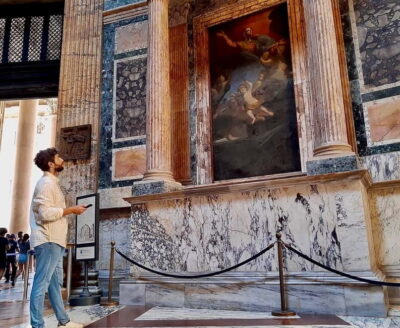 ★ 4.1Pantheon Priority Entry Ticket & Interactive AppFrom $145,114 reviews
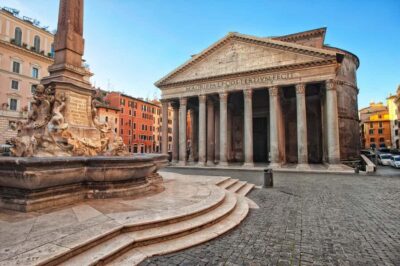 ★ 4.6Pantheon Priority Entry Tickets with Interactive AppFrom $54,108 reviews
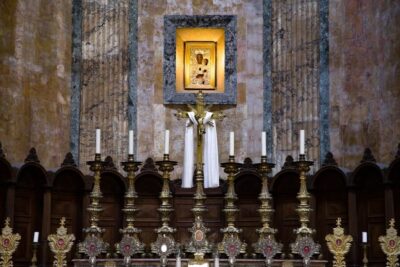 ★ 4.9Pantheon Timeless Marvel Guided Tour with Entry TicketFrom $214,002 reviews
 ★ 4.4Castel Sant’Angelo: Ticket with optional Vatican or PantheonFrom $183,088 reviews
 ★ 5.0Pantheon Elite Guided Tour – Rome’s Iconic Ancient TempleFrom $411,447 reviews
 ★ 4.9Pantheon Small-Group Guided Tour with Entry TicketFrom $511,226 reviews
 ★ 4.0Rome’s Iconic Temple: Pantheon Audio Guided Tour with Fast AccessFrom $211,188 reviews
 ★ 4.7Pantheon Small Group Tour and Skip-the-Line TicketFrom $531,008 reviews
Browse the lists this tour appears in