
Reviewed · 3-HOUR EXPERIENCES
Rome: Via Crucis Pilgrim 3-Hour Walking Tour
This pilgrimage-style walking tour turns Rome into a living prayer route. You start at Santa Maria Maggiore and follow the story of Christ’s final days through relics, icons, and the places connected to Pontius Pilate. What I like most is how the guide keeps it grounded in Catholic teaching while also pointing out the art and symbols you’d otherwise miss.
I also like the human pacing: it’s only about 2–3 km in roughly 3 hours, with time set aside for veneration and reflection. One thing to consider is that this isn’t a casual sightseeing walk—there’s a dress code (no shorts or short skirts), and one stop isn’t wheelchair-accessible, so you’ll want to plan accordingly.
In This Review
- Key things you’ll notice on this Via Crucis walk
- Rome’s Passion route, mapped for prayer (not just photos)
- Meeting at Santa Maria Maggiore: where the day starts and why it matters
- Hidden side stops that explain how Rome became a pilgrimage center
- Scala Sancta (Holy Stairs): what you’ll see, and what you should plan
- St John Lateran: the Cathedral of Rome and the relics tied to Peter and Paul
- Santa Croce in Gerusalemme: finishing at the Basilica of the Holy Cross
- The price: what you’re paying for at $107.62 per person
- Who should book this Via Crucis Pilgrim tour (and who might prefer another plan)
- Should you book this tour?
- FAQ
- How long is the Via Crucis Pilgrim walking tour?
- How far do you walk during the tour?
- Where do I meet the guide?
- Where does the tour end?
- Is the tour wheelchair accessible?
- What clothing is allowed?
- What’s included in the price?
- Is transportation included?
- Can I request a homily at the end?
Key things you’ll notice on this Via Crucis walk
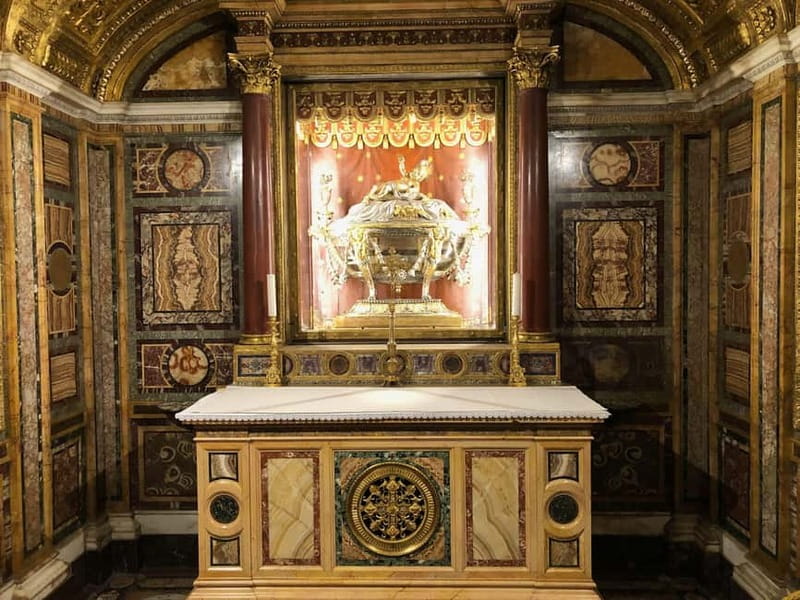
- Passion relic focus: parts of the One True Cross, Holy Nails, Crown of Thorns relics, and more
- Two major basilicas: Santa Maria Maggiore and St John Lateran in one route
- Holy Door season timing: St Mary Major is listed as a Holy Door site opening in 2025
- Short-group feel: limited to 5 participants, with a devoted guide
- The Holy Stairs stop: you visit Scala Sancta, with an important note about the kneeling tradition
- Roman Catholic prayer emphasis: time for veneration and an optional homily at the end
Rome’s Passion route, mapped for prayer (not just photos)
If you want Rome to feel like more than buildings, this tour is built for that. The walking route is designed as a real Via Crucis experience: you move from site to site where objects, images, and locations are tied to the Passion story and the early Church.
I found the tone especially practical. The guide doesn’t treat relics like party tricks. Instead, you get the “why” behind what you’re seeing—how these items came to Rome after Christianity was legalized, and how tradition links them to key moments from Christ’s final hours. You’ll also hear teaching that stays respectful and focused, which matters when you’re stepping into places where people pray rather than just visit.
The route also makes sense for a short stay. In about 3 hours, you cover major basilicas, a side-church with famous devotional imagery, and a stop at the Scala Sancta. It’s not long, but it is packed with meaning.
Worth a look next to this Rome booking:
- Rome: Guided Food Walking Tour with Wine in Trastevere
★ 4.9 · 3,105 reviews - Rome: Trastevere & Campo de Fiori Street Food Walking Tour
★ 4.9 · 2,768 reviews - Rome: Paranormal Night Walking Tour & Secret Backstreets
★ 4.9 · 1,921 reviews - Rome: Trastevere Street Food Walking Tour with Local Expert
★ 4.8 · 1,784 reviews
Meeting at Santa Maria Maggiore: where the day starts and why it matters
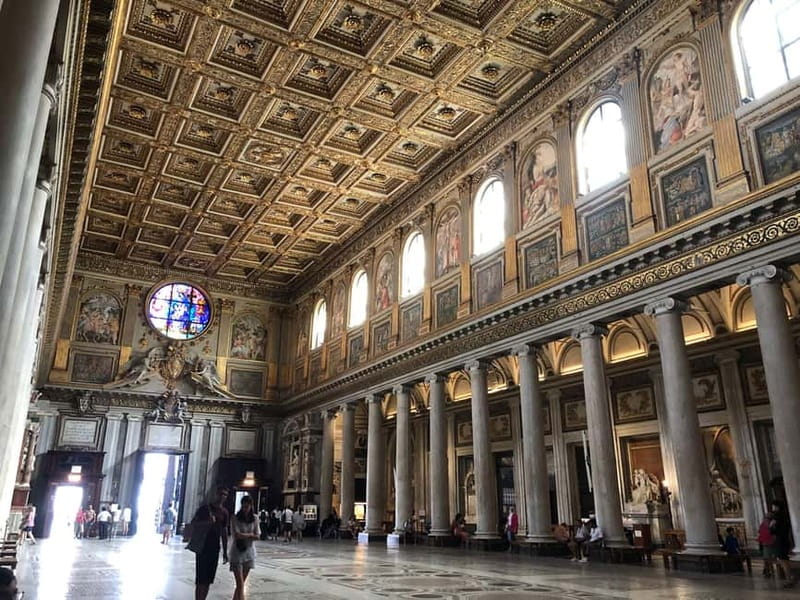
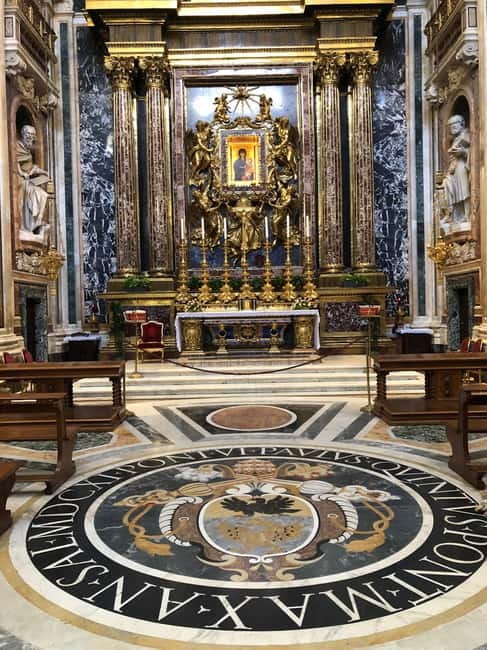
The tour begins at the fountain in front of the main entrance to Basilica Papale di Santa Maria Maggiore. One practical note: the front of the basilica faces Piazza Santa Maria Maggiore, not Via Cavour. If you’re arriving early, give yourself time to orient yourself in the plaza.
Santa Maria Maggiore is one of the four Major Basilicas in Rome, and the timing here is part of the bigger picture. The sites connected to the Holy Door season in 2025 are a major theme for this tour, and St Mary Major is listed as one of those Holy Door locations. Even if you’re not traveling for the Jubilee itself, this context gives your visit a sharper frame: you’re not just touring a landmark church, you’re entering a place tied to a worldwide Catholic rhythm.
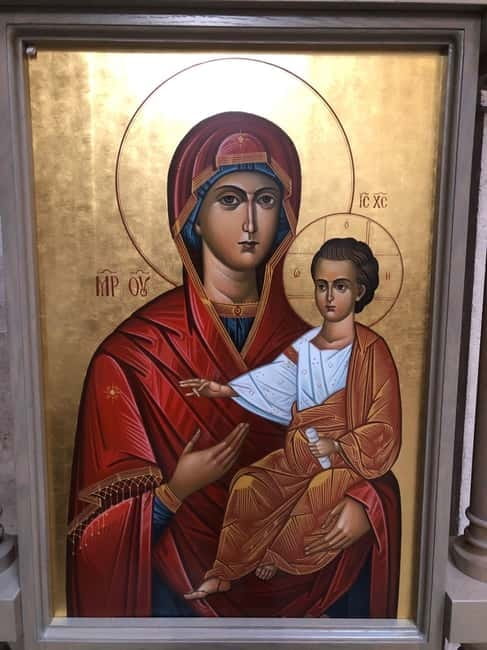
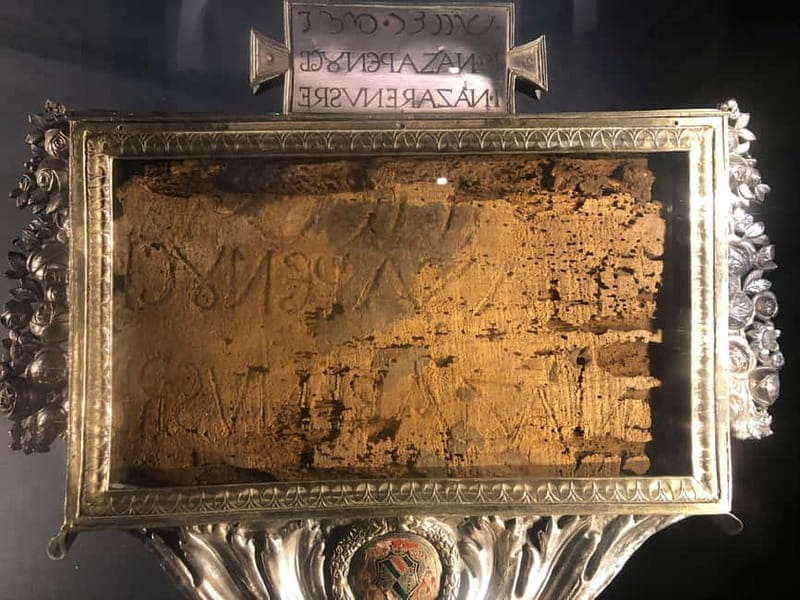
Inside, you’ll be able to venerate wood from the Crib of the Nativity. You’ll also stand near the icon linked to St Luke, Salus Popoli Romani. If you love religious art, this is the part where you’ll feel the most payoff—because the guide points out symbolism and devotional importance, not just decorative features.
Hidden side stops that explain how Rome became a pilgrimage center
After Santa Maria Maggiore, the tour shifts into spaces that feel more local and slightly quieter, the kind of places you might walk past on your own without realizing how significant they are.
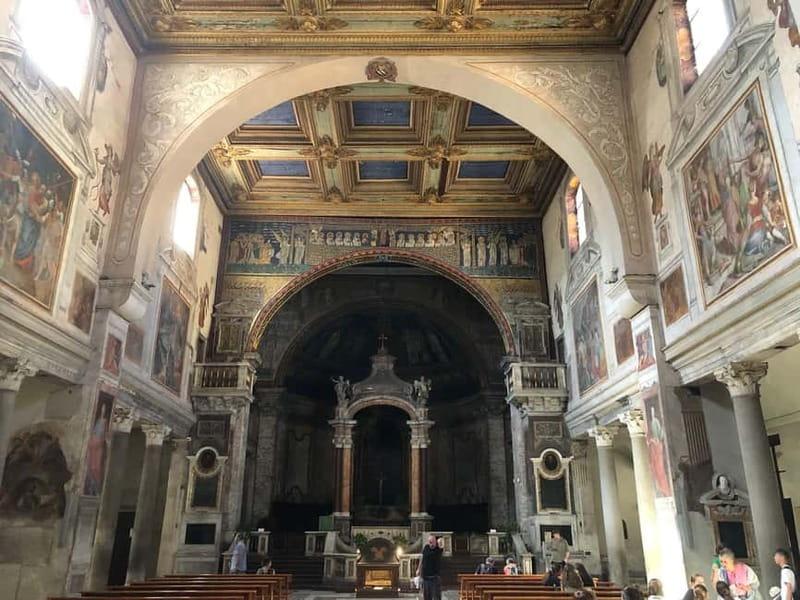
One of the next stops is Santa Prassede, where you’ll get a short guided look at the mosaics and symbolism that fill the church. This is one of those moments where art becomes a language. Instead of trying to read everything on your own, you get a tour guide’s eye for what connects the imagery to the Church’s history and devotion.
Then comes a stop at the Church of Saint Alphonsus Maria de Liguori. This isn’t presented as a “major famous church” in the same way, but it fits the tour’s overall goal: you’re learning how devotion is practiced in different kinds of spaces—grand basilicas for big moments, and smaller churches for focused prayer.
These middle stops also help with pacing. You’re not walking nonstop between big interiors. You’re guided from one devotional setting to the next, and the scale of the route keeps it manageable for most able-bodied visitors.
Scala Sancta (Holy Stairs): what you’ll see, and what you should plan
The Scala Sancta stop is one of the most emotionally loaded parts of this kind of Via Crucis route. The tour includes Scala Sancta and you’ll receive a guided visit there.
Here’s the key practical detail you should know up front: the tradition of climbing the stairs on your knees takes around 45 minutes, and it’s specifically noted as not part of this tour’s itinerary. So you’ll still get the stop and the meaning, but you shouldn’t assume you’ll have time for that extended kneeling devotion within the standard 3-hour plan.
The Scala Sancta site is also described as the location of the Church’s Holy of Holies inner sanctum, traditionally associated with no one but the Pope, along with another icon said to have been begun by St Luke and completed by angels. Even if you don’t know the details ahead of time, the guide’s job here is to connect the physical steps to the Passion story—especially the theme of moving toward judgment and sacrifice.
If you want to do the kneeling devotion, plan it separately so you don’t feel rushed or stressed.
Worth a look next to this Rome booking:
St John Lateran: the Cathedral of Rome and the relics tied to Peter and Paul
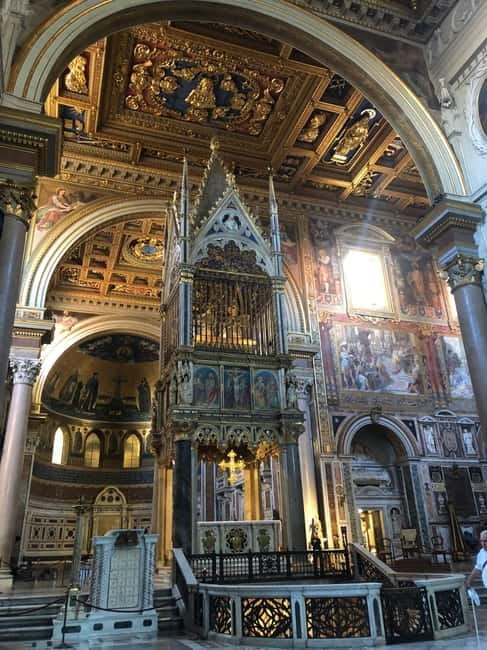
Next, you head to Basilica di San Giovanni in Laterano, the Cathedral of Rome and described here as the Mother Church of the World. This is a major stop, and it’s where your tour leans into the Church’s identity: the living line from apostolic beginnings to present-day worship.
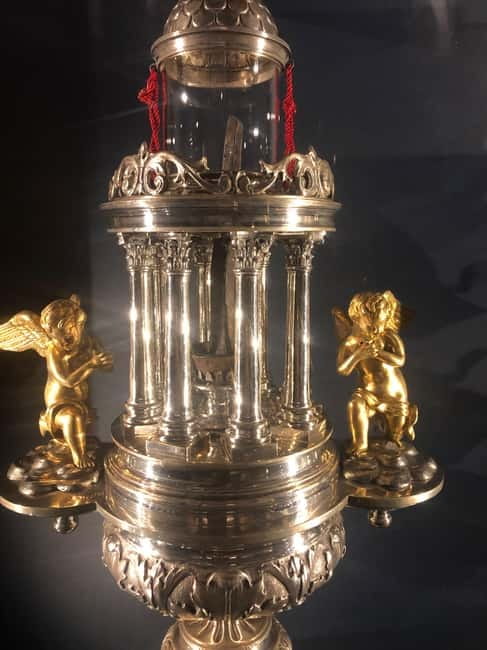
This portion is guided with about 30 minutes set aside. You’ll see devotional and relic-focused elements such as the skulls of Saints Peter and Paul, the Pillars of the Church, and the Holy Sponge associated with how He was given a kind of drink while He hung from the Cross.
Even if you’re not fixated on relics, this is a powerful framework. It’s not just “Look at an object.” You’re being taught how Rome’s sacred geography ties the Passion story to the apostolic foundation of the Church. The guide also helps you make sense of what you’re looking at in a way that feels more like catechesis than a lecture.
Santa Croce in Gerusalemme: finishing at the Basilica of the Holy Cross
Your final stop is the Basilica of the Holy Cross in Jerusalem (Santa Croce). This is where the route’s Passion theme tightens into the closing focus.
The tour includes a guided visit of about 30 minutes here, and there’s also a note about a homily on request. If you want a more prayerful ending, this is worth asking for rather than assuming it will happen automatically.
This basilica is connected to the idea of sacred objects linked to Jerusalem’s Passion events—exactly the kind of link the tour is built around. If you’ve ever wondered why certain reliquaries and Passion artifacts show up in Rome, this is the stop where the logic lands.
Logistically, Santa Croce is described as roughly a 10-minute walk from the nearest metro station, which helps if you’re planning your next leg of the day.
The price: what you’re paying for at $107.62 per person
At $107.62 per person, this tour isn’t cheap, but it’s also not trying to sell you a long, slow museum marathon. You’re paying for several things that matter on a short schedule:
- A devout Catholic guide who stays focused on faith, Scripture, and tradition tied to the Passion
- A route that combines two Major Basilicas with Scala Sancta and major devotional locations
- Time built into the experience for prayer and veneration, not just “see it, move on”
- A small group size (limited to 5), which usually makes it easier to ask questions and stay connected to the message
If your main goal is modern art, street scenes, or big-picture Roman Empire sightseeing, you might find other tours better aligned. But if you want your Rome day to feel like an actual pilgrimage route—especially for Catholic travelers—this pricing can feel fair because the content is specialized and the pacing is respectful.
Who should book this Via Crucis Pilgrim tour (and who might prefer another plan)
This works best if you fall into one of these categories:
- You’re a traditional Catholic traveler who wants a Passion-focused route in Rome
- You enjoy religious art when it’s explained through doctrine and symbols
- You want a smaller group day with more time for prayer and reflection than typical sightseeing tours
It may be less ideal if:
- You’re looking for a general history walk that mostly covers politics and architecture
- You need wheelchair access throughout, since the tour notes it is not suitable for wheelchair users and that one location isn’t wheelchair-accessible
- You might struggle with the dress code (no shorts, no short skirts)
Also, the meeting point is a real-life plaza situation with security and crowd flow. A small but important tip: arrive a few minutes early and double-check you’re at the fountain in front of Santa Maria Maggiore’s main entrance. The operator also notes the use of WhatsApp for real-time contact if anything goes sideways.
Should you book this tour?
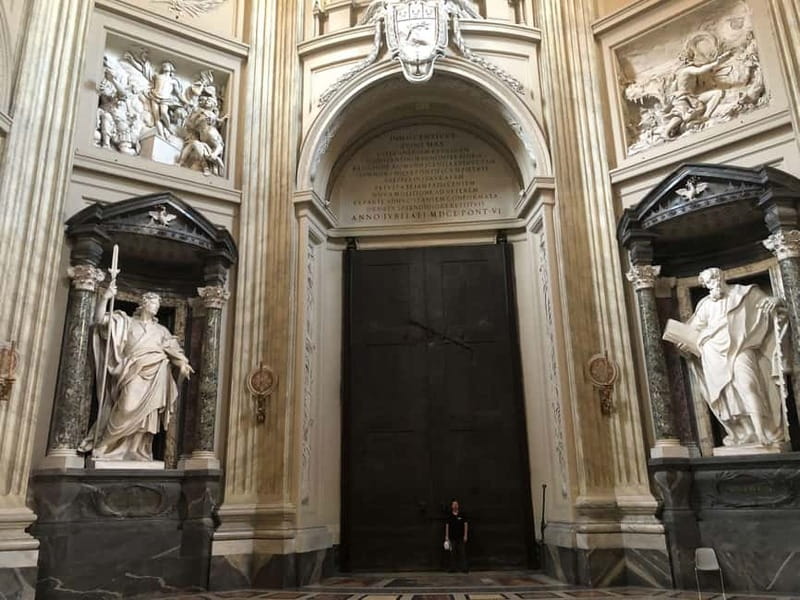
I’d book it if you want Rome to feel spiritual and structured around the Via Crucis, not random churches on a map. The tour’s real strength is that it connects relics, icons, and specific Passion locations into a coherent walk you can pray through.
If you’re on the fence, think about your priorities. For Catholic pilgrims (and Catholics traveling during the build-up to the 2025 Holy Year), this is the kind of day you’ll remember long after the photos fade.
If you want, tell me your travel dates and whether you’ll be traveling during Holy Week or the Jubilee season, and I’ll help you plan what to pair this with on either side of the 3 hours.
FAQ
How long is the Via Crucis Pilgrim walking tour?
It runs for 3 hours. Starting times depend on availability.
How far do you walk during the tour?
It’s about 2–3 km total walking.
Where do I meet the guide?
Meet at the fountain in front of the main entrance to the Basilica of St Mary Major (Santa Maria Maggiore).
Where does the tour end?
The tour finishes at the Basilica of the Holy Cross in Jerusalem (Santa Croce). The description also notes that the activity ends back at the meeting point, so check your confirmation for the exact end details.
Is the tour wheelchair accessible?
No. It is not suitable for wheelchair users, and it notes that one location is not wheelchair-accessible.
What clothing is allowed?
Shorts and short skirts are not allowed.
What’s included in the price?
Included are a devout Catholic guide, all taxes and fees, and radio headsets for groups of 7 or more. A homily is available on request.
Is transportation included?
Transport to the meeting point and from the end point is not included.
Can I request a homily at the end?
Yes. A homily on request is included as part of the experience at the conclusion.
More Walking Tours in Rome
- Rome: Guided Food Walking Tour with Wine in Trastevere
★ 4.9 · 3,105 reviews - Rome: Trastevere & Campo de Fiori Street Food Walking Tour
★ 4.9 · 2,768 reviews - Rome: Paranormal Night Walking Tour & Secret Backstreets
★ 4.9 · 1,921 reviews - Rome: Trastevere Street Food Walking Tour with Local Expert
★ 4.8 · 1,784 reviews - Rome: Small-Group Guided Day or Night Walking Tour
★ 4.8 · 1,009 reviews - Rome by Night Walking Tour – Legends & Criminal Stories
★ 4.5 · 1,003 reviews
More Tours in Rome
- Vatican Museums, Sistine Chapel & St. Peter’s Basilica Tour
★ 4.3 · 73,970 reviews - Vatican Museums, Sistine Chapel & St Peter’s Basilica Guided Tour
★ 4.5 · 39,149 reviews - Rome: Colosseum, Palatine Hill and Roman Forum Guided Tour
★ 4.8 · 32,814 reviews - Rome: Guided Tour of Colosseum, Roman Forum & Palatine Hill
★ 4.7 · 27,897 reviews - Rome: Colosseum, Roman Forum and Palatine Hill Guided Tour
★ 4.5 · 23,903 reviews - Rome: Colosseum Arena Floor, Palatine & Forum Guided Tour
★ 4.5 · 20,180 reviews
More Tour Reviews in Rome
- Vatican Museums, Sistine Chapel & St. Peter’s Basilica Tour
★ 4.3 · 73,970 reviews - Vatican Museums, Sistine Chapel & St Peter’s Basilica Guided Tour
★ 4.5 · 39,149 reviews - Rome: Colosseum, Palatine Hill and Roman Forum Guided Tour
★ 4.8 · 32,814 reviews - Rome: Guided Tour of Colosseum, Roman Forum & Palatine Hill
★ 4.7 · 27,897 reviews - Rome: Colosseum & Forum with Audio Guide App -Optional Arena
★ 4.2 · 24,770 reviews - Rome: Colosseum, Roman Forum and Palatine Hill Guided Tour
★ 4.5 · 23,903 reviews
Just added to our Rome reviews





3-Hour Experiences, compared.
 ★ 5.0Jewish Ghetto and Synagogues with Jewish Roman Guide 3 HoursFrom $193907 reviews
 ★ 5.0Private Customizable 3-Hour Golf Cart City TourFrom $203229 reviews
 ★ 5.0Private: 3 hours ETuk Tour in RomeFrom $119190 reviews
 ★ 5.0Rome Vespa Small Group Sightseeing Tour, 3 Hour ExperienceFrom $235189 reviews
 ★ 5.03 hours Private Golf Cart Tour – The major highlights in 3 hours.From $235156 reviews
 ★ 4.73-Hour Private Golf Cart Tour with Culinary Tasting IncludedFrom $47151 reviews
Rome 3-Hour Evening Vespa Sidecar Tour with Gourmet Pizza TastingFrom $181106 reviews
 ★ 5.03 Hours Private/Group Tour Golf cart with GelatoFrom $25497 reviews
Browse the lists this tour appears in