
Rome looks different after dark. This Vespa sidecar tour lets you glide past major monuments with an easy, hands-off ride, while your guide talks through headsets so you catch every story without shouting over the street noise. You also get built-in photo and look-at-it moments at the key squares, not just a drive-by.
What I like most is the combo: great sightlines and a guided “how to read Rome” script. The second reason it works is the pace—short stops where you can actually see details. One thing to consider is that the ride has strict height/weight and seating rules, so it’s worth checking those early if you’re tall, heavy, traveling with kids, or have mobility concerns.
In This Review
- Key highlights to know before you go
- Rome After Dark From a Vespa Sidecar (the 7:00 pm advantage)
- Meeting at Piazza della Repubblica: where the ride starts
- Piazza della Repubblica and Fontana delle Naiadi: the showpiece start
- Quirinale Palace area on Monte Cavallo: power and perspective
- Altare della Patria (Victor Emmanuel II): Rome’s dramatic statement
- Pantheon exterior only: the night route still gives you the essentials
- Trevi Fountain after dark: a landmark with real physics and legend
- Spanish Steps and Piazza del Popolo: quick breaks that feel like wandering
- St Peter’s Square: when the city hands you a cathedral-sized view
- Terrazza del Gianicolo: a quieter Rome with panoramic payoff
- Through real neighborhood lanes: alleys, trattorias, and the Jewish Ghetto
- Basilica di Santa Maria Maggiore: one of Rome’s four major Marian basilicas
- Vico Pizza&Wine: the gourmet pizza tasting and wine stop
- Price and value check: is $181.41 fair for 3 hours of Rome?
- Who should book this Vespa sidecar pizza tour
- Who should think twice
- Should you book this Vespa sidecar pizza tour?
- FAQ
- How long is the Rome 3-Hour Evening Vespa Sidecar Tour?
- Where does the tour start and what time?
- Will I drive the Vespa sidecar?
- Do we enter the Pantheon during this tour?
- Is pizza included, and what about dietary restrictions like celiac?
- What’s the group size?
- Are children allowed, and how do seating rules work?
Key highlights to know before you go
- Headset commentary on board: live narration you can hear clearly while you ride
- Streets-to-stops timing: frequent short pauses for close landmark viewing
- Small group size (max 12): more attention and calmer logistics
- Photo-friendly night views: classic landmarks look extra good after sundown
- Pizza + wine included: the ride ends with a real meal, not just a snack
Rome After Dark From a Vespa Sidecar (the 7:00 pm advantage)
You’re not walking a long loop tonight. You’re riding, and that matters in Rome. At 7:00 pm the streets start to feel less crowded, the light turns softer on stone, and monuments look more dramatic without the noon glare.
The format is simple: you sit while a professional driver handles the Vespa. You’ll wear helmets with sterilized disposable head covers, and you’ll get headsets so your guide’s commentary stays clear. This is ideal if you want the big-picture history but don’t want to play phone-loudspeaker across a group.
The tour runs about 3 hours total, and travel time counts inside that window. So you’re not just adding transportation at the end—you’re using the time to see more of central Rome.
Still hungry? More Rome food walks
- Winner 2025 Rome Twilight Trastevere Food Tour by Eating Europe
★ 5.0 · 5,157 reviews - Rome: Street Food Tour with Local Guide
★ 4.8 · 4,077 reviews - Rome Food Tour: Unlimited Tastings with Fine Wine & Barolo
★ 5.0 · 3,365 reviews - Rome Food Tour: Campo de’ Fiori, Ghetto, Trastevere Winner 2024
★ 5.0 · 3,205 reviews
Meeting at Piazza della Repubblica: where the ride starts
Your start point is Piazza della Repubblica (41, 00185 Roma RM). Expect a straightforward check-in and then mounting up for the ride. Because the group cap is 12 people, it’s usually easier to keep everyone organized than on big bus tours.
Even before you move, take a look around the square. The plan is built for night photos and quick landmark stops, and Piazza della Repubblica sets that tone from the first minutes.
Piazza della Repubblica and Fontana delle Naiadi: the showpiece start
Stop one is Piazza della Repubblica, a major square shaped during the redevelopment after Rome became Italy’s capital. This is one of those places where the architecture does a lot of the talking: grand buildings, a big open layout, and a centerpiece fountain.
The key landmark here is Fontana delle Naiadi. It’s set in the middle of a large roundabout, which means you get a classic “look outward, not just up” view. Your guide uses the time to point out what you’re seeing and why it matters, and you’ll have a short window to take photos from the most workable angles.
The payoff: you get a strong introduction to Roman urban design before you hit the older monuments.
Quirinale Palace area on Monte Cavallo: power and perspective
Next you’re in the world of the Quirinale Palace (the President’s official residence). It’s on the Quirinal Hill, which is Rome’s highest hill, located in the area people call Monte Cavallo.
This stop is short, but it’s built for the kind of impression you can’t get from a quick street glimpse. You’ll learn how many different roles this site has held across centuries—popes, kings of Italy, and presidents of the Italian Republic. Even if you’re not chasing titles, it helps you understand why this hill area feels different: it’s ceremonial, it’s elevated, and it’s built to signal importance.
Practical tip: wear comfortable shoes anyway. Even with a ride, these tours often include “get close, look, snap, and move” steps.
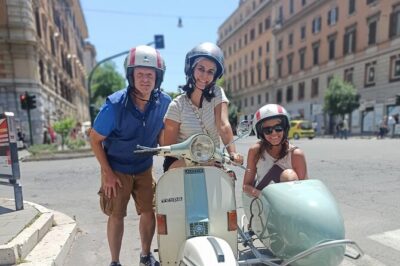
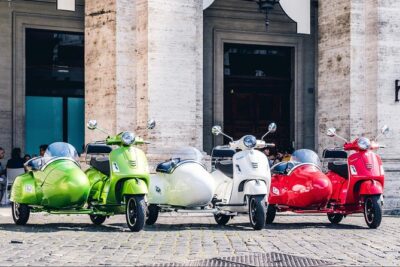
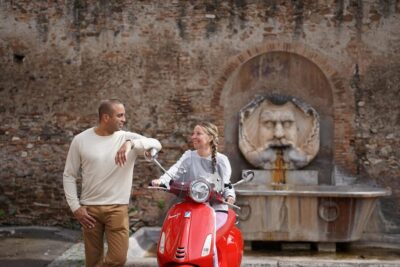
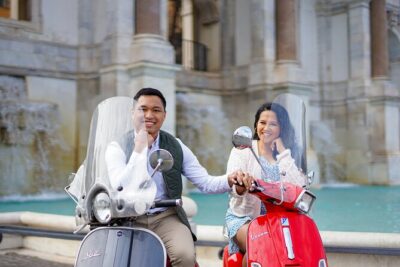
More of Rome from the sidecar
Altare della Patria (Victor Emmanuel II): Rome’s dramatic statement
Then comes Monumento Nazionale a Vittorio Emanuele II, also known as Altare della Patria, in Piazza Venezia. This massive structure is the kind of monument you feel before you fully process it: it dominates the space, and it was inaugurated in 1911 as a tribute to Victor Emmanuel II after unification.
Two things make this stop extra worth your time:
- You get breath-taking views over the city.
- Inside, there’s a museum focus on the Risorgimento (the unification era).
Even if you don’t enter museums during this particular experience, your guide can help you read what you’re looking at—especially the symbolic centerpiece: the tomb of the unknown soldier with an eternal flame, guarded by two soldiers since 1921.
If you love skyline photos, this is one of your best opportunities.
Pantheon exterior only: the night route still gives you the essentials
The tour includes a Pantheon stop, but there’s an important limitation: you won’t enter because the Pantheon is closed during the tour. That means you’ll rely on what you can see outside.
Still, this is a worthwhile stop if you know what to look for. The Pantheon is famous for being the best-preserved ancient Roman building, completed around 126 AD, and for its giant oculus—its main source of natural light. Even from outside, it’s easy to understand why people built religious awe into architecture.
Consideration: if you were hoping for an indoor Pantheon moment tonight, this might not be your best match.
Trevi Fountain after dark: a landmark with real physics and legend
You’ll head to Trevi Fountain, and yes, it lives up to the hype—especially at night when the stone and water reflect city light. The fountain is enormous (about 20 meters wide by 26 meters tall), and it’s also historically layered.
Your guide will connect the story:
- The origins link to the Aqua Virgo aqueduct (ending here in 19 B.C.)
- The design evolved through the Renaissance
- The final appearance dates to 1762
- The name Trevi comes from Tre Vie—three streets meeting at this point
Trevi is one of those places where the “how to see it” matters. The best time is when you’re close enough to feel the scale but still have space for photos. This tour builds in around 30 minutes for that.
Spanish Steps and Piazza del Popolo: quick breaks that feel like wandering
After Trevi, you’ll pass through the classic portrait Rome keeps offering: the Spanish Steps (Scalinata di Trinità dei Monti) and nearby views toward Piazza di Spagna. The stairs connect Piazza di Spagna with the church Trinità dei Monti and were built in the early 18th century. At this hour, they’re perfect for catching a calm moment—people often sit there to rest, people-watch, and soak in views.
Then you shift to Piazza del Popolo, a square inside the northern gate area known as Porta Flaminia. This was Rome’s main entrance route north in the Roman Empire, and it still acts like a hub today. Your guide can point out the three main roads that start here:
- Via del Babuino
- Via di Ripetta
- Via del Corso
This is a great “breather” stop. Even though it’s short, it changes the feel of the evening from monument to neighborhood-scale city life.
St Peter’s Square: when the city hands you a cathedral-sized view
Next up is St. Peter’s Square (Piazza San Pietro) in Vatican City, right at the base of St. Peter’s Basilica. It’s one of the most famous squares on earth, designed by Bernini in the 1600s, and it can hold over 300,000 people.
On a Vespa sidecar tour, you’re not doing a long deep-walk here. Instead, you get the immediate impact: open space, grand lines, and that “how can this be so large” feeling.
It’s also one of the best spots on this route for night atmosphere. The lighting and scale hit different after dark.
Terrazza del Gianicolo: a quieter Rome with panoramic payoff
Then you climb to Janiculum Hill (Terrazza del Gianicolo). Many people call it Rome’s eighth hill. It sits just outside the core ancient area and is known for feeling peaceful compared to the center.
The big reason to come here is the view. Your walk up the pathways takes you to overlooks where the city spreads out in a way the streets don’t show you. It’s also tied to historic defense: Janiculum is associated with Garibaldi and the battle where he repelled an attack from French troops. Sculptures of heroes line the paths, including Giuseppe Garibaldi.
If you want one moment that feels like you’re escaping Rome’s noise without leaving Rome, this is it.
Through real neighborhood lanes: alleys, trattorias, and the Jewish Ghetto
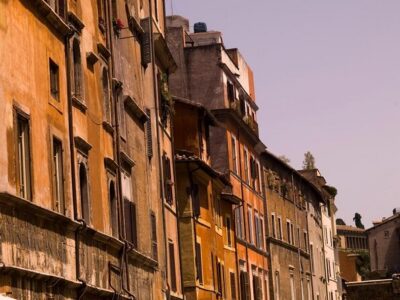
After the panoramic break, you’ll ride through more local-feeling streets—bohemian atmosphere, typical trattorias, and narrow alleys where the city looks lived-in rather than staged.
The route specifically passes by the Jewish Ghetto, so you’re not only seeing monuments. You’re also getting a sense of how Rome moves between old and everyday life—especially at night when side streets feel more intimate.
This is where the Vespa sidecar format shines. You see faster than walking, but you still glide through spaces that feel local.
Basilica di Santa Maria Maggiore: one of Rome’s four major Marian basilicas
Another major stop is Basilica di Santa Maria Maggiore. It’s one of Rome’s four major basilicas and is considered the largest church dedicated to the Virgin Mary in Rome.
On a night ride, basilicas can feel different—less like a museum stop and more like an anchor for the neighborhood’s spiritual rhythm. Even with a shorter stop, your guide can help you connect what you see to why this church matters in the city’s religious map.
Vico Pizza&Wine: the gourmet pizza tasting and wine stop
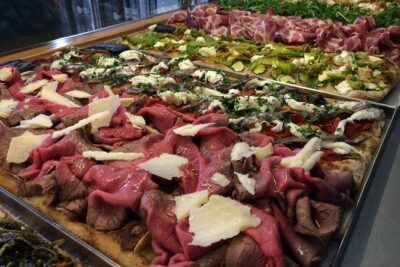
You end with dinner gourmet pizza tasting at Vico Pizza&Wine. This is a key value point. Many Rome “sightseeing-first” tours leave you with a late, random meal. Here, the tour actively includes food, so the experience feels finished instead of unfinished.
Pizza and wine are included as part of the tasting. And for people who want a true Roman meal vibe without spending time hunting for a place, it’s a practical win.
If you have celiac disease or need gluten-free pizza, note this clearly: gluten-free pizza is not available. The information also mentions that an afternoon tour includes a gelato stop at a completely gluten-free gelateria, but that’s not the evening plan here. So if your dietary needs are strict, you’ll want to plan around what can be served at the restaurant.
Price and value check: is $181.41 fair for 3 hours of Rome?
At $181.41 per person for about 3 hours, the real question is what you get for the money beyond transportation.
You’re paying for:
- Professional drivers (you don’t drive, you just sit)
- Headsets so narration stays clear
- Sterilized disposable head covers with CE-approved helmets
- A licensed guide who tells you what you’re seeing and why
- Built-in stop time for major monuments
- Dinner gourmet pizza tasting with wine
That mix matters because it reduces two common travel costs you can’t always measure in money: time and attention. You spend less time walking between sites, and you spend more time actually understanding what you’re looking at.
Also, the tour caps at 12 people, which tends to keep the experience more personal than big-group buses.
What could make it feel less worth it? If you’re only interested in a single landmark and would rather do everything yourself at your own pace, the structure may feel like you’re being guided more tightly than you want.
Who should book this Vespa sidecar pizza tour
This tour fits best if you:
- Want a first-time Rome overview that still includes real stops
- Prefer night views and photo opportunities
- Like history told in plain language with help from live headset narration
- Enjoy the idea of combining major monuments with a sit-down food finish
It can also be a strong fit for couples and small groups because you get paired seating options. Each Vespa can carry two passengers: one in the sidecar and one behind the driver (with the possibility of swapping during stops).
Who should think twice
- Pregnant travelers (not permitted)
- Anyone who can’t meet the height/weight limits for riding
- People who strongly want to enter the Pantheon during their visit here (you won’t enter on this tour)
If that’s you, you can still visit many of these sites yourself on a separate plan.
Should you book this Vespa sidecar pizza tour?
Yes, I’d book it if your goal is to see central Rome in a way that feels playful and efficient, with a guide who helps you connect the dots fast. The headset narration plus the steady schedule of landmark moments is a solid mix of “wow” and “okay, now I get it,” and finishing with pizza and wine makes the evening feel complete.
I’d skip it if you need the Pantheon interior tonight, or if your plans depend on gluten-free pizza specifically. For most people, though, this is one of the smarter ways to do Rome after dark without turning the evening into a long shuffle of streets.
FAQ
How long is the Rome 3-Hour Evening Vespa Sidecar Tour?
It runs for about 3 hours.
Where does the tour start and what time?
The meeting point is Piazza della Repubblica (41, 00185 Roma RM, Italy), and the tour starts at 7:00 pm. It ends back at the meeting point.
Will I drive the Vespa sidecar?
No. Professional drivers handle the ride. Your job is to sit back and enjoy.
Do we enter the Pantheon during this tour?
No. The Pantheon is closed during the tour, so you won’t enter the monument.
Is pizza included, and what about dietary restrictions like celiac?
Dinner gourmet pizza tasting at Vico Pizza&Wine is included. For celiac disease, gluten-free pizza is not available. The information notes a gluten-free gelato option exists on an afternoon tour, not this evening tour.
What’s the group size?
The tour has a maximum of 12 travelers.
Are children allowed, and how do seating rules work?
Children must be at least 5 years old and accompanied by an adult. If a child is taller than 150 cm, they can sit behind the driver; otherwise they will have to sit in the sidecar.
More Tour Reviews in Rome
- Vatican Museums, Sistine Chapel & St. Peter’s Basilica Tour
★ 4.3 · 73,970 reviews - Vatican Museums, Sistine Chapel & St Peter’s Basilica Guided Tour
★ 4.5 · 39,149 reviews - Rome: Colosseum, Palatine Hill and Roman Forum Guided Tour
★ 4.8 · 32,814 reviews - Rome: Guided Tour of Colosseum, Roman Forum & Palatine Hill
★ 4.7 · 27,897 reviews - Rome: Colosseum & Forum with Audio Guide App -Optional Arena
★ 4.2 · 24,770 reviews - Rome: Colosseum, Roman Forum and Palatine Hill Guided Tour
★ 4.5 · 23,903 reviews
More Vespa Days in Rome
- Vespa Sidecar Tour By Night with Pickup
★ 5.0 · 1,803 reviews - Rome Morning Vespa Sidecar Tour in Rome with Cappuccino
★ 5.0 · 1,771 reviews - Rome: Explore the City by Vespa with an Optional Photoshoot
★ 5.0 · 1,103 reviews - Rome Vespa Scooter Tour with Professional Photographer
★ 5.0 · 857 reviews - Rome: Highlights Vespa Sidecar Tour with Coffee and Gelato
★ 4.9 · 747 reviews - Rome: Vespa Ride with Pictures and Sweet Tastings
★ 5.0 · 723 reviews
More Roman Tables Worth Booking
- Winner 2025 Rome Twilight Trastevere Food Tour by Eating Europe
★ 5.0 · 5,157 reviews - Rome: Street Food Tour with Local Guide
★ 4.8 · 4,077 reviews - Rome Food Tour: Unlimited Tastings with Fine Wine & Barolo
★ 5.0 · 3,365 reviews - Rome Food Tour: Campo de’ Fiori, Ghetto, Trastevere Winner 2024
★ 5.0 · 3,205 reviews - Rome: Guided Food Walking Tour with Wine in Trastevere
★ 4.9 · 3,105 reviews - Rome: Trastevere Food tour with Free-Flowing Fine Wine
★ 5.0 · 2,853 reviews
Just added to our Rome reviews





Rome Food Tours, compared.
 ★ 5.0Winner 2025 Rome Twilight Trastevere Food Tour by Eating EuropeFrom $1255,157 reviews
 ★ 4.8Street Food Tour with Local GuideFrom $534,077 reviews
 ★ 5.0Rome Food Tour: Unlimited Tastings with Fine Wine & BaroloFrom $833,365 reviews
 ★ 5.0Rome Food Tour: Campo de’ Fiori, Ghetto, Trastevere Winner 2024From $883,205 reviews
 ★ 4.9Guided Food Walking Tour with Wine in TrastevereFrom $1003,105 reviews
 ★ 5.0Trastevere Food tour with Free-Flowing Fine WineFrom $1022,853 reviews
 ★ 4.9Trastevere & Campo de Fiori Street Food Walking TourFrom $512,768 reviews
★ 5.0Rome Street Food Tour with Local GuideFrom $542,361 reviews
Browse the lists this tour appears in