

Reviewed · TREVI FOUNTAIN TOURS
Rome: Trevi Fountain Underground Small Group Tour
Trevi Fountain has a secret underbelly. This small-group tour takes you beneath the famous marble scene to see the Vicus Caprarius archaeological area and the Aqua Virgo aqueduct system. I really like that it’s guided (in English) and uses headsets, so you catch the details without guessing.
The biggest plus for me is what you can actually see: Roman infrastructure that once carried water to the city, plus layers of later homes built on top of it. One possible drawback: the Trevi Fountain portion is brief, so if you want lots of time to linger up top, this isn’t the best match.
In This Review
- Key Things to Know Before You Go
- Why Trevi Fountain Underground Is Worth the Ticket
- Meeting at Piazza dei Crociferi Without Getting Stuck in Confusion
- Vicus Caprarius: Walking the Roman City of Water
- What You’ll See: Aqueduct Remains, Domus Layers, and the Castellum Aquae
- Trevi Fountain Stop: The Photo Break and How to Time It
- The Tour Flow: Small Group Energy and Headsets That Actually Help
- Price and Value: Is $71 for 45 Minutes Fair?
- Who Should Book This Tour (And Who Might Skip It)
- Should You Book Rome: Trevi Fountain Underground Small Group Tour?
- FAQ
- Where does the tour start?
- Do I need to wait at the entrance of the archaeological site?
- How long is the tour?
- What language is the tour guide?
- Are headsets included?
- What should I bring?
- Does the tour run in bad weather?
- Is this tour wheelchair accessible?
Key Things to Know Before You Go

- Skip-the-line entry means less waiting in the busy Trevi area.
- Vicus Caprarius is the star: you’ll spend most of the visit walking and learning underground.
- Roman water works are visible—you’re not just hearing dates and legends.
- Multiple time periods show up (Imperial-era domus, medieval houses, and the Aqua Virgo water infrastructure).
- Headsets help a lot in underground spaces with echo.
- Rain or shine—you’ll still be doing the underground walk if the weather turns.
Why Trevi Fountain Underground Is Worth the Ticket
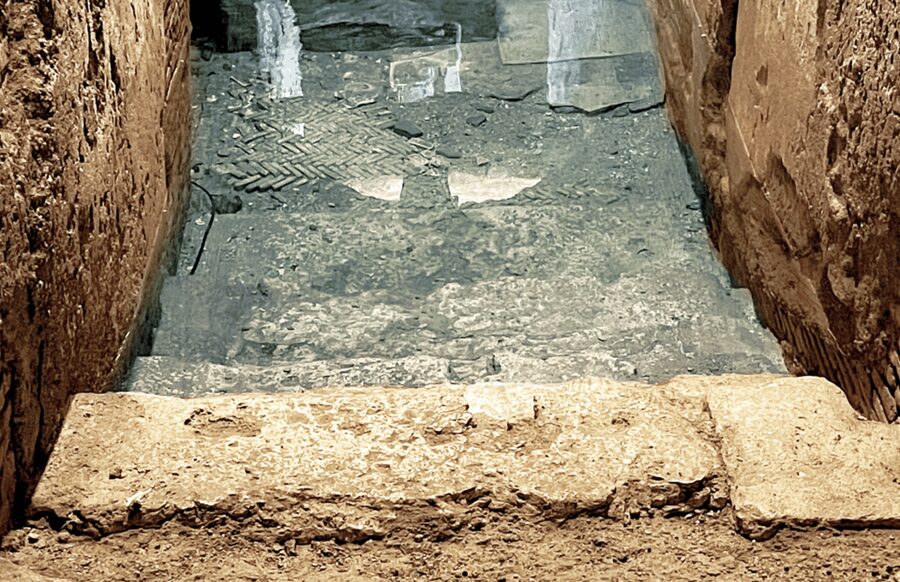
Trevi Fountain is famous for a reason. But above ground, you’re mostly looking at what people built and photographed later. Underground, you get the earlier story: the Romans moving water through the city, and later residents building right on top of that infrastructure.
This tour focuses on one main archaeological area under Trevi: Vicus Caprarius – the City of Water. You also learn how the water system connects to the poetic story behind Aqua Virgo, plus how emperors improved Rome’s water supply. It’s a rare chance in Rome to see how a single place stacks time periods, literally under your feet.
If you’re the kind of person who likes your sightseeing with receipts—physical remains, not just plaques—you’ll enjoy this.
Toss a coin, then look at these
- Rome: Trevi Fountain and Underground Guided Tour
★ 4.3 · 1,664 reviews - Rome: Opera Concert at Palazzo Poli – Fontana di Trevi
★ 4.7 · 1,026 reviews - Best of Rome Walking Tour including Trevi Fountain
★ 4.5 · 923 reviews - Rome Walking Tour with Piazza Navona, Trevi Fountain and Pantheon
★ 4.5 · 676 reviews
Meeting at Piazza dei Crociferi Without Getting Stuck in Confusion
Meet at a tiny square: Piazza dei Crociferi, near Trevi Fountain. Your guide is recognizable by a sign with the Rome with Silvia logo. One simple tip: don’t wait at the entrance of the archaeological site. Show up at the square and wait for your group there.
Timing matters because this tour moves on a tight schedule. The visit runs about 45 minutes, with a guided underground portion and a short Trevi Fountain photo stop afterward. If you arrive late, you may miss instructions that set up what you’ll be seeing.
Also, bring passport or ID. Yes, it feels like paperwork for a fountain. Welcome to Italy.
Vicus Caprarius: Walking the Roman City of Water

The core experience happens at Vicus Caprarius, an underground archaeological area that came to light during renovations of the former Cinema Trevi in 1999 and opened in 2004. That fact helps you understand why this site feels so special: it’s tied to modern Rome discovering (and preserving) older layers.
This is where you’ll see the remains of one of the Romans’ aqueducts feeding the city. The poetic name Aqua Virgo relates to pure, clear water. You’ll also hear the popular legend: thirsty Roman soldiers led to a spring by a young woman—virgo in Latin—after which the aqueduct took its name.
Expect a guided walk through underground passages and sections where water infrastructure and building foundations are visible. It’s the kind of experience that makes you look differently at the Trevi Fountain above: that famous waterfall effect and basin scene sit on top of a system that once mattered for everyday life.
And because this is underground, comfortable shoes matter. Even if it’s not a muddy day, it’s a walking day.
What You’ll See: Aqueduct Remains, Domus Layers, and the Castellum Aquae
The tour isn’t only about one aqueduct wall. You’ll hear how Trevi ties into Rome’s bigger water network—and you’ll see several archaeological layers connected to that story.
Here’s what the underground visit typically includes:
- The Imperial-era domus you’ll pass through during the tour route
- Medieval houses built after the Roman period
- The castellum aquae of Aqua Virgo, described as a monumental water tank designed by Emperor Hadrian to better supply Campo Marzio
That combination is the point. Rome isn’t one moment in time—it’s layers. The underground setting makes that visible. You’re not just learning that Rome changed. You’re seeing how different eras used the same water systems and same ground, again and again.
If you like “how did it work?” history, pay attention during this section. The aqueduct system isn’t just a fun backstory—it explains why Trevi mattered long before it became a postcard.




Trevi Fountain Stop: The Photo Break and How to Time It
After the underground portion, you’ll come back up for a Trevi Fountain photo stop and a short guided moment—about 15 minutes on the itinerary.
This is where you reframe what you just saw. You’ll look at the fountain like it’s the top of a system, not just a decorative landmark. It’s also your chance to do the classic fountain angles without rushing.
Two practical notes:
- Don’t assume the Trevi Fountain segment is long. The main action is underground.
- Plan for crowds above ground. Even with skip-the-line entry for the tour, Trevi is still Trevi.
If you want a leisurely, lingering Trevi experience, consider pairing this with separate time to stand, relax, and people-watch later.
The Tour Flow: Small Group Energy and Headsets That Actually Help
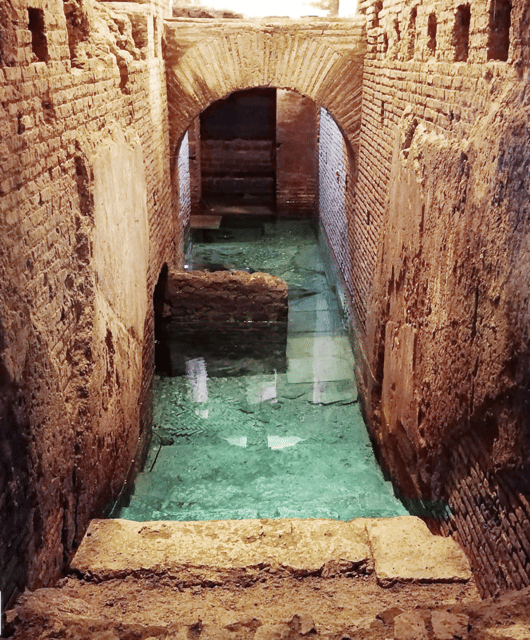
This is a small group tour, and the pace tends to fit the space. Underground areas can feel tight and echo-y, which is exactly why headsets matter. With the headsets included, you’re not forced to strain your ears or stand in awkward places just to hear.
The tour runs with an official English-speaking guide, and you’ll have that steady narration while you’re in the archaeological sections. You’ll also know you’re with the right team because the guide is associated with the Rome with Silvia sign at the meeting point.
Guide names can vary day to day. For example, names like Sylvia and Virginia show up in the tour experience descriptions I was given, so if you’re hoping for a specific style of guiding, don’t assume every day is identical. Still, with headsets and a timed route, you should be set up for clarity.
Price and Value: Is $71 for 45 Minutes Fair?
At $71 per person for a tour that runs about 45 minutes, the question isn’t whether it’s “cheap.” It’s whether it’s worth what you get.
Here’s how I’d judge the value:
- You’re paying for access to an archaeological site beneath one of Rome’s most photographed landmarks.
- You get entry tickets included and skip-the-line through a separate entrance.
- You get an official English guide plus headsets, which improves the experience in a place where sound can be tough.
What you’re not buying is a long, slow, wandering day. This is structured and focused. If you want a quick, high-impact cultural stop with real material evidence, it can feel like good value.
If you mainly want long fountain time and photos, you might prefer spending that money on a longer Trevi-area walk plus a museum elsewhere. This tour is for people who love “under the surface” Rome.
Who Should Book This Tour (And Who Might Skip It)
This tour makes the most sense for you if:
- You love Roman engineering and want to see aqueduct remains tied to Aqua Virgo
- You enjoy history that’s visible through layers of time (Imperial era to medieval building traces)
- You want a short, well-organized experience with headsets and a clear guide
You might want to skip or plan differently if:
- You need a wheelchair-accessible option. This tour is listed as not suitable for wheelchair users.
- You’re hoping to spend lots of time up at the fountain itself. The underground visit takes priority, and the Trevi stop is brief.
- You dislike walking on uneven stone. Comfortable shoes are a must.
Also remember: it runs rain or shine, so wear weather-appropriate clothing. Underground sites don’t magically become comfortable in bad weather.
Should You Book Rome: Trevi Fountain Underground Small Group Tour?
Yes, I think you should book it if you want your Trevi experience to include more than a photo and a coin toss moment. The value is in the specific focus: Vicus Caprarius and the Aqua Virgo water system you can see, plus the layered story that makes Rome feel real instead of just scenic.
Before you go, do two things:
- Go prepared to walk for the guided underground portion and wear comfortable shoes.
- Plan your timing around the meeting point at Piazza dei Crociferi and look for the Rome with Silvia sign. Don’t wait at the archaeological entrance.
If you want, tell me your travel dates and whether you care more about fountains-as-photos or aqueduct-as-engineering. I can help you decide if this tour fits best in your Rome day plan.
FAQ
Where does the tour start?
The meeting point is Piazza dei Crociferi, a tiny square near Trevi Fountain. Your guide will be recognizable by a sign with the Rome with Silvia logo.
Do I need to wait at the entrance of the archaeological site?
No. The guidance is to not wait at the archaeological site entrance. Meet at Piazza dei Crociferi instead.
How long is the tour?
The activity is listed as 45 minutes.
What language is the tour guide?
The tour is led by an official English-speaking guide.
Are headsets included?
Yes. Headsets are included so you can hear the guide clearly.
What should I bring?
Bring passport or ID, plus comfortable shoes and weather-appropriate clothing.
Does the tour run in bad weather?
Yes. The tour takes place rain or shine.
Is this tour wheelchair accessible?
No. It is listed as not suitable for wheelchair users.
More Tours in Rome
- Vatican Museums, Sistine Chapel & St. Peter’s Basilica Tour
★ 4.3 · 73,970 reviews - Vatican Museums, Sistine Chapel & St Peter’s Basilica Guided Tour
★ 4.5 · 39,149 reviews - Rome: Colosseum, Palatine Hill and Roman Forum Guided Tour
★ 4.8 · 32,814 reviews - Rome: Guided Tour of Colosseum, Roman Forum & Palatine Hill
★ 4.7 · 27,897 reviews - Rome: Colosseum, Roman Forum and Palatine Hill Guided Tour
★ 4.5 · 23,903 reviews - Rome: Colosseum Arena Floor, Palatine & Forum Guided Tour
★ 4.5 · 20,180 reviews
More Tour Reviews in Rome
- Vatican Museums, Sistine Chapel & St. Peter’s Basilica Tour
★ 4.3 · 73,970 reviews - Vatican Museums, Sistine Chapel & St Peter’s Basilica Guided Tour
★ 4.5 · 39,149 reviews - Rome: Colosseum, Palatine Hill and Roman Forum Guided Tour
★ 4.8 · 32,814 reviews - Rome: Guided Tour of Colosseum, Roman Forum & Palatine Hill
★ 4.7 · 27,897 reviews - Rome: Colosseum & Forum with Audio Guide App -Optional Arena
★ 4.2 · 24,770 reviews - Rome: Colosseum, Roman Forum and Palatine Hill Guided Tour
★ 4.5 · 23,903 reviews
Near the Trevi: More to See
- Rome: Trevi Fountain and Underground Guided Tour
★ 4.3 · 1,664 reviews - Rome: Opera Concert at Palazzo Poli – Fontana di Trevi
★ 4.7 · 1,026 reviews - Best of Rome Walking Tour including Trevi Fountain
★ 4.5 · 923 reviews - Catacombs Tour with Transfer – Optional Capuchin Crypt or Trevi
★ 4.5 · 694 reviews - Rome Walking Tour with Piazza Navona, Trevi Fountain and Pantheon
★ 4.5 · 676 reviews - The Great Opera Arias Concert at Palazzo Poli – Trevi Fountain
★ 5.0 · 533 reviews
Just added to our Rome reviews





Trevi Fountain Tours, compared.
 ★ 4.3Trevi Fountain and Underground Guided TourFrom $411,664 reviews
 ★ 4.7Opera Concert at Palazzo Poli – Fontana di TreviFrom $471,026 reviews
 ★ 4.5Best of Rome Walking Tour including Trevi FountainFrom $4923 reviews
 ★ 4.5Catacombs Tour with Transfer – Optional Capuchin Crypt or TreviFrom $54694 reviews
 ★ 4.5Rome Walking Tour with Piazza Navona, Trevi Fountain and PantheonFrom $35676 reviews
 ★ 5.0The Great Opera Arias Concert at Palazzo Poli – Trevi FountainFrom $48533 reviews
 ★ 4.9Spanish Steps, Trevi, Navona and Pantheon Sunset TourFrom $46522 reviews
 ★ 4.8Rome Walking Tour: Pantheon, Trevi, Navona & Hidden GemsFrom $23501 reviews
Browse the lists this tour appears in