
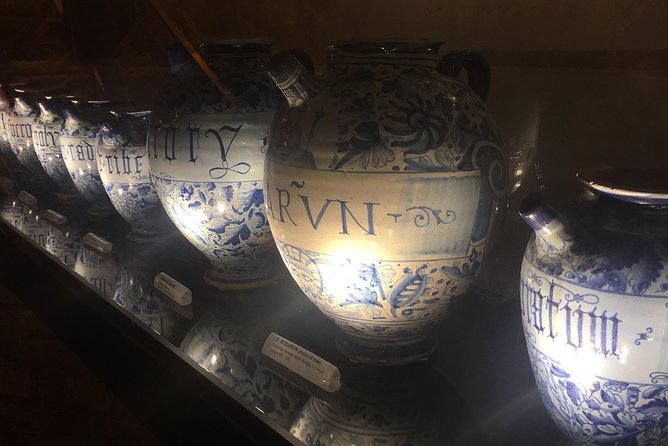
Reviewed · TREVI FOUNTAIN TOURS
Rome: Trevi Fountain District and Underground Domus Guided Tour
One sentence, one surprise: Rome has a water secret underground. This guided, small-group stop at Vicus Caprarius takes you about 30 feet (9 meters) below street level to see a Roman water tank tied to the Vergine aqueduct. Then you pop back up for a timed look at Trevi Fountain, right where the coin-throwing legend lives.
I love that this tour focuses on the stuff most people miss: not another photo sprint, but how Rome’s water system worked and what archaeologists unearthed in the process. I also like the format—a small group (max 15)—so the guide can actually explain what you’re seeing instead of rushing you along. The one drawback to consider is that the underground area is small, so if you’re expecting long tunnel walks, you may feel underwhelmed.
In This Review
- Key Takeaways Before You Go
- Rome’s Underground Water Story: Why This Tour Feels Different
- Price and Value: What $53.10 Really Buys You
- Finding the Start at Vicolo del Puttarello: Easy, Central, and Direct
- Stop 1: Vicus Caprarius and the City of Water Beneath Trevi
- What You See Underground: Roman Villa Layers and Real Finds
- How the Romans Managed Water: The Real Takeaway
- Stop 2: Trevi Fountain in About 10 Minutes (and How to Enjoy It)
- Guides: Names You Might Hear and Why It Matters
- Small-Group Size and the Underground Reality
- What If You’re Only Here for Trevi?
- Who This Tour Suits Best
- What’s Included (and the Little Extras)
- Should You Book This Trevi Underground Tour?
- FAQ
- What is the duration of the Rome Trevi Fountain District and Underground Domus guided tour?
- How much does the tour cost?
- Where do I meet the guide?
- Is the tour in English?
- How many people are in the group?
- What do I do at Vicus Caprarius?
- Is Trevi Fountain included at the end?
- What is included with the ticket?
- Is there hotel pickup or drop-off?
- Is the tour suitable for people with mobility impairments?
- What is the cancellation policy?
Key Takeaways Before You Go

- Meet at Vicolo del Puttarello, 25 and go straight into the Vicus Caprarius site for reserved entry
- 30 feet (9 meters) underground with a guide focused on the City of Water and Roman water tech
- Small group capped at 15 for better pacing and more room for questions
- Trevi Fountain gets about 10 minutes—perfect for the legend and photos, not a long stay
- Included Italian gelato after the tour is a nice bonus in this busy area
Rome’s Underground Water Story: Why This Tour Feels Different
Rome can be intense at street level. Between crowds near Trevi and the heat in the narrow lanes, it’s easy to feel like you’re just moving from landmark to landmark.
This experience flips the script. You start at Vicus Caprarius, where an underground archaeological site was discovered in 1999 in the basement of a cinema. Down there, the point is clear: understand how Romans managed water—and how that water is connected to the fountains you see above.
The best part is the scale of the story. You’re not touring a huge underground city; you’re looking at a focused slice of Roman infrastructure. That can be a win if you like tight, meaningful stops.
Toss a coin, then look at these
- Rome: Trevi Fountain and Underground Guided Tour
★ 4.3 · 1,664 reviews - Rome: Opera Concert at Palazzo Poli – Fontana di Trevi
★ 4.7 · 1,026 reviews - Best of Rome Walking Tour including Trevi Fountain
★ 4.5 · 923 reviews - Rome Walking Tour with Piazza Navona, Trevi Fountain and Pantheon
★ 4.5 · 676 reviews
Price and Value: What $53.10 Really Buys You
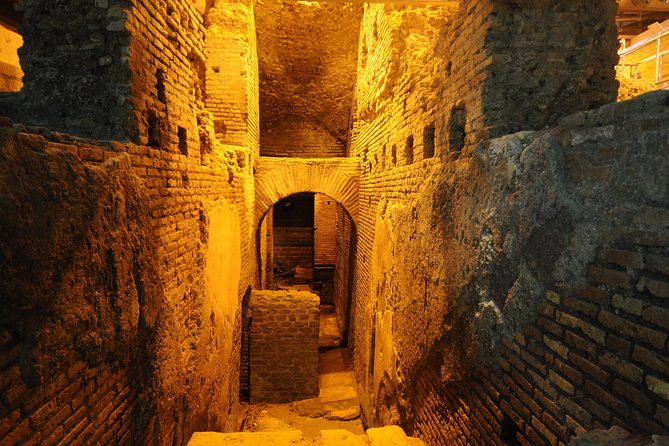
At $53.10 per person for about 55 minutes, you’re paying for three things: reserved entry, a guided explanation, and access to Trevi Fountain for the end of the outing. The tour also includes Italian gelato, which helps soften the cost a bit.
One note that matters for value: there are ways to see the underground area independently. A guest pointed out that self-guided tickets for the underground site were around 4 euro each, which made the guided price feel too high to them. If you’re the type who reads signs well, you might do better going your own way.
But if you want context—how the site connects to the Vergine aqueduct, why the area earned the nickname City of Water, and what the finds mean—a guide can be the difference between seeing objects and actually understanding them. For me, that’s where the money tends to justify itself.
Finding the Start at Vicolo del Puttarello: Easy, Central, and Direct
Your meeting point is Vicolo del Puttarello, 25. You redeem tickets right at Vicus Caprarius – The Water City, which is only steps from Trevi Fountain. That setup is practical: you don’t waste time hunting for offices, and you don’t start the clock late.
The tour is in English, and it runs with a maximum group size of 15 people. You’ll be with a guide the whole time, which matters underground where it’s harder to piece together what you’re looking at from one spot.
This is also one of those tours where “meeting point near public transportation” is genuinely useful. You’re in the center, and you can connect to other sights without an extra commute.
Stop 1: Vicus Caprarius and the City of Water Beneath Trevi
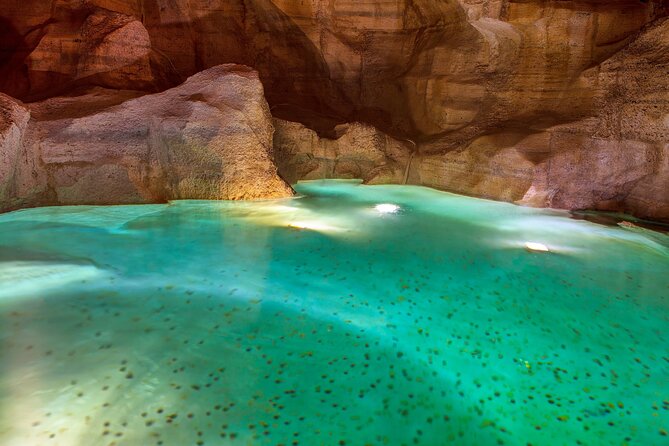
Stop one is the headline. You enter with the guide and go about 30 feet (9 meters) below the streets of Rome. This isn’t just a staircase tour—it’s a look at a Roman villa and an ancient cistern system uncovered during modern excavations.
The site itself is tied to the Vergine aqueduct. Inside, you can see a water tank connected to it. The guide’s job here is to connect the dots: this underground infrastructure fed the systems that later created the fountains you know above ground.
You’ll spend about 45 minutes on this first stop. That time length is important. It’s enough to slow down and learn why the discovery mattered, without turning the experience into a long slog in a place that stays enclosed.
Worth a look next to this Rome booking:



What You See Underground: Roman Villa Layers and Real Finds
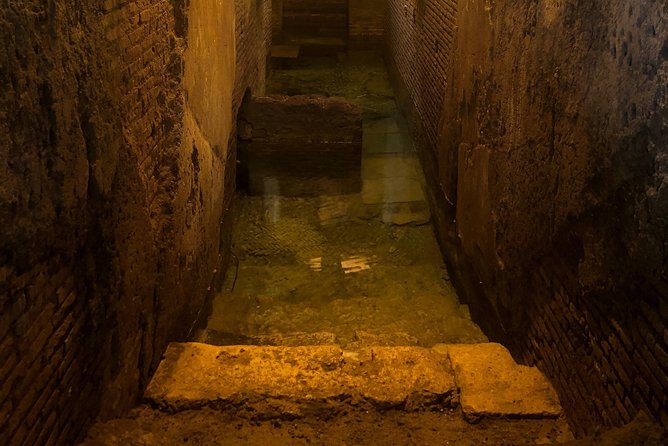
This is where the tour earns its keep. The guide shows the kinds of artifacts that turn archaeology from random objects into a story with clues.
Here are the highlights you should expect to hear about:
- Polychrome marble coverings, including precious decorative elements
- The head of Alessandro Helios, a standout artifact connected to the site’s identity
- A treasure trove of 800 coins
- Spatheia, special African amphorae used for transporting oil
Those details matter because they don’t just say Roman times were old. They explain how the site likely functioned as part of daily life—how people stored and moved valuable goods, and how the water systems supported urban living.
Also, the tour emphasizes discovery. The site was uncovered in 1999 inside a cinema’s basement. That modern twist adds a layer of intrigue: the underground world you see today was not found by accident decades ago—it emerged through recent work, which helps explain why the experience still feels fresh.
How the Romans Managed Water: The Real Takeaway
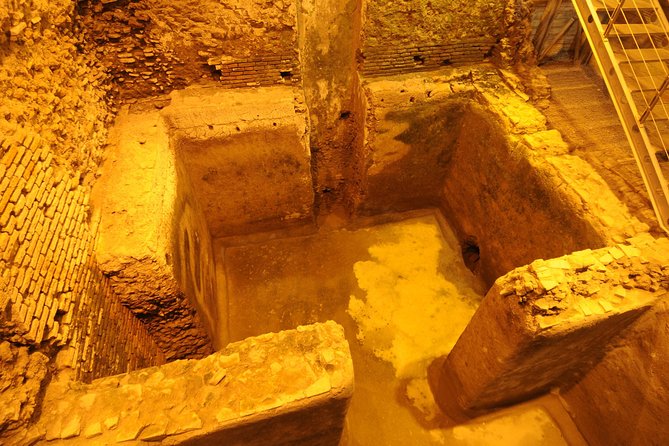
The goal is simple: understand how water moved and why the area got called the City of Water. Romans didn’t just build fountains for decoration. Water was infrastructure—managed, stored, and routed.
When you’re underground, it becomes easier to grasp the physics. You’re standing near the kind of tank and cistern systems that would have connected with larger aqueduct networks. The guide ties that to what you’ll see later at Trevi, where the fountain’s flow becomes more meaningful once you’ve seen the supply chain.
If you like “how it worked” history more than “who ruled when,” this part is for you. The story is practical, not just ceremonial.
Stop 2: Trevi Fountain in About 10 Minutes (and How to Enjoy It)
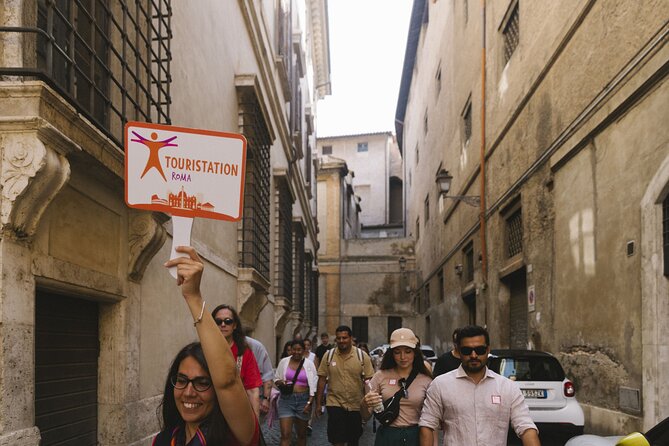
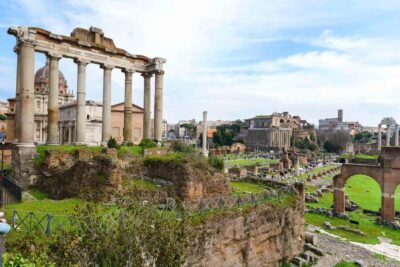
After you come back up, the tour finishes at Trevi Fountain. You’ll have around 10 minutes. That’s enough to take in the scene, throw a coin if you want, and get a few photos—without pretending you can stare at the fountain for an hour during peak crowds.
The legend says the coin throw ensures your return to Rome someday. Even if you’re not into legends, it gives you a tidy ritual to mark the end of the tour.
One consideration: Trevi can be chaotic. Some people felt the fountain portion was crowded and hard to fully enjoy. So I’d treat Trevi here as a quick finale, not the main event.
Guides: Names You Might Hear and Why It Matters
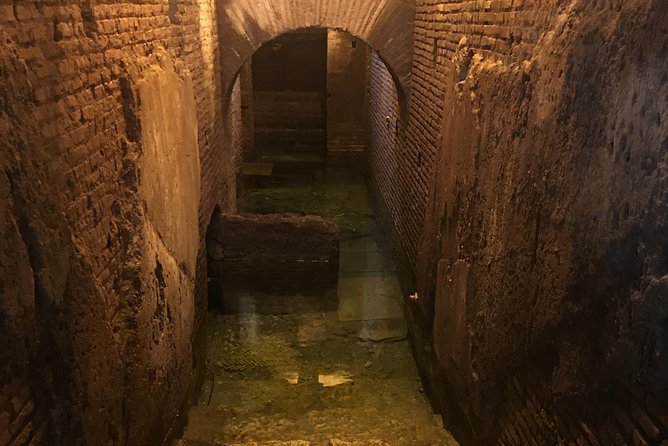
A big reason this tour gets strong feedback is the guide. Different guides show up in the experience, and certain names are repeated in guest notes—Erika, Erica, Michelle, and Noemi/Neomi.
If one of those guides is offered on your date, it can be worth choosing that option if you have flexibility. What people consistently praise is not only historical detail, but also the ability to keep the group moving and to answer questions clearly while you’re standing in a dark, confined space.
Also, pay attention to what the guide explains about the artifacts. The most memorable moments tend to be when the guide connects a specific object—like the 800 coins or the Helios head—to the larger water-and-life story of the site.
Small-Group Size and the Underground Reality
Max 15 people is a real advantage here. Underground spaces can be tight, and you need enough time to look at each section and listen without shouting.
A small group also helps the guide adjust if someone is curious or confused. You’re not stuck watching a screen while everyone else moves on. You’re standing where the story happened.
That said, the physical area is still limited. Even with a small group, this isn’t a massive multi-room labyrinth. It’s more like one focused archaeological setting with clear interpretation. If your “must see” checklist includes lots of underground tunnels, set expectations accordingly.
What If You’re Only Here for Trevi?
This tour is not a Trevi Fountain-only experience. Trevi gets the short stop at the end.
That’s a good thing if you want the context behind the fountain’s water source. It’s a mismatch if your priority is lingering at the sculpture, photographing for long stretches, or doing Trevi as a stand-alone highlight.
Think of it this way: the underground part is where you learn. Trevi is where you apply it and take your final images.
Who This Tour Suits Best
This experience is a strong fit if you:
- Like Rome behind-the-scenes, especially water systems and how cities worked
- Want a guided explanation in a smaller setting
- Prefer shorter, high-impact tours rather than all-day marathons
- Enjoy artifacts as clues, not just scenery
It may not be ideal if you:
- Expect big underground tunnel networks
- Want a long, leisurely Trevi visit
- Have mobility concerns, since it’s not suitable for people with mobility impairments
It’s also a smart pick if it’s your first trip and you’ve already seen the major landmarks, but you still want something that feels new.
What’s Included (and the Little Extras)
Your ticket set includes:
- Reserved entry to Vicus Caprarius
- A guided tour inside the underground site
- Access to Trevi Fountain at the end
- Assistance from Touristation staff
- Italian gelato
Not included: food and drinks, plus hotel pickup and drop-off.
The gelato is a small detail, but in this part of Rome it’s a practical way to avoid thinking about your next snack step after the tour.
Should You Book This Trevi Underground Tour?
Book it if you want a guided, story-focused look at Vicus Caprarius, especially the Roman water system connected to the Vergine aqueduct. If you’re curious about how the fountains above had a supply line—and you like learning from real finds like polychrome marble, the Alessandro Helios head, 800 coins, and amphorae used for oil—this is a good use of time.
Don’t book it if your main goal is Trevi Fountain alone or if you’re hoping for a large underground maze of tunnels. In that case, the underground site may feel too compact, and the value comparison to self-guided entry (one guest mentioned around 4 euro self tickets) could make you question the price.
If you’re the middle type—yes to Trevi, yes to something smarter than another crowd photo—this tour is one of the better ways to earn your time in the Trevi area.
FAQ
What is the duration of the Rome Trevi Fountain District and Underground Domus guided tour?
It runs for about 55 minutes (approx.), including time underground and the short Trevi Fountain stop.
How much does the tour cost?
The price is listed as $53.10 per person.
Where do I meet the guide?
Meet at Vicolo del Puttarello, 25, 00187 Roma RM, Italy. Ticket redemption is also at Vicolo del Puttarello, 25 at Vicus Caprarius.
Is the tour in English?
Yes, the tour is offered in English.
How many people are in the group?
The tour has a maximum of 15 travelers.
What do I do at Vicus Caprarius?
You enter the Vicus Caprarius – The Water City underground archaeological site with a guide, going about 30 feet (nine meters) below the streets to see the remains and artifacts.
Is Trevi Fountain included at the end?
Yes. You get access to Trevi Fountain, with about 10 minutes during the tour.
What is included with the ticket?
Included items are Touristation staff assistance, a reserved entry ticket and guided tour for Vicus Caprarius, Trevi Fountain access, and Italian gelato.
Is there hotel pickup or drop-off?
No. Pick up from and to the hotel is not included.
Is the tour suitable for people with mobility impairments?
No, it is not suitable for people with mobility impairments.
What is the cancellation policy?
Free cancellation is available. You can cancel up to 24 hours in advance for a full refund.
More Tours in Rome
- Vatican Museums, Sistine Chapel & St. Peter’s Basilica Tour
★ 4.3 · 73,970 reviews - Vatican Museums, Sistine Chapel & St Peter’s Basilica Guided Tour
★ 4.5 · 39,149 reviews - Rome: Colosseum, Palatine Hill and Roman Forum Guided Tour
★ 4.8 · 32,814 reviews - Rome: Guided Tour of Colosseum, Roman Forum & Palatine Hill
★ 4.7 · 27,897 reviews - Rome: Colosseum, Roman Forum and Palatine Hill Guided Tour
★ 4.5 · 23,903 reviews - Rome: Colosseum Arena Floor, Palatine & Forum Guided Tour
★ 4.5 · 20,180 reviews
More Tour Reviews in Rome
- Vatican Museums, Sistine Chapel & St. Peter’s Basilica Tour
★ 4.3 · 73,970 reviews - Vatican Museums, Sistine Chapel & St Peter’s Basilica Guided Tour
★ 4.5 · 39,149 reviews - Rome: Colosseum, Palatine Hill and Roman Forum Guided Tour
★ 4.8 · 32,814 reviews - Rome: Guided Tour of Colosseum, Roman Forum & Palatine Hill
★ 4.7 · 27,897 reviews - Rome: Colosseum & Forum with Audio Guide App -Optional Arena
★ 4.2 · 24,770 reviews - Rome: Colosseum, Roman Forum and Palatine Hill Guided Tour
★ 4.5 · 23,903 reviews
Near the Trevi: More to See
- Rome: Trevi Fountain and Underground Guided Tour
★ 4.3 · 1,664 reviews - Rome: Opera Concert at Palazzo Poli – Fontana di Trevi
★ 4.7 · 1,026 reviews - Best of Rome Walking Tour including Trevi Fountain
★ 4.5 · 923 reviews - Catacombs Tour with Transfer – Optional Capuchin Crypt or Trevi
★ 4.5 · 694 reviews - Rome Walking Tour with Piazza Navona, Trevi Fountain and Pantheon
★ 4.5 · 676 reviews - The Great Opera Arias Concert at Palazzo Poli – Trevi Fountain
★ 5.0 · 533 reviews
Just added to our Rome reviews




Trevi Fountain Tours, compared.
 ★ 4.3Trevi Fountain and Underground Guided TourFrom $411,664 reviews
 ★ 4.7Opera Concert at Palazzo Poli – Fontana di TreviFrom $471,026 reviews
 ★ 4.5Best of Rome Walking Tour including Trevi FountainFrom $4923 reviews
 ★ 4.5Catacombs Tour with Transfer – Optional Capuchin Crypt or TreviFrom $54694 reviews
 ★ 4.5Rome Walking Tour with Piazza Navona, Trevi Fountain and PantheonFrom $35676 reviews
 ★ 5.0The Great Opera Arias Concert at Palazzo Poli – Trevi FountainFrom $48533 reviews
 ★ 4.9Spanish Steps, Trevi, Navona and Pantheon Sunset TourFrom $46522 reviews
 ★ 4.8Rome Walking Tour: Pantheon, Trevi, Navona & Hidden GemsFrom $23501 reviews
Browse the lists this tour appears in