
Reviewed · TRASTEVERE TOURS
Rome: Trastevere Hidden Gems and Jewish Ghetto Small Group Tour
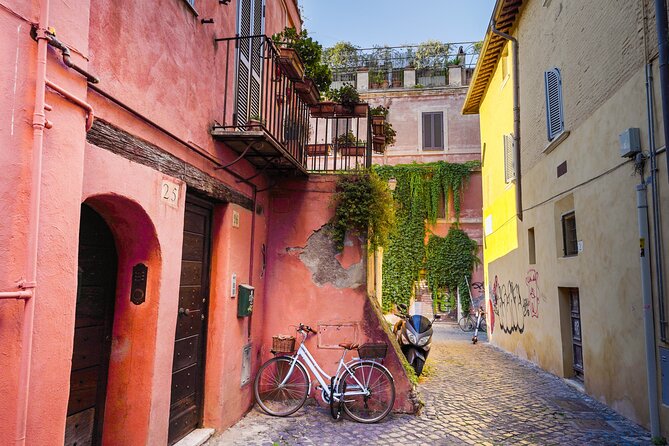
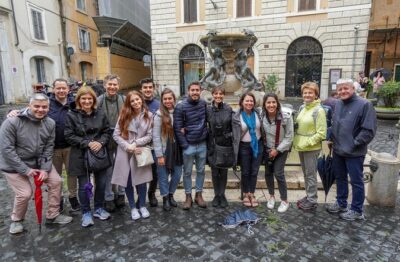
Trastevere has a quieter side you’ll miss alone. This 2.5-hour small-group walk threads together Trastevere churches, the Jewish Ghetto, and the river island Isola Tiberina in one logical route that feels less touristy and more local. You’ll start near Piazza di San Francesco d’Assisi and end at Piazza Mattei, with a guide keeping the story straight as the streets get narrow.
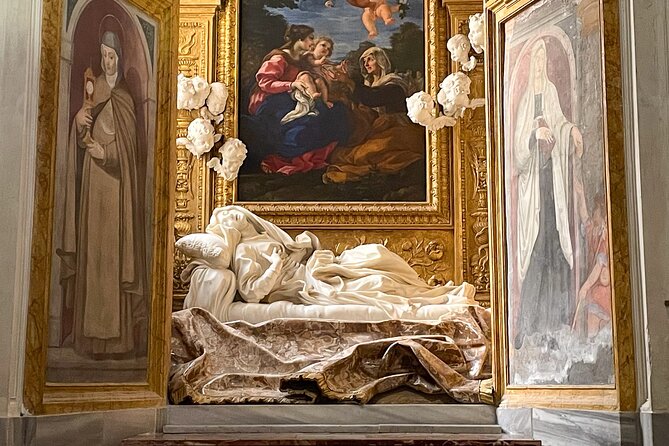
What I like most is the way the stops are connected by people and meaning, not just famous names. You get Bernini’s Blessed Ludovica Albertoni (in a church most visitors never think to enter), plus a look at how Rome’s oldest Jewish community shaped the neighborhood you walk through.
One thing to consider: the route includes a church underground visit, so plan for a bit of stair-and-wait reality. Nothing extreme is promised, but the “underground” part means you should bring comfortable shoes and expect the timing to run by the day’s access.
In This Review
- Key highlights you’ll feel right away
- Trastevere and the Jewish Ghetto route: why it feels smarter than a checklist
- Timing and meeting points: how the 2.5 hours actually play
- Chiesa di San Francesco a Ripa Grande: Bernini’s Blessed Ludovica Albertoni
- Santa Cecilia in Trastevere: layers of meaning plus the included underground crypt
- Vicolo Dell’Atleta: a calm alley that doubles as a history shortcut
- Isola Tiberina: where Rome tells the truth about itself
- Il Portico di Ottavia: the Jewish district (ghetto) and the Colosseum design connection
- Guides and the small-group factor: why you’ll likely enjoy the way it’s taught
- Price and value: is $67.72 worth it?
- Who should book this Trastevere and Jewish Ghetto walk
- Should you book this tour?
- FAQ
- How long is the Rome: Trastevere Hidden Gems and Jewish Ghetto small group tour?
- What language is the tour offered in?
- How big is the group?
- Is the underground crypt visit included?
- Where does the tour start and end?
- Is hotel pickup included?
Key highlights you’ll feel right away
- Small group size (max 12) means you can actually hear your guide and ask questions.
- Bernini’s Blessed Ludovica Albertoni in Chiesa di San Francesco a Ripa Grande is a standout you won’t find on most quick Rome lists.
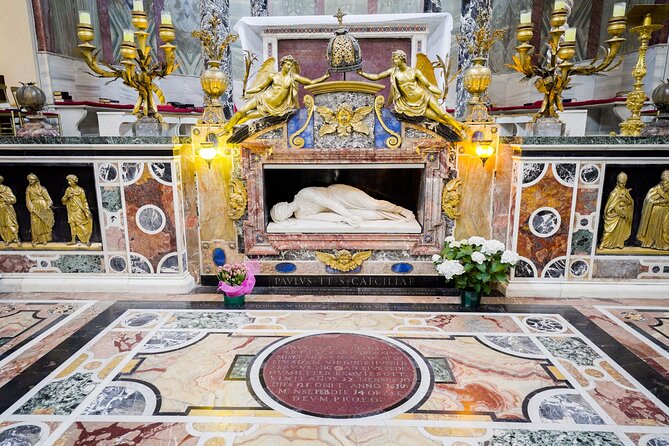
- Santa Cecilia’s underground site is included, with special access by the nuns.
- Vicolo Dell’Atleta offers the kind of calm, narrow Rome lanes where the stories land better.
- Il Portico di Ottavia ties the ghetto area to the Colosseum’s design idea, plus food-and-community context.
Trastevere and the Jewish Ghetto route: why it feels smarter than a checklist
This tour works because it’s designed like a walk you could actually enjoy, not a sprint. In about 2 hours 30 minutes, you move between five focused areas: a Bernini stop, a Santa Cecilia stop with an underground visit, a peaceful narrow alley, Isola Tiberina, and then the Jewish Ghetto area around Il Portico di Ottavia.
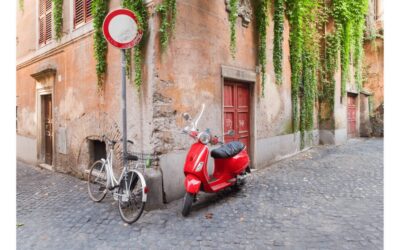
Trastevere is famous, sure. But the best moments are often the ones that happen one street off the main flow—when you’re still close to the center, yet far from the big loud crowds. This route leans into that feeling. You’ll notice it right from the start: narrow streets, small corners, and churches that don’t rely on crowd power to feel special.
The Jewish Ghetto segment also does something useful. Instead of giving you facts that float around, it shows you the neighborhood as a physical place shaped by time—so the story has context as you walk.
More lanes worth losing an evening in Trastevere
- Winner 2025 Rome Twilight Trastevere Food Tour by Eating Europe
★ 5.0 · 5,157 reviews - Rome Food Tour: Campo de’ Fiori, Ghetto, Trastevere Winner 2024
★ 5.0 · 3,205 reviews - Rome: Guided Food Walking Tour with Wine in Trastevere
★ 4.9 · 3,105 reviews - Rome: Trastevere Food tour with Free-Flowing Fine Wine
★ 5.0 · 2,853 reviews
Timing and meeting points: how the 2.5 hours actually play
You start at Piazza di San Francesco d’Assisi & Via Jacopa de’ Settesoli, 00153 Roma RM, then finish at Piazza Mattei, 00186 Roma RM. That end point matters. Piazza Mattei sits right where you can keep wandering afterward in the ghetto area without immediately needing another bus or metro hop.
The pacing is built around short, specific stops:
- Chiesa di San Francesco a Ripa Grande: about 30 minutes
- Santa Cecilia in Trastevere: about 1 hour
- Vicolo Dell’Atleta: about 15 minutes
- Isola Tiberina: about 15 minutes
- Il Portico di Ottavia: about 30 minutes
Most of the stops are free to enter on-site (as listed), and only the underground crypt visit is included. That mix helps you spend your money on the parts that truly need access, while keeping the rest easy and low-friction.
There’s also no hotel pickup. Plan to arrive on your own using public transportation. The meeting point is described as near transit, which is exactly what you want for a walking tour like this.
Chiesa di San Francesco a Ripa Grande: Bernini’s Blessed Ludovica Albertoni
This is where the tour earns your attention early. You go to Chiesa di San Francesco a Ripa Grande and focus on one of the real “how did Rome hide this?” moments: Bernini’s Blessed Ludovica Albertoni.
Bernini can be overwhelming if you only encounter him in the biggest, most over-visited settings. Here, the mood is different. The church setting gives you room to appreciate the work without the circus atmosphere you get elsewhere.
What I love about starting here is that it teaches you how to look. You aren’t just collecting a name. Your guide helps you notice how art and faith connect in a very Roman way—devotion made visible, and then built into the everyday rhythm of the city.
If your priority is art, this stop alone is a strong reason to book.
Santa Cecilia in Trastevere: layers of meaning plus the included underground crypt
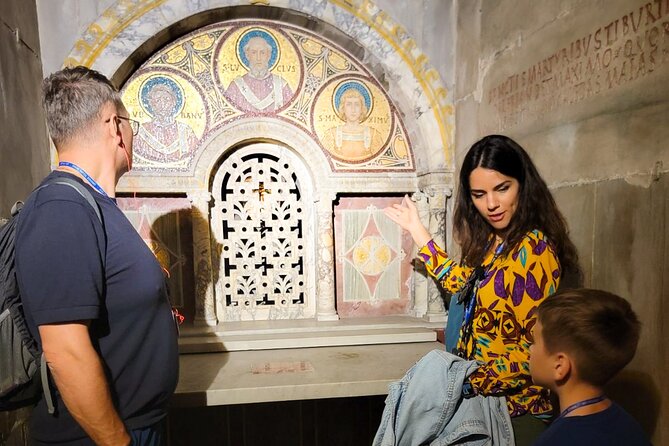
Santa Cecilia is the most story-heavy stop on the walk, and it’s also the one that gives you a real “okay, that changes things” moment. You’ll explore the church tied to Saint Cecilia and her dramatic, resilient story.
The tour highlights her as tough and enduring—then gives you a way to see why her legend stuck around. You’ll also hear about the church itself as a layered site—described as having history stacked like lasagna, where different eras leave their mark rather than erasing the past.
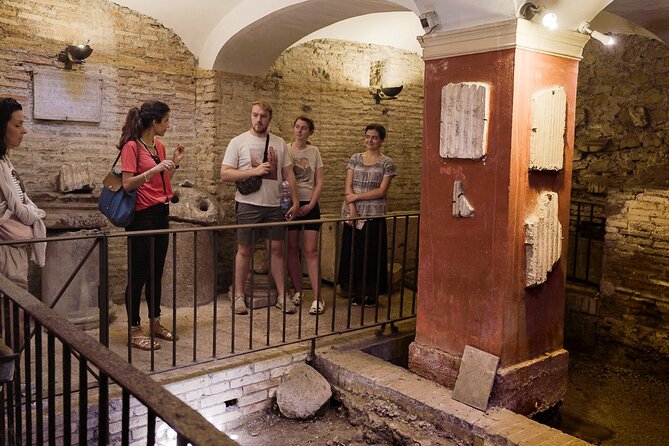
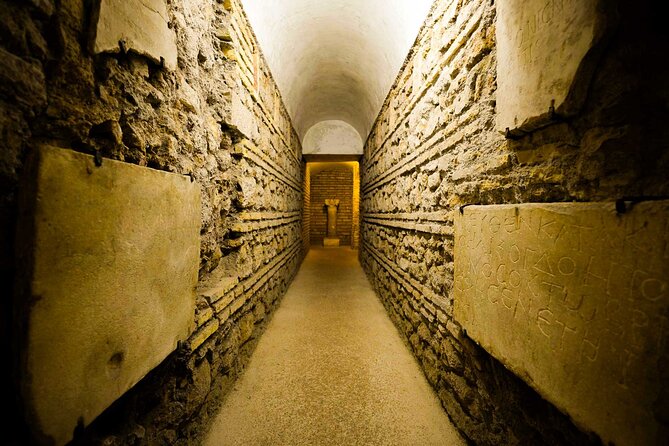
Here’s the practical win: the tour includes entry to the underground site, with special access by the nuns. That access is the difference between seeing a church as a room and experiencing it as a place with depth beneath your feet.
You’ll spend about 1 hour here, which is long enough for your guide to connect the story, but not so long that you feel stuck. Still, treat it as your main “sit-and-listen then walk” portion.
Drawback to plan for: underground spaces can change the air and light levels quickly. Bring a little patience, and you’ll be fine.
More of the Ghetto's quiet corners
Vicolo Dell’Atleta: a calm alley that doubles as a history shortcut
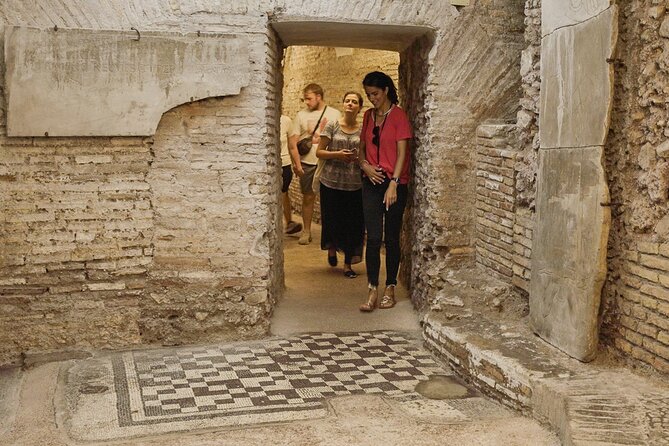
After Santa Cecilia, you shift gears to Vicolo Dell’Atleta, a narrow, peaceful corner of Rome that feels like it could be missed if you’re rushing.
This part is short—about 15 minutes—but it has a clever purpose. It gives you a breather from major landmarks while still feeding your curiosity. Your guide points out how secrets sit in plain sight in Rome: references to ancient Jewish life (including the idea of the most ancient synagogue of Rome, which today houses a restaurant) and also an “athlete” thread linked to the alley.
This stop is less about a single must-see object and more about the sensation of moving through a place where layers have survived by being quietly used.
Isola Tiberina: where Rome tells the truth about itself
Next up is Isola Tiberina, the island in the Tiber. You’ll spend about 15 minutes here.
What makes this stop interesting isn’t just the view of water and river banks—it’s what your guide connects to it. The story you’ll hear links the island to ideas of who becomes Roman (a local belief about being born on the island) and to the bridge where Julius Caesar walked, described as the most ancient in Rome.
Even if you’ve heard Caesar named a thousand times, tying him to a specific bridge-and-walk moment makes history feel less like a textbook and more like a walk you could trace.
This is also a nice reset point. After church interiors and underground spaces, being outside by the river helps you register the day as a whole.
Il Portico di Ottavia: the Jewish district (ghetto) and the Colosseum design connection
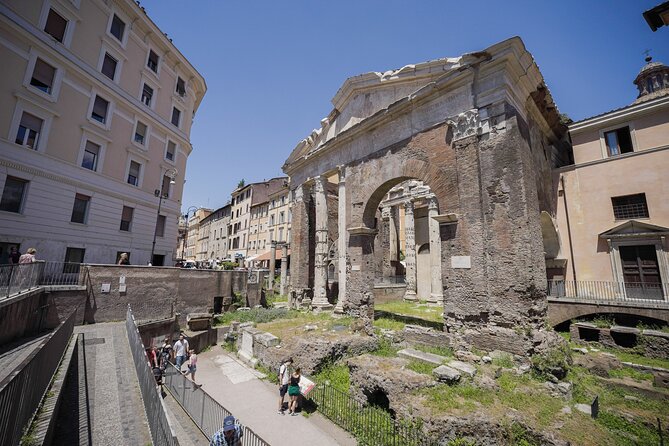
The final major stop is around Il Portico di Ottavia, in the Jewish district often associated with the ghetto name. You’ll spend about 30 minutes here.
This area is powerful because it’s both historic and lived-in. Your guide connects the neighborhood story to the bigger picture: the Jewish community of Rome is described as one of the oldest Jewish communities in Europe, and the walk helps you see how that long presence shaped the streets, buildings, and daily life.
Two details stand out from the tour’s framing:
- You’ll see the building that inspired the design of the Colosseum.
- You’ll get context for some food destinations of Rome and how the community and the neighborhood intersect.
That Colosseum design link is a great example of how the tour thinks. It doesn’t treat the ghetto as a separate museum section. It shows how ideas moved across the city and how architecture can carry cultural fingerprints.
If you end your day here, you’ll likely want to keep going. Piazza Mattei is a natural springboard for that.
Guides and the small-group factor: why you’ll likely enjoy the way it’s taught
A tour is only as good as how it’s explained, and the size matters. This experience caps at 12 people. That makes it easier to keep your guide’s pace without getting lost in the back row.
In the feedback tied to this tour, names like Frederica and Francesca come up for strong guiding—people describe the guides as personable and very good at connecting the dots around Rome’s stories. Even if you don’t know your guide ahead of time, this tour structure makes it more likely you’ll get a human, conversational experience rather than a headset lecture.
If your guide happens to be Frederica or Francesca, lean into questions. This route has multiple “why is this here?” moments, and your guide can likely explain them in plain terms.
Price and value: is $67.72 worth it?
At $67.72 per person, this isn’t an impulse bargain. But it isn’t priced like a luxury production either. The value is in three places:
- Small group (max 12): you’re paying for attention, not just access.
- Included underground crypt entry at Santa Cecilia: underground access usually costs more when you do it on your own.
- A focused route that bundles several well-chosen “Rome in context” moments: Bernini, Santa Cecilia, Isola Tiberina, and the ghetto area.
If you’d otherwise pick 1–2 highlights and spend the rest of the day wandering, this tour likely saves time and helps you understand what you’re looking at. If you prefer total freedom and don’t like structured walking, you might not feel the same benefit.
The sweet spot: you want authenticity and explanation, but you still like moving at a human pace.
Who should book this Trastevere and Jewish Ghetto walk
Book it if:
- You like art and churches, but not the usual “only the biggest names” version.
- You want a walk that connects Rome’s Jewish history to real streets, not just a distant description.
- You’re the type who enjoys narrow lanes and quiet corners as much as big monuments.
- You’re traveling with kids and want a tour that’s listed as suitable for children.
Skip it if:
- You hate walking and tight lanes (this route leans into the narrow-street feel of Trastevere).
- You want long free time at each stop. This is structured, with short stop durations.
Should you book this tour?
I’d book it if you want a smarter Rome day—one that uses the city as a storybook you can walk through. The Bernini stop and the included Santa Cecilia underground visit are the anchors, and the rest of the route supports them with calmer, more atmospheric corners like Vicolo Dell’Atleta and the river island.
If your schedule allows, book it early because this one is described as commonly reserved about two months out, and it’s also limited to a max of 12.
And here’s my practical advice: wear comfortable shoes, bring patience for the underground portion, and use the guide time to ask those simple questions you’re always thinking in Rome—why this is here, who it was for, and what changed over time.
FAQ
How long is the Rome: Trastevere Hidden Gems and Jewish Ghetto small group tour?
It lasts about 2 hours 30 minutes.
What language is the tour offered in?
The tour is offered in English.
How big is the group?
The tour is a small group with a maximum of 12 travelers.
Is the underground crypt visit included?
Yes. Entry tickets to the underground crypt at Santa Cecilia are included.
Where does the tour start and end?
It starts at Piazza di San Francesco d’Assisi & Via Jacopa de’ Settesoli, 00153 Roma RM, Italy, and ends at Piazza Mattei, 00186 Roma RM, Italy.
Is hotel pickup included?
No, pick-up from the hotel is not included.
More Tour Reviews in Rome
- Vatican Museums, Sistine Chapel & St. Peter’s Basilica Tour
★ 4.3 · 73,970 reviews - Vatican Museums, Sistine Chapel & St Peter’s Basilica Guided Tour
★ 4.5 · 39,149 reviews - Rome: Colosseum, Palatine Hill and Roman Forum Guided Tour
★ 4.8 · 32,814 reviews - Rome: Guided Tour of Colosseum, Roman Forum & Palatine Hill
★ 4.7 · 27,897 reviews - Rome: Colosseum & Forum with Audio Guide App -Optional Arena
★ 4.2 · 24,770 reviews - Rome: Colosseum, Roman Forum and Palatine Hill Guided Tour
★ 4.5 · 23,903 reviews
More Around the Jewish Ghetto
- Rome Food Tour: Campo de’ Fiori, Ghetto, Trastevere Winner 2024
★ 5.0 · 3,205 reviews - Jewish Ghetto and Trastevere Tour Rome
★ 4.5 · 1,729 reviews - Rome: Eat Like a Roman Ghetto & Campo de’ Fiori Food Tour
★ 5.0 · 1,037 reviews - Jewish Ghetto and Synagogues with Jewish Roman Guide 3 Hours
★ 5.0 · 907 reviews - Jewish Ghetto & Piazza Navona: Food, Wine & Sightseeing Rome Tour
★ 5.0 · 460 reviews - Rome: Food & Wine Tour of Campo de Fiori, Ghetto, Trastevere
★ 4.8 · 413 reviews
Still in Trastevere? Keep Going
- Winner 2025 Rome Twilight Trastevere Food Tour by Eating Europe
★ 5.0 · 5,157 reviews - Rome Food Tour: Campo de’ Fiori, Ghetto, Trastevere Winner 2024
★ 5.0 · 3,205 reviews - Rome: Guided Food Walking Tour with Wine in Trastevere
★ 4.9 · 3,105 reviews - Rome: Trastevere Food tour with Free-Flowing Fine Wine
★ 5.0 · 2,853 reviews - Rome: Trastevere & Campo de Fiori Street Food Walking Tour
★ 4.9 · 2,768 reviews - Rome: Award Winning Trastevere Group Food Tour with Wine
★ 5.0 · 2,273 reviews
Just added to our Rome reviews





Trastevere Tours, compared.
 ★ 5.0Winner 2025 Rome Twilight Trastevere Food Tour by Eating EuropeFrom $1255,157 reviews
 ★ 5.0Rome Food Tour: Campo de’ Fiori, Ghetto, Trastevere Winner 2024From $883,205 reviews
 ★ 4.9Guided Food Walking Tour with Wine in TrastevereFrom $1003,105 reviews
 ★ 5.0Trastevere Food tour with Free-Flowing Fine WineFrom $1022,853 reviews
 ★ 4.9Trastevere & Campo de Fiori Street Food Walking TourFrom $512,768 reviews
 ★ 5.0Award Winning Trastevere Group Food Tour with WineFrom $812,273 reviews
 ★ 4.8Trastevere Street Food Walking Tour with Local ExpertFrom $571,784 reviews
 ★ 4.5Jewish Ghetto and Trastevere Tour RomeFrom $41,729 reviews
Browse the lists this tour appears in