
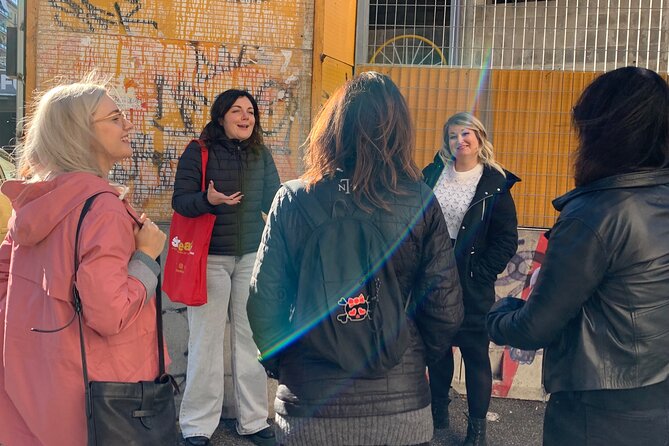
Reviewed · ROME FOOD TOURS
Rome: Street Food, Local Market and Hidden Gems Tour
Street food and history meet in Testaccio. I love the Testaccio market tastings led by locals like Giulia, and I really like the sit-down trattoria lunch that makes this feel like an honest Roman meal instead of random bites; one thing to consider: 3 wines are included, so plan your pace if you do not drink much.
This is a 3.5-hour, small-group walking tour (maximum 10) that keeps the attention on your questions. You get guided time in a real neighborhood, plus enough food to leave satisfied rather than hunting for your next snack. The one drawback is simple: it moves on a schedule, so if you want lots of free time, you might feel a bit time-pressed.
In This Review
- Key highlights worth planning around
- Why Testaccio is the smart setting for a Rome street-food tour
- Getting started near Stazione Trastevere and the Testaccio approach
- Mattatoio: a former slaughterhouse that keeps life moving
- Walking Testaccio with a local guide like Giulia
- Mercato di Testaccio: the street-food tasting you’ll remember
- Monte Testaccio: the quieter side of Rome in a short window
- Rome War Cemetery: a quick WWII perspective without getting heavy
- What’s included in the meal: breakfast, street bites, pasta, dessert, wine
- Price and value: what $119.48 buys you in real Rome terms
- Who this Rome food tour suits best (and who should be cautious)
- Practical tips before you go (so the food hits right)
- Should you book this Rome Street Food, Local Market and Hidden Gems tour?
- FAQ
- How long is the Rome Street Food, Local Market and Hidden Gems tour?
- Where do I meet, and where does the tour end?
- Is the tour offered in English?
- What food and drinks are included?
- Is it suitable for vegetarians or pescatarians?
- How big is the group?
- What is the cancellation policy?
Key highlights worth planning around

- Testaccio-focused food: street food tastings plus a proper pasta lunch, not just samples.
- Local guide energy: locals like Giulia explain the how-and-why behind what you eat.
- A meal that adds up: breakfast with maritozzo, market bites, dessert, and wine.
- Short stops with meaning: from Ponte Testaccio to Mattatoio and Monte Testaccio.
- Small group size (max 10): easier to hear, easier to ask questions, less waiting.
Why Testaccio is the smart setting for a Rome street-food tour
Testaccio is one of those Rome neighborhoods where food feels practical, not performative. You get to spend time where people actually eat and shop, with your guide steering you toward the right stalls and dishes. That matters because street food can be chaotic if you do not know what to look for.
I also like that the tour is built like a meal arc, not a checklist. You start with a breakfast classic, work through market tastings, and then sit down for pasta. By the end, you are not just chewing on leftovers—you understand what you tried and why it belongs here.
And yes, you also get the walking-history side of Rome. The guide weaves quick context into each stop so you are not just wandering around and hoping it all makes sense.
Still hungry? More Rome food walks
- Winner 2025 Rome Twilight Trastevere Food Tour by Eating Europe
★ 5.0 · 5,157 reviews - Rome: Street Food Tour with Local Guide
★ 4.8 · 4,077 reviews - Rome Food Tour: Unlimited Tastings with Fine Wine & Barolo
★ 5.0 · 3,365 reviews - Rome Food Tour: Campo de’ Fiori, Ghetto, Trastevere Winner 2024
★ 5.0 · 3,205 reviews
Getting started near Stazione Trastevere and the Testaccio approach
Your morning begins at Piazza Flavio Biondo, 7 (near public transport) and the walk officially starts from Stazione Trastevere. The first stop is brief—about 15 minutes—and it is mainly about setting the group up and getting you oriented.
From there, you cross Ponte Testaccio. It is a short crossing (around 5 minutes), but it gives you a clean picture of how the neighborhood fits into Rome’s urban story. If you usually skip the “history bits,” this works because it is short and tied to where you are going next.
The pace is a big deal on this tour. Because you have food planned at multiple points, you want that steady rhythm—enough movement to feel like a stroll, not so much that you arrive at the market out of steam.
Mattatoio: a former slaughterhouse that keeps life moving
One of my favorite kinds of stops on a food tour is when the place has a past—and a present. Mattatoio fits that perfectly. It used to be Rome’s main slaughterhouse, and today it serves as a cultural center for exhibitions and academic studies.
The stop is around 15 minutes. That is enough time to land the concept and move on without turning the tour into a museum day. The value here is not memorizing facts; it is understanding that Rome’s food culture has a setting, and that settings change over time.
If you like modern reuse (old industry repurposed into learning and art), you will probably enjoy this break. If you only want food and nothing else, you might find this the most “side quest” stop—but it still supports the bigger neighborhood feel.
Walking Testaccio with a local guide like Giulia
Once you hit Testaccio itself, you get a guided district walk of about 1 hour 10 minutes. This is where the tour becomes more than eating. Your guide points out interesting attractions across the area and links what you are about to taste to the neighborhood that shaped it.
In the reviews, the guide name that shows up again and again is Giulia, and the vibe is consistent: she is friendly, and she explains things in a way that actually sticks. That is the difference between a generic tasting and one that feels like learning how locals think about food.
This portion also benefits from the small group size (maximum 10). When the group is small, your guide can answer questions without rushing you. It is also easier to stay together when you are moving through real streets rather than one controlled food street.
Worth a look next to this Rome booking:
Mercato di Testaccio: the street-food tasting you’ll remember
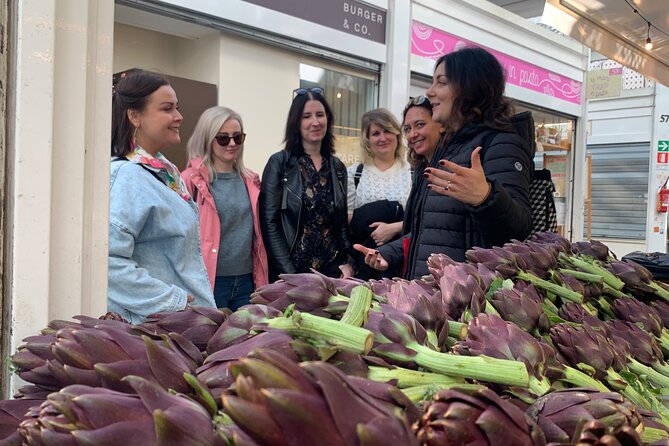
The centerpiece for food is Mercato di Testaccio. You spend about 1 hour here, walking the food benches with your guide and sampling several traditional street foods.
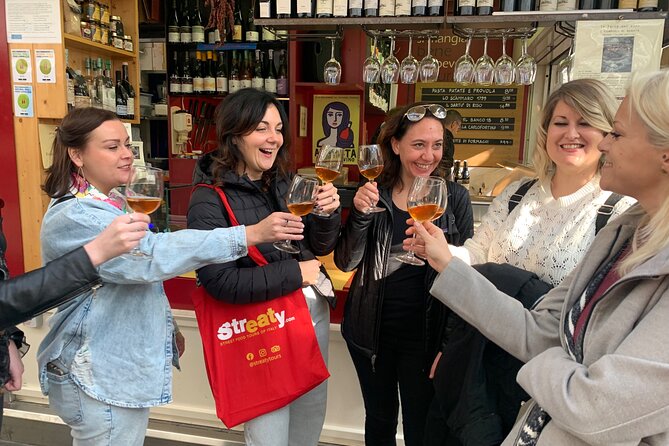
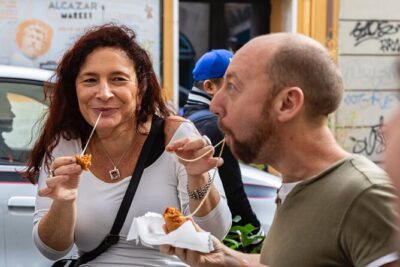
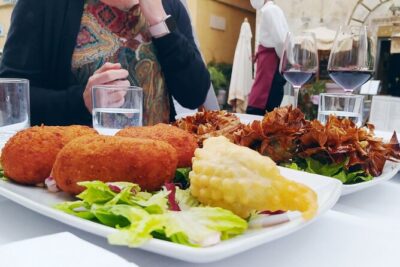
From the menu of tastings, you can expect classic Roman names such as supplì, polpette, country cheese, and other old-school dishes. You may also try cacio e pepe as part of what’s served at the meal stops. On the drinks side, the tour includes 3 wines, which is part of why the market tastings feel like a real local lunch experience, not just a tasting flight.
Here is the practical advantage: the guide handles ordering, so you do not waste time deciding. You also get a mix of flavors—fried, savory, cheesy, and wine-friendly—so you get a rounded sense of what Roman street food can be.
One small caution: this is not a vegetarian buffet where you can endlessly swap dishes. The tour is marked suitable to vegetarians and pescatarians, so options exist, but you should still expect a guided menu approach. If you have strict dietary needs, you will want to be clear when you book.
Monte Testaccio: the quieter side of Rome in a short window
After the market, you head toward Monte Testaccio for about 40 minutes. The tour frames this as a chance to see the secret spots of the Mount, which matters because Monte Testaccio often gets skipped when people focus only on the biggest sights.
This section works as a breather. You have already eaten, and now you shift from tasting to noticing. Even without a long pause, it gives you a chance to take in a different angle of the neighborhood and feel like you are seeing Rome beyond the postcard routes.
If you love off-the-main-road Rome, this stop is one of the reasons the tour stands out. If you are the type who wants every minute to be food, you may wish it ran a bit longer at the market—but the tour stays balanced by design.
Rome War Cemetery: a quick WWII perspective without getting heavy
Near the end, you visit the Rome War Cemetery for about 5 minutes. The focus here is on the Allies’ disembark during World War II.
It is intentionally short, and that is part of what makes it manageable on a walking food tour. You still get a sense of place—Rome is not just ancient ruins and perfect fountains—but you do not get pulled into a long, emotional detour.
If you prefer your sightseeing to stay light, you might treat this as a moment of respect and then move on quickly. If you like history, even small “blink and you miss it” stops are useful when the guide gives just enough context to make it more than names on stone.
What’s included in the meal: breakfast, street bites, pasta, dessert, wine
This tour is built around eating, and the schedule reflects that. Here is the flow of what you should expect to eat and drink:
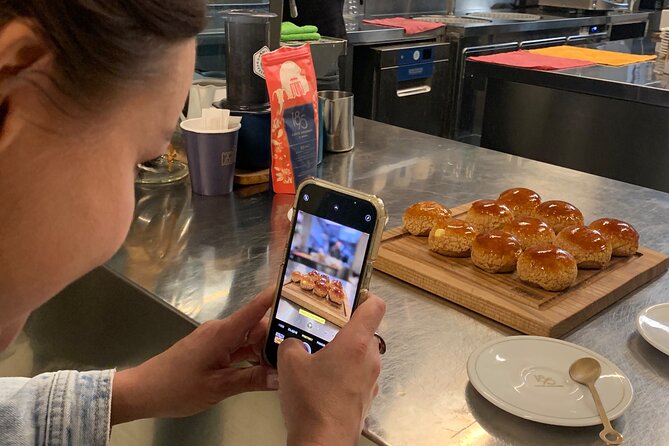
- Roman breakfast with Maritozzo
You start with a traditional breakfast item. Maritozzo sets the tone early: sweet, easy to start with, and a classic Roman treat.
- Street food tastings at the market
The guide samples multiple traditional options such as supplì, country cheese, polpette, and other old-school dishes. This is where you learn what to order and what to look for when you go back on your own.
- A sit-down pasta lunch in a century-old trattoria
This is a big value point. A century-old trattoria implies character and consistency, and the tour gives you a proper lunch rather than a series of standing bites. You also get seasonal dessert to cap it off.
- 3 wines
Wine is part of the included program. If you want to try Roman food culture the full way, this is one of the reasons the experience feels complete.
One more practical benefit: because you eat at several points, you are unlikely to end hungry. The whole structure prevents the common problem with street-food self-guided wandering—overeating the wrong things and then running out of steam before dinner.
Price and value: what $119.48 buys you in real Rome terms
At $119.48 per person for about 3 hours 30 minutes, this is not a budget-only tour. But it is also not overpriced when you compare what is included.
You are paying for:
- a guided walking experience with a local expert
- a guided breakfast
- market street-food tastings
- a sit-down pasta lunch at a traditional trattoria
- seasonal dessert
- 3 wines
- the benefit of a small group (maximum 10)
Also, most of the sightseeing stops are listed as admission ticket free. That means you are not stacking entry fees on top of food and drink. In other words, your money goes where it counts—into the meal and the guidance.
When I think about value for this style of tour, I focus on two things: convenience and quality control. Convenience is handled because the guide orders and routes you. Quality control is handled because you get consistent selections instead of random impulse purchases.
Who this Rome food tour suits best (and who should be cautious)
This is a great fit if you:
- want Rome street food with structure (so you do not end up guessing what to buy)
- like neighborhood walking more than big-monument marathons
- enjoy learning quick context while you eat
- want a small group so your guide can actually respond
It is also suitable to vegetarians and pescatarians, which is a strong plus for a food tour. Still, it is a guided set-menu format, so strict diets may require a bit of care when you book.
If you only want food and prefer zero history, you might find the district and the short cemetery stop a little more than you bargained for. And if you prefer drinking to be optional, remember that wine is included as part of the package.
Practical tips before you go (so the food hits right)
- Eat smart before the start. There is a breakfast component included, so you do not need a huge meal beforehand.
- Wear walking shoes. This is a walking tour with multiple stops over about 3.5 hours.
- Pace your wine. If you are not a regular wine drinker, you can sip slowly while still enjoying the pairing.
- Keep your questions ready. The small group size makes Q&A feel easy, especially during the market segment.
Should you book this Rome Street Food, Local Market and Hidden Gems tour?
Yes, if your goal is to understand Roman food culture through Testaccio, in a guided, small-group format, and to leave full. The strongest reasons to book are the market focus and the way the guide connects what you taste to the neighborhood. When a local like Giulia leads it, the experience tends to feel friendly, informative, and genuinely worth your time.
I would only skip it if you are trying to avoid wine completely, or if you want a totally self-paced street-food day. Otherwise, this hits a good balance: food first, with just enough Rome context to make each bite make sense.
FAQ
How long is the Rome Street Food, Local Market and Hidden Gems tour?
The tour lasts about 3 hours 30 minutes.
Where do I meet, and where does the tour end?
The meeting point is Piazza Flavio Biondo, 7, 00152 Roma RM, Italy. The tour ends a few steps from the Metro Station of Piramide.
Is the tour offered in English?
Yes, it is offered in English.
What food and drinks are included?
You get a Roman breakfast with Maritozzo, street food tastings at the market, a sit-down pasta lunch at a traditional trattoria, seasonal dessert, and 3 wines.
Is it suitable for vegetarians or pescatarians?
The tour is suitable to vegetarians and pescatarians.
How big is the group?
The tour has a maximum of 10 travelers.
What is the cancellation policy?
Free cancellation is available up to 24 hours in advance for a full refund. It also notes the experience requires good weather, and if it is canceled due to poor weather you’ll be offered a different date or a full refund.
More Tours in Rome
- Vatican Museums, Sistine Chapel & St. Peter’s Basilica Tour
★ 4.3 · 73,970 reviews - Vatican Museums, Sistine Chapel & St Peter’s Basilica Guided Tour
★ 4.5 · 39,149 reviews - Rome: Colosseum, Palatine Hill and Roman Forum Guided Tour
★ 4.8 · 32,814 reviews - Rome: Guided Tour of Colosseum, Roman Forum & Palatine Hill
★ 4.7 · 27,897 reviews - Rome: Colosseum, Roman Forum and Palatine Hill Guided Tour
★ 4.5 · 23,903 reviews - Rome: Colosseum Arena Floor, Palatine & Forum Guided Tour
★ 4.5 · 20,180 reviews
More Tour Reviews in Rome
- Vatican Museums, Sistine Chapel & St. Peter’s Basilica Tour
★ 4.3 · 73,970 reviews - Vatican Museums, Sistine Chapel & St Peter’s Basilica Guided Tour
★ 4.5 · 39,149 reviews - Rome: Colosseum, Palatine Hill and Roman Forum Guided Tour
★ 4.8 · 32,814 reviews - Rome: Guided Tour of Colosseum, Roman Forum & Palatine Hill
★ 4.7 · 27,897 reviews - Rome: Colosseum & Forum with Audio Guide App -Optional Arena
★ 4.2 · 24,770 reviews - Rome: Colosseum, Roman Forum and Palatine Hill Guided Tour
★ 4.5 · 23,903 reviews
More Roman Tables Worth Booking
- Winner 2025 Rome Twilight Trastevere Food Tour by Eating Europe
★ 5.0 · 5,157 reviews - Rome: Street Food Tour with Local Guide
★ 4.8 · 4,077 reviews - Rome Food Tour: Unlimited Tastings with Fine Wine & Barolo
★ 5.0 · 3,365 reviews - Rome Food Tour: Campo de’ Fiori, Ghetto, Trastevere Winner 2024
★ 5.0 · 3,205 reviews - Rome: Guided Food Walking Tour with Wine in Trastevere
★ 4.9 · 3,105 reviews - Rome: Trastevere Food tour with Free-Flowing Fine Wine
★ 5.0 · 2,853 reviews
Just added to our Rome reviews





Rome Food Tours, compared.
 ★ 5.0Winner 2025 Rome Twilight Trastevere Food Tour by Eating EuropeFrom $1255,157 reviews
 ★ 4.8Street Food Tour with Local GuideFrom $534,077 reviews
 ★ 5.0Rome Food Tour: Unlimited Tastings with Fine Wine & BaroloFrom $833,365 reviews
 ★ 5.0Rome Food Tour: Campo de’ Fiori, Ghetto, Trastevere Winner 2024From $883,205 reviews
 ★ 4.9Guided Food Walking Tour with Wine in TrastevereFrom $1003,105 reviews
 ★ 5.0Trastevere Food tour with Free-Flowing Fine WineFrom $1022,853 reviews
 ★ 4.9Trastevere & Campo de Fiori Street Food Walking TourFrom $512,768 reviews
★ 5.0Rome Street Food Tour with Local GuideFrom $542,361 reviews
Browse the lists this tour appears in