
Reviewed · PANTHEON TOURS
Rome: Spanish Steps, Trevi Fountain, Pantheon & Navona Tour
Rome gets easier when someone maps your walk. This 2.5-hour tour strings together Rome’s most photographed corners with clear, on-foot guidance so you spend less time guessing and more time looking. I really like that headsets are included, which makes the guide’s commentary easy to catch even in crowds, and I also like how the route helps you navigate Rome fast without feeling rushed from one landmark to the next.
The big consideration is simple: you’ll be doing a fair amount of walking on sidewalks and streets, and the tour is not recommended if you have back or knee problems. If you’re comfortable strolling at a steady pace, this is a strong way to get your bearings in central Rome.
To make the experience feel calmer, the group stays small (up to 25), and it runs in English with a professional guide. You also end in Piazza Navona, which is a great place to keep exploring after the tour.
In This Review
- Key things to know before you go
- Why this quick Rome walk works so well for first-timers
- Piazza del Popolo to Spanish Steps: getting your bearings fast
- Piazza del Popolo and Porta del Popolo: Michelangelo, with an architect’s twist
- Spanish Steps: the 1723 staircase and what to look for
- Trevi Fountain: from Aqua Virgo to the Renaissance face you recognize
- Pantheon from the outside: reading the dome and the oculus
- Piazza Navona: a former stadium turned grand square
- Price and timing: what you’re paying for at $59
- Group size, pace, and guide style: how to get the most out of it
- Logistics you should plan around (without killing the vibe)
- Should you book this Rome: Spanish Steps, Trevi Fountain, Pantheon & Navona Tour?
- FAQ
- How long is the Rome Spanish Steps, Trevi Fountain, Pantheon & Navona tour?
- What language is the tour offered in?
- What’s included in the tour price?
- Is admission included for all stops?
- Does the tour visit the inside of the Pantheon?
- Where does the tour start and end?
- Is this tour suitable for everyone who wants to walk around Rome?
- Is free cancellation available?
Key things to know before you go
- Headsets included so you can hear history clearly, even when the streets get loud
- Five major stops in about 2.5 hours, ideal for a first trip or a quick sightseeing window
- Pantheon interior is not included, so you’ll view the building from outside during this tour
- Mostly no-entry-fee sights along the way (free admission at the listed stops)
- Small group size (max 25) helps keep questions from getting lost in the noise
Why this quick Rome walk works so well for first-timers
If Rome is your first big stop in Italy, the hardest part is often not finding monuments. It’s figuring out how they connect, where to stand for the best views, and what to pay attention to once you’re there.
This tour does the connecting for you. In just a couple of hours, you hit the Spanish Steps, Trevi Fountain, the Pantheon area, and Piazza Navona—plus Piazza del Popolo as a strong starting point. That means you come away with a mental map of central Rome, not just a pile of photos.
I also like the pace. It’s long enough to learn what you’re seeing and short enough to still feel energetic afterward. You don’t end the day wondering what you missed—you can actually process what you saw.
The Pantheon, a couple more takes
- Rome: Pantheon Priority Entry Ticket & Interactive App
★ 4.1 · 5,114 reviews - Rome: Pantheon Priority Entry Tickets with Interactive App
★ 4.6 · 4,108 reviews - Rome: Pantheon Timeless Marvel Guided Tour with Entry Ticket
★ 4.9 · 4,002 reviews - Castel Sant’Angelo: Ticket with optional Vatican or Pantheon
★ 4.4 · 3,088 reviews
Piazza del Popolo to Spanish Steps: getting your bearings fast
You start at Piazza del Popolo, a lively square that functions like a hub. It’s a good first stop because you can orient yourself immediately: you’re in the right area of Rome for the rest of the walk, and you’re not hunting for direction before the tour even begins.
As you gather your bearings, the guide’s job is to turn a busy street scene into something readable. You’ll hear how this area connects to older city walls and gates. In particular, this landmark ties back to the Porta del Popolo name and its earlier identity as Porta Flaminia.
Then you shift into the climb-and-views rhythm that defines this part of Rome. The walking is part of the charm. You feel the slope and the changing perspectives, and the guide helps you place each moment in time, from older Roman planning to later Renaissance and Baroque flavor.
Practical note: because this is an on-foot route, wear shoes you trust. The value here is speed and context, so you’ll want your feet to cooperate.
Piazza del Popolo and Porta del Popolo: Michelangelo, with an architect’s twist
At the first stop, you’ll get one of those Rome stories that makes the city feel less random. The gate here is tied to Michelangelo’s involvement, but the details are more nuanced than a simple famous-name claim.
You’ll hear that Pope Pius IV commissioned Michelangelo in 1562, yet Michelangelo delegated the work to architect Nanni di Baccio Bigio. The construction reportedly took three years, landing on a finished date of 1565. That timeline matters because it helps you understand why the gate feels so intentional and designed rather than like a leftover structure.
What I like about starting here: it gives you a historical “frame” before you step into the more decorative, people-watching scenes like the Spanish Steps and Trevi Fountain. You’re not just collecting sights—you’re building a sense of how Rome layers eras over each other.
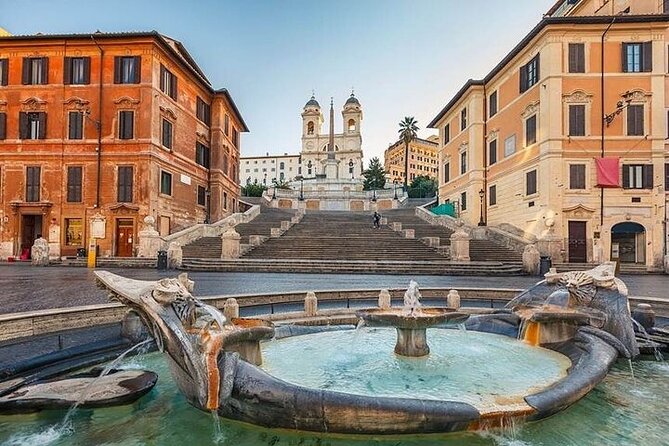
Spanish Steps: the 1723 staircase and what to look for
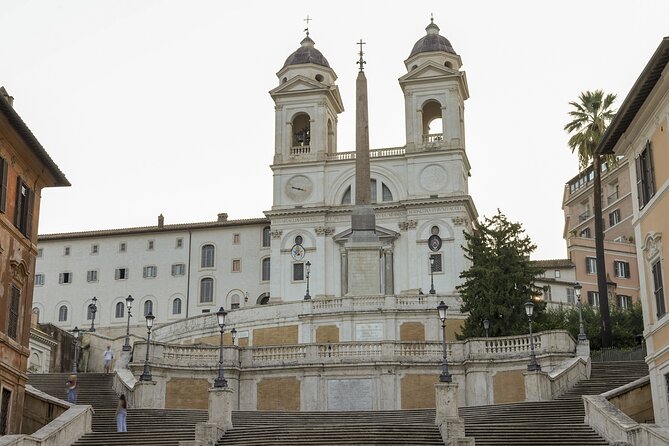
The Spanish Steps are famous for one reason: they give you a dramatic ascent and an instant place to pause. Even before you start walking, the area has that artist-and-poet vibe because people naturally gather where the view opens.
You’ll learn that the staircase dates back to 1723, forming a connection between the Piazza di Spagna at the base and the Piazza Trinità dei Monti at the top. On paper, it sounds straightforward. On the ground, it’s a stage for the city: the steps pull crowds upward, and the long sightlines help you see why this spot became a magnet for creativity.
A quick way to get more out of the stop: look at how the square spaces change as you move. At the bottom, you feel the street energy. As you go higher, it’s more about geometry and vantage points.
If you’re sensitive to stairs, plan carefully. You may not be doing a full climb to the very top during the tour, but you will be near the steps and moving along the route. If stairs are a challenge for you, tell the guide so you can position yourself comfortably.
Toss a coin, then look at these


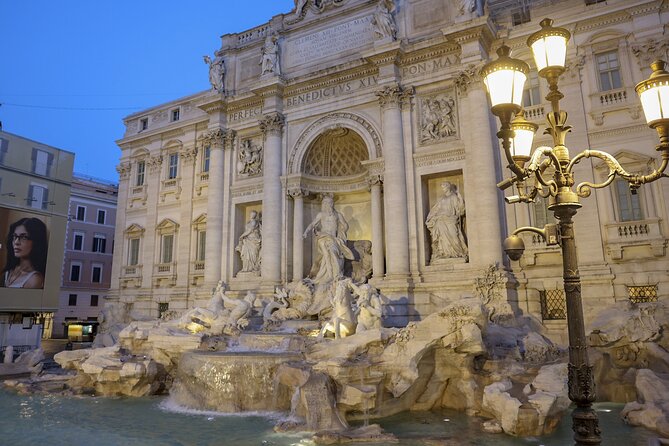
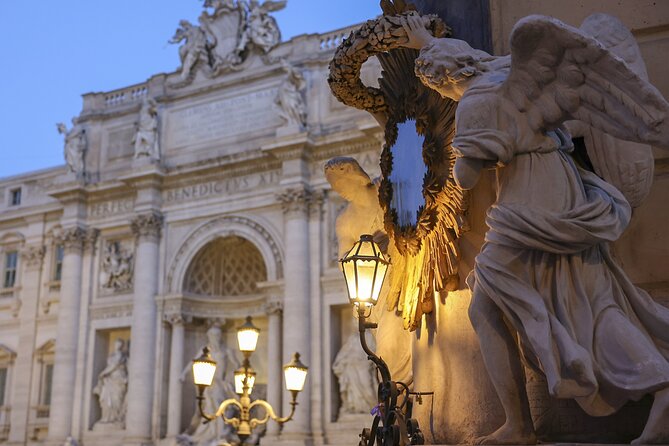
Trevi Fountain: from Aqua Virgo to the Renaissance face you recognize
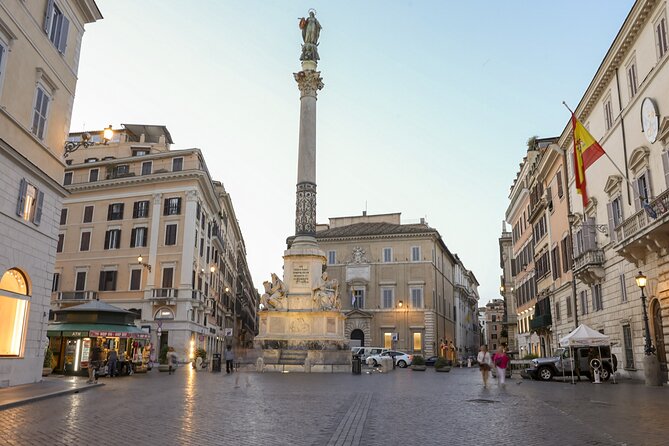
Trevi Fountain is one of those places where the photo can never quite match the real thing, mostly because the fountain is a focus point surrounded by human noise and motion. The guide’s job is to help you look past the chaos and see the structure as design, not just scenery.
You’ll hear the origin story: the water supply goes back to 19BC, when an aqueduct called Aqua Virgo brought water to this area. Then you’ll get the key Renaissance shift—this fountain as you recognize it was constructed with guidance associated with Pope Nicolas V.
What you should do at Trevi: slow down. Standing close is tempting, but the best learning moments often happen when you step back enough to understand the whole composition. From there, you can take in the craftsmanship and the way the fountain anchors the street.
Also, don’t treat Trevi like a random stop. It’s an example of how Rome repurposes infrastructure into art—turning a practical system (water) into something meant to be seen and remembered.
Pantheon from the outside: reading the dome and the oculus
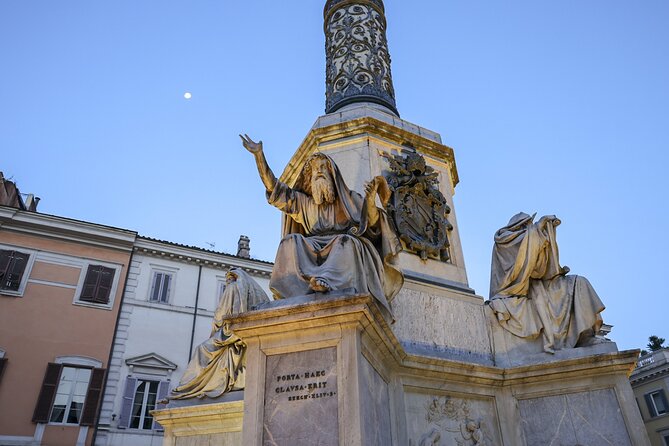
The Pantheon is the big one. And even without entering, it’s still worth your time because the building itself teaches you how ancient Roman engineering made a lasting impression.
During this tour, you’ll see it, but you won’t visit inside. The advantage is that you keep the flow of the walk and still get the “aha” details: built between 25 and 27 BC as a temple for pagan gods, completed by Hadrian in 126 AD, and later used as a church dedicated to St. Mary and Martyrs starting in the 7th century.
The guide will point your attention toward the dome, including the central opening called the oculus. That oculus is more than a feature. It’s a design statement about light and scale—something you can understand even from outside if you’re looking with the right cues.
One practical consideration: you’ll likely be near crowds. If you want clearer sightlines for the dome, position yourself where the guide suggests, rather than trying to squeeze right at the front. This is where headsets really help; you can follow instructions while keeping your eyes on the structure.
Piazza Navona: a former stadium turned grand square
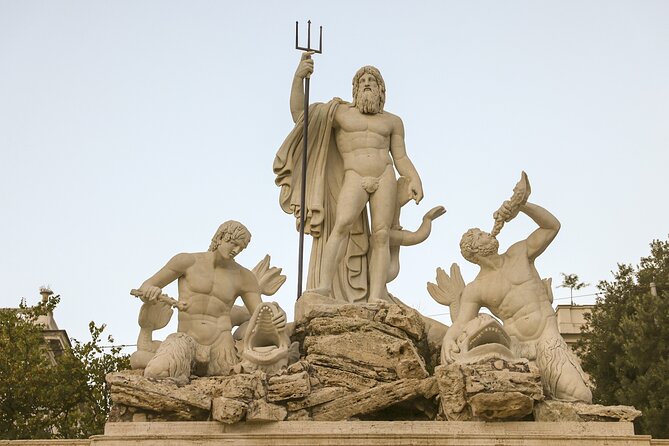
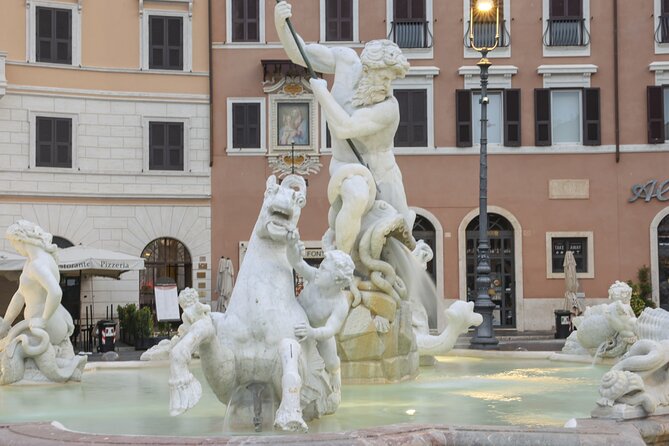
Piazza Navona has that classic Rome feel: elegant buildings, fountains, and a sense that the whole block is made for strolling. The best part is that it didn’t always look like this.
You’ll learn it began in the 1st century as the Stadio di Domiziano, a stadium. Then by the 15th century, the site was paved over and turned into a marketplace, serving as the city’s main commercial hub for nearly 300 years. Today, that mix of old layout and newer Baroque presentation is exactly why the square feels so dramatic.
When you arrive for this final stop, take a moment to look at the “shape” of the space. The way the square stretches out helps you connect the present to the earlier stadium geometry. It’s an easy mental trick that turns a pretty square into a story you can actually hold.
Also, ending here is smart. After the tour finishes, Piazza Navona is a convenient launchpad for the next part of your day—shopping, snacks, or a slow wander with no pressure to move on immediately.
Price and timing: what you’re paying for at $59
At $59 per person for about 2 hours 30 minutes, the value comes from what’s included, not just the sites themselves.
Most of the stops you’ll see have free admission. So you’re mostly paying for:
- a guide who connects the dots between eras and explains what matters
- headsets so you don’t lose the story to the street
- a tight walking route that saves you time figuring out where to go next
In a city like Rome, time and attention are your real currencies. This tour spends both. You’re not standing in front of monuments with no context, hoping something clicks. You’re learning the cues that make each place easier to understand on your own later.
The tour is also commonly booked about 66 days in advance, which is a hint that this is a popular format. If your schedule is fixed, it’s worth locking in early rather than trying to wing it.
Group size, pace, and guide style: how to get the most out of it
You’ll be in a group capped at 25 people. That’s big enough to feel lively, but small enough that questions don’t disappear. The best part of that setup is that you can ask simple practical questions—where to stand, what to notice, how to approach a next sight in your own time.
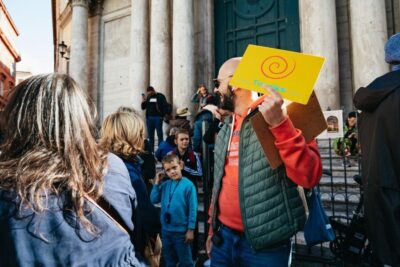
From the guide feedback I’ve seen, the common theme is clarity and personality. Guides such as Max, Islam, and Ari come up because they’re known for explaining in a way that makes details feel understandable, not like a memorization exercise. There’s also a note about guides being flexible and helping you move through the day with confidence, including taking photos at strong spots when it makes sense.
You can help your guide help you:
- Ask one good question about what to look for at the next stop.
- If a scene feels crowded, let the guide guide your position. Rome crowd control isn’t about avoiding people—it’s about avoiding bad angles.
- Use the headsets. Don’t treat them like a backup plan; treat them like part of the experience.
Logistics you should plan around (without killing the vibe)
This tour starts in Piazza del Popolo and ends in Piazza Navona, both areas with good access to public transportation. That matters because you can tie this sightseeing block to other plans without complicated taxi runs or long backtracking.
There’s also a heads-up about the Jubilee: some monuments may be under restoration, and you’ll want to pay attention to messages sent before your day. If anything changes, it’s usually about access, views, or timing—not the overall route concept.
Finally, keep in mind the Pantheon interior is not included. You’re seeing the building, learning from it, and then you’re free to decide later whether you want to add an interior ticket on your own.
Should you book this Rome: Spanish Steps, Trevi Fountain, Pantheon & Navona Tour?
Book it if:
- You want a fast, organized introduction to central Rome’s icons.
- You value a guide who explains the details so you don’t miss what makes each stop meaningful.
- You’re okay with walking and you want a small-group experience with headsets.
Skip it (or choose a different format) if:
- Stairs and longer walking are an issue for your knees or back.
- You specifically want to go inside the Pantheon during this exact outing, since this one keeps Pantheon visits outside-only.
If you want the classic first-time Rome “greatest hits” run—with less wandering and more understanding—this is a solid match. It gives you the map in your head, the stories in your notes, and a satisfying finish in Piazza Navona where you can keep the evening going.
FAQ
How long is the Rome Spanish Steps, Trevi Fountain, Pantheon & Navona tour?
It’s about 2 hours 30 minutes.
What language is the tour offered in?
The tour is offered in English.
What’s included in the tour price?
You get a tour guide, taxes, and headsets.
Is admission included for all stops?
Admission is free for the stops at Piazza del Popolo, Spanish Steps, Trevi Fountain, and Piazza Navona. Pantheon is not included for entry inside.
Does the tour visit the inside of the Pantheon?
No, the Pantheon visit inside is not included. You’ll see it during the tour.
Where does the tour start and end?
It starts at Piazza del Popolo and ends at Piazza Navona.
Is this tour suitable for everyone who wants to walk around Rome?
It’s not recommended for travelers with back or knee problems because of the walking involved.
Is free cancellation available?
Yes, you can cancel for a full refund up to 24 hours in advance of the experience start time.
More of Rome's Grand Piazzas
- 3 in 1 Cooking Class near Navona: Fettuccine, Ravioli & Tiramisu
★ 5.0 · 7,376 reviews - Rome Food Tour: Campo de’ Fiori, Ghetto, Trastevere Winner 2024
★ 5.0 · 3,205 reviews - Rome: Trastevere & Campo de Fiori Street Food Walking Tour
★ 4.9 · 2,768 reviews - Enjoy Spritz and Pasta Making in Piazza Navona
★ 5.0 · 1,681 reviews - Rome: Pasta & Tiramisu Cooking Class near the Spanish Steps
★ 4.8 · 1,395 reviews - Rome: Traditional Pizza Cooking Class near Piazza Navona
★ 4.7 · 1,241 reviews
Near the Trevi: More to See
- Rome: Trevi Fountain and Underground Guided Tour
★ 4.3 · 1,664 reviews - Rome: Opera Concert at Palazzo Poli – Fontana di Trevi
★ 4.7 · 1,026 reviews - Best of Rome Walking Tour including Trevi Fountain
★ 4.5 · 923 reviews - Catacombs Tour with Transfer – Optional Capuchin Crypt or Trevi
★ 4.5 · 694 reviews - Rome Walking Tour with Piazza Navona, Trevi Fountain and Pantheon
★ 4.5 · 676 reviews - The Great Opera Arias Concert at Palazzo Poli – Trevi Fountain
★ 5.0 · 533 reviews
Back to the Pantheon
- Rome: Pantheon Priority Entry Ticket & Interactive App
★ 4.1 · 5,114 reviews - Rome: Pantheon Priority Entry Tickets with Interactive App
★ 4.6 · 4,108 reviews - Rome: Pantheon Timeless Marvel Guided Tour with Entry Ticket
★ 4.9 · 4,002 reviews - Castel Sant’Angelo: Ticket with optional Vatican or Pantheon
★ 4.4 · 3,088 reviews - Pantheon Elite Guided Tour – Rome’s Iconic Ancient Temple
★ 5.0 · 1,447 reviews - Rome: Pantheon Small-Group Guided Tour with Entry Ticket
★ 4.9 · 1,226 reviews
Just added to our Rome reviews





Pantheon Tours, compared.
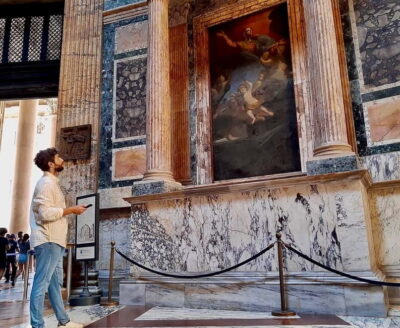 ★ 4.1Pantheon Priority Entry Ticket & Interactive AppFrom $145,114 reviews
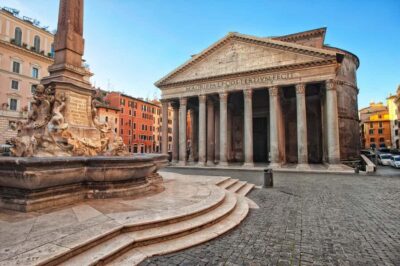 ★ 4.6Pantheon Priority Entry Tickets with Interactive AppFrom $54,108 reviews
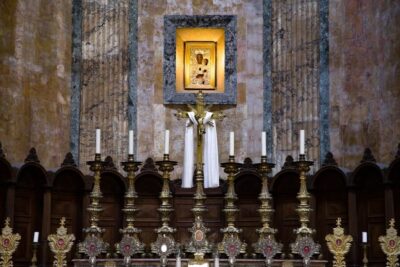 ★ 4.9Pantheon Timeless Marvel Guided Tour with Entry TicketFrom $214,002 reviews
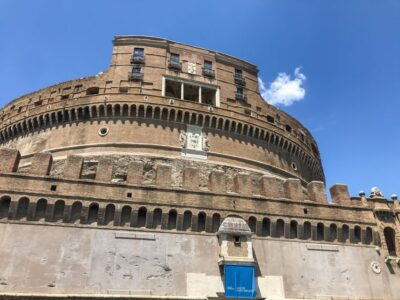 ★ 4.4Castel Sant’Angelo: Ticket with optional Vatican or PantheonFrom $183,088 reviews
 ★ 5.0Pantheon Elite Guided Tour – Rome’s Iconic Ancient TempleFrom $411,447 reviews
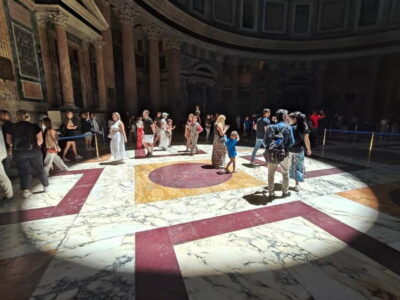 ★ 4.9Pantheon Small-Group Guided Tour with Entry TicketFrom $511,226 reviews
 ★ 4.0Rome’s Iconic Temple: Pantheon Audio Guided Tour with Fast AccessFrom $211,188 reviews
 ★ 4.7Pantheon Small Group Tour and Skip-the-Line TicketFrom $531,008 reviews
Browse the lists this tour appears in