
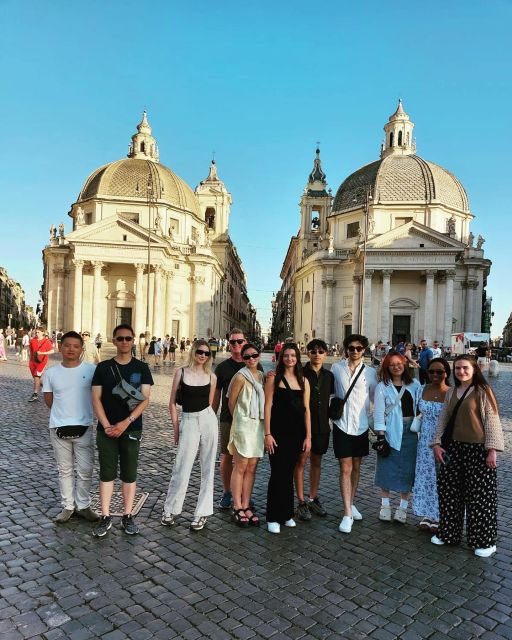
Reviewed · WALKING TOURS
Rome: Piazza del Popolo and City Sights Free Walking Tour
Popolo makes Rome click.
This is a tip-based walking tour that turns Piazza del Popolo into a launchpad for major sights and street-level stories, from the towering Ramesses II obelisk to the statues and marble that frame Porto del Popolo. I like how the walk gives you more than postcard angles, with facts you can actually connect to what you’re seeing on the ground.
I also like the way the tour ends at Castel Sant’Angelo, walking you toward a fortress with a clear backstory: first a mausoleum under Hadrian, later reshaped into a castle around the 14th century. One thing to consider: it’s a 2.5-hour on-foot experience, so wear proper shoes and expect steady strolling rather than frequent breaks.
If you want an easy, low-cost way to get bearings on day one or day two, this format is a smart bet—plus the guide typically shares practical picks for restaurants and nightlife to use immediately after the walk.
In This Review
- Key things I’d circle before you go
- Piazza del Popolo meeting point: a start that helps you orient fast
- Ramesses II and Porto del Popolo: slow down for the gate details
- Aurelian Walls and Christianity roots: why this walk talks religion and defense
- The stroll toward Piazzale Flaminio: learning the city’s edges as you walk
- Castel Sant’Angelo: Hadrian’s mausoleum, then a castle around the 14th century
- Restaurant and nightlife tips: useful advice, not vague suggestions
- Price and value: a low-cost start with tip-based flexibility
- Who should book this Rome walking tour (and who should skip it)
- Should you book this free walking tour?
- FAQ
- Where is the meeting point for the tour?
- How long is the Rome walking tour?
- Is the tour free, or is it tip-based?
- Is the guide available in English?
- Is this walking tour wheelchair accessible?
- What is the cancellation policy?
Key things I’d circle before you go
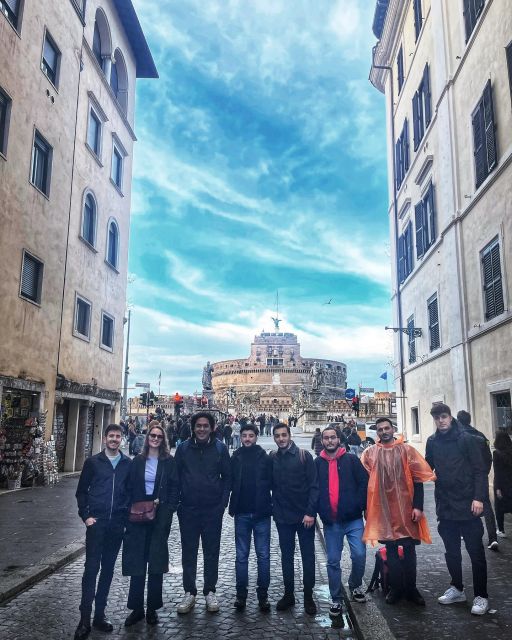
- Ramesses II obelisk at Piazza del Popolo, a standout landmark that’s easy to locate again later
- Porto del Popolo details in the Aurelian Walls, including the marble columns and statues worth slowing down for
- Castel Sant’Angelo’s “two lives”: Hadrian’s mausoleum, later a castle in the Middle Ages
- Christianity roots in the city narrative, explained as part of the broader historical timeline you’re walking through
- Food and night tips from your guide, designed for what you’ll do the same evening
- A small-group feel is commonly mentioned in guide-led experiences like this, which makes questions easier to ask
Piazza del Popolo meeting point: a start that helps you orient fast
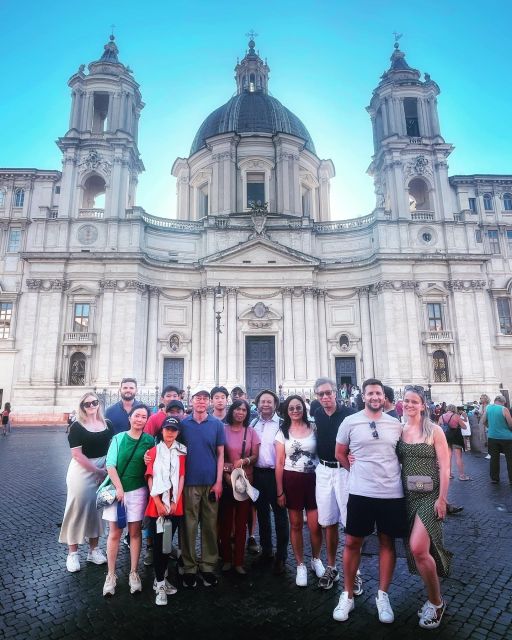
You meet outside the arches and entry gates into Piazza del Popolo. That matters more than you’d think, because it puts you at a major hub where you can easily retrace your steps after the tour.
This is also a good location for first-timers. You’re standing in the middle of a square that connects major streets and viewpoints, so the tour helps you understand where you are before you start branching out on your own. If your Rome plan includes at least one “I need to get my bearings” day, this walk fits well.
Worth a look next to this Rome booking:
- Rome: Guided Food Walking Tour with Wine in Trastevere
★ 4.9 · 3,105 reviews - Rome: Trastevere & Campo de Fiori Street Food Walking Tour
★ 4.9 · 2,768 reviews - Rome: Paranormal Night Walking Tour & Secret Backstreets
★ 4.9 · 1,921 reviews - Rome: Trastevere Street Food Walking Tour with Local Expert
★ 4.8 · 1,784 reviews
Ramesses II and Porto del Popolo: slow down for the gate details
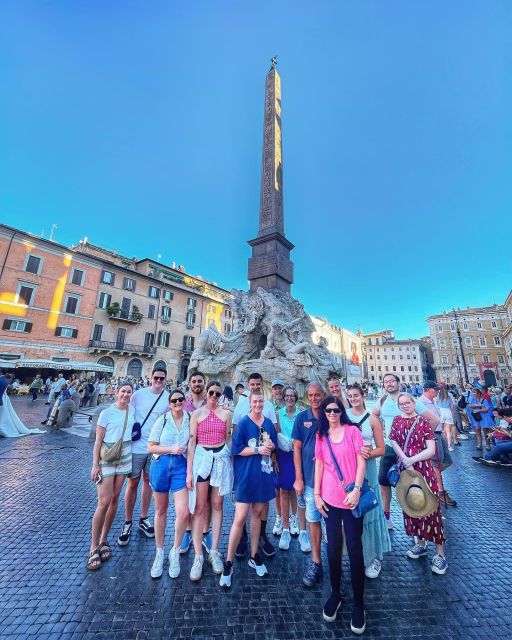
The tour shines right away with Piazza del Popolo and its iconic objects. One highlight is the tall obelisk of Ramesses II—it’s visually dramatic, and it’s also a useful “reference point” you can remember when you’re navigating later.
Then comes the Porto del Popolo, the gate area that forms part of the Aurelian Walls. The really satisfying part here is not just seeing the gate, but noticing what decorates it: marble columns and statues that make the gate feel like more than a functional doorway. It’s the kind of detail you might miss if you’re just walking through.
A practical tip: give yourself permission to pause. At this stage of a walking tour, you’re training your eyes. If you rush, you miss the visual clues that the guide points out, and the whole story piece doesn’t click.
Aurelian Walls and Christianity roots: why this walk talks religion and defense
This tour connects Rome’s physical edges—the city walls—with the city’s evolving beliefs and power. You’ll hear about the roots of Christianity as part of the broader historical timeline while you move through areas tied to the Aurelian Walls.
That topic can sound abstract until you’re standing near the structures. Walls aren’t just stone; they shaped movement, security, and who could pass where. When your guide frames the gate and boundary spaces in that way, it becomes easier to understand why certain areas mattered long before modern Rome took its current form.
This is also where your guide’s style can matter. In past groups led by guides such as Lucio, Nick, and Joan, the pacing tends to include story arcs and human details—like pointing out historical figures, including historically important women—so you don’t feel like you’re only hearing dates and rulers.
The stroll toward Piazzale Flaminio: learning the city’s edges as you walk
One key moment in the route is moving from Piazza del Popolo toward the boundary area around Piazzale Flaminio. The guide explains the layout so you understand why this location feels like a threshold: not just between monuments, but between different parts of the city.
As you walk, the tour also tends to include “hidden” details in the sense that you’re shown specific spots you might not notice on your own—little architectural cues, urban design features, and viewpoints that help you interpret what’s around you.
If you’re the type who likes to ask questions, this is a comfortable format. The tour is long enough for a real conversation, but short enough that you’re still moving and not stuck in one place for too long.
Worth a look next to this Rome booking:


Castel Sant’Angelo: Hadrian’s mausoleum, then a castle around the 14th century
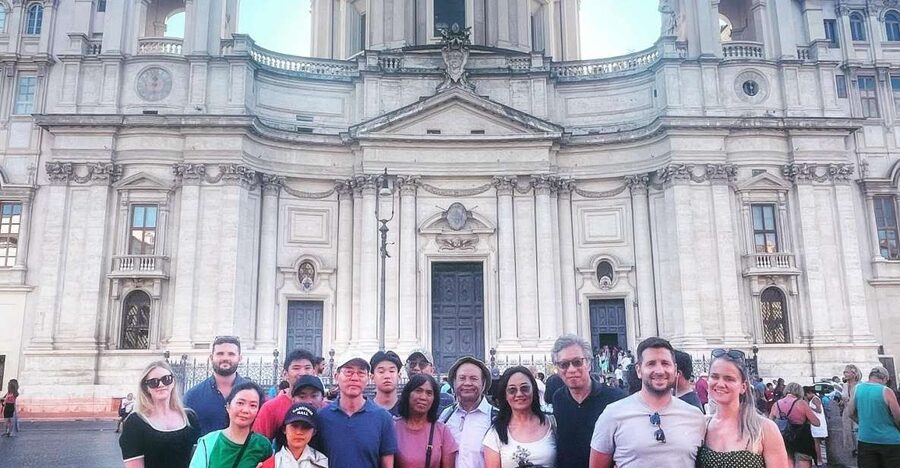
Eventually, you land at Castel Sant’Angelo, and that stop is the tour’s payoff. The guide shares the big transformation: it was built by Emperor Hadrian as a mausoleum, then later converted into a castle around the 14th century.
What I like about ending here is that it gives you a “before and after” story you can hold in your head. A tomb becomes a fortress—that’s Rome in a nutshell. Power changes hands. Buildings get reused. The city keeps layers.
Also, this is a fortress, so the exterior perspective tends to matter. You don’t need museum tickets to get the concept: it reads as defensive architecture first, memorial space second. If you’ve ever wondered why certain Rome buildings feel both monumental and slightly intimidating, this one explains that feeling fast.
Practical photo note: for pictures, watch for angles where you can capture both the structure and the surrounding streets. In a walking tour format, you don’t always have time for a perfect tripod shot, so aiming for a clean composition quickly helps.
Restaurant and nightlife tips: useful advice, not vague suggestions
One reason people leave walking tours like this happy is the immediate payoff: what to eat and where to go after. Your guide is set up to share recommendations for the best restaurants in the area and provide nightlife tips.
Even if you already have a rough dinner plan, these suggestions are valuable because they’re based on what’s convenient, lively, and appropriate for where you are. Instead of searching blindly, you get targeted guidance—especially helpful if you’re staying near the historic center and want an evening that doesn’t turn into a logistics headache.
In addition, some guided experiences in this style include a short pause for gelato/coffee/toilet needs. That might sound minor, but it’s the difference between finishing with energy and finishing cranky.
Price and value: a low-cost start with tip-based flexibility
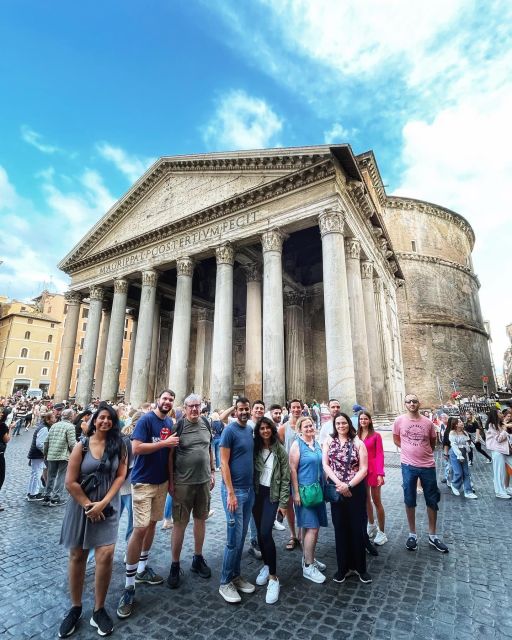
The price shown is $3.54 per person, and the tour itself is described as free/tip-based. That combination is usually where the value comes in: you’re paying very little upfront, then you decide the final amount based on how the guide and group worked for you.
A 2.5-hour walk is also a sweet spot. You get enough time to see multiple major landmarks—Piazza del Popolo, the gate area around Porto del Popolo, and the Castel Sant’Angelo approach—without it swallowing a whole day.
A few other practical benefits matter too:
- Live guide in English, which makes the explanations easier to follow
- Wheelchair accessible, so the route design is meant to accommodate mobility needs
- Reserve & pay later, which reduces stress if your schedule isn’t totally locked in yet
If you’re budget-minded, this is a great way to invest in context instead of spending big on a ticketed attraction day.
Who should book this Rome walking tour (and who should skip it)
This tour is a strong match if you want:
- A smart start on your first visit, when you need orientation fast
- A walking experience that connects architecture to story—especially through gates, walls, and the shift from antiquity into the medieval world
- Practical Rome advice from a guide, including restaurant and nightlife suggestions
- An English-speaking guide who can answer questions in real time, which is a common reason groups rate these experiences highly
You might skip it if you want your time to be mostly inside major ticketed sites, or if you hate walking for 2.5 hours even at a comfortable pace. Also, because it’s tip-based, it works best when you’re comfortable supporting the guide directly based on the experience.
Should you book this free walking tour?
Yes, I’d book it if you’re trying to turn Rome into something you understand, not just something you pass by. The landmarks chosen—Ramesses II, Porto del Popolo, and the Hadrian-to-castle arc of Castel Sant’Angelo—make the story feel coherent, and the guide’s local food and evening suggestions add real value beyond sightseeing.
I’d especially consider it early in your trip. Get the framework first, then your later monuments and neighborhoods will make more sense as you move around the city.
If you’re on the fence, do this simple check: do you want a guided walking orientation that lasts a little over two hours? If yes, you’ll likely enjoy how much you learn without turning it into a day-long commitment.
FAQ
Where is the meeting point for the tour?
Meet the guide outside of the arches and entry gates into Piazza del Popolo.
How long is the Rome walking tour?
The tour duration is 2.5 hours.
Is the tour free, or is it tip-based?
It’s described as a free walking trip and is also tip-based, meaning you decide what to pay the guide.
Is the guide available in English?
Yes, the tour has a live guide in English.
Is this walking tour wheelchair accessible?
Yes, it is wheelchair accessible.
What is the cancellation policy?
You can cancel up to 24 hours in advance for a full refund.
More Walking Tours in Rome
- Rome: Guided Food Walking Tour with Wine in Trastevere
★ 4.9 · 3,105 reviews - Rome: Trastevere & Campo de Fiori Street Food Walking Tour
★ 4.9 · 2,768 reviews - Rome: Paranormal Night Walking Tour & Secret Backstreets
★ 4.9 · 1,921 reviews - Rome: Trastevere Street Food Walking Tour with Local Expert
★ 4.8 · 1,784 reviews - Rome: Small-Group Guided Day or Night Walking Tour
★ 4.8 · 1,009 reviews - Rome by Night Walking Tour – Legends & Criminal Stories
★ 4.5 · 1,003 reviews
More Tours in Rome
- Vatican Museums, Sistine Chapel & St. Peter’s Basilica Tour
★ 4.3 · 73,970 reviews - Vatican Museums, Sistine Chapel & St Peter’s Basilica Guided Tour
★ 4.5 · 39,149 reviews - Rome: Colosseum, Palatine Hill and Roman Forum Guided Tour
★ 4.8 · 32,814 reviews - Rome: Guided Tour of Colosseum, Roman Forum & Palatine Hill
★ 4.7 · 27,897 reviews - Rome: Colosseum, Roman Forum and Palatine Hill Guided Tour
★ 4.5 · 23,903 reviews - Rome: Colosseum Arena Floor, Palatine & Forum Guided Tour
★ 4.5 · 20,180 reviews
More Tour Reviews in Rome
- Vatican Museums, Sistine Chapel & St. Peter’s Basilica Tour
★ 4.3 · 73,970 reviews - Vatican Museums, Sistine Chapel & St Peter’s Basilica Guided Tour
★ 4.5 · 39,149 reviews - Rome: Colosseum, Palatine Hill and Roman Forum Guided Tour
★ 4.8 · 32,814 reviews - Rome: Guided Tour of Colosseum, Roman Forum & Palatine Hill
★ 4.7 · 27,897 reviews - Rome: Colosseum & Forum with Audio Guide App -Optional Arena
★ 4.2 · 24,770 reviews - Rome: Colosseum, Roman Forum and Palatine Hill Guided Tour
★ 4.5 · 23,903 reviews
Just added to our Rome reviews





Walking Tours, compared.
 ★ 4.9Guided Food Walking Tour with Wine in TrastevereFrom $1003,105 reviews
 ★ 4.9Trastevere & Campo de Fiori Street Food Walking TourFrom $512,768 reviews
 ★ 4.9Paranormal Night Walking Tour & Secret BackstreetsFrom $341,921 reviews
 ★ 4.8Trastevere Street Food Walking Tour with Local ExpertFrom $571,784 reviews
 ★ 4.8Small-Group Guided Day or Night Walking TourFrom $231,009 reviews
 ★ 4.5Rome by Night Walking Tour – Legends & Criminal StoriesFrom $141,003 reviews
 ★ 4.4Guided City Center Evening Sightseeing Walking TourFrom $46953 reviews
 ★ 4.9Small-Group City Highlights Moonlight Walking TourFrom $29949 reviews
Browse the lists this tour appears in