
Reviewed · TICKETS
Rome: Leonardo da Vinci Exhibition Entrance Ticket
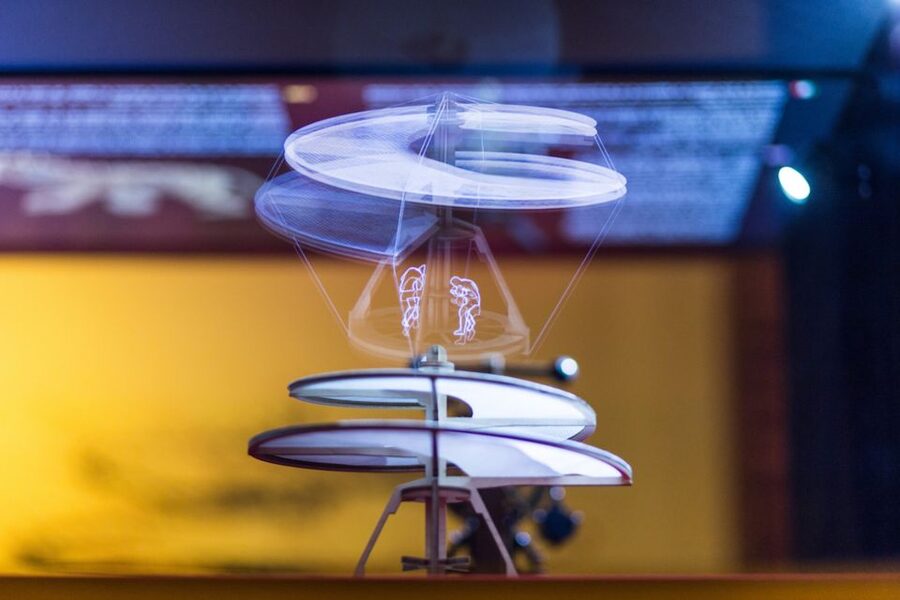
Leonardo comes to life in Rome. This Leonardo da Vinci exhibition ticket takes you into Palazzo della Cancelleria to see 65 full-scale machines and 9 holograms that turn sketches into something you can study up close, often with hands-on parts. The main catch: it is a compact, model-heavy show, so if you’re expecting huge, museum-style galleries, you’ll finish faster than you think.
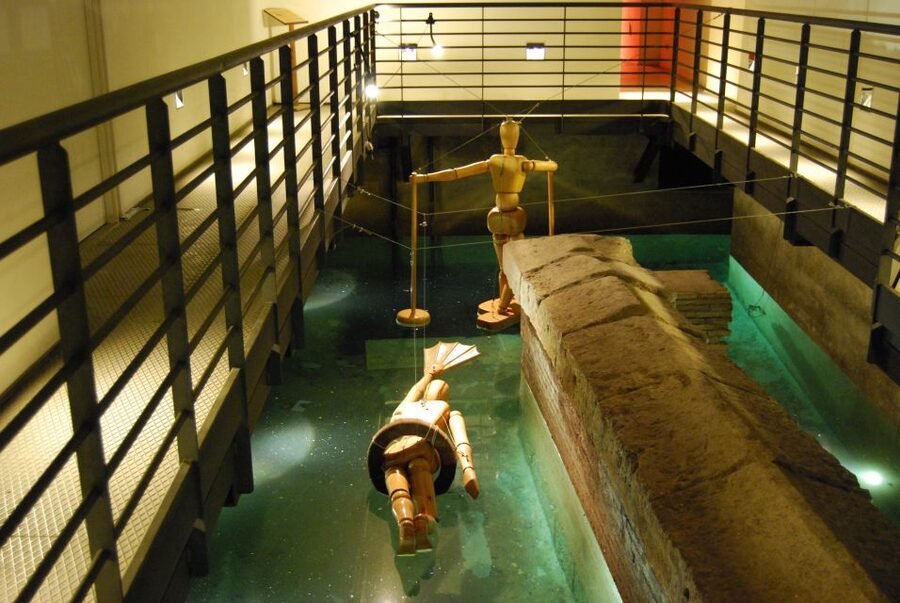
I like that the setting matches the theme. The Palazzo is a real architectural stop (owned by the Vatican), and the exhibit works around the building’s special features, including an on-site tomb area tied to 43 BC and an underground pond setting that also helps you cool down.
You move through several themed stops, not one long hallway. The display is arranged around Leonardo’s thinking about Water, Air, Fire, and Earth, plus areas focused on science, aviation, and military ideas—fun stuff, but with limited time to linger per room since the space is tight.
In This Review
- Key things that make this ticket different
- Palazzo della Cancelleria: a Renaissance building with real-world Leonardo vibes
- Tickets, timing, and what the $10 Leonardo experience gets you
- A practical planning tip
- How the exhibit is organized: four themed sections that match Leonardo’s curiosity
- Room-by-room: what you’ll likely see and what to watch for
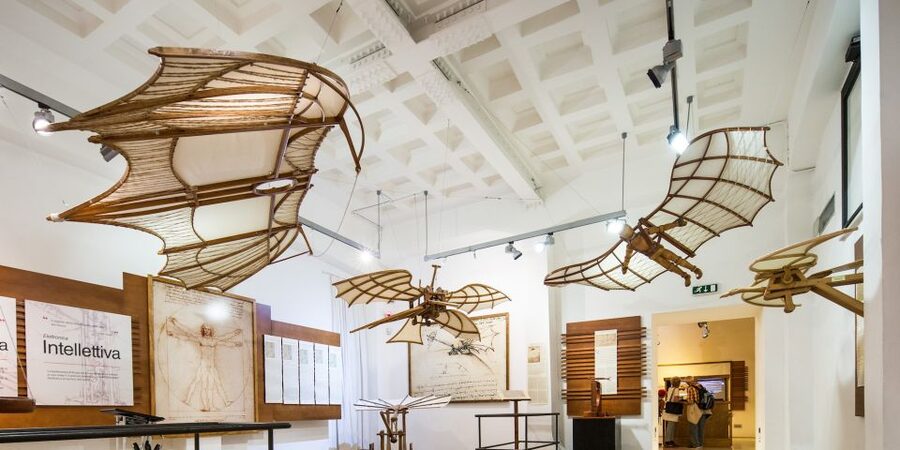
- The full-scale machines based on Leonardo’s designs
- The 9 holograms: paintings and inventions in 3D
- The interactive installations tied to drawings
- Hands-on play: touching machines, building a bridge, and learning faster
- The underground tomb moment: 43 BC, an underground pond setting, and a quiet pause
- Audio and guidance: when headphones make the machines click
- Who this is best for (and who might want to skip it)
- How long it takes: fast visit vs unhurried learning
- Best way to pair it with a Rome day near Campo de’ Fiori
- Value check: is this Leonardo exhibition worth your limited Rome time?
- Should you book the Leonardo da Vinci exhibition ticket?
- FAQ
- How much is the Leonardo da Vinci exhibition ticket?
- How long does the visit take?
- What are the main things to see inside?
- Where is the exhibition located?
- Is a guide included in the ticket?
- Is the exhibition wheelchair accessible?
Key things that make this ticket different
- Full-scale machines built from Leonardo’s designs, so you see how ideas turn into hardware
- Holograms that show paintings and inventions in 3D for a clearer sense of motion and scale
- Water studies, Air, Fire, Earth sections that connect his curiosity to real-world engineering
- A 43 BC tomb area with an underground pond-like immersion moment in the Palazzo
- Interactive stations using Leonardo’s drawings, plus build-and-play activities like a bridge model
Palazzo della Cancelleria: a Renaissance building with real-world Leonardo vibes
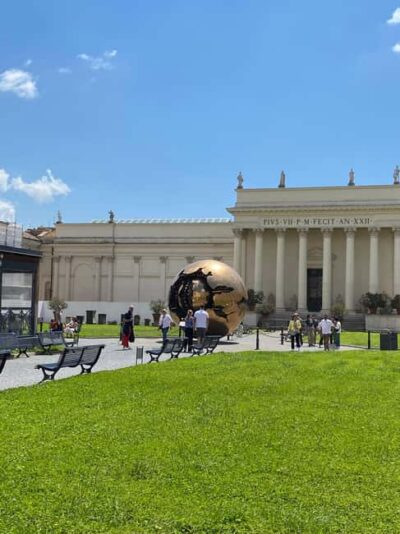
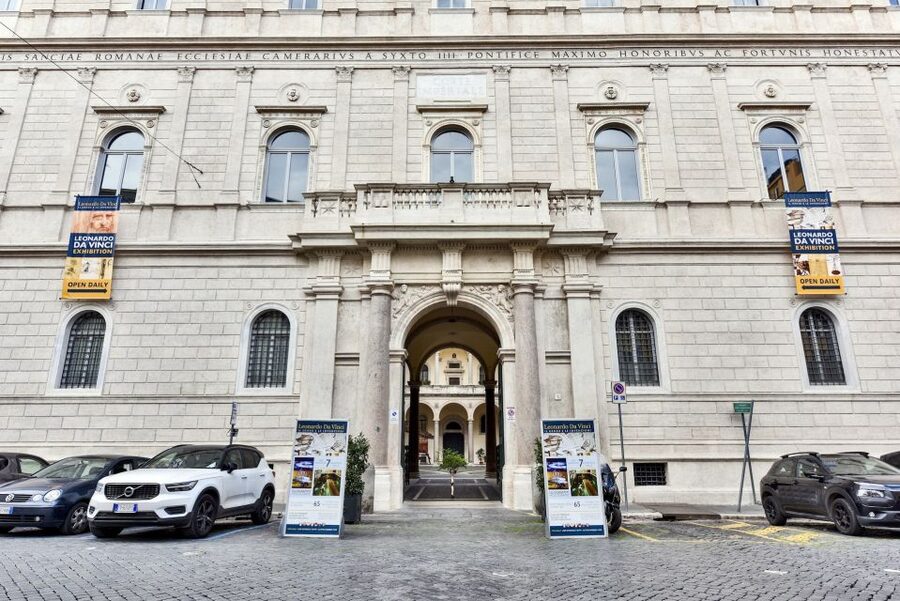
Palazzo della Cancelleria sits near Campo de’ Fiori and Piazza Navona, so you can build a day around it without adding transit headaches. The building itself matters here: it’s owned by the Vatican, and the upper floor includes the Sacra Rota (the court tied to marriage cases).
What makes this backdrop work is that you’re not just looking at machines in a generic room. The exhibition lives inside a historic structure with its own story, including the tomb of the architect Auro Irzio dating to 43 BC, placed in an underground natural pond-like setting. That setting gives the exhibit a moody, scientific feel that fits Leonardo’s mix of art and engineering.
Even if you skip the “big-ticket” museums in favor of something more hands-on, this location helps you feel like you’re in the middle of old Rome, not at a random attraction stop.
Worth a look next to this Rome booking:
- Rome: Hop-On Hop-Off Panoramic Bus Ticket – Access 3 Routes
★ 4.0 · 18,145 reviews - Vatican Museums & Sistine Chapel Skip-the-Line Entry Ticket
★ 4.4 · 13,838 reviews - Vatican Museums & Sistine Chapel Skip-the-Ticket-Line Tour
★ 4.3 · 10,486 reviews - Rome: Vatican Museums & Sistine Chapel Skip-the-Line Ticket
★ 4.3 · 8,103 reviews
Tickets, timing, and what the $10 Leonardo experience gets you
This is a $10 per person entrance ticket with a stated 1-day validity, and you’ll want to plan it like a timed stop rather than an all-day marathon. The exhibit entrance is available until 1 hour before closing time, so don’t treat it as a late-night afterthought.
You also get a gadget with your ticket, and you can skip the ticket line. That’s not just convenience—it’s part of how the visit stays smooth. When you’re trying to fit a short, model-heavy museum into a Rome day, every saved minute helps.
Value-wise, the bargain here isn’t only the low price. It’s the ratio of “time spent actively doing something” to “time spent standing and reading.” You’ll be able to get up close to working-style models and interact with many of the machines, plus you’ll have multimedia elements like holograms and guided-style audio options (when available).
A practical planning tip
If you want a relaxed pace, aim for earlier in the day. One common pattern with compact indoor exhibits is that crowds spike later, and the show is built for moving room to room. If you arrive when it’s quieter, you get more chances to test the models instead of rushing.
How the exhibit is organized: four themed sections that match Leonardo’s curiosity
The layout is designed to move you through four sections tied to Leonardo’s engineering mindset. Instead of presenting his life as a checklist, the exhibit uses his ideas about how the world works.
You’ll see sections connected to:
- Water
- Air
- Fire
- Earth
The point isn’t just that Leonardo wrote about these topics. It’s that the exhibit turns those studies into structures you can understand—things that behave like systems, with models and explanations that connect to science and engineering.
In the process, the exhibition also groups Leonardo’s concepts into areas tied to science, aviation, and military applications. That combination is part of why the show works for different interests: art lovers get the creativity side, while science and design fans get the “how it works” angle.
Worth a look next to this Rome booking:

Room-by-room: what you’ll likely see and what to watch for
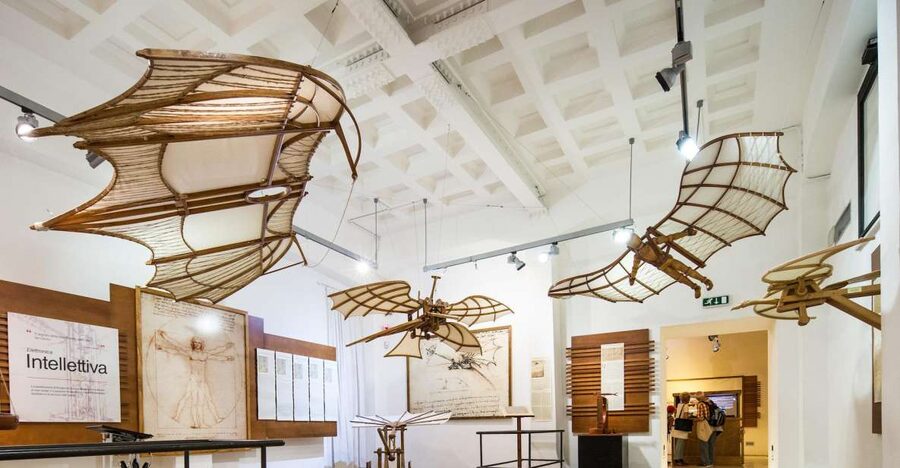
This is a model-forward exhibit, so your best strategy is to move with curiosity, then slow down for the pieces that feel most hands-on. A lot of visitors find the early “wow” factor comes quickly—full-scale reconstructions are eye-catching—but the understanding deepens as you connect drawings to the physical builds.
The full-scale machines based on Leonardo’s designs
Over 65 inventions are represented with full-scale machines made according to Leonardo’s drawings. The magic here is visual and mental. You start by recognizing how close the models are to his thinking, then you notice what changes when you shift from paper precision to real materials.
Look for the machines that emphasize:
- gears, mechanisms, and movement
- practical engineering logic (how force is transmitted)
- designs that hint at later transportation and architecture ideas
Some displays go beyond engines and flying concepts. Based on what’s included in the exhibition, you may also encounter musical-instrument-style creations and other creative devices—not just metal-and-gear engineering. There’s also mention of a copy of The Last Supper in the exhibit, which gives you a reminder that Leonardo wasn’t sorting ideas into separate boxes.
The 9 holograms: paintings and inventions in 3D
The exhibit highlights 9 holograms meant to show Da Vinci paintings and inventions in 3D. This part is useful because it helps you see relationships that can be hard to grasp with static models alone.
If you’re the type who likes the “why” behind the visuals, this section gives you a smoother bridge between his original artwork and his engineering experiments. It’s also where motion and spatial thinking click into place.
The interactive installations tied to drawings
Leonardo is famous for sketches, and this exhibit uses that strength. You’ll find 7 interactive installations that connect aspects of his ideas to drawings you can interpret while you test or observe the matching inventions.
The best approach is to spend an extra minute comparing: look at the sketch element, then find the model element that corresponds. When you do that, the exhibit stops being a set of cool machines and starts feeling like you’re learning a way of thinking.
Hands-on play: touching machines, building a bridge, and learning faster
This is not a sit-and-watch show. The experience is built so you can touch and play with almost all the machines on display (the exact level of interaction may vary by exhibit area).
There are activities that turn observation into participation, including an option to build your own version of a bridge inspired by Leonardo’s invention ideas. Even if you don’t become an engineer by the end, you’ll come away with a stronger sense of how he approached structure and load.
Why this matters: Leonardo’s genius isn’t only the final device. It’s the reasoning that led him there. Interactive parts help you “feel” that reasoning—how small design choices affect performance.
A warning that’s worth taking seriously: this is still a museum interior with models, platforms, and different zones marked for touch. Some areas may have trip hazards or unclear touch rules, so keep an eye on your footing, especially if you’re with kids.
The underground tomb moment: 43 BC, an underground pond setting, and a quiet pause
One of the most unusual things about this exhibit is the tomb from 43 BC area, described as immersed in an underground pond setting. That’s not a typical “museum show” feature, and it changes the mood.
You get a break from the mechanical focus. It also reinforces the reality that this museum is inside a centuries-old place with layers of history. Even if you’re here for Leonardo’s engineering, the building’s ancient story gives you a grounding pause.
It also helps with comfort. The exhibit is partly underground, which gives you a practical benefit in Rome’s warmer months—you can step inside and cool down for a focused hour or two.
Audio and guidance: when headphones make the machines click
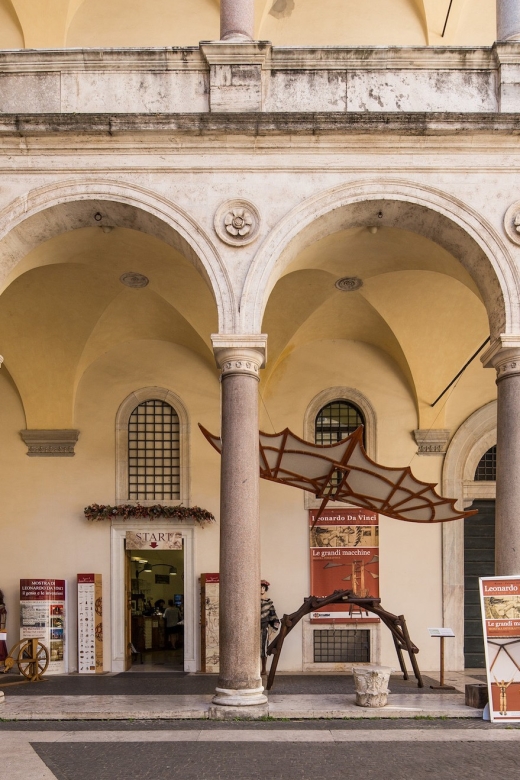
The included ticket info says you get a gadget, but many visitors also choose an audio/headphone option if offered. Based on the information in the experience notes and the strong feedback around audio quality, it’s usually worth considering.
The audio-style guidance can help you follow the story of Leonardo’s inventions and understand what you’re seeing. One useful note: the audio may not perfectly match the order of rooms. If you notice that, don’t panic—just let the audio guide your attention to the relevant models when you reach them.
Also, if you like clearer explanations, choosing the audio option can turn the exhibit from visual stimulation into actual learning. You’ll likely understand the same machine much more deeply when you know what to look for.
Who this is best for (and who might want to skip it)
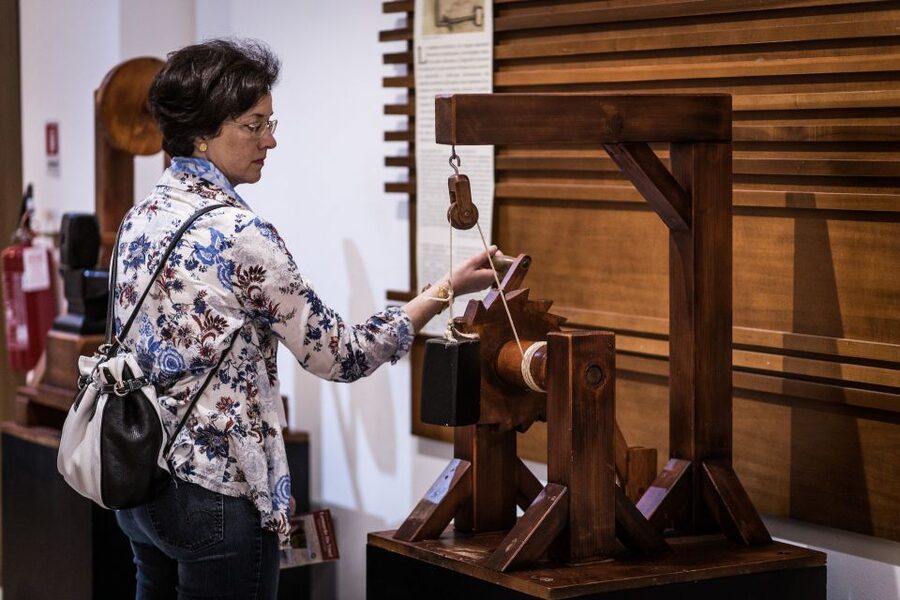
This works especially well if you like engineering, design, art-meets-science thinkers, or you want something different from the standard “line up and look” Rome routine.
It’s also a strong match for:
- families who want hands-on activities
- adults who enjoy interactive science displays
- visitors who want a shorter, high-impact indoor stop near the sights
It may be less ideal if you’re traveling with very small kids. Not because it’s boring—because there are trip hazards and areas where you need to pay attention to touch rules. For older kids (and teens), it often lands well since the mix of play and explanation fits curiosity.
If you only have an hour and you’re trying to choose the single most “wow” indoor thing, this can be a good pick. The exhibit isn’t huge, so it won’t swallow your whole afternoon.
How long it takes: fast visit vs unhurried learning
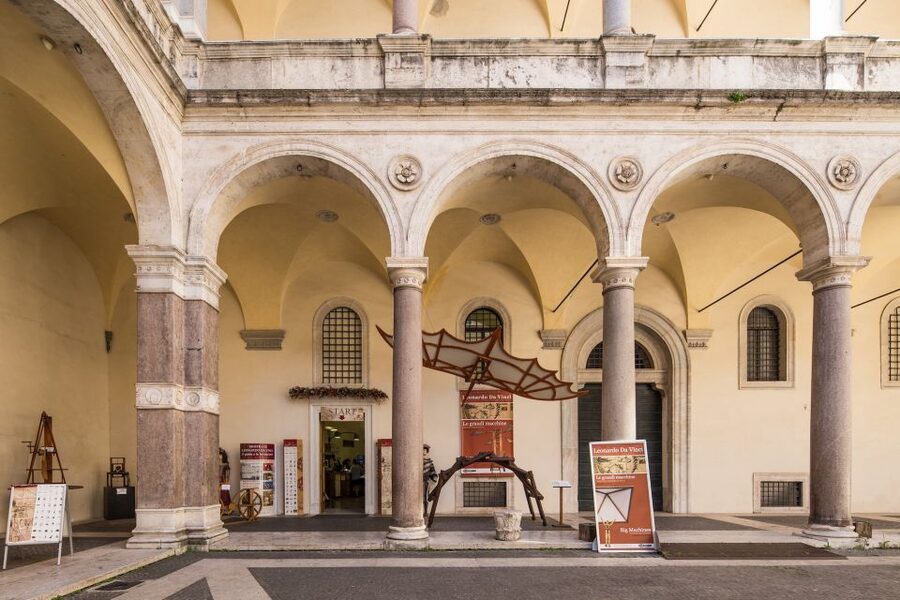
You should plan for about 45 to 60 minutes as a realistic visit length. Some people spend closer to two hours if they read the explanations, test most of the interactive pieces, and don’t rush the holograms.
A smart approach: do a first pass to spot the sections that grab you. Then slow down for the machines and interactive builds you’re most curious about. That keeps you from feeling like you must see everything at the same intensity.
Best way to pair it with a Rome day near Campo de’ Fiori
Because the meeting point is Piazza della Cancelleria 1, it pairs naturally with walking time around Campo de’ Fiori and Piazza Navona. You can do a morning walk, then duck inside for air-conditioned thinking (especially nice if it’s hot outside).
If you’re building a day that mixes big sights with smaller, calmer ones, this exhibition gives you a break from the constant crowds. The show also tends to feel quieter than Rome’s headline museums because it’s a focused engineering-and-art niche.
A practical rhythm that works well:
1) walk the area outside
2) enter when you want a cool reset
3) spend your energy actively in the interactive sections
4) exit and continue on foot toward your next stop
Value check: is this Leonardo exhibition worth your limited Rome time?
For the price, I think the value comes from how much you do while you’re there. At $10, you’re paying for a hands-on style exhibit with dozens of machines, holograms, and interactive installations—not just a room of display cases.
Compared with many Rome attractions, the ceiling is not that it’s huge. The ceiling is that it’s fun and educational in the same hour. If you want an experience that feels more like a workshop than a gallery, this is a strong match.
The one trade-off is pacing. Because it’s compact, you’ll likely finish quicker than you expect. That’s good if you’re fitting it into a tight itinerary, but it can feel short if you were hoping for a long, slow cultural marathon.
Should you book the Leonardo da Vinci exhibition ticket?
Book it if you want a smart, hands-on way to experience Leonardo’s inventions without spending all day in line or in a cavern of marble. If you enjoy models you can test, holograms that help explain concepts, and a setting with real architectural character, this one fits.
Skip it (or reconsider timing) if you need a massive museum experience with endless rooms. This is a focused exhibition, and you’ll get your “big moments” faster than with larger attractions.
My final advice: go when you can. Pick a time when you’re not rushed, and give yourself space to interact. Leonardo is the kind of genius you understand better when you slow down just enough to test the ideas.
FAQ
How much is the Leonardo da Vinci exhibition ticket?
The ticket price is $10 per person.
How long does the visit take?
The exhibit is listed as a 1-day experience, and many visitors plan around 45–60 minutes, though some spend closer to about two hours.
What are the main things to see inside?
You can expect over 65 full-scale machines based on Leonardo’s designs, 9 holograms in 3D, interactive installations using Leonardo’s drawings, and a tomb from 43 BC in an underground pond-like setting.
Where is the exhibition located?
It’s at Piazza della Cancelleria 1, near Campo de’ Fiori and Piazza Navona.
Is a guide included in the ticket?
No guide is included with the ticket.
Is the exhibition wheelchair accessible?
Yes, it’s wheelchair accessible.
More Museums in Rome
- Vatican Museums, Sistine Chapel & St. Peter’s Basilica Tour
★ 4.3 · 73,970 reviews - Vatican Museums, Sistine Chapel & St Peter’s Basilica Guided Tour
★ 4.5 · 39,149 reviews - Rome: Vatican Museums, Sistine Chapel and Basilica Tour
★ 4.3 · 16,039 reviews - Vatican Museums & Sistine Chapel Skip-the-Line Entry Ticket
★ 4.4 · 13,838 reviews - Rome: Vatican Museums, Sistine Chapel & Basilica Tour
★ 4.7 · 13,217 reviews - Rome: Vatican Museums & Sistine Chapel Guided Tour
★ 4.3 · 12,117 reviews
More Tickets in Rome
- Rome: Hop-On Hop-Off Panoramic Bus Ticket – Access 3 Routes
★ 4.0 · 18,145 reviews - Vatican Museums & Sistine Chapel Skip-the-Line Entry Ticket
★ 4.4 · 13,838 reviews - Vatican Museums & Sistine Chapel Skip-the-Ticket-Line Tour
★ 4.3 · 10,486 reviews - Rome: Vatican Museums & Sistine Chapel Skip-the-Line Ticket
★ 4.3 · 8,103 reviews - Rome: St. Peter’s Basilica & Dome Entry Ticket & Audio Tour
★ 4.2 · 7,537 reviews - Vatican & Sistine Chapel Ticket with Optional Audio Guide
★ 4.1 · 5,405 reviews
More Tour Reviews in Rome
- Vatican Museums, Sistine Chapel & St. Peter’s Basilica Tour
★ 4.3 · 73,970 reviews - Vatican Museums, Sistine Chapel & St Peter’s Basilica Guided Tour
★ 4.5 · 39,149 reviews - Rome: Colosseum, Palatine Hill and Roman Forum Guided Tour
★ 4.8 · 32,814 reviews - Rome: Guided Tour of Colosseum, Roman Forum & Palatine Hill
★ 4.7 · 27,897 reviews - Rome: Colosseum & Forum with Audio Guide App -Optional Arena
★ 4.2 · 24,770 reviews - Rome: Colosseum, Roman Forum and Palatine Hill Guided Tour
★ 4.5 · 23,903 reviews
Just added to our Rome reviews




Tickets, compared.
 ★ 4.5Vatican: Museums & Sistine Chapel Entrance TicketFrom $38144,003 reviews
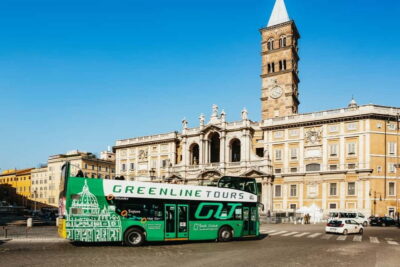 ★ 4.0Hop-On Hop-Off Panoramic Bus Ticket – Access 3 RoutesFrom $1918,145 reviews
 ★ 4.4Vatican Museums & Sistine Chapel Skip-the-Line Entry TicketFrom $4313,838 reviews
 ★ 4.2Vatican Museums & Sistine Chapel Skip-The-Line TicketFrom $4111,708 reviews
 ★ 4.3Vatican Museums & Sistine Chapel Skip-the-Ticket-Line TourFrom $13010,486 reviews
★ 4.3Vatican Museums & Sistine Chapel Skip-the-Line TicketFrom $578,103 reviews
★ 4.3Vatican Museums & Sistine Chapel Skip-the-Ticket-Line TourFrom $13010,486 reviews
★ 4.3Vatican Museums & Sistine Chapel Skip-the-Line TicketFrom $578,103 reviews
 ★ 4.2St. Peter’s Basilica & Dome Entry Ticket & Audio TourFrom $177,537 reviews
 ★ 4.1Vatican & Sistine Chapel Ticket with Optional Audio GuideFrom $465,405 reviews