
Reviewed · ROME E-BIKE TOURS
Rome Highlights Bike Tour 3 Hour City Cycling Experience
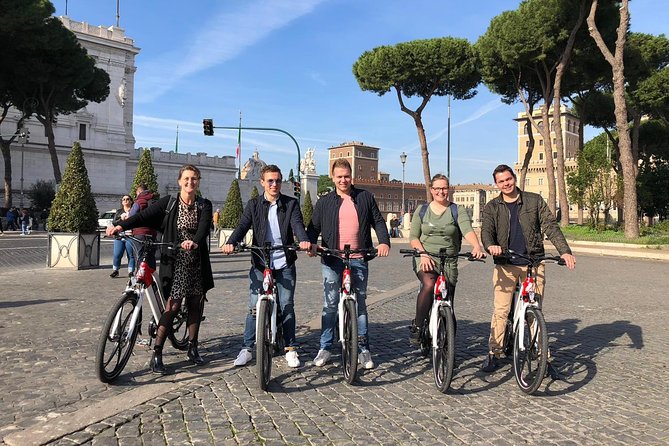
Rome on two wheels beats the long walk. This 3-hour highlights ride strings together major sights with quick stops and a guide who connects what you see to how Rome worked. I love the easy 10km route, so you get a lot of landmarks without feeling like you did a workout.
I also really like the small-group feel and the steady pacing. With helmets provided and the group kept to a manageable size, the ride stays calm even when the streets feel busy.
One possible drawback: the key stops are short (about 10 minutes each), so if you want long hangs inside monuments or a slow stroll at every fountain, you’ll need extra time after the tour.
In This Review
- Key highlights to know before you go
- Entering the Roman scene on an easy 10km ride
- Getting your bearings at Foro Romano and Mercati di Traiano
- Trevi Fountain and Piazza di Spagna: the classic “wow” zone
- The painterly street stop and an unforgettable sense of place
- Piazza del Popolo and Palazzo di Montecitorio: power and everyday movement
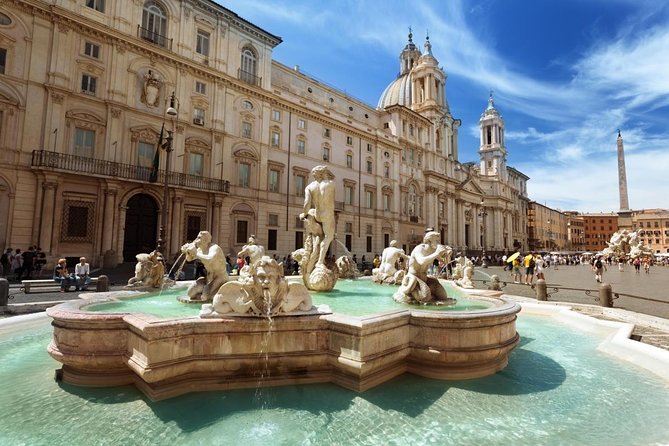
- Piazza Navona and the Bernini fountain stop
- The Pantheon: the big finale with one important catch
- How the ride feels in real life (traffic, bikes, and pacing)
- Price and value: what $60.34 really covers
- Who should book this and who might skip it
- Should you book the Rome Highlights Bike Tour?
- FAQ
- How long is the Rome Highlights Bike Tour?
- What distance will I ride?
- What is the meeting point for the tour?
- What’s the price per person?
- Is the tour in English?
- Are bikes and helmets included?
- Is Pantheon admission included?
- Are food and drinks included?
- Do children need to be accompanied?
Key highlights to know before you go
- 10km, about 3 hours: a “cover the classics” ride that fits first-timers
- Helmet provided: simple safety touch that makes the whole experience less stressful
- A classic Rome loop: Campo de’ Fiori area, Piazza Navona, the Pantheon zone, and more
- Quick context stops: short explanations at the Foro Romano and Imperial Forums
- Pantheon entry not included: you’ll need to plan for that separately
- Max 15 riders: enough energy for fun, not enough to turn into a moving crowd
Entering the Roman scene on an easy 10km ride
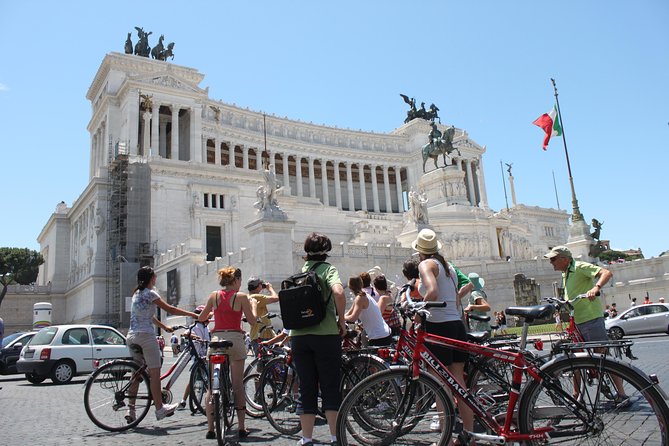
Rome can wear you out fast. The streets are layered with history, and the walking adds up quickly. This bike tour is designed for the opposite mood: grab your Rome overview while keeping your legs mostly fresh.
You’ll ride a route of about 10km and spend roughly 3 hours with an expert guide. That timing matters. Three hours is enough to connect distant sights into one mental map, but it’s short enough that you can still go explore in depth later—on foot, with gelato, with zero hurry.
The vibe is practical: helmets on, bikes ready, and a group that (at up to 15 people) can actually stay together. You’ll also want to dress smart casual. Not fancy, just comfortable for cycling and stopping often.
More of Rome under pedal power
- Rome EBike Tour: Appian Way, Catacombs & Roman Aqueducts
★ 5.0 · 1,766 reviews - Rome: Top Highlights & Hidden Gems Tour by Cannondale E-Bike
★ 4.9 · 1,760 reviews - Rome: Appian Way & Aqueducts E-Bike Tour (Catacombs & Food)
★ 4.9 · 1,498 reviews - Rome: Appian Way, Catacombs, & Roman Aqueducts E-bike Tour
★ 4.9 · 1,421 reviews
Getting your bearings at Foro Romano and Mercati di Traiano
The tour starts in the city center at Via Cavour, 302 (00184 Roma) at 9:30am, then sets you up with context. The first major stop is the Foro Romano (Roman Forum).
At Foro Romano, you’re looking at layers—what’s left of buildings and monuments from different eras. Even without getting into heavy details, the guide’s explanations help you notice something important: the Forum wasn’t just pretty ruins. It was the political, legal, religious, and economic center of ancient Rome. When you see it from ground level, the scale lands in a way that photos often fail to deliver.
A little later you’ll stop at Mercati di Traiano – Museo dei Fori Imperiali. The text on this place usually feels like a museum label, but the idea is simple: this massive structure was tied to administration connected to the Imperial Forums. It’s a good mid-ride shift from open-air spaces to the idea of Rome as a system—laws, offices, commerce, and power built into architecture.
Quick note on time: both these stops are about 10 minutes each. That’s perfect for orientation, but it isn’t meant to replace a full museum visit.
Trevi Fountain and Piazza di Spagna: the classic “wow” zone
Once the tour heads toward the famous baroque-and-famous-everywhere area, you’ll hit Trevi Fountain next. This is one of Rome’s biggest and most recognizable fountains, and the stop is brief. Still, it’s a good moment to understand what the fountain symbolizes in the Roman story—how art and spectacle were used to shape identity in the center of the city.
Then you’ll ride on to Piazza di Spagna, the Spanish Steps area. This stop comes with a built-in talking point: the monumental stairway of 136 steps. Standing near the square helps you grasp the “stage” effect—these steps are less a staircase and more a social and visual anchor in the urban layout.
Two things to keep in mind here:
- The area is tourist-heavy in general, so your bike tour timing is useful.
- Because your stop is short, your goal is observation, not lingering. If you want the perfect photo without rushing, you’ll likely want to come back after the ride.
The painterly street stop and an unforgettable sense of place
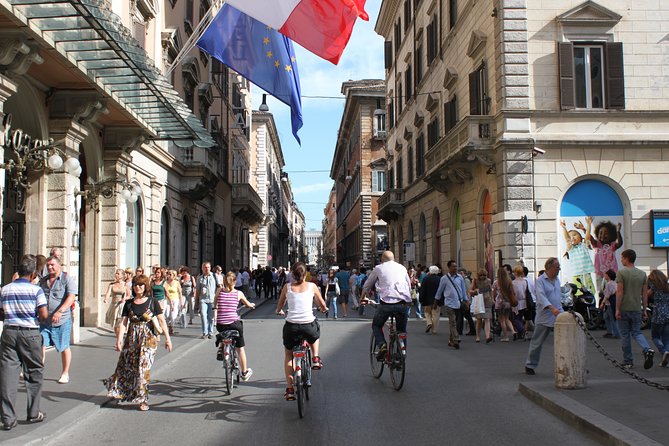
Between the bigger headline squares, the route includes a stop described as the street of painters, known for its artistic soul. Even if you don’t know the neighborhood name, you’ll feel the shift: more character, more texture, more “this is where creative life happened” energy.
This kind of stop is more than decoration. It helps you break the pattern of only seeing monuments. Rome is also a living city with craft traditions and street life. When you’re on a bike, these small breaks keep the tour from turning into a checklist of the top ten.
As you continue, there’s another quick visit to a site described as one of the few funerary monuments still present in the city center. That matters because Rome’s burial culture is huge, but a lot of it isn’t intact right where you’d expect. A stop like this gives you a clearer picture of how long the city reused space and how remnants of life and death still shape the streetscape.
Worth a look next to this Rome booking:
Piazza del Popolo and Palazzo di Montecitorio: power and everyday movement
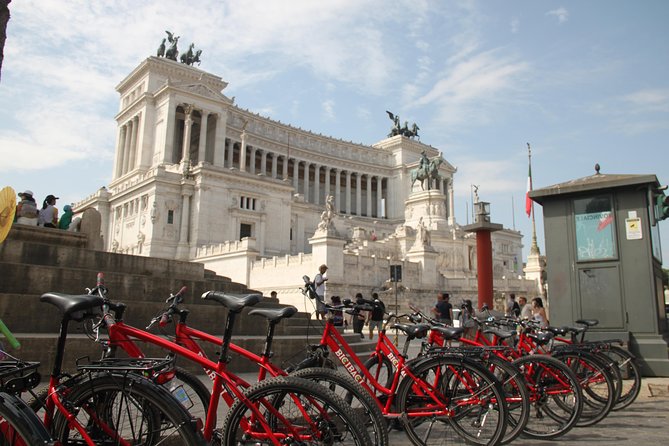
At Piazza del Popolo, you’ll see the square from which the shopping street Via del Corso starts. This is the kind of place where Rome feels both historical and current. You can almost watch the city’s rhythm move outward from the square.
Then the tour reaches Palazzo di Montecitorio. This baroque building used to be the residence of the Ludovisi family and now houses the Italian Parliament. For many visitors, that sounds like a random government building stop. But in context, it’s a neat reminder: Rome’s centers don’t just shift geographically. The function evolves while the “center of gravity” stays strong.
Again, it’s a short stop. So treat it like a chance to recognize the building and understand its role—not a deep architecture session.
Piazza Navona and the Bernini fountain stop
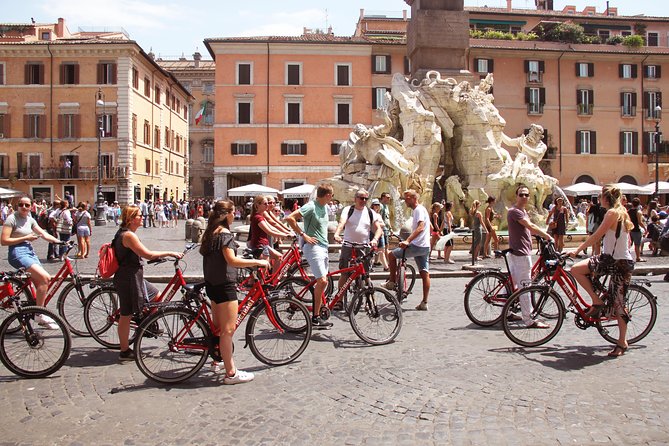
Piazza Navona is built on the remains of an ancient Roman stadium. That single sentence is a cheat code for understanding the square. The geometry you see today isn’t random; it’s the footprint of much older Rome.
Your stop includes one of the most beautiful fountains designed by Bernini. The fountain is the centerpiece, but the real win is the way the square makes Rome feel lived-in. Street performers, cafés, and constant movement can make the area feel overwhelming if you only arrive on your own. On a bike tour, your guide helps you take it in efficiently.
The only practical drawback is the same one you’ll face in most central Rome sights: crowds. On a bike you’re moving through, and the short stop times help you avoid the worst dead-air waiting.
The Pantheon: the big finale with one important catch
The tour ends with the Pantheon. In Roman times it was a temple dedicated to all gods. Today it functions as a basilica where mass is regularly celebrated.
This is one of those sights where context actually changes what you see. If you know it used to be a temple for multiple gods and you understand it still serves a religious purpose, the building reads differently. The scale feels intentional, not accidental. You’ll also notice how the space is still part of daily life rather than just a frozen monument.
Here’s the important catch: Pantheon admission is not included. That means you should plan for a ticket on your own. If you’re hoping to ride straight to the entrance and go in immediately, check the Pantheon’s rules and operating hours ahead of time so the end of your tour doesn’t feel like a timing puzzle.
How the ride feels in real life (traffic, bikes, and pacing)
A three-hour bike tour sounds simple until you picture Rome street life. The good news is the tour is set up for an easy route and a short time at each stop. That matters because it keeps you from getting “stuck” in any one busy area.
You also get:
- Use of bicycle
- Use of helmet
- A group capped at 15 travelers
- English guidance
Those choices add up to comfort. Helmet included is a big deal in a city that can have unpredictable traffic patterns. A small group means fewer merges, fewer bottlenecks, and less time circling around to regroup.
Pacing is another key part of the experience. Your stops are around 10 minutes each. That format is perfect for first day sightseeing. It’s less ideal if you need lots of photo time, or if you like museum-style reading at each monument.
Price and value: what $60.34 really covers
The price is $60.34 per person for about 3 hours. For Rome, that’s not just “rent a bike and go.” You’re paying for several things you’ll otherwise piece together yourself:
- a local guide
- the guided route and pacing
- bike and helmet use
- the tour’s included stops and quick explanations
- taxes and handling included
Also, the tour is positioned as a good first introduction—so you’re buying time. Instead of spending hours planning a route and crisscrossing the city, you get a ready-made line through classic sights.
Where you might feel the cost most clearly is the extras. Food and drinks aren’t included, and Pantheon entry isn’t included. So budget a snack break before or after, and plan your Pantheon ticket separately.
If you’re trying to get the most out of a limited visit, this ticket-to-time ratio usually makes sense.
Who should book this and who might skip it
This tour fits best if you:
- are on your first trip to Rome and want a strong overview
- prefer cycling over long walks (especially in summer heat)
- like seeing a lot of major landmarks without spending a full day on logistics
- want a guided narrative that ties places together quickly
You might want a different plan if you:
- want long, slow time at one monument (like hours inside one museum)
- hate crowds and know you’ll want extended quiet time at fountains or squares
- need a tour with included entrance fees at every major site (Pantheon is not included)
As a practical tip, think of this ride as the opening chapter. Then come back on foot to the places that grab you most.
Should you book the Rome Highlights Bike Tour?
If your goal is to get your bearings fast and see major Rome sights in a structured, easy way, I’d book it. The route is built for first-timers, it’s timed well, and the small-group setup makes it feel manageable.
Just go in with the right expectation: it’s a highlights circuit, not an all-day deep study. Bring comfortable clothes, plan for Pantheon admission separately, and keep some energy for your post-tour wandering.
If you want Rome in a few hours without turning the trip into leg day, this one is a strong choice.
FAQ
How long is the Rome Highlights Bike Tour?
It’s about 3 hours.
What distance will I ride?
The route is about 10km.
What is the meeting point for the tour?
The tour starts at Via Cavour, 302, 00184 Roma RM, Italy.
What’s the price per person?
It costs $60.34 per person.
Is the tour in English?
Yes, it’s offered in English.
Are bikes and helmets included?
Yes. The tour includes use of a bicycle and a helmet.
Is Pantheon admission included?
No. Pantheon admission is not included.
Are food and drinks included?
No. Food and drinks are not included.
Do children need to be accompanied?
Yes. Children must be accompanied by an adult. The tour notes that most travelers can participate.
More Tours in Rome
- Vatican Museums, Sistine Chapel & St. Peter’s Basilica Tour
★ 4.3 · 73,970 reviews - Vatican Museums, Sistine Chapel & St Peter’s Basilica Guided Tour
★ 4.5 · 39,149 reviews - Rome: Colosseum, Palatine Hill and Roman Forum Guided Tour
★ 4.8 · 32,814 reviews - Rome: Guided Tour of Colosseum, Roman Forum & Palatine Hill
★ 4.7 · 27,897 reviews - Rome: Colosseum, Roman Forum and Palatine Hill Guided Tour
★ 4.5 · 23,903 reviews - Rome: Colosseum Arena Floor, Palatine & Forum Guided Tour
★ 4.5 · 20,180 reviews
More Tour Reviews in Rome
- Vatican Museums, Sistine Chapel & St. Peter’s Basilica Tour
★ 4.3 · 73,970 reviews - Vatican Museums, Sistine Chapel & St Peter’s Basilica Guided Tour
★ 4.5 · 39,149 reviews - Rome: Colosseum, Palatine Hill and Roman Forum Guided Tour
★ 4.8 · 32,814 reviews - Rome: Guided Tour of Colosseum, Roman Forum & Palatine Hill
★ 4.7 · 27,897 reviews - Rome: Colosseum & Forum with Audio Guide App -Optional Arena
★ 4.2 · 24,770 reviews - Rome: Colosseum, Roman Forum and Palatine Hill Guided Tour
★ 4.5 · 23,903 reviews
Pedal Through More of Rome
- Rome EBike Tour: Appian Way, Catacombs & Roman Aqueducts
★ 5.0 · 1,766 reviews - Rome: Top Highlights & Hidden Gems Tour by Cannondale E-Bike
★ 4.9 · 1,760 reviews - Rome: Appian Way & Aqueducts E-Bike Tour (Catacombs & Food)
★ 4.9 · 1,498 reviews - Rome: Appian Way, Catacombs, & Roman Aqueducts E-bike Tour
★ 4.9 · 1,421 reviews - Rome City Small Group Bike Tour with quality Cannondale EBike
★ 5.0 · 1,380 reviews - Rome by Night – Ebike Small Group Tour – Food and Wine (Option)
★ 5.0 · 1,275 reviews
Just added to our Rome reviews





Rome E-Bike Tours, compared.
 ★ 5.0Rome EBike Tour: Appian Way, Catacombs & Roman AqueductsFrom $1021,766 reviews
 ★ 4.9Top Highlights & Hidden Gems Tour by Cannondale E-BikeFrom $851,760 reviews
 ★ 4.9Appian Way & Aqueducts E-Bike Tour (Catacombs & Food)From $881,498 reviews
 ★ 4.9Appian Way, Catacombs, & Roman Aqueducts E-bike TourFrom $851,421 reviews
 ★ 5.0Rome City Small Group Bike Tour with quality Cannondale EBikeFrom $1021,380 reviews
 ★ 5.0Rome by Night – Ebike Small Group Tour – Food and Wine (Option)From $711,275 reviews
 ★ 4.9Rome by Night: E-bike Small Group Tour -Food & Wine (Option)From $691,233 reviews
 ★ 5.0Appian Way Aqueducts Bike Tour (Catacombs & Lunch Option)From $78975 reviews
Browse the lists this tour appears in