
Two wheels beats endless walking in Rome. In about 2.5 hours, you get a small-group ride with story-filled stops at major sights like the Pantheon and Trevi, plus the option of an e-bike for hills and comfort. One thing to weigh: you need to be able to ride a bike, and there’s no food included, so you’ll want to plan a meal around the tour.
I like how practical this setup feels. You start and finish near Piazza Capranica, you get a water bottle, and the schedule is built around short photo moments and guided explanations so you can actually take it all in. If it’s rainy, the ride can still work, but you should come ready for wet streets and slower going.
Here’s the core idea: you’ll cover a lot of Rome without the constant stopping and starting that slows foot sightseeing. And because group size is capped (about 5 to 10 people), your guide can keep pace and tailor the ride when questions pop up.
In This Review
- Key Things I’d Target Before You Book
- Two Wheels Over Rome’s Traffic Jitters: The Real Value
- Where the Ride Begins and Ends (Piazza Capranica): Easy Start, Realistic Finish
- The Pantheon Stop: Why This Is a Great First Anchor
- Sant’Ignazio di Loyola: Church Architecture Without the Museum Mood
- Temple of Hadrian and Trajan’s Column: When the City Starts Speaking Emperor
- Trevi Fountain and the Imperial-to-Tourist Shift
- Piazza Venezia: A Snapshot of What Rome Looks Like at Scale
- Colosseum: The Big One, Handled the Right Way
- Arch of Constantine, Circus Maximus, and Theatre of Marcellus
- Jewish Ghetto: A Neighborhood Stop, Not Just Another Monument
- Largo di Torre Argentina and Campo de’ Fiori: Street Life Meets Story
- Piazza Navona: The Final Big Photo Moment and a Gentle Landing
- Classic Bike vs. E-Bike: Choosing the Right Level of Effort
- How the Small-Group Format Changes What You Get
- What to Bring (So the 2.5 Hours Feels Good)
- Who Should Book This Bike Tour (and Who Should Skip It)
- Should You Book It? A Simple Decision
- FAQ
- How long is the bike or e-bike tour?
- Where does the tour start and end?
- Do I have to know how to ride a bike?
- Can I choose between a regular bicycle and an e-bike?
- Is food included?
- How big is the group?
- What’s included in the price?
- What languages are the guides available in?
- What is the cancellation policy?
Key Things I’d Target Before You Book
- A small group (5 to 10) means less waiting and more time at the places that matter.
- Classic bike or e-bike lets you match the ride to your energy, especially on Rome’s ups and downs.
- Multiple photo stops at the Pantheon, Trevi, Colosseum, and more keep the tour from feeling like a blur.
- Safety briefing plus helmets on request make it easier to relax and enjoy the street ride.
- Route coverage across two thousand years runs from imperial monuments to Rome’s lived-in neighborhoods.
Two Wheels Over Rome’s Traffic Jitters: The Real Value
Rome can be overwhelming on foot. It’s not just the crowds, it’s the sheer number of sights packed into a small space. This kind of guided bike tour is one of the fastest ways to get oriented because the route is built to connect big-name monuments with nearby streets you’d probably miss.
The $32-per-person price also makes sense when you think about time. In 2.5 hours, you’re not just seeing one attraction. You’re moving through a chain of iconic spots with stops for photos and context, so you leave with a mental map you can use for the rest of your trip. If you’re spending limited days in Rome, it’s a strong “first or second day” move.
The other quiet win is the guide. Names in recent departures include Mateo and Alexander, and both are praised for clear English and safe, confident guiding. What I look for in a Rome tour is simple: can the guide explain what you’re seeing in a way that sticks. The positive feedback here points to guides who help you understand the why behind the stone.
More of Rome under pedal power
- Rome EBike Tour: Appian Way, Catacombs & Roman Aqueducts
★ 5.0 · 1,766 reviews - Rome: Top Highlights & Hidden Gems Tour by Cannondale E-Bike
★ 4.9 · 1,760 reviews - Rome: Appian Way & Aqueducts E-Bike Tour (Catacombs & Food)
★ 4.9 · 1,498 reviews - Rome: Appian Way, Catacombs, & Roman Aqueducts E-bike Tour
★ 4.9 · 1,421 reviews
Where the Ride Begins and Ends (Piazza Capranica): Easy Start, Realistic Finish
The tour starts and ends at Piazza Capranica 97, with the meeting point described as Palazzo Capranica. That matters because it keeps you from spending part of your short outing stuck in logistics. You’ll be able to walk back to a nearby hotel area afterward, which is a big deal in Rome where neighborhoods can feel far apart.
Before you roll out, you should expect a safety briefing and guidance on how the group rides. Helmets are provided (and child seats can be requested). There’s also luggage storage, plus a bottle of water, so you’re not juggling bags while trying to enjoy the landmarks.
If you’re thinking about shoes: bring comfortable ones. You’ll want to be able to stand at photo stops and take quick walks when the route needs it.
The Pantheon Stop: Why This Is a Great First Anchor
Your early ride includes the Pantheon, which works well as a first anchor sight. It’s instantly recognizable from the outside, and it helps you lock into the Roman scale right away: big stone, clear geometry, and centuries of layers in one view.
This stop includes sightseeing time and a guided explanation, with a photo moment built in. The payoff is momentum. After the Pantheon, you’ll be in story mode, so the ride doesn’t feel like you’re just snapping photos. It feels like you’re moving through a timeline.
If you’re the type who likes quiet details, you’ll also appreciate that the tour doesn’t rush straight through everything. You get enough time to look around and shift from “wow” to “oh, that’s why.”
Sant’Ignazio di Loyola: Church Architecture Without the Museum Mood
Next up is the Church of Sant’Ignazio di Loyola with a photo stop and guided sightseeing. Church stops can sometimes turn into a quick glance and out. Here, the tone is more like: slow down, look, listen.
The location also makes sense in the route. It breaks up the imperial-monument pattern with something more intimate and architectural. You’ll likely notice how the ride keeps rotating the subject matter: temples and emperors give way to religion and design, which helps your brain keep track.
Worth a look next to this Rome booking:
Temple of Hadrian and Trajan’s Column: When the City Starts Speaking Emperor
You’ll pass and stop for photos connected to the Temple of Hadrian and later Trajan’s Column. These are the kinds of places where context matters. Up close, you can see the craftsmanship. Without a guide, it’s easier to treat them like “another old thing.” With a guide, they connect into a fuller picture of power, propaganda, and what Rome wanted people to remember.
A practical note: these stops are built for quick viewing. You’re not waiting in long lines for entry (this is a bike tour focused on riding and stopping). The tradeoff is you’ll get highlights, not deep access.
Still, that’s the point. You’re collecting the important visual references so you can return later—on foot—if a site really hooks you.
Trevi Fountain and the Imperial-to-Tourist Shift
At Trevi Fountain, expect a classic Rome photo moment. You’ll have sightseeing time tied to the tour, and the guide’s stories help explain why Trevi became the postcard magnet it is today.
One practical consideration: Trevi is always busy. Since the tour includes a photo stop rather than lingering in line-style sightseeing, you can manage it without losing the whole rhythm of the ride. If your goal is to get the iconic shot and understand the setting, this is a smart way to do it.
From Trevi, the tour keeps moving you through the center toward Trajan’s Column, Piazza Venezia, and onward. That continuous flow is exactly what makes the tour efficient.
Piazza Venezia: A Snapshot of What Rome Looks Like at Scale
Piazza Venezia is a strategic stop because it sits where views open up and you start understanding how monuments relate to each other spatially. It’s also a place where your guide can point out sightlines and the logic of the city’s layout.
Since the tour includes sightseeing and a photo stop here, it’s not only about looking at one structure. It’s about using the view as a reference point for everything you’ll see afterward.
The main drawback? Like all busy center squares, it can feel crowded at the edges. Your best move is to keep moving with the group and use the stop for photos and quick orientation, not for a long personal wander.
Colosseum: The Big One, Handled the Right Way
Then comes the star of the show: the Colosseum. You’ll stop for photos with guided sightseeing, plus time to pass by adjacent areas as the ride continues.
This is where a bike tour can be better than a full-day plan. You’re not spending the outing focused on one timed ticket or one single-site bottleneck. You’re getting the monument in your field of view while also learning what you’re looking at and where to aim your attention when you return later on foot.
Also, if you’re doing this early in the trip, it’s perfect. The Colosseum is too huge to process immediately. With the guide’s explanation plus the quick photo stop, you’ll leave already understanding what to look for when you do deeper sightseeing later.
Arch of Constantine, Circus Maximus, and Theatre of Marcellus
After the Colosseum, the route flows past and includes photo stops at the Arch of Constantine, then Circus Maximus, and later Theatre of Marcellus.
Two things to know here:
- You get free time at a couple of stops. Arch of Constantine includes a free-time moment, and Circus Maximus has free time too. Use that time to step away from the bike, take a few extra photos, or just breathe for a minute.
- These areas help you widen the Rome picture beyond the one arena you already know.
Arch of Constantine is a turning point because it connects triumphal imagery to the street-level experience of modern Rome. Then Circus Maximus shifts the story from stadium spectacle to the long sweep of civic life. Theatre of Marcellus keeps the momentum going, showing how performance spaces shaped the city’s rhythm.
A small warning: since you’re riding between monuments, you’ll want to pace yourself. If you’re tired, the best strategy is to treat each free-time window as your reset button.
Jewish Ghetto: A Neighborhood Stop, Not Just Another Monument
Next is the Jewish Ghetto with guided sightseeing while you’re riding through the area. This part of the tour matters because it moves beyond only ancient ruins and toward a Rome that’s still lived in.
The tour approach here is practical: you’re not required to make this a long museum-style detour. You get a guided look and the chance to connect what you’ve seen to real neighborhood history and continuity.
If you like walking streets but don’t want to handle planning on your own, this stop hits a sweet spot.
Largo di Torre Argentina and Campo de’ Fiori: Street Life Meets Story
At Largo di Torre Argentina, you’ll have a photo stop plus guided context. It’s one of those places where the environment is part of the story, and the tour timing helps you notice it without getting stuck in planning mode.
Then comes Campo de’ Fiori, again with a photo stop and guided sightseeing. This is a good contrast point. You get a familiar public square feel—something you can recognize even if you only know it from photos. Since the tour includes scenic drive segments on the way here, you’ll also see how the roads link squares and monuments.
If you’re hungry, remember: food isn’t included. That’s not a deal-breaker, but it does mean you should save your meal plans for after the ride. Campo de’ Fiori is the kind of place where you’ll want a snack, but you’ll be doing that on your own time.
Piazza Navona: The Final Big Photo Moment and a Gentle Landing
The tour ends with Piazza Navona, with sightseeing and time built in (including free time). Piazza Navona is a strong finish because it’s visually rewarding and easy to use as a mental landmark once you’re back on foot.
You’ll wrap the ride at Palazzo Capranica, and the timing makes it feel like a complete outing rather than a rushed sampler. If you’re thinking about where to go next, this is a good spot to pause. Grab your next coffee or gelato nearby and start planning based on where you felt the strongest connection.
Classic Bike vs. E-Bike: Choosing the Right Level of Effort
You can choose between a regular bicycle and an electric bike. On Rome hills and stop-start streets, that choice is more than comfort—it affects your whole experience.
- If you’re in good shape and want the full pedal feel, the classic bike works.
- If you want to save energy for sightseeing later (or you’re dealing with tired legs, uneven routes, or just want an easier pace), the e-bike is a smart pick.
Reviews specifically praise the e-bike for comfort, including mention of ups and downs across Rome. That lines up with why I’d steer people toward the e-bike if they’re traveling as a couple, bringing kids, or simply want a smoother ride without arriving exhausted.
How the Small-Group Format Changes What You Get
This is a small-group tour (about 5 to 10 people). That’s not just a nice-to-have. It affects how much you benefit from the guide.
In larger groups, photo stops can become frantic: one side waits, the other side doesn’t hear, and everyone rushes. Here, the smaller size makes it more realistic to pause, look, and actually understand what you’re seeing. It also makes the “free time” segments more useful, because the group can regroup quickly and you don’t feel stuck.
Guides in recent departures have been praised for friendly, safe riding and for explaining locations clearly in English. If you’re language-minded, you’ll be supported in Dutch, English, French, German, Italian, or Spanish.
What to Bring (So the 2.5 Hours Feels Good)
This is not a “show up and hope” tour. Bring what helps you enjoy the ride:
- Comfortable shoes (you’ll stand for photos)
- Camera (you’ll want it at Pantheon, Trevi, Colosseum, and more)
- Sunscreen (Rome sun is real)
- Water is provided, but having your own spare can help
- Passport or ID card
- Comfortable clothes that match the season
For rainy days, at least one group found it great even after arriving wet and tired. Still, your best approach is practical: expect slower comfort if conditions are slick.
Who Should Book This Bike Tour (and Who Should Skip It)
This works best for you if:
- You want a strong overview of Rome in a short window
- You enjoy learning through stories tied to what you see
- You want to move efficiently between central sights
- You’re comfortable riding a bike, or you’re choosing the e-bike option
You might skip it if:
- You can’t ride a bike (the tour isn’t suitable for that)
- You want a full food-focused day (no meals are included)
- You prefer long, slow museum time at only one site
Families are welcome. Children up to 3 years old join for free and ride safely in a child seat on a parent’s bike (when requested). Seats and helmets are available on request as well.
Should You Book It? A Simple Decision
I’d book this tour if you want to get your bearings fast and you like the idea of learning Rome’s big stories while you’re actively moving through the city. At $32 for a 2.5-hour guided ride with a small group, it’s good value because you’re not just checking off attractions—you’re stitching them into a mental map.
If you’re on the fence, choose the e-bike. It’s the easiest way to keep the ride comfortable so you can focus on the sights and the guide’s explanations.
If you’ve already planned a day packed with indoor tickets and want something lighter, this also fits well as a morning or early afternoon plan.
FAQ
How long is the bike or e-bike tour?
The tour lasts about 2.5 hours.
Where does the tour start and end?
It starts and ends at Piazza Capranica 97.
Do I have to know how to ride a bike?
Yes. The tour is not suitable for people who can’t ride a bike.
Can I choose between a regular bicycle and an e-bike?
Yes. You can choose a classic bicycle or a comfortable electric bike.
Is food included?
No. Food is not included.
How big is the group?
It’s a small-group tour, typically between 5 and 10 people.
What’s included in the price?
Included items include a local guide, a regular or electric bike (based on your choice), helmets (on request), child seats (on request), luggage storage, bottle of water, and photo stops and sightseeing of iconic landmarks.
What languages are the guides available in?
Guides are available in Dutch, English, French, German, Italian, and Spanish.
What is the cancellation policy?
You can cancel up to 24 hours in advance for a full refund, and there’s also reserve now & pay later availability.
More Tours in Rome
- Vatican Museums, Sistine Chapel & St. Peter’s Basilica Tour
★ 4.3 · 73,970 reviews - Vatican Museums, Sistine Chapel & St Peter’s Basilica Guided Tour
★ 4.5 · 39,149 reviews - Rome: Colosseum, Palatine Hill and Roman Forum Guided Tour
★ 4.8 · 32,814 reviews - Rome: Guided Tour of Colosseum, Roman Forum & Palatine Hill
★ 4.7 · 27,897 reviews - Rome: Colosseum, Roman Forum and Palatine Hill Guided Tour
★ 4.5 · 23,903 reviews - Rome: Colosseum Arena Floor, Palatine & Forum Guided Tour
★ 4.5 · 20,180 reviews
More Tour Reviews in Rome
- Vatican Museums, Sistine Chapel & St. Peter’s Basilica Tour
★ 4.3 · 73,970 reviews - Vatican Museums, Sistine Chapel & St Peter’s Basilica Guided Tour
★ 4.5 · 39,149 reviews - Rome: Colosseum, Palatine Hill and Roman Forum Guided Tour
★ 4.8 · 32,814 reviews - Rome: Guided Tour of Colosseum, Roman Forum & Palatine Hill
★ 4.7 · 27,897 reviews - Rome: Colosseum & Forum with Audio Guide App -Optional Arena
★ 4.2 · 24,770 reviews - Rome: Colosseum, Roman Forum and Palatine Hill Guided Tour
★ 4.5 · 23,903 reviews
Pedal Through More of Rome
- Rome EBike Tour: Appian Way, Catacombs & Roman Aqueducts
★ 5.0 · 1,766 reviews - Rome: Top Highlights & Hidden Gems Tour by Cannondale E-Bike
★ 4.9 · 1,760 reviews - Rome: Appian Way & Aqueducts E-Bike Tour (Catacombs & Food)
★ 4.9 · 1,498 reviews - Rome: Appian Way, Catacombs, & Roman Aqueducts E-bike Tour
★ 4.9 · 1,421 reviews - Rome City Small Group Bike Tour with quality Cannondale EBike
★ 5.0 · 1,380 reviews - Rome by Night – Ebike Small Group Tour – Food and Wine (Option)
★ 5.0 · 1,275 reviews
Just added to our Rome reviews





Rome E-Bike Tours, compared.
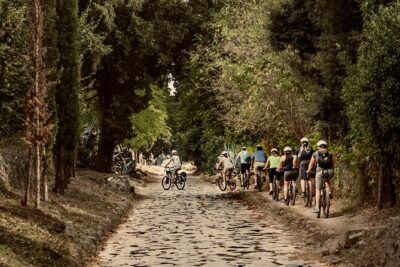 ★ 5.0Rome EBike Tour: Appian Way, Catacombs & Roman AqueductsFrom $1021,766 reviews
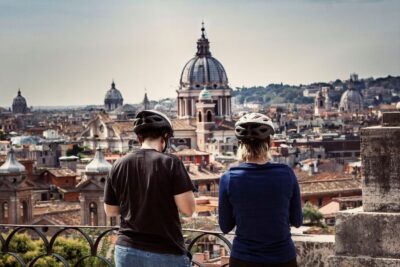 ★ 4.9Top Highlights & Hidden Gems Tour by Cannondale E-BikeFrom $851,760 reviews
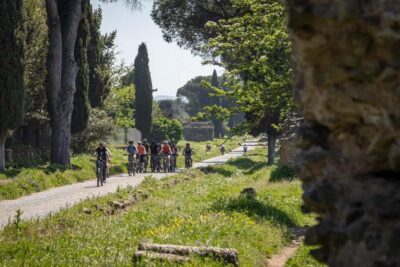 ★ 4.9Appian Way & Aqueducts E-Bike Tour (Catacombs & Food)From $881,498 reviews
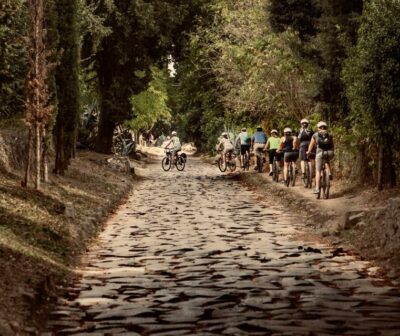 ★ 4.9Appian Way, Catacombs, & Roman Aqueducts E-bike TourFrom $851,421 reviews
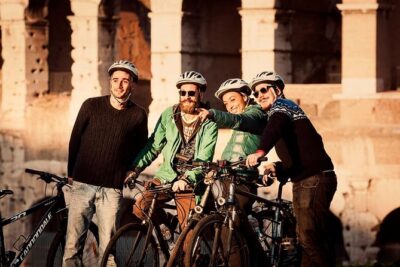 ★ 5.0Rome City Small Group Bike Tour with quality Cannondale EBikeFrom $1021,380 reviews
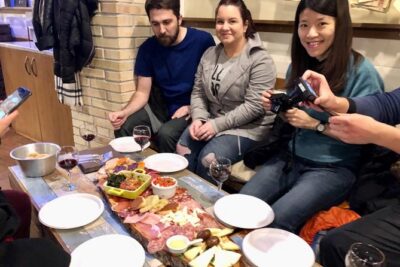 ★ 5.0Rome by Night – Ebike Small Group Tour – Food and Wine (Option)From $711,275 reviews
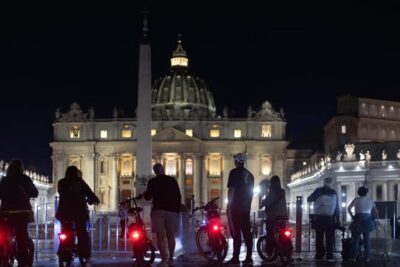 ★ 4.9Rome by Night: E-bike Small Group Tour -Food & Wine (Option)From $691,233 reviews
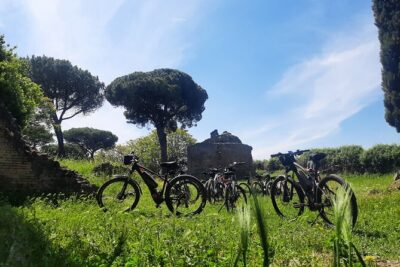 ★ 5.0Appian Way Aqueducts Bike Tour (Catacombs & Lunch Option)From $78975 reviews
Browse the lists this tour appears in