
Reviewed · BORGHESE GALLERY TOURS
Rome: Galleria Borghese Museum Entry Ticket and Guided Tour
Two hours. Three artistic heavyweights. This entry-ticket-plus-guide visit to Galleria Borghese gets you into Rome’s most compact lesson in Caravaggio drama and Bernini motion, with ceiling frescoes that can feel almost three-dimensional. The main thing to watch: the schedule is tight, so if you like to linger on every inch, you may feel a bit rushed.
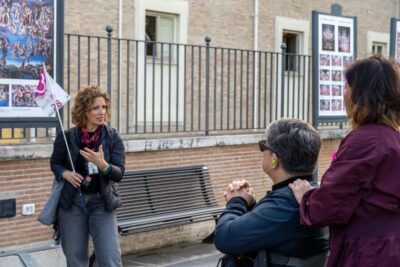
I like that the tour is built for clarity, not confusion: you get headsets so you can hear the guide cleanly, and you’ll still have an audio guide option in multiple languages. You meet at Piazzale Scipione Borghese with a guide holding a red flag with the Saints Tour logo, and the tour runs rain or shine.
In the rooms, you’ll connect the dots between paintings, sculptures, and the painted ceilings. Expect Caravaggio’s St John the Baptist, Bernini’s Rape of Proserpine and Apollo and Daphne, plus major ceiling works like Mariano Rossi’s fresco in the Salone and Francesco Caccianiga’s Fall of Phaeton.
In This Review
- Key things you should know before you go
- Galleria Borghese in Two Hours: what this visit is really about
- Meeting at Piazzale Scipione Borghese: start points that save your sanity
- What the Borghese Collection means: collecting, power, and why the museum feels personal
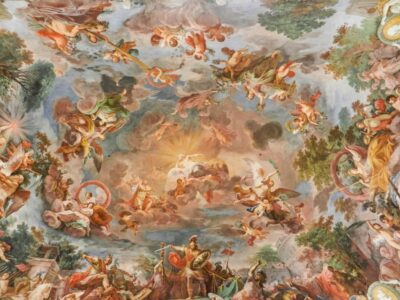
- The Salon experience: Mariano Rossi’s ceiling and that 3D illusion
- Chamber of Ceres: marble symbols and the Oedipus connection
- Fall of Phaeton ceiling: Francesco Caccianiga’s overhead drama
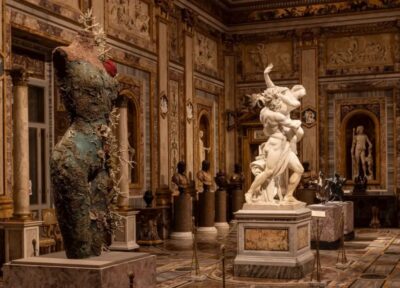
- Bernini on the main stage: Apollo and Daphne and Rape of Proserpine
- Caravaggio moments: St John the Baptist and the artist’s emotional punch
- How the guide and headsets help you see more (without feeling lost)
- Price and logistics: is $94 a good value for Galleria Borghese?
- Who should book this tour, and who might prefer a different plan
- Should you book this Galleria Borghese entry ticket and guided tour?
- FAQ
- How long is the Galleria Borghese entry ticket and guided tour?
- Is the entry ticket included in the price?
- What are the main highlights I should expect to see?
- What languages are available for the live guide and audio support?
- Where do I meet the guide?
- Do I need to bring ID?
- Are luggage or large bags allowed?
- Is the tour wheelchair accessible, and does it run in bad weather?
- Can I cancel and get a refund?
Key things you should know before you go
- Timed entry makes this gallery feel manageable instead of a confusing maze of rooms
- Headsets help you follow the story without leaning in or losing details
- Caravaggio and Bernini share the spotlight in a short, high-impact route
- Ceiling frescoes are part of the show (especially the Salone’s foreshortening)
- Travel light since large bags and luggage aren’t allowed
Galleria Borghese in Two Hours: what this visit is really about
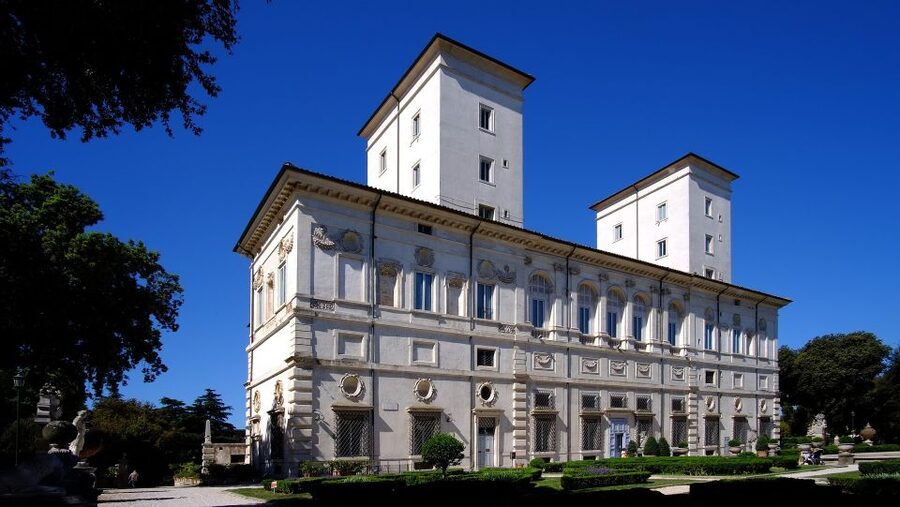
Galleria Borghese is famous because it’s concentrated. Instead of wandering all day through “a lot of stuff,” you get a tight, curated circuit that links themes—power, myth, belief, and drama. In about two hours, you’re meant to see the highlights and understand why they matter.
What I like most is how the tour treats art as a set of conversations. You don’t just look at a sculpture; you also learn what kind of collecting drove the collection, why the artists chose certain subjects, and how the room itself plays along. That context makes the works hit harder when you’re standing in front of them.
The only real drawback is pacing. Two hours goes fast in a museum as packed as this. If your ideal Rome day is slow, you might want extra time on your own after the tour—or consider a self-paced plan instead.
More Bernini and Caravaggio at the Borghese
- Rome: Borghese Gallery Skip-the-Line Ticket & Audioguide
★ 4.3 · 4,318 reviews - Rome: Borghese Gallery Ticket + Audioguide or Guided Tour
★ 4.6 · 3,219 reviews - Rome: Borghese Gallery Guided Tour with Skip-the-Line Entry
★ 4.8 · 2,649 reviews - Rome: Borghese Gallery Skip-the-Line Tickets with Audioguide
★ 4.6 · 2,562 reviews
Meeting at Piazzale Scipione Borghese: start points that save your sanity
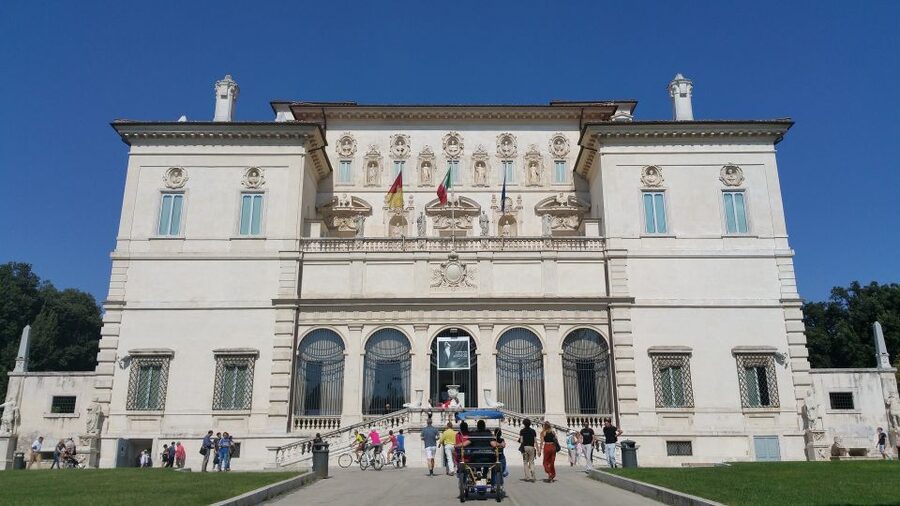
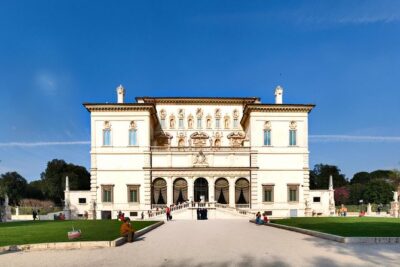
Your meeting point is Piazzale Scipione Borghese (address: Piazzale Scipione Borghese, 5). Look for your guide holding a red flag with the Saints Tour logo. This matters more than you’d think: Galleria Borghese is popular, and you don’t want to be late, searching, or split from your group.
Also plan to travel with minimal baggage. Luggage or large bags aren’t allowed. If you’re coming from another part of central Rome, pack smart so you can move quickly and keep your hands free.
Finally, the tour runs rain or shine. So if you’re going in a shoulder-season storm, a compact umbrella and grippy shoes are a good idea—mostly for walking to and from the museum.
What the Borghese Collection means: collecting, power, and why the museum feels personal
This isn’t a museum that randomly displays masterpieces. The collection was initiated by Cardinal Scipione Borghese, nephew of Pope Paul V and a serious collector. He went after works that fit his taste and status, including artists like Caravaggio—who is heavily represented here.
You’ll see that collecting logic in the way the museum holds together. Caravaggio’s sharp contrasts and emotional realism sit near sculpture that practically lunges toward you. Bernini’s style is all about movement and theatrical feeling, so when you also see myth scenes and symbolic objects in the rooms, the whole place starts to feel like one big story.
Even the portrait busts carry that “who mattered” energy: there’s a bust of Pope Paul V and portraits connected to Cardinal Scipione Borghese. You’re not just seeing art—you’re seeing a display of influence built into the walls.
The Salon experience: Mariano Rossi’s ceiling and that 3D illusion
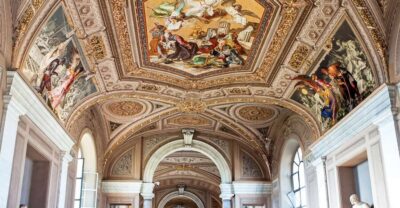
One room deserves extra attention: the Salone, with a large ceiling fresco by the Sicilian artist Mariano Rossi. What makes it special is how he uses foreshortening. From the ground, it can look almost three-dimensional—like the architecture and figures are reaching out toward you.
This isn’t just pretty ceiling dressing. The fresco depicts Marcus Furius Camillus relieving the siege of the Capitol by the Gauls. The subject is about rescue and power—exactly the kind of drama that fits Bernini’s theatrical sculpture style. So as you move through the Salone, you’re getting a visual theme match: epic events above, dramatic figures in the works nearby.
If you like art that plays tricks on perspective, this is your payoff room. Take a full moment to look up before you start rushing through the next painting or sculpture.
Worth a look next to this Rome booking:
Chamber of Ceres: marble symbols and the Oedipus connection
Next up is the Chamber of Ceres, a room known for its marble vase depicting Oedipus and the Sphinx. Even if you’re not a mythology expert, you’ll recognize the tension built into the story: riddle, danger, and a forced confrontation with fate.
This is one of those spots where the tour framing helps. Without guidance, a vase like this can feel like an accessory. With the explanation, it turns into a symbol you can read—something that links to broader themes of myth, judgment, and authority that appear across the collection.
It’s also a good place to slow down briefly if the route feels fast. Stand back, then come closer. You’ll start noticing how marble forms can carry texture and expression in a way that feels almost alive.
Fall of Phaeton ceiling: Francesco Caccianiga’s overhead drama
Another ceiling work you’ll encounter is the second room’s fresco by Francesco Caccianiga, depicting the Fall of Phaeton. Phaeton’s story is all about loss of control and consequences—again, very on-brand for Baroque storytelling.
What helps here is that you’re not just scanning for famous names. You’re learning how ceilings function inside this kind of museum. In Galleria Borghese, the painted ceiling is part of the emotional set design. The subject matter lines up with the intensity of the art at eye level.
If you enjoy art that works on multiple layers—story, composition, and illusion—this ceiling is worth your attention. Even a quick look upward here can make your later sculpture viewing feel more connected.
Bernini on the main stage: Apollo and Daphne and Rape of Proserpine
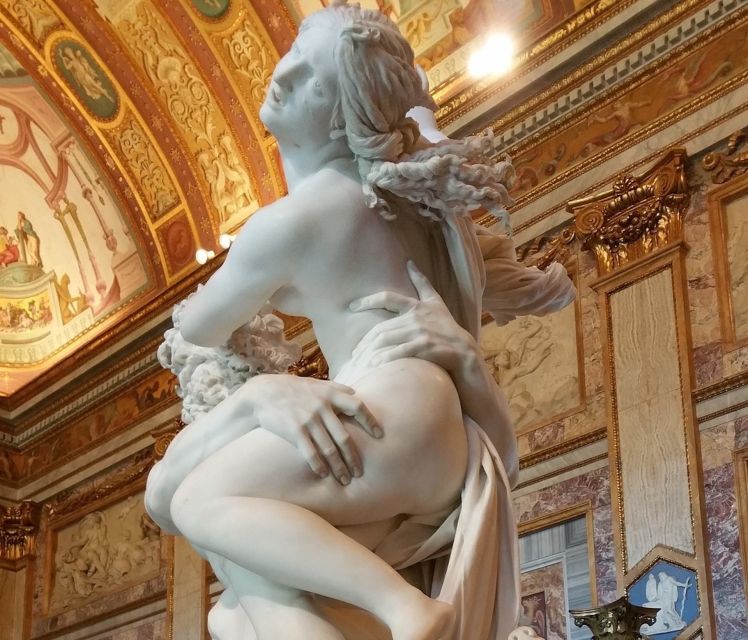
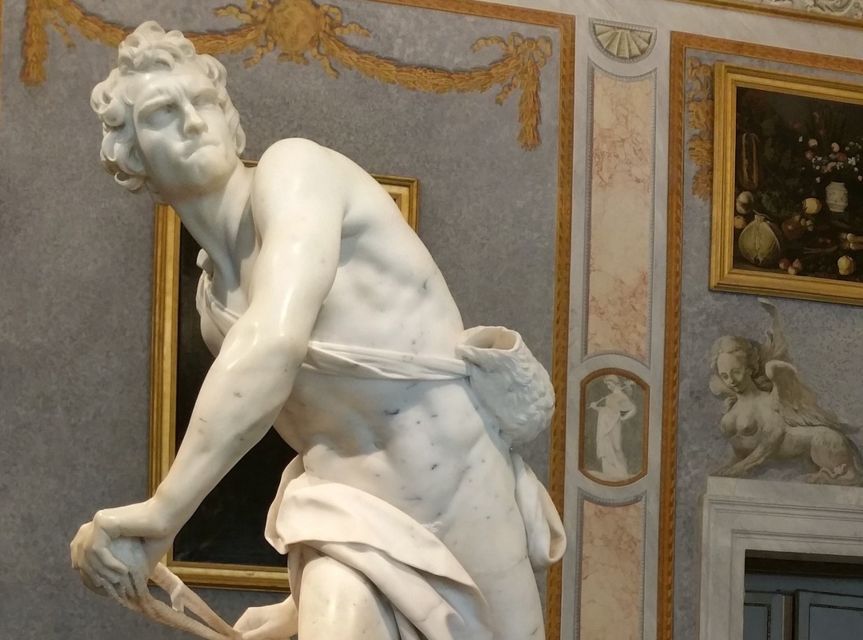
Bernini is the headline for many people, and for good reason. His figures here are built to feel in motion, with expressions and poses that look like they’re reacting in real time. Within the tour route, two works stand out.
First is Apollo and Daphne. You’ll see it in the third room, and it’s the kind of sculpture that can make you forget you’re in a museum line-up. The action is clear even without explanation: chase, transformation, urgency.
Second is Rape of Proserpine. This one is famously dramatic—equal parts power, fear, and mythic spectacle. It also shows Bernini’s secular sculpture strengths: he doesn’t treat myth scenes as distant legends. He treats them like urgent human events with emotional stakes.
If you’re the type who likes to compare styles, keep an eye on how Bernini changes from one scene to another. The energy shifts, but the craft stays visible—especially around facial emotion and how the body language tells the story.
Caravaggio moments: St John the Baptist and the artist’s emotional punch
Caravaggio is represented in the collection with major works, and one of the key highlights for this tour is his St John the Baptist. Caravaggio’s art has a directness that makes it feel modern, even when it’s centuries old.
What you can appreciate quickly is the emotional weight. Caravaggio’s figures don’t pose for decoration; they feel present. The lighting and realism bring the subject forward so you’re not just reading a scene—you’re meeting a person in it.
The tour also connects Caravaggio to other works you might notice around the gallery, like Boy with Basket of Fruit, Saint Jerome Writing, and Sick Bacchus. Even if you can’t pause at every single painting, the guide’s narrative helps you understand why Caravaggio’s presence matters in this particular collection.
If you only have a short time in Rome and you want one museum where you can catch both Caravaggio and Bernini without stress, this is one of the best ways to do it.
How the guide and headsets help you see more (without feeling lost)
This kind of museum can beat you up if you go solo: too much to read, too many rooms, and lots of temptation to drift. With a live guide, you get a path that’s focused on impact, and you also get explanations timed to what you’re looking at.
The headsets are a practical win. They mean you’re not stuck in the back straining for every word, and you don’t have to turn your body into a human mic stand. You can keep your eyes on the art, which is the point.
Language coverage is also solid: the live guide is available in French, Italian, and English. Plus, there’s an audio guide included in those same languages. That gives you a safety net if you miss a point or want to review a theme once you step away.
On top of that, the guided experience can be flexible for mixed-age groups. I’ve seen praise tied to guides who stayed patient with teenagers, making sure they still got the story instead of just standing there waiting for the adults to finish.
Price and logistics: is $94 a good value for Galleria Borghese?
At $94 per person for a two-hour guided entry, you’re paying for three things you’d otherwise have to assemble yourself: a timed entry ticket, a guide, and the audio support (including headsets). That combination is usually what turns this museum from overwhelming into focused.
Is it cheap? No. But it can be fair value if you fall into any of these categories:
- You only have a limited window in Rome and want to prioritize the biggest works.
- You’d rather pay than spend time figuring out what to see first.
- You like learning as you look, especially for Baroque art where context matters.
If you’re the type who loves quiet wandering and already knows exactly which rooms you want to hit, you might feel the cost more sharply. Also note that the two-hour structure means the pace is set; you’re not there to explore every corner slowly.
Still, if you want Caravaggio and Bernini highlights plus key ceiling frescoes in one go, this ticket-plus-guide format is one of the most efficient ways to do it.
Who should book this tour, and who might prefer a different plan
This experience fits best if you want a strong overview of Galleria Borghese without the mental load. It’s especially good for:
- First-time visitors who want the major masterpieces (Caravaggio and Bernini) and the storytelling behind them.
- People who appreciate art context, not just surface viewing.
- Families or groups with mixed patience levels, since a good guide can keep momentum and comprehension aligned.
It might be less satisfying if your style is slow, detailed, and room-by-room. This is also true if you’re bringing large bags—since luggage and big items aren’t allowed, you’ll need to travel light to stay comfortable.
If you want the best of both worlds, a smart approach is to use this guided route to get oriented, then decide later whether you want to spend extra time on specific works on your own.
Should you book this Galleria Borghese entry ticket and guided tour?
Yes—if you want a high-impact, organized visit where you’ll see the core masterpieces and understand the themes fast. You’ll get a clear route through major rooms, you’ll hear the explanations in your language, and you won’t be stuck guessing how to connect ceilings, sculpture, and myth.
Book it now if your Rome schedule is tight and you don’t want to lose time sorting out what matters. And bring a plan to travel light.
Skip it (or consider a different approach) if you know you want a slow, self-paced museum day and you feel irritated by a timed structure. For everyone else, this is a practical way to experience one of Rome’s most famous collections without letting it slip into stress.
FAQ
How long is the Galleria Borghese entry ticket and guided tour?
The tour duration is 2 hours.
Is the entry ticket included in the price?
Yes. The package includes the entry ticket and a guide.
What are the main highlights I should expect to see?
You’ll focus on major works including Caravaggio’s St John the Baptist, and Bernini’s Rape of Proserpine and Apollo and Daphne. The route also includes notable ceiling frescoes such as Mariano Rossi’s fresco in the Salone and Francesco Caccianiga’s Fall of Phaeton.
What languages are available for the live guide and audio support?
The live guide is available in French, Italian, and English. Audio guide support is also included in French, Italian, and English.
Where do I meet the guide?
Meet at Piazzale Scipione Borghese, 5. Your guide will have a red flag with the Saints Tour logo.
Do I need to bring ID?
Yes. Bring a passport or ID card.
Are luggage or large bags allowed?
No. Luggage or large bags are not allowed.
Is the tour wheelchair accessible, and does it run in bad weather?
Yes, it is wheelchair accessible, and it takes place rain or shine.
Can I cancel and get a refund?
You can cancel up to 24 hours in advance for a full refund.
More Tours in Rome
- Vatican Museums, Sistine Chapel & St. Peter’s Basilica Tour
★ 4.3 · 73,970 reviews - Vatican Museums, Sistine Chapel & St Peter’s Basilica Guided Tour
★ 4.5 · 39,149 reviews - Rome: Colosseum, Palatine Hill and Roman Forum Guided Tour
★ 4.8 · 32,814 reviews - Rome: Guided Tour of Colosseum, Roman Forum & Palatine Hill
★ 4.7 · 27,897 reviews - Rome: Colosseum, Roman Forum and Palatine Hill Guided Tour
★ 4.5 · 23,903 reviews - Rome: Colosseum Arena Floor, Palatine & Forum Guided Tour
★ 4.5 · 20,180 reviews
More Tour Reviews in Rome
- Vatican Museums, Sistine Chapel & St. Peter’s Basilica Tour
★ 4.3 · 73,970 reviews - Vatican Museums, Sistine Chapel & St Peter’s Basilica Guided Tour
★ 4.5 · 39,149 reviews - Rome: Colosseum, Palatine Hill and Roman Forum Guided Tour
★ 4.8 · 32,814 reviews - Rome: Guided Tour of Colosseum, Roman Forum & Palatine Hill
★ 4.7 · 27,897 reviews - Rome: Colosseum & Forum with Audio Guide App -Optional Arena
★ 4.2 · 24,770 reviews - Rome: Colosseum, Roman Forum and Palatine Hill Guided Tour
★ 4.5 · 23,903 reviews
More Rooms at the Borghese
- Rome: Borghese Gallery Skip-the-Line Ticket & Audioguide
★ 4.3 · 4,318 reviews - Rome: Borghese Gallery Ticket + Audioguide or Guided Tour
★ 4.6 · 3,219 reviews - Rome: Borghese Gallery Guided Tour with Skip-the-Line Entry
★ 4.8 · 2,649 reviews - Rome: Borghese Gallery Skip-the-Line Tickets with Audioguide
★ 4.6 · 2,562 reviews - Rome: Borghese Gallery & Gardens Small Group Guided Tour
★ 4.5 · 2,190 reviews - Rome: Borghese Gallery Guided Tour with Tickets
★ 4.9 · 1,880 reviews
Just added to our Rome reviews





Borghese Gallery Tours, compared.
 ★ 4.3Borghese Gallery Skip-the-Line Ticket & AudioguideFrom $504,318 reviews
 ★ 4.6Borghese Gallery Ticket + Audioguide or Guided TourFrom $533,219 reviews
 ★ 4.8Borghese Gallery Guided Tour with Skip-the-Line EntryFrom $842,649 reviews
 ★ 4.6Borghese Gallery Skip-the-Line Tickets with AudioguideFrom $532,562 reviews
 ★ 4.5Borghese Gallery & Gardens Small Group Guided TourFrom $472,190 reviews
 ★ 4.9Borghese Gallery Guided Tour with TicketsFrom $571,880 reviews
 ★ 4.3Borghese Gallery Skip the line ticket and AudioguideFrom $531,535 reviews
 ★ 4.5Borghese Gallery, Canova’s Masterpieces Skip-the-Line Guided TourFrom $591,162 reviews
Browse the lists this tour appears in