
Reviewed · APPIAN WAY TOURS
Rome: E-Bike Tour of Appia Antica, Aqueducts, and Caffarella
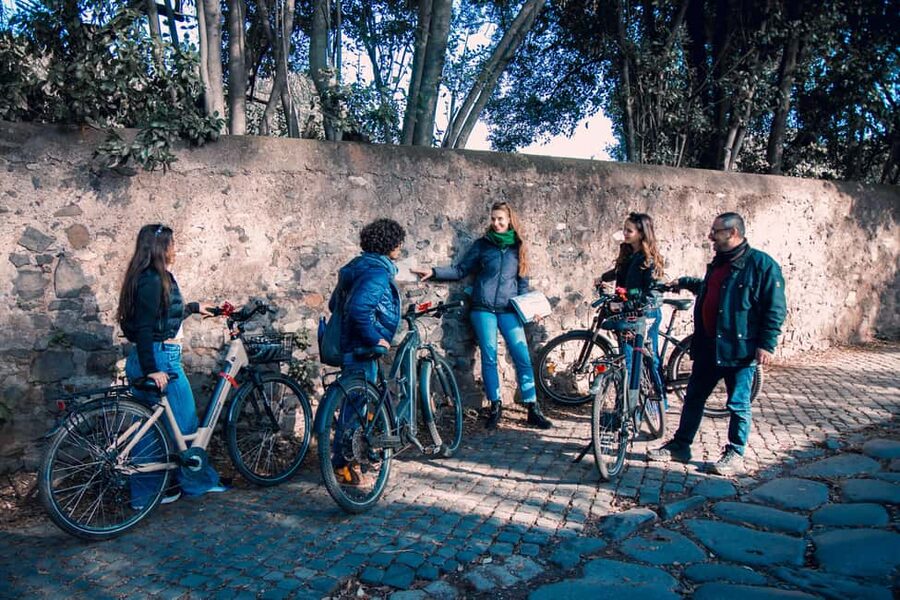
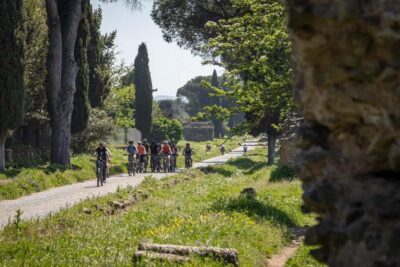
The Appian Way is Rome at walking speed, upgraded with e-bikes. You get a guided route through Appia Antica and the aqueducts zone, plus a green run through Caffarella Valley—without the marathon pace of classic sightseeing. I really like how the ride blends archaeology and nature, and I love that the bikes make the older, uneven stretches feel doable.
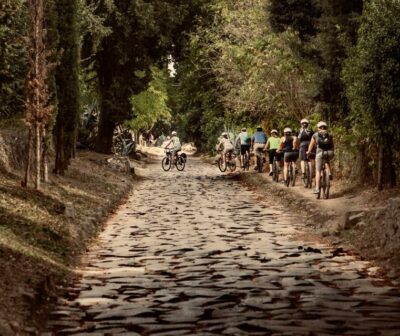
What to watch: this is an active e-bike tour, and you do need to ride a bicycle confidently. The group is small (up to 8), but it’s also rain or shine, and some crossings and bumpy stone paths can take a little focus.
In This Review
- Key highlights you’ll feel on the ride
- Why the Appia Antica corridor feels like a time machine
- Starting at Circus Maximus and getting rolling comfortably
- Caracalla Baths, Porta San Sebastiano, and the Rome you bike past
- Quo Vadis, catacombs zone, and tombs along Via Appia Antica
- Aqueduct Park: the engineering behind Rome’s water
- Caffarella Valley on the Almone River: animals, shade, and Egeria’s nearby nymphaeum
- How the 4-hour rhythm works (and where the pace feels good)
- Price and value for an e-bike heritage tour at $88
- Who should book this tour (and who should skip it)
- Should you book the Rome: Appia Antica, Aqueducts, and Caffarella e-bike tour?
- FAQ
- Where is the meeting point?
- How long is the tour?
- What’s included in the price?
- Do I need to know how to ride a bicycle?
- Is the tour offered in English?
- Does the tour run in bad weather?
- Can I cancel and get a refund?
- Is it suitable for kids or anyone with mobility issues?
Key highlights you’ll feel on the ride
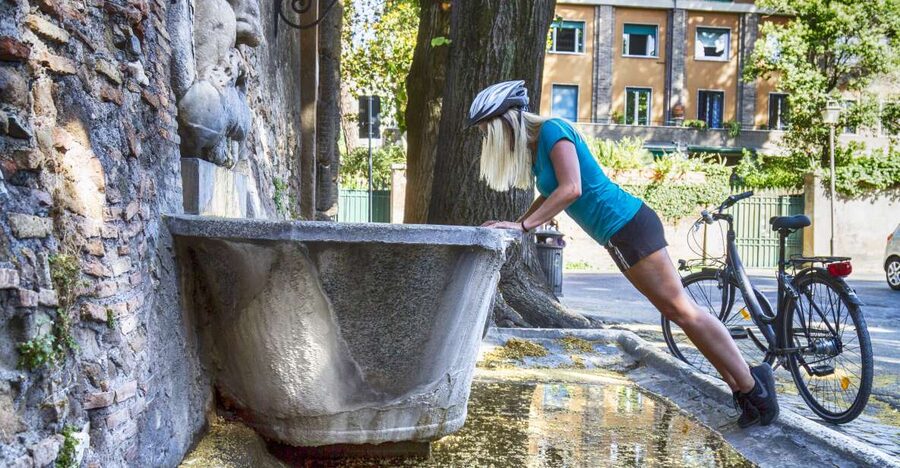
- Appia Antica by e-bike: move along Rome’s first highway fast enough to see more, slow enough to read the landscape.
- Aqueduct engineering, up close: Parco degli Acquedotti turns ancient water infrastructure into something you can actually picture.
- A guide who explains what you see: guides like Monika and Adriana are praised for making monuments make sense, not just name-drops.
- Traffic-smart routing: many car-free stretches, plus the guide managing busy crossings for comfort.
- Caffarella Valley’s animal-and-shade feel: you trade city noise for a rural pocket near the center.
- A real break built in: there’s time for a local bar stop midway.
Why the Appia Antica corridor feels like a time machine
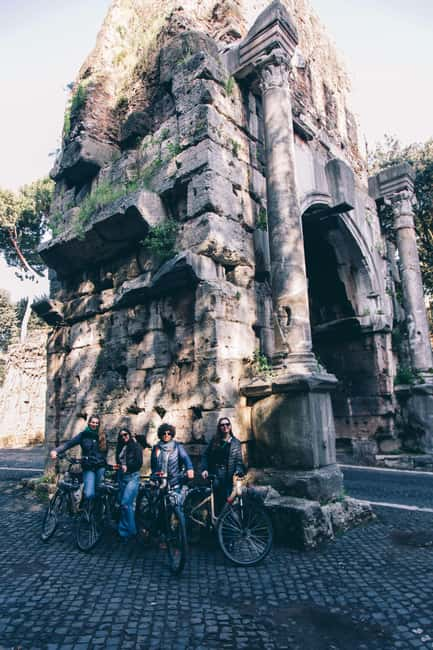
The story behind Appia Antica is part of why this tour works. Rome’s countryside got chewed up by development for decades, and Antonio Cederna—an archaeologist, urban planner, journalist, and politician—pushed back hard. That matters because it’s not just a pretty road anymore; it’s a preserved stretch of Europe’s first highway, started in 312 BC under Appius Claudius Caecus.
E-bike travel changes your perspective. On foot you’d spend too much time detouring around crowds or giving up on long distances. Here, you keep momentum, so you actually connect the dots: Roman engineering, defensive walls, tombs, and villas all line up along the same corridor. You end up seeing how Rome expanded, protected itself, and reused the land over centuries—without treating the area like an outdoor museum you rush through.
Keep going down the Appian Way
- Rome EBike Tour: Appian Way, Catacombs & Roman Aqueducts
★ 5.0 · 1,766 reviews - Rome: Appian Way & Aqueducts E-Bike Tour (Catacombs & Food)
★ 4.9 · 1,498 reviews - Rome: Appian Way, Catacombs, & Roman Aqueducts E-bike Tour
★ 4.9 · 1,421 reviews - Rome Underground: Catacombs Tour, Aqueducts and Appian Way
★ 5.0 · 1,007 reviews
Starting at Circus Maximus and getting rolling comfortably
The tour kicks off at the Rome in a Day Tours meeting spot, in front of the Circus Maximus. It’s a smart start point: you’re already near one of Rome’s biggest ancient sports arenas (and yes, it’s the type of landmark that helps you orient quickly). Show up about 15 minutes early to fit the bikes and handle paperwork so you’re not stressed when the group is ready.
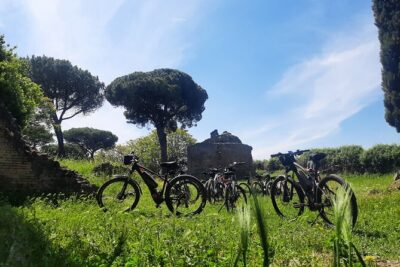
Bike quality is a big deal on this route, and the feedback is consistently positive: people mention well-maintained bikes and strong charge levels. You’ll get a quick setup so you can ride with confidence, which is important because part of the scenery you’re chasing is ancient stone.
One more practical note: the tour runs rain or shine. If weather is wet, the old surfaces can feel slippery, so wear shoes that grip well and keep your pace smooth.
Caracalla Baths, Porta San Sebastiano, and the Rome you bike past
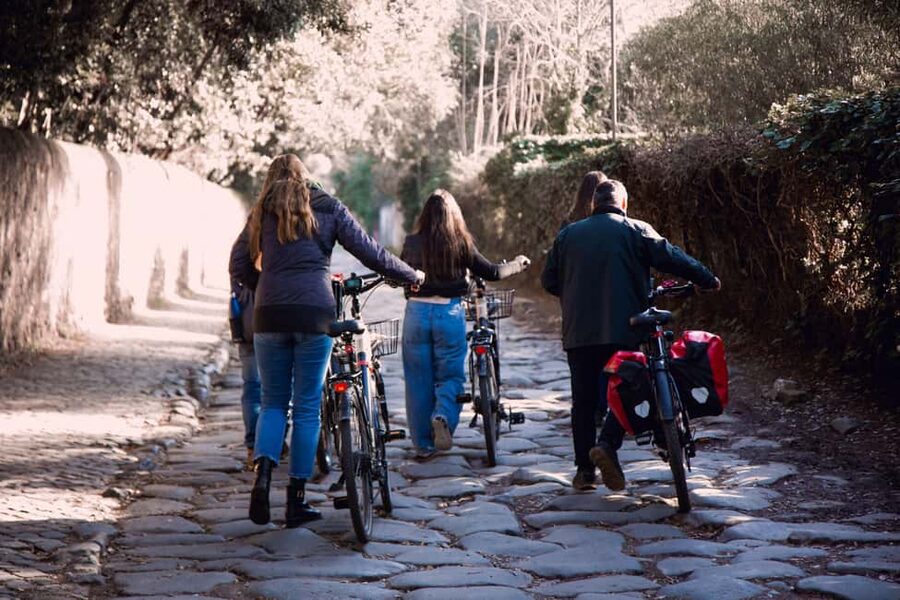
Early on, you pause for photos at the Baths of Caracalla. This isn’t just a quick glance. The baths are your primer for what’s coming next: Rome’s obsession with scale and water. You’ll then roll toward Porta San Sebastiano, a key point near the Aurelian Walls—Rome’s fortified boundary in later centuries.
These stops are where your guide’s voice really matters. People specifically praise Monika and Adriana for knowing the details behind what’s visible from the path. That’s the difference between seeing a wall and understanding why that wall is there.
If you’re sensitive to traffic, this section is handled thoughtfully. Reviews mention that the guide kept the group away from cars as much as possible and managed busy spots using crossings or by stopping traffic when needed. In other words: you get the practical comfort of guided cycling, not the guesswork of riding on your own.
Quo Vadis, catacombs zone, and tombs along Via Appia Antica
As you continue along the first stretches of the Appian corridor, you’ll pass several major monuments that fit together like a timeline. Early “in-between” views can include places like the Garden of Oranges and Cavalieri di Malta Square. Then you start moving into the denser concentration of ancient sites along the road itself.
You’ll visit the Church of Domine Quo Vadis. It’s a calm, focused stop, designed for walking in and taking in the site rather than just snapping photos from the bike. The tour then continues toward the catacombs area of Saint Callistus, where you’ll pass by rather than do a deep interior visit. That works well in a half-day format because it keeps you moving while still showing you where Rome’s underground burial tradition sits in the landscape.
Next come the big visual anchors that reward a slow pause. You’ll have a photo stop at the Residence of Maxentius (Villa di Massenzio) and at the Tomb of Cecilia Metella. These are the kind of structures where your brain clicks: emperors and elites weren’t hiding; they were building monuments meant to be seen from the road.
You’ll also get quick views of other features concentrated in the first miles, including the Tumulus of the Curiazi and Villa dei Quintili. Even when you aren’t stopping fully at every one, your guide explains what you’re looking at, which makes the whole area feel connected instead of random.
More of Rome under pedal power
Aqueduct Park: the engineering behind Rome’s water
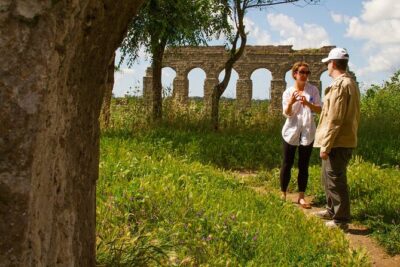
Then you switch gears into pure Roman infrastructure. The ride takes you to Parco degli Acquedotti, the aqueduct park, where you spend about half an hour. This is where the name of the game is scale: these aqueducts weren’t decorative; they were the system that kept Rome running with water.
Your guide frames the aqueducts as part of the same story you saw in the baths. Caracalla’s grandeur tells you Rome wanted water. The aqueducts show you how they made it happen—stone channels, long-distance planning, and water management that had to survive the centuries.
One of the best parts here is that you’re not stuck looking at a single arch. The park gives you a sense of how the lines run and how the structure dominates the space. It’s the kind of place where, after you’ve learned even a few basics, the monuments stop being just scenery.
Caffarella Valley on the Almone River: animals, shade, and Egeria’s nearby nymphaeum
After the aqueducts, the route drops toward the Caffarella Valley. The tour follows the Almone River down into the greenery, and that’s a big quality-of-life shift from central Rome. You’ll have time in Caffarella Park for about 30 minutes.
This is where the e-bike really earns its keep. The countryside feel is the goal, but walking the whole distance would wear you out before you really enjoy it. On the bike, you can enjoy the slower moments: you might spot horses, sheep, goats, and pigs close to the path, which feels surprising given you’re still in the Rome area.
You’ll also get a look in the direction of the Nymphaeum of Egeria, described as near Herodes Atticus’s villa. Even without a long formal stop, the point is to connect names to places as you ride through. You leave with a mental map that makes later independent sightseeing easier.
How the 4-hour rhythm works (and where the pace feels good)
The tour has a smooth, guided cadence that fits a half day well. You start with short photo stops, then move into visits where you have time to look and listen. There’s a local bar break for about 20 minutes—an underrated part of why this tour gets such strong feedback.
That break gives you a chance to reset your legs and take in the setting. People also note that the guide builds stops around the day’s realities, including time for shade and water.
One more pace detail: the old Appian surfaces can be bumpy. That shows up in the ride experience, but several comments frame it as part of the charm—real stone, not a smooth replica. With an e-bike helping on tougher bits, you get the authenticity without turning the day into a full-body workout.
Price and value for an e-bike heritage tour at $88
At $88 per person for 4 hours, you’re paying for three things that matter on this route: a local guide, a quality e-bike, and efficient access to scattered sites that would take forever to link on foot.
Compared with piecing together buses and walking segments, this price starts to make sense fast. The tour is built to cut down dead time between monuments—especially around the aqueducts and the countryside pockets where transport options can slow you down.
Also, value isn’t just cost. It’s whether the experience lands. The recurring praise is about the guide quality and the bike condition. People call it a highlight because you get both learning and movement, not one or the other.
Who should book this tour (and who should skip it)
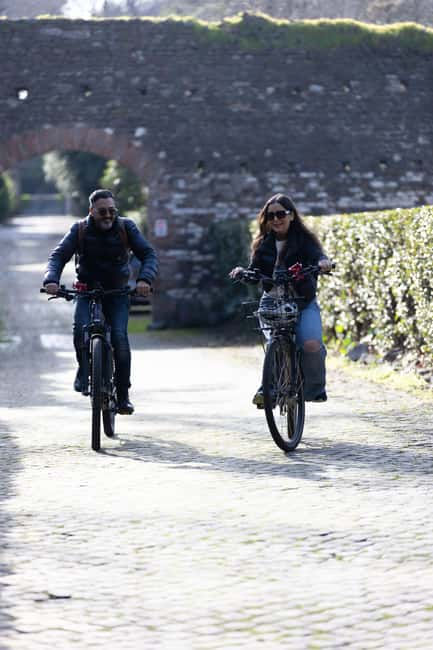
This is best for you if you want a structured way to see Roman landmarks that don’t all sit in the same tight grid. It’s great for couples, friends, and small groups who like the outdoors but don’t want the effort of a long ride on a non-assisted bike.
It’s also a good fit for history lovers who enjoy explanations tied to physical places. Multiple guides are singled out by name, including Monika, Adriana, Alannah, Frederick, and Martin, and the common thread is that they take time to explain what you’re seeing.
Skip it if you can’t ride a bicycle, because that’s a clear requirement. It’s also not suitable for children under 12, pregnant women, people with mobility impairments, or anyone who can’t comfortably handle cycling on mixed surfaces.
Should you book the Rome: Appia Antica, Aqueducts, and Caffarella e-bike tour?
If you’re the type who wants Rome beyond the top three landmarks, I’d book this. The route gives you a rare combo: ancient monuments that feel grounded in real geography, plus a real escape into green space near the city.
Two decisions make it an easy yes. First, you’ll appreciate the e-bike if you want to cover distance without sacrificing stops. Second, you’ll benefit from a guide if you want context for the monuments—especially when you reach the aqueduct park and the tombs along the Appian corridor.
If you’re nervous about riding in any traffic situations, take comfort in the guidance style described in feedback: car-free stretches when possible, and help with busier crossings. Just be honest with yourself about bike confidence and choose footwear that can handle stone and weather.
FAQ
Where is the meeting point?
You meet at the Rome in a Day Tours location, in front of the Circus Maximus. Arrive about 15 minutes early to get acquainted with the bikes and complete paperwork.
How long is the tour?
The tour lasts 4 hours.
What’s included in the price?
The tour includes an experienced live guide and an e-bike.
Do I need to know how to ride a bicycle?
Yes. This e-bike tour requires that you know how to drive a bicycle.
Is the tour offered in English?
Yes. The live guide speaks English and Dutch.
Does the tour run in bad weather?
Yes. The tour takes place rain or shine.
Can I cancel and get a refund?
Yes. Free cancellation is available up to 24 hours in advance for a full refund.
Is it suitable for kids or anyone with mobility issues?
No. It is not suitable for children under 12, pregnant women, people with mobility impairments, or anyone who can’t ride a bike.
More Tour Reviews in Rome
- Vatican Museums, Sistine Chapel & St. Peter’s Basilica Tour
★ 4.3 · 73,970 reviews - Vatican Museums, Sistine Chapel & St Peter’s Basilica Guided Tour
★ 4.5 · 39,149 reviews - Rome: Colosseum, Palatine Hill and Roman Forum Guided Tour
★ 4.8 · 32,814 reviews - Rome: Guided Tour of Colosseum, Roman Forum & Palatine Hill
★ 4.7 · 27,897 reviews - Rome: Colosseum & Forum with Audio Guide App -Optional Arena
★ 4.2 · 24,770 reviews - Rome: Colosseum, Roman Forum and Palatine Hill Guided Tour
★ 4.5 · 23,903 reviews
Pedal Through More of Rome
- Rome EBike Tour: Appian Way, Catacombs & Roman Aqueducts
★ 5.0 · 1,766 reviews - Rome: Top Highlights & Hidden Gems Tour by Cannondale E-Bike
★ 4.9 · 1,760 reviews - Rome: Appian Way & Aqueducts E-Bike Tour (Catacombs & Food)
★ 4.9 · 1,498 reviews - Rome: Appian Way, Catacombs, & Roman Aqueducts E-bike Tour
★ 4.9 · 1,421 reviews - Rome City Small Group Bike Tour with quality Cannondale EBike
★ 5.0 · 1,380 reviews - Rome by Night – Ebike Small Group Tour – Food and Wine (Option)
★ 5.0 · 1,275 reviews
The Appian Way, Continued
- Rome EBike Tour: Appian Way, Catacombs & Roman Aqueducts
★ 5.0 · 1,766 reviews - Rome: Appian Way & Aqueducts E-Bike Tour (Catacombs & Food)
★ 4.9 · 1,498 reviews - Rome: Appian Way, Catacombs, & Roman Aqueducts E-bike Tour
★ 4.9 · 1,421 reviews - Rome Underground: Catacombs Tour, Aqueducts and Appian Way
★ 5.0 · 1,007 reviews - Appian Way Aqueducts Bike Tour (Catacombs & Lunch Option)
★ 5.0 · 975 reviews - Rome: Appian Way, Aqueducts, and Catacombs Tour
★ 4.7 · 942 reviews
Just added to our Rome reviews





Appian Way Tours, compared.
 ★ 5.0Rome EBike Tour: Appian Way, Catacombs & Roman AqueductsFrom $1021,766 reviews
 ★ 4.9Appian Way & Aqueducts E-Bike Tour (Catacombs & Food)From $881,498 reviews
 ★ 4.9Appian Way, Catacombs, & Roman Aqueducts E-bike TourFrom $851,421 reviews
 ★ 5.0Rome Underground: Catacombs Tour, Aqueducts and Appian WayFrom $651,007 reviews
 ★ 5.0Appian Way Aqueducts Bike Tour (Catacombs & Lunch Option)From $78975 reviews
 ★ 4.7Appian Way, Aqueducts, and Catacombs TourFrom $64942 reviews
 ★ 5.0Appian Way, Catacombs and Aqueducts Park Tour with Top E-BikeFrom $102735 reviews
 ★ 4.6Appian Way E-Bike Tour Catacombs, Aqueducts & PicnicFrom $89727 reviews
Browse the lists this tour appears in