
Reviewed · WALKING TOURS
Private Rome City Walking Tour
Rome can feel like information overload. This private walk turns the chaos into a clean, memorable route through the must-see landmarks. I especially like the leisurely pace (it actually fits a real group schedule) and the way the guide connects ancient Rome to the Renaissance without making it a lecture. One consideration: you’re moving through some of the city’s busiest streets, so comfortable shoes and mental stamina matter if you’re doing this on a peak evening.
I also like the practical payoff of this tour. It finishes in a dining hotspot and the guide typically steers you toward great local options, so the evening doesn’t end with sightseeing—it keeps going. The tour is offered in English, uses a mobile ticket, and is private, meaning only your group participates. A guide named Dalila is mentioned in the feedback for sharing personal picks for restaurants, bars, and off-the-beaten-path things to do.
If you want a first-night plan that covers the big icons while still feeling personal, this is a strong option. Just know it’s only about two hours, so you’ll walk past some highlights rather than turning every stop into a deep stay.
In This Review
- Key Things to Know Before You Go
- A 2-Hour Rome Walk That Helps You Get Oriented Fast
- From Piazza d’Aracoeli to Piazza Navona: The Route Logic
- Monumento a Vittorio Emanuele II: Start at Italy’s Big National Statement
- Trevi Fountain: Coins, Baroque Drama, and a Realistic Expectation
- Chiesa di Sant’Ignazio di Loyola: A Quieter Stop That Adds Depth
- Pantheon: Seeing the Dome’s Impact Without Getting Lost
- Trajan’s Column and the Outdoor Forum Feeling
- Piazza Navona Finale: Fountains, Church Views, and Dinner Momentum
- Price and Value: Is $120.15 Worth It?
- Who This Tour Suits Best (and Who Might Prefer Something Else)
- Should You Book This Private Rome City Walking Tour?
- FAQ
- How long is the private Rome city walking tour?
- What is the price per person?
- Is this tour private?
- What language is the tour offered in?
- Where does the tour start and end?
- Are any admission tickets required for the listed stops?
- Do I get a mobile ticket?
- What is the cancellation policy?
- When will I receive confirmation after booking?
Key Things to Know Before You Go
- Private, group-tailored pacing: Built to match your group’s comfort level rather than forcing a sprint.
- Strategic starting point: You begin at Piazza d’Aracoeli and end in the restaurant-friendly Piazza Navona area.
- Free admission for listed stops: The tour information lists free entry for the sights you visit.
- English guide support: The experience is offered in English for smoother explanations.
- Best used as a first-evening move: One of the biggest wins is getting an effective dinner lead-in.
A 2-Hour Rome Walk That Helps You Get Oriented Fast
Rome has a funny way of tricking you. You see a gorgeous church facade and suddenly you’re lost in alleyways, trying to remember which direction the Colosseum is. This tour helps you get your bearings quickly by stringing together some of the city’s most recognizable landmarks in a route that makes sense on foot.
The big value here is not just the list of stops. It’s the order and the way the guide frames what you’re seeing. You start at a monument tied to Italy’s unification, move through major Baroque highlights, then work back toward the ancient world—ending where Rome goes to snack, people-watch, and linger at the fountains. That’s a good formula for first-timers, and it’s also a good reset if you’ve already spent your day hopping from one museum to another.
You’ll want to know what this tour is and isn’t. It’s not a full-day grind, and it’s not designed to cover every interior detail of every site. Instead, you get smart context, a comfortable pace, and time at each stop that lets you actually see what you came for without feeling rushed.
Worth a look next to this Rome booking:
- Rome: Guided Food Walking Tour with Wine in Trastevere
★ 4.9 · 3,105 reviews - Rome: Trastevere & Campo de Fiori Street Food Walking Tour
★ 4.9 · 2,768 reviews - Rome: Paranormal Night Walking Tour & Secret Backstreets
★ 4.9 · 1,921 reviews - Rome: Trastevere Street Food Walking Tour with Local Expert
★ 4.8 · 1,784 reviews
From Piazza d’Aracoeli to Piazza Navona: The Route Logic
The walk starts at Piazza d’Aracoeli (Via di S. Venanzio, 8) and ends at Piazza Navona. That matters because it shapes your day. You’re entering central Rome, then finishing in one of the most convenient areas to eat—lined with restaurants where it’s easy to keep the momentum going.
The tour is near public transportation, which is useful if you’re arriving from elsewhere in the city or you don’t want to fight for parking. And because it’s private, you can move at a pace that works for your group—slower if you want photos and a calmer chat, faster if your group likes to keep walking.
Timing also matters. The tour is about two hours on foot, with shorter windows at several stops and a longer sit-down moment at Trevi Fountain. You should expect lots of looking up—Rome is built for that—and plenty of street-level scenes that connect the landmarks rather than isolating them.
Monumento a Vittorio Emanuele II: Start at Italy’s Big National Statement
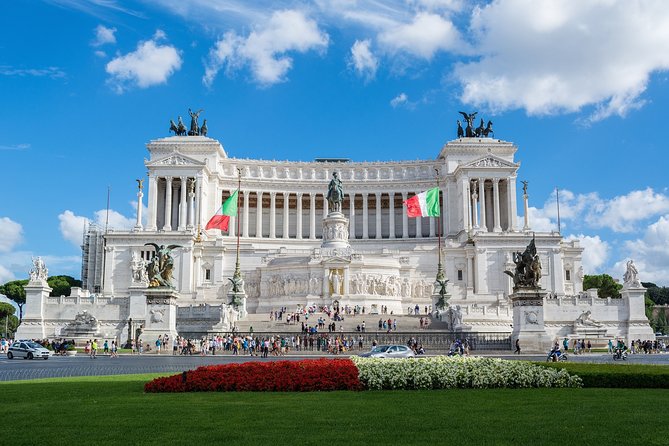
You kick things off at the Monumento a Vittorio Emanuele II—Rome’s tall, dominant monument commemorating the unification of Italy and Vittorio Emanuele. Even if you’re not trying to memorize every detail, it’s a strong opener because it instantly tells you Rome is more than just ancient ruins. It’s also a modern nation-place layered on top of older layers.
This stop is listed at about 10 minutes. That’s enough time to grasp what it represents and to take in the scale from street level. Practical tip: bring your phone camera expectations down a notch. In tight city angles, you often capture part of the monument better than the whole thing. Use the time to get your bearings and let the guide explain what you’re looking at.
Also, this is a tall structure in a busy area. The drawback is simple: it can be a bit chaotic around major monuments. The upside is that once you understand the monument’s role, the rest of the walk feels more connected.
Trevi Fountain: Coins, Baroque Drama, and a Realistic Expectation
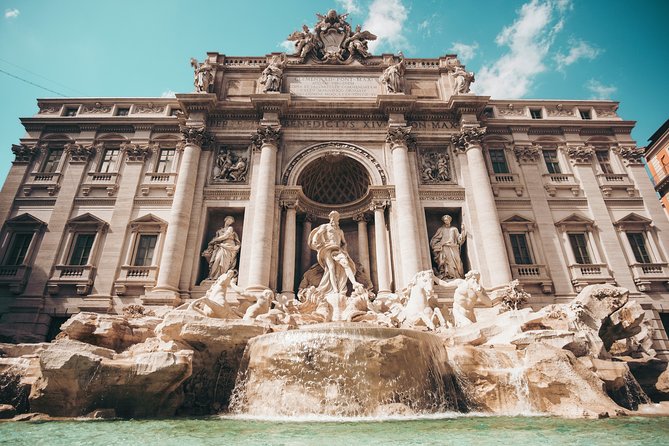
Next up is the Trevi Fountain (Fontana di Trevi). The tour plans about 30 minutes here, and that time block is generous for what you want out of Trevi: photos, the coin-throw tradition, and a slow look at the details.
Why it works: the fountain isn’t just a pretty landmark. It’s Baroque architectural theatre—designed to pull your attention in and make you stop moving. Trevi is one of those places where you’ll always hear the sound of crowds, but the extra time means you don’t feel trapped by the line of people shuffling past.
Admission is listed as free, so you’re paying for the guide’s context rather than entry fees. Your best use of the 30 minutes is to let the guide point out what’s going on visually before you freeze for pictures. That way, you won’t leave thinking you only saw the “famous fountain.” You’ll actually understand the design language.
One more practical note: Trevi is often crowded. You’ll probably feel like you’re dodging bodies to get a clear shot. If your group is sensitive to tight spaces, lean on the guide to time your moments—wait for a brief opening in the crowd and then take your photos.
Worth a look next to this Rome booking:


Chiesa di Sant’Ignazio di Loyola: A Quieter Stop That Adds Depth
From Trevi, the route shifts to the Chiesa di Sant’Ignazio di Loyola, connected to Campus Martius. This is listed at about 10 minutes and the tour frames it as a Roman Catholic titular church dedicated to Ignatius of Loyola.
This is the kind of stop that you might skip if you were only chasing the biggest postcard images. That’s why it’s valuable. It adds a religious and architectural thread to the walk, and it helps break up the pace so you’re not just bouncing between the most famous names.
Because the time is short, you won’t be doing a full interior tour. Think of it as a stop for context: the guide helps you understand why this church matters, and you get a chance to reset before the next major icon.
Potential drawback: if you love long church visits, 10 minutes can feel brief. But for a two-hour route, it’s a smart tradeoff. It keeps the walk moving while still giving you more than just “big sights, quick stops.”
Pantheon: Seeing the Dome’s Impact Without Getting Lost
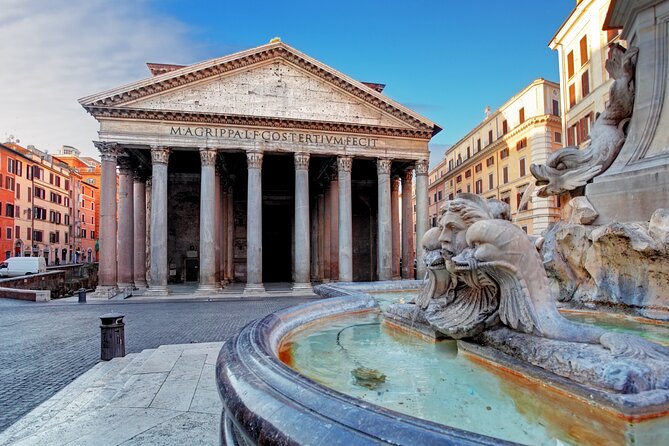
After the Loyola church, you pass by the Pantheon and explore the surrounding square for about 20 minutes total. This is the moment where Rome starts to feel timeless.
The Pantheon is described as a structure built by Emperor Hadrian nearly 2000 years ago. It’s also noted for being the largest unreinforced concrete dome in the world—a mind-bending detail, especially when you see the building in person and realize how much it has survived.
This stop is framed as a pass-by with time in the square. That’s a big advantage for most people. You get the key experience—spotting the building’s presence “from nowhere,” taking in the architecture around it, and absorbing the atmosphere—without turning your tour into a bottleneck.
Practical tip: plan on spending at least part of your 20 minutes looking around the edges of the square. The space is part of the show. People tend to photograph the main facade and forget to notice how the square funnels you back toward the building. A guide is useful here because they’ll steer your attention to what you might miss if you’re just wandering.
Trajan’s Column and the Outdoor Forum Feeling
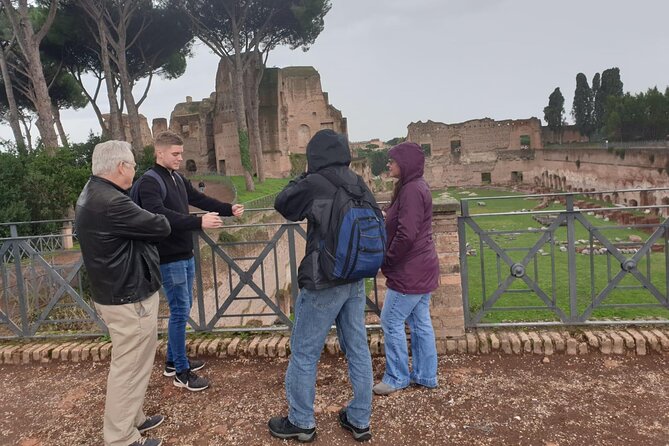
Next you explore Trajan’s Column and the outer forum area, with about 10 minutes planned. The tour describes it as “Trajan’s column” and focuses on the mighty monument itself.
What you should expect from this stop: you’ll likely get a sense of how Rome displayed power through stone monuments and public spaces. Trajan’s Column is famous enough that even a short visit can feel rewarding, especially when someone gives you the right framing before you look.
The drawback is that outdoor forum areas can be easier to “skim” than you’d like. If you’re the type who loves reading every sign and hunting for every detail, the time limit might not satisfy you. But as part of a tight two-hour plan, the short stop is effective—you get the symbol and the context without losing the thread of the overall walk.
Piazza Navona Finale: Fountains, Church Views, and Dinner Momentum
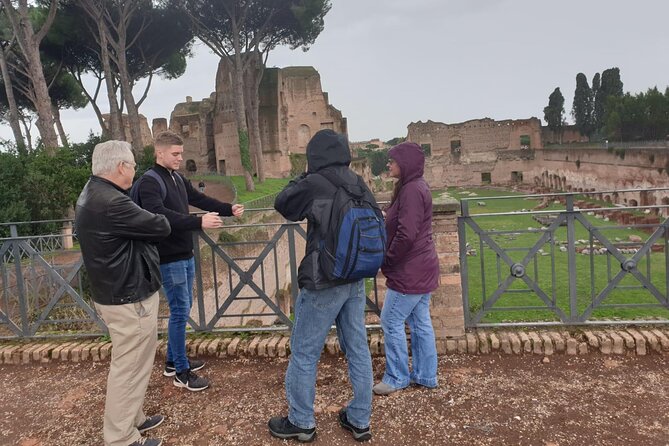
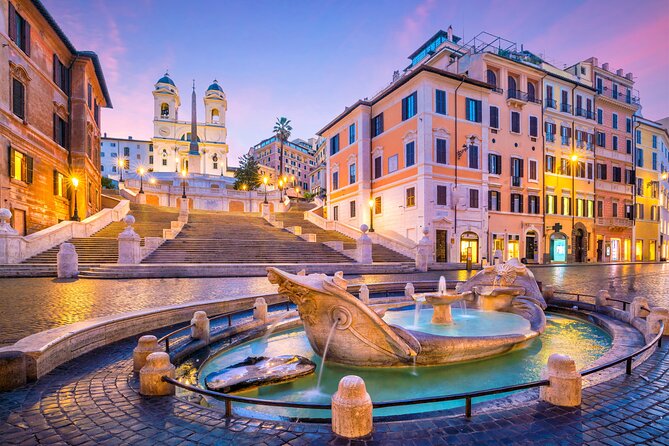
The tour ends in Piazza Navona. You’ll spend about 20 minutes there, finishing your walk at one of Rome’s most famous squares. The highlight is the famous fountain scene: three magnificent fountains, plus the classic Baroque church of Sant’Agnese in Agone.
This is a smart ending point because it’s practical. Piazza Navona is lined with plenty of places to eat, and the tour info specifically says the guide will point you toward local eateries, bars, and even rooftop terrace options nearby. This isn’t just a nice perk; it changes how you plan the rest of your evening.
The feedback ties into this directly. One of the strongest notes is that the dinner recommendation helped people land on what ended up being one of their best meals of the trip. And since Dalila is mentioned for sharing personal restaurant, bar, and off-the-beaten-path suggestions, you can reasonably expect the guide’s suggestions to go beyond the obvious tourist defaults.
How to use your 20 minutes well: don’t cram everything into one quick loop. Stand in one spot first and let your eyes adjust to the fountains and the church facade. Then take a slow stroll around the square for a second viewpoint. After that, ask your guide where to go next—especially if your group wants something less crowded or more local-feeling.
Price and Value: Is $120.15 Worth It?
At $120.15 per person for a private tour around two hours, the price can feel steep at first glance. Here’s how I’d think about the value.
1) You’re paying for private time, not just motion through landmarks.
Being private means the guide can adapt to your group—pace, questions, photo pauses, and the order in how you look at things.
2) The tour lists free admission at each stop.
That means you’re not stacking entry ticket costs on top of the tour fee. Your money mainly goes to the guided storytelling and on-the-ground direction.
3) Central Rome is easier with someone who helps you make sense of it.
Without guidance, it’s very easy to see a fountain, glance at a column, and then forget how the sites connect. With guidance, even short stops turn into understanding.
The best value is usually when you’re splitting the experience among a small group that wants comfort and attention. If you’re traveling solo, it may still be worth it if you really want a first-evening plan that sets you up for the rest of your trip. If you’re budget-first and don’t care about context, you may prefer a cheaper option. But if you want your evening to feel organized and guided, this price lands more in the “worth it” range.
Who This Tour Suits Best (and Who Might Prefer Something Else)
This walking tour fits best if you want:
- a first-night plan that hits major landmarks without being a full-day marathon
- English guidance that explains what you’re seeing while you walk
- a private, adjustable pace for your group
- a clean finish in Piazza Navona with dinner suggestions
It may be less ideal if:
- you want long stays at each site (this is built for quick, meaningful stops)
- your group hates crowds or narrow sidewalks during peak times
- you’re hoping for a deep, museum-level experience (this walk focuses on the city and landmark context)
Should You Book This Private Rome City Walking Tour?
Yes, if you’re the type who wants to get it right early: see the big icons, understand how they fit together, and end with a dinner plan that actually helps. This tour has a strong track record for being an excellent opener to Rome, plus the guide’s personal restaurant recommendations are a clear reason people remember the experience.
I’d skip it only if your group is hunting for a long, slow, hands-on deep dive at fewer sites. With two hours and multiple highlights, you’ll get breadth and context—not extended time in every place.
If you’re ready for an efficient, friendly walk through central Rome, this one is a solid booking.
FAQ
How long is the private Rome city walking tour?
The tour lasts about 2 hours.
What is the price per person?
The price is $120.15 per person.
Is this tour private?
Yes. It’s a private tour/activity, and only your group participates.
What language is the tour offered in?
The tour is offered in English.
Where does the tour start and end?
It starts at Piazza d’Aracoeli (Via di S. Venanzio, 8) and ends at Piazza Navona.
Are any admission tickets required for the listed stops?
The tour information lists free admission tickets for the stops included.
Do I get a mobile ticket?
Yes. A mobile ticket is included.
What is the cancellation policy?
You can cancel for a full refund up to 24 hours in advance of the experience start time.
When will I receive confirmation after booking?
Confirmation is received at the time of booking.
More Walking Tours in Rome
- Rome: Guided Food Walking Tour with Wine in Trastevere
★ 4.9 · 3,105 reviews - Rome: Trastevere & Campo de Fiori Street Food Walking Tour
★ 4.9 · 2,768 reviews - Rome: Paranormal Night Walking Tour & Secret Backstreets
★ 4.9 · 1,921 reviews - Rome: Trastevere Street Food Walking Tour with Local Expert
★ 4.8 · 1,784 reviews - Rome: Small-Group Guided Day or Night Walking Tour
★ 4.8 · 1,009 reviews - Rome by Night Walking Tour – Legends & Criminal Stories
★ 4.5 · 1,003 reviews
More Tours in Rome
- Vatican Museums, Sistine Chapel & St. Peter’s Basilica Tour
★ 4.3 · 73,970 reviews - Vatican Museums, Sistine Chapel & St Peter’s Basilica Guided Tour
★ 4.5 · 39,149 reviews - Rome: Colosseum, Palatine Hill and Roman Forum Guided Tour
★ 4.8 · 32,814 reviews - Rome: Guided Tour of Colosseum, Roman Forum & Palatine Hill
★ 4.7 · 27,897 reviews - Rome: Colosseum, Roman Forum and Palatine Hill Guided Tour
★ 4.5 · 23,903 reviews - Rome: Colosseum Arena Floor, Palatine & Forum Guided Tour
★ 4.5 · 20,180 reviews
More Tour Reviews in Rome
- Vatican Museums, Sistine Chapel & St. Peter’s Basilica Tour
★ 4.3 · 73,970 reviews - Vatican Museums, Sistine Chapel & St Peter’s Basilica Guided Tour
★ 4.5 · 39,149 reviews - Rome: Colosseum, Palatine Hill and Roman Forum Guided Tour
★ 4.8 · 32,814 reviews - Rome: Guided Tour of Colosseum, Roman Forum & Palatine Hill
★ 4.7 · 27,897 reviews - Rome: Colosseum & Forum with Audio Guide App -Optional Arena
★ 4.2 · 24,770 reviews - Rome: Colosseum, Roman Forum and Palatine Hill Guided Tour
★ 4.5 · 23,903 reviews
Just added to our Rome reviews





Walking Tours, compared.
 ★ 4.9Guided Food Walking Tour with Wine in TrastevereFrom $1003,105 reviews
 ★ 4.9Trastevere & Campo de Fiori Street Food Walking TourFrom $512,768 reviews
 ★ 4.9Paranormal Night Walking Tour & Secret BackstreetsFrom $341,921 reviews
 ★ 4.8Trastevere Street Food Walking Tour with Local ExpertFrom $571,784 reviews
 ★ 4.8Small-Group Guided Day or Night Walking TourFrom $231,009 reviews
 ★ 4.5Rome by Night Walking Tour – Legends & Criminal StoriesFrom $141,003 reviews
 ★ 4.4Guided City Center Evening Sightseeing Walking TourFrom $46953 reviews
 ★ 4.9Small-Group City Highlights Moonlight Walking TourFrom $29949 reviews
Browse the lists this tour appears in