
That huge dome is the kind of sight that stops you mid-step. This is a smart, tight 1-hour way to see the Pantheon’s standout architecture and get clear context on what you’re looking at. I especially like that you get a live English guide plus your entry ticket, so you’re not scrambling for answers while you stand in line.
My other favorite part is how the hour is organized around the building’s big visual moments, like the oculus and interior details, then connects them to the Pantheon’s past and famous burials such as Raphael. One consideration: the Pantheon is an active church, so you’ll need shoulders and knees covered and you must carry valid ID, or entry can be refused.
In This Review
- Key things to know before you go
- Why this 1-hour Pantheon tour feels like the right move
- Meeting fast: where to find your group and start strong
- Entering the Pantheon: the dome moment you’ll remember
- Inside the interior: how the guide helps you read the space
- Raphael and the Pantheon’s famous burials
- What you’ll actually do during the hour
- Dress code and ID rules: the stuff that can ruin your day
- Price and value: is $44 worth it?
- Who this tour suits best (and who should plan differently)
- Should you book this Pantheon 1-hour guided tour?
- FAQ
- How long is the Pantheon tour?
- Does this experience include entry tickets?
- What should I wear to the Pantheon?
- Do I need to bring ID?
- Is the tour offered in English?
- Is the tour wheelchair accessible?
Key things to know before you go
- Skip-the-line entry with your ticket included, so you can spend your hour inside rather than waiting outside.
- A focused 1-hour format that targets the dome, interior design, and core stories without dragging.
- Raphael’s tomb is part of the storytelling, giving the visit a strong art-and-history anchor.
- Headphones available if you need them, which helps when you’re inside a busy church space.
- Modest dress rules (no shorts, short skirts, or sleeveless shirts) are enforced, so plan your outfit early.
- Valid ID matters: your full name must match what’s on your ID, or you can be turned away.
Why this 1-hour Pantheon tour feels like the right move
If you’ve seen enough Rome monuments, you already know the danger: you can walk into a famous site, take a few photos, and still leave without understanding what makes it special. This tour is designed to prevent that exact problem.
In just 60 minutes, you’ll get guided attention on the Pantheon’s most important features: the massive dome, the interior layout, and the meaning behind what you’re seeing. For me, the value is that you’re not just visiting an object. You’re learning the grammar of the building, so the visit keeps paying off after you leave.
You’ll also cover the human side. A major theme is how the Pantheon connects Roman power, later history, and famous burials. Raphael’s name comes up directly, which helps you place the building in both art history and the Renaissance-era imagination.
The Pantheon, a couple more takes
- Rome: Pantheon Priority Entry Ticket & Interactive App
★ 4.1 · 5,114 reviews - Rome: Pantheon Priority Entry Tickets with Interactive App
★ 4.6 · 4,108 reviews - Rome: Pantheon Timeless Marvel Guided Tour with Entry Ticket
★ 4.9 · 4,002 reviews - Castel Sant’Angelo: Ticket with optional Vatican or Pantheon
★ 4.4 · 3,088 reviews
Meeting fast: where to find your group and start strong
Your meeting point is right in the area in front of the Pantheon, near a fountain. Look for staff holding a blue flag. Aim to arrive no later than 15 minutes before the start time, because you’ll need a moment to check in and get oriented.
This matters more than it sounds. In high season, timing inside the Pantheon can shift due to visitor volume, so it helps to start the process on your clock, not Rome’s. Getting there early also gives you time to confirm your clothing choices before staff ask you to adjust.
Once you check in, the plan is straightforward: you’ll get your entry ticket and move with the group into the church so your hour is spent where it counts.
Entering the Pantheon: the dome moment you’ll remember
The biggest payoff of the Pantheon is how quickly your brain switches from walking around Rome to studying geometry.
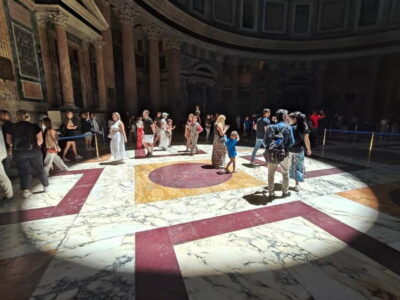
As you step inside, the dome dominates your vision. This is where the tour earns its keep: you don’t just stare upward. The guide helps you notice the structural logic and design choices that made this building so influential. When the guide points out the key features, it becomes easier to understand why this space is still treated like a masterpiece after nearly 2,000 years.
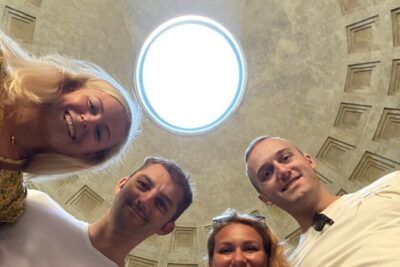
Then there’s the oculus, the opening at the top. If you’ve never visited, expect it to feel oddly dramatic in real time—light changes what you see, and suddenly the dome isn’t just a ceiling. It becomes a sky-frame. You’ll have a chance to look up, absorb the scale, and connect what you’re seeing to the building’s engineering ambition.
If you like architecture, this is the portion you’ll probably replay in your mind later. If you don’t, it’s still worth it because your guide translates the visual into something you can remember.
Inside the interior: how the guide helps you read the space
After the dome comes the interior design, where the Pantheon shifts from wow-factor to details.
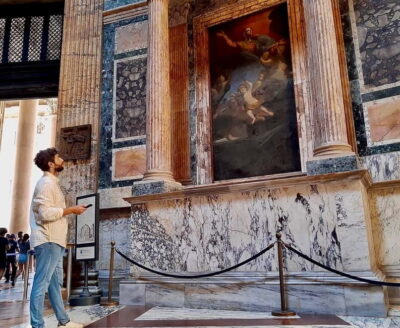
The guide’s role here is practical: they’ll walk you through the Pantheon’s layout and the intricately designed interior elements so you’re not left guessing what you’re looking at. Even small observations—where your eye should go first, what patterns mean, and how the space fits together—make the visit feel purposeful rather than random.
One thing to consider: some people may find the way explanations are delivered a bit unusual. If you prefer a strict, step-by-step lecture style, you might want to mentally prep for a more story-driven approach. The upside is that it usually keeps you from zoning out in a long line of tourists.
You’ll also learn the Pantheon’s origins and its role in Roman history. That background matters because otherwise the building can feel like an isolated “pretty old thing.” With context, it becomes part of the bigger Roman story—how monuments were built to communicate authority, belief, and civic identity.
Worth a look next to this Rome booking:




Raphael and the Pantheon’s famous burials
A highlight of this tour is the chance to learn the stories of famous figures buried within the Pantheon. The tour specifically calls out Raphael, and that’s a big deal.
Here’s why it works for you: Raphael gives the visit a bridge between ancient Rome and later European art culture. Instead of thinking only in terms of emperors and architects, you start seeing the Pantheon as a long-lasting cultural magnet—an enduring place where history keeps being written on top of itself.
Even if Renaissance art isn’t your main interest, Raphael is a strong anchor name. It makes the inside feel less like you’re looking at decorations and more like you’re standing in a real location where important lives intersected with place and memory.
What you’ll actually do during the hour
Because the tour is one hour long, you should expect a compact sequence rather than a slow roaming pace. You’ll be guided through the Pantheon’s key visual areas, with time to stop and look while your guide connects the dots.
In a practical sense, plan for:
- Standing and walking inside the Pantheon as part of the experience.
- Time for your own viewing between guide points (you’ll get chances to look up at the dome and around the interior).
- Headphones if needed, which can help if the group is moving and you don’t want to strain to hear.
The whole idea is to leave you with a mental map. By the end of the hour, you should feel like you know what you looked at and why it matters, instead of just taking photos and moving on.
Dress code and ID rules: the stuff that can ruin your day
This is Rome, and the Pantheon is an operating church. That means rules are real.
You’ll need modest clothing: no shorts, no short skirts, and no sleeveless shirts. Even if the weather is hot, plan for shoulders and knees covered. If you forget, you might end up scrambling or waiting while the group moves on.
Also bring your valid ID. Every participant’s full name must be provided exactly as it appears on their ID. Entry can be denied if your ID doesn’t match, and in that situation refunds won’t be issued.
For kids, the requirement is an ID (passport or ID card). For adults, the tour data emphasizes valid ID presentation at entry. If you want this visit to stay stress-free, pack your ID in a spot you can reach quickly.
Price and value: is $44 worth it?
At $44 per person, you’re paying for three things bundled together: a professional guide, the entry ticket, and help at the meeting point.
Is it worth it? Usually, yes—especially if you’re the type who hates vague sightseeing. The Pantheon is famous enough that you can get in on your own, but the difference here is interpretation. In one hour, you’re buying clarity: what the dome represents, why the interior design works, and how the building sits in Roman and later history.
If you’re the kind of visitor who reads signs for 20 minutes and still feels unsure, a guide is often the cheapest way to turn frustration into understanding. And since this tour includes skip-the-line access, you’re also reducing the time you spend waiting outside—time you can’t get back.
If you’re traveling on a tight schedule and only have one short window for the Pantheon, this format is efficient. If you have lots of free time and really enjoy slow wandering without structure, you might prefer unguided entry. But for most people, the guide + ticket combination is the practical sweet spot.
Who this tour suits best (and who should plan differently)
This tour fits best if you care about getting oriented fast. I’d point it toward:
- History enthusiasts who want the Roman origins and key context explained clearly.
- Architecture lovers who want help noticing what matters inside the dome and interior design.
- People visiting Rome for a short time who don’t want to spend their day guessing what they’re looking at.
It’s also a good match if you like guided storytelling tied to specific names, because the tour includes famous burials, including Raphael.
One group to note: it’s not suitable for wheelchair users. If mobility is a concern, you’ll need a different option.
Should you book this Pantheon 1-hour guided tour?
If you want the Pantheon to feel meaningful rather than just famous, I’d book it. The biggest reason is the pacing: you get skip-the-line access plus a focused guide narrative that helps you see the dome and interior as more than a photo stop.
Book it if:
- You have limited time in Rome.
- You want a guided route through the building’s most important features.
- You’d rather understand the place in an hour than “maybe” understand it later.
Consider another plan if:
- You’re traveling with someone who needs lots of quiet time without standing or walking with a group.
- You don’t want to follow modest dress and ID requirements (and you’re not willing to plan for them).
If you can meet the basic requirements—covered shoulders and knees, valid ID, and comfortable shoes—this tour is a strong way to get maximum value from a single iconic building.
FAQ
How long is the Pantheon tour?
The tour lasts 1 hour.
Does this experience include entry tickets?
Yes. Your entry ticket to the Pantheon is included, and the tour offers skip-the-line access.
What should I wear to the Pantheon?
You must dress modestly: no shorts, no short skirts, and no sleeveless shirts. Shoulders and knees must be covered because it’s an active church.
Do I need to bring ID?
Yes. You’ll need a valid ID, and your full name must match what you provide exactly as it appears on your ID.
Is the tour offered in English?
Yes. The live tour guide is English.
Is the tour wheelchair accessible?
No. It is not suitable for wheelchair users.
More Tours in Rome
- Vatican Museums, Sistine Chapel & St. Peter’s Basilica Tour
★ 4.3 · 73,970 reviews - Vatican Museums, Sistine Chapel & St Peter’s Basilica Guided Tour
★ 4.5 · 39,149 reviews - Rome: Colosseum, Palatine Hill and Roman Forum Guided Tour
★ 4.8 · 32,814 reviews - Rome: Guided Tour of Colosseum, Roman Forum & Palatine Hill
★ 4.7 · 27,897 reviews - Rome: Colosseum, Roman Forum and Palatine Hill Guided Tour
★ 4.5 · 23,903 reviews - Rome: Colosseum Arena Floor, Palatine & Forum Guided Tour
★ 4.5 · 20,180 reviews
More Tour Reviews in Rome
- Vatican Museums, Sistine Chapel & St. Peter’s Basilica Tour
★ 4.3 · 73,970 reviews - Vatican Museums, Sistine Chapel & St Peter’s Basilica Guided Tour
★ 4.5 · 39,149 reviews - Rome: Colosseum, Palatine Hill and Roman Forum Guided Tour
★ 4.8 · 32,814 reviews - Rome: Guided Tour of Colosseum, Roman Forum & Palatine Hill
★ 4.7 · 27,897 reviews - Rome: Colosseum & Forum with Audio Guide App -Optional Arena
★ 4.2 · 24,770 reviews - Rome: Colosseum, Roman Forum and Palatine Hill Guided Tour
★ 4.5 · 23,903 reviews
Back to the Pantheon
- Rome: Pantheon Priority Entry Ticket & Interactive App
★ 4.1 · 5,114 reviews - Rome: Pantheon Priority Entry Tickets with Interactive App
★ 4.6 · 4,108 reviews - Rome: Pantheon Timeless Marvel Guided Tour with Entry Ticket
★ 4.9 · 4,002 reviews - Castel Sant’Angelo: Ticket with optional Vatican or Pantheon
★ 4.4 · 3,088 reviews - Pantheon Elite Guided Tour – Rome’s Iconic Ancient Temple
★ 5.0 · 1,447 reviews - Rome: Pantheon Small-Group Guided Tour with Entry Ticket
★ 4.9 · 1,226 reviews
Just added to our Rome reviews





Pantheon Tours, compared.
 ★ 4.1Pantheon Priority Entry Ticket & Interactive AppFrom $145,114 reviews
 ★ 4.6Pantheon Priority Entry Tickets with Interactive AppFrom $54,108 reviews
 ★ 4.9Pantheon Timeless Marvel Guided Tour with Entry TicketFrom $214,002 reviews
 ★ 4.4Castel Sant’Angelo: Ticket with optional Vatican or PantheonFrom $183,088 reviews
 ★ 5.0Pantheon Elite Guided Tour – Rome’s Iconic Ancient TempleFrom $411,447 reviews
 ★ 4.9Pantheon Small-Group Guided Tour with Entry TicketFrom $511,226 reviews
 ★ 4.0Rome’s Iconic Temple: Pantheon Audio Guided Tour with Fast AccessFrom $211,188 reviews
 ★ 4.7Pantheon Small Group Tour and Skip-the-Line TicketFrom $531,008 reviews
Browse the lists this tour appears in