

Reviewed · PANTHEON TOURS
Pantheon and Jewish Ghetto Tour
The Pantheon and the Jewish Ghetto in one walk. I love how this tour pairs skip-the-line Pantheon entry with a small-group guide who connects art, religion, and politics in real time. One thing to plan around: guide timing can be imperfect on some departures, and the Pantheon can also see schedule changes.
You’ll start inside the Pantheon, then move outward through key squares and remnants of ancient Rome, before finishing in the area shaped by the city’s Jewish community. If you want Rome that feels organized but still human—less wandering, more meaning—this is a solid fit.
In This Review
- Key highlights worth getting excited about
- Entering the Pantheon: engineering you can feel
- Pantheon’s shift from temple to tomb: why the guide matters
- Piazza della Minerva and Largo di Torre Argentina: ancient fragments with modern foot traffic
- The Jewish Ghetto streets: a shift in mood, not just scenery
- Via del Portico d’Ottavia to Portico of Octavia: ending with continuity
- What the 2-hour timeline really means for your feet
- Dress code rules you must follow
- Mobility note
- $65 value: what you’re paying for (and what you’re not)
- Timing risk: guide no-shows and changing Pantheon schedules
- How to protect yourself
- Who this Pantheon and Jewish Ghetto tour suits best
- Should you book this Pantheon and Jewish Ghetto tour?
- FAQ
- How long is the Pantheon and Jewish Ghetto tour?
- Is this tour in English or Spanish?
- What’s included in the price?
- Does the tour include food and drinks?
- What should I bring?
- Are there dress code restrictions?
- Is this tour wheelchair accessible?
- Where do I meet the guide?
Key highlights worth getting excited about
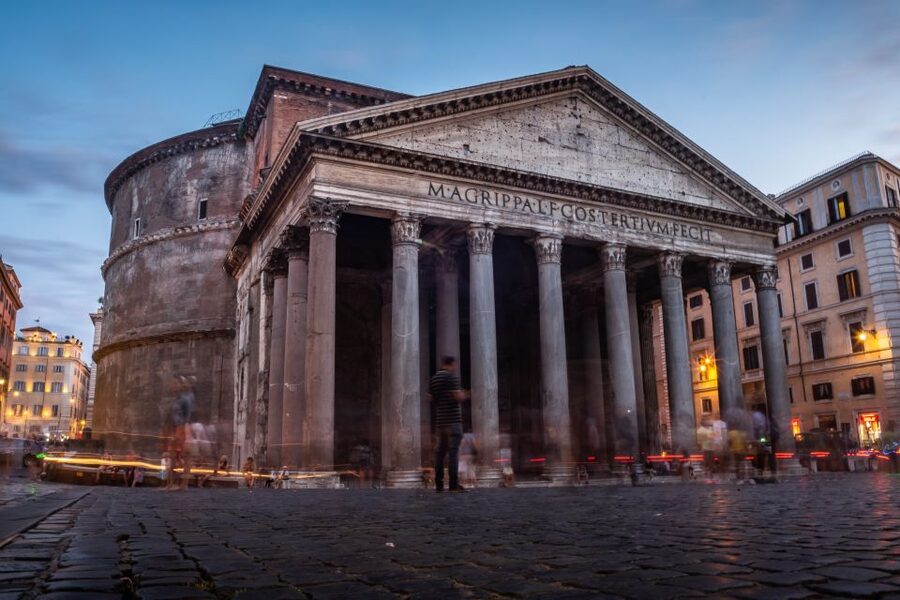
- Skip-the-line Pantheon entry so you spend more time inside and less time in queues
- Pantheon’s oculus lighting up the interior in a way photos can’t really capture
- Raphael’s tomb and royal burials that turn a famous monument into a story about power and art
- Historic Jewish Ghetto walk through the streets and landmarks tied to community life over centuries
- Headsets included so you can actually hear your guide in busy, echo-heavy spaces
Entering the Pantheon: engineering you can feel
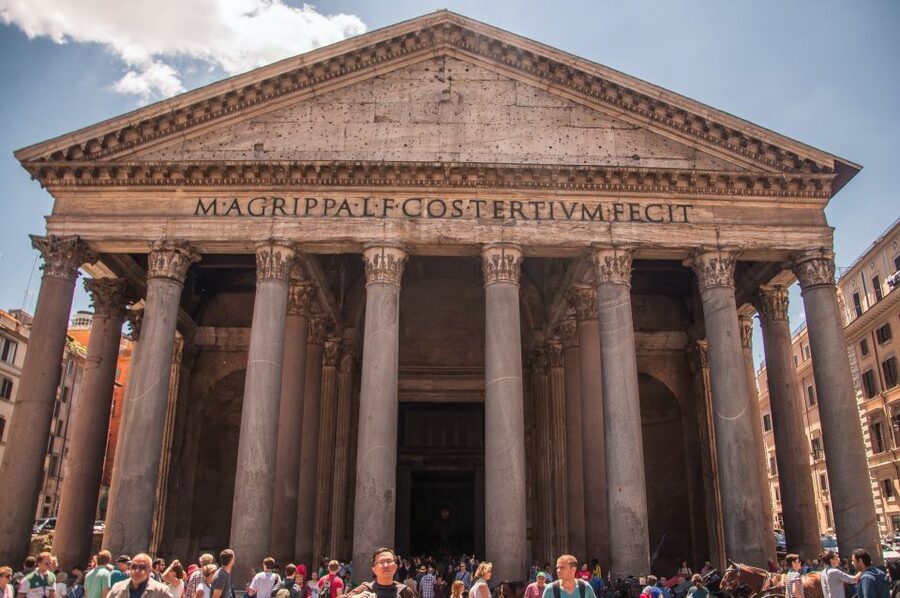
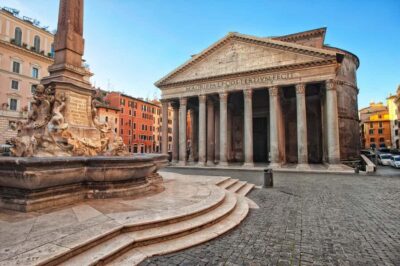
The Pantheon still hits you, even after you’ve seen the pictures. I like that the tour begins here because it sets the tone: this is not just sightseeing, it’s one of the best-preserved statements of ancient Roman engineering.
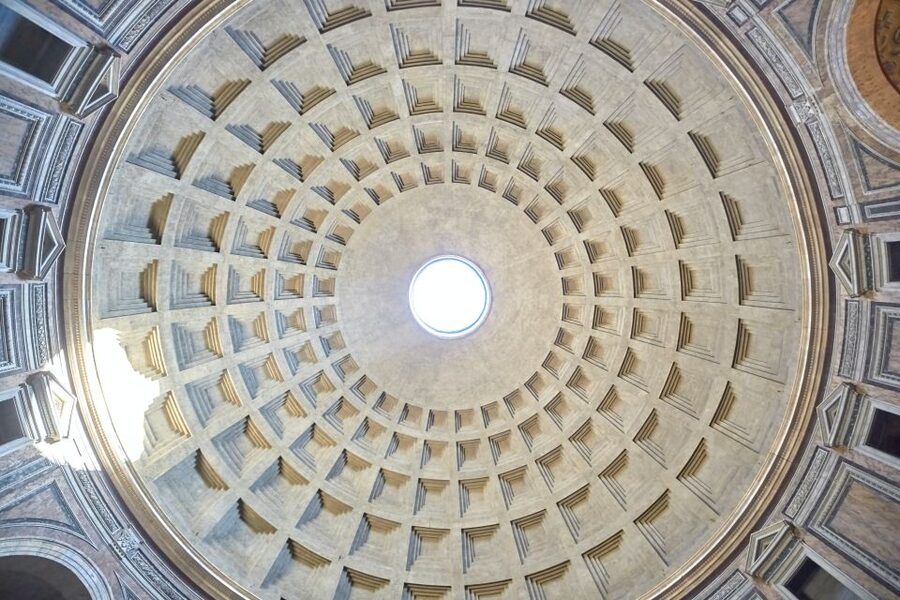
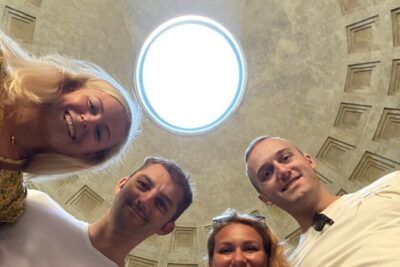
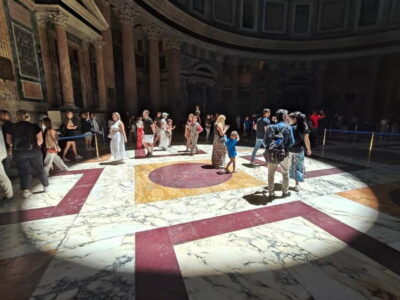
Inside, the star is the dome and its central oculus. The opening is where daylight becomes part of the architecture, and your guide will point out how the space works as you walk around. The overall effect is surprisingly intimate for something built on a grand scale.
Practical tip: the Pantheon is also an entry-and-security environment. Having a guide helps you keep moving without guessing what comes next. One of the strongest perks here is that you get skip-the-line tickets plus headsets, so you’re not stuck far back straining to hear.
The Pantheon, a couple more takes
- Rome: Pantheon Priority Entry Ticket & Interactive App
★ 4.1 · 5,114 reviews - Rome: Pantheon Priority Entry Tickets with Interactive App
★ 4.6 · 4,108 reviews - Rome: Pantheon Timeless Marvel Guided Tour with Entry Ticket
★ 4.9 · 4,002 reviews - Castel Sant’Angelo: Ticket with optional Vatican or Pantheon
★ 4.4 · 3,088 reviews
Pantheon’s shift from temple to tomb: why the guide matters
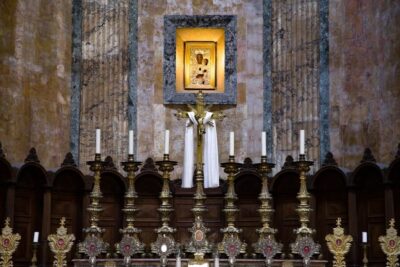
A big reason to book a guided visit is that the Pantheon’s story isn’t one straight line. It began as a temple honoring all gods, and today it functions as a monument of remembrance—linked with famous art and former Italian monarchs.
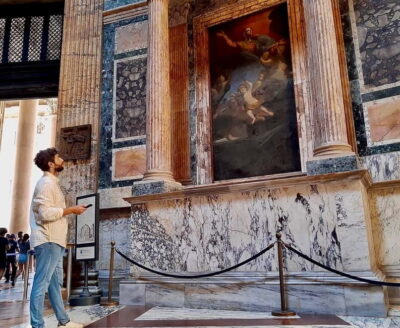
You’ll get to see the tomb of the painter Raphael, which is a perfect example of how Rome layers meaning on top of older stone. You’ll also see the resting place of past kings, and that’s where the tour gets especially interesting for people who like history as a conversation between religion and politics.
What I appreciate: you’re not just told facts. You’re guided through why these changes happened and what it says about Rome’s priorities over time. Even if you only catch part of the context, the monument itself does the rest.
Piazza della Minerva and Largo di Torre Argentina: ancient fragments with modern foot traffic
After the Pantheon, you’ll transition from one of Rome’s most intact monuments to areas where ancient traces are embedded in daily life. The route includes Piazza della Minerva and Largo di Torre Argentina, two spots where the past is visible but not always obvious at first glance.
This is where a guide earns their fee. Without guidance, it’s easy to treat these as convenient “photo stops.” With the commentary, they become reminders that Rome’s ruins are not relics behind glass; they’re part of the city’s everyday layout.
If you’re the type who enjoys “look harder” moments, this section is for you. Your job is to slow down. Look up, glance across street lines, and let your guide connect what you’re seeing to what Rome used to be in those exact locations.
The Jewish Ghetto streets: a shift in mood, not just scenery
Then comes the emotional turn of the day: you move through the heart of the historic Jewish Ghetto, including the area around Piazza Mattei and along Via del Portico d’Ottavia. This part matters because it shows Rome as a place where different communities shaped culture, laws, and daily life—not just emperors and marble.
Your guide will walk you through the historic context of the area and how it connects to art, religion, and politics. Even if you’ve read about the ghetto before, having the landmarks in front of you makes the story easier to hold.
One of the best ways to enjoy this segment is to pay attention to transitions. The scenery changes, the tone changes, and your guide’s framing helps you avoid treating it as a single “theme park” stop. You’re learning how the city organized itself around community boundaries—and how those boundaries still show up in place names and monuments.
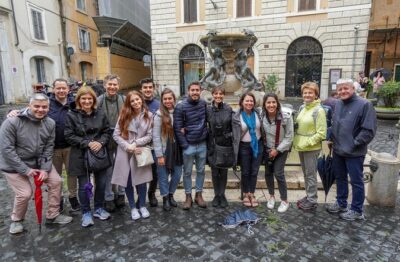
More of the Ghetto's quiet corners



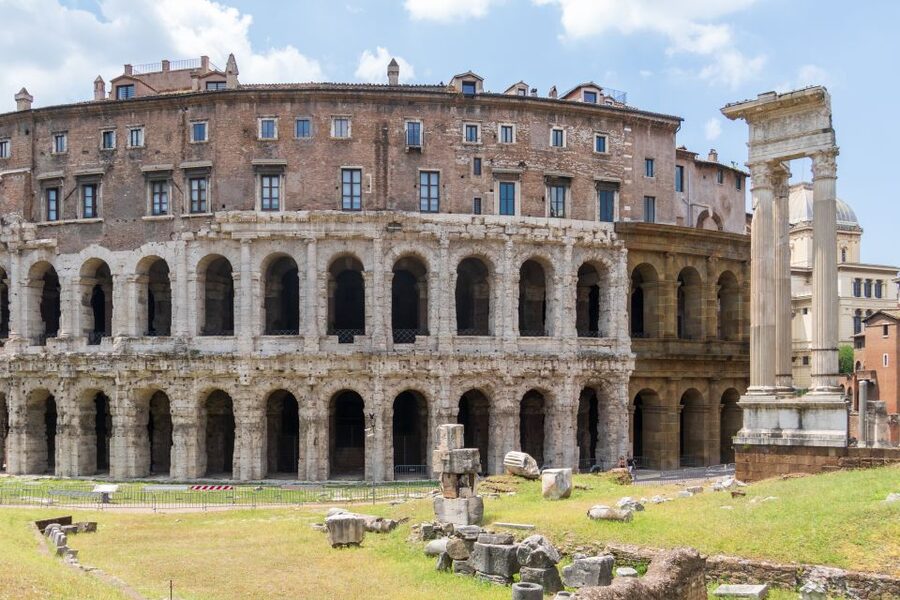
Via del Portico d’Ottavia to Portico of Octavia: ending with continuity
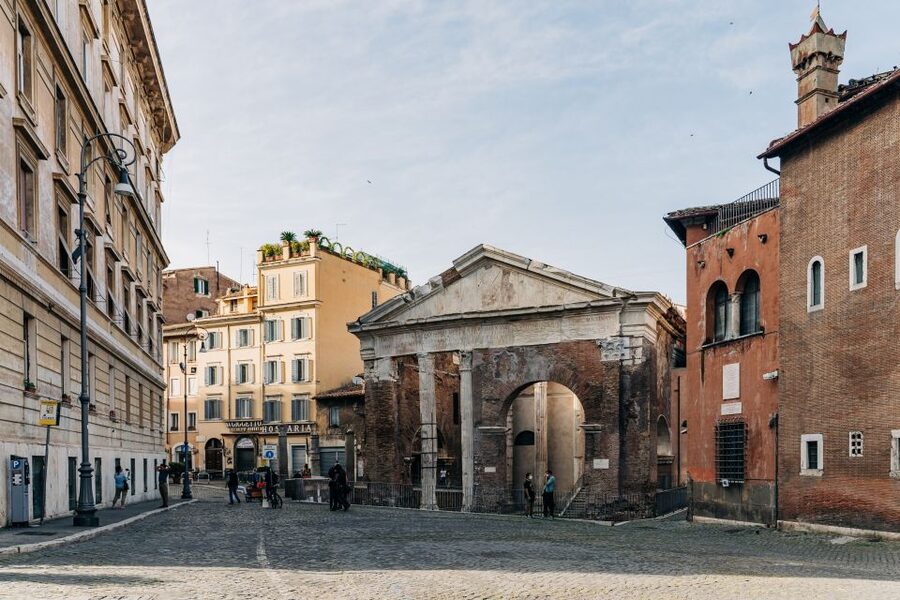
The tour concludes near the Portico of Octavia, another landmark that ties the walk together. Finishing here works because the day’s themes converge: ancient Rome, layered identities, and the ongoing cultural legacy of the Jewish community.
The Portico of Octavia is a strong closing note because it’s architectural and specific. It gives you something concrete to anchor your memory on after the day’s moving pieces.
If you like a clean ending, you’ll appreciate that the tour doesn’t just “let you go.” It leads you to a meaningful final stop, so the walk doesn’t feel like random wandering after the Pantheon.
What the 2-hour timeline really means for your feet
The tour is listed as 2 hours. That’s a useful guideline, but the experience is still a city-walk with multiple stops and time inside the Pantheon.
You’ll want comfortable shoes. Rome can be uneven and busy, and your time gets better when you’re not constantly adjusting blisters. Also, the Pantheon area can involve walking between viewpoints and dealing with crowd flow.
Plan on bringing your passport or ID card, since it’s required. And read the dress guidance carefully, because access rules are strict.
Dress code rules you must follow
You’ll need to wear suitable attire (for both men and women). The guidance says no hemline above the knees, no vests, and no sleeveless tops. Shorts, short skirts, sleeveless shirts, and similar outfits aren’t allowed. This isn’t a vibe thing; it’s an access thing.
If you’re traveling in hot weather, plan your outfit around the rules, not around the forecast. A light long-sleeve or a layer you can add is often the simplest fix.
Mobility note
This tour is not suitable for people with mobility impairments and not wheelchair-friendly based on the provided info. If mobility is a concern, I’d choose an option that’s explicitly built for easier movement.
$65 value: what you’re paying for (and what you’re not)
At $65 per person, this tour isn’t cheap in the way a free walking tour can be. But it includes a few things that matter in Rome: skip-the-line tickets for the Pantheon and headsets for clear listening.
Those two pieces are real value. Pantheon time is expensive because crowds are constant. Skip-the-line access helps you protect the most important hour of your day, and headsets help you actually enjoy the guide rather than just nodding at landmarks you can’t hear about.
You also get guided coverage of both major areas: the Pantheon and the Jewish Ghetto. That combination is hard to replicate on your own without accidentally turning the day into a self-guided puzzle.
Not included: food and drinks, plus no hotel pickup. So if you want snacks, plan them yourself. If you’re doing a tight sightseeing schedule, this tour’s structure can be a relief because it reduces indecision.
Timing risk: guide no-shows and changing Pantheon schedules
I’m going to be honest here. Some departures have faced problems like late guides or, in one case, a guide not showing up. That kind of disruption can throw off your day, especially if you’re only in Rome for a short window.
Add to that the fact that Pantheon access is subject to anticipated closures, postponed openings, masses, concerts, or other events. That means your plan can shift even when everything is run correctly.
How to protect yourself
- Show up early enough that you’re not sprinting to catch the start.
- Keep an eye on any day-of messages from the provider so you’re not relying on memory.
- If your schedule is tight, build in buffer time around this activity rather than stacking it as your only fixed commitment.
This tour can be excellent, but you’ll enjoy it more if you treat it like a timed entry experience, not just a casual walk.
Who this Pantheon and Jewish Ghetto tour suits best
This works especially well if you want Rome with structure. If you’ve never visited the Pantheon before, starting here is a smart move. The monument is the headline, and the guide helps you read it instead of just staring.
It also suits people who like connections—how art, religion, and politics show up in stone, tombs, and street-level history. The Jewish Ghetto portion becomes more meaningful when you’ve got someone tying the landmarks to the wider story.
It may be less suitable if you hate group pacing or you’re traveling with mobility limitations. And if you’re the type who wants total control over timing, you might prefer planning two separate self-guided visits.
Should you book this Pantheon and Jewish Ghetto tour?
Yes, I’d book it if you want an organized, two-part Rome story and you value skip-the-line convenience plus headsets. The Pantheon section is a big payoff, and the ghetto walk gives the day a perspective you won’t get from only seeing monuments on their own.
I’d think twice if your schedule is extremely fragile or you can’t handle a potential start-time hiccup. In that case, bring extra time buffer and be ready to adapt.
If you want Rome that connects the dots without turning into a lecture, this is a strong way to do it for $65.
FAQ
How long is the Pantheon and Jewish Ghetto tour?
The duration is listed as 2 hours.
Is this tour in English or Spanish?
Yes. The live guide is available in Spanish and English.
What’s included in the price?
Included features are skip-the-line tickets to the Pantheon, headsets, a guided tour of the Pantheon, and a guided tour of the Jewish Ghetto.
Does the tour include food and drinks?
No. Food and drinks are not included.
What should I bring?
Bring a passport or ID card, and wear comfortable shoes.
Are there dress code restrictions?
Yes. Suitable attire is required, with restrictions on hems (no above the knees) and no sleeveless tops or vests, among other rules.
Is this tour wheelchair accessible?
No. It is not suitable for people with mobility impairments and it is not for wheelchair users.
Where do I meet the guide?
The meeting point may vary depending on the option booked, but it is tied to the Piazza della Rotonda area.
More Tour Reviews in Rome
- Vatican Museums, Sistine Chapel & St. Peter’s Basilica Tour
★ 4.3 · 73,970 reviews - Vatican Museums, Sistine Chapel & St Peter’s Basilica Guided Tour
★ 4.5 · 39,149 reviews - Rome: Colosseum, Palatine Hill and Roman Forum Guided Tour
★ 4.8 · 32,814 reviews - Rome: Guided Tour of Colosseum, Roman Forum & Palatine Hill
★ 4.7 · 27,897 reviews - Rome: Colosseum & Forum with Audio Guide App -Optional Arena
★ 4.2 · 24,770 reviews - Rome: Colosseum, Roman Forum and Palatine Hill Guided Tour
★ 4.5 · 23,903 reviews
More Around the Jewish Ghetto
- Rome Food Tour: Campo de’ Fiori, Ghetto, Trastevere Winner 2024
★ 5.0 · 3,205 reviews - Jewish Ghetto and Trastevere Tour Rome
★ 4.5 · 1,729 reviews - Rome: Eat Like a Roman Ghetto & Campo de’ Fiori Food Tour
★ 5.0 · 1,037 reviews - Jewish Ghetto and Synagogues with Jewish Roman Guide 3 Hours
★ 5.0 · 907 reviews - Jewish Ghetto & Piazza Navona: Food, Wine & Sightseeing Rome Tour
★ 5.0 · 460 reviews - Rome: Food & Wine Tour of Campo de Fiori, Ghetto, Trastevere
★ 4.8 · 413 reviews
Back to the Pantheon
- Rome: Pantheon Priority Entry Ticket & Interactive App
★ 4.1 · 5,114 reviews - Rome: Pantheon Priority Entry Tickets with Interactive App
★ 4.6 · 4,108 reviews - Rome: Pantheon Timeless Marvel Guided Tour with Entry Ticket
★ 4.9 · 4,002 reviews - Castel Sant’Angelo: Ticket with optional Vatican or Pantheon
★ 4.4 · 3,088 reviews - Pantheon Elite Guided Tour – Rome’s Iconic Ancient Temple
★ 5.0 · 1,447 reviews - Rome: Pantheon Small-Group Guided Tour with Entry Ticket
★ 4.9 · 1,226 reviews
Just added to our Rome reviews





Pantheon Tours, compared.
 ★ 4.1Pantheon Priority Entry Ticket & Interactive AppFrom $145,114 reviews
 ★ 4.6Pantheon Priority Entry Tickets with Interactive AppFrom $54,108 reviews
 ★ 4.9Pantheon Timeless Marvel Guided Tour with Entry TicketFrom $214,002 reviews
 ★ 4.4Castel Sant’Angelo: Ticket with optional Vatican or PantheonFrom $183,088 reviews
 ★ 5.0Pantheon Elite Guided Tour – Rome’s Iconic Ancient TempleFrom $411,447 reviews
 ★ 4.9Pantheon Small-Group Guided Tour with Entry TicketFrom $511,226 reviews
 ★ 4.0Rome’s Iconic Temple: Pantheon Audio Guided Tour with Fast AccessFrom $211,188 reviews
 ★ 4.7Pantheon Small Group Tour and Skip-the-Line TicketFrom $531,008 reviews
Browse the lists this tour appears in