
Reviewed · ROME E-BIKE TOURS
Night Tour of Rome with Top E-bike & optional Italian Dinner
Rome glows after dark on two wheels. You’ll ride a Top E-bike route through Rome’s best-known sights and quieter alleys, using the golden-hour window to catch monuments when they look their softest. I like that the pace is controlled and effort-light, with anti-puncture tires and a comfortable seat built for an evening ride.
My second big like is the guide experience: safety-focused, detail-minded, and ready to point out what matters as the city shifts from late afternoon to true night. One thing to consider is simple: you are still covering about 12 km / 7.5 mi, so this is best if you’re comfortable riding through historic streets (even at a leisure/intermediate level).
In This Review
- Key highlights that make this night ride worth it
- Why Rome at night feels different on an E-bike
- Your ride setup: Cannondale bikes, anti-puncture tires, and helmets
- Meeting at Via Labicana 49 and how the tour stays smooth
- From the Colosseum to the Roman Forum: sunset into dusk
- Theatre of Marcellus, Farnese Palace, and the Jewish Ghetto area
- The Pantheon at dusk and Church of Sant’Ignazio di Loyola
- Piazza di Pietra, the Spanish Steps, and Trevi Fountain
- Piazza Venezia and the Imperial Fora in evening light
- The 2.5-hour vs 4-hour experience (and what dinner really means)
- Who should book this Rome night e-bike ride
- Should you book this Rome E-bike tour with dinner?
- FAQ
- How long is the Night Tour of Rome with Top E-bike?
- Where do we meet for the tour?
- What’s included with the tour?
- Is dinner included?
- How far will we ride?
- What kind of bike is used?
- Is a helmet required?
- What languages are available for the guide?
- Is the tour suitable for children?
Key highlights that make this night ride worth it
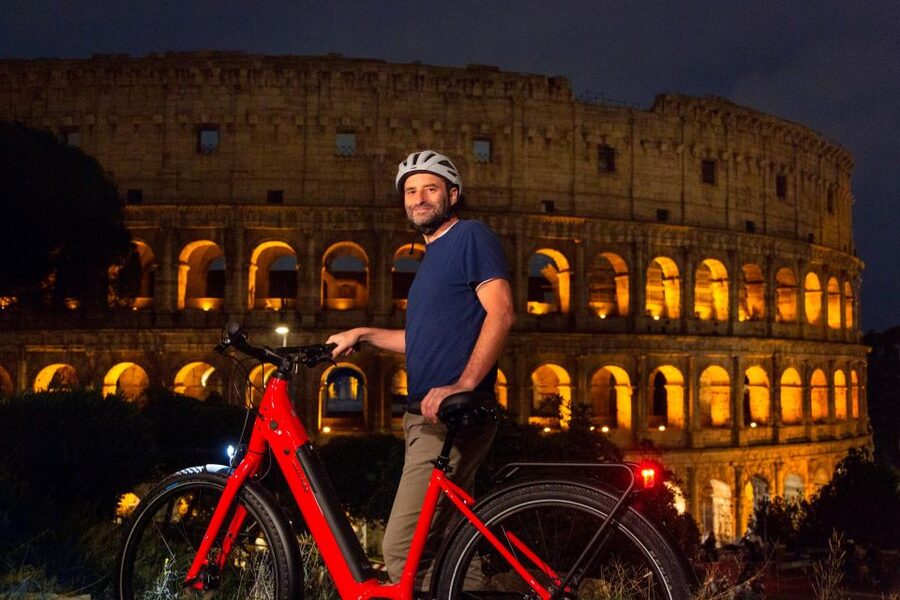
- Cannondale E-bikes maintained and checked after every use, plus a helmet (mandatory) and a handlebar bag
- Evening-sweet-spot timing, built around sunset turning to dusk so the big monuments don’t feel as chaotic
- A route that mixes marquee stops with back-street Rome, including the Jewish neighborhood and the Theatre of Marcellus area
- Small group size (max 10), which helps you stay together and get good sighting time at stops
- Optional 4-hour trattoria dinner, served about 1h15 after the tour starts, with appetizers, pizza or pasta, a drink, water, and coffee
- Multi-language guides (German, Italian, Spanish, French, Dutch, English) so you’re not stuck decoding directions
Why Rome at night feels different on an E-bike
Rome looks amazing in photos. It looks different in motion—especially at night, when streets start to breathe and the crowds spread out. On this tour, you get to see the Colosseum transition into evening, then keep rolling so the rest of the route feels like a story rather than a checklist.
The E-bike changes the whole deal. You’re not doing a workout; you’re doing orientation. You get your bearings fast because you glide past major landmarks and also through smaller lanes where you can suddenly understand how neighborhoods connect.
The other advantage is practical: at night, you’ll still have people around, but you’ll spend less time in bottlenecks. The guides are safety-conscious, and the riding approach is built around comfort and control, not racing the traffic lights.
More of Rome under pedal power
- Rome EBike Tour: Appian Way, Catacombs & Roman Aqueducts
★ 5.0 · 1,766 reviews - Rome: Top Highlights & Hidden Gems Tour by Cannondale E-Bike
★ 4.9 · 1,760 reviews - Rome: Appian Way & Aqueducts E-Bike Tour (Catacombs & Food)
★ 4.9 · 1,498 reviews - Rome: Appian Way, Catacombs, & Roman Aqueducts E-bike Tour
★ 4.9 · 1,421 reviews
Your ride setup: Cannondale bikes, anti-puncture tires, and helmets
This is a proper bike setup, not a shaky rental. The ride uses Cannondale E-bikes with anti-puncture tires and a comfortable seat, plus a handlebar bag so you’re not juggling your phone, water bottle, or jacket.
Helmet use is mandatory. That sounds formal, but it’s also part of why the tour feels calm. The guide’s job is to keep everyone together, and a consistent setup helps you focus on Rome—not on your balance.
Also, the bikes aren’t just handed out and sent away. They’re checked after every use, which matters when you’re rolling over older streets and uneven sidewalks. The E-bike assistance lets you keep a steady pace, which helps when you’re stopping often for short sightseeing moments.
One more real-world note: there’s a weight limit for the bike equipment (300 lbs / 136 kg). If you’re bringing a child setup, it can affect the ride difficulty level, so it’s smart to plan based on your group.
Meeting at Via Labicana 49 and how the tour stays smooth
The meeting point is Via Labicana 49, in a spot that’s about a 5-minute walk from the Colosseum. That’s convenient because you’re not starting in some far-off neighborhood and later realizing you’ll miss your best light at the start.
Group size is capped at 10. That’s a sweet spot: you get a guide who can manage the pace, and you still have time to ask questions without the group turning into a rushing conga line.
A small detail you’ll appreciate: you get water, and you carry what you need in a handlebar bag. Rome at night is cooler than midday, but you’ll still want to stay comfortable, especially if you’re doing the longer (4-hour) route.
And yes, the guide may adjust the route if there are official or public celebrations in the city. That’s the only “wiggle room” you should expect. Either way, you’ll still get the core landmarks.
From the Colosseum to the Roman Forum: sunset into dusk
Your first highlight is the Colosseum area. You get a short sightseeing window—about 5 minutes—right where the light is changing. That timing is the point. The Colosseum looks dramatic even in full daylight, but at dusk it turns more atmospheric, and the surrounding streets feel less like a theme park rush.
From there, you roll into the Roman Forum area. This is where a guided explanation earns its keep. With the bike, you’re moving through the space that shaped so much of ancient civic life, but you’re not stuck standing in one spot with everyone else. You’ll get the best “I can picture this” moments when your guide connects landmarks to how the city functioned.
What I like most about covering these zones by bike is the rhythm. You’re not only looking forward; you’re also learning how to scan: arches, open spaces, and sightlines change as you move. It’s the kind of mental map that makes the rest of Rome easier to enjoy later, even when you walk on your own.
After dark: other Rome walks
Theatre of Marcellus, Farnese Palace, and the Jewish Ghetto area
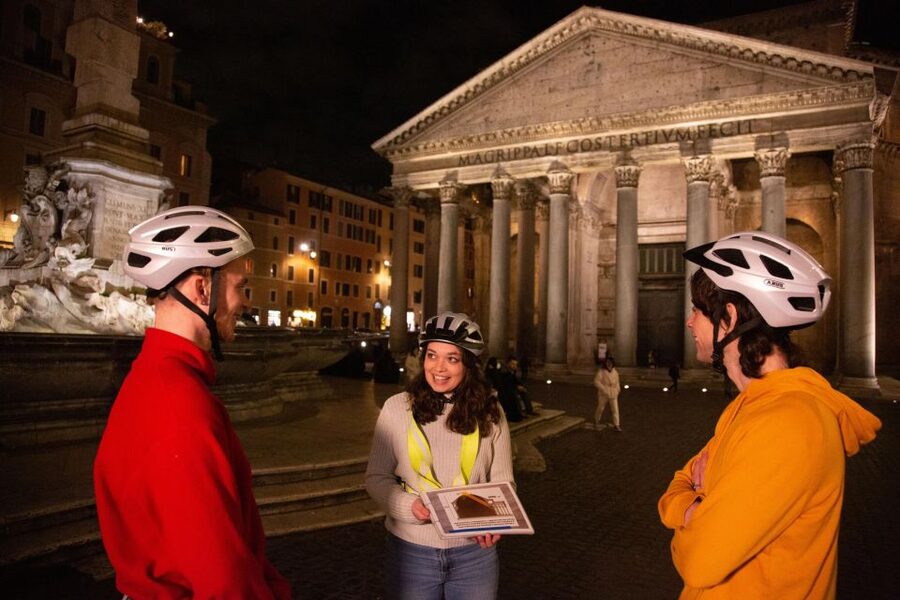
The route doesn’t treat Rome like one big museum hall. After the Forum area, you’ll pass by the Theatre of Marcellus for sightseeing. This is one of those spots that often gets shorter attention than it deserves, but it helps you see how entertainment and daily life overlapped in ancient times.
Then the tour shifts toward neighborhoods and buildings that feel more lived-in. Farnese Palace is a good example: you’re seeing a grand structure, but you’re also in the middle of the kind of street texture that makes Rome feel like a real city, not just a collection of monuments.
Next is the Jewish Ghetto area. This part of Rome carries deep significance, and the guide’s commentary helps you slow down and notice the human scale of the streets. On a bike you can cover ground without losing context, and this stop adds variety to the classic sequence of “big four” sights.
I’d call out a practical benefit here: the back streets help you avoid the heaviest pedestrian flow. You still see major icons, but you’re spending less time boxed in with everyone else.
The Pantheon at dusk and Church of Sant’Ignazio di Loyola
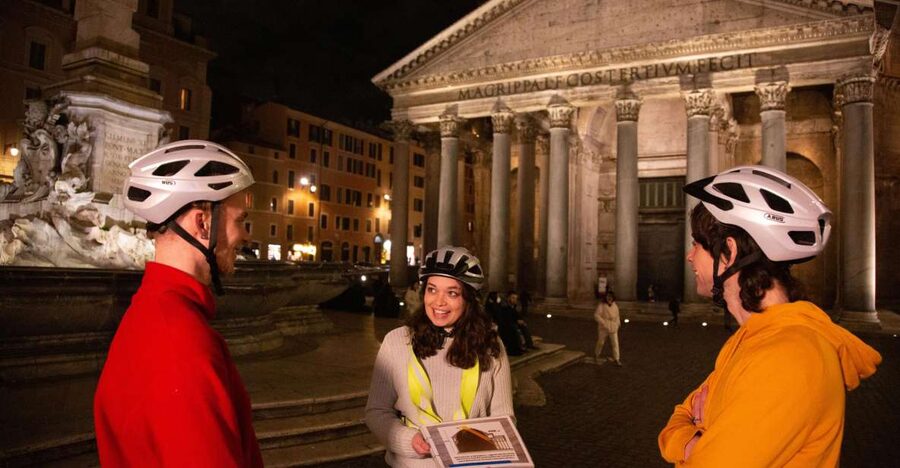
Then comes the Pantheon. Expect dusk lighting that makes it feel quieter and more monumental. The Pantheon is famous, but the experience is also about proportions and atmosphere—something you can’t fully get from a bus window.
What makes it work in an evening tour is the sequence. You’re coming from earlier stops with momentum, and then the city feels like it slows down around the Pantheon. That short pause gives you time to look at how the space “frames” the street around it.
After that, you’ll see the Church of Sant’Ignazio di Loyola. This is an excellent contrast stop. You’ll be in Rome’s mix of grand architecture and street-level immediacy, which is exactly what makes a bike tour feel like you’re understanding the place, not only photographing it.
If you’re the type who enjoys finding details—doorways, facades, small squares—this section scratches that itch without making the ride feel like museum time.
Piazza di Pietra, the Spanish Steps, and Trevi Fountain
Piazza di Pietra is a good mid-route waypoint. It helps you reset visually, and it gives you a chance to catch your breath before you head toward the Spanish Steps.
Then: the Spanish Steps. They’re famous for a reason, but the bigger value here is approach and timing. You’ll be arriving as the light cools, and you’re seeing them as a street feature rather than a postcard object. The guide’s narration helps you understand why people gather there and why it works in every season.
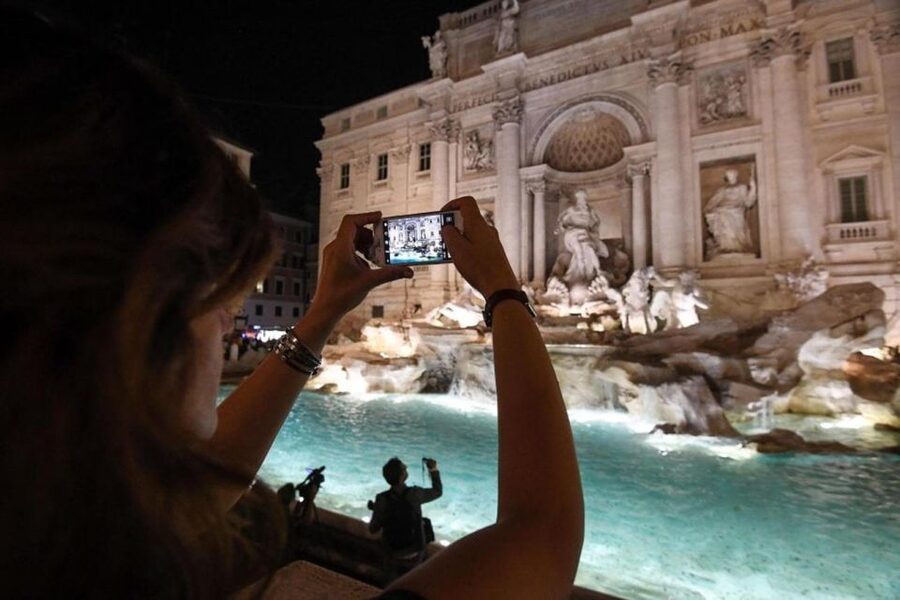
After that, Trevi Fountain. This is one of the most photographed places in Rome, and it can feel overwhelming. The bike tour helps because you’re not trying to arrive first and claim a perfect spot hours ahead. You can look, take photos, and move on without turning it into a half-day siege.
A real-world tip: don’t plan on only one photo. Take a quick wide shot, then step to a slightly different angle as the guide moves the group. The evening light shifts fast, and you’ll get better variety without stressing.
Piazza Venezia and the Imperial Fora in evening light
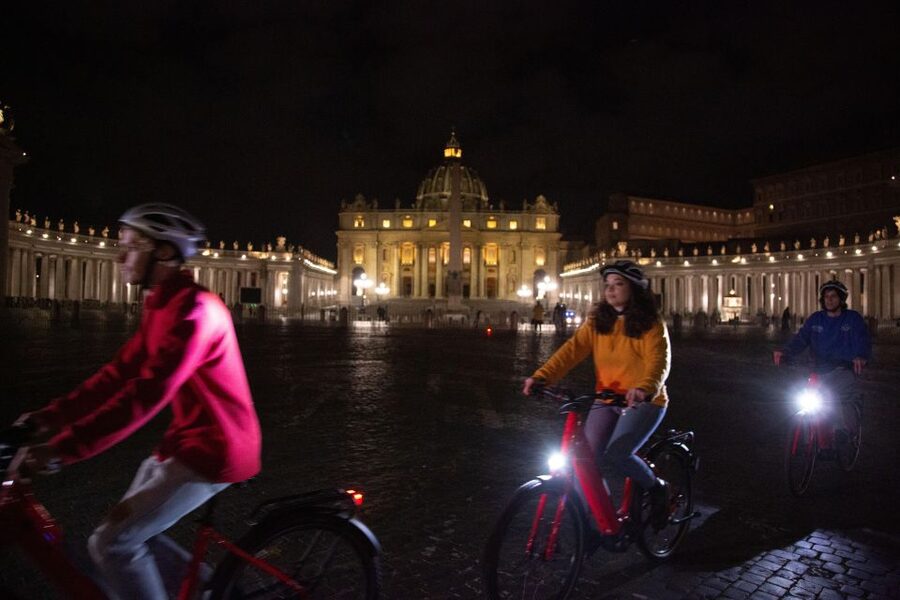
Piazza Venezia is a strong anchor point. It’s central enough to orient you, and it’s also the kind of space where you can feel the city’s layout in your bones. From here, you head toward the Imperial Fora.
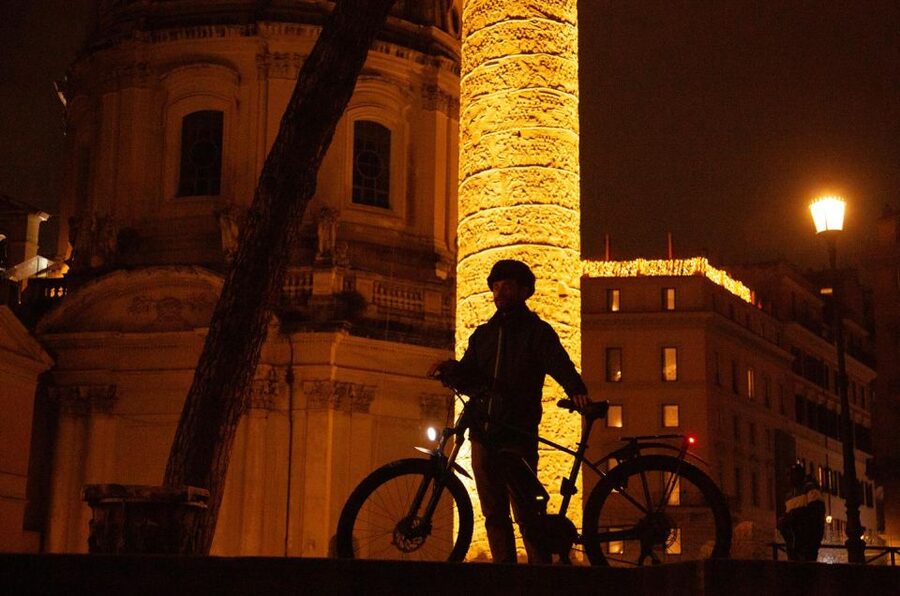
The Imperial Fora can look stunning in daylight, but at night you often notice different things—shadow shapes, the way surfaces catch light, and the feeling of scale. With the bike, you can take in multiple angles instead of hunting for one static view.
If you’ve walked parts of Rome before, you know how fragmented it can feel. A bike route like this ties it together. You’ll leave with a better sense of where things sit relative to each other, which is handy if you want to revisit later on foot.
And you’ll still get enough time at each stop for photos and brief sightseeing, without feeling stuck.
The 2.5-hour vs 4-hour experience (and what dinner really means)
You choose between a 2.5-hour version and a 4-hour version. The itineraries are identical in the sights you’ll cover. The difference is that the 4-hour option adds dinner.
Dinner happens about 1h15 after the tour starts. It’s in an Italian trattoria and includes a mix of appetizers, a pizza or pasta dish, a soft drink or a glass of wine or beer, water, and coffee. It’s a solid set menu format—easy to manage, and it keeps the evening flow from turning into a long restaurant search.
This option is especially good if you’re pairing Rome sightseeing with a no-stress food plan. You don’t have to figure out where to eat right after cycling.
The main consideration is that set dinners aren’t always a perfect match for every palate. If you have very specific dietary needs or preferences, you’ll want to think ahead and plan accordingly, because the dinner components are predetermined.
If you’re more of a snack-and-sip person, you might also appreciate knowing that one rider wished for a brief spritz stop in a back alley. That’s a useful reminder: if you really want an extra aperitivo moment, build it into your own plan before or after the tour.
Who should book this Rome night e-bike ride
This tour is a great match if you want a high-value Rome overview without spending your whole evening walking. It’s ideal for first-timers who want the Colosseum, Pantheon, Trevi Fountain, and Spanish Steps, but also want the route to feel like real neighborhoods, not only headline stops.
It’s also a good fit for groups who prefer structure. With a guide and a small group, you don’t spend time guessing where to go next.
Family-friendly can be true here, too, depending on ages. Children aged 1 to 4 can ride on a child seat for free. Children aged 5 to 8 get a child extension. Kids aged 9+ (at least 140 cm / 55 inches) can independently ride on an appropriately sized e-bike. Babies under 1 aren’t suitable.
If you’re carrying a child setup, the difficulty is described as intermediate for an adult with a child seat/extension, so you’ll want to be realistic about that.
And if you’re the kind of traveler who cares about pacing and safety, this tour’s “checked bike, mandatory helmet, guide-led route” approach is exactly the kind of structure that makes night sightseeing less stressful.
Should you book this Rome E-bike tour with dinner?
I’d book it if you want Rome after dark with less friction. For $85 per person, you’re paying for three things that matter: a maintained E-bike, a guided route that hits major landmarks plus quieter streets, and—if you choose the 4-hour version—an included Italian dinner that saves time and decision-making.
Skip it if you strongly prefer walking, you’re not comfortable riding in crowded areas at night, or you know you want total control over your dinner choices. Also, if you’re sensitive to the idea of cycling distance, remember it’s about 12 km.
If you’re flexible, this is one of the more efficient ways to “feel” the city in a single evening: monuments when the light turns soft, plus enough side streets to make it feel like Rome rather than a photo loop.
FAQ
How long is the Night Tour of Rome with Top E-bike?
It runs for 2.5 to 4 hours, depending on which version you choose.
Where do we meet for the tour?
You meet at Via Labicana 49. It’s about a 5-minute walk from the Colosseum.
What’s included with the tour?
You get a professional guide, a top quality E-bike, a mandatory helmet, a handlebar bag, and a bottle of water. If you select the 4-hour option, dinner at an Italian trattoria is also included.
Is dinner included?
Dinner is included only with the 4-hour version. It includes a mix of appetizers, pizza or pasta, a soft drink or a glass of wine or beer, water, and coffee, served about 1h15 after the tour starts.
How far will we ride?
The tour covers about 12 km / 7.5 miles.
What kind of bike is used?
The tour uses top quality E-bikes, described as Cannondale bikes, with anti-puncture tires and a comfortable seat.
Is a helmet required?
Yes, wearing a helmet is mandatory on the tour.
What languages are available for the guide?
The guide is available in German, Italian, Spanish, French, Dutch, and English.
Is the tour suitable for children?
Infants under 1 year aren’t suitable. Children aged 1 to 4 ride on a child seat for free. Ages 5 to 8 use a child extension. Ages 9+ (at least 140 cm / 55 inches) can ride independently on an appropriately sized e-bike.
More Tour Reviews in Rome
- Vatican Museums, Sistine Chapel & St. Peter’s Basilica Tour
★ 4.3 · 73,970 reviews - Vatican Museums, Sistine Chapel & St Peter’s Basilica Guided Tour
★ 4.5 · 39,149 reviews - Rome: Colosseum, Palatine Hill and Roman Forum Guided Tour
★ 4.8 · 32,814 reviews - Rome: Guided Tour of Colosseum, Roman Forum & Palatine Hill
★ 4.7 · 27,897 reviews - Rome: Colosseum & Forum with Audio Guide App -Optional Arena
★ 4.2 · 24,770 reviews - Rome: Colosseum, Roman Forum and Palatine Hill Guided Tour
★ 4.5 · 23,903 reviews
When the Lights Come On in Rome
- Winner 2025 Rome Twilight Trastevere Food Tour by Eating Europe
★ 5.0 · 5,157 reviews - Rome: City Highlights Open-Top Bus Night Tour
★ 4.1 · 2,038 reviews - Rome: Paranormal Night Walking Tour & Secret Backstreets
★ 4.9 · 1,921 reviews - Vespa Sidecar Tour By Night with Pickup
★ 5.0 · 1,803 reviews - Rome by Night – Ebike Small Group Tour – Food and Wine (Option)
★ 5.0 · 1,275 reviews - Rome by Night: E-bike Small Group Tour -Food & Wine (Option)
★ 4.9 · 1,233 reviews
Pedal Through More of Rome
- Rome EBike Tour: Appian Way, Catacombs & Roman Aqueducts
★ 5.0 · 1,766 reviews - Rome: Top Highlights & Hidden Gems Tour by Cannondale E-Bike
★ 4.9 · 1,760 reviews - Rome: Appian Way & Aqueducts E-Bike Tour (Catacombs & Food)
★ 4.9 · 1,498 reviews - Rome: Appian Way, Catacombs, & Roman Aqueducts E-bike Tour
★ 4.9 · 1,421 reviews - Rome City Small Group Bike Tour with quality Cannondale EBike
★ 5.0 · 1,380 reviews - Rome by Night – Ebike Small Group Tour – Food and Wine (Option)
★ 5.0 · 1,275 reviews
Just added to our Rome reviews





Rome E-Bike Tours, compared.
 ★ 5.0Rome EBike Tour: Appian Way, Catacombs & Roman AqueductsFrom $1021,766 reviews
 ★ 4.9Top Highlights & Hidden Gems Tour by Cannondale E-BikeFrom $851,760 reviews
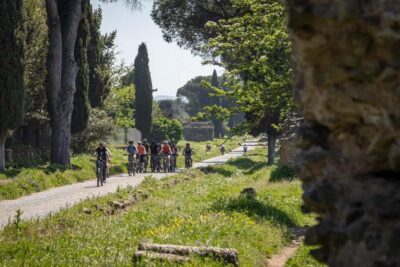 ★ 4.9Appian Way & Aqueducts E-Bike Tour (Catacombs & Food)From $881,498 reviews
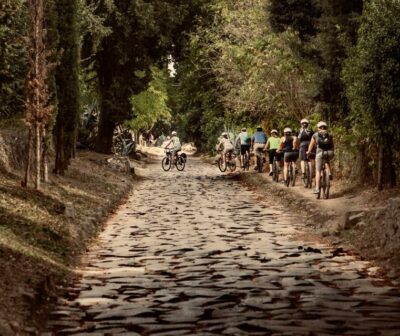 ★ 4.9Appian Way, Catacombs, & Roman Aqueducts E-bike TourFrom $851,421 reviews
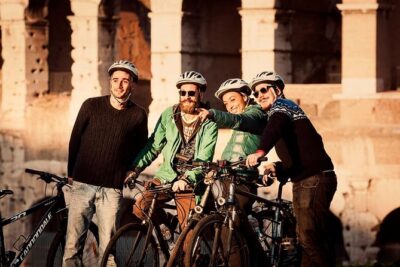 ★ 5.0Rome City Small Group Bike Tour with quality Cannondale EBikeFrom $1021,380 reviews
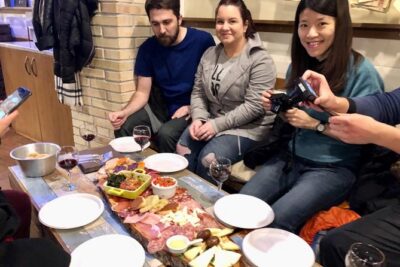 ★ 5.0Rome by Night – Ebike Small Group Tour – Food and Wine (Option)From $711,275 reviews
 ★ 4.9Rome by Night: E-bike Small Group Tour -Food & Wine (Option)From $691,233 reviews
 ★ 5.0Appian Way Aqueducts Bike Tour (Catacombs & Lunch Option)From $78975 reviews
Browse the lists this tour appears in