
Reviewed · ROME E-BIKE TOURS
Highlights of Rome Bike Tour (Including Jubilee Sights)
Rome clicks into place fast on two wheels. This 3-hour small-group bike tour strings together the big-name sights and the lesser-known corners of central Rome, from the Jewish Ghetto area to Trevi and the ancient imperial forum zone. Two things I’d book for right away: the bike bag setup for valuables and the pick-your-pace bike options that keep the ride comfortable. The one catch? Expect cobbled streets and tight traffic in parts of the route.
Guides like Daniele, Nico, Stefano, Marika, Sahrah, and Elena set the tone, often mixing solid background with fun stories (yes, some guides compare Roman eras to TV seasons and lasagna layers). You’ll get a lot of seeing per minute, but if you hate crowds, timing matters.
In This Review
- Key points to know before you ride
- Why a Rome Bike Tour works so well for first-timers
- Price and what you’re really paying for ($54.44 for 3 hours)
- Cobblestones, traffic, and how the ride stays manageable
- Stop 1: Antico Quartiere Ebraico and the Jewish Ghetto of Rome
- Piazza Navona, Campo de’ Fiori, and the Pantheon zone in one sweep
- Sant’Ignazio di Loyola outside: Baroque drama without the long entry line
- Tempio di Adriano: a quick stop with big imperial context
- Trevi Fountain plus Trajan’s Forum and the Imperial Forum spine
- Arch of Constantine and Circus Maximus: power propaganda to legendary origins
- Bike tour guide style: why the storytelling makes this worth it
- Timing advice: morning is smoother; Friday evenings can feel chaotic
- What to wear and pack for a Rome bike day
- Who this tour is best for (and who should consider another option)
- Should you book this Rome highlights bike tour?
- FAQ
- Is this Rome bike tour in English?
- How long is the Highlights of Rome Bike Tour?
- What’s the group size?
- Where do we meet and where does the tour end?
- What’s included in the price?
- Are entrance tickets included for all the stops?
- Are drinks included?
- Is the tour suitable for pregnant women?
- Can kids join the tour?
Key points to know before you ride
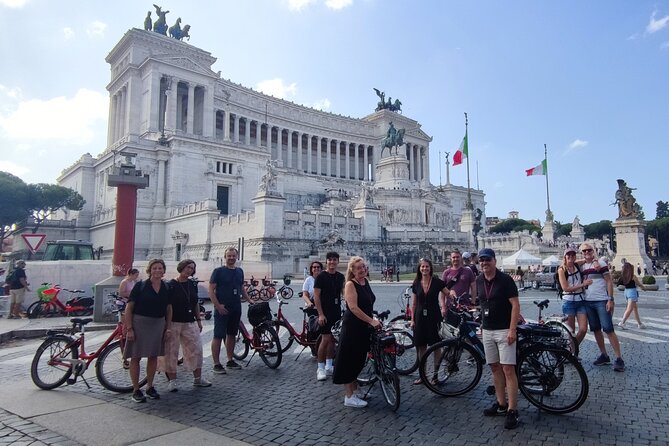
- 14-person max keeps the tour friendly and easier to manage at stops
- Helmet + front pouch + back rack means you can carry essentials without juggling bags
- Route covers both “must-sees” and quieter history zones like the Jewish Ghetto
- Some key sights are not included (Pantheon and a few others), so plan for optional entries
- Cobblestones shape the experience more than the biking does, so dress and footwear matter
Why a Rome Bike Tour works so well for first-timers
If Rome is your first Italian city, you need two things fast: a layout in your head and a feel for how neighborhoods connect. This tour does that with a logical spine through central Rome, then fans out to major landmarks and a few less-visited layers of the city.
I like that the pace feels built for real travelers. You’re not sprinting between photo spots. Stops are short and frequent, so you get context while everything is still close enough to make sense. And because it’s small-group, you’re more likely to stay oriented instead of getting lost in the “follow the leader” shuffle.
More of Rome under pedal power
- Rome EBike Tour: Appian Way, Catacombs & Roman Aqueducts
★ 5.0 · 1,766 reviews - Rome: Top Highlights & Hidden Gems Tour by Cannondale E-Bike
★ 4.9 · 1,760 reviews - Rome: Appian Way & Aqueducts E-Bike Tour (Catacombs & Food)
★ 4.9 · 1,498 reviews - Rome: Appian Way, Catacombs, & Roman Aqueducts E-bike Tour
★ 4.9 · 1,421 reviews
Price and what you’re really paying for ($54.44 for 3 hours)
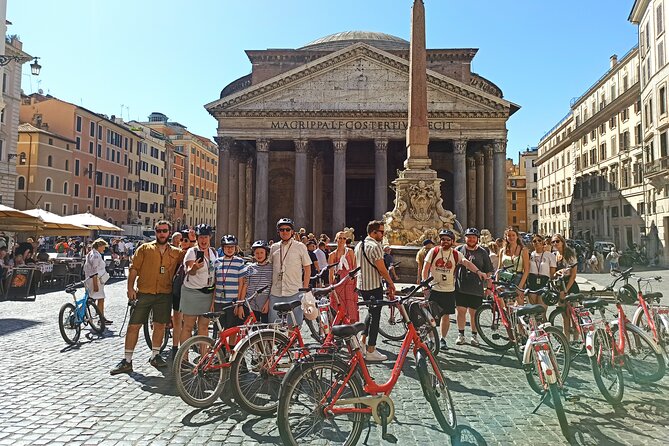
At $54.44 per person for about 3 hours, this is value-heavy because you’re not just paying for stories. You’re also getting the practical stuff that makes Rome easier: bike rental, a helmet, and a front pouch/back rack system for keeping your day bag under control.
What’s not included: drinks. Also, some of the “icon stops” are ticket-not-included, which usually means you’re paying for entry only if you choose to go inside on your own time. That’s a smart model for travelers who want flexibility instead of a scripted museum schedule.
If you’re budgeting tightly, it helps that several stops are marked free for admissions. You’ll still spend your time seeing and learning, even when entry isn’t part of the package.
Cobblestones, traffic, and how the ride stays manageable
Rome is flat, but the ground is not always friendly. Cobblestones show up, and the route can include narrow lanes and busy intersections. The tour operator’s own guidance strongly discourages joining if you’re pregnant, which tells you how seriously cobblestones are taken.
What helps most is how the guide runs the group. Multiple guides mentioned keeping everyone together and making safety the priority, with frequent waiting during transitions. You’ll likely hear the headset comments best while stopped, so don’t stress if a few lines get muffled while you’re moving through denser areas.
Two practical tips:
- Bring water if you can. Drinks aren’t included, and the ride-plus-walk rhythm adds up.
- Pick shoes that can handle uneven pavement and quick stops.
Stop 1: Antico Quartiere Ebraico and the Jewish Ghetto of Rome
The tour starts by easing you into a side of Rome many first-timers overlook. You spend about 7 minutes in the Antico Quartiere Ebraico, home to the Jewish Ghetto of Rome.
This area matters because it was shaped by law as well as faith and culture. The ghetto dates to 1555, when Pope Paul IV ordered Jews to live there and to carry a distinctive sign of belonging. That’s not just a historical footnote—it explains why the neighborhood has a strong identity and why the architecture, streets, and community life feel different from the wider city.
In a bike tour, the trick is not spending forever at any single spot. Here, you get the basics of what you’re looking at, so later—if you wander back—you’ll know what you’re seeing.
Worth a look next to this Rome booking:
Piazza Navona, Campo de’ Fiori, and the Pantheon zone in one sweep
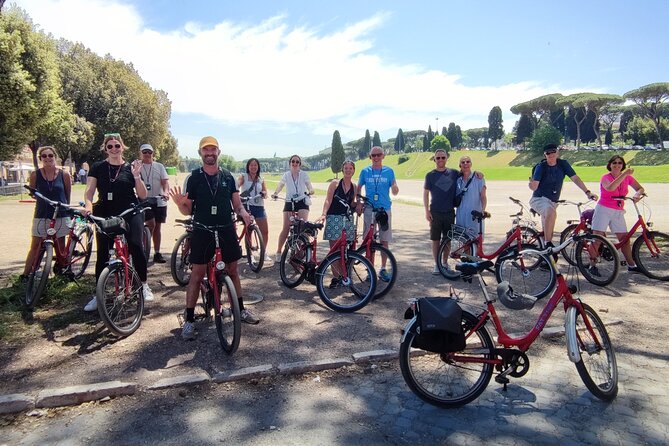
Next you move into the classic center, where Rome does lively like no other city. First comes the Campo de’ Fiori area (about 10 minutes). During the day it’s built around market energy, and by night the square shifts to restaurant and terrace life. It’s a good “Rome is alive” moment before you hit the heavyweight sights.
Then you reach Piazza Navona (about 7 minutes). The square is famous for Baroque spectacle, but the big detail here is the footprint. The current shape mirrors the old Stadium of Domitian, built in 86 AD for athletic competitions and horse racing. That connection helps you read the square as a former arena, not just a pretty stage for photos.
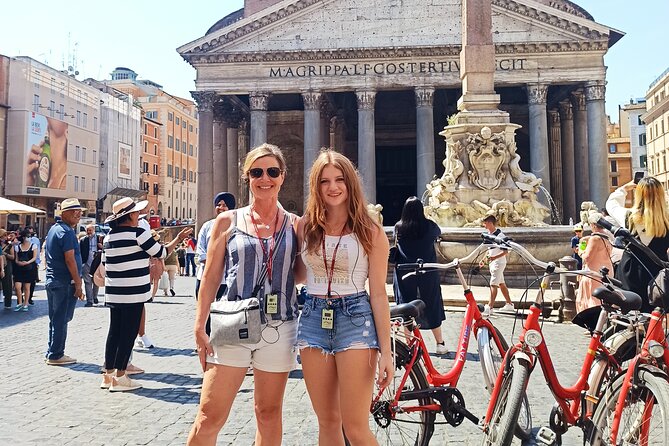
After that, you’re in the Pantheon area with about 15 minutes on hand. The Pantheon’s influence on architects is legendary for a reason: harmony of lines and strong geometry. You also get the origin story—Marcus Vipsanius Agrippa commissioned a temple for all the gods in 27 BC. Entry isn’t included here, so you’ll get the experience of seeing and learning without being forced into a specific ticket.
Practical note: Piazza Navona and the Pantheon area can get crowded. If your goal is an easy ride and calmer stop times, you’ll usually have a better day earlier rather than later.
Sant’Ignazio di Loyola outside: Baroque drama without the long entry line
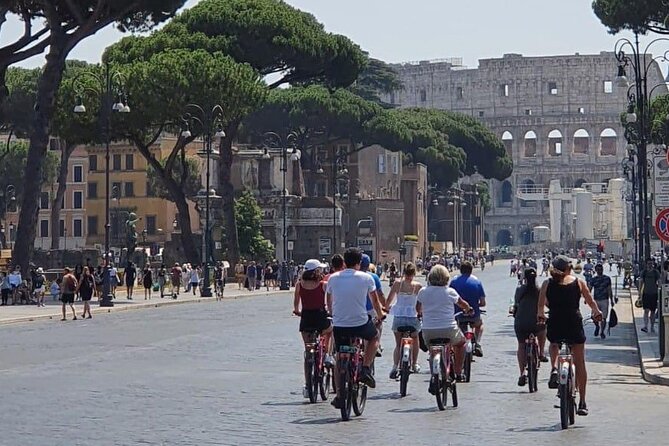
You then pause at Chiesa di Sant’Ignazio di Loyola (about 10 minutes). This stop is all about viewing and explanation from the outside, plus pictures—so you’re not spending your group time figuring out tickets and timed entry.
This is a smart stop for a bike tour because it gives you the feel of Baroque Rome without turning the day into a queue marathon. You’ll get context for what you’re looking at right away, which makes later church visits far more enjoyable.
If churches aren’t your main interest, this stop still works because it’s short and visual. If you do love architecture, it’s the kind of stop that makes you notice details you’d otherwise walk past.
Tempio di Adriano: a quick stop with big imperial context
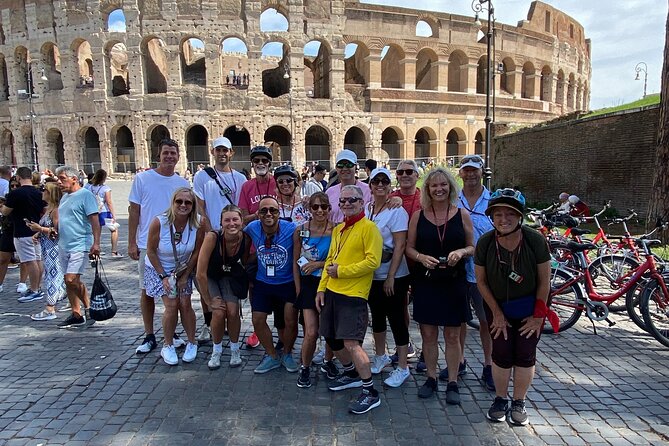
After Sant’Ignazio, the tour moves to Tempio di Adriano (about 5 minutes). This one is compact, and it’s designed for that “snap into focus” effect.
The story centers on Emperor Hadrian. The building is commonly linked to a dedication connected to Hadrian’s wife Vibia Sabina, who was deified after her death in 136. The works were concluded around 145 AD, associated with Antoninus Pius. Even on a short pause, you’ll understand why this structure survives in the way it does and how it fits into the broader imperial storylines you’ll see later.
Trevi Fountain plus Trajan’s Forum and the Imperial Forum spine
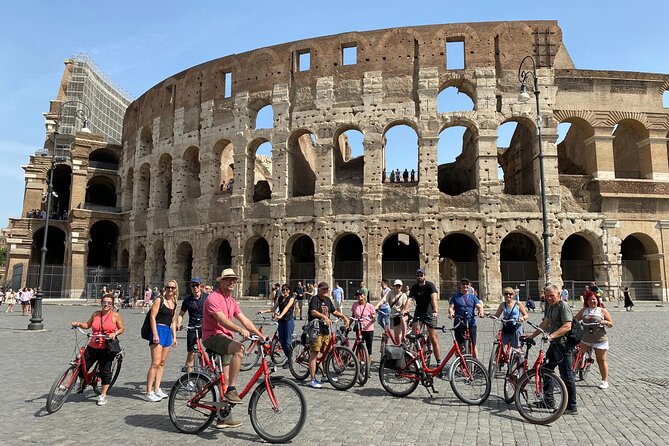
Now you’re in the part of the route where Rome turns into an outdoor textbook.
Trevi Fountain gets about 7 minutes, and you’re pointed to its larger meaning: it’s fed by the Vergine aqueduct, the ancient water system still in use. That continuous connection helps you see the fountain as more than a famous image. It’s a practical city piece turned into art and ritual.
Next comes Trajan’s Forum (about 15 minutes), with explanations of Trajan’s Forum and the Imperial Forum. This is where the story you started earlier grows into scale. You’ll connect street-level sight to the idea of Rome as a political machine—built spaces used to stage power.
Then there’s a quick stop at Piazza Venezia / Ancient City (about 5 minutes). The square’s modern form traces back to renovations in the 19th and 20th centuries, including work tied to the Monumento a Vittorio Emanuele II. This detail matters because it shows Rome as a city that keeps editing itself—layer on layer—while the ancient ground keeps showing through.
Arch of Constantine and Circus Maximus: power propaganda to legendary origins
You finish with two classic big-moment sights: the Arch of Constantine (about 5 minutes) and the Circus Maximus area (about 8 minutes).
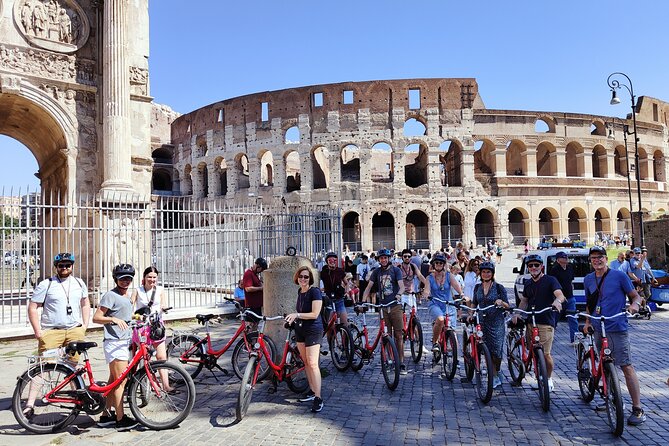
The Arch of Constantine is described as a synthesis of Constantinian-era ideology, celebrating Constantine’s triumph over Maxentius on October 28, 312 AD. It’s not just stone decoration—it’s messaging in architecture. Seeing it as propaganda helps you read Rome’s monuments as communication, not just relics.
Then you reach Circus Maximus, the largest public entertainment building in antiquity. The scale is part of the awe: about 600 meters long by 140 meters wide. You also hear a legend tied to the city’s origins, the Rape of the Sabine Women. Even if you’re skeptical about legend, it still tells you what Romans believed mattered enough to repeat.
Bike tour guide style: why the storytelling makes this worth it
Plenty of tours show you sights. This one tries to make you understand what you’re seeing while you’re still there.
Guides like Daniele and Nico are praised for being both informative and entertaining, with humor that keeps the day from feeling like a lecture. Others—Stefano, Marika, Sahrah, and Elena—are specifically mentioned for keeping the group moving and making safety a priority. In short: you get enough time to look and take photos, but the tour doesn’t stall.
A small-group setup also changes the feel. When the guide checks that everyone is still together, it reduces the mental load for you. You spend less energy worrying about where the group is, and more energy noticing details at each stop.
Timing advice: morning is smoother; Friday evenings can feel chaotic
Based on real-world experience, Rome crowds can make or break your ride. If you’re booking for an afternoon, expect busier streets near major hubs like Piazza Navona and the Pantheon area.
If you have flexibility, aim for a morning slot. Your stops tend to feel easier, and the biking portions feel less like a weave through people.
If you end up with a busier time window, just plan to slow your own pace for safety: keep both hands steady, watch the wheels ahead, and don’t rush the cobblestone crossings.
What to wear and pack for a Rome bike day
Rome bike tours are simple in concept but picky in execution.
- Wear closed-toe shoes with grip for uneven pavement.
- Bring sunscreen and a hat for sunny days; bring warm layers for cooler weather.
- If rain is in the forecast, bring waterproof gear.
For packing, the bike gear is helpful: the front pouch and back rack let you keep essentials handy. What you should still plan for is hydration, since drinks aren’t included.
Who this tour is best for (and who should consider another option)
This is a great fit if you:
- want an overview of major Rome highlights in one day
- like learning stories tied to real places, not just reading plaques
- prefer short stops with room to take photos and move on
It’s less ideal if you:
- are pregnant (cobbled streets are a real issue)
- don’t feel comfortable riding in a group
- hate traffic and close calls on narrow streets
Kids are welcome if they’ve been riding for a while, can handle group riding on mixed surfaces, and you include the child’s height to reserve the right bike size. Under 18 requires an adult with them.
Should you book this Rome highlights bike tour?
Yes—if you want a fast, organized way to get your bearings and see the major sights without feeling trapped in a walking-only schedule. The combination of bike rental + guide + multiple key areas in about 3 hours makes it a strong value, especially for first-timers who want to return later and explore on foot.
Book it particularly if you like your Rome tour days to include both headline landmarks and the quieter neighborhood layer, like the Jewish Ghetto. If you’re sensitive to crowds or rough pavement, choose your time slot carefully and dress for the cobblestones.
FAQ
Is this Rome bike tour in English?
Yes. The tour is offered in English.
How long is the Highlights of Rome Bike Tour?
The duration is about 3 hours.
What’s the group size?
The tour is limited to a maximum of 14 travelers.
Where do we meet and where does the tour end?
You meet at Via dei Delfini, 35, 00186 Roma RM, Italy, and the tour ends back at the meeting point.
What’s included in the price?
Included are the local tour guide, bike rental, a helmet, and a front bike pouch plus a back rack.
Are entrance tickets included for all the stops?
No. Some stops are marked as free admission, while others are not included. For example, the Pantheon and Piazza Navona entries are listed as not included, and Chiesa di Sant’Ignazio di Loyola is described as an outside view.
Are drinks included?
No. Drinks are not included.
Is the tour suitable for pregnant women?
Pregnant women are strongly discouraged from joining due to cobbled streets.
Can kids join the tour?
Kids are welcome if they’ve been riding for a while, are comfortable riding in a group, and can navigate various surfaces. You should include the child’s height to reserve the correct bike size.
More Tours in Rome
- Vatican Museums, Sistine Chapel & St. Peter’s Basilica Tour
★ 4.3 · 73,970 reviews - Vatican Museums, Sistine Chapel & St Peter’s Basilica Guided Tour
★ 4.5 · 39,149 reviews - Rome: Colosseum, Palatine Hill and Roman Forum Guided Tour
★ 4.8 · 32,814 reviews - Rome: Guided Tour of Colosseum, Roman Forum & Palatine Hill
★ 4.7 · 27,897 reviews - Rome: Colosseum, Roman Forum and Palatine Hill Guided Tour
★ 4.5 · 23,903 reviews - Rome: Colosseum Arena Floor, Palatine & Forum Guided Tour
★ 4.5 · 20,180 reviews
More Tour Reviews in Rome
- Vatican Museums, Sistine Chapel & St. Peter’s Basilica Tour
★ 4.3 · 73,970 reviews - Vatican Museums, Sistine Chapel & St Peter’s Basilica Guided Tour
★ 4.5 · 39,149 reviews - Rome: Colosseum, Palatine Hill and Roman Forum Guided Tour
★ 4.8 · 32,814 reviews - Rome: Guided Tour of Colosseum, Roman Forum & Palatine Hill
★ 4.7 · 27,897 reviews - Rome: Colosseum & Forum with Audio Guide App -Optional Arena
★ 4.2 · 24,770 reviews - Rome: Colosseum, Roman Forum and Palatine Hill Guided Tour
★ 4.5 · 23,903 reviews
Pedal Through More of Rome
- Rome EBike Tour: Appian Way, Catacombs & Roman Aqueducts
★ 5.0 · 1,766 reviews - Rome: Top Highlights & Hidden Gems Tour by Cannondale E-Bike
★ 4.9 · 1,760 reviews - Rome: Appian Way & Aqueducts E-Bike Tour (Catacombs & Food)
★ 4.9 · 1,498 reviews - Rome: Appian Way, Catacombs, & Roman Aqueducts E-bike Tour
★ 4.9 · 1,421 reviews - Rome City Small Group Bike Tour with quality Cannondale EBike
★ 5.0 · 1,380 reviews - Rome by Night – Ebike Small Group Tour – Food and Wine (Option)
★ 5.0 · 1,275 reviews
Just added to our Rome reviews

Rome E-Bike Tours, compared.
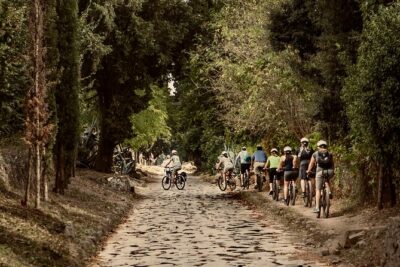 ★ 5.0Rome EBike Tour: Appian Way, Catacombs & Roman AqueductsFrom $1021,766 reviews
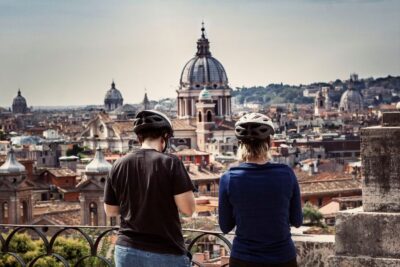 ★ 4.9Top Highlights & Hidden Gems Tour by Cannondale E-BikeFrom $851,760 reviews
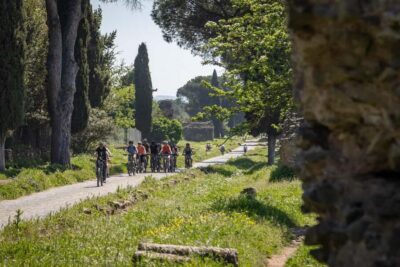 ★ 4.9Appian Way & Aqueducts E-Bike Tour (Catacombs & Food)From $881,498 reviews
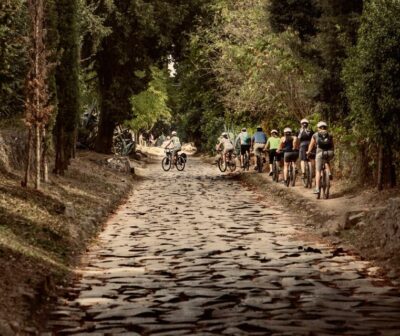 ★ 4.9Appian Way, Catacombs, & Roman Aqueducts E-bike TourFrom $851,421 reviews
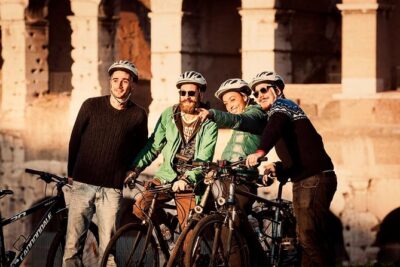 ★ 5.0Rome City Small Group Bike Tour with quality Cannondale EBikeFrom $1021,380 reviews
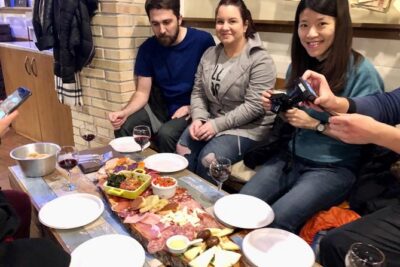 ★ 5.0Rome by Night – Ebike Small Group Tour – Food and Wine (Option)From $711,275 reviews
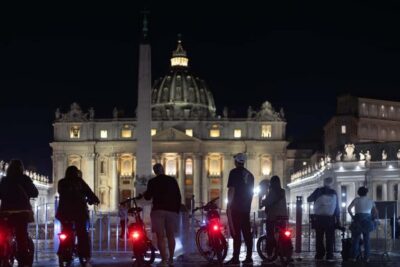 ★ 4.9Rome by Night: E-bike Small Group Tour -Food & Wine (Option)From $691,233 reviews
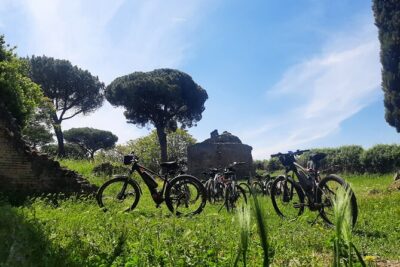 ★ 5.0Appian Way Aqueducts Bike Tour (Catacombs & Lunch Option)From $78975 reviews
Browse the lists this tour appears in