
Reviewed · TRASTEVERE TOURS
Highlights of Jewish Ghetto And Trastevere Walking Tour
One foot in the past, one in the present. This tip-based walk connects the Jewish Ghetto with Trastevere street life, using real landmarks and real stories to explain how communities survived and kept going. I love how it pairs big history with plain street-level details, and I especially love the food recommendations that help you turn the walk into actual decisions for what to eat next. One possible drawback: the guides use dark humor, including politically incorrect jokes, so keep that in mind if you want a strictly respectful tone.
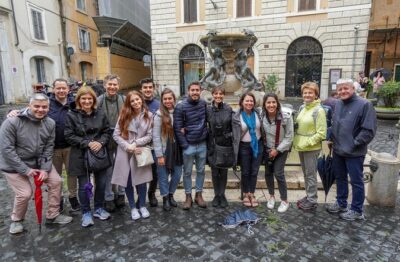
You meet near the fountain at Fontana delle Tartarughe, then head toward the area where ancient Rome and later Jewish life overlap. The English-speaking guides I saw praised by name include Ivan, Iris, Max, Skylar, and Martina, and the common thread is a loud, clear story style that keeps the group moving.
Plan on about 87 minutes as the scheduled length, though some groups report running a bit longer with questions. It is mostly walking on uneven, narrow lanes, and it can feel long on your feet, so bring comfortable shoes and expect a steady pace.
In This Review
- Key highlights that make this tour worth your time
- Starting at Fontana delle Tartarughe: the quick setup
- Jewish Ghetto of Rome: papal restrictions and everyday survival
- Great Synagogue of Rome: moving from streets to sacred space
- Tiber Island: healing myths and medicine at the water’s edge
- Trastevere streets and Raphael whispers: medieval to Renaissance
- Santa Maria in Trastevere and Ponte Sisto: a change of mood with strong scenery
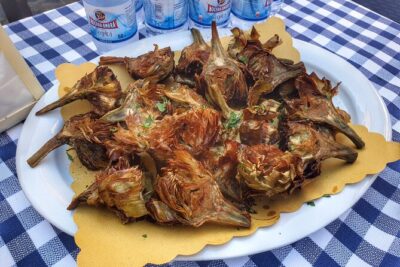
- Food recommendations that make the route useful
- Tip-based pricing: what you should budget and why it’s different here
- Who should take this walk, and how to prep your shoes
- Should you book the Jewish Ghetto and Trastevere tour?
- FAQ
- How long is the Jewish Ghetto and Trastevere walking tour?
- Is this tour free, and how does tipping work?
- Where do I meet for the tour?
- Where does the tour end?
- What’s included in the tour?
- Is the tour in English?
Key highlights that make this tour worth your time
- Tip-based model that rewards good guiding: the tour runs on tips alone, and you’ll typically budget roughly 15€ to 50$.
- From ancient remains to daily life: you get context near major Roman landmarks like the Theatre of Marcellus and the Portico d’Ottavia.
- Tiber Island’s healing legends: myth and medicine show up here, long before modern hospitals.
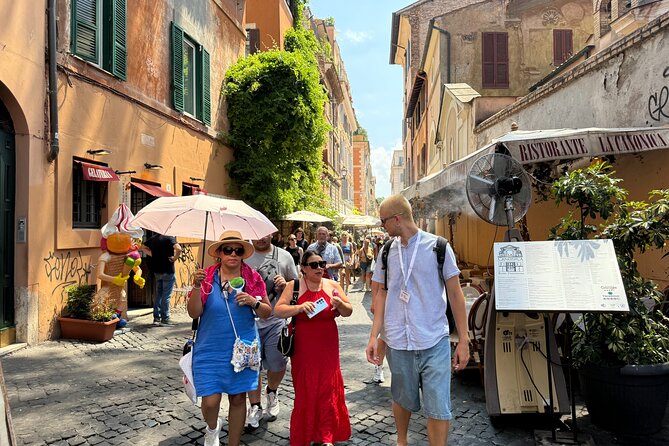
- Trastevere street stories: medieval lanes, ivy-covered facades, and even Raphael-related gossip and legends.
- Practical Roman food guidance: you’re not just shown sights; you’re guided to what to eat and where to go afterward.
- Guide personality matters: praised for humor, clarity, and keeping kids and adults engaged when the group stays small (one group noted 10 people).
Starting at Fontana delle Tartarughe: the quick setup
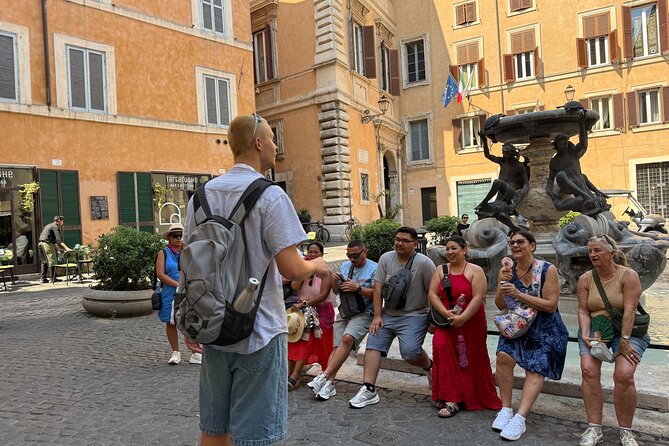
The experience starts by Fontana delle Tartarughe, a straightforward meet point where the guide holds a sign for the tour. This matters more than it sounds. With a walking route through small streets, you want to avoid the awkward first 10 minutes of wandering around trying to find your group.
Your first stop is also a photo moment. That seems basic, but it’s a smart way to settle everyone, confirm the group size, and get the story rolling before you hit the tighter streets.
A good guide typically does two things right away:
- They set the timeline, so you know what era you’re looking at.
- They explain what you’ll be looking for with your eyes, not just what you’re hearing.
If you’re joining later in the day, one departure around 5pm was mentioned as a treat because you can watch the neighborhoods move from daylight into evening.
More lanes worth losing an evening in Trastevere
- Winner 2025 Rome Twilight Trastevere Food Tour by Eating Europe
★ 5.0 · 5,157 reviews - Rome Food Tour: Campo de’ Fiori, Ghetto, Trastevere Winner 2024
★ 5.0 · 3,205 reviews - Rome: Guided Food Walking Tour with Wine in Trastevere
★ 4.9 · 3,105 reviews - Rome: Trastevere Food tour with Free-Flowing Fine Wine
★ 5.0 · 2,853 reviews
Jewish Ghetto of Rome: papal restrictions and everyday survival
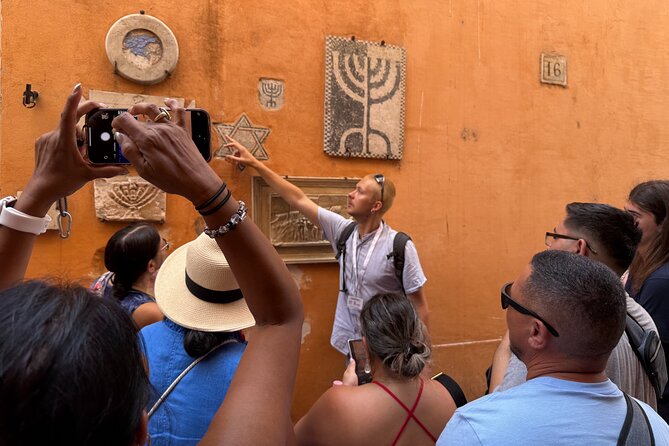
Once you move into the Jewish Ghetto area, the tour shifts into high-stakes history without turning it into a textbook. The core theme is continuity: one of the oldest Jewish communities in the world, surviving centuries of pressure while still building daily life, faith, culture, and community identity.
You’re surrounded by big Roman anchors, including the Theatre of Marcellus and the Portico d’Ottavia. That contrast is part of the point. You see that you’re not stepping into a sealed-off museum space. You’re walking through a neighborhood where different eras stacked on top of each other.
The story you’ll hear focuses on how a once-prestigious part of ancient Rome became a restricted district under papal rule. From there, the guide explains what daily life meant behind ghetto walls, and how people preserved identity through tradition and quiet resistance.
Two things I think you’ll appreciate here:
- The explanation stays human-scale. You hear about ordinary life, not just laws and dates.
- The route makes it easier to connect what you see on the street to what you’re being told.
A note on tone. The tour’s highlight list mentions dark humor and politically incorrect jokes. In the ghetto context, humor can either help some people process or shut others down. If you know you prefer a more careful tone, treat that as a question to ask when you meet the guide.
Great Synagogue of Rome: moving from streets to sacred space
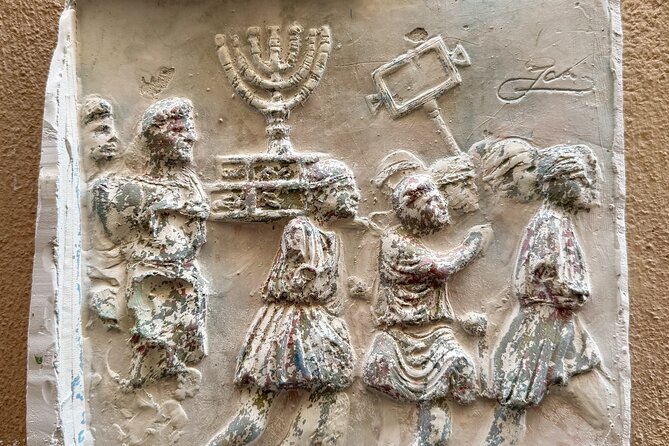
After the ghetto overview, the walk naturally hits a major landmark: the Great Synagogue of Rome. You stop for both photos and a short visit, which gives you a clean mental pivot.
The practical value of this stop is that it turns the area from a general story into something specific. It’s one thing to hear about community survival. It’s another to look at a central religious site and understand that faith wasn’t an abstract idea. It shaped routines, gathering points, and cultural continuity.
You’ll also get help reading the neighborhood as you walk. One of the most common complaints I hear about history tours is that people leave with facts but no map in their head. Here, the guide’s job is to link scenes together so that when you pass another building or street corner, your brain already knows what to associate with it.
If you tend to ask questions, this is a good segment to do it. The tour format is built around discussion and story, and multiple guides were praised for inviting questions without rushing the group.
Tiber Island: healing myths and medicine at the water’s edge
From the ghetto area, you cross to the Tiber Island. This stop is short on paper, but it’s memorable in practice because the tour uses it as a storytelling bridge between ancient myth and the idea of healing.
The description you’re given ties Tiber Island to healing and refuge since antiquity, where myth and medicine converged long before modern hospitals existed. That framing changes how you look at the river and the island. It stops being just a crossing point and becomes a place where people projected hope and protection.
You get another quick photo moment and a guided look, then you keep walking. The payoff is that the tour doesn’t stay trapped in one heavy topic. It uses geography to shift moods while keeping the bigger story coherent.
Also, if you’re a visual person, this is where the group often takes in views over the Tiber River. One set of comments specifically called out the views as a reason the experience felt special, especially when walking toward evening.
More of the Ghetto's quiet corners

Trastevere streets and Raphael whispers: medieval to Renaissance
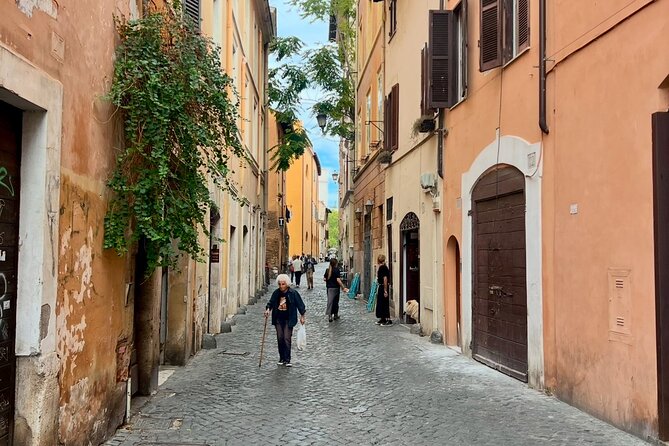
Then the tour moves into Trastevere, and the pace of life changes. This is where you get the ivy-covered buildings, medieval street texture, and those smaller, less-perfect-looking streets that make Rome feel real.
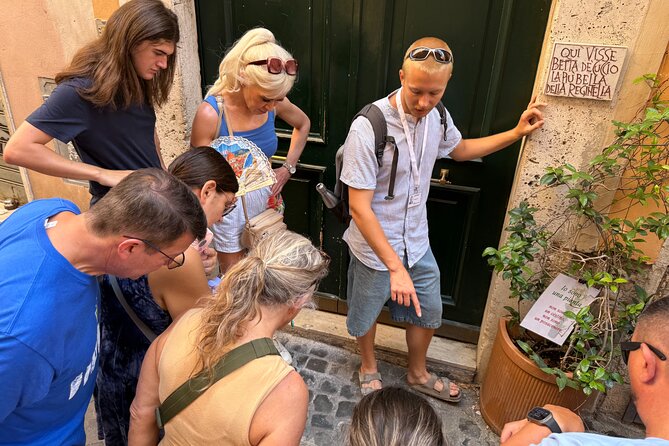
The tour style here leans into legend. You’ll hear unexpected stories, including clues related to Raphael’s lover’s house and what those connections might suggest about his private life. Whether you’ve studied art history deeply or you just know the name Raphael, it’s fun because it brings Renaissance figures into a neighborhood context instead of keeping them locked behind museum walls.
Trastevere also comes with a reputation for rebellion, passion, and nightlife. The guide’s job is to tie that reputation to actual street-level history, so it doesn’t feel like generic folklore. From what people praised, the best guides in this tour do that by threading eras together: ancient roots, medieval streets, Renaissance intrigue, and then the living neighborhood you see today.
Two practical considerations for this segment:
- You’ll be walking through busy streets that can get crowded. Your guide should keep the group together.
- Some lanes are narrow. One guest explicitly praised their guide for safety awareness in small alleys, which tells me you should pay attention to where you step and let the guide set the flow.
If your group includes kids, this is often a strong moment. One comment noted teenagers stayed engaged, and another noted a family with kids had all ages interested through the story style and food stops.
Santa Maria in Trastevere and Ponte Sisto: a change of mood with strong scenery
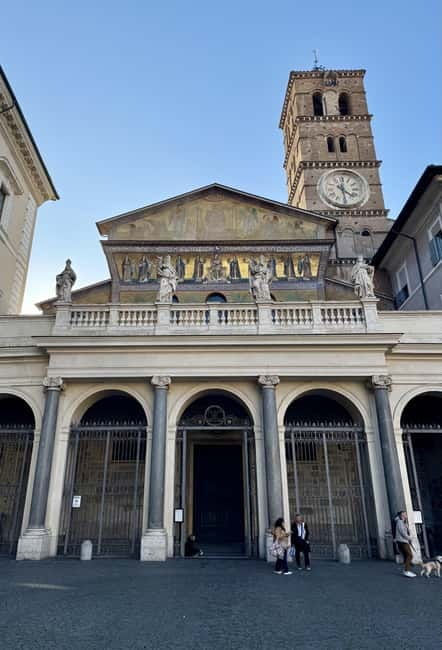
After Trastevere, you get another anchor: Santa Maria in Trastevere. The stop includes a visit and short sightseeing time. Even if you’re not a church person, this matters because it shows how Roman neighborhoods layer faith, art, and community identity on top of older stories.
Think of it as contrast and connection. The Jewish Ghetto story explains one community’s endurance. Santa Maria in Trastevere helps you see a different thread of Roman spiritual life in the same broader city fabric.
Then you reach Ponte Sisto. This is a photo stop with guided sightseeing, and it’s one of the best moments to catch your breath without turning the walk into a sit-down lecture. Crossing the river gives you that visual reset, and it’s also where the tour’s storytelling can feel less heavy.
You’ll often see why the river matters so much. Even if you already knew Rome’s geography, the tour’s explanation helps you connect the water to myths, movement, and refuge themes you heard earlier around Tiber Island.
Food recommendations that make the route useful
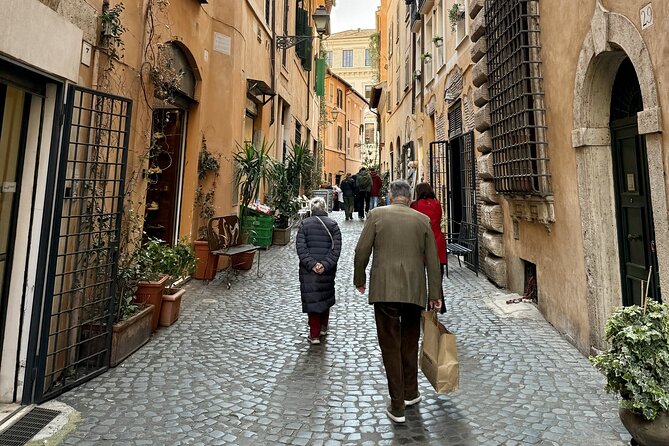
This is one of the strongest practical elements of the tour. It includes food recommendations, and the tour is built to point you toward authentic Roman flavors rather than leaving you to guess.
In real life, this can save your trip. Rome is full of restaurants that look good in photos but are rough on the plate once you arrive. A guide who knows the neighborhood can steer you toward places that match what you just saw and what the area is known for.
A couple details that stood out from guide mentions in comments:
- Gluten-free options were mentioned as available at most stops by one guide (Martina).
- Several guides gave restaurant and bakery suggestions tied directly to Jewish Ghetto and Trastevere neighborhoods, not generic must-eats.
Even if you prefer to explore on your own afterward, you’ll still leave with a shortlist of places to check. That alone can turn a history walk into a trip tool.
If you have dietary needs, tell the guide early. That’s the best way to get recommendations that actually fit your constraints, not just a last-minute shrug.
Tip-based pricing: what you should budget and why it’s different here
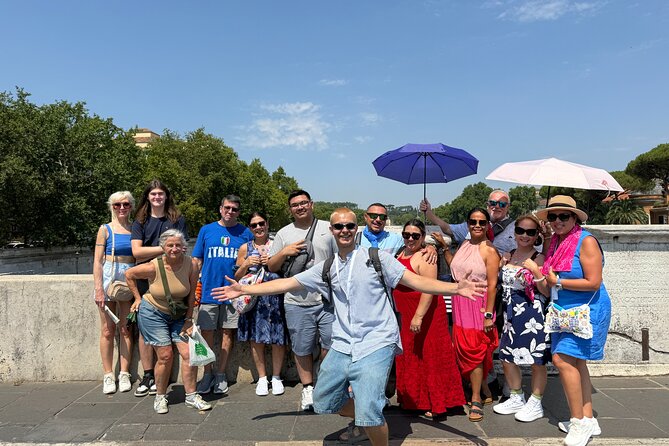
The listed price is low, and the model is clear: the guides work on tips alone, which means your payment at the end is the real engine. The tour’s information says tips are typically between 10€ and 50$, and it also states usually 15€ to 50$.
So how do you think about value?
- If the upfront fee is small, the total cost depends on your tipping.
- The upside is that you control the final amount based on how much you felt you got from the guide.
- The guide controls a lot of the quality through storytelling, pacing, and whether the group stays together.
You’ll also see this in guest comments. Several people explicitly praised the guides and emphasized that the guides are not paid in a traditional way and that tipping matters. One guest even raised an issue about tips being inadequate, then apologized later, which shows how strongly this model affects the tour relationship.
My practical advice: if you enjoyed the guide, tip in the middle or higher range. If you didn’t, tip based on what you did enjoy. Either way, it’s better to decide before you feel rushed at the end.
Also, because the humor can be dark and politically incorrect, tip generously only if that tone worked for you.
Who should take this walk, and how to prep your shoes
This tour fits best if you want history with a strong storyteller and you like walking through neighborhoods more than ticking off monuments. It’s also a good choice if you want a quick route that still covers a lot of ground: ancient context, Jewish community history, Tiber Island mythology, and Trastevere street lore in one flow.
You might enjoy it most if:
- You like explanations that connect what you’re seeing to why it matters.
- You want practical restaurant ideas tied to the areas you visit.
- You’re okay with a lively guide who uses humor to keep attention.
Prep is simple, and it matters:
- Wear trainers. One comment warned it’s long on the feet.
- Expect small alleys and traffic awareness. Guides are praised for keeping the group safe, but you still want to stay alert.
- Pace can be around 3.7–4.0 mph for some groups. If you move slower, say so early and don’t try to sprint between stops.
Group size can vary. One person mentioned a small group of 10 on a particular time slot, and in general smaller groups often make the Q&A easier and keep the story from feeling rushed.
Should you book the Jewish Ghetto and Trastevere tour?
Book it if you want a guided walk that treats history as lived experience: ghetto life, religious landmarks, healing legends on the Tiber, and Trastevere street storytelling that mixes medieval, Renaissance, and modern neighborhood energy.
Skip it or reconsider if you strongly prefer a strictly formal tone. The guide style here can include dark humor and politically incorrect jokes, and the subject matter is heavy enough that you should choose the tone you’re comfortable with.
If you do book, I’d make one smart move: pick your guide with your expectations in mind. Names praised include Ivan and Iris, plus Max, Skylar, and Martina. The route format depends heavily on the guide’s storytelling skill, and most praise is about exactly that.
FAQ
How long is the Jewish Ghetto and Trastevere walking tour?
The duration is listed as 87 minutes. You can check availability for starting times.
Is this tour free, and how does tipping work?
It is a tip-based tour using a pay-what-you-want model. Tips are typically in the range of 15€ to 50$.
Where do I meet for the tour?
Meet by the fountain at Fontana delle Tartarughe. The guide will hold a sign with the tour name.
Where does the tour end?
The tour finishes at Piazza Trilussa.
What’s included in the tour?
You get a local English-speaking guide, a walking tour, and food recommendations.
Is the tour in English?
Yes, the tour is offered in English.
More Tour Reviews in Rome
- Vatican Museums, Sistine Chapel & St. Peter’s Basilica Tour
★ 4.3 · 73,970 reviews - Vatican Museums, Sistine Chapel & St Peter’s Basilica Guided Tour
★ 4.5 · 39,149 reviews - Rome: Colosseum, Palatine Hill and Roman Forum Guided Tour
★ 4.8 · 32,814 reviews - Rome: Guided Tour of Colosseum, Roman Forum & Palatine Hill
★ 4.7 · 27,897 reviews - Rome: Colosseum & Forum with Audio Guide App -Optional Arena
★ 4.2 · 24,770 reviews - Rome: Colosseum, Roman Forum and Palatine Hill Guided Tour
★ 4.5 · 23,903 reviews
More Around the Jewish Ghetto
- Rome Food Tour: Campo de’ Fiori, Ghetto, Trastevere Winner 2024
★ 5.0 · 3,205 reviews - Jewish Ghetto and Trastevere Tour Rome
★ 4.5 · 1,729 reviews - Rome: Eat Like a Roman Ghetto & Campo de’ Fiori Food Tour
★ 5.0 · 1,037 reviews - Jewish Ghetto and Synagogues with Jewish Roman Guide 3 Hours
★ 5.0 · 907 reviews - Jewish Ghetto & Piazza Navona: Food, Wine & Sightseeing Rome Tour
★ 5.0 · 460 reviews - Rome: Food & Wine Tour of Campo de Fiori, Ghetto, Trastevere
★ 4.8 · 413 reviews
Still in Trastevere? Keep Going
- Winner 2025 Rome Twilight Trastevere Food Tour by Eating Europe
★ 5.0 · 5,157 reviews - Rome Food Tour: Campo de’ Fiori, Ghetto, Trastevere Winner 2024
★ 5.0 · 3,205 reviews - Rome: Guided Food Walking Tour with Wine in Trastevere
★ 4.9 · 3,105 reviews - Rome: Trastevere Food tour with Free-Flowing Fine Wine
★ 5.0 · 2,853 reviews - Rome: Trastevere & Campo de Fiori Street Food Walking Tour
★ 4.9 · 2,768 reviews - Rome: Award Winning Trastevere Group Food Tour with Wine
★ 5.0 · 2,273 reviews
Just added to our Rome reviews





Trastevere Tours, compared.
 ★ 5.0Winner 2025 Rome Twilight Trastevere Food Tour by Eating EuropeFrom $1255,157 reviews
 ★ 5.0Rome Food Tour: Campo de’ Fiori, Ghetto, Trastevere Winner 2024From $883,205 reviews
 ★ 4.9Guided Food Walking Tour with Wine in TrastevereFrom $1003,105 reviews
 ★ 5.0Trastevere Food tour with Free-Flowing Fine WineFrom $1022,853 reviews
 ★ 4.9Trastevere & Campo de Fiori Street Food Walking TourFrom $512,768 reviews
 ★ 5.0Award Winning Trastevere Group Food Tour with WineFrom $812,273 reviews
 ★ 4.8Trastevere Street Food Walking Tour with Local ExpertFrom $571,784 reviews
 ★ 4.5Jewish Ghetto and Trastevere Tour RomeFrom $41,729 reviews
Browse the lists this tour appears in