
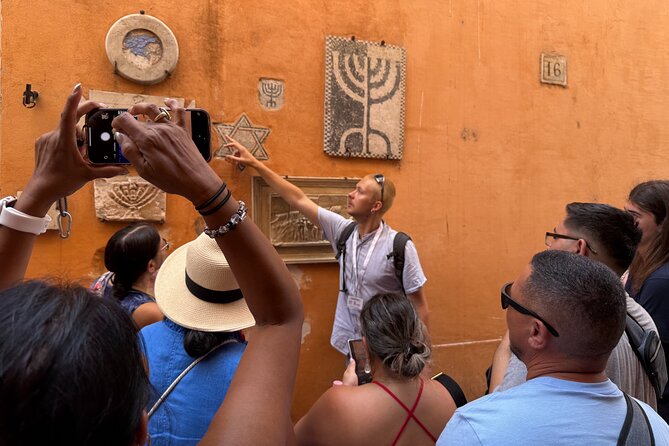
Reviewed · TRASTEVERE TOURS
Highlights of Jewish Ghetto and Trastevere Walking Tour
Jewish Ghetto and Trastevere in one smart walk. You get a fast 90-minute route that links synagogue landmarks and Roman monuments, with a small group (up to 20) and a licensed guide keeping it moving.
I also like that you cross the Tiber and finish in Trastevere, so the story lands in real street life, not just plaques. Guides such as Iri and Ivan also bring practical food suggestions and a bit of dark, sometimes politically incorrect humor—enough to make the facts feel human.
One thing to consider: this is a tip-based tour, so plan to tip well on top of the $3.87 base price. And it depends on good weather, since it’s an outdoor walk.
In This Review
- Key takeaways before you go
- A smart, 1-hour-45-minute Rome combo: Jewish Ghetto plus Trastevere
- Start at Piazza Mattei: Fontana delle Tartarughe’s bronze turtles
- Portico d’Ottavia: the ancient gateway to the Jewish Ghetto
- Teatro di Marcello: Julius Caesar’s theater that looks like a mini Colosseum
- Tempio Maggiore di Roma: Art Nouveau meets a community that endured
- Isola Tiberina: Rome’s only river island and its healing legend
- Trastevere streets: where the story keeps living after the history ends
- Basilica di Santa Maria in Trastevere: 12th-century mosaics and quiet air
- Piazza Trilussa: finishing in a square made for dinner plans
- Price and logistics: why $3.87 can still be worth it
- The guide experience: pacing, storytelling, and restaurant pointers
- Morning vs afternoon timing: how to pick the best slot
- Who should book this Jewish Ghetto and Trastevere walk?
- Should you book this Rome Jewish Ghetto and Trastevere tour?
- FAQ
- How long is the Jewish Ghetto and Trastevere walking tour?
- How much does the tour cost, and do the stops charge admission?
- Where does the tour start and where does it end?
- Is the tour offered in English, and how many people are in a group?
- Do I get a mobile ticket?
- What happens if the weather is poor or if I need to cancel?
Key takeaways before you go
- Two neighborhoods, one coherent story: ancient Rome, Jewish history, and medieval street scenes in a single walk.
- Hands-on history at landmark gates: Portico d’Ottavia and Teatro di Marcello set the stage before you reach synagogue-era Rome.
- Tiber River moments on both banks: crossing bridges and seeing the island gives you a geography lesson in minutes.
- Architecture nerd time (without the headache): Art Nouveau meets older religious styles at Tempio Maggiore di Roma.
- End in Trastevere, not back at a starting point: Piazza Trilussa is the easy springboard to dinner.
- A group small enough for questions: up to 20 people helps the guide keep the pace and attention.
A smart, 1-hour-45-minute Rome combo: Jewish Ghetto plus Trastevere
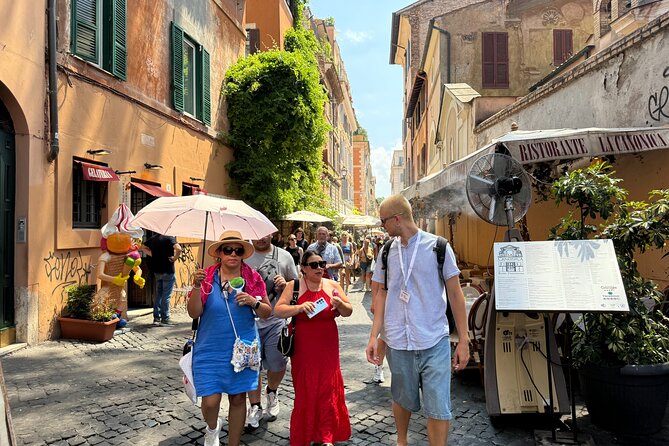
This is the kind of Rome walk I like best: focused, not exhausting. In about 1 hour 45 minutes, you cover two historic districts that are often visited separately, and you connect the dots between empires, religion, and neighborhood life.
The small group size matters. With a cap of 20 people, the guide can actually steer the conversation, answer questions, and keep your eyes on the right details. And since it’s offered in both morning and afternoon timings, you can match it to the rest of your day.
More lanes worth losing an evening in Trastevere
- Winner 2025 Rome Twilight Trastevere Food Tour by Eating Europe
★ 5.0 · 5,157 reviews - Rome Food Tour: Campo de’ Fiori, Ghetto, Trastevere Winner 2024
★ 5.0 · 3,205 reviews - Rome: Guided Food Walking Tour with Wine in Trastevere
★ 4.9 · 3,105 reviews - Rome: Trastevere Food tour with Free-Flowing Fine Wine
★ 5.0 · 2,853 reviews
Start at Piazza Mattei: Fontana delle Tartarughe’s bronze turtles
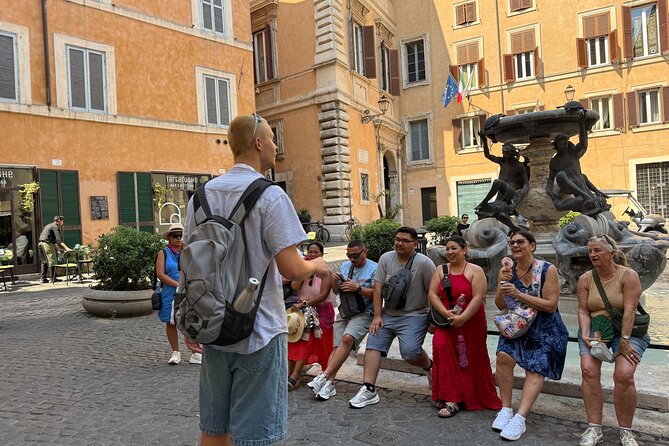
You begin in Piazza Mattei, right at the Fontana delle Tartarughe. It’s a late Renaissance fountain, and the details are worth pausing for. The bronze turtles and their delicate figures sit in a composition that feels almost playful—yet it’s placed in a square that’s close to some very serious history later on.
This first stop works as a warm-up. You’re not just looking at a pretty fountain; you’re getting your orientation for the neighborhood streets and the general vibe of the area.
Practical note: the stop is short, so if you want a photo, do it quickly and move with the group.
Portico d’Ottavia: the ancient gateway to the Jewish Ghetto
Next comes the Portico d’Ottavia—built in the 2nd century BCE and later restored by Augustus. It’s a monumental passageway, but it’s also a boundary marker. Here, architecture tells you where power sat and how cities organized space.
The guide’s job in a walk like this is to help you read the city. At Portico d’Ottavia, the story connects archaeology and lived experience. You can understand why the location became tied to the Jewish Ghetto: it’s one of those places where Rome’s layers are right in your face.
If you like history that has a physical geography, you’ll enjoy this. It’s not abstract.
Teatro di Marcello: Julius Caesar’s theater that looks like a mini Colosseum
From there, you head to Teatro di Marcello. This is an ancient Roman theater commissioned by Julius Caesar and completed by Augustus. The guide points out how it resembles a smaller Colosseum, and how its design influenced later amphitheaters.
This stop is quick, but it’s a good one for getting perspective. It reminds you that Rome’s entertainment buildings weren’t just for spectacle—they were part of how the empire displayed itself.
Tip: treat this as a photo-stop plus a mental model. After you see it, you’ll notice theater-like design choices across Rome.
More of the Ghetto's quiet corners

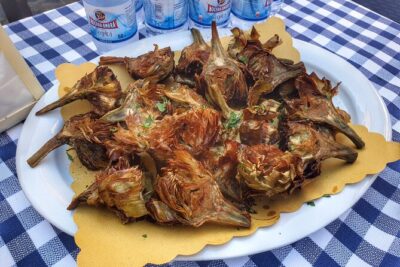
Tempio Maggiore di Roma: Art Nouveau meets a community that endured
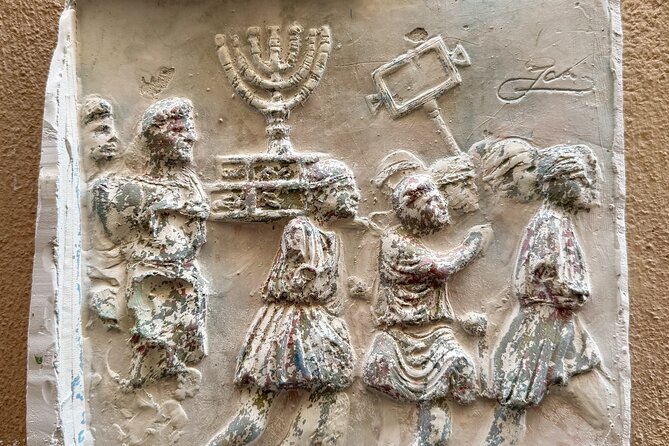
Then the walk reaches Tempio Maggiore di Roma, the main synagogue of Rome. It was inaugurated in 1904, and the architecture is unusually eye-catching—an Art Nouveau look with Assyro-Babylonian influences.
This is the moment where the tour’s two-neighborhood idea clicks. Trastevere is ahead, full of daily life. But the Jewish Ghetto story is here too—shown through design, religious space, and the persistence of a community.
Even if you’re not an architecture specialist, you can still appreciate what the guide does with the facts: the building isn’t only a landmark. It’s a statement in stone and ornament about continuity through upheaval.
Isola Tiberina: Rome’s only river island and its healing legend
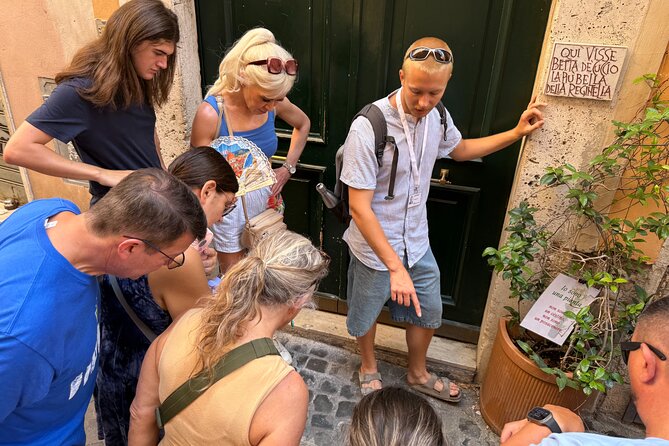
Next you shift to the Tiber itself—because Rome makes you earn its best views. You’ll cross over and take in riverside scenery on both banks, then land at Isola Tiberina, the island in the middle of the river.
Isola Tiberina is known for healing dating back to ancient times. It also connects to two major points: the historic Fatebenefratelli Hospital and the Temple of Aesculapius.
This stop is short on time, but it’s big on meaning. The guide is essentially teaching you Rome’s old habit: turning natural features into purposeful places. When you look at the island in the flow of the river, you start to understand why it kept getting reused across centuries.
If you’re a “walk means views” person, this is one of the best sections of the route.
Trastevere streets: where the story keeps living after the history ends
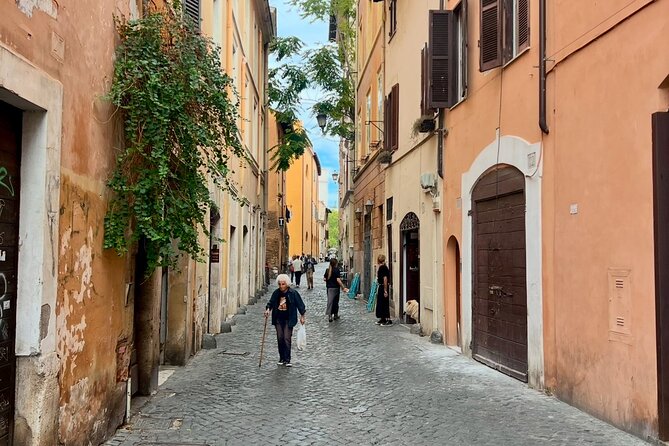
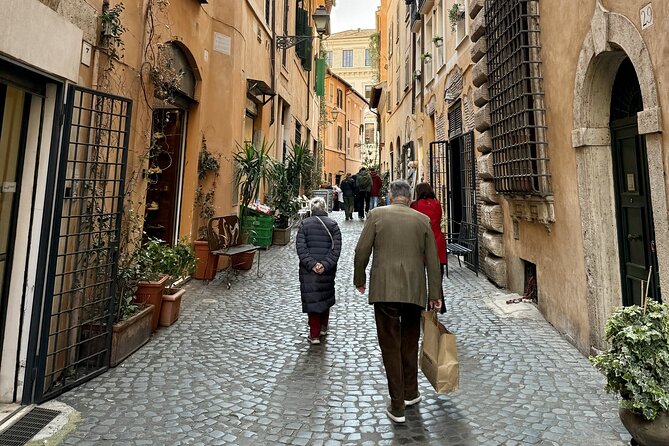
After the river island, the tour arrives in Trastevere, one of Rome’s most charming districts. The vibe here is different from the ghetto lanes: medieval street patterns, lively evening energy, and plenty of places to eat.
This isn’t only sightseeing. The guide gives food recommendations during the walk—practical suggestions so you don’t have to guess where to go next. In Trastevere, the line between tourist trap and solid trattoria can be thin, so having a local-minded pointer helps.
Also, Trastevere is where your evening planning gets easy. Since the tour ends in the area, you’re not stuck traveling across town afterward just to find dinner.
Basilica di Santa Maria in Trastevere: 12th-century mosaics and quiet air
You continue to Basilica di Santa Maria in Trastevere, one of Rome’s oldest churches. Look for the 12th-century mosaics—they’re a highlight, and the atmosphere is calmer than the streets outside.
This is one of those stops that works even if you’re not into churches. The key is contrast: you just walked through layers of civic and community space. Inside, you get a visual reminder that Rome’s faith traditions also shaped art and daily rhythms.
Short stop, but strong payoff.
Piazza Trilussa: finishing in a square made for dinner plans
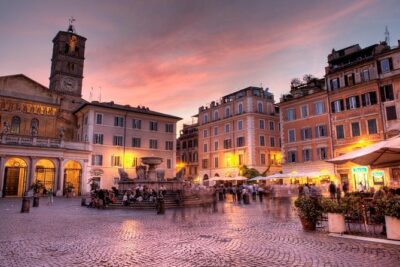
The walk ends at Piazza Trilussa, a lively gathering point in the Trastevere area. Here you’ll find the Fountain of Ponte Sisto and a statue of the poet Trilussa, plus the kind of public energy that naturally pulls you toward food and people-watching.
The ending spot is smart. You’re placed right where you want to be if your next step is a casual meal. It’s not a remote landmark with nowhere to go.
And since the tour also includes crossing Ponte Sisto, you’ll have gotten the river connection earlier, plus a sense of how Trastevere links back toward the historic center.
Price and logistics: why $3.87 can still be worth it
The listed price is $3.87 per person, which sounds almost too low for a guided walk. The key detail is that the tour is tip-based—the guides work for tips alone. So think of the base price as the access fee, not the full cost.
Value-wise, you’re paying for:
- A licensed guide who brings historical context
- Focused stops across Jewish Ghetto + Roman antiquities + Trastevere
- Food suggestions along the way
Also, with an average booking time around 32 days in advance and a max group size of 20, you can treat this as a popular, guided way to avoid doing the same route on your own with less context.
If you already have a strong guidebook and you love self-paced wandering, you could DIY parts of this. But if you want someone to interpret what you’re seeing—especially the bridge between synagogue history and the surrounding ancient city fabric—this is a good use of money.
The guide experience: pacing, storytelling, and restaurant pointers
The best part of a walking tour is how the guide turns places into meaning. On this route, that often includes quick syntheses of stories so you don’t feel lost at street level.
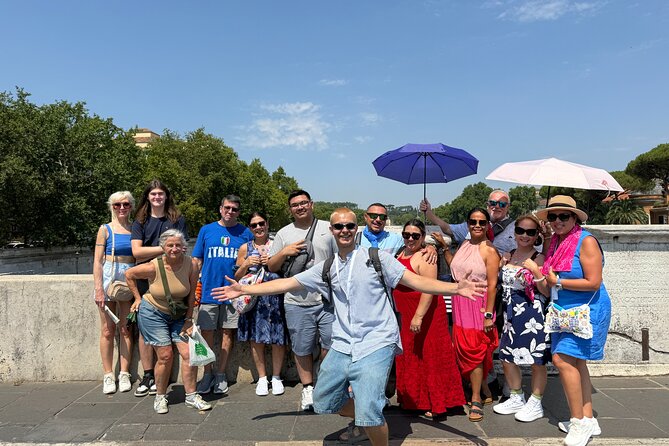
Guides like Iri and Ivan are described as energetic and able to keep people engaged without turning it into a lecture. You’ll also get practical restaurant advice during the walk, which is especially useful in Trastevere where the dining options are plentiful.
And yes: expect humor. The tour format includes dark humor and jokes that may be politically incorrect. If that’s not your style, you might still enjoy the historical stops, but keep your expectations aligned with that tone.
Morning vs afternoon timing: how to pick the best slot
You can choose between morning and afternoon departures. In practical terms, picking the timing should match two things: your energy level for an outdoor walk, and your plans for dinner afterward.
Afternoon tends to flow naturally into Trastevere meals. Morning gives you more time to explore further on your own after you finish at Piazza Trilussa.
Either way, plan for walking between stops and be ready to move promptly at each location.
Who should book this Jewish Ghetto and Trastevere walk?
This works well if you want:
- A guided Rome Jewish Ghetto experience that’s short and organized
- Quick, high-impact stops rather than a long day
- A route that ends in a neighborhood where you can eat right away
- A mix of architecture, archaeology, and neighborhood culture
You might skip it if you prefer slow, in-depth museum-style visits. The stops are intentionally brief, and the tour is built for moving.
Also, since it’s outdoors, it’s best when the weather cooperates.
Should you book this Rome Jewish Ghetto and Trastevere tour?
If you’re trying to cover a lot of Rome without feeling rushed, this is an efficient pick. You get synagogue-era context, Roman monuments, and river island scenery, then finish where your feet—and appetite—will want to stay.
My decision rule is simple: book it if you value interpretation and guidance more than you value total freedom. The ending in Piazza Trilussa is a real convenience, and the mix of history plus food advice makes it easier to turn into a great day rather than just a walk.
If you’re going to tip anyway for a good guide, the low base price makes this an even better deal.
FAQ
How long is the Jewish Ghetto and Trastevere walking tour?
It lasts about 1 hour 45 minutes.
How much does the tour cost, and do the stops charge admission?
The price is listed as $3.87 per person. The stops included here are marked as having free admission tickets.
Where does the tour start and where does it end?
It starts at Fontana delle Tartarughe, Piazza Mattei, 5, 00186 Rome and ends in Piazza Trilussa, 00153 Rome.
Is the tour offered in English, and how many people are in a group?
The tour is offered in English, with a maximum group size of 20 travelers.
Do I get a mobile ticket?
Yes, the tour includes a mobile ticket.
What happens if the weather is poor or if I need to cancel?
The experience requires good weather. If it’s canceled due to poor weather, you’ll be offered a different date or a full refund. You can cancel for a full refund up to 24 hours in advance.
More Tour Reviews in Rome
- Vatican Museums, Sistine Chapel & St. Peter’s Basilica Tour
★ 4.3 · 73,970 reviews - Vatican Museums, Sistine Chapel & St Peter’s Basilica Guided Tour
★ 4.5 · 39,149 reviews - Rome: Colosseum, Palatine Hill and Roman Forum Guided Tour
★ 4.8 · 32,814 reviews - Rome: Guided Tour of Colosseum, Roman Forum & Palatine Hill
★ 4.7 · 27,897 reviews - Rome: Colosseum & Forum with Audio Guide App -Optional Arena
★ 4.2 · 24,770 reviews - Rome: Colosseum, Roman Forum and Palatine Hill Guided Tour
★ 4.5 · 23,903 reviews
More Around the Jewish Ghetto
- Rome Food Tour: Campo de’ Fiori, Ghetto, Trastevere Winner 2024
★ 5.0 · 3,205 reviews - Jewish Ghetto and Trastevere Tour Rome
★ 4.5 · 1,729 reviews - Rome: Eat Like a Roman Ghetto & Campo de’ Fiori Food Tour
★ 5.0 · 1,037 reviews - Jewish Ghetto and Synagogues with Jewish Roman Guide 3 Hours
★ 5.0 · 907 reviews - Jewish Ghetto & Piazza Navona: Food, Wine & Sightseeing Rome Tour
★ 5.0 · 460 reviews - Rome: Food & Wine Tour of Campo de Fiori, Ghetto, Trastevere
★ 4.8 · 413 reviews
Still in Trastevere? Keep Going
- Winner 2025 Rome Twilight Trastevere Food Tour by Eating Europe
★ 5.0 · 5,157 reviews - Rome Food Tour: Campo de’ Fiori, Ghetto, Trastevere Winner 2024
★ 5.0 · 3,205 reviews - Rome: Guided Food Walking Tour with Wine in Trastevere
★ 4.9 · 3,105 reviews - Rome: Trastevere Food tour with Free-Flowing Fine Wine
★ 5.0 · 2,853 reviews - Rome: Trastevere & Campo de Fiori Street Food Walking Tour
★ 4.9 · 2,768 reviews - Rome: Award Winning Trastevere Group Food Tour with Wine
★ 5.0 · 2,273 reviews
Just added to our Rome reviews





Trastevere Tours, compared.
 ★ 5.0Winner 2025 Rome Twilight Trastevere Food Tour by Eating EuropeFrom $1255,157 reviews
 ★ 5.0Rome Food Tour: Campo de’ Fiori, Ghetto, Trastevere Winner 2024From $883,205 reviews
 ★ 4.9Guided Food Walking Tour with Wine in TrastevereFrom $1003,105 reviews
 ★ 5.0Trastevere Food tour with Free-Flowing Fine WineFrom $1022,853 reviews
 ★ 4.9Trastevere & Campo de Fiori Street Food Walking TourFrom $512,768 reviews
 ★ 5.0Award Winning Trastevere Group Food Tour with WineFrom $812,273 reviews
 ★ 4.8Trastevere Street Food Walking Tour with Local ExpertFrom $571,784 reviews
 ★ 4.5Jewish Ghetto and Trastevere Tour RomeFrom $41,729 reviews
Browse the lists this tour appears in