
Reviewed · POMPEII DAY TRIPS
From Rome: Pompeii and Herculaneum by High-Speed Train
Two Vesuvius victims, one fast train day. This Rome-to-Campania trip pairs a high-speed train with archaeologist-led walking tours through Pompeii and Herculaneum, using headsets so you don’t miss a detail. You also get comfortable van/minibus rides so you’re not stuck figuring out transit in unfamiliar places.
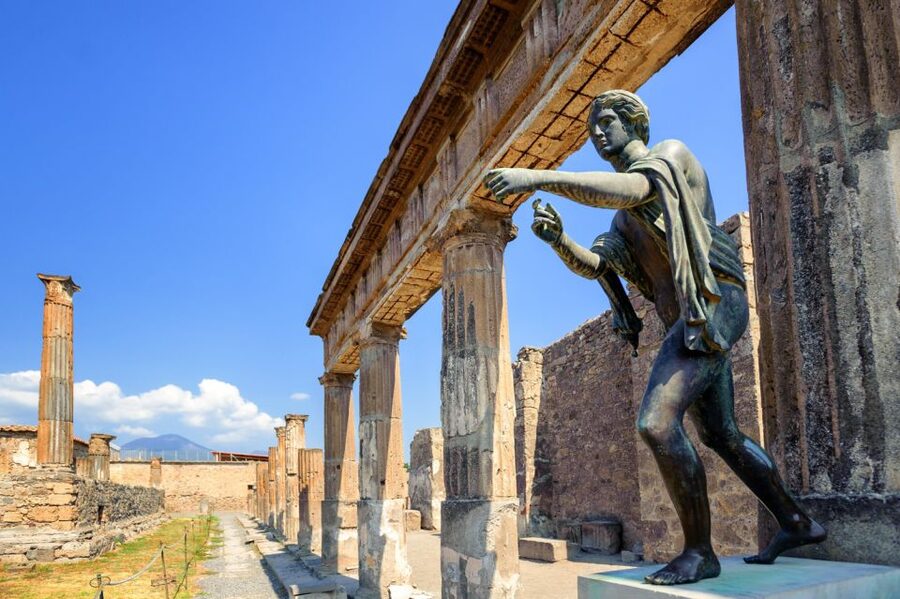
What I like most is the focus on the human story, not just the stones. In Pompeii you see plaster casts of victims and animals, plus major highlights like the brothel area and even newly opened houses, all explained by an archaeologist guide.
The main thing to consider is timing. The day runs long, Pompeii includes guided time plus a short free period, and that can make lunch and picture-taking feel a bit rushed.
In This Review
- Key points you’ll care about
- Day Trip From Rome: Why Pompeii + Herculaneum Works in One Shot
- The guides make the day
- Price and Logistics: What You’re Actually Paying For
- Getting Started in Naples: The Meet-Up Spot That Saves Time
- Pompeii With an Archaeologist: Casts, the Brothel, and Those Newer House Areas
- Expect a lot of walking on uneven ground
- Pompeii Free Time: How to Use 30 Minutes Without Stress
- Herculaneum in Two Hours: House Life, the House of Neptune and Amphitrite, and the Skeleton Beach
- The Human Story: What Those Plaster Casts Teach You
- Comfort, Shoes, and Rain: Small Rules That Matter
- How Well It Flows: Transfers, Drivers, and Staying on Track
- Who This Tour Suits Best (And Who Might Prefer Something Else)
- Final Call: Should You Book This Pompeii + Herculaneum Day Trip?
- FAQ
- Where do we meet the guide in Naples?
- How long is the whole trip from start to finish?
- How do we travel from Rome to Naples?
- How do you get from Naples to the archaeological sites?
- Are Pompeii and Herculaneum guided?
- What Pompeii sights are included?
- What Herculaneum sights are included?
- How much walking should I plan for?
- What should I bring and what is not allowed?
- Is the tour suitable for wheelchair users?
Key points you’ll care about
- Fast train to Naples in about 70 minutes, then short transfers by van/minibus
- Archaeologist-guided tours at both sites with headsets for everyone
- Pompeii highlights include plaster casts, a brothel area, and newly opened houses
- Herculaneum highlights include the House of Neptune and Amphitrite and the preserved-skeleton beach
- Skip-the-ticket-line entry via Pompeii Express tickets
- Short free time in Pompeii means you should plan what you want most for photos and lunch
Day Trip From Rome: Why Pompeii + Herculaneum Works in One Shot
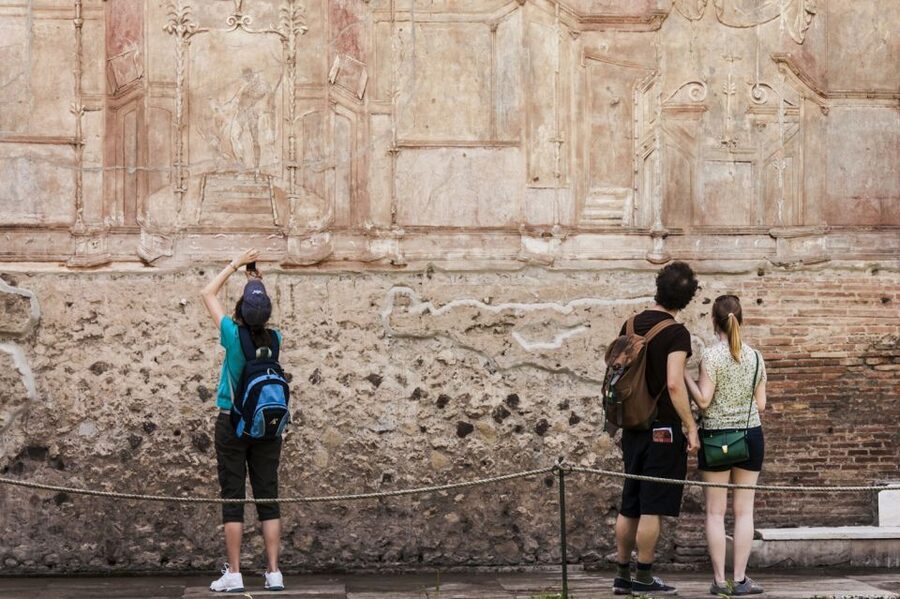
Rome to Pompeii is easy to day-trip in theory. Making it worth your full day takes a bit more work. This tour uses a high-speed train to shrink the travel hassle, then it spends your time where it counts: Pompeii and Herculaneum, both guided by an archaeologist.
The best reason to do both sites in one day is contrast. Pompeii feels like a big, public city with grand streets and major buildings. Herculaneum feels more intimate, more domestic, with quieter blocks and houses that help you picture everyday life. With a good guide, you stop seeing it as a “disaster sightseeing day” and start seeing it as two different slices of Roman life preserved under the same volcanic crisis.
And yes, the subject matter is heavy. Seeing victims’ plaster casts in Pompeii is emotional. But it’s also unusually educational, because the guide connects what you see to how people lived, what they wore, what they owned, and what the eruption and earthquakes did to the area.
More days out to Pompeii and Vesuvius
- From Rome: Pompeii, Amalfi Coast, and Sorrento Day Trip
★ 4.6 · 7,031 reviews - From Rome: Pompeii, Amalfi Coast and Positano Day Trip
★ 4.6 · 6,620 reviews - Pompeii, Amalfi Coast and Positano Day Trip from Rome
★ 4.5 · 6,250 reviews - Pompeii and Mount Vesuvius Day Trip from Rome with Pizza Lunch
★ 4.5 · 6,151 reviews
The guides make the day
One of the strongest signals in the reviews is that the archaeologist guides genuinely change the experience. Names that come up repeatedly include Michele (often pronounced Michael), Mikel, Raphael, Sergio, Gennaro, Alfredo, Diego, Paolo, Giulia, Julia, and Gennaio. Different personalities, same core advantage: you get explanations tied to the architecture and finds, not generic “stand and point” commentary.
Price and Logistics: What You’re Actually Paying For
At $222.77 per person (for this specific experience), you’re not just paying for entrances. You’re paying for a whole chain of things that would be annoying to assemble alone:
- high-speed train from Rome to Naples and back
- guided tours at both Pompeii and Herculaneum with archaeologist interpretation
- transportation by van/minibus between Naples and the sites
- headsets, so group walking doesn’t turn into guesswork
- entry access that helps you avoid waiting at the ticket point at Pompeii (Pompeii Express tickets)
That’s what makes the value feel different from a basic day tour. If you’re the type who wants to understand what you’re looking at, the cost-to-time ratio makes more sense. If you want total freedom to wander without structure, the set schedule may feel limiting.
The other logistics point: this isn’t a “meet up and solve it later” situation. You travel independently on the train using tickets provided for you, then you meet the tour team in Naples. After that, the transfers and timing are handled for you.
Getting Started in Naples: The Meet-Up Spot That Saves Time
Your day begins at Roma Termini. You travel by high-speed train to Naples Central Station, then meet the guide right outside the station area.
The meeting point is clearly set: stand in front of the STARHOTEL TERMINUS entrance located opposite the station, and look for a guide holding an ASKOS TOURS sign. It’s a simple setup, but it’s still worth arriving early at Roma Termini so you don’t sprint through the station at the last second.
From Naples, you’ll transfer to Pompeii by minibus (a short ride), then the day keeps moving with another quick transfer to Herculaneum, and finally the return to Naples Central Station for the fast train back to Rome.




Pompeii With an Archaeologist: Casts, the Brothel, and Those Newer House Areas
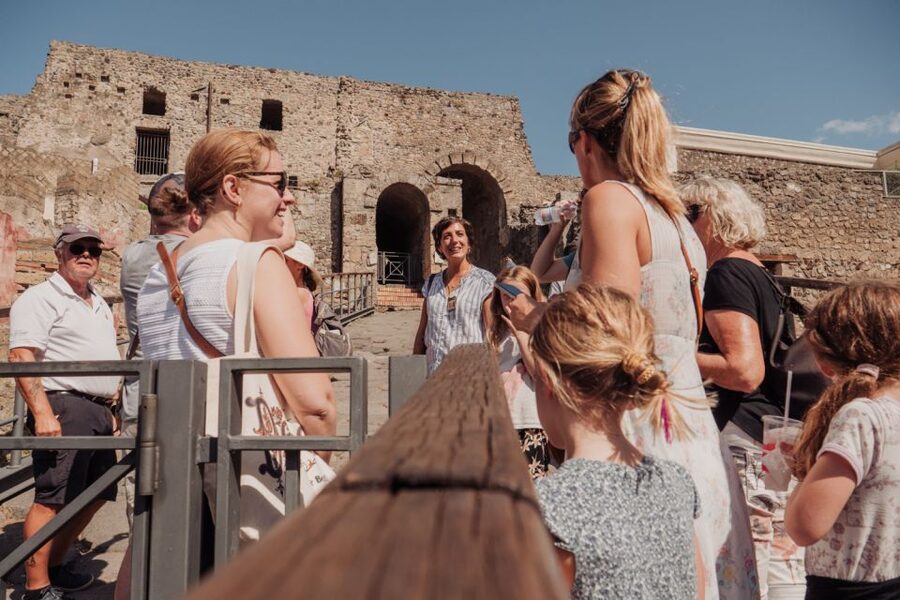
Pompeii is the headline attraction. The tour doesn’t just take you to the biggest photographed spots. It pushes deeper into the experience of the city.
In Pompeii, the guided visit includes key buildings and major highlights. You’ll see things like:
- the brothel area
- newly opened house areas
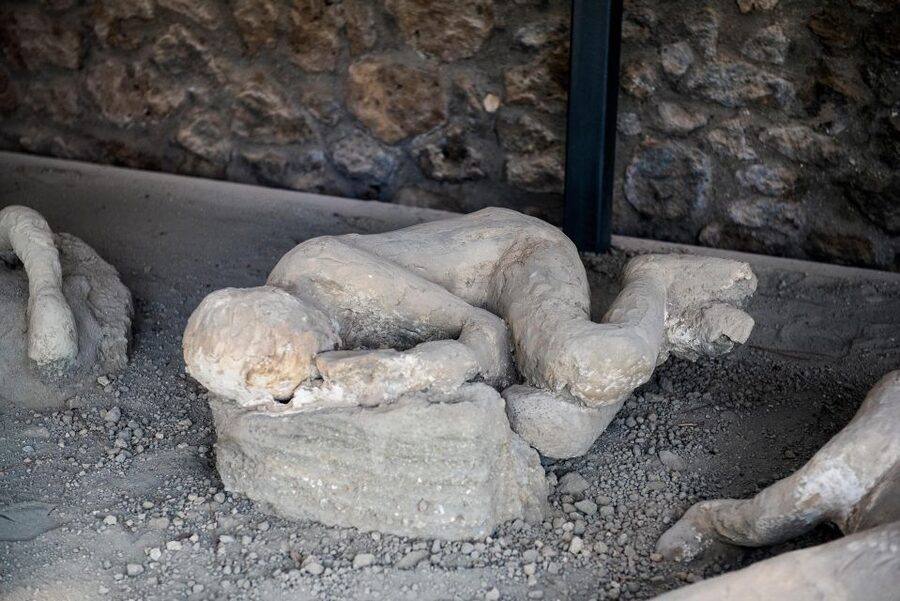
- plaster casts of victims, and also plaster casts of animals preserved in the eruption context
Why that matters: plaster casts can be a special kind of museum moment. Photos don’t really teach you how people died and what happened in the streets. When an archaeologist explains what you’re looking at and how the city’s layout and collapse played out, the site turns from spectacle into evidence.
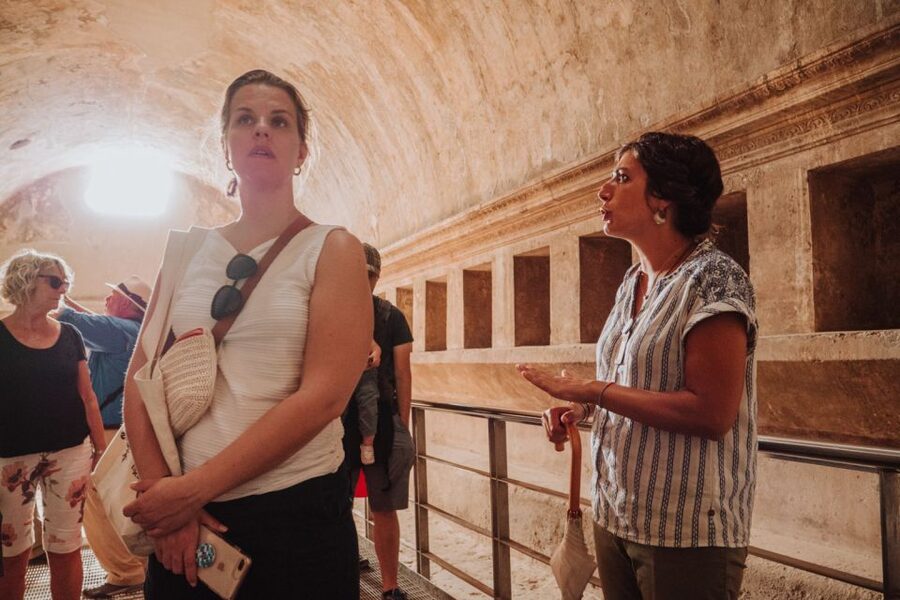
The tour also uses headsets for everyone, which matters in Pompeii because the crowds and the distance between groups can make standard “hear what the guide says” tours turn frustrating.
Expect a lot of walking on uneven ground
This is not a sit-in-a-bus-and-see-everything situation. Pompeii includes about one mile of walking during the visit, and the streets are stone-paved. Wear footwear that grips well. Avoid anything slippery or too delicate.
Pompeii Free Time: How to Use 30 Minutes Without Stress
You get free time after the guided portion in Pompeii. In practice, this is the window for either a meal, quick shopping, or just stepping back and letting the scale hit you.
Here’s the reality check: Pompeii can eat time fast. The guided portion gives you a lot of structure, but you may still find yourself wishing you had a little more daylight to return to a courtyard or the forum area for photos. Some people felt the day’s Pompeii timing could be tight, especially if they wanted a slower museum-style walk or extra time for lunch seating.
My practical advice:
- Pick one “must photograph” area before you start walking. Then you’ll know what to chase during free time.
- If you plan to shop, set a budget and stick to it. Pompeii is full of tempting souvenirs.
- If lunch is important to you, go in with the mindset that you may need to move quickly once you sit down.
Herculaneum in Two Hours: House Life, the House of Neptune and Amphitrite, and the Skeleton Beach
If Pompeii is about grand city life, Herculaneum is about how people lived. The ruins here feel more preserved in terms of intimacy—streets and houses that let your brain build a domestic map.
The Herculaneum visit is about two hours, guided. Your route includes stops such as:
- the House of Neptune and Amphitrite
- the beach area where preserved skeletons are found
This is the kind of scene that sticks in your mind. It’s not just “look at bones.” The guide’s job here is to connect what happened to the coast and why the preservation looks the way it does. When you understand the volcanic process and the sequence of events, the skeleton beach turns from shock into context.
Also, Herculaneum includes about half a mile of walking. It’s less than Pompeii, but you’ll still cover ground through uneven surfaces.
The Human Story: What Those Plaster Casts Teach You
The plaster casts are one of the most praised elements of the day. They include people and animals in Pompeii, and they’re displayed in a way that makes the city’s tragedy feel immediate.
Without that explanation, casts can look like a museum exhibit. With an archaeologist guiding you, they become a timeline: where people were likely moving, what collapsed, and why certain areas ended up with the kinds of remains they have today.
I also like how the tour framing uses the sites together. Pompeii shows a public city in motion. Herculaneum shows a more domestic, close-up version of Roman daily life. Same eruption story. Different “how it felt” perspective.
Comfort, Shoes, and Rain: Small Rules That Matter
This tour runs rain or shine, so bring a raincoat if weather looks iffy. The walking surfaces are outdoors and uneven, so you’ll want stable shoes.
Not allowed:
- sandals or flip flops
- luggage or large bags
- high-heeled shoes
What I’d bring:
- a compact day bag (within the tour’s luggage rules)
- a rain layer you can actually walk in
- something for sun protection if the day is clear
The tour also isn’t recommended for limited mobility, and it’s not suitable for wheelchair users. Plan around walking distance: about one mile in Pompeii, about half a mile in Herculaneum.
How Well It Flows: Transfers, Drivers, and Staying on Track
A big part of doing Pompeii and Herculaneum in one day is not getting lost in Naples traffic and station logistics. The tour handles the transfer timing with minibus/van rides that keep things structured.
One driver name that shows up is Pasquale, praised for handling Naples traffic effectively. There’s also an example of quick problem-solving when something mechanical caused stress, and the day still moved forward.
The other small-but-real pro move: headsets for everyone. That reduces the usual chaos of a group trying to stay together while talking over crowds.
Who This Tour Suits Best (And Who Might Prefer Something Else)
This tour is a strong match for:
- first-timers to Pompeii and Herculaneum who want both in one day
- people who care about understanding the ruins, not only collecting photos
- travelers who like guided structure and hate wasting time figuring out transit
- couples, solo travelers, and families who can handle moderate walking
You might choose something else if:
- you want long, free-form exploration at each site
- you have mobility limitations that make uneven outdoor walking difficult
- you dislike tightly timed days and short free periods
Final Call: Should You Book This Pompeii + Herculaneum Day Trip?
If your goal is a well-paced, guided day that turns ruins into real stories, this is an easy yes. You’re getting high-speed train time saved, archaeologist-led explanations at both major sites, and organized transfers that keep the day from unraveling.
The main reason to pause is pacing. Pompeii is huge, and the free time you get is short. If you’re the type who wants museum-style wandering and slow lunch breaks, you may feel rushed. But if you want the big highlights plus clear context, the schedule is built for exactly that.
FAQ
Where do we meet the guide in Naples?
Meet your guide in front of the STARHOTEL TERMINUS entrance, opposite Naples Central Station. Look for the guide holding an ASKOS TOURS sign.
How long is the whole trip from start to finish?
The total duration is about 8.5 hours, depending on the departure time you select.
How do we travel from Rome to Naples?
You take a high-speed train from Roma Termini to Naples Central Station. The train ride is about 70 minutes each way.
How do you get from Naples to the archaeological sites?
After arriving in Naples, you use a van/minibus transfer to Pompeii, and later a minibus transfer to Herculaneum. Transfers back to Naples use the same style of transport.
Are Pompeii and Herculaneum guided?
Yes. Both Pompeii and Herculaneum are visited on guided tours with an archaeologist. The tour is in English, and headsets are provided for all participants.
What Pompeii sights are included?
Pompeii includes a guided visit to key highlights such as newly opened houses, the plaster casts of victims (and animals), the brothel area, and other major buildings on site. You also get a short free time period afterward.
What Herculaneum sights are included?
The Herculaneum guided visit includes stops such as the House of Neptune and Amphitrite and the beach area where preserved skeletons are found.
How much walking should I plan for?
Plan for about one mile of walking in Pompeii and about half a mile of walking in Herculaneum.
What should I bring and what is not allowed?
Bring your passport or ID card. Avoid sandals or flip flops, high-heeled shoes, and luggage or large bags. The tour is outdoors, so a raincoat can help since it runs in rain or shine.
Is the tour suitable for wheelchair users?
No. The tour is not suitable for wheelchair users, and it is not recommended for people with limited mobility.
—
If you tell me your travel month and whether you’ll prioritize photos vs. stories, I can suggest how to pace your Pompeii free time so you don’t feel short-changed.
More Tour Reviews in Rome
- Vatican Museums, Sistine Chapel & St. Peter’s Basilica Tour
★ 4.3 · 73,970 reviews - Vatican Museums, Sistine Chapel & St Peter’s Basilica Guided Tour
★ 4.5 · 39,149 reviews - Rome: Colosseum, Palatine Hill and Roman Forum Guided Tour
★ 4.8 · 32,814 reviews - Rome: Guided Tour of Colosseum, Roman Forum & Palatine Hill
★ 4.7 · 27,897 reviews - Rome: Colosseum & Forum with Audio Guide App -Optional Arena
★ 4.2 · 24,770 reviews - Rome: Colosseum, Roman Forum and Palatine Hill Guided Tour
★ 4.5 · 23,903 reviews
More Days Out to Pompeii
- From Rome: Pompeii, Amalfi Coast, and Sorrento Day Trip
★ 4.6 · 7,031 reviews - From Rome: Pompeii, Amalfi Coast and Positano Day Trip
★ 4.6 · 6,620 reviews - Pompeii, Amalfi Coast and Positano Day Trip from Rome
★ 4.5 · 6,250 reviews - Pompeii and Mount Vesuvius Day Trip from Rome with Pizza Lunch
★ 4.5 · 6,151 reviews - From Rome: Pompeii Day Trip with Optional Vesuvius and Lunch
★ 4.6 · 5,067 reviews - Pompeii Tour & Amalfi Coast Day Trip from Rome
★ 4.5 · 1,932 reviews
Just added to our Rome reviews





Pompeii Day Trips, compared.
 ★ 4.6From Rome: Pompeii, Amalfi Coast, and Sorrento Day TripFrom $797,031 reviews
 ★ 4.6From Rome: Pompeii, Amalfi Coast and Positano Day TripFrom $996,620 reviews
 ★ 4.5Pompeii, Amalfi Coast and Positano Day Trip from RomeFrom $1016,250 reviews
 ★ 4.5Pompeii and Mount Vesuvius Day Trip from Rome with Pizza LunchFrom $906,151 reviews
 ★ 4.6From Rome: Pompeii Day Trip with Optional Vesuvius and LunchFrom $885,067 reviews
 ★ 4.5Pompeii Tour & Amalfi Coast Day Trip from RomeFrom $2401,932 reviews
 ★ 4.5Private Pompeii, Positano & Amalfi coast Tour from RomeFrom $1,0711,888 reviews
 ★ 5.0Rome to Pompeii Guided Tour with Wine & Lunch by High Speed TrainFrom $2391,379 reviews
Browse the lists this tour appears in