
Reviewed · 2-HOUR EXPERIENCES
Fountains and Squares of Rome 2-Hour Walking Tour
Rome’s fountains tell stories you can walk into. This 2-hour tour strings together Baroque and Renaissance squares with famous water landmarks, so you’re not just looking—you’re getting the why behind them. I especially love the small-group feel, because it helps your guide tailor pace and explanations to the people in front of them. One thing to keep in mind: it’s a compact, busy walk, and at this price point you’ll want to enjoy the walking and guidance more than expecting museum-style time.
You’ll get more than postcard photos here. I like the way the route mixes iconic stops (Trevi and Piazza Navona) with precise details like the half-sunken-ship fountain and the Pantheon’s world’s largest non-reinforced concrete dome. The possible drawback is simple: with no hotel pickup, you need to show up ready to start at Piazza Barberini and be comfortable moving for the full 2 hours.
In This Review
- Key things to know before you go
- How This 2-Hour Fountain Route Works (and Why It’s a Good Fit)
- Piazza Barberini Start: Getting Oriented Fast
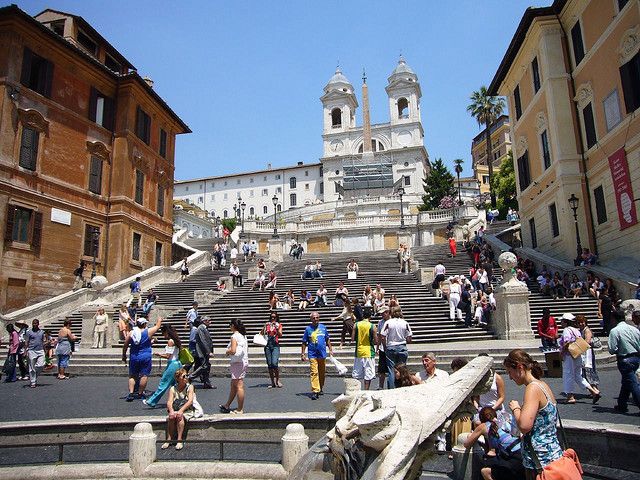
- Piazza di Spagna and the Fontana della Barcaccia: the Half-Sunken Ship Moment
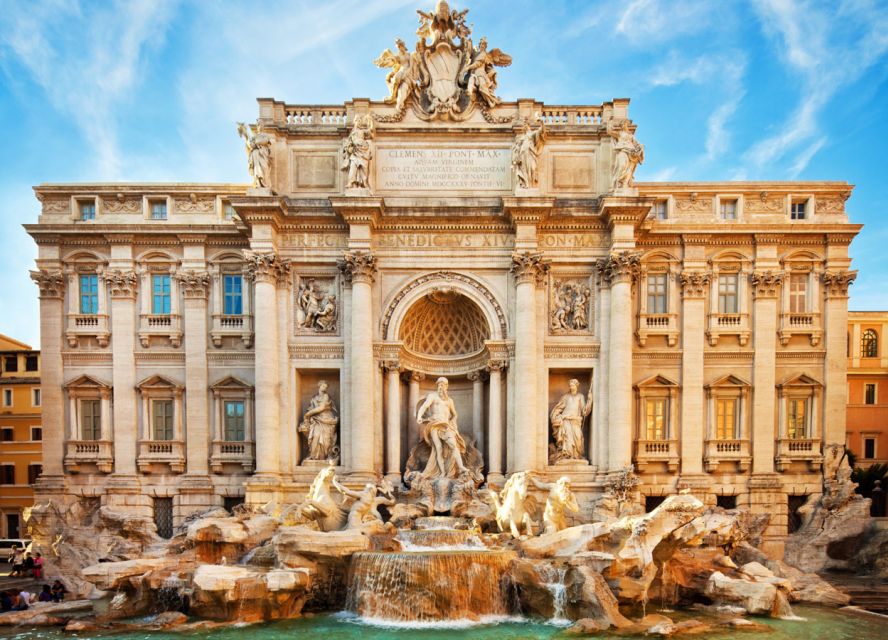
- Trevi Fountain: Coin Ritual, Big Setting, Real Context
- Pantheon Stop: From a Square Fountain to Ancient Engineering
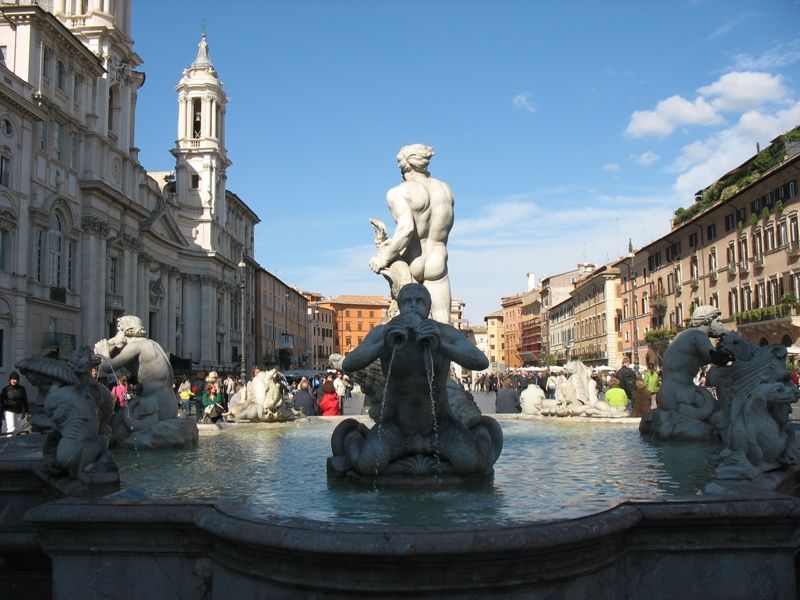
- Piazza Navona: Bernini’s Four Rivers and the Stadium Under Your Feet
- Campo de’ Fiori Ending: Giordano Bruno’s Statue and a Darker Memory
- Price and Value: Is $74 Worth It for a Small-Group Walk?
- Who This Tour Suits Best (and Who Might Prefer a Different Plan)
- Should You Book the Fountains and Squares of Rome Tour?
- FAQ
- What’s the duration of the Fountains and Squares of Rome walking tour?
- Where does the tour start?
- What are the main stops on the route?
- What’s included in the price?
- What languages are available?
- Do I need hotel pickup or drop-off?
- What should I bring?
Key things to know before you go
- Start at Piazza Barberini and follow a tight route that keeps you moving through the core sights.
- Fontana della Barcaccia at the base of the Spanish Steps is the standout “wow” fountain, shaped like a half-sunken ship.
- Trevi Fountain coin ritual plus a setting you’ll actually understand once you know the backstory.
- Pantheon dome fact: you’ll see one of the most talked-about engineering feats in Rome—the huge non-reinforced concrete dome.
- Piazza Navona sits on the Stadium of Domitian, and Bernini’s Fountain of the Four Rivers turns the square into an open-air gallery.
- End at Campo de’ Fiori with Giordano Bruno’s bronze statue, where the place’s darker past still lingers.
How This 2-Hour Fountain Route Works (and Why It’s a Good Fit)
This is a short, focused walk through Rome’s most famous fountain-and-square area: you start at Piazza Barberini, then work your way down to Piazza di Spagna, across to Trevi and the Pantheon, and finally into Piazza Navona and Campo de’ Fiori. In 2 hours, you’re getting a lot of landmark density, which is exactly why this kind of tour can work well early in your trip.
The best part for your planning: you’re not stuck choosing between “fountains” and “architecture.” You get both, and the route is arranged so each stop answers something about the next. Think of it as one long conversation in stone—Baroque theatrics, Renaissance planning, and older Roman layers all in a single loop.
Worth a look next to this Rome booking:
- Rome: Guided Food Walking Tour with Wine in Trastevere
★ 4.9 · 3,105 reviews - Rome: Trastevere & Campo de Fiori Street Food Walking Tour
★ 4.9 · 2,768 reviews - Rome: Paranormal Night Walking Tour & Secret Backstreets
★ 4.9 · 1,921 reviews - Rome: Trastevere Street Food Walking Tour with Local Expert
★ 4.8 · 1,784 reviews
Piazza Barberini Start: Getting Oriented Fast
You’ll meet your guide in front of the fountain in Piazza Barberini. That matters more than it sounds. In central Rome, where streets twist and squares appear suddenly, a clear starting point helps you get your bearings quickly and makes the first minutes feel organized instead of chaotic.
From there, the tour continues toward the Spanish Steps area. You’ll spend the beginning of the walk learning the basics of what you’re about to see—how the squares relate to power, religion, and status, and why these fountains became part of the city’s storytelling.
Practical note: this is not a sit-and-stare tour. You’ll want comfortable shoes from the start.
Piazza di Spagna and the Fontana della Barcaccia: the Half-Sunken Ship Moment
The tour heads to Piazza di Spagna, at the base of the Spanish Steps. Even if you don’t climb, it’s worth arriving with your eyes up and your mind tuned to details. The stairs connect the Bourbon Spanish Embassy area and the Trinità dei Monti church—so the space isn’t just scenic; it’s designed to connect institutions.
Here’s the fountain you’ll focus on: Fontana della Barcaccia, a Baroque fountain shaped like a half-sunken ship. It’s dramatic, and it also gives you a perfect example of Baroque storytelling. This isn’t water as decoration only; it’s water as theater.
If you’re traveling with kids or a mixed group, this is a good early win. It’s visually obvious, easy to point at, and it gives your guide something fun to explain right away. One guide was noted for tailoring the pace for families, and this kind of stop is exactly where that tailoring helps.
Trevi Fountain: Coin Ritual, Big Setting, Real Context
Next comes the Trevi district and Trevi Fountain, the one almost everyone comes to see at least once. You’ll be able to do the famous tradition—throw a coin into the water—while your guide fills in the context that turns the ritual into something more meaningful than just a photo.
One reason Trevi hits hard is the backdrop: it sits against the Palazzo Poli area, and once you know what you’re looking at, the fountain reads like part of a larger composition rather than a standalone monument. Your guide’s job is to help you see how the fountain fits the architecture around it and why it became a magnet for pilgrims.
The practical reality: Trevi is busy. In a 2-hour tour, that’s why having a guide who keeps you moving matters. You’re not trying to linger for 30 minutes in the middle of a crowd. You’re learning, seeing, and then moving on to the next high point.
Worth a look next to this Rome booking:
Pantheon Stop: From a Square Fountain to Ancient Engineering
After Trevi, the tour moves on to the Pantheon. This is where the vibe shifts from Baroque drama to ancient structure, and that contrast is part of the value. Rome keeps layering styles, and this stop shows you one of the best-preserved monuments of Ancient Rome.
Once inside, you can marvel at the world’s largest non-reinforced concrete dome. That phrase is doing a lot of work: it points to the Pantheon as an engineering achievement, not just a pretty interior. Your guide’s explanation helps you connect the scale you’re seeing with why it was so impressive for its time.
One thing to consider: the tour is only 2 hours total, so the Pantheon is a key stop but not likely to feel like a slow museum visit. If you want extra time for photos, reading, or a longer sit-in-the-air feeling, you might plan to return later on your own.
Piazza Navona: Bernini’s Four Rivers and the Stadium Under Your Feet
Then you’ll reach Piazza Navona, built on the site of the Stadium of Domitian. That’s a fun detail because it changes how the square feels. Instead of thinking of it as “just a plaza,” you start imagining how Roman crowds once gathered there—and how today’s Baroque layout replaced older space.
In Piazza Navona, one highlight is Bernini’s Fontana dei Quattro Fiumi (Fountain of the Four Rivers). It’s a showpiece, and your guide should help you see the fountain as symbolism, not only sculpture. It’s the kind of artwork that gets more interesting the moment you understand what it’s meant to represent.
This stop also tends to work well for varied groups. One guide was praised for being patient with an older group and keeping a great pace. Piazza Navona gives you plenty of angles to look from, so even if someone in your group can’t walk fast, there are ways to enjoy the view without losing the thread.
Campo de’ Fiori Ending: Giordano Bruno’s Statue and a Darker Memory
The tour ends at Campo de’ Fiori (Field of Flowers). The name can sound sweet, but this square carries a heavy story: it was once the site of a medieval market and later used for public executions.
At the center, you’ll see a bronze statue of Giordano Bruno. He was burnt at the stake for heresy in 1600. Ending here gives the tour emotional contrast. You start with water myths and grand fountain rituals, then finish with a reminder of what Rome has always been willing to remember.
It’s a useful way to end your sightseeing loop because Campo de’ Fiori is also a practical base for food afterward. You’ll be standing in the middle of a living square, not far from places to continue your evening.
Price and Value: Is $74 Worth It for a Small-Group Walk?
At $74 per person for a 2-hour walk, you’re paying mainly for three things: a live guide, a small-group format, and time-saving logistics in a high-traffic area. You’re not paying for a bus ride or hotel pickup. You are paying for interpretation—help turning “I saw Trevi” into “I get why Trevi matters.”
The biggest value question for you: do you want the guide’s explanations enough to justify a guided route instead of DIY wandering? If you enjoy learning how Baroque art communicates power and belief, this type of tour tends to feel worth it fast.
One more cost consideration: the tour doesn’t include hotel pickup/drop-off, and one comparison point came up from another perspective—some other tour options include admission tickets. Since this tour description only explicitly lists guide and small group as included, I’d recommend checking what’s covered before you go in with a ticket-included assumption, especially around any indoor stops like the Pantheon.
Who This Tour Suits Best (and Who Might Prefer a Different Plan)
This tour fits best if you want a tight route through central Rome’s fountain squares and you like guided storytelling. It’s also a strong pick for families, because the format supports pacing adjustments—at least some guides have been praised for tailoring explanations for kids and keeping groups comfortable.
It’s less ideal if you want long, slow time at fewer stops. In 2 hours, you’ll cover major icons, but you won’t have the kind of time where you can read every detail on every surface.
And if you’re sensitive to crowds, you should expect busy streets around Trevi and the major piazzas. That said, your guide’s role becomes even more important here: keeping the plan moving helps you avoid getting stuck in a slow-moving bottleneck.
Should You Book the Fountains and Squares of Rome Tour?
I’d book it if your priority is learning and efficiency: you want the Trevi ritual explained, the Spanish Steps-area fountain story understood, the Pantheon dome pointed out in context, and Piazza Navona turned from a pretty square into a layered Roman site. The small-group format and live guides—people have been especially pleased with guides like Felice, Federica, and Luisa for pacing and friendliness—are exactly what make this kind of short tour work.
I’d think twice if you’re only chasing photos and you prefer wandering without guidance. In that case, you can still visit these places on your own, but you’ll lose the explanations that connect the stops.
If you want, tell me your travel dates and whether you’re visiting in the morning or afternoon. I can suggest how to pair this 2-hour walk with nearby sights so you get the most from your time in Rome.
FAQ
What’s the duration of the Fountains and Squares of Rome walking tour?
The tour lasts 2 hours.
Where does the tour start?
The guide waits in front of the fountain in Piazza Barberini.
What are the main stops on the route?
The tour goes from Piazza Barberini to the Piazza di Spagna area, continues to Trevi, includes the Pantheon, then visits Piazza Navona, and ends at Campo de’ Fiori.
What’s included in the price?
A guide and a small group tour are included.
What languages are available?
The live tour guide is available in English and Italian.
Do I need hotel pickup or drop-off?
No. Hotel pickup and drop-off are not included.
What should I bring?
Wear comfortable shoes.
More Walking Tours in Rome
- Rome: Guided Food Walking Tour with Wine in Trastevere
★ 4.9 · 3,105 reviews - Rome: Trastevere & Campo de Fiori Street Food Walking Tour
★ 4.9 · 2,768 reviews - Rome: Paranormal Night Walking Tour & Secret Backstreets
★ 4.9 · 1,921 reviews - Rome: Trastevere Street Food Walking Tour with Local Expert
★ 4.8 · 1,784 reviews - Rome: Small-Group Guided Day or Night Walking Tour
★ 4.8 · 1,009 reviews - Rome by Night Walking Tour – Legends & Criminal Stories
★ 4.5 · 1,003 reviews
More Tours in Rome
- Vatican Museums, Sistine Chapel & St. Peter’s Basilica Tour
★ 4.3 · 73,970 reviews - Vatican Museums, Sistine Chapel & St Peter’s Basilica Guided Tour
★ 4.5 · 39,149 reviews - Rome: Colosseum, Palatine Hill and Roman Forum Guided Tour
★ 4.8 · 32,814 reviews - Rome: Guided Tour of Colosseum, Roman Forum & Palatine Hill
★ 4.7 · 27,897 reviews - Rome: Colosseum, Roman Forum and Palatine Hill Guided Tour
★ 4.5 · 23,903 reviews - Rome: Colosseum Arena Floor, Palatine & Forum Guided Tour
★ 4.5 · 20,180 reviews
More Tour Reviews in Rome
- Vatican Museums, Sistine Chapel & St. Peter’s Basilica Tour
★ 4.3 · 73,970 reviews - Vatican Museums, Sistine Chapel & St Peter’s Basilica Guided Tour
★ 4.5 · 39,149 reviews - Rome: Colosseum, Palatine Hill and Roman Forum Guided Tour
★ 4.8 · 32,814 reviews - Rome: Guided Tour of Colosseum, Roman Forum & Palatine Hill
★ 4.7 · 27,897 reviews - Rome: Colosseum & Forum with Audio Guide App -Optional Arena
★ 4.2 · 24,770 reviews - Rome: Colosseum, Roman Forum and Palatine Hill Guided Tour
★ 4.5 · 23,903 reviews
Just added to our Rome reviews





2-Hour Experiences, compared.
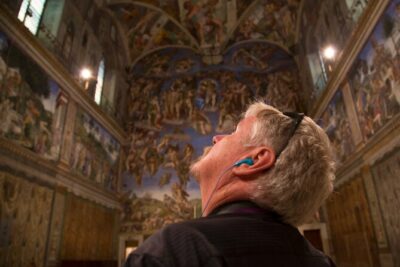 ★ 4.5Vatican Museums & Sistine Chapel Express 2-Hour Guided TourFrom $711,037 reviews
 ★ 4.72-Hour Gladiator SchoolFrom $135630 reviews
 ★ 5.0Cooking Class 2 Hour Spanish Steps – Fettucine and TiramisùFrom $113298 reviews
 ★ 5.0Rome 2 hour Golf Cart night tour with Hotel PickupFrom $313215 reviews
 ★ 5.02-Hour Golf Cart Sightseeing Tour at NightFrom $202124 reviews
 ★ 5.0Jewish Ghetto, Synagogues & Museum Tour with Jewish Guide 2 hoursFrom $161111 reviews
 ★ 5.02-Hour Vip Tuk-tuk tour with Hotel Pickup and ProseccoFrom $15792 reviews
 ★ 5.0Rome Private 2-Hour Tour with Hotel PickupFrom $22864 reviews
Browse the lists this tour appears in