
Reviewed · WALKING TOURS
City Walk with Architect: Private walking tour of Rome
Rome’s streets read like a design book. I love the architect-focused commentary and the way the route stays flexible around what you want to see. I also like that it’s private, so you can ask real questions as you walk. One catch: it’s still a 2.5-hour sidewalk session, so if you can’t handle at least an hour of walking, you’ll want to rethink it.
If you’re lucky enough to get a guide like Bado, the vibe is calm and helpful, even when the pace needs to slow down. There’s time for questions, and you can ask for practical guidance (like where to stand for photos) rather than just hearing facts and moving on.
At $118.82 per person for about 2 hours 30 minutes, the value comes from seeing a tight mix of big-name sights and quieter architectural moments while learning what to look for. Just keep expectations realistic: this is mainly a walking and looking tour, not an every-site “go inside” pass.
In This Review
- Key things I’d pay attention to
- A private, flexible route built for how Rome is actually experienced
- Pacing and comfort: can you handle about 2.5 hours on foot?
- Piazza della Minerva to Trevi Fountain: starting strong, reading the city
- The Column of Immaculate Conception and why “vertical art” works in Rome
- Spanish Steps and Piazza del Popolo: stairs, symmetry, and sightlines
- Piazza Colonna and the Column of Marcus Aurelius: how stories are built into stone
- Tempio di Adriano and Piazza Navona: moving from structure to space
- Pantheon and Piazza Venezia terrace: the finish that makes the walk feel worth it
- What you actually learn (and how to use it on your own)
- Price and value: what $118.82 per person buys you
- Who this tour fits best (and who might want a different option)
- Should you book this city walk with an architect guide?
- FAQ
- How long is the Rome Architect City Walk?
- Where does the tour start and end?
- Is this tour private?
- What language is the guide?
- Is admission included for the stops?
- Is private transportation included?
- How do I get my ticket?
- Is the tour suitable for people who can’t walk far?
- Are service animals allowed?
- What’s the cancellation policy?
- How far in advance is it commonly booked?
Key things I’d pay attention to

- Flexible itinerary: You’re not locked into a single rigid route.
- Architect-led explanations: You’ll learn how to read buildings and squares as design choices.
- Private Q&A time: Only your group, with chances to ask follow-up questions.
- A smart route through famous piazzas: Minerva to Trevi, then onward to Spanish Steps, Pantheon, and more.
- Vittoriano terrace payoff: You get terrace access near Piazza Venezia.
- Walk-first experience with small breaks: Great for stamina, not ideal for limited mobility.
A private, flexible route built for how Rome is actually experienced
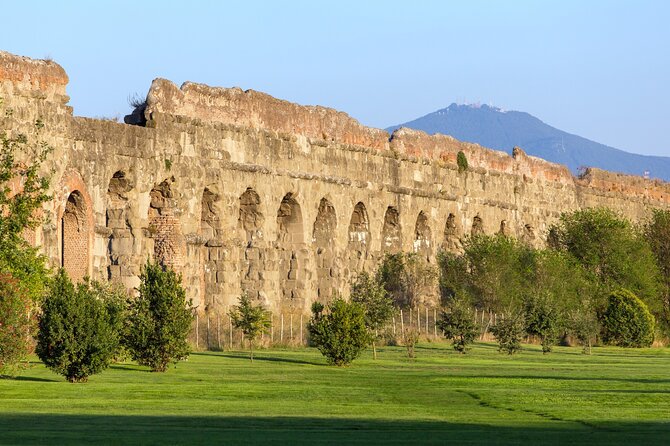
Most Rome walking tours hit the highlights and then rush to the next photo stop. This one works differently. You start in Piazza della Minerva and finish in Piazza Venezia, but along the way you’re able to shape the flow instead of following a pre-chosen script.
That flexibility matters because Rome isn’t one straight line. Crowds, street layout, and your own curiosity all change how the day feels. When you can adjust—within the framework of stops like Trevi Fountain and the Pantheon—you spend less time waiting and more time looking.
And because it’s private, you’re not sharing your guide’s time with a big group. That’s where the best architecture learning happens: you can ask, compare what you’re seeing in real time, and get answers that match what you care about (stairs, columns, domes, terraces, piazzas—whatever pulls you in).
Worth a look next to this Rome booking:
- Rome: Guided Food Walking Tour with Wine in Trastevere
★ 4.9 · 3,105 reviews - Rome: Trastevere & Campo de Fiori Street Food Walking Tour
★ 4.9 · 2,768 reviews - Rome: Paranormal Night Walking Tour & Secret Backstreets
★ 4.9 · 1,921 reviews - Rome: Trastevere Street Food Walking Tour with Local Expert
★ 4.8 · 1,784 reviews
Pacing and comfort: can you handle about 2.5 hours on foot?
The tour lasts roughly 2 hours 30 minutes and includes small breaks in between. The overall message is simple: you’ll be walking, and the walking is part of the point.
If you can walk for at least one hour (with breaks), you’ll likely be fine. If you’re someone who tends to hit a wall after shorter distances, this may be too much. You’ll be moving through multiple major squares—Piazza del Popolo, Piazza Navona, Piazza Venezia—so expect plenty of standing and short transfers.
Also worth noting: the meeting area is near public transportation, which helps if you’re coming from another part of Rome and want a low-stress start.
Piazza della Minerva to Trevi Fountain: starting strong, reading the city
You begin in Piazza della Minerva, and that’s a good warm-up move. It gives you a base point before you plunge into the traffic, lanes, and crowd energy of the most famous streets.
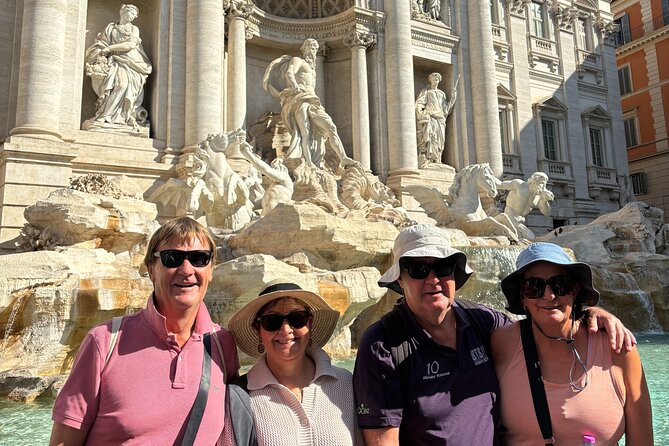
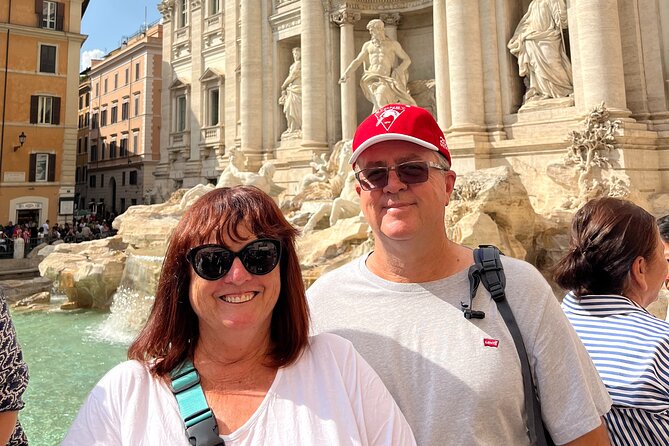
From there, the walk heads to Fontana di Trevi. This is one of those places where the architecture matters as much as the statue-filled drama. With an architect’s lens, you’re guided to notice how the fountain’s setting, lines, and angles shape the way you experience it. It’s also a great stop for learning how to “see” architecture when everyone else is just aiming phones.
The quick time window—about 15 minutes—means you’ll want your guide’s advice on where to stand and what to watch for. Use that time for observation rather than trying to do everything at once.
The Column of Immaculate Conception and why “vertical art” works in Rome
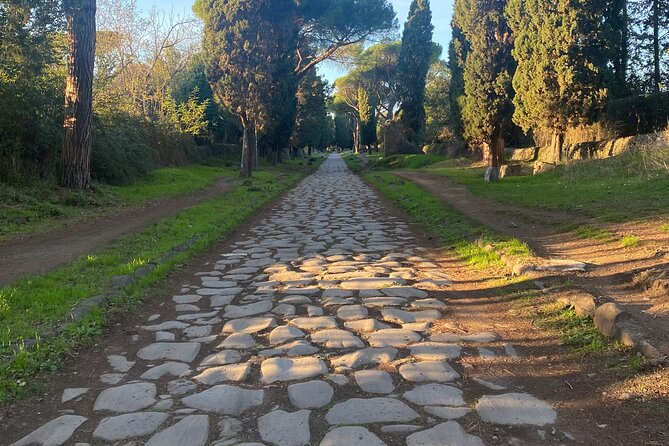
Next up is the Column of Immaculate Conception. A column tour doesn’t sound like it would be fun in a city where the big ticket items are fountains and temples. In practice, a column stops you in a different way. It’s not about sweeping views first—it’s about detail, direction, and the way public art marks meaning in a plaza.
This kind of stop is valuable if you like architecture that communicates. Columns are designed to be read over time: from different angles, with changing light, and while you’re walking around the square instead of just staring from one spot.
Again, it’s not a long visit (about 15 minutes), so the guide’s ability to point out what’s worth your attention pays off quickly.
Worth a look next to this Rome booking:

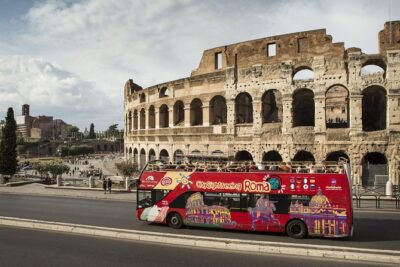

Spanish Steps and Piazza del Popolo: stairs, symmetry, and sightlines
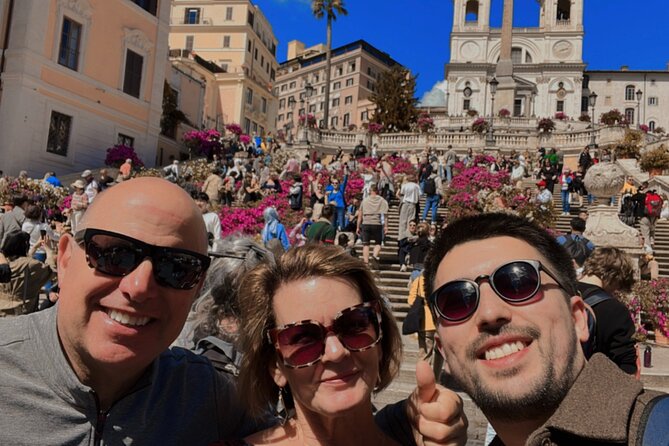
Then you’ll hit the Spanish Steps, where architecture is literally made for movement. Even if you don’t want to climb, you can study how the stairs shape pedestrian flow, camera angles, and how people gather. The guide’s role here is key: you’ll learn what to look for besides the obvious postcard view.
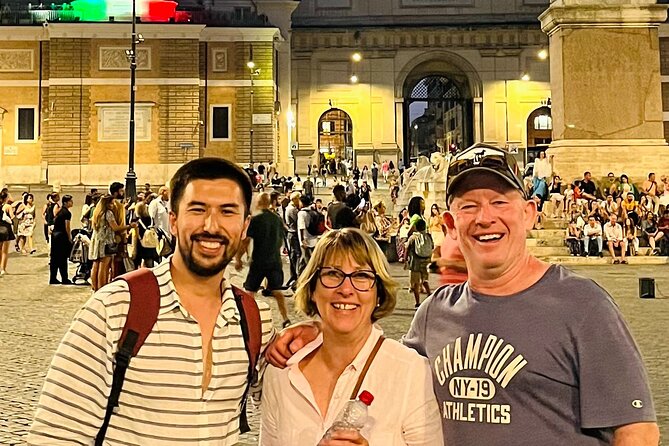
After that comes Piazza del Popolo. This is a useful pause between heavy hitters. A big open piazza lets you reset, take a breath, and notice how surrounding facades frame the space. It’s a lesson in urban design: squares aren’t just big emptiness; they’re stage sets for how the city wants you to circulate.
The stop time is short—about 15 minutes—so treat it like a design reconnaissance mission. If you ask a question (How does this square feel different from the next one? What’s the relationship between the buildings?), you’ll get more out of it.
Piazza Colonna and the Column of Marcus Aurelius: how stories are built into stone
At Piazza Colonna, the focus shifts to the Column of Marcus Aurelius. Columns like this are architecture with narration built in. Instead of thinking of the column as a single object, you start thinking of it as a vertical timeline that wraps itself around a public landmark.
That perspective is exactly what makes an architect-led walk more than a sightseeing loop. You stop treating the column as a monument you point at, and you start reading it as a composition—how the reliefs and form communicate message and movement.
The visit is around 15 minutes, so it’s worth asking for the quickest way to orient yourself: what section to start with, how to pace your viewing, and what details are most important to notice from the street-level viewpoint you actually have.
Tempio di Adriano and Piazza Navona: moving from structure to space
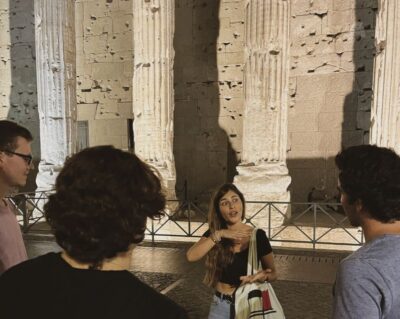
Next is the Tempio di Adriano. A temple-like stop works well on a walking tour because it gives your eyes a break from fountains and crowds. Even when you’re not going inside, these structures reward close attention to proportion, edges, and how the site sits within its surrounding streets.
After that, you reach Piazza Navona. This piazza is one of Rome’s most memorable public spaces, and it’s a strong place to see architecture as a “container” for city life. You’ll spend about 15 minutes here, which is enough time to understand the layout and notice how the space guides where people stand, walk, and pause.
If you’re the type who likes to watch how a city behaves, Navona is a great place to do it. If you’re more into details, ask your guide what to focus on—geometry, facades, or how the space feels from different edges.
Pantheon and Piazza Venezia terrace: the finish that makes the walk feel worth it
The Pantheon is the kind of sight that makes you go quiet, even if you’ve seen photos before. On this tour, you’re looking at it as architecture you can measure with your eyes: the scale, the form, and how the building dominates the surrounding street view.
Your time here is about 15 minutes. The good move is to spend your first minute getting the “big shape,” then your next minutes focusing on what the guide points out. Don’t try to do it all. The best viewing moments come when you slow down for just a few key angles.
Then you end in Piazza Venezia, with a look at the Vittoriano and access to the terrace. This is a smart way to close. A terrace visit gives your brain a reset: you’ve spent the walk reading close details, then you finish with a broader view to tie it together.
It’s also practical. When you’re done, you’re already positioned to keep exploring in the center of Rome.
What you actually learn (and how to use it on your own)
A good architect-led walk changes how you see everything after it. Instead of just naming monuments, you start noticing the design decisions behind them: how buildings frame space, how squares guide crowds, and how elements like columns and stairs turn movement into part of the architecture.
Here are a few practical habits I recommend you try during this tour:
- Ask one question per stop. Example: What detail matters most here, from street level?
- Compare plazas, not just buildings. Piazza del Popolo and Piazza Navona feel different for a reason—use the guide to spot what that reason is.
- Look for repetition and contrast. Rome mixes eras and styles close together. You’ll get better at seeing that pattern when someone helps you read it as architecture rather than trivia.
Also, pay attention to small guidance moments. In the experience, guides like Bado are described as patient, good at handling late arrivals, and willing to answer questions. That matters because Rome’s streets can be chaotic. When your guide stays calm, you get better learning instead of just stress.
Price and value: what $118.82 per person buys you
The headline price is $118.82 per person for about 2 hours 30 minutes. That sounds like a lot until you break down what’s included.
You get an English-speaking guide, and you’re not paying extra for admission at the listed stops (they’re marked as free for the activity). You also get a private format, which tends to be where you get value: fewer people per guide means more time for questions and more flexibility in how you move.
What’s not included is private transportation. That’s typical for walking tours, and it’s actually part of the value equation. You’re paying for guided walking and architecture interpretation, not a vehicle transfer that drops you near a few spots and sends you off alone.
If you’re traveling with a small group and you care about architecture beyond the usual checkboxes, this pricing makes sense. If you mainly want quick snapshots and minimal walking, you may feel the cost more than the benefit.
One more practical note: the tour operates with free cancellation up to 24 hours in advance, which makes it easier to adjust when Rome schedules get real.
Who this tour fits best (and who might want a different option)
This is best for you if you:
- love architecture and want help learning how to see it
- enjoy walking through major central Rome sights in a structured but flexible way
- want a private experience with lots of chances to ask questions
- are comfortable walking for about an hour or more, even with small breaks
You might want to skip or choose something else if:
- you strongly prefer to go inside major sites and spend most of your time indoors
- you can’t manage the walking required for a 2.5-hour route
It’s also worth knowing the tour’s vibe: it focuses on viewing and architectural reading. If you crave interior access, treat this as the “understand the city outside” half of your Rome plan, then add a separate plan for interiors where possible.
Should you book this city walk with an architect guide?
Book it if you want a smarter way to experience Rome’s most famous spaces without feeling like you’re trapped in a rigid route. The private, English-speaking format plus architecture-focused explanations make the stops—from Piazza della Minerva to the Pantheon and the Vittoriano terrace—feel more meaningful than just a list of names.
Skip it if you’re aiming for maximum indoor time or if your walking stamina is limited. Also, if you want a super-long sit-down at each site, the short stop lengths (often around 15 minutes) mean you’ll need to accept quick observation over lingering.
If your goal is to get your bearings fast and learn how the city is “built to be walked,” this is a strong match.
FAQ
How long is the Rome Architect City Walk?
It runs for about 2 hours 30 minutes.
Where does the tour start and end?
It starts at Piazza della Minerva in Rome and ends in Piazza Venezia, Rome.
Is this tour private?
Yes. It’s a private tour/activity, and only your group participates.
What language is the guide?
The tour is offered in English.
Is admission included for the stops?
The listed stops are marked with admission ticket free for this experience.
Is private transportation included?
No. Private transportation isn’t included.
How do I get my ticket?
You get a mobile ticket.
Is the tour suitable for people who can’t walk far?
It isn’t recommended for people who can’t walk for at least 1 hour. There are small breaks, but it still involves walking.
Are service animals allowed?
Yes, service animals are allowed.
What’s the cancellation policy?
Free cancellation is available up to 24 hours before the experience start time for a full refund.
How far in advance is it commonly booked?
On average, it’s booked 39 days in advance.
More Walking Tours in Rome
- Rome: Guided Food Walking Tour with Wine in Trastevere
★ 4.9 · 3,105 reviews - Rome: Trastevere & Campo de Fiori Street Food Walking Tour
★ 4.9 · 2,768 reviews - Rome: Paranormal Night Walking Tour & Secret Backstreets
★ 4.9 · 1,921 reviews - Rome: Trastevere Street Food Walking Tour with Local Expert
★ 4.8 · 1,784 reviews - Rome: Small-Group Guided Day or Night Walking Tour
★ 4.8 · 1,009 reviews - Rome by Night Walking Tour – Legends & Criminal Stories
★ 4.5 · 1,003 reviews
More Tours in Rome
- Vatican Museums, Sistine Chapel & St. Peter’s Basilica Tour
★ 4.3 · 73,970 reviews - Vatican Museums, Sistine Chapel & St Peter’s Basilica Guided Tour
★ 4.5 · 39,149 reviews - Rome: Colosseum, Palatine Hill and Roman Forum Guided Tour
★ 4.8 · 32,814 reviews - Rome: Guided Tour of Colosseum, Roman Forum & Palatine Hill
★ 4.7 · 27,897 reviews - Rome: Colosseum, Roman Forum and Palatine Hill Guided Tour
★ 4.5 · 23,903 reviews - Rome: Colosseum Arena Floor, Palatine & Forum Guided Tour
★ 4.5 · 20,180 reviews
More Tour Reviews in Rome
- Vatican Museums, Sistine Chapel & St. Peter’s Basilica Tour
★ 4.3 · 73,970 reviews - Vatican Museums, Sistine Chapel & St Peter’s Basilica Guided Tour
★ 4.5 · 39,149 reviews - Rome: Colosseum, Palatine Hill and Roman Forum Guided Tour
★ 4.8 · 32,814 reviews - Rome: Guided Tour of Colosseum, Roman Forum & Palatine Hill
★ 4.7 · 27,897 reviews - Rome: Colosseum & Forum with Audio Guide App -Optional Arena
★ 4.2 · 24,770 reviews - Rome: Colosseum, Roman Forum and Palatine Hill Guided Tour
★ 4.5 · 23,903 reviews
Just added to our Rome reviews





Walking Tours, compared.
 ★ 4.9Guided Food Walking Tour with Wine in TrastevereFrom $1003,105 reviews
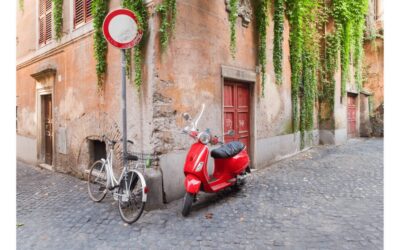 ★ 4.9Trastevere & Campo de Fiori Street Food Walking TourFrom $512,768 reviews
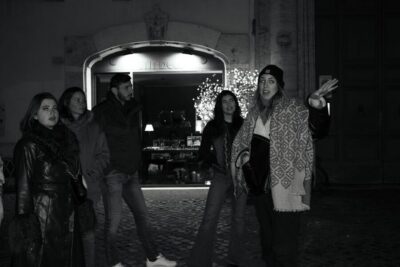 ★ 4.9Paranormal Night Walking Tour & Secret BackstreetsFrom $341,921 reviews
 ★ 4.8Trastevere Street Food Walking Tour with Local ExpertFrom $571,784 reviews
 ★ 4.8Small-Group Guided Day or Night Walking TourFrom $231,009 reviews
 ★ 4.5Rome by Night Walking Tour – Legends & Criminal StoriesFrom $141,003 reviews
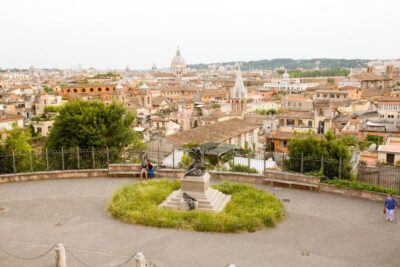 ★ 4.4Guided City Center Evening Sightseeing Walking TourFrom $46953 reviews
 ★ 4.9Small-Group City Highlights Moonlight Walking TourFrom $29949 reviews
Browse the lists this tour appears in