
Reviewed · PRIVATE DRIVERS
Christian Rome with English Speaking driver
Rome has a way of grabbing you by the collar.
This private Christian Rome day pairs an English-speaking driver with hotel pickup so you can jump straight into some of the city’s most meaningful churches—without hunting bus stops or paying for parking. I especially love the quick, efficient round-trip transit (it keeps the day from turning into sore-feet logistics), and I like that you get history from the car, then explore the basilicas on your own at your pace. One consideration: your driver can only comment from inside the vehicle; once you’re out, you’re on your own unless you add a licensed guide inside the sites.
If your idea of a great Roman day is calm timing, good drop-offs, and the freedom to linger in a chapel that catches your eye, this fits. It’s booked often by Catholic pilgrims and Christian-history fans, and that makes sense—your route hits major pilgrimage stops like the Holy Stairs, plus the Catacombs of St. Callixtus. A small tradeoff is that churches can have Sunday restrictions, so you may not always be able to access every area you’d expect on a weekday.
Bottom line: this is a very practical way to see a concentrated loop of Christian Rome in one morning or afternoon, with the main cost under control—except for the catacombs ticket.
In This Review
- Key Things to Know Before You Go
- A Private Basilicas Circuit That Starts at Your Hotel
- How the 6-Hour Plan Feels in Real Life
- Stop by Stop: From Santa Maria Maggiore to St. Paul Outside the Walls
- Basilica di Santa Maria Maggiore (St. Mary Major)
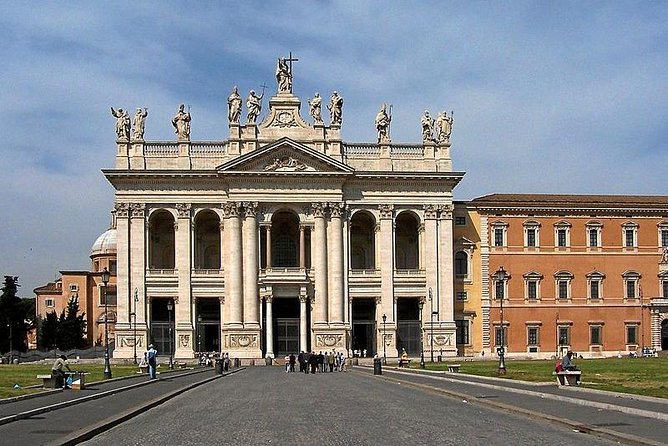
- Arcibasilica di San Giovanni in Laterano (St. John Lateran)
- Pontifical Sanctuary of the Holy Stairs (Scala Sancta)
- Basilica di Santa Croce in Gerusalemme (Holy Cross in Jerusalem)
- Chiesa del Domine Quo Vadis
- Catacombe di San Callisto (Catacombs of St. Callixtus)
- Basilica Papale di San Paolo Fuori le Mura (St. Paul Outside the Walls)
- Catacombs Reality Check: Ticket Cost and What Guides Say Under Ground
- Driver Commentary Rules (and How to Get the Best From Them)
- Price and Value for Up to 3 People
- Should You Book This Christian Rome Tour?
- FAQ
- How long is the Christian Rome tour?
- How many people are included in a group?
- Is hotel pickup and drop-off included?
- What language is the driver?
- Are admission tickets included for all stops?
- Is a walking guide provided inside the sites?
- What if I go on a Sunday?
- Does the tour include lunch?
Key Things to Know Before You Go
- Private hotel pickup and drop-off saves you time and stress in Rome traffic
- Most sites have free admission, so your day cost stays predictable
- Seven pilgrimage-worthy stops let you connect the storyline from early Christianity to later basilicas
- Catacombs require an extra ticket (about €8) and the included guided tour is without a microphone
- Your driver explains from the car, so you control your pacing once you step inside
- You can often adjust timing if you ask early and keep the overall schedule in mind
A Private Basilicas Circuit That Starts at Your Hotel
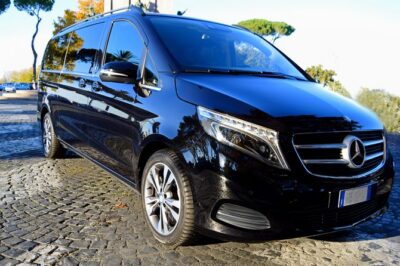
This is the kind of tour that feels simple because the hard parts are handled for you. You don’t need to figure out which bus goes where, and you don’t need to circle for parking while everyone pretends the narrow streets are wider than they are. With an air-conditioned sedan or minivan and hotel pickup/drop-off, you start and end the day cleanly.
The structure also works well for real people with real energy levels. You’re not crammed into a large group timeline. At each major church, you’re dropped close enough to reduce wandering, then you’re given time to walk in, look around, and move at your own pace. This is especially useful in Rome because the most meaningful details are often the quiet ones—chapels, side altars, mosaics in corners—stuff that’s easy to miss when you’re being rushed.
And yes, your driver will explain things in English. Names you may recognize from past days include David, Daniele, Matteo, Max, Manuel, Alessandro, and Damiano. Different people, same idea: clear, friendly commentary that helps the sights make sense right away.
Worth a look next to this Rome booking:
- Rome Private Arrival Transfer: Fiumicino Airport to Hotel in Rome
★ 4.5 · 2,492 reviews - Rome: Catacombs Guided Tour with Transfer
★ 4.2 · 1,808 reviews - Rome: Catacombs and Capuchin Crypt Guided Tour with Transfer
★ 4.6 · 1,606 reviews - Transfer Fiumicino Airport – Rome City Centre
★ 4.5 · 1,070 reviews
How the 6-Hour Plan Feels in Real Life
The tour is about 6 hours total, and the day’s flow is built around short, manageable on-site visits. Typical time blocks are around 15 minutes to 40 minutes depending on the stop, and the sequence can be adjusted depending on conditions (the order may vary).
That matters because some places are easy to scan quickly, while others reward a slower pace:
- Basilicas like Santa Maria Maggiore and St. John Lateran have enough to fill your eyes without needing a formal tour.
- The Holy Stairs (Scala Sancta) are short on paper but intense in mood—so you’ll want a moment to actually absorb what you’re seeing.
- The Catacombs of St. Callixtus are underground and guided; you’ll likely need more attention than walking through a church hall.
One more practical note: your driver is not a licensed tour guide. In Italy, strict rules apply, so the driver can explain and comment from inside the vehicle, but they can’t elaborate when you’re outside the car. Once you step into each site, it’s you (and any signs or optional audio/guides you choose).
This setup is still great value for the money. You’re buying smooth transport plus English context, not paying for a full walking tour inside every room.
Stop by Stop: From Santa Maria Maggiore to St. Paul Outside the Walls
Basilica di Santa Maria Maggiore (St. Mary Major)
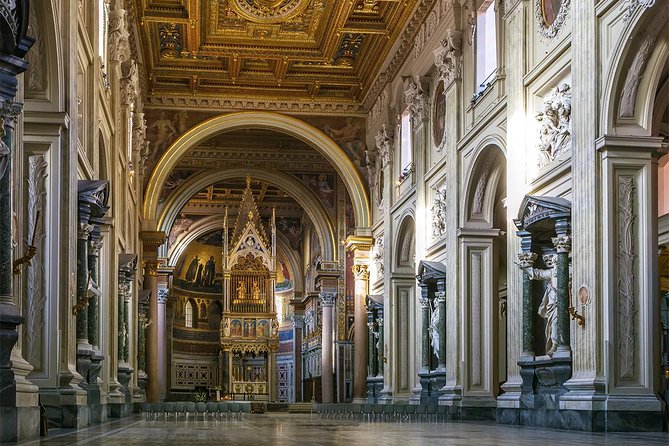
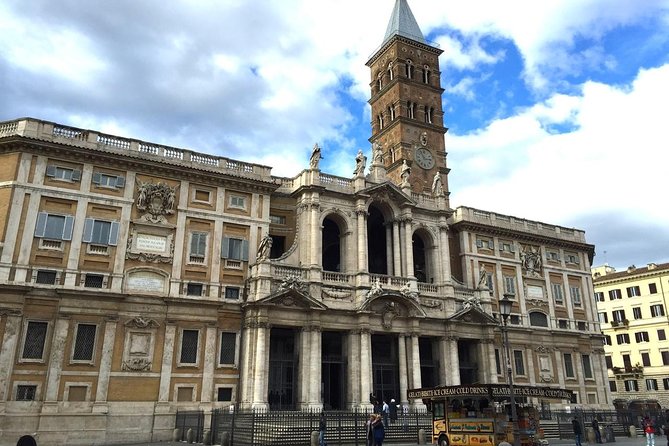
This is a major “start strong” stop. You’ll be taken by car from your hotel to Santa Maria Maggiore on the Esquiline hill, with a history reaching back to 352 A.D. I love places like this because the scale is big enough to feel important, but it still feels human—chapels with different styles, different tones.
What makes it special in concrete terms:
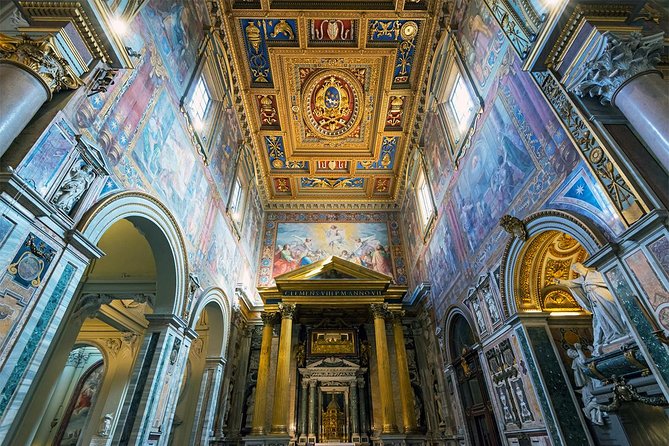
- The 5th-century mosaics in the central nave
- The Cosmatesque pavement (a distinctive mosaic style)
- A 15th-century coffered ceiling in gilt wood
- Multiple chapels built over time by popes, cardinals, and confraternities
- The high altar, begun by Ferdinando Fuga and later enriched by Valadier
- The relic of the Holy Crib
You get about 40 minutes here. That’s usually enough to see the big features and still choose one or two areas to linger without feeling rushed.
Arcibasilica di San Giovanni in Laterano (St. John Lateran)
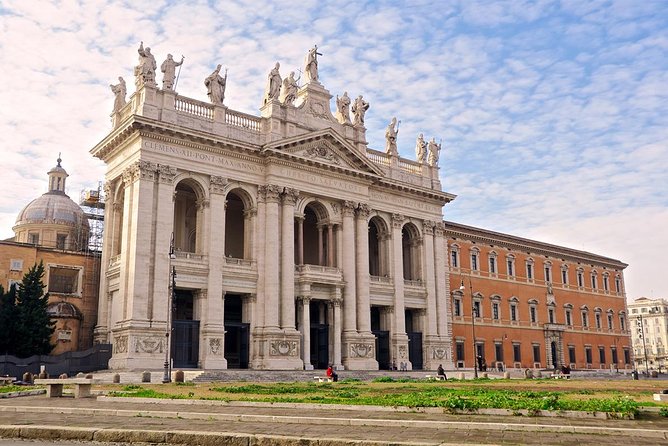
Next up is one of the big three in Roman Catholic life: St. John Lateran. Built by Emperor Constantine, it was a papal residence until 1307, which helps explain why the church feels “cathedral-level” important.
Expect about 40 minutes. The standout pieces listed for this stop include:
- The 17th-century remaking by Borromini
- Gentilitial chapels (smaller spaces that add texture to your visit)
- The relic of the table of the Last Supper
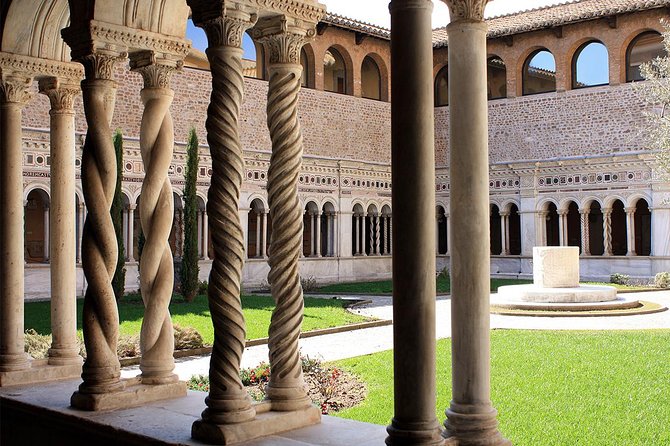
- A lovely 13th-century cloister
- The baptistery, described as the oldest and tallest among the Egyptian obelisks in Rome
- The Holy Stairs nearby (which you’ll visit next)
A note that helps you enjoy the day: this church can feel “busy” because it’s central and important. If you’re looking for peaceful time, aim to enter and then pick a direction to explore instead of trying to see everything at once.
Pontifical Sanctuary of the Holy Stairs (Scala Sancta)
The Scala Sancta are 28 white marble steps tied to Catholic tradition and relic devotion. They’re located in an edifice on Holy See property near the Archbasilica of St. John Lateran. The steps lead to the Church of St. Lawrence in Palatio ad Sancta Sanctorum—the Sancta Sanctorum, the early popes’ personal chapel.
You’ll have about 20 minutes here. This is one of those stops where the emotional impact often matters more than speed. Even if you’re not religious, it’s hard not to feel the weight of what’s attributed to the site and how worship shaped its survival.
Basilica di Santa Croce in Gerusalemme (Holy Cross in Jerusalem)
This basilica often surprises people—in a good way—because the focus isn’t on a single obvious thing. It’s a place built around the idea that Jerusalem’s sacredness was transported to Rome.
Tradition says it was consecrated around 325 and connected to Empress St. Helena moving relics of the Passion from the Holy Land to Rome. The name “in Jerusalem” is explained by the idea that the basilica floor was covered with Jerusalem soil when it was founded.
You’ll get about 30 minutes. For me, the best way to enjoy this stop is to treat it like a devotional time capsule. Look for the sense of layering: ancient origins, then later additions that keep the story alive.
Chiesa del Domine Quo Vadis
This is a smaller stop with a strong story behind it. You’ll pass the Old Appian Way by Porta San Sebastian, and then arrive at the tiny chapel known for the Domine Quo Vadis account—Peter fleeing Nero’s persecution, seeing Christ in a vision, and hearing the response associated with where Jesus is going next.
The chapel is described as 9th-century (redone in the 17th century). You’ll have about 15 minutes. That’s enough for a quick look inside and then a moment outside to connect it to the road you’re traveling on—the Appian Way corridor helps the story click.
Catacombe di San Callisto (Catacombs of St. Callixtus)
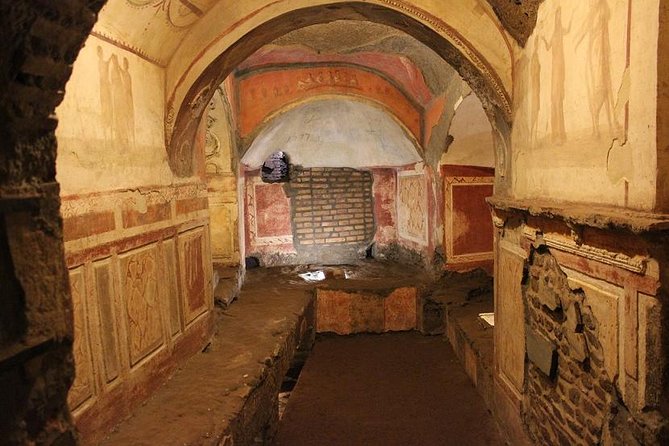
Now we get underground. You’ll travel to the catacombs for about an hour. These are underground galleries and vaults where early Christians buried the dead and came to pray and celebrate liturgy.
The tour description frames a real timeline you’ll likely hear from the local guide:
- After Constantine, bodies of martyrs and saints were moved into city churches
- Catacombs outside the old walls suffered pillaging and damage in the 6th and 7th centuries by Goths and Lombards
- They were abandoned and then rediscovered centuries later
- By the late 19th century, they became an important visitor site again
Important logistics: admission is not included. You should expect to pay around €8 per person for entry, and the admission includes a guided tour by a local guide. There’s one key tip from past visitors: there may not be a microphone, so stay as close to the guide as you can to hear everything.
Also, don’t go expecting movie-level skeletons or skull displays. The value is in understanding how Christians marked faith in burial spaces, and how architecture preserved memory over centuries.
Basilica Papale di San Paolo Fuori le Mura (St. Paul Outside the Walls)
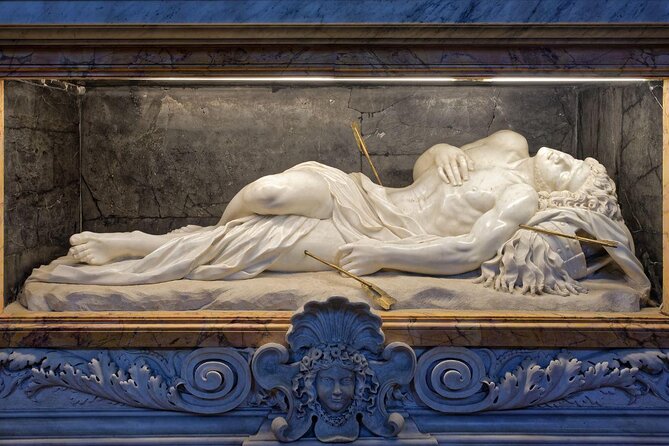
Your final big church stop is St. Paul Outside the Walls—Rome’s second-largest church. The site is traditionally believed to be the burial place of the Apostle Paul. Constantine later turned the cella memoriae into a basilica, and it was consecrated in 394 by Pope Silvester I.
This basilica has a famous disruption: a terrible fire on July 15, 1823, followed by reconstruction described as identical using what survived. You’ll see the results in mosaics and the magnificent portico with 150 columns.
Contemporary work is also described as uncovering the tomb so pilgrims can pray and visit. You’ll have about an hour here, which gives you enough time to see both the grand exterior impression and the interior devotional focus.
Catacombs Reality Check: Ticket Cost and What Guides Say Under Ground
Let’s talk about the one place where this day can cost extra: the Catacombs of St. Callixtus.
Why it’s still worth it: catacombs are one of the most direct ways to feel early Christian Rome. You’re not just looking at later church art. You’re seeing how underground space became sacred space, and how Christianity shaped burial and remembrance long before basilicas dominated the skyline.
What to expect:
- You pay about €8 per person for admission
- The fee includes a guided tour with a local guide
- The guide may not use a microphone
- Your best move is to stay close so you catch the details
If you’re the type who likes pictures, this won’t feel like a photo safari. It’s more about listening and noticing. If your group includes older visitors or anyone who gets tired easily, the hour underground can still work fine—just don’t treat it like a quick stop. The catacombs are part of the emotional arc of the day.
Driver Commentary Rules (and How to Get the Best From Them)
Here’s the big practical difference between this and a traditional walking tour: your driver explains from the car, not as a walking guide inside the sites.
That’s not a flaw so much as a framing choice. It keeps the experience moving and helps you cover a lot in 6 hours. It also gives you control: you can spend extra time on the parts that matter to you without being herded.
So how do you get the best experience?
- Ask your driver early what they recommend seeing most carefully at each stop.
- If you need adjustments, mention it at the start. Past days show drivers like David were willing to move the catacombs earlier when energy was higher.
- Plan your pacing inside the churches yourself, since no one is controlling your footsteps.
Also, since drivers like to be helpful, it’s smart to ask about lunch timing. Lunch isn’t included, but drivers have a track record of recommending solid places that aren’t generic tourist traps.
If you want a more hands-on inside-the-church style of guiding, you’d need a licensed walking guide or additional services on top. For the price and format here, most people are really buying efficiency plus strong context.
Price and Value for Up to 3 People
At $509.07 per group (up to 3), this isn’t cheap in absolute terms. But Rome is expensive, and private transport has a real cost. The math changes quickly if you’re traveling as a small unit.
What makes it feel like value:
- Hotel pickup and drop-off are included, so you’re not paying extra or wasting time
- You get a private vehicle for the day (air-conditioned sedan/minivan)
- Most of the scheduled stops have admission ticket free
- You receive English commentary during transit, which makes the route easier to understand
Where the value can slip a little:
- Catacombs add about €8 per person
- Lunch isn’t included
- Since your driver isn’t allowed to function as a licensed guide outside the car, you’ll rely on your own exploration for the in-church details
Still, for couples and small families, this often lands as a smart way to see the right sites without turning the day into a logistics project. It’s also a strong add-on if you’re doing Vatican area touring, because it connects the Christian story without forcing you into the same crowded rhythms.
Should You Book This Christian Rome Tour?
You should book if you want a private day focused on major Christian pilgrimage stops, and you’d rather spend your energy inside churches than navigating Rome’s streets. It’s a good match for:
- Catholic pilgrims who want a concentrated route
- History buffs who like understanding context before stepping inside
- Families with mixed ages who need calmer pacing
- Anyone who wants flexibility to linger and then move on without a big-group schedule
Skip (or consider another format) if you mainly want a fully guided walking tour inside every site. Because the driver can’t do extensive on-foot guiding, you’ll guide much of your own experience once you arrive.
If you book, do this before you start: tell your driver what matters most to you—especially around catacombs and how much time you want in each basilica. That small conversation is where the day becomes yours.
FAQ
How long is the Christian Rome tour?
The tour is approximately 6 hours.
How many people are included in a group?
The price is listed per group for up to 3 people.
Is hotel pickup and drop-off included?
Yes. Pickup and drop-off from your centrally-located Rome hotel are included.
What language is the driver?
The tour is offered with English speaking.
Are admission tickets included for all stops?
Admission is free for all listed stops except the Catacombs of St. Callixtus, which costs about €8 per person and is not included.
Is a walking guide provided inside the sites?
No. The included commentary is from the vehicle, and walking tour guidance inside the sites is not included.
What if I go on a Sunday?
On Sundays, some churches may have restrictions on which places you may be able to visit.
Does the tour include lunch?
Lunch is not included.
More Private Drivers in Rome
- Rome Private Arrival Transfer: Fiumicino Airport to Hotel in Rome
★ 4.5 · 2,492 reviews - Rome: Catacombs Guided Tour with Transfer
★ 4.2 · 1,808 reviews - Rome: Catacombs and Capuchin Crypt Guided Tour with Transfer
★ 4.6 · 1,606 reviews - Transfer Fiumicino Airport – Rome City Centre
★ 4.5 · 1,070 reviews - Private Departure Transfer: Hotel to Rome Fiumicino Airport
★ 4.5 · 1,050 reviews - Rome: Imperial City Tour by Golf Cart with Optional Transfer
★ 4.8 · 1,024 reviews
More Tour Reviews in Rome
- Vatican Museums, Sistine Chapel & St. Peter’s Basilica Tour
★ 4.3 · 73,970 reviews - Vatican Museums, Sistine Chapel & St Peter’s Basilica Guided Tour
★ 4.5 · 39,149 reviews - Rome: Colosseum, Palatine Hill and Roman Forum Guided Tour
★ 4.8 · 32,814 reviews - Rome: Guided Tour of Colosseum, Roman Forum & Palatine Hill
★ 4.7 · 27,897 reviews - Rome: Colosseum & Forum with Audio Guide App -Optional Arena
★ 4.2 · 24,770 reviews - Rome: Colosseum, Roman Forum and Palatine Hill Guided Tour
★ 4.5 · 23,903 reviews
Just added to our Rome reviews





Private Drivers, compared.
 ★ 4.5Rome Private Arrival Transfer: Fiumicino Airport to Hotel in RomeFrom $672,492 reviews
 ★ 4.2Catacombs Guided Tour with TransferFrom $541,808 reviews
 ★ 4.6Catacombs and Capuchin Crypt Guided Tour with TransferFrom $411,606 reviews
 ★ 4.5Transfer Fiumicino Airport – Rome City CentreFrom $81,070 reviews
 ★ 4.5Private Departure Transfer: Hotel to Rome Fiumicino AirportFrom $621,050 reviews
 ★ 4.8Imperial City Tour by Golf Cart with Optional TransferFrom $1241,024 reviews
 ★ 4.5Catacombs Tour with Transfer – Optional Capuchin Crypt or TreviFrom $54694 reviews
 ★ 5.0Civitavecchia Private Transfer: Rome to Civitavecchia Cruise PortFrom $141669 reviews
Browse the lists this tour appears in