
Reviewed · APPIAN WAY TOURS
Ancient Appian Way PRIVATE Bike Tour
Rome calms down on the Appian Way.
This private e-bike tour takes you past major ruins and big stretches of parkland, without the stress of walking. I love how much you fit in during a half-day (eight big stops, each about 20 minutes), and I also like that the guide stories are built into every location, not tacked on after. A fair heads-up: you still ride some busy streets, and the e-bikes are pedal assisted, so you do need to pedal and you should already ride a bike well.
You’ll start at Via dei SS. Quattro, 58, meet your guide, and get fitted with a helmet plus phone and handlebar holders. Guides I’ve seen people rave about include Valerio, Claudio, Alex, Nico, Marco, Sara, and Chris, and the common thread is clear, patient explanations that make the ruins easier to picture. For families, this is a strong option since child seats are included and kids can ride with the right setup.
One more consideration before you book: the tour is designed for moderate physical fitness, and if you’re nervous about traffic, that part may not be your favorite. Still, the payoff is real once you hit the Appian Way’s quieter edges and those huge aqueduct views.
In This Review
- Key highlights
- Why the Appian Way feels like a different Rome
- Private e-bikes and the ride reality (traffic, pedaling, stamina)
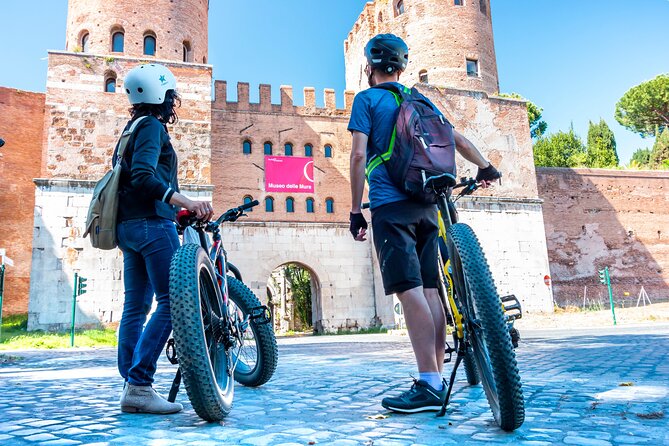
- Porta San Sebastiano: your jump into Roman Rome
- Parco della Caffarella: ancient remains inside a huge green breath
- Ninfeo di Egeria: myth, ritual, and a spring-fed atmosphere
- Parco degli Acquedotti: Roman water engineering you can still see
- Villa dei Quintili and Cecilia Metella: wealth and death on the road
- Circus of Maxentius and the feeling of scale
- Terme di Caracalla: the biggest public baths in your day
- How much value you really get for the $147.54
- Who should book this Appian Way private bike tour
- Should you book it?
- FAQ
- How long is the Ancient Appian Way PRIVATE Bike Tour?
- What’s included with the e-bike rental?
- Are any site admissions included or required during the stops?
- Is the tour suitable for kids?
- Do I need to be an experienced cyclist?
- What is the cancellation policy?
Key highlights
- Private guide time with plenty of attention at each stop, so you can ask questions
- E-bike help without a throttle, so you pedal while getting the assist
- Aqueducts plus parkland at Parco degli Acquedotti and the Appia Antica Regional Park
- Photo-worthy ancient landmarks like Porta San Sebastiano, the Circus of Maxentius, and the Mausoleo di Cecilia Metella
- Family-friendly setup with a child seat (up to 25 kg) and child bike trailer rules
Why the Appian Way feels like a different Rome
Rome has a way of pulling you in from every direction. This tour gives you a break from that sensation by steering you out of the densest parts of the city and onto the ancient spine of the Appian Way.
You’re not just cruising past monuments. Each stop is chosen to show a different layer of Roman life: city walls and pilgrim graffiti at the start, parkland walks among ancient remains, sacred myths, engineering water routes, wealthy villas, tomb culture, and even the scale of public entertainment and bathing.
And because it’s private, the route works better for real-life timing. If someone needs a slower moment at a viewpoint or wants a bit more explanation about what you’re seeing, you’re not stuck waiting for a big group pace.
Keep going down the Appian Way
- Rome EBike Tour: Appian Way, Catacombs & Roman Aqueducts
★ 5.0 · 1,766 reviews - Rome: Appian Way & Aqueducts E-Bike Tour (Catacombs & Food)
★ 4.9 · 1,498 reviews - Rome: Appian Way, Catacombs, & Roman Aqueducts E-bike Tour
★ 4.9 · 1,421 reviews - Rome Underground: Catacombs Tour, Aqueducts and Appian Way
★ 5.0 · 1,007 reviews
Private e-bikes and the ride reality (traffic, pedaling, stamina)
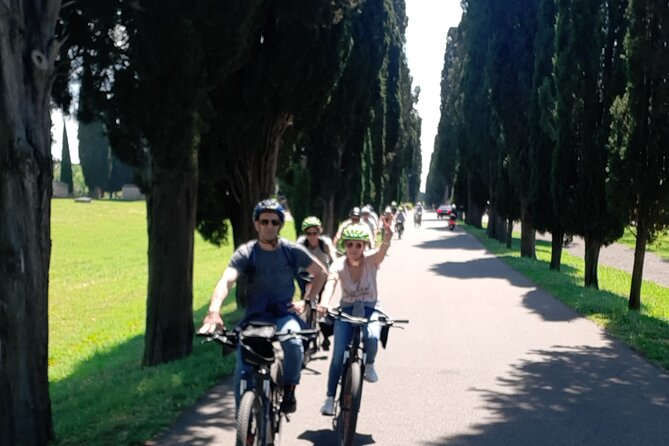
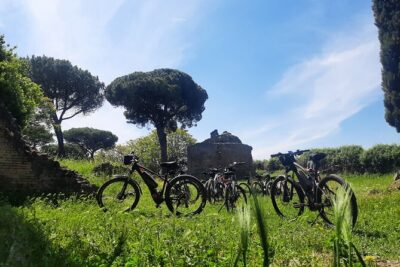
The tour runs about 4 hours and is built around an e-bike that comes with safety basics: helmet, plus phone and handlebar holders. The important part is how the bike assists you. People often highlight that there’s no throttle; it’s pedal assisted. Translation: you get help, but you still pedal, so don’t plan on a total free ride.
Also, the operator is clear that you must know how to ride a bike well. If you feel shaky on turns, uneven surfaces, or staying balanced while stopping and starting, this can be stressful rather than fun. In the same spirit, the tour calls for moderate physical fitness, which makes sense because you’ll be moving continuously between sites for a half-day.
Here’s the other practical factor: there’s some city traffic. One guide-led ride is described as having roughly 20% of the route in city traffic, and that is enough that nervous riders should consider carefully. If you’re comfortable cycling in active streets, you’ll probably be fine. If you dislike sharing the road, you may want to choose a different style of tour (or at least be honest with yourself about what bike riding feels like for you).
Porta San Sebastiano: your jump into Roman Rome
Your first stop is Porta San Sebastiano, a southern gateway with real authority. It’s part of the Aurelian Walls built around 275 AD, and it also marks the beginning of the historic Via Appia Antica.
What I like about this start is the shift in mood. You go from modern Rome’s motion to a structure designed to control movement—then you begin following that same “why this road mattered” logic as the tour continues.
You’ll also notice medieval graffiti. That little detail is actually useful: it shows the Appian Way didn’t just matter to Romans. It stayed meaningful as travelers and pilgrims moved through centuries after the walls were built. There’s no ticket needed for this stop, so you can spend your time looking rather than waiting.
Parco della Caffarella: ancient remains inside a huge green breath
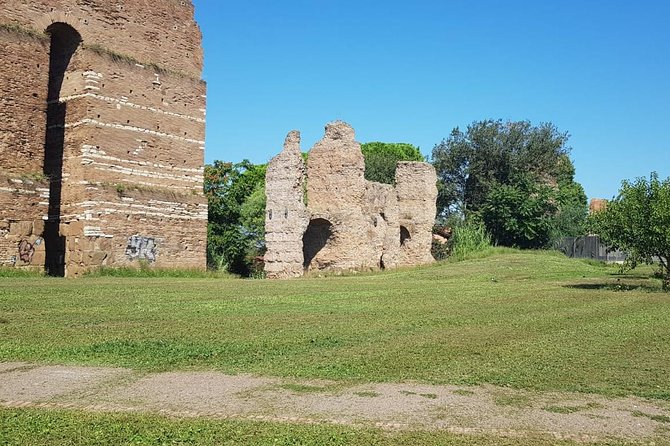
Next you move into Parco Della Caffarella, now part of the Appia Antica Regional Park. This is one of the biggest green areas in Rome and also across Europe, and that scale matters because it changes how the whole day feels.
Instead of a tight stop-and-go pattern, you get a calmer pace among paths and groves where ancient buildings’ remains can be seen. This is where the Appian Way stops feeling like a sightseeing list and starts feeling like a long Roman story unfolding across land.
The practical win here is that park stops can be easier on your body. It’s still walking around, but it’s not the same crowds-and-curbs energy you get near the center. Admission here is free too, so you won’t be managing extra costs while you’re trying to relax and take in the scale.
More of Rome under pedal power
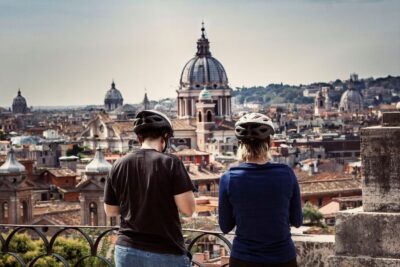
Ninfeo di Egeria: myth, ritual, and a spring-fed atmosphere
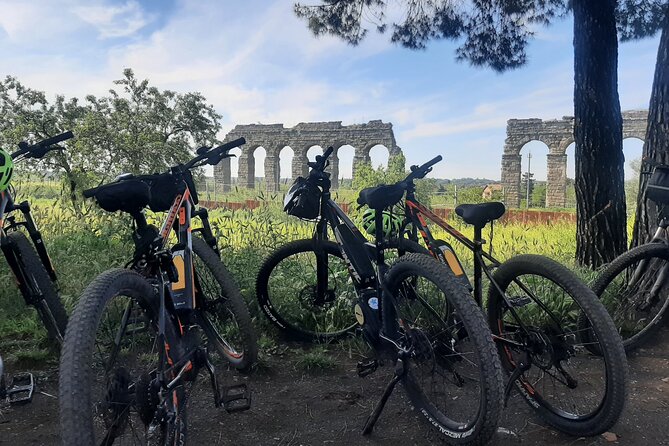
At Ninfeo di Egeria, you hit a different tone: sacred legend. The site is tied to the story of the Nymph Egeria and Numa Pompilius, the second king of Rome. The guide connects it to the theme of love and grief, with the legend saying that Egeria’s tears created a spring.
Even if myths aren’t your main interest, this stop works because it explains why certain places were treated as important long before archaeology labels showed up on signs. You’re seeing how meaning got attached to water, springs, and sacred spaces—exactly the sort of clue that helps you understand what you’ll see later with Roman aqueduct engineering.
This stop is also free, and since the time is about 20 minutes, it’s a good mid-tour reset if you’re warming up or cooling down in the day’s heat.
Parco degli Acquedotti: Roman water engineering you can still see
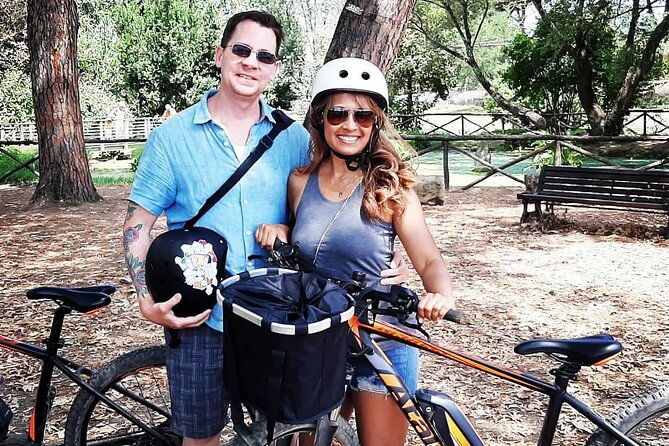
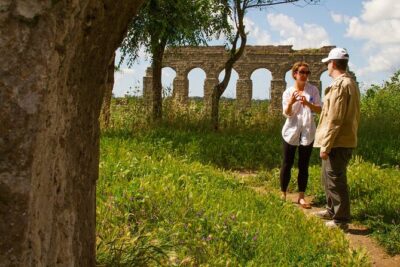
Now you get to one of the tour’s best reasons to exist: the aqueduct network. Parco degli Acquedotti within the Appia Antica archaeological area is crossed in ancient times by the water network of Ancient Rome, and parts of that system are still visible today.
What you can expect here is a mix of open views and engineering remains. You’re shown aqueduct remnants in places that are well preserved, and it’s also noted that surprisingly some of them still function. That’s the kind of detail that makes the whole topic feel less like museum glass and more like real infrastructure.
This is also a stop where a great guide makes a difference. If you’re wondering how water “got from there to here,” this is where the tour helps you connect the dots—then later the Baths of Caracalla tie the water story into daily Roman life.
Admission is free, and the timing is short enough that you can see a lot without getting tired before the next major monuments.
Villa dei Quintili and Cecilia Metella: wealth and death on the road
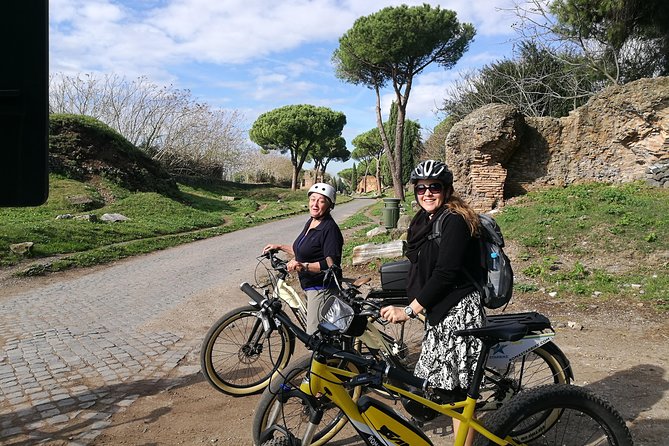
After aqueducts, the tour moves into power and status—wealth on the Appian Way, and the way Romans treated remembrance.
At Villa dei Quintili and Santa Maria Nova, you’ll see the remains of the Villa dei Quintili, linked to Sesto Quintilio Condiano and Massimo Valerio, consuls in the second century AD. The villa story includes a political twist: they were killed by Commodus I, and the villa became imperial property.
That’s helpful context because it explains why you’re looking at something built to impress. Wealth here wasn’t just about comfort. It was also about proximity to a major route and visibility to the world that moved along that road.
Then comes Mausoleo di Cecilia Metella and Castrum Caetani. The mausoleum is a pagan tomb dedicated to Cecilia Metella and dates back to the 1st century BC. It’s described as the best preserved mausoleum on the Via Appia Antica, which is a big deal for a place like this because ruins aren’t all equally readable.
You’ll also see the Castrum Caetani elements and the medieval house remains of the Caetani family, plus the perimeter walls of the church of San Nicola. In about 20 minutes, this stop gives you a layered timeline: pagan tomb, medieval reuse, and later religious architecture remnants—same location, different eras.
All of this is free to visit on your route, so again it stays focused on your time and attention.
Circus of Maxentius and the feeling of scale
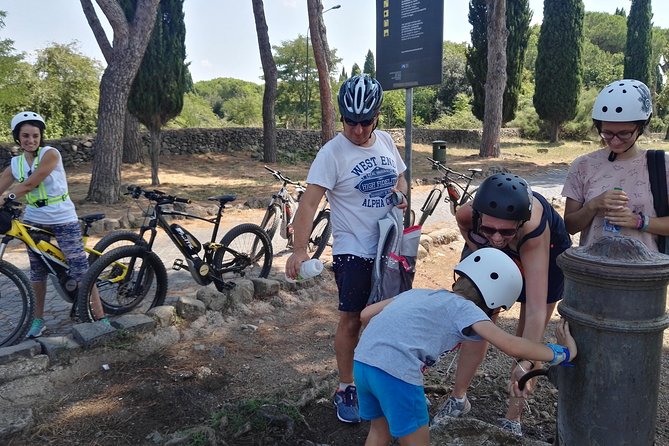
Then you ride to the Circus of Maxentius, described as the best example of a Roman circus that survived to today. The big word here is survived. When something holds together for this long, the shape and scale stay easier to understand.
You’ll take in remains of the circus, including the spina that’s still visible. The tour also points out that the Agonale obelisk was moved during the Renaissance to the Fountain of the Four Rivers in Piazza Navona. That connection is a practical kind of history: it helps you understand why Rome repeats itself. A monument may travel, but the stories often stay local.
If you’re the type who likes your ancient sites to feel more like a place where people actually gathered, this stop tends to land well. A circus wasn’t a quiet, contemplative experience. It was crowds, noise, and spectacle—so seeing its footprint is a change of pace after tombs and villas.
Terme di Caracalla: the biggest public baths in your day
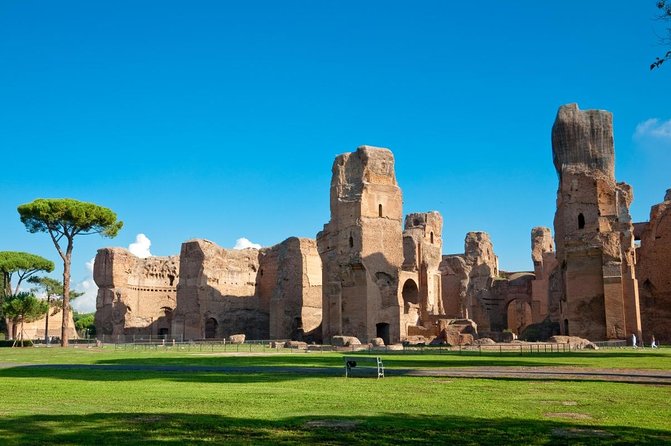
Your final major stop is Terme di Caracalla, the Baths built by the emperor Caracalla. These were for about a century the largest public baths ever built, and a good portion of the structure is still preserved.
There’s also an engineering tie-in: a branch of the Aqua Marcia brought water to the baths through the Antoninian aqueduct. That’s a nice payoff to the earlier aqueduct park stop. You’re not just admiring stone lines; you’re seeing how that water system supported daily public life at massive scale.
One more small note you may be shown: small remains can be admired at the Porta di San Sebastiano. Even if you don’t catch every detail, the tour’s structure helps you keep track of how water, buildings, and road routes interlock.
This stop is also free, which means the day stays high on value and low on ticket hassle.
How much value you really get for the $147.54
At $147.54 per person for about 4 hours, the best way to judge value is not just the price tag—it’s what gets delivered in that time.
You’re getting:
- A private guide for your group only, with attention built into multiple stops
- An e-bike plus helmet and support gear, which reduces fatigue and keeps the route doable
- Multiple free stops along the Appian Way and related archaeological parks
- A mix of themes—walls, myth, water engineering, wealth, tomb culture, circus life, and baths
Compared to doing these sites separately, the big savings is friction. You don’t have to plan transit between far-flung pieces, solve parking problems, or figure out how to connect routes once you’re outside the center. The bike also compresses time. You cover ground faster than walking, while still stopping often enough to make each place matter.
If you’re traveling with kids, the value can jump again because child seats are included and the operator offers discounts for kids. Just be sure you match the child rules: the child seat setup is available up to 25 kg, and the child discount (age 6–10) only applies if the child is less than 4/7 feet tall (143 cm), since they’ll ride on a trailer bike rather than a bike alone.
Who should book this Appian Way private bike tour
This tour is a great match if you want:
- A guided, stop-by-stop ancient road experience rather than just cycling through
- A comfortable way to see aqueducts and major ruins in a half-day
- Family-friendly options with child seats and a child setup designed for younger riders
- Clear history storytelling, which people associate with guides like Valerio, Claudio, Nico, Alex, Marco, Sara, and Chris
It might not be ideal if:
- You’re very anxious about riding on shared roads. There is some city traffic, and Rome drivers can be intense.
- You don’t pedal easily on a bike. These are pedal assisted with no throttle, so stamina matters.
- You don’t already feel confident cycling. The tour requires you to ride a bike well.
Should you book it?
Yes, I think you should book this tour if your goal is to feel the Appian Way as a real route, not a string of disconnected photos. The combination of private attention, e-bike practicality, and big stops like aqueduct parks, the Circus of Maxentius, and Terme di Caracalla makes this a strong value for a first-timer who still wants depth.
If traffic stresses you out or you’re unsure about biking for a half-day, consider whether you can handle the ride. But if you’re comfortable pedaling and sharing the road for part of the route, this is one of the best ways to trade downtown crowds for ancient air.
FAQ
How long is the Ancient Appian Way PRIVATE Bike Tour?
It’s about 4 hours.
What’s included with the e-bike rental?
You get a high-quality e-bike, a helmet, and phone plus handlebar holders. Child seats are included for children up to 25 kg.
Are any site admissions included or required during the stops?
The tour notes free admission tickets for each listed stop, so you won’t be paying separate admission fees on the route.
Is the tour suitable for kids?
Yes. Child seats are included, and discounts apply for kids age 6–10 only if they’re under 4/7 feet tall (143 cm), since they ride using a trailer bike rather than a bike alone.
Do I need to be an experienced cyclist?
You must know how to ride a bike well, and the tour is geared for moderate physical fitness.
What is the cancellation policy?
Free cancellation is available up to 24 hours in advance of the experience for a full refund. Canceling less than 24 hours before start time isn’t refunded.
More Tour Reviews in Rome
- Vatican Museums, Sistine Chapel & St. Peter’s Basilica Tour
★ 4.3 · 73,970 reviews - Vatican Museums, Sistine Chapel & St Peter’s Basilica Guided Tour
★ 4.5 · 39,149 reviews - Rome: Colosseum, Palatine Hill and Roman Forum Guided Tour
★ 4.8 · 32,814 reviews - Rome: Guided Tour of Colosseum, Roman Forum & Palatine Hill
★ 4.7 · 27,897 reviews - Rome: Colosseum & Forum with Audio Guide App -Optional Arena
★ 4.2 · 24,770 reviews - Rome: Colosseum, Roman Forum and Palatine Hill Guided Tour
★ 4.5 · 23,903 reviews
Pedal Through More of Rome
- Rome EBike Tour: Appian Way, Catacombs & Roman Aqueducts
★ 5.0 · 1,766 reviews - Rome: Top Highlights & Hidden Gems Tour by Cannondale E-Bike
★ 4.9 · 1,760 reviews - Rome: Appian Way & Aqueducts E-Bike Tour (Catacombs & Food)
★ 4.9 · 1,498 reviews - Rome: Appian Way, Catacombs, & Roman Aqueducts E-bike Tour
★ 4.9 · 1,421 reviews - Rome City Small Group Bike Tour with quality Cannondale EBike
★ 5.0 · 1,380 reviews - Rome by Night – Ebike Small Group Tour – Food and Wine (Option)
★ 5.0 · 1,275 reviews
The Appian Way, Continued
- Rome EBike Tour: Appian Way, Catacombs & Roman Aqueducts
★ 5.0 · 1,766 reviews - Rome: Appian Way & Aqueducts E-Bike Tour (Catacombs & Food)
★ 4.9 · 1,498 reviews - Rome: Appian Way, Catacombs, & Roman Aqueducts E-bike Tour
★ 4.9 · 1,421 reviews - Rome Underground: Catacombs Tour, Aqueducts and Appian Way
★ 5.0 · 1,007 reviews - Appian Way Aqueducts Bike Tour (Catacombs & Lunch Option)
★ 5.0 · 975 reviews - Rome: Appian Way, Aqueducts, and Catacombs Tour
★ 4.7 · 942 reviews
Just added to our Rome reviews





Appian Way Tours, compared.
 ★ 5.0Rome EBike Tour: Appian Way, Catacombs & Roman AqueductsFrom $1021,766 reviews
 ★ 4.9Appian Way & Aqueducts E-Bike Tour (Catacombs & Food)From $881,498 reviews
 ★ 4.9Appian Way, Catacombs, & Roman Aqueducts E-bike TourFrom $851,421 reviews
 ★ 5.0Rome Underground: Catacombs Tour, Aqueducts and Appian WayFrom $651,007 reviews
 ★ 5.0Appian Way Aqueducts Bike Tour (Catacombs & Lunch Option)From $78975 reviews
 ★ 4.7Appian Way, Aqueducts, and Catacombs TourFrom $64942 reviews
 ★ 5.0Appian Way, Catacombs and Aqueducts Park Tour with Top E-BikeFrom $102735 reviews
 ★ 4.6Appian Way E-Bike Tour Catacombs, Aqueducts & PicnicFrom $89727 reviews
Browse the lists this tour appears in