
Reviewed · COLOSSEUM & ANCIENT ROME TOURS
Wheelchair Accessible Colosseum,Pantheon, Trevi & Rome Highlights
A great accessible day in Rome is rare. This wheelchair-friendly highlights route strings together the big-ticket sights with a guide who can adapt the pace for your needs. I love that it starts at the Colosseum with a reserved entry setup, and I also like the way you finish with the Pantheon area while still staying on a guided timeline. One thing to keep in mind: even on an accessible route, Rome’s cobblestones and stone streets can be tough for some mobility aids.
What makes this tour especially practical is the mix of major sights plus quick, well-timed stops. You get history and architecture as you walk, not a scattershot “photo and run.” The private format also means you’re not stuck with other people’s speed, which matters when you’re using a wheelchair or need frequent breaks.
In This Review
- Key highlights that matter
- A wheelchair-accessible Rome plan that doesn’t feel rushed
- Entering the Colosseum without the bottleneck
- Roman Forum: a guided walk through the power center
- Il Vittoriano and Quirinal Palace views: a quick change of scenery
- Trevi Fountain plus Spanish Steps: iconic, but time-smart
- Piazza Navona fountains: a small dose of theatre
- Pantheon time in the afternoon light
- Guides make or break accessibility
- Price and what you’re really paying for
- Who this wheelchair-accessible highlights tour is best for
- Should you book this tour?
- FAQ
- How long is the tour?
- What sights are included?
- Are tickets included?
- Is the tour private?
- What accessibility support is offered?
- What language is the tour offered in?
- Where does the tour start and end?
- What documents do I need for entry to the Colosseum and Roman Forum?
Key highlights that matter
- Wheelchair-friendly Colosseum route with reserved entry plus your guide handling the flow
- Forum landmarks on foot: Arch of Constantine, Temple of Julius Caesar, Arch of Titus, and more in a compact stop
- Short, focused city-view moments around Il Vittoriano and the Quirinal Palace area
- Trevi Fountain + Spanish Steps timing built for pictures without eating up the whole day
- Piazza Navona fountains in a manageable 20 minutes, then you move before it gets too crowded
- Pantheon timing plus final guided time in the Piazza della Rotonda area
A wheelchair-accessible Rome plan that doesn’t feel rushed
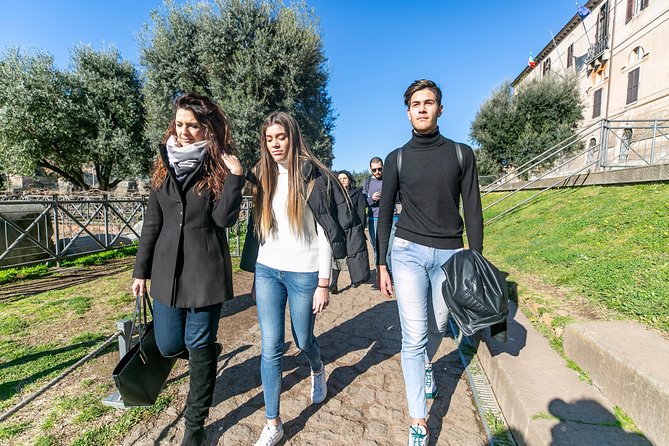
Rome can be a great city. It can also be a stubborn one. Cobblestones, uneven sidewalks, and long queues turn “bucket list” days into endurance tests fast. This experience is designed to fight that problem with a wheelchair-accessible route and a guide who can adjust how you move.
I also appreciate the private-tour setup. Your group goes together, with pace and route tailored to mobility needs. That flexibility shows up in the little moments: stopping when you need a reset, keeping the walk comfortable, and choosing the best lines through busy areas when possible.
You should still expect uneven stone streets. One review called out that cobblestones can be difficult with a rollerator. That’s not a failure of the tour—it’s just Rome. If your chair rolls smoothly over stone, you’ll likely be fine. If you’re using a device that struggles on uneven ground, plan on extra patience and short pauses.
And yes, the guides get major love. Names like Tomaso, Tommaso, Francesco, Claudia, Donato, and Maria come up with the same theme: kind, patient, and tuned to accessibility needs. That isn’t just “nice.” In Rome, it affects how easy it is to actually enjoy the sights.
Still on ancient Rome? A few more we rated
- Rome: Colosseum, Palatine Hill and Roman Forum Guided Tour
★ 4.8 · 32,814 reviews - Rome: Guided Tour of Colosseum, Roman Forum & Palatine Hill
★ 4.7 · 27,897 reviews - Rome: Colosseum & Forum with Audio Guide App -Optional Arena
★ 4.2 · 24,770 reviews - Rome: Colosseum, Roman Forum and Palatine Hill Guided Tour
★ 4.5 · 23,903 reviews
Entering the Colosseum without the bottleneck
The tour starts at P.za del Colosseo, 23. That matters because the Colosseum is not a “wander in from anywhere” kind of place. Meeting here puts you in the right zone immediately, then your guide takes over.
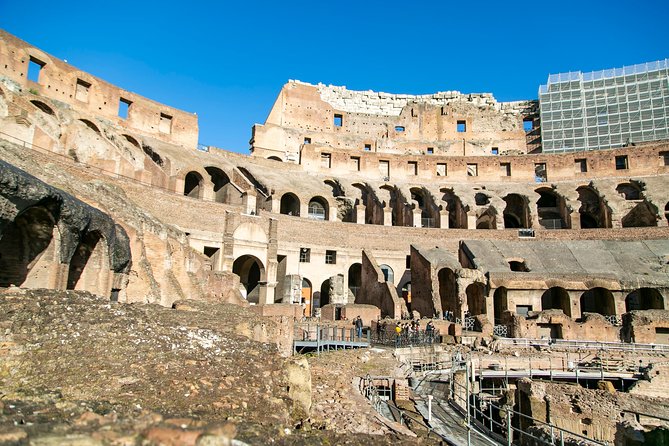
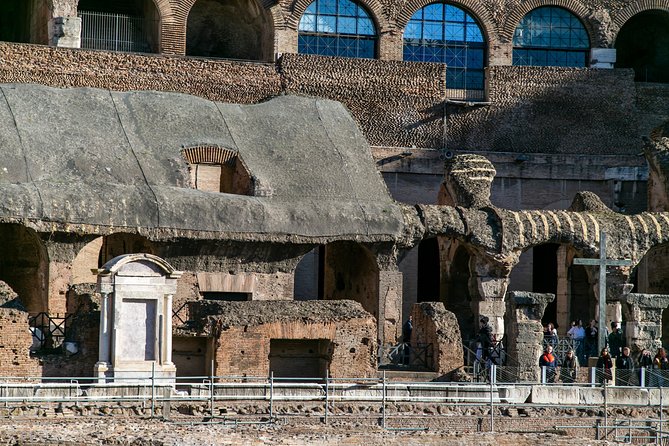
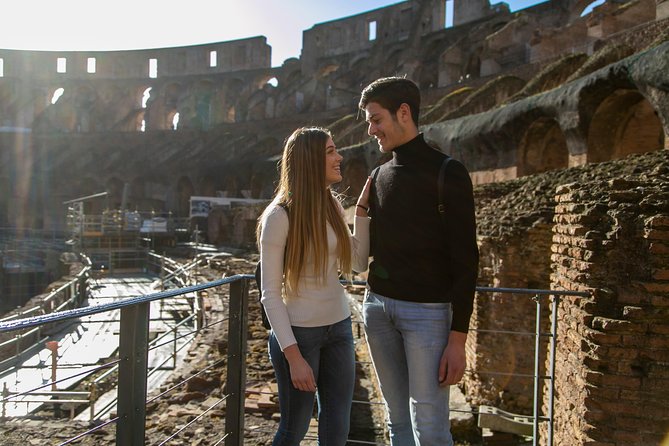
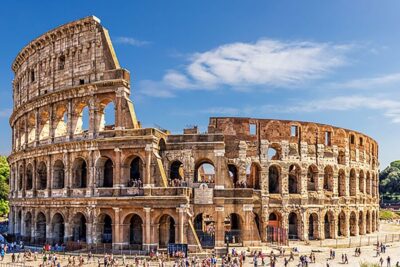
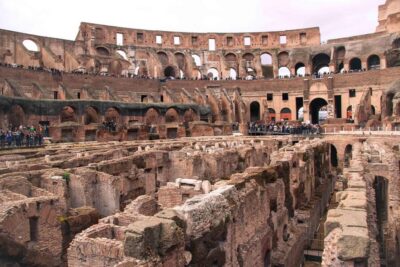
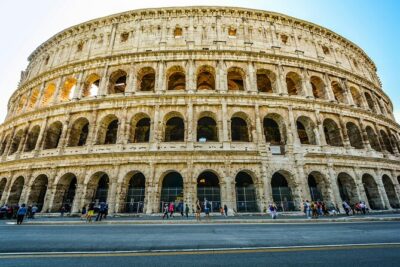
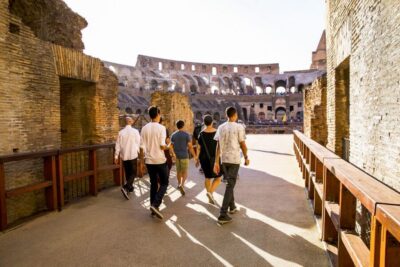
Your first stop is the Colosseum for about 1 hour, with admission included. The guide explains what you’re looking at—this isn’t the usual “huge arena” speech. You’ll hear how it worked in the Roman world and why it was built the way it was, including stories about the violent spectacles staged there.
What I like most is that the Colosseum visit is framed for real understanding, not just photo angles. Even if you’ve read about the ancient empire before, you’ll usually pick up details about structure and purpose that make the stones feel less like ruins and more like a machine built for an audience.
Accessibility is a key promise here: a wheelchair-friendly route in the Colosseum. In plain terms, that means you should have a plan for how to get from point to point inside and around the site. One standout from the experience feedback is how guides physically match your level when explaining. Tomaso, for example, was praised for getting down to a wheelchair user’s level so she could see what he wanted her to notice. That kind of small adjustment can be the difference between “I learned some facts” and “I could actually follow along.”
Practical note: the Colosseum requires ticketing with matching names. The tour info is clear that you must provide full names for all travelers at booking. At the ticket office, names must match ID/passport or entry can be denied. Build in buffer time so you aren’t scrambling.
Roman Forum: a guided walk through the power center
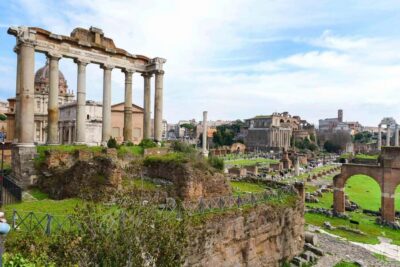
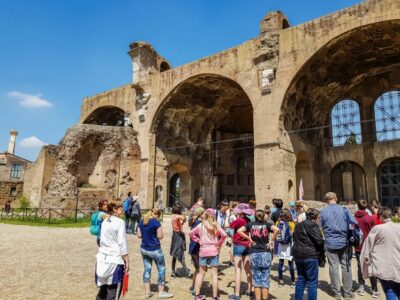
Right after the Colosseum, you head to the Roman Forum area. It’s a short walk, and your guide connects the dots between the arena and the city around it. The Forum stop is also about 1 hour, and admission is included as well.
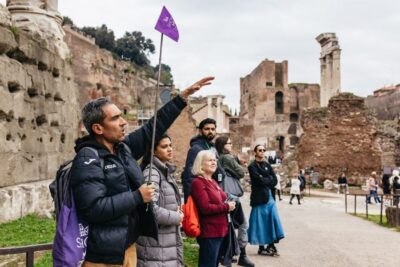
This is where the tour becomes more than a checklist. You’ll see major landmarks that signal how Rome functioned:
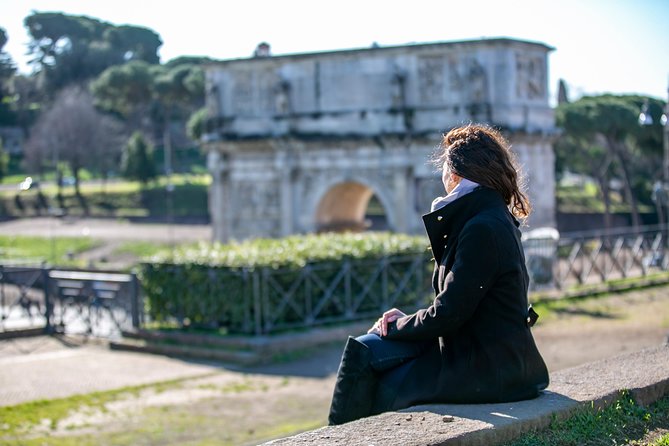
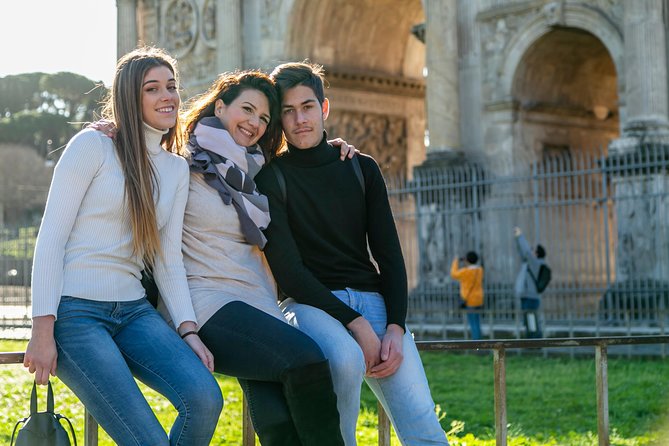
- Arch of Constantine
- Temple of Julius Caesar (built on the cremation site of Julius Caesar)
- Arch of Titus
- House of the Vestal Virgins
- Senate House
- Basilica of Maxentius
- and more nearby ruins
If you like “why did they build this here?” questions, the Forum answers them. It was the main hub of ancient Roman life—religion, politics, commerce. You’re walking a space that used to act like a civic center, not a museum hallway.
The main consideration for mobility: even though the tour is accessibility-focused, the Forum is still outdoors and still full of ancient stone surfaces. Expect uneven footing. A guide can help with pacing and route choice, but you’ll still want to bring the right mindset: this is a walk on real ground, not polished tile.
If your energy is limited, consider using the guide’s flexibility. Since it’s a private tour, you can ask for breaks rather than forcing yourself through long stretches. That’s one of the things the guides are praised for: patient pacing and care with mobility-impaired visitors.
Il Vittoriano and Quirinal Palace views: a quick change of scenery
After the Forum, you get a change of pace with two recognizable civic landmarks nearby: Il Vittoriano and views toward the Quirinal Palace, the official residence of the Italian President.
Il Vittoriano is a neoclassical monument built in 1885 in honor of King Victor Emmanuel II, and locals nickname it the Wedding Cake. It’s a useful stop because it shifts you from ancient ruins to a more modern-looking Rome. That contrast helps you reset your brain before you head back into the postcard zone.
This section is more about seeing the scale and vibe than a long deep dive. If you’re someone who likes variety, it breaks up the heavier ancient architecture blocks and keeps the day from feeling like nonstop stone.
The Pantheon, a couple more takes
Trevi Fountain plus Spanish Steps: iconic, but time-smart
Next up: Trevi Fountain. You get about 30 minutes, and admission here is free.
Trevi is one of those places where the photo matches reality—at least the main idea does. But the real value of a guided stop is timing and context. Your guide helps you look at the fountain like an artwork and a social magnet, not just a busy meeting point.
The itinerary also includes time near the Spanish Steps. Even if you don’t linger long, it’s the kind of Rome pairing that makes sense. You go from a swirl of myth and legend at Trevi to the dramatic stairway silhouette that defines the area.
The biggest practical tip: this is a photo-friendly zone, so it can get busy around peak times. Use your guide’s pacing. If you’re in a wheelchair, you’ll want the route that keeps you moving without needing to squeeze into tight pockets of space. That’s exactly where a private, accessibility-focused plan helps.
Piazza Navona fountains: a small dose of theatre
Then you head to Piazza Navona for about 20 minutes, also free to enter.
Navona is famous for its fountains and for how it feels like an outdoor room. The architecture frames the space, and the fountains give it a lively center even when you’re just standing still.
What makes this stop work in a 4-hour format is that it’s short. You get the payoff without letting it turn into a long wandering session. It’s a “see it, understand it, move on” stop, which matters when you’re balancing mobility needs and keeping the day comfortable.
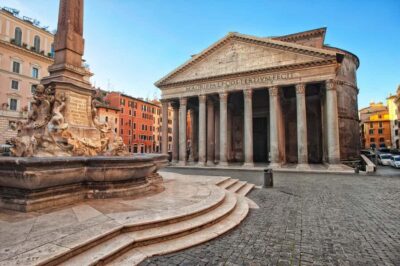
Pantheon time in the afternoon light
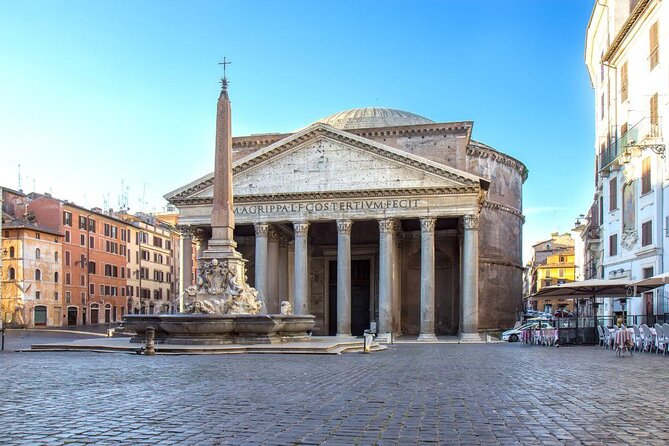
Your final major sight is the Pantheon, with about 30 minutes allocated, again free to enter. After the Pantheon, you’ll stroll through nearby streets and reach the Piazza della Rotonda area, where the tour ends (meeting point details list Piazza della Rotonda, 11 as the endpoint).
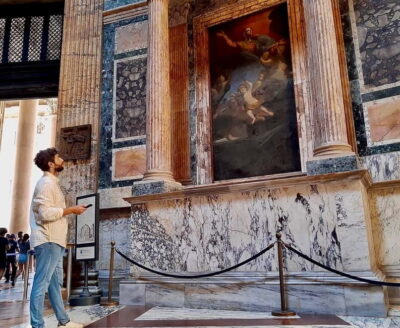
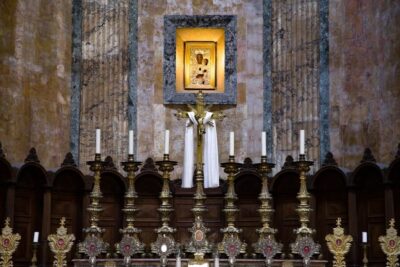
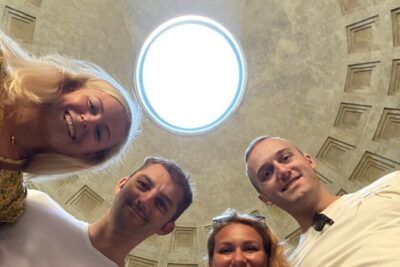
The Pantheon is one of the best places to slow down without losing momentum. Even in a guided format, it tends to pull people into a calmer state. You’re not staring at a ruin. You’re looking at a building that still feels “used,” even if you’re visiting as a tourist.
Why this stop is valuable in this itinerary: it gives you a satisfying finish after Trevi and Navona. Those are expressive, open-air scenes. The Pantheon is structure and proportion, and your guide’s comments can help you notice details that are easy to miss if you’re only scanning for the iconic dome view.
If you’re sensitive to walking distance, this ending layout can help. You start at the Colosseum and work through central Rome, ending near the Pantheon zone where the tour closes. That can reduce the feeling that you still have to “figure out the next step” once the tour is over.
Guides make or break accessibility
This tour’s best feature isn’t a single monument. It’s the human factor—guides who understand how to translate history into something you can actually see and enjoy.
In the feedback, the same qualities repeat:
- Guides who are patient and kind
- Guides who adapt explanations to wheelchair users, sometimes physically lowering themselves to the visitor’s level so the sightlines make sense
- Guides who plan routes to fit mobility limitations
- Guides who keep pacing comfortable, including rest breaks when needed
- Guides who handle heat with sensitivity, so the day stays pleasant rather than exhausting
If you’re the person in the chair, those details matter. If you’re accompanying someone who uses a wheelchair or another mobility aid, those details matter just as much. They affect whether you spend the day helping and managing or simply sightseeing.
Also, I like that the tour is private. One guide can handle your needs without negotiating around a whole crowd. That makes the experience feel more personal and less like a forced march.
One caution: since private tours can be pricey, you want to make sure you’ll get enough value from the guiding. If you don’t care about historical context and you mainly want selfies, you might find a cheaper approach more suitable. But if you want your time to feel meaningful, it’s easier to justify this price.
Price and what you’re really paying for
At $431.35 per person for about 4 hours, this isn’t the cheapest way to see Rome’s highlights. But the value comes from what’s included.
You get:
- A professional guide (art historian)
- Colosseum entrance ticket (listed value €18)
- Colosseum reservation fee (listed value €2)
- Local taxes
- A private tour (only your group)
What you don’t get is private transportation. That’s normal for central walking tours in Rome, but it’s worth flagging. If your group needs easier door-to-door movement, you’ll need to arrange that separately.
So is it worth it? For me, it usually comes down to this question: will your accessibility needs slow you down enough that a guided plan saves you time and stress? If yes, the price starts to look more reasonable. When you reduce guesswork, improve pacing, and avoid the wrong routes, you’re paying for comfort and smooth logistics as much as you’re paying for history.
The other value lever: the tour is booked an average of 50 days in advance. Booking ahead matters more for popular sites like the Colosseum, especially when you need reserved entry. If your dates are flexible, you can sometimes find better timing. If they’re not, booking early helps you lock in the plan.
Who this wheelchair-accessible highlights tour is best for
This works well if you:
- Use a wheelchair or another mobility aid and want a guided plan built around accessibility
- Appreciate history and architecture explanations (not just walking past sights)
- Want a private group experience with control over pace and breaks
- Prefer a structured route through central Rome rather than a full-day free-for-all
It’s also a good fit for families who need a guide to keep things organized.
Where it may be less ideal is if you want a long, slow day with lots of free wandering. This is a highlights route with set timing. It’s designed to hit key stops in about 4 hours, not to turn into an all-day art seminar.
Should you book this tour?
I’d book it if your priority is an accessible route that reduces stress and a guide who pays attention to how people can actually experience the sights. The Colosseum start, the Forum structure, and the finish near the Pantheon create a smooth arc through central Rome, and the guide-driven pacing is exactly what makes the day feel comfortable.
I’d think twice only if your group doesn’t care about guided context and you’re fine managing rough ground and crowds on your own. In that case, you could probably find a lower-cost option. But if you want your day to feel well planned, kind, and genuinely easier to navigate—this is the kind of tour that makes Rome work for you.
FAQ
How long is the tour?
It runs for about 4 hours.
What sights are included?
You visit the Colosseum, Roman Forum area, Il Vittoriano (view/area), Trevi Fountain (and nearby Spanish Steps area), Piazza Navona, and the Pantheon area around Piazza della Rotonda.
Are tickets included?
Yes for the Colosseum: admission ticket and reservation fee are included. Other stops listed (Trevi Fountain, Piazza Navona, Pantheon) are listed as free.
Is the tour private?
Yes. It’s private, and only your group participates.
What accessibility support is offered?
The itinerary is described as wheelchair-accessible, and there’s a wheelchair-friendly route in the Colosseum. The guide can customize the pace and route to match mobility needs.
What language is the tour offered in?
It’s offered in English.
Where does the tour start and end?
It starts at P.za del Colosseo, 23, and ends at Piazza della Rotonda, 11.
What documents do I need for entry to the Colosseum and Roman Forum?
You’ll need a valid passport or ID document that matches the full names provided at booking. If names don’t match and you present the voucher with all travelers’ full names before entry, access may be denied.
Near the Trevi: More to See
- Rome: Trevi Fountain and Underground Guided Tour
★ 4.3 · 1,664 reviews - Rome: Opera Concert at Palazzo Poli – Fontana di Trevi
★ 4.7 · 1,026 reviews - Best of Rome Walking Tour including Trevi Fountain
★ 4.5 · 923 reviews - Catacombs Tour with Transfer – Optional Capuchin Crypt or Trevi
★ 4.5 · 694 reviews - Rome Walking Tour with Piazza Navona, Trevi Fountain and Pantheon
★ 4.5 · 676 reviews - The Great Opera Arias Concert at Palazzo Poli – Trevi Fountain
★ 5.0 · 533 reviews
Back to the Pantheon
- Rome: Pantheon Priority Entry Ticket & Interactive App
★ 4.1 · 5,114 reviews - Rome: Pantheon Priority Entry Tickets with Interactive App
★ 4.6 · 4,108 reviews - Rome: Pantheon Timeless Marvel Guided Tour with Entry Ticket
★ 4.9 · 4,002 reviews - Castel Sant’Angelo: Ticket with optional Vatican or Pantheon
★ 4.4 · 3,088 reviews - Pantheon Elite Guided Tour – Rome’s Iconic Ancient Temple
★ 5.0 · 1,447 reviews - Rome: Pantheon Small-Group Guided Tour with Entry Ticket
★ 4.9 · 1,226 reviews
Ancient Rome, Kept Going
- Rome: Colosseum, Palatine Hill and Roman Forum Guided Tour
★ 4.8 · 32,814 reviews - Rome: Guided Tour of Colosseum, Roman Forum & Palatine Hill
★ 4.7 · 27,897 reviews - Rome: Colosseum & Forum with Audio Guide App -Optional Arena
★ 4.2 · 24,770 reviews - Rome: Colosseum, Roman Forum and Palatine Hill Guided Tour
★ 4.5 · 23,903 reviews - Rome: Colosseum Arena Floor, Palatine & Forum Guided Tour
★ 4.5 · 20,180 reviews - Rome: Colosseum Arena, Palatine Hill & Forum Guided Tour
★ 4.7 · 14,510 reviews
Just added to our Rome reviews





Colosseum & Ancient Rome Tours, compared.
 ★ 4.8Colosseum, Palatine Hill and Roman Forum Guided TourFrom $5232,814 reviews
 ★ 4.7Guided Tour of Colosseum, Roman Forum & Palatine HillFrom $5527,897 reviews
 ★ 4.2Colosseum & Forum with Audio Guide App -Optional ArenaFrom $4124,770 reviews
 ★ 4.5Colosseum, Roman Forum and Palatine Hill Guided TourFrom $5923,903 reviews
 ★ 4.5Colosseum Arena Floor, Palatine & Forum Guided TourFrom $4120,180 reviews
 ★ 4.7Colosseum Arena, Palatine Hill & Forum Guided TourFrom $8414,510 reviews
 ★ 4.6Colosseum,Forum & Palatine Tour + Optional Arena FloorFrom $4513,169 reviews
 ★ 4.7Colosseum: Underground and Ancient Rome TourFrom $16012,691 reviews
Browse the lists this tour appears in