
Reviewed · WALKING TOURS
Via Crucis Catholic Pilgrim Walking Tour in Rome
Rome turns into a pilgrimage route.
This Via Crucis Catholic Pilgrim Walking Tour in Rome is built for people who want more than photos: you’ll move from one sacred stop to the next with a guide framing what you see through Scripture, theology, and Church history, from a clearly Catholic perspective. It’s offered in English, and the group is kept small so the experience stays personal.
I especially like two things. First, the small group (up to 5 travelers) means you’re not shouting over a crowd; your guide can slow down for questions and explanations. Second, I like how the tour focuses on meaning, not just facts—at each stop you get context so the sites feel connected, not random.
The one consideration: this is real walking. In summer it can be tough, and it’s not recommended if you can’t walk more than about 2 kilometers. Also, you’ll see the Holy Stairs, but you won’t have time to do the traditional knee-climbing devotion as part of the tour.
In This Review
- Key things to know
- Piazza di Santa Maria Maggiore Start: a pilgrim tone before the first church
- A 3 to 4 Hour Small-Group Walk (Max 5): pacing and what you’ll feel on your feet
- Stop 1: Santa Maria Maggiore and a strong opening in Rome’s major-basilica world
- Stop 2: Santa Prassede for the scourging pillar and some of the earliest Christian mosaics
- Stop 3: St Alphonsus Maria de Liguori and the original icon of Our Lady of Perpetual Help
- Stop 4: Scala Santa Holy Stairs—what you’ll see and what you won’t do on tour
- Stop 5: St John Lateran and the Holy Door for a Partial Indulgence year
- Stop 6: Santa Croce in Gerusalemme—when the relics are the point
- Price and what you’re really buying for $114.45 per person
- Practical dress and walking tips for Roman summer heat
- What makes the guides matter on this tour
- Should you book Crucis Tours for this Via Crucis route?
- FAQ
- How long is the Via Crucis Catholic Pilgrim Walking Tour in Rome?
- What time does the tour start, and where do I meet?
- What’s the group size?
- Is the tour offered in English?
- Are there admission fees for the churches and basilicas?
- What’s included in the price, and what isn’t?
- Is the tour suitable if I have limited mobility?
- What clothing should I wear?
- Will I have time to climb the Holy Stairs on my knees?
- What if I need to cancel?
Key things to know
- Up to 5 people keeps the vibe calm and question-friendly.
- English guide and mobile ticket make it easy to show up and follow along.
- Holy relics plus major basilicas give you a strong “Rome outside the Vatican” focus.
- Scala Sancta included viewing time, but knee tradition needs a separate stop.
- Dress code applies: shoulders and knees covered for churches.
- Not for very limited walkers; summer heat makes the walking harder.
Piazza di Santa Maria Maggiore Start: a pilgrim tone before the first church
The day starts at Piazza di Santa Maria Maggiore, right by the Basilica di Santa Maria Maggiore area. That matters because you’re beginning with a major church setting, not a random street-corner meeting point. You get a “start walking, start praying” feel right away.
From there, your guide sets the tone: you’re not just ticking off basilicas, you’re learning how Catholic devotion, Scripture, and Church history fit together. That’s the difference between sightseeing and a pilgrimage-style route.
And yes, this is a faith-forward tour, but it’s not only for people who want to sing hymns. If you like theology, sacred art, and the stories behind relics, you’ll still find plenty to appreciate.
Worth a look next to this Rome booking:
- Rome: Guided Food Walking Tour with Wine in Trastevere
★ 4.9 · 3,105 reviews - Rome: Trastevere & Campo de Fiori Street Food Walking Tour
★ 4.9 · 2,768 reviews - Rome: Paranormal Night Walking Tour & Secret Backstreets
★ 4.9 · 1,921 reviews - Rome: Trastevere Street Food Walking Tour with Local Expert
★ 4.8 · 1,784 reviews
A 3 to 4 Hour Small-Group Walk (Max 5): pacing and what you’ll feel on your feet
The tour runs about 3 to 4 hours, with specific timed visits at each stop. The total walking time is part of the experience, and that’s great—until the summer heat shows up and your legs start negotiating with you.
The group is capped at 5 travelers, which helps in practical ways. You’re more likely to get individual attention if something is unclear. You also tend to move as a unit without constant re-grouping, which keeps the flow smoother.
For your planning: it starts at 8:45 am, and the morning timing helps you avoid the worst of Rome’s daytime heat. If you’re someone who hates rushing, you may still appreciate that the visits aren’t just “10 seconds at the door” moments.
Stop 1: Santa Maria Maggiore and a strong opening in Rome’s major-basilica world
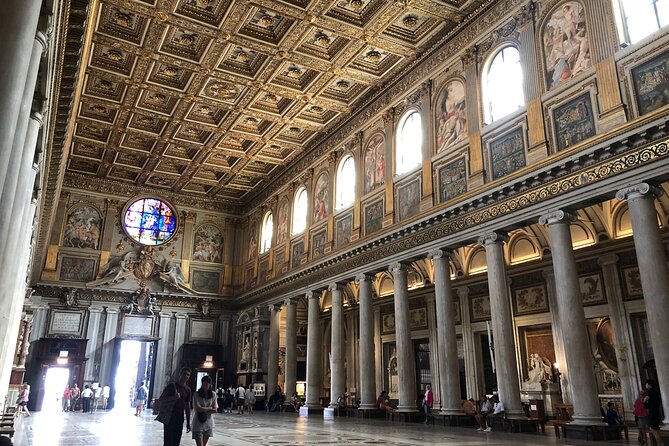
Your first stop is the Basilica di Santa Maria Maggiore. Even if you’ve seen other big Roman churches before, starting here sets an important context: you’re in one of Rome’s key sacred spaces, and you’re building momentum for what comes next.
A lot of visitors miss this part. They think the “big wow” only happens at the relics and the Holy Stairs. But the opening church stop is where the guide’s framing starts to matter. Once the guide connects devotion to history, the rest of the route clicks into place faster.
Time at this stop is about an hour. That’s enough to look around without feeling like you’re constantly watching your watch. If you’re the type who likes to take in details slowly, this first stop gives you space to do it.
Stop 2: Santa Prassede for the scourging pillar and some of the earliest Christian mosaics
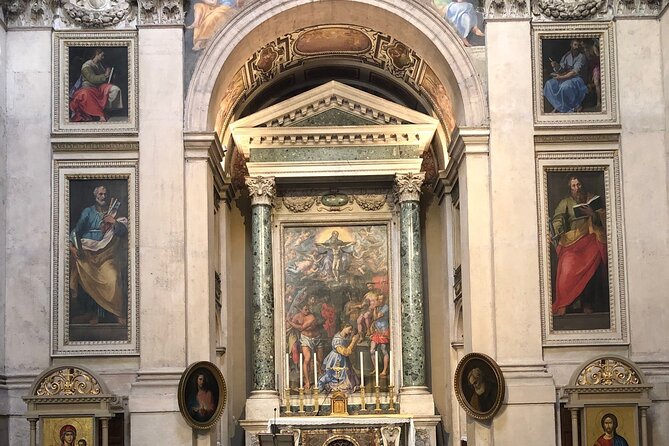
Next you head to the Basilica of Santa Prassede. This church has a quieter feel than some of the headline basilicas, and that change of pace helps. It’s the kind of place where you can hear your own thoughts—and then your guide starts telling the stories that shaped devotion here.
The highlight is specific and unforgettable: a pillar associated with the Lord Christ being scourged before the crucifixion. The pillar is said to have been brought to Rome in the 13th century as a donation in gratitude for the Fourth Crusade.
You also get a glimpse of early Christian mosaic art. Even if you’re not a “mosaic person,” you’ll likely appreciate how early Christian visual language was meant to teach and strengthen faith, not just decorate space.
One practical note: this stop is short (about 15 minutes). So if mosaics are your main interest, pay attention early and keep your eyes open—this is the moment to take a first good look.




Stop 3: St Alphonsus Maria de Liguori and the original icon of Our Lady of Perpetual Help
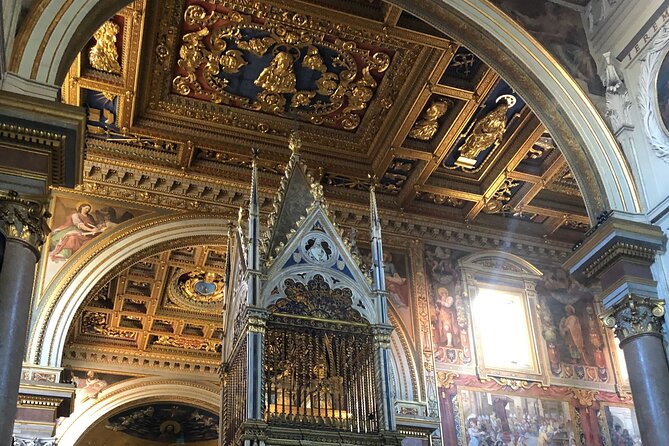
You’ll then visit the Church of Saint Alphonsus Maria de Liguori. From the outside, it may look less dramatic than some Roman churches. But inside, it’s designed for worshipers, and that’s where the real attention goes.
The major draw for traditional Catholic pilgrims here is the original icon of Our Lady of Perpetual Help (also known as Our Lady of Perpetual Succour). For many people, Marian devotion is deeply personal. For others, it’s still historically important—this icon is a direct link to how devotion was preserved, copied, and passed along through generations.
This stop lasts around 15 minutes, so don’t expect a long study session. Use this time to orient yourself: take in the icon first, then let the guide’s explanation connect it to the broader story of what you’re walking through that day.
If you’re traveling with kids, this kind of stop tends to work well because it gives you a clear focal point to look at, rather than a long list of architectural features.
Stop 4: Scala Santa Holy Stairs—what you’ll see and what you won’t do on tour
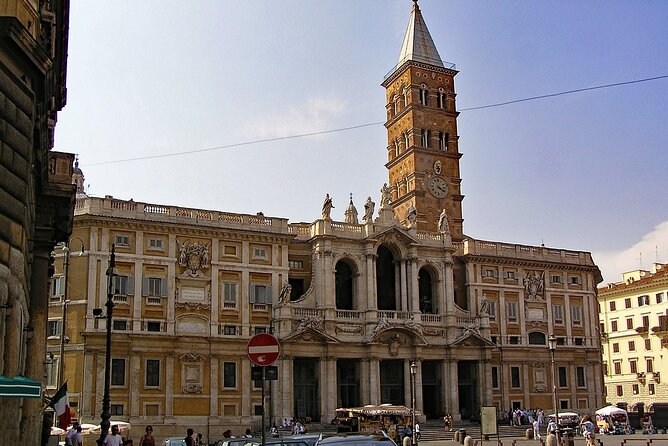
This is the star stop for many people: the Pontificio Santuario della Scala Santa, known as the Scala Sancta, the Holy Stairs. These are traditionally linked to the steps Jesus ascended at the praetorium in Jerusalem before His condemnation.
Here’s the key practical point: the pilgrim tradition is to climb the steps on your knees. The tour will show you the Holy Steps, and you’ll be able to see the devotional space—but you won’t have time to complete the knee-climbing tradition as part of this guided walk.
If knee-climbing is a must-do for you, plan a separate visit. The tour is structured to fit multiple sacred sites into one morning, so the guide keeps the schedule moving.
You also visit the Holy of Holies at the Church of the Holy Stairs. In the tiny chapel, you’ll see an acheiropoieta—an icon by tradition begun by St Luke and finished by angels. That kind of detail can feel almost unbelievable until you stand where it’s shown and hear the guide explain the tradition and meaning.
Time here is about 30 minutes, including the included entrance.
Stop 5: St John Lateran and the Holy Door for a Partial Indulgence year
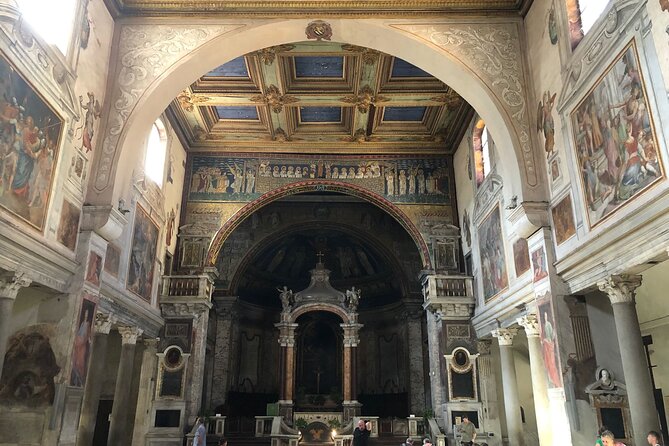
Then you reach Basilica of San Giovanni in Laterano (St John Lateran). This is huge in Catholic terms: it’s the Mother Church of the World and the seat of the Bishop of Rome, the Pope. It’s also the oldest and highest-ranking of Rome’s four Major Basilicas.
There’s an added layer for pilgrims who plan around jubilee devotion. St John Lateran is one of the four Holy Door sites for a Jubileum year, associated with a Partial Indulgence.
Inside, you’re looking at major Catholic symbolism: statues of all the Apostles, numerous papal tombs, and the skulls of St Peter and St Paul, plus the Pillars of the Church. Even if you don’t know the names of every artifact, the guide’s explanations help you understand why these items are treated with such reverence.
Your time at this stop is about 30 minutes. That’s helpful because big basilicas take time. You don’t want to rush; you want to let the space and the stories settle.
Stop 6: Santa Croce in Gerusalemme—when the relics are the point
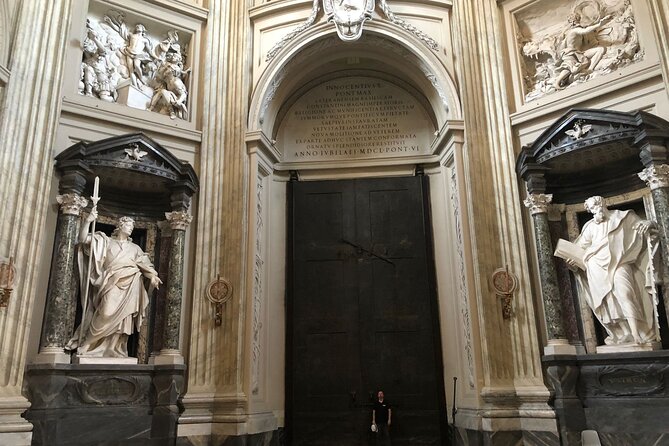
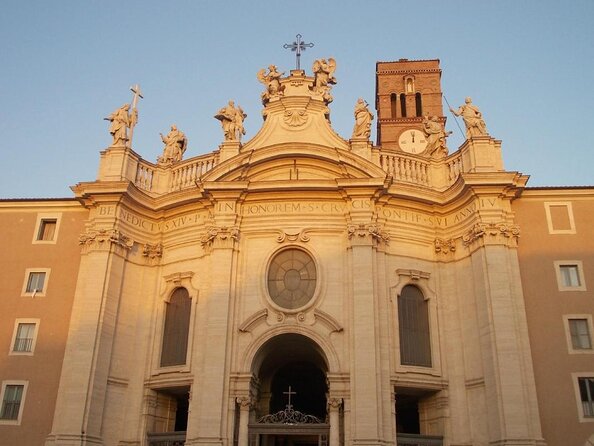
The tour’s final stop is Basilica of Santa Croce in Gerusalemme, often the climax for people who came specifically for relics of the Passion of Christ. The church is in the middle of city life, yet crowds are rare here compared to the surrounding bustle, which makes the visit feel more focused.
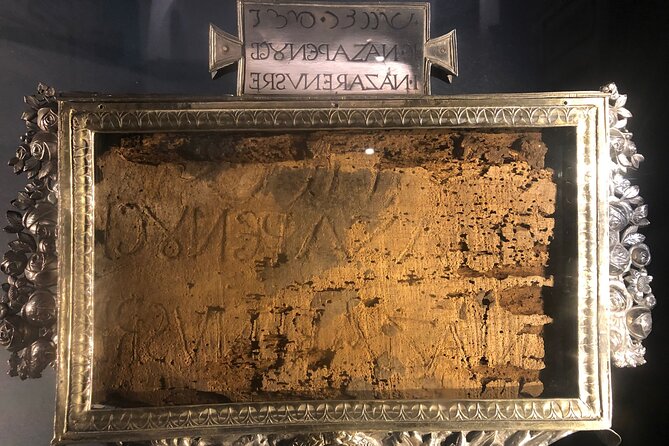
This basilica is associated with some of the most important relics of the Passion. The core tradition connects to St Helena, mother of Emperor Constantine, who made pilgrimage to Jerusalem after Christianity was legalized and then brought relics back to Rome. With the blessing of the Bishop, she is said to have brought back:
- a section of wood from the True Cross
- Holy Nails from the crucifixion
- thorns from the Crown of Thorns
- the board hung above Jesus on the cross, bearing the inscription Jesus the Nazarene, King of the Jews
The basilica also contains other relics linked to Gospel events: the finger of St Thomas, fragments from the cave of the Nativity and the Holy Sepulchre.
Time here is about 30 minutes. That’s enough to venerate what you’re shown without feeling like you’re getting pulled along. By the end, many people feel the tour’s structure make sense: earlier stops prepare you, and then Santa Croce delivers the payoff.
Price and what you’re really buying for $114.45 per person
At $114.45 per person, this isn’t a “cheap pass through Rome” kind of tour. It’s more like you’re paying for a guided pilgrimage route, in a small group, with structured time in multiple sacred locations.
What helps the value: all fees and taxes are included. Also, the stops are set up so admission is generally not the cost bottleneck—many church visits are free, and only the Holy Stairs chapel entrance is specifically listed as included.
So where does the money go? Mostly into the guiding. The guide’s job is to explain why each relic or sacred space matters, and to connect Scripture and Church history to what you’re seeing. That’s also why the group size is limited: the tour works better when the guide can actually speak to people, not just manage a herd.
If you’re traveling as a couple or family, you can treat this as a faith-centered alternative to a general church tour. If you’re paying for a private guide, you’d likely spend more. For a group tour, this price sits in the “reasonable if it matches your interests” category.
Practical dress and walking tips for Roman summer heat
This is where you’ll want to be honest with yourself. The tour notes it’s particularly difficult in summer. It also says it’s not recommended if you can’t walk more than about 2 kilometers.
What that means in real life: you’ll likely be doing repeated walking segments between churches. You won’t be sitting for long stretches. If you have mobility limitations, plan carefully.
Also follow the church dress requirement: shoulders and knees must be covered. That’s not a suggestion. Bring something lightweight that still meets the rule, especially in warm weather.
One more “do this right” tip: wear shoes that handle uneven sidewalks. Rome’s streets aren’t designed for soft-soled comfort.
Finally, you’ll be visiting active religious spaces. Expect respectful quiet, and keep your phone behavior modest. You’ll get a better experience when you treat it like worship-adjacent space, not an attraction line.
What makes the guides matter on this tour
The tour description is faith-centered, but the way it feels depends on the guide’s delivery. In past experiences with this route, guides like Tom and Wen have been praised for connecting theology and Church history to what you’re seeing, not just listing dates and names.
That style matters because Rome’s churches can blur together fast. The guide helps you keep track of what each place contributes to the Catholic story. When the guide explains why a relic is preserved, what a sacred space symbolizes, or how a devotion developed, the whole route stops feeling like separate stops and starts feeling like one connected path.
Also, a small group helps here again. If you want to ask something, you can actually get an answer.
Should you book Crucis Tours for this Via Crucis route?
Book it if you want a Rome walk that’s built around Catholic pilgrimage, where the emphasis is on relics, sacred sites, and explanations tied to Scripture and Church history. This is also a strong choice if you care about seeing major basilicas outside the Vatican and want a route that stays focused.
Skip it (or choose another option) if walking limits you. The tour itself warns it’s difficult in summer and not recommended if you can’t manage more than about 2 kilometers. Also, if you’re hoping to do the Holy Stairs knee-climbing devotion as part of the tour, know you won’t have time for that specific tradition during the guided visit.
If you match those two points, this is a meaningful way to spend a half-day in Rome.
FAQ
How long is the Via Crucis Catholic Pilgrim Walking Tour in Rome?
It runs about 3 to 4 hours.
What time does the tour start, and where do I meet?
The start time is 8:45 am. You meet at P.za di Santa Maria Maggiore, 33, 00185 Roma RM, Italy.
What’s the group size?
The tour has a maximum of 5 travelers.
Is the tour offered in English?
Yes, it’s offered in English.
Are there admission fees for the churches and basilicas?
The tour indicates admission tickets are free for the listed stops, with the Holy Stairs church entrance included as part of the tour.
What’s included in the price, and what isn’t?
All fees and taxes are included. Guide tips and private transportation are not included.
Is the tour suitable if I have limited mobility?
The tour requests moderate physical fitness and says it is not recommended for travelers who cannot walk more than 2 kilometers.
What clothing should I wear?
You must cover shoulders and knees, and dress respectfully for the churches.
Will I have time to climb the Holy Stairs on my knees?
No. You’ll see the Scala Sancta and the Holy Stairs, but the tour notes there isn’t time to partake in the knee-climbing tradition during the guided visit.
What if I need to cancel?
Free cancellation is available up to 24 hours in advance for a full refund. If you cancel less than 24 hours before the start time, the amount paid is not refunded.
More Walking Tours in Rome
- Rome: Guided Food Walking Tour with Wine in Trastevere
★ 4.9 · 3,105 reviews - Rome: Trastevere & Campo de Fiori Street Food Walking Tour
★ 4.9 · 2,768 reviews - Rome: Paranormal Night Walking Tour & Secret Backstreets
★ 4.9 · 1,921 reviews - Rome: Trastevere Street Food Walking Tour with Local Expert
★ 4.8 · 1,784 reviews - Rome: Small-Group Guided Day or Night Walking Tour
★ 4.8 · 1,009 reviews - Rome by Night Walking Tour – Legends & Criminal Stories
★ 4.5 · 1,003 reviews
More Tours in Rome
- Vatican Museums, Sistine Chapel & St. Peter’s Basilica Tour
★ 4.3 · 73,970 reviews - Vatican Museums, Sistine Chapel & St Peter’s Basilica Guided Tour
★ 4.5 · 39,149 reviews - Rome: Colosseum, Palatine Hill and Roman Forum Guided Tour
★ 4.8 · 32,814 reviews - Rome: Guided Tour of Colosseum, Roman Forum & Palatine Hill
★ 4.7 · 27,897 reviews - Rome: Colosseum, Roman Forum and Palatine Hill Guided Tour
★ 4.5 · 23,903 reviews - Rome: Colosseum Arena Floor, Palatine & Forum Guided Tour
★ 4.5 · 20,180 reviews
More Tour Reviews in Rome
- Vatican Museums, Sistine Chapel & St. Peter’s Basilica Tour
★ 4.3 · 73,970 reviews - Vatican Museums, Sistine Chapel & St Peter’s Basilica Guided Tour
★ 4.5 · 39,149 reviews - Rome: Colosseum, Palatine Hill and Roman Forum Guided Tour
★ 4.8 · 32,814 reviews - Rome: Guided Tour of Colosseum, Roman Forum & Palatine Hill
★ 4.7 · 27,897 reviews - Rome: Colosseum & Forum with Audio Guide App -Optional Arena
★ 4.2 · 24,770 reviews - Rome: Colosseum, Roman Forum and Palatine Hill Guided Tour
★ 4.5 · 23,903 reviews
Just added to our Rome reviews





Walking Tours, compared.
 ★ 4.9Guided Food Walking Tour with Wine in TrastevereFrom $1003,105 reviews
 ★ 4.9Trastevere & Campo de Fiori Street Food Walking TourFrom $512,768 reviews
 ★ 4.9Paranormal Night Walking Tour & Secret BackstreetsFrom $341,921 reviews
 ★ 4.8Trastevere Street Food Walking Tour with Local ExpertFrom $571,784 reviews
 ★ 4.8Small-Group Guided Day or Night Walking TourFrom $231,009 reviews
 ★ 4.5Rome by Night Walking Tour – Legends & Criminal StoriesFrom $141,003 reviews
 ★ 4.4Guided City Center Evening Sightseeing Walking TourFrom $46953 reviews
 ★ 4.9Small-Group City Highlights Moonlight Walking TourFrom $29949 reviews
Browse the lists this tour appears in