
A trip to St. Peter’s can change your pace. This guided visit is built to help you see what matters in St. Peter’s Basilica and then go below ground to the Vatican Grottoes, where the first Bishop of Rome is honored. I like the way the tour brings major artworks into clear focus, and I’m a fan of live guiding—people often name guides like Alexandra and Volodymyr for keeping the story sharp and easy to follow. One possible drawback: you’ll still go through airport-style security, so plan for real waiting even with a guided format.
Inside, you get the big emotional hits without getting lost in the crowd. You’ll see Michelangelo’s Pietà near the entrance and Bernini’s Baldachin over the papal altar, plus the Chair of St. Peter (Cathedra Petri), tied to the symbolic authority of the papacy. If you’re the kind of person who wants meaning alongside marble, this tour is set up for you. The trade-off is simple: it’s a walking tour and not designed for wheelchairs or mobility impairments.
You’re also not just browsing above ground. The visit ends in the Vatican Grottoes and the Tomb of St. Peter, a solemn space beneath the basilica where many popes are laid to rest. I’d call that the reason this experience feels complete rather than “just another museum stop.” Still, if you’re hoping for Vatican Museums or the Sistine Chapel included, you’ll need to choose a different add-on option.
In This Review
- Key highlights worth centering in your day
- Why this St. Peter’s guided format feels better than self-guided wandering
- Price and value: what $20 buys you in the real world
- Meeting at Via del Mascherino: the first move that saves time
- Security and timing: why your expectations should be realistic
- St. Peter’s Basilica: Pietà, Baldachin, and the Chair of St. Peter
- Michelangelo’s Pietà: where sorrow feels human
- Bernini’s Baldachin: scale, bronze, and the altar’s drama
- The Chair of St. Peter (Cathedra Petri): authority made visible
- Bonus: the dome and what it means to the building
- The Vatican Grottoes and Tomb of St. Peter: the quieter ending that sticks
- Who should book this St. Peter’s + Grottoes tour
- Small rules that actually affect your experience
- Should you book this tour?
- FAQ
- How long is the Vatican: St. Peter’s Basilica & Underground guided tour?
- What will I see during the tour?
- Is the dome included?
- Are Vatican Museums and the Sistine Chapel included?
- Will I be able to skip the security line?
- What should I wear to enter?
Key highlights worth centering in your day
- Pietà near the entrance: you’ll know exactly what you’re looking at instead of drifting past it.
- Bernini’s Baldachin: the scale and theology make more sense when a guide frames it for you.
- Chair of St. Peter (Cathedra Petri): you get the symbolism, not just the sightseeing photo.
- Vatican Grottoes + Tomb of St. Peter: you finish where the building’s meaning turns sacred and quiet.
- Headphones for group listening: you can step aside to look without losing the narration.
- St. Peter’s security still matters: you can’t avoid the checks, so timing prep is part of the win.
Why this St. Peter’s guided format feels better than self-guided wandering
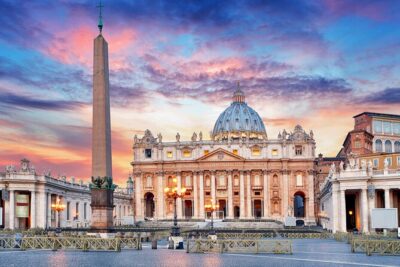
St. Peter’s Basilica is huge. That’s the problem and the power. On your own, you can absolutely see the highlights—but you might miss the “why” behind them. This tour is built to connect the art to the faith and the politics of the Church over centuries, without turning it into a lecture marathon.
I like that the tour doesn’t treat the basilica like a checklist. It guides you toward the key objects that anchor the whole place: Michelangelo’s Pietà for the emotional core, Bernini’s Baldachin for the dramatic centerpiece, and the Chair of St. Peter for the symbolic authority theme that runs through the building.
It also helps that the tour is live-guided in multiple languages (English, Spanish, French, Italian, Portuguese, German, Romanian, Arabic). Even if you’re comfortable with art, a good guide keeps your attention from sliding off into “pretty marble mode.”
One more practical plus: the tour time is relatively tight—about 90 to 150 minutes—so it’s easier to place on a busy Rome schedule. If your day already has Vatican Museums or a long walk around Centro Storico, this can be a sensible, focused anchor.
Other ways through the Vatican Museums
- Vatican Museums, Sistine Chapel & St. Peter’s Basilica Tour
★ 4.3 · 73,970 reviews - Vatican Museums, Sistine Chapel & St Peter’s Basilica Guided Tour
★ 4.5 · 39,149 reviews - Rome: Vatican Museums, Sistine Chapel and Basilica Tour
★ 4.3 · 16,039 reviews - Vatican Museums & Sistine Chapel Skip-the-Line Entry Ticket
★ 4.4 · 13,838 reviews
Price and value: what $20 buys you in the real world
$20 per person sounds almost too good for what’s included, mainly because the value isn’t only the sites. It’s the guidance and the pacing that help you actually use your time.
You’re paying for:
- Access to St. Peter’s Basilica with a guided route
- Viewing of Michelangelo’s Pietà
- Viewing of Bernini’s Baldachin
- Viewing of the Chair of St. Peter
- A visit to the Papals’ Crypt / Papal crypt and the Tomb of St. Peter
- A Vatican dome ticket only if you choose that dome option (otherwise it’s not part of this basic flow)
For many people, St. Peter’s is one of the most expensive-feeling places in Europe in terms of time and attention. Security lines can sap energy fast. A live guide—especially one who keeps explaining details during waiting—turns that “stuck in line” time into “I’m getting oriented and learning what I’m about to see.”
Also, some add-ons can shift the price/value equation. If you choose the option with Vatican Museums and Sistine Chapel guided tour, the deal can include skip-the-line for that portion. But for St. Peter’s itself, you should assume security still takes time because skipping checks isn’t an option.
Meeting at Via del Mascherino: the first move that saves time
Your meeting point is on Via del Mascherino 88, near St. Peter’s Basilica and close to Via Porta Angelica. That location matters. Getting oriented on the Vatican side of town is half the battle, especially on days with heavy crowds.
I suggest you arrive a bit early so you’re not doing that late-run panic around the security entrance. The tour involves walking, and the timing is built around getting the group through checks and into the basilica efficiently.
Also double-check your clothing before you leave the hotel. Knees and shoulders must be covered. If you show up in shorts or a tank top, you’ll waste time fixing it at the last second, and it can be a pain to find the right option near the Vatican.
Security and timing: why your expectations should be realistic
Here’s the plain truth: skipping the security check line isn’t possible. Expect airport-style security, and during peak seasons, waits can run from 10 to 120 minutes.
That’s why the best strategy is not to “beat the line.” It’s to “manage the line.” On well-run tours, your guide keeps you productive while you wait—sharing context and small details so the time doesn’t feel wasted.
If you have flexibility, consider going earlier in the day. Some guides and tour schedules tend to run smoother when you’re not fighting the biggest crowd wave. The tour duration itself (90–150 minutes) is short enough that timing on the calendar can make a noticeable difference in how rushed you feel inside.
More time under Michelangelo's dome
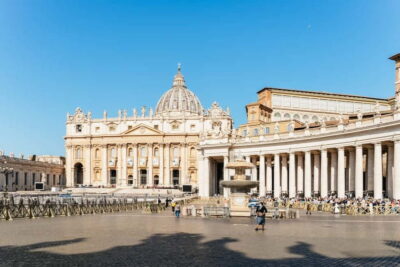
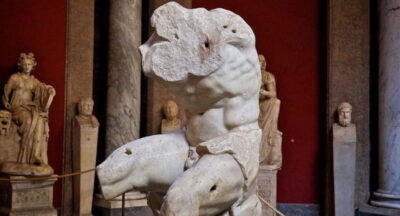
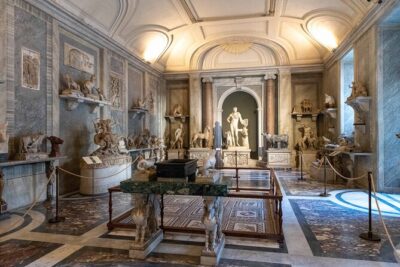
St. Peter’s Basilica: Pietà, Baldachin, and the Chair of St. Peter
The tour starts in St. Peter’s Basilica, and that matters. You’re not “building up” to the main stage—you enter with the story already in place.
Michelangelo’s Pietà: where sorrow feels human
Michelangelo’s Pietà is near the entrance, which is great because you’re not stuck in the back of the basilica trying to locate it. This is the work many people recognize instantly, even if they don’t know the title.
What I like about having a guide here is that the sculpture stops being a famous image and becomes a scene. You learn what makes it so moving and why Michelangelo’s age and skill still hit people centuries later. The result: you don’t just look up; you slow down.
Bernini’s Baldachin: scale, bronze, and the altar’s drama
Next is Bernini’s Baldachin over the papal altar. The canopy is enormous, and that scale can either impress you or leave you blinking without context.
With a guide, you understand what it’s doing in the space—how it focuses attention and how the design connects to the tomb beneath. It’s not just a pretty centerpiece; it’s the visual way the Church points your gaze where it wants it.
The Chair of St. Peter (Cathedra Petri): authority made visible
Then comes the Chair of St. Peter, a relic symbol tied to papal authority and the continuity of the Church. It’s displayed as a bronze-enclosed relic structure above the apse area.
This is one of those stops where your guide’s job becomes more than facts. The best experience here is when the symbolism clicks—so you understand why it’s revered, and why it belongs in the basilica’s “argument” about leadership and tradition.
Bonus: the dome and what it means to the building
If you choose the option that includes the dome ticket, you add another layer: stepping into the basilica’s architecture beyond what you can see from the ground. Even without the climb, you’ll hear about the dome’s importance, since Michelangelo designed it and it was completed after his death.
That architectural context helps you read the basilica as a unified design instead of scattered masterpieces.
The Vatican Grottoes and Tomb of St. Peter: the quieter ending that sticks
After St. Peter’s Basilica, the tour moves into the Vatican Grottoes, beneath the basilica. The mood changes fast. It’s solemn and slower, and that shift is part of the value.
In the grottoes you visit the Papal crypt area and the Tomb of St. Peter. This is the first Bishop of Rome—an anchor figure for Christianity—and the site is presented as sacred, supported by archaeological and historical evidence.
What I love here is how the tour gives you permission to slow down. You’re not chasing the next photo angle. You’re standing in a space where the building’s art and power turn into something more reverent.
Some tour schedules also align with times when the Holy Door is open (it’s only open during Jubilee Years). If your dates coincide, you might have the chance to pass through it. That’s not a guarantee—but it can be a memorable part of the day when it’s available.
Who should book this St. Peter’s + Grottoes tour
This tour is a strong match if:
- You want the major basilica highlights explained in plain language
- You care about symbolism (not only famous names)
- You like structured sightseeing with a live guide
- You want a finish in the grottoes instead of ending after the basilica
It’s not a match if:
- You have mobility issues or need a wheelchair-friendly route (the tour involves walking)
- You’re expecting Vatican Museums or the Sistine Chapel as part of the default package (those are not included unless you choose that guided option)
Small rules that actually affect your experience
A few policies matter inside the basilica and grottoes:
- Flash photography isn’t allowed
- Pets aren’t allowed
- Food and drink aren’t allowed inside the Basilica
- Shoulders and knees must be covered
These aren’t just formalities. They affect how long you’ll spend in line, how you’ll plan your outfit, and whether you’ll feel comfortable once you’re inside.
Should you book this tour?
Yes, if you want St. Peter’s to feel understandable, not overwhelming. At around $20, you’re getting guided focus on Pietà, Baldachin, the Chair of St. Peter, and then the Vatican Grottoes and Tomb of St. Peter—one of the most meaningful endings you can build into a Rome trip.
Book with confidence if:
- You’re short on time and want the essentials done well
- You prefer a guide over wandering and guessing what matters
- You want live explanations in your language
Think twice if:
- You need wheelchair or low-walking support
- You were planning to spend your Vatican day primarily in the Vatican Museums and Sistine Chapel (that’s not included in this core format)
If your goal is a guided, coherent St. Peter’s experience that ends in a genuinely quiet place, this is the kind of tour that makes the basilica stick in your memory for the right reasons.
FAQ
How long is the Vatican: St. Peter’s Basilica & Underground guided tour?
It runs about 90 to 150 minutes, depending on the starting time and how the schedule moves through the basilica and grottoes.
What will I see during the tour?
You’ll get a guided visit of St. Peter’s Basilica and see Michelangelo’s Pietà, Bernini’s Baldachin, and the Chair of St. Peter. The tour ends with the Vatican Grottoes and the Papal crypt area, including the Tomb of St. Peter.
Is the dome included?
A dome visit is included only if you choose the option that includes the dome tour ticket. Otherwise, the dome ticket is not part of the basic included items.
Are Vatican Museums and the Sistine Chapel included?
Not in the default experience. Vatican Museums and the Sistine Chapel are included only if you select the option that adds a guided tour there.
Will I be able to skip the security line?
You cannot skip the airport-style security check. The tour may help with other line savings if you choose the Vatican Museums and Sistine Chapel guided option, but security checks still apply.
What should I wear to enter?
You need shoulders and knees covered. Flash photography is not allowed, and food and drinks are not allowed inside the Basilica.
More Tour Reviews in Rome
- Vatican Museums, Sistine Chapel & St. Peter’s Basilica Tour
★ 4.3 · 73,970 reviews - Vatican Museums, Sistine Chapel & St Peter’s Basilica Guided Tour
★ 4.5 · 39,149 reviews - Rome: Colosseum, Palatine Hill and Roman Forum Guided Tour
★ 4.8 · 32,814 reviews - Rome: Guided Tour of Colosseum, Roman Forum & Palatine Hill
★ 4.7 · 27,897 reviews - Rome: Colosseum & Forum with Audio Guide App -Optional Arena
★ 4.2 · 24,770 reviews - Rome: Colosseum, Roman Forum and Palatine Hill Guided Tour
★ 4.5 · 23,903 reviews
More at St. Peter's Basilica
- Vatican Museums, Sistine Chapel & St. Peter’s Basilica Tour
★ 4.3 · 73,970 reviews - Vatican Museums, Sistine Chapel & St Peter’s Basilica Guided Tour
★ 4.5 · 39,149 reviews - Rome: Vatican Museums, Sistine Chapel and Basilica Tour
★ 4.3 · 16,039 reviews - Rome: Vatican Museums, Sistine Chapel & Basilica Tour
★ 4.7 · 13,217 reviews - Skip-the-Line Group Tour of the Vatican, Sistine Chapel & St. Peter’s Basilica
★ 4.5 · 12,779 reviews - Rome: St. Peter’s Basilica, Papal Tombs, and Dome Climb Tour
★ 4.5 · 10,099 reviews
The Vatican, A Few More Ways In
- Vatican Museums, Sistine Chapel & St. Peter’s Basilica Tour
★ 4.3 · 73,970 reviews - Vatican Museums, Sistine Chapel & St Peter’s Basilica Guided Tour
★ 4.5 · 39,149 reviews - Rome: Vatican Museums, Sistine Chapel and Basilica Tour
★ 4.3 · 16,039 reviews - Vatican Museums & Sistine Chapel Skip-the-Line Entry Ticket
★ 4.4 · 13,838 reviews - Rome: Vatican Museums, Sistine Chapel & Basilica Tour
★ 4.7 · 13,217 reviews - Skip-the-Line Group Tour of the Vatican, Sistine Chapel & St. Peter’s Basilica
★ 4.5 · 12,779 reviews
Just added to our Rome reviews



Vatican Museums Tours, compared.
 ★ 4.5Vatican: Museums & Sistine Chapel Entrance TicketFrom $38144,003 reviews
 ★ 4.3Vatican Museums, Sistine Chapel & St. Peter’s Basilica TourFrom $7273,970 reviews
 ★ 4.5Vatican Museums, Sistine Chapel & St Peter’s Basilica Guided TourFrom $2239,149 reviews
 ★ 4.3Vatican Museums, Sistine Chapel and Basilica TourFrom $7316,039 reviews
 ★ 4.4Vatican Museums & Sistine Chapel Skip-the-Line Entry TicketFrom $4313,838 reviews
 ★ 4.7Vatican Museums, Sistine Chapel & Basilica TourFrom $7213,217 reviews
 ★ 4.5Skip-the-Line Group Tour of the Vatican, Sistine Chapel & St. Peter’s BasilicaFrom $3012,779 reviews
 ★ 4.3Vatican Museums & Sistine Chapel Guided TourFrom $11812,117 reviews
Browse the lists this tour appears in