
Reviewed · VATICAN MUSEUMS TOURS
Vatican City: Sistine Chapel, Museums, Basilica Private Tour
Michelangelo’s ceiling is only half the story. This private 4-hour Vatican City tour strings together the Vatican Museums, the Sistine Chapel, and St. Peter’s Basilica with skip-the-line entry and a guide who helps you see the right things fast.
What I like most is the way the route is built around big “must-sees” you can actually absorb, not just race past. You get standout stops like the Cortile della Pigna and the Raphael rooms tied to Julius II, which makes the art feel connected instead of random.
One thing to keep in mind: it’s a tight schedule. Even with a private guide, the Vatican Museums can feel crowded, and the Sistine Chapel time is set at about 30 minutes.
In This Review
- Key highlights in plain terms
- A 4-hour Vatican City sprint: what you really get
- Starting at TMark Hotel Vaticano and getting through the first bottleneck
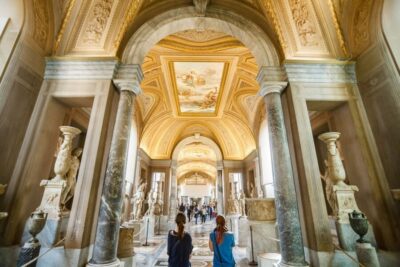
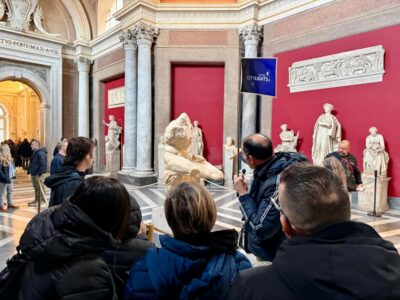
- Vatican Museums highlights: pine cone, Egypt, maps, and papal apartments
- Cortile della Pigna and the pine-cone fountain story
- Cortile Ottagono and pacing between galleries
- Egyptian Museum antiquities
- Gallery of Candelabra and tapestries by Raphael’s students
- Gallery of Maps and the Renaissance room payoff
- Raphael for Julius II, then the Borgia private chambers
- Sistine Chapel: how to make 30 minutes feel like more
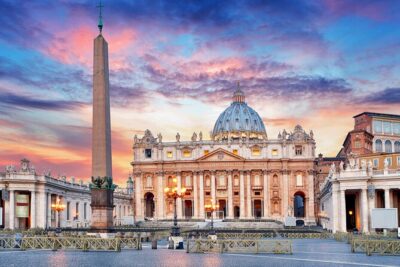
- St. Peter’s Basilica and Square: scale, art, and meaning
- Price and value for a private Vatican guide
- Who this tour suits best (and who might want a different plan)
- Practical tips: dress code, ID, headsets, and pacing
- Should you book this private Vatican Museums, Sistine Chapel, and St. Peter’s tour?
- FAQ
- How long is the Vatican City Sistine Chapel, Museums, and Basilica private tour?
- What is included in the tour price?
- Where do I meet for the tour?
- Do I need to bring anything with me?
- Is there a dress code?
- Do I need headsets?
Key highlights in plain terms
- Cortile della Pigna: that pine-cone fountain tied to ancient Isis lore
- Cortile Ottagono: the octagonal courtyard that sets the rhythm for the next galleries
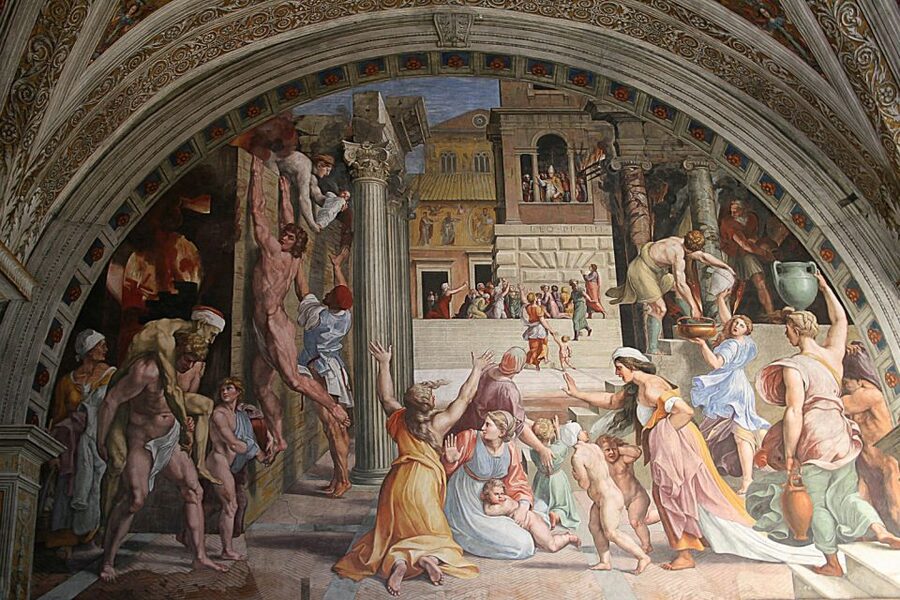
- Raphael for Julius II: you’ll step into rooms associated with the artist’s papal commissions
- Borgia Pope chambers: private spaces connected to Alexander VI
- Egyptian Museum antiquities: Ancient Egypt artifacts appear in the museum mix
- Sistine Chapel focus: Michelangelo’s ceiling plus the Last Judgment ceiling fresco in a set window
A 4-hour Vatican City sprint: what you really get
If you’ve ever tried to plan the Vatican on your own, you know the problem: you can start strong and still end up lost, late, or stuck waiting. This tour is built to fix the common pain points by bundling the Vatican Museums, Sistine Chapel, and St. Peter’s Basilica into one managed flow.
You’ll spend about 2 hours in the Vatican Museums, then shift straight into the Sistine Chapel for about 30 minutes, followed by St. Peter’s Basilica for about 1 hour and St. Peter’s Square for about 30 minutes. That timing matters because each area has a different mood and a different kind of artwork. The Museums reward attention. The Sistine Chapel rewards eye contact and silence. St. Peter’s rewards scale and time.
And yes, you’ll see major names: Michelangelo and Raphael are both part of the deal, plus lots of art that explains how those artists fit into papal collecting over centuries.
Other ways through the Vatican Museums
- Vatican Museums, Sistine Chapel & St. Peter’s Basilica Tour
★ 4.3 · 73,970 reviews - Vatican Museums, Sistine Chapel & St Peter’s Basilica Guided Tour
★ 4.5 · 39,149 reviews - Rome: Vatican Museums, Sistine Chapel and Basilica Tour
★ 4.3 · 16,039 reviews - Vatican Museums & Sistine Chapel Skip-the-Line Entry Ticket
★ 4.4 · 13,838 reviews
Starting at TMark Hotel Vaticano and getting through the first bottleneck
The tour starts at the entrance area connected to TMark Hotel Vaticano, then you meet up at the Vatican Museums entrance area (Viale Vaticano 99 is listed). This is the part where timing and direction make a real difference. The Vatican Museums can be packed even early, and finding your way inside without tangling with long lines is where a “skip-the-line” ticket earns its keep.
You’ll need a passport or ID card, and you should plan for the fact that the Vatican has strict dress rules. If your plan includes shorts, short skirts, or sleeveless shirts, adjust before you go.
This isn’t a tour that asks you to wander. It’s a tour that guides you to key rooms and keeps the day moving without pretending you can see everything in four hours.
Vatican Museums highlights: pine cone, Egypt, maps, and papal apartments
The best “value” inside the Vatican Museums is not simply that there’s a lot of art. It’s that the museum is organized like a story. You don’t have to read every page, but you do want to land in chapters that make the next chapter make sense.
You’ll start with some of the museum architecture and sculpture courtyards, then move into themed galleries:
Cortile della Pigna and the pine-cone fountain story
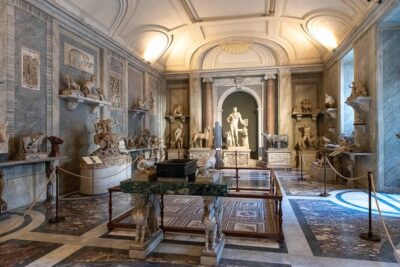
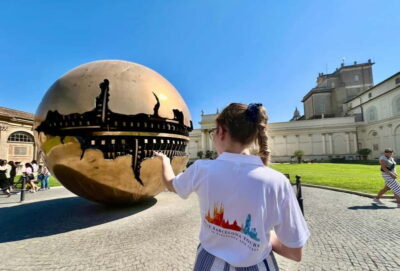
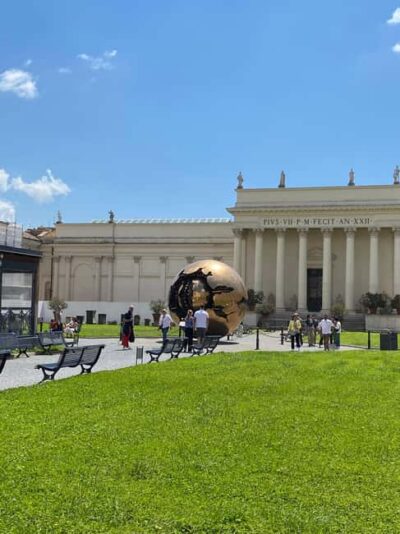
One of the first memorable stops is the Cortile della Pigna. It’s known for a pine-cone fountain that once stood beside the Temple of Isis. That detail gives you a way to interpret what you’re seeing: you’re not just looking at a courtyard. You’re spotting how ancient objects and ideas were reused and reframed by later collectors.
More time under Michelangelo's dome
Cortile Ottagono and pacing between galleries
After that, you’ll go to the Cortile Ottagono, the octagonal courtyard. This is one of those spaces that helps you reset your brain. The Vatican Museums can make you feel like you’re constantly being hit with new masterpieces. A courtyard break keeps you from zoning out and missing what matters next.
Egyptian Museum antiquities
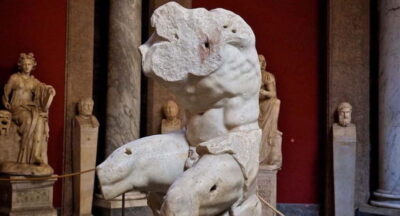
You’ll also see Ancient Egypt objects in the Egyptian Museum area. This is a helpful contrast in tone. When you’re used to thinking of the Vatican as “all Renaissance and Baroque,” the Egypt section reminds you the papal collection absorbed older civilizations too. Even if you only spend a short time there, it changes the way the rest of the day lands.
Gallery of Candelabra and tapestries by Raphael’s students
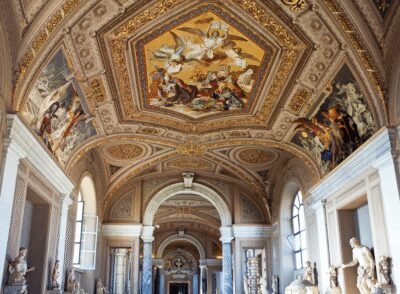
Next are themed art rooms such as the Gallery of the Candelabra, including 2nd-century candelabra from Otricoli, and the Gallery of Tapestries, where you’ll admire Flemish tapestries made by or linked to Raphael’s students.
For me, this is where a good guide earns their fee. Tapestries and candelabra can sound like background. With context, you start noticing design choices, materials, and how these works were meant to communicate power and belief.
Gallery of Maps and the Renaissance room payoff
Then you’ll reach the Gallery of Maps, where historic maps of the world are displayed. This is a smart stop for travelers who like the “how people saw the world” side of history—not just the art.
Finally, you’ll visit one of the beautiful Renaissance rooms that acts like a climax. It’s not just decorative; it signals how the Vatican wanted its collections and architecture to feel: impressive, ordered, and meant to impress visitors from far away.
Raphael for Julius II, then the Borgia private chambers
Two standout “story” elements follow:
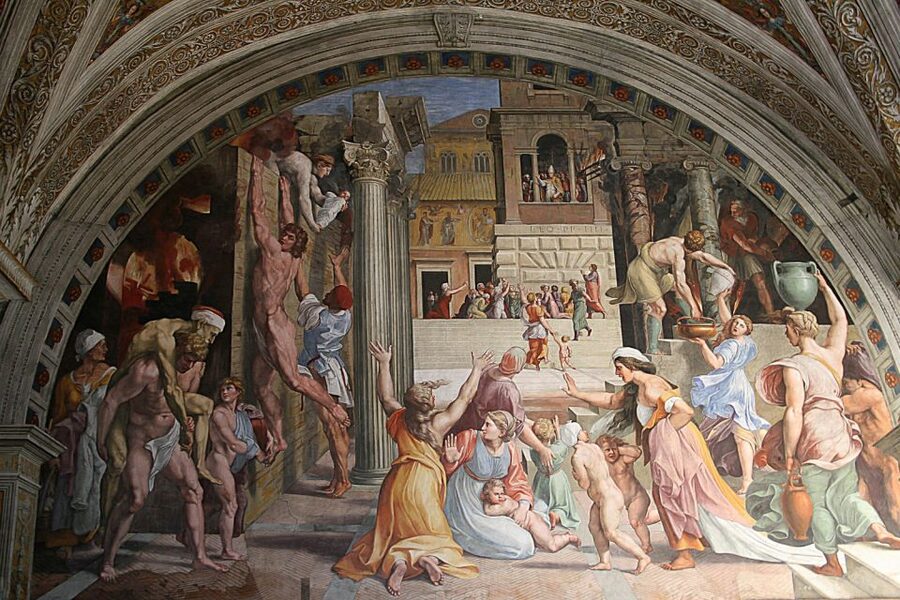
- Enter the apartments Raphael painted for Julius II
- Visit the private chambers of the Borgia Pope Alexander VI
This pairing is valuable because it shows the Vatican as a political stage, not only an art museum. Julius II and Alexander VI represent very different eras and attitudes, and you’ll feel that difference in the rooms and what the tour emphasizes.
A few of the guides you might get (names like Yevgen, Fabio, Julia, Katia, and Paola show up in past experiences) are praised for adjusting explanations to your pace and needs—especially when people have mobility or health constraints.
Sistine Chapel: how to make 30 minutes feel like more
The Sistine Chapel is one of those places where you have to choose your focus. If you try to stare at everything, you’ll see nothing.
This tour gives you about 30 minutes inside the Sistine Chapel, which covers Michelangelo’s ceiling frescoes and the Last Judgment ceiling painting. The key is to follow your guide’s cues rather than trying to “solve it” alone.
Here’s what makes this approach work for you:
- You’ll get help identifying what to look for in the time you have
- You’ll avoid the common mistake of spending half your visit standing in the wrong spot
- You’ll understand how the chapel connects to the wider Vatican collection
Also, the chapel experience is quieter and more controlled. That’s not a minor detail—it’s part of why guided timing matters. A good guide helps you transition from the noisy Museums into a space where you’re supposed to be still and attentive.
St. Peter’s Basilica and Square: scale, art, and meaning
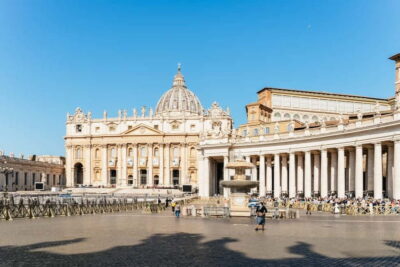
After the Sistine Chapel, the pace shifts again. St. Peter’s Basilica takes about 1 hour on this tour, and then you’ll spend about 30 minutes at Saint Peter’s Square.
Inside St. Peter’s Basilica, the focus isn’t just on “big famous art.” You’ll see highlighted treasures such as:
- Michelangelo’s Pietà
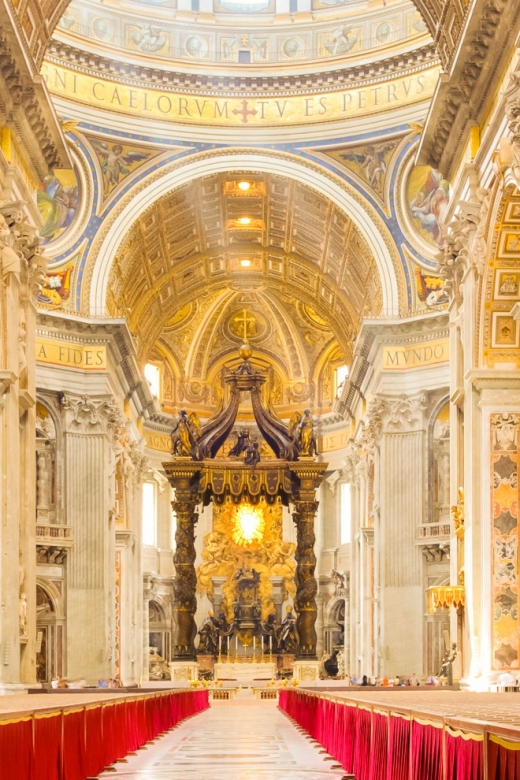
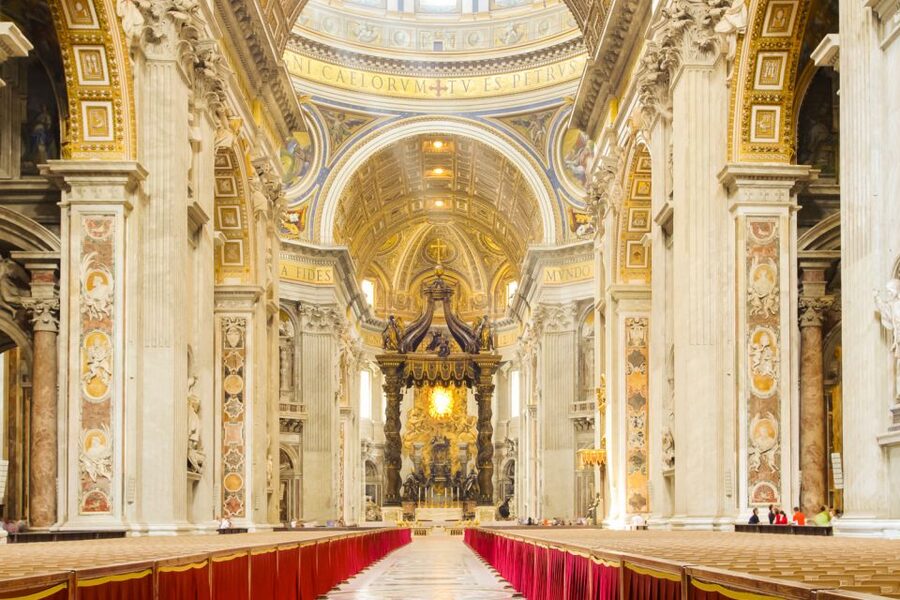
- Bernini’s St. Peter’s Baldachin
These are the kinds of works that change your mental model of the Vatican. A ceiling fresco is one scale. A monumental sculptural installation is another. St. Peter’s is where you feel the Church’s ambition in physical form.
And then you step into Saint Peter’s Square, which helps you re-orient your brain. It’s easier to understand what you just saw when you can place it in the wider Vatican setting.
The guides are often praised for managing the crowd factor and keeping people oriented. If you travel with a parent or someone with mobility limits, this is where choosing a guide who’s good at pacing matters a lot. Names like Katia and Yevgen have been highlighted for helping with wheelchair needs, and guides like Julia have been noted for slowing down when someone has asthma.
Price and value for a private Vatican guide
The listed price here is $717.06 per group, shown as up to 1 traveler on this particular rate. That may sound steep until you look at what you’re actually buying:
- Skip-the-line museum access (huge time value in the Vatican)
- A private guide for about 4 hours
- Entry coverage for the Vatican Museums, Sistine Chapel admission, and St. Peter’s Basilica visit
- Guidance that helps you focus on the most important areas rather than wasting hours
If you’re a solo traveler paying for a private guide, your best “value lever” is time saved plus reduced stress. You’re basically paying to avoid the part where you spend your day figuring out where to go next.
If you’re traveling with others, the math can improve quickly because a private guide typically costs less per person as group size rises. One small note: headsets are only mentioned as needed for groups over 5 people, and they’re available at €3 per person. That suggests small groups still move smoothly, but larger private groups may need extra help hearing the guide.
For many people, the biggest payoff isn’t luxury. It’s confidence. You arrive expecting a masterpiece marathon and you leave with the right highlights understood, not just seen.
Who this tour suits best (and who might want a different plan)
This works especially well if you:
- Want Michelangelo and Raphael highlights without planning your own route for days
- Like guided context for art and the Vatican setting
- Prefer a private format where you can ask questions and slow down
- Travel with someone who benefits from pacing support, like wheelchair users or people who need a gentler speed (guides have been praised for exactly that)
You might consider a different option if you:
- Want a long, unstructured Vatican day where you can roam without a time box
- Plan to spend hours inside one chapel or one gallery on your own
- Are the type who enjoys reading museum labels line-by-line for hours (because this tour focuses on the most important areas)
Practical tips: dress code, ID, headsets, and pacing
Before you go, lock in a few basics so the day stays smooth.
Dress code matters. The Vatican requires you not to wear shorts, short skirts, or sleeveless shirts. If you’re unsure, pack something light that covers your shoulders and knees.
Bring ID. You’ll need a passport or ID card.
Headsets can be needed. The tour notes that headsets are necessary for groups of more than 5 people and they’re available for €3 per person. Even if your group is small, it’s smart to carry patience—your guide will still be working through the Vatican’s crowd reality.
Pace expectations. Four hours sounds long until you’re walking museum corridors, climbing into courtyards, and shifting between indoor and sacred spaces. The tour’s tight structure is part of the value, but you’ll want to mentally accept that you’re seeing highlights, not every room.
Food and drinks aren’t included, so plan a meal strategy around the tour time. If you’re sensitive to heat, crowds, or stamina, consider scheduling your tour earlier in the day if you have that choice.
Should you book this private Vatican Museums, Sistine Chapel, and St. Peter’s tour?
Yes, if your goal is a high-impact Vatican day with less stress and clearer meaning. This tour is built for travelers who want to see the big artistic anchors—Michelangelo’s ceiling work, Raphael-linked rooms, and major Basilica sculptures—while still getting enough context to make the art feel connected.
Book it if you value:
- Skip-the-line entry and guided focus
- A private guide who can adjust pacing for real needs
- A route that moves you from Museums to Sistine Chapel to St. Peter’s without leaving you scrambling
Hold off or pick a different style if you want a long self-guided museum crawl. The Vatican can swallow time. A time-boxed highlight tour won’t replace that, but it can give you the right hit of wonder with far less guesswork.
If you’re going to the Vatican once (or you’re time-crunched), this private plan is one of the most practical ways to get the stories behind the sights and still feel like you saw something real.
FAQ
How long is the Vatican City Sistine Chapel, Museums, and Basilica private tour?
It runs for about 4 hours. The exact starting times depend on availability.
What is included in the tour price?
The tour includes the Vatican Museums skip-the-line ticket, admission to the Sistine Chapel, a visit to St. Peter’s Basilica, and a private live guide.
Where do I meet for the tour?
You meet at the entrance of the Vatican Museums at Viale Vaticano 99, at the exit of TMark Hotel.
Do I need to bring anything with me?
Yes. You should bring your passport or ID card.
Is there a dress code?
Yes. Shorts, short skirts, and sleeveless shirts are not allowed.
Do I need headsets?
If your group is more than 5 people, headsets are necessary. They are available for €3 per person.
More Tour Reviews in Rome
- Vatican Museums, Sistine Chapel & St. Peter’s Basilica Tour
★ 4.3 · 73,970 reviews - Vatican Museums, Sistine Chapel & St Peter’s Basilica Guided Tour
★ 4.5 · 39,149 reviews - Rome: Colosseum, Palatine Hill and Roman Forum Guided Tour
★ 4.8 · 32,814 reviews - Rome: Guided Tour of Colosseum, Roman Forum & Palatine Hill
★ 4.7 · 27,897 reviews - Rome: Colosseum & Forum with Audio Guide App -Optional Arena
★ 4.2 · 24,770 reviews - Rome: Colosseum, Roman Forum and Palatine Hill Guided Tour
★ 4.5 · 23,903 reviews
More at St. Peter's Basilica
- Vatican Museums, Sistine Chapel & St. Peter’s Basilica Tour
★ 4.3 · 73,970 reviews - Vatican Museums, Sistine Chapel & St Peter’s Basilica Guided Tour
★ 4.5 · 39,149 reviews - Rome: Vatican Museums, Sistine Chapel and Basilica Tour
★ 4.3 · 16,039 reviews - Rome: Vatican Museums, Sistine Chapel & Basilica Tour
★ 4.7 · 13,217 reviews - Skip-the-Line Group Tour of the Vatican, Sistine Chapel & St. Peter’s Basilica
★ 4.5 · 12,779 reviews - Rome: St. Peter’s Basilica, Papal Tombs, and Dome Climb Tour
★ 4.5 · 10,099 reviews
The Vatican, A Few More Ways In
- Vatican Museums, Sistine Chapel & St. Peter’s Basilica Tour
★ 4.3 · 73,970 reviews - Vatican Museums, Sistine Chapel & St Peter’s Basilica Guided Tour
★ 4.5 · 39,149 reviews - Rome: Vatican Museums, Sistine Chapel and Basilica Tour
★ 4.3 · 16,039 reviews - Vatican Museums & Sistine Chapel Skip-the-Line Entry Ticket
★ 4.4 · 13,838 reviews - Rome: Vatican Museums, Sistine Chapel & Basilica Tour
★ 4.7 · 13,217 reviews - Skip-the-Line Group Tour of the Vatican, Sistine Chapel & St. Peter’s Basilica
★ 4.5 · 12,779 reviews
Just added to our Rome reviews





Vatican Museums Tours, compared.
 ★ 4.5Vatican: Museums & Sistine Chapel Entrance TicketFrom $38144,003 reviews
 ★ 4.3Vatican Museums, Sistine Chapel & St. Peter’s Basilica TourFrom $7273,970 reviews
 ★ 4.5Vatican Museums, Sistine Chapel & St Peter’s Basilica Guided TourFrom $2239,149 reviews
 ★ 4.3Vatican Museums, Sistine Chapel and Basilica TourFrom $7316,039 reviews
 ★ 4.4Vatican Museums & Sistine Chapel Skip-the-Line Entry TicketFrom $4313,838 reviews
 ★ 4.7Vatican Museums, Sistine Chapel & Basilica TourFrom $7213,217 reviews
 ★ 4.5Skip-the-Line Group Tour of the Vatican, Sistine Chapel & St. Peter’s BasilicaFrom $3012,779 reviews
 ★ 4.3Vatican Museums & Sistine Chapel Guided TourFrom $11812,117 reviews
Browse the lists this tour appears in