
Reviewed · VATICAN MUSEUMS TOURS
Tour Squares of Rome and Vatican
Rome’s monuments in one brisk route. This tour threads Imperial Rome landmarks and the Papal Baroque look-and-feel into a single walk, with stops at major squares and famous works along the way. You even get a quick entrance moment at the Pantheon, then you roll onward toward the Vatican area and St. Peter’s Square.
I like the way it keeps you oriented fast. The route is built around recognizable names and scenes, including Michelangelo and Bernini-related artistry in the Renaissance-Baroque era, plus multiple fountain stops that make it easy to see the evolution of Roman taste.
One drawback to consider: there’s at least one reported mix-up where some booked via a third party arrived expecting a paid ticket while others thought it was free. I strongly suggest you double-check your mobile ticket/reservation before you meet the group, and keep your booking confirmation handy.
In This Review
- Key highlights worth your attention
- What This Tour Covers: Imperial Rome to St. Peter’s Square
- Price and Value: $17.44 for Big-Name Stops
- Where You Meet and How the Route Feels
- Pantheon Stop: Imperial Rome in a Quick Moment
- Domitian Flavio Stadium Ruins + Castel Sant’Angelo
- Papal Golden Time: Michelangelo and Bernini-Era Rome
- Trevi Fountain and the Baroque Fountain Chain
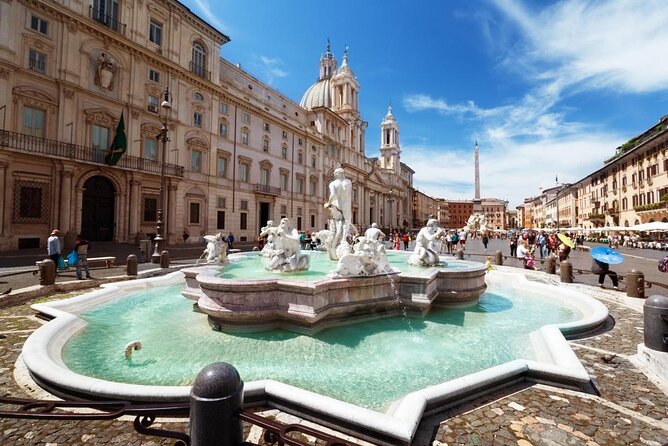
- Piazza Navona: Neptune and the Moor Statue Moments
- Arrival at St. Peter’s Square and the Angelus on Sundays
- How Long Each Stop Really Feels (and Why That’s Not a Bad Thing)
- Group Size, Getting Around, and Staying in the Flow
- Ticket Sanity Check: One Reported Booking Confusion
- Who Should Book This Tour (and Who Might Prefer Something Else)
- Should You Book the Squares of Rome and Vatican Tour?
- FAQ
- How long is the tour?
- Where is the meeting point?
- Where does the tour end?
- Is the ticket mobile?
- Is it free to cancel?
- Does it include the Angelus?
Key highlights worth your attention

- Imperial + Papal Rome in one route, from the Pantheon area to St. Peter’s Square
- Quick, focused stops (often only minutes each) that help you see the big stuff without a long day
- Baroque fountain circuit tied to well-known works and sculptural themes
- Small group cap of 30, which makes it easier to move and hear explanations
- Sunday option for the Angelus, with a papal blessing noted as part of the experience
What This Tour Covers: Imperial Rome to St. Peter’s Square

This is the kind of tour that works like a guided highlight reel—except the “highlights” are the real deal. You start in central Rome (Centro Storico) and move through eras: Imperial Rome, then Renaissance-Baroque Rome, and finally the Vatican finish at St. Peter’s Square.
The pitch is simple: you get a guided thread linking monuments that many people see individually—but here you see how the vibe changes as you walk. That’s where the value sits. Instead of collecting random photos, you connect the dots between the architecture and the art style.
Expect a route where time per stop can be short. The stated duration is listed as roughly 2 to 45 minutes, which tells you this isn’t built for slow wandering. It’s built for getting bearings fast and making your next decision with a clearer mental map.
Other ways through the Vatican Museums
- Vatican Museums, Sistine Chapel & St. Peter’s Basilica Tour
★ 4.3 · 73,970 reviews - Vatican Museums, Sistine Chapel & St Peter’s Basilica Guided Tour
★ 4.5 · 39,149 reviews - Rome: Vatican Museums, Sistine Chapel and Basilica Tour
★ 4.3 · 16,039 reviews - Vatican Museums & Sistine Chapel Skip-the-Line Entry Ticket
★ 4.4 · 13,838 reviews
Price and Value: $17.44 for Big-Name Stops
At $17.44 per person, the price is low enough that you should judge it based on what you get: guided pacing plus access to at least one major interior stop (the Pantheon entry is indicated as part of the route). You’re paying for help making sense of the city’s top symbols, not for a long sit-down museum day.
This can be a strong deal if:
- you want a guided order to your Rome days
- you’re comfortable with quick stops and moving on
- you’d rather spend time outside than queue for hours
The tradeoff is that quick time means you won’t get the kind of deep, linger-for-an-hour experience that some people want. If you’re the type who likes to read every inscription and watch every sculpted detail for five minutes at a time, you may feel rushed.
Where You Meet and How the Route Feels
The meeting point is Fontana del Tritone, Piazza Barberini. That’s a good anchor because it’s in the center of things and associated with a fountain square—easy to find, easy to recognize, and a natural starting point for a walk that’s heavy on fountains.
You end at St. Peter’s Square (Piazza San Pietro) in the Vatican area. The description also mentions leaving the Vatican Museums, which fits the idea of a finish close to that whole zone.
The practical point: you’re not doing a back-to-back museum day with lots of timed entries. You’re moving through sight nodes. That’s helpful if your schedule is packed, or if you prefer the city experience over long indoor blocks.
Pantheon Stop: Imperial Rome in a Quick Moment

One of the anchor sites here is the Pantheon. The tour description specifically notes you will enter, and it labels the segment as admission ticket free with a short time window.
Why this matters: the Pantheon is one of those buildings that instantly changes how you read the rest of Rome. Even if you know it from postcards, being inside (even briefly) helps you understand why Romans later treated the city as a stage for power and engineering.
The realistic downside is time. If your slot is only a few minutes, you’ll want to choose what you look at first:
- the space and scale inside
- the dome and opening
- the overall feel of the interior rather than trying to catch every corner detail
If you’re traveling with someone who gets impatient waiting in lines, this kind of quick entry window can be a relief.




Domitian Flavio Stadium Ruins + Castel Sant’Angelo

The route includes the ruins of the Domitian Flavio Stadium area and then Castel Sant’Angelo. Even in a short walkthrough, these stops help you understand the layers of Rome: entertainment and imperial spectacle, followed by later power symbols and the city’s long architectural memory.
Castel Sant’Angelo is especially useful in a route like this because it acts like a visual landmark. When you see it in the middle distance, you start to feel that you’re heading toward the Vatican zone rather than wandering inside random streets.
What to consider: ruins and major monuments can mean you’ll be walking through areas where you can’t always control crowds. If you want the best photos, plan on taking them during the brief stop window and then letting the group move on.
Papal Golden Time: Michelangelo and Bernini-Era Rome

The tour calls out a Papal “golden time” segment where you’ll see Renaissance-Baroque Rome, with works associated with Michelangelo Buonarroti and Gian Lorenzo Bernini.
This is the part that turns your Roman walk from architecture appreciation into art appreciation. These artists shaped what people think of when they think of Rome as theatrical—stone that seems to move, compositions designed to pull your eye, and public art built for mass viewing.
The value here is the way the route links famous artists to real street-level experiences. When you see the fountains and the dramatic civic spaces, the names become more than trivia.
The drawback: it’s hard to do big-name art justice in a short pacing tour. So focus on what you’re trying to learn:
- the overall style shift from earlier Rome to the Baroque attitude
- why the fountains feel like sculptures, not just water features
- how public spaces become stages for power and faith
If you’re the type who enjoys short guided context and then exploring on your own, this section is a good match.
Trevi Fountain and the Baroque Fountain Chain

This is the heart of the experience: a run of Rome fountains tied to famous sculptural stories. The tour lists stops including:
- Trevi Fountain
- Fountain of Triton
- Fountain of the Four Rivers
- Fountain of Neptune
- the Moor statue associated with Piazza Navona
Trevi Fountain is the obvious headline. But what I like about this fountain-heavy structure is that it’s not just one “must-see.” It’s a chain. Once you’re primed to notice how each fountain is composed—figures, symbolism, and the way water animates the scene—you start seeing patterns instead of only collecting landmarks.
Practical reality check: these areas can be busy. The tour time is short per stop, so you’ll want to keep your expectations matched to the pacing. Think of each fountain as a “spotlight moment” rather than a long sit-down visit.
Also, if you’re planning your day around photos at dawn or at night, keep in mind this tour is designed for daytime movement. You can still use it to learn where everything is, then come back later when you want longer time for shots.
Piazza Navona: Neptune and the Moor Statue Moments

Piazza Navona shows up in the route through its sculptural fountain stops—specifically Neptune and the Moor (the Moor associated with the plaza).
Why this fits the overall theme: Piazza Navona feels like a stage. The Baroque energy isn’t hidden in museums—it’s right there in an open public space where the sculptures and the water create a performance-like atmosphere.
What you might want to do on your own afterward is circle back slowly. Since the tour stop time can be brief, you’ll often get enough to recognize the composition. Then, if you return later, you can let your eyes take longer.
If your feet are already tired, pace yourself. Piazza Navona is great, but it’s easy to burn energy quickly when you’re also trying to keep up with a group.
Arrival at St. Peter’s Square and the Angelus on Sundays
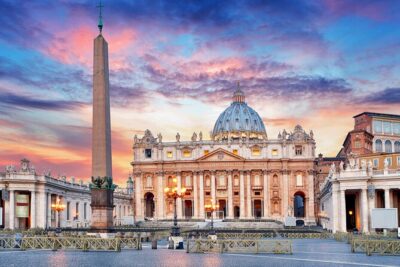
The finish is St. Peter’s Square. That matters because it’s one of the few places where the Vatican setting feels instantly ceremonial—whether it’s your first time there or your fifth.
On Sundays, the description notes the tour ends with the papal blessing in the Angelus. If you’re traveling on a Sunday, this can be a huge reason to book, since it adds an event-based feel rather than a purely sightseeing finish.
Two practical considerations:
- The experience is scheduled around the reality of a public square and a church calendar, so your best bet is to arrive early and stay alert for crowd flow.
- If you dislike waiting, this is the part where you’ll want to stay flexible. Even if the tour is short, the area can require patience.
The tour also references leaving the Vatican Museums. That suggests the overall timing fits with the Vatican area flow, not a deep museum day. So if you’re hoping for an extensive museum visit, plan that separately.
How Long Each Stop Really Feels (and Why That’s Not a Bad Thing)
The duration is listed as roughly 2 to 45 minutes. That range is a clue: your day is likely structured as short guided moments with movement between them.
Is that a drawback? It depends. For many people, it’s a plus:
- You see more of Rome’s famous sights in a shorter window.
- You avoid being stuck in one spot for too long.
- You get the guide’s context, then you can explore independently.
If you prefer long museum-style visits or slow “reading the room” pacing, you may need to add extra time on your own after the tour ends—especially around St. Peter’s Square and the fountain zones.
The best way to make a quick tour feel satisfying is to decide ahead of time what you want most:
- architecture and interiors (Pantheon)
- sculpture and symbolism (fountains and Baroque names)
- Vatican atmosphere (St. Peter’s Square and Sunday Angelus)
Then let the tour do its job: connect those dots.
Group Size, Getting Around, and Staying in the Flow
The tour notes a maximum of 30 travelers. For a walking route, that’s a workable group size. It’s small enough that you can usually move as a unit, but not so tiny that you feel like you’re constantly waiting for everyone to catch up.
It also lists that it’s near public transportation and that most travelers can participate. It even mentions service animals allowed, which is good to know if you travel with a companion animal.
For your comfort, wear shoes you trust. This is a Rome walking experience that links central squares and monuments. You don’t need hiking boots, but you do need traction and cushioning.
Ticket Sanity Check: One Reported Booking Confusion
Here’s the one caution I’d take seriously. A negative experience described a scenario where the ticket purchased through a third party didn’t match what other people showed up with, leading to frustration and a lack of clear answers from the guide on the spot.
I can’t predict how your booking will go. But you can reduce the risk:
- Bring the mobile ticket on your phone (fully accessible).
- Screenshot your confirmation details.
- Meet at the stated Fontana del Tritone location with your booking receipt ready.
This isn’t meant to scare you. It’s meant to help you protect your time in a city where even one missed meeting can derail a whole day.
Who Should Book This Tour (and Who Might Prefer Something Else)
I’d recommend this tour if you:
- want a guided route through Imperial Rome + Baroque fountains + Vatican finish
- like the idea of quick stop times and then exploring more later
- want an easier way to understand why certain monuments and fountains matter, not just where they are
- travel on a Sunday and care about the Angelus ending
You might choose something else if you:
- want long guided time inside monuments and museums
- hate crowds and don’t like sharing space in major squares
- need lots of flexibility to pause for slow, personal sightseeing
This tour is built for momentum. If you enjoy that pace, you’ll likely enjoy the structure.
Should You Book the Squares of Rome and Vatican Tour?
Yes, if you want a cost-friendly, high-recognition route that shows you how Rome shifts from Imperial grandeur to Papal Baroque drama, ending right where the Vatican atmosphere feels real.
I’d book especially when:
- you’re short on time and still want the city’s biggest name sights
- you’re excited about the fountain circuit and the sculptural ideas behind it
- you’re traveling on a Sunday for the Angelus ending
Skip or reconsider if:
- you need deep museum time rather than short guided stops
- you dislike the idea of quick pacing and moving on
If you do book, do the ticket sanity check. Then show up ready to walk, look up, and let Rome’s art and architecture stack in your mind as you go.
FAQ
How long is the tour?
The duration is listed as approximately 2 to 45 minutes, depending on the segment timing.
Where is the meeting point?
You start at Fontana del Tritone, Piazza Barberini, 00187 Roma RM, Italy.
Where does the tour end?
The tour ends at St. Peter’s Square, Piazza San Pietro, 00120, Vatican City.
Is the ticket mobile?
Yes, the experience uses a mobile ticket.
Is it free to cancel?
Free cancellation is available. You can cancel up to 24 hours in advance for a full refund.
Does it include the Angelus?
On Sundays, the tour ends with the papal blessing in the Angelus.
More Tours in Rome
- Vatican Museums, Sistine Chapel & St. Peter’s Basilica Tour
★ 4.3 · 73,970 reviews - Vatican Museums, Sistine Chapel & St Peter’s Basilica Guided Tour
★ 4.5 · 39,149 reviews - Rome: Colosseum, Palatine Hill and Roman Forum Guided Tour
★ 4.8 · 32,814 reviews - Rome: Guided Tour of Colosseum, Roman Forum & Palatine Hill
★ 4.7 · 27,897 reviews - Rome: Colosseum, Roman Forum and Palatine Hill Guided Tour
★ 4.5 · 23,903 reviews - Rome: Colosseum Arena Floor, Palatine & Forum Guided Tour
★ 4.5 · 20,180 reviews
More Tour Reviews in Rome
- Vatican Museums, Sistine Chapel & St. Peter’s Basilica Tour
★ 4.3 · 73,970 reviews - Vatican Museums, Sistine Chapel & St Peter’s Basilica Guided Tour
★ 4.5 · 39,149 reviews - Rome: Colosseum, Palatine Hill and Roman Forum Guided Tour
★ 4.8 · 32,814 reviews - Rome: Guided Tour of Colosseum, Roman Forum & Palatine Hill
★ 4.7 · 27,897 reviews - Rome: Colosseum & Forum with Audio Guide App -Optional Arena
★ 4.2 · 24,770 reviews - Rome: Colosseum, Roman Forum and Palatine Hill Guided Tour
★ 4.5 · 23,903 reviews
The Vatican, A Few More Ways In
- Vatican Museums, Sistine Chapel & St. Peter’s Basilica Tour
★ 4.3 · 73,970 reviews - Vatican Museums, Sistine Chapel & St Peter’s Basilica Guided Tour
★ 4.5 · 39,149 reviews - Rome: Vatican Museums, Sistine Chapel and Basilica Tour
★ 4.3 · 16,039 reviews - Vatican Museums & Sistine Chapel Skip-the-Line Entry Ticket
★ 4.4 · 13,838 reviews - Rome: Vatican Museums, Sistine Chapel & Basilica Tour
★ 4.7 · 13,217 reviews - Skip-the-Line Group Tour of the Vatican, Sistine Chapel & St. Peter’s Basilica
★ 4.5 · 12,779 reviews
Just added to our Rome reviews





Vatican Museums Tours, compared.
 ★ 4.5Vatican: Museums & Sistine Chapel Entrance TicketFrom $38144,003 reviews
 ★ 4.3Vatican Museums, Sistine Chapel & St. Peter’s Basilica TourFrom $7273,970 reviews
 ★ 4.5Vatican Museums, Sistine Chapel & St Peter’s Basilica Guided TourFrom $2239,149 reviews
 ★ 4.3Vatican Museums, Sistine Chapel and Basilica TourFrom $7316,039 reviews
 ★ 4.4Vatican Museums & Sistine Chapel Skip-the-Line Entry TicketFrom $4313,838 reviews
 ★ 4.7Vatican Museums, Sistine Chapel & Basilica TourFrom $7213,217 reviews
 ★ 4.5Skip-the-Line Group Tour of the Vatican, Sistine Chapel & St. Peter’s BasilicaFrom $3012,779 reviews
 ★ 4.3Vatican Museums & Sistine Chapel Guided TourFrom $11812,117 reviews