
Four basilicas, one pilgrimage day. This tour strings together Rome’s Papal Basilicas in a tight, guided route, with the minivan doing the heavy lifting between stops.
What I like most is how it keeps your time practical. You get about 45 minutes in each church, plus clear explanations from guides such as Dina and Marcela, with drivers like Max or Walter helping the pacing feel easy.
One thing to keep in mind: on some dates, St. Peter’s Holy Door access can change due to Vatican decisions, and you may end up visiting fewer doors than expected.
In This Review
- Key highlights I think you’ll care about
- Four papal basilicas in one guided day
- Meeting at Via della Conciliazione and how the day stays manageable
- St. Peter’s Basilica: dome views, tomb tradition, and Holy Door risk
- Basilica di Santa Maria Maggiore: early mosaics and a Mary-centered stop
- Arcibasilica di San Giovanni in Laterano: Rome’s cathedral and the papal throne symbol
- Basilica Papale di San Paolo Fuori le Mura: vast nave, apse mosaics, and pope portraits
- Guides and drivers: why the people matter in Rome
- What’s included, what to budget, and what to do before you go
- Timing tips for your best photos and best attention
- Who this tour fits best
- Should you book the Papal Basilicas of Rome tour?
- FAQ
- What is the duration of the Papal Basilicas tour?
- Where does the tour start and end?
- What time does the tour begin?
- Is the tour offered in English, and what group size should I expect?
- Are entrance tickets included?
- What should I budget for besides the tour price?
- What is the cancellation policy?
Key highlights I think you’ll care about
- Four papal basilicas in one day so you don’t lose hours hopping between neighborhoods
- Tickets and guided entry are handled for St. Peter’s and the other three basilicas
- Holy Door focus (often Jubilee year), with the chance to pass through the doors while they’re open
- About 45 minutes per basilica for enough viewing time without turning your day into a marathon
- Small group cap (max 20), plus strong “stay-together” guidance so you don’t wander off
- English-speaking guides with strong storytelling (people often mention Dina, Marcela, Claudia, Carola, and Michaela)
Four papal basilicas in one guided day
Rome can be overwhelming when you try to do the major churches on your own. Distances add up, lines can be unpredictable, and you’re stuck deciding what matters most. This tour’s real value is that it bundles four papal basilicas into one organized flow, so you spend your energy looking at art and architecture instead of figuring out routes.
The other big appeal is spiritual. When the churches are operating with Jubilee Holy Door access, this kind of day becomes more than sightseeing. You’re not just looking at famous interiors—you’re walking through doorways that carry special meaning, and your guide helps you understand what you’re seeing while you’re there.
Weighing this one up? Here is how a few Rome favourites compare:
- Vatican Museums, Sistine Chapel & St. Peter’s Basilica Tour
★ 4.3 · 73,970 reviews - Vatican Museums, Sistine Chapel & St Peter’s Basilica Guided Tour
★ 4.5 · 39,149 reviews - Rome: Colosseum, Palatine Hill and Roman Forum Guided Tour
★ 4.8 · 32,814 reviews - Rome: Guided Tour of Colosseum, Roman Forum & Palatine Hill
★ 4.7 · 27,897 reviews
Meeting at Via della Conciliazione and how the day stays manageable
The tour starts at Via della Conciliazione, 4 with a 9:00 am departure and returns you to the same meeting point. Expect an about 5-hour day, which sounds short until you realize you’re visiting four major sites tied to different parts of the city and (for some dates) special Holy Door access.
The minivan matters. Inside central Rome, getting from one basilica to the next is rarely a straight line. Vehicle transport helps you keep your momentum, and the group stays together without turning your day into “meet you at the corner” chaos.
Also, this is designed for comfort and clarity: you get assistance during the visit, a driver for the full route, and a tour guide for the entire duration. In practice, that means you’re not constantly asking where to go next.
One more practical note: the tour uses a mobile ticket, and it’s offered in English. If you like to know what’s coming before you arrive, this structure is reassuring.
St. Peter’s Basilica: dome views, tomb tradition, and Holy Door risk
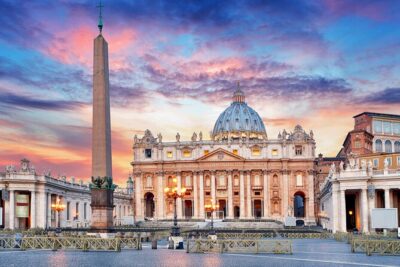
St. Peter’s is the big one, and the tour handles it with a set chunk of time—about 45 minutes. The setting alone is unforgettable: this basilica is in the Vatican area, and it’s built between the 16th and 17th centuries on a tradition tied to the Apostle Peter’s burial site.
What your guide will help you notice is how the building layers artistry across centuries. People often focus on the dome, attributed to Michelangelo, because it’s such a dominating presence on Rome’s skyline. But there’s also the bigger story of how Renaissance and Baroque artists shaped what you see as you move through the space.
Now for the “consideration” that matters. Access can change. One past experience included a situation where St. Peter’s was closed in a way that prevented entry for the planned Holy Door portion—so the group ended up visiting three doors instead of four. The key point for you: even with a reservation, closures are Vatican decisions and can’t be controlled by your tour operator.
My advice: treat the Holy Door count as a likely highlight, not a guaranteed checklist. If St. Peter’s is open, it can be a once-in-a-lifetime moment. If not, you’ll still be inside one of the world’s most important churches—so the day isn’t a write-off.
Basilica di Santa Maria Maggiore: early mosaics and a Mary-centered stop
Santa Maria Maggiore is one of the four papal basilicas, and it’s especially tied to devotion to the Virgin Mary. Founded in the fifth century, it’s known for early Christian mosaics and a gilded coffered ceiling. Even if you don’t call yourself an art-nerd, mosaics and gilded ceilings tend to grab your attention fast.
This stop also comes with a legend that your guide can connect to the physical site. The tradition says the basilica was built after a miraculous Marian apparition on the Esquiline Hill involving summer snowfall. Whether you treat it as faith history or cultural storytelling, it adds meaning to why people care so much about the exact place.
Why the tour’s timing works here: about 45 minutes is enough to catch the visual highlights—mosaics, nave, and ceiling details—without draining you. And because the day includes multiple basilicas, the guide’s framing helps you avoid the “I saw four churches, but they blended together” feeling.
Arcibasilica di San Giovanni in Laterano: Rome’s cathedral and the papal throne symbol
San Giovanni in Laterano is often described as the cathedral of Rome and the oldest of the four papal basilicas, founded in the fourth century by Constantine. It also carries a title of sorts: the mother of all churches. The tour gives it the same focused visit time, about 45 minutes, which is important here because the building is grand and the interior has a lot to look at.
This is the stop where the “why it matters” is easy to understand. It was the residence of the popes for centuries, so it’s not just another church—it’s tied to the heart of Rome’s papal story.
You’ll notice the imposing Baroque facade and then move into an interior rich with art and statues of the Apostles. The basilica also houses the papal throne, a symbol of the Pope’s authority as Bishop of Rome.
The practical win: your guide will help you connect the symbolism to what you’re physically standing in front of. When you get that context, you don’t just look—you understand. And understanding is the part that sticks after the photos are uploaded.
Basilica Papale di San Paolo Fuori le Mura: vast nave, apse mosaics, and pope portraits
St. Paul Outside the Walls sits along the Via Ostiense and marks the burial site of the Apostle Paul, according to tradition. Founded in the fourth century by Emperor Constantine, it was later rebuilt after a fire in 1823 while keeping the grand early Christian style.
The interior is known for a vast nave with imposing colonnades and splendid apse mosaics. In a day packed with huge churches, this one has a slightly different feel because of the scale and the “processional” way you experience the space from one end toward the apse.
One very specific feature that your guide may point out: the basilica includes series of medallions with portraits of all the popes, from St. Peter to the current pontiff. That’s a detail you can’t really appreciate by accident. With guidance, it becomes a thread that ties the whole papal basilica idea together—past to present, in face after face.
This stop can also be emotionally resonant for pilgrims, because it’s tied to Paul’s life and burial. Even if you’re more of a history-watcher, the mix of scale, mosaics, and papal portrait series gives you a lot to work with in that 45-minute window.
Guides and drivers: why the people matter in Rome
In Rome, the difference between a good church visit and a meaningful one is often your guide. This tour consistently gets praise for guides who manage both storytelling and timing—people mention guides like Dina, Marcela, Claudia, Carola, and Michaela, each described as clear, friendly, and focused on keeping the group moving.
You’ll likely feel the benefits immediately:
- Your guide answers questions instead of doing a nonstop lecture.
- The explanations help you notice what matters in each church.
- The group stays together, with less drifting off.
The driver also matters more than you’d think. You’re moving between major sites in traffic, and a good driver keeps the ride smooth and the schedule on track. Reviews mention drivers such as Max and Walter, with praise for attentiveness and for helping passengers during in-and-out transitions.
Also, don’t underestimate the small kindness of picture help. Several experiences highlight guides offering to take photos at key stops. That sounds minor until you’re in a crowded church area trying to coordinate a good shot. It also reduces stress so you can keep your attention on the basilicas.
What’s included, what to budget, and what to do before you go
Here’s the practical picture of what you’re paying for. The tour price is $168.20 per person, and it includes:
- Entrance to the Papal Basilicas
- A tour guide for the entire duration
- Assistance during the visit
- Transport by minivan to reach all four basilicas
- A driver
- Group discounts (when applicable)
Not included: tips.
A mobile ticket is part of the setup, so you’ll want to have your phone ready and charged. This helps when you’re standing in front of major sites where check-in details matter.
Value-wise, I think this is strongest if you fall into one of these categories:
- You want the Holy Door experience (when available) and don’t want to wrestle with church logistics.
- You care about art and architecture, but you want guided context so it means something.
- You only have a short time in Rome and want a structured “see the big four” day without wasting half your morning on planning.
If you’re the type who wants to wander freely for hours and treat each church like a separate day, you may feel boxed in by the tight time blocks. The tour is built for focus, not long drifting.
Timing tips for your best photos and best attention
Even with transport and tickets handled, Rome rewards smart pacing. Here are a few ways to get more out of your 45 minutes per basilica:
Wear comfortable shoes. You’ll cover distances on foot inside church areas, plus there’s always some movement between sections.
Go in with a simple plan. Pick two things you want to look for at each stop—one major architectural feature and one smaller detail. For example, at St. Peter’s you might focus on the dome experience and then one key interior element. At Santa Maria Maggiore, aim for the mosaics and the ceiling effect.
If Holy Door access is a priority for you, treat it as a “watch what happens when you arrive” moment. Vatican schedules can shift, and your guide will be the one helping you adapt on the spot.
Finally, use your guide for what they do best: interpretation. If you ask short, specific questions, you’ll likely get answers that make the art and symbolism land faster than reading a guidebook after the fact.
Who this tour fits best
This is a strong pick if you want:
- A faith-leaning pilgrimage day that doesn’t turn into logistics work
- A guided walkthrough of four papal basilicas with enough time to actually see key highlights
- A small group setting (max 20) where you can ask questions and stay oriented
It’s also a good match for travelers who hate long, unstructured hours in crowds. The minivan transport creates natural “breathing spaces,” and the guide keeps transitions organized.
Should you book the Papal Basilicas of Rome tour?
Yes, I’d book it if you want a structured day that hits the big papal sites and (on eligible dates) includes the Holy Door highlight. The included tickets, minivan transport, and guided time blocks make it feel like you bought time back—time you’d otherwise spend researching, routing, and negotiating entry logistics.
Skip it or approach it with open eyes if Holy Door access is your only goal and you’re counting on a guaranteed four-door outcome. Closures and Vatican decisions can affect entry in ways your operator can’t control. Still, even then, you’d be visiting major basilicas with real meaning, guided by people who know how to explain what you’re seeing.
If your main goal is spiritual impact plus practical organization, this tour is a solid fit.
FAQ
What is the duration of the Papal Basilicas tour?
It’s approximately 5 hours.
Where does the tour start and end?
It starts at Via della Conciliazione, 4, 00193 Roma RM, Italy and ends back at the same meeting point.
What time does the tour begin?
The start time is 9:00 am.
Is the tour offered in English, and what group size should I expect?
The tour is offered in English, and it has a maximum of 20 travelers.
Are entrance tickets included?
Yes. Entrance to the Papal Basilicas is included.
What should I budget for besides the tour price?
Tips are not included, so you’ll need to budget for gratuities.
What is the cancellation policy?
You can cancel for a full refund up to 24 hours in advance of the experience start time. If you cancel less than 24 hours before, the amount paid is not refunded.
More Tours in Rome
- Vatican Museums, Sistine Chapel & St. Peter’s Basilica Tour
★ 4.3 · 73,970 reviews - Vatican Museums, Sistine Chapel & St Peter’s Basilica Guided Tour
★ 4.5 · 39,149 reviews - Rome: Colosseum, Palatine Hill and Roman Forum Guided Tour
★ 4.8 · 32,814 reviews - Rome: Guided Tour of Colosseum, Roman Forum & Palatine Hill
★ 4.7 · 27,897 reviews - Rome: Colosseum, Roman Forum and Palatine Hill Guided Tour
★ 4.5 · 23,903 reviews - Rome: Colosseum Arena Floor, Palatine & Forum Guided Tour
★ 4.5 · 20,180 reviews
More Tour Reviews in Rome
- Vatican Museums, Sistine Chapel & St. Peter’s Basilica Tour
★ 4.3 · 73,970 reviews - Vatican Museums, Sistine Chapel & St Peter’s Basilica Guided Tour
★ 4.5 · 39,149 reviews - Rome: Colosseum, Palatine Hill and Roman Forum Guided Tour
★ 4.8 · 32,814 reviews - Rome: Guided Tour of Colosseum, Roman Forum & Palatine Hill
★ 4.7 · 27,897 reviews - Rome: Colosseum & Forum with Audio Guide App -Optional Arena
★ 4.2 · 24,770 reviews - Rome: Colosseum, Roman Forum and Palatine Hill Guided Tour
★ 4.5 · 23,903 reviews
Just added to our Rome reviews





Tours, compared.
 ★ 4.3Vatican Museums, Sistine Chapel & St. Peter’s Basilica TourFrom $7273,970 reviews
 ★ 4.5Vatican Museums, Sistine Chapel & St Peter’s Basilica Guided TourFrom $2239,149 reviews
 ★ 4.8Colosseum, Palatine Hill and Roman Forum Guided TourFrom $5232,814 reviews
 ★ 4.7Guided Tour of Colosseum, Roman Forum & Palatine HillFrom $5527,897 reviews
 ★ 4.5Colosseum, Roman Forum and Palatine Hill Guided TourFrom $5923,903 reviews
 ★ 4.5Colosseum Arena Floor, Palatine & Forum Guided TourFrom $4120,180 reviews
 ★ 4.3Vatican Museums, Sistine Chapel and Basilica TourFrom $7316,039 reviews
 ★ 4.7Colosseum Arena, Palatine Hill & Forum Guided TourFrom $8414,510 reviews