
A good Colosseum day starts before the crowd crush. This timed-entry route links the Colosseum to the Forum and Palatine with a guide (or an app, if you choose that option), plus clear audio through headsets so you don’t miss the story.
Two things I really like: you get priority entry to the Colosseum plus the Forum and Palatine, and the stops are chosen to help you understand how Roman power, religion, and politics all connected. The vibe is also small (up to 25 people), which makes it easier to move, ask questions, and not feel lost.
One possible drawback: the tour is outdoors with lots of walking, standing, and stairs on uneven ground. If you’re sensitive to heat (or you dislike stairs), you’ll want to plan carefully, wear good shoes, and go into it with that in mind.
In This Review
- Key things I’d circle before you go
- Timed Entry That Actually Gets You Moving
- Where You Start at the Arch of Constantine (and Why It Matters)
- Entering the Colosseum Without Losing Half Your Day
- Roman Forum Magic: Via Sacra, Rostra, and the Seats of Power
- The In-Between Stops: Arches, Temples, and Forum Streets
- Palatine Hill Views and the Circus Maximus Moment
- Small-Group Pacing, Heat, and Why Shaded Stops Matter
- Guided Tours vs. Audioguide App: Choose the Right Fit
- If Weather Changes Your Plans
- Who This Tour Suits Best (and Who Should Consider Another Plan)
- Should You Book This Colosseum, Forum and Palatine Tour?
- FAQ
- How long is this Colosseum, Forum and Palatine experience?
- What does the price include?
- Is Arena Floor access available?
- Where does the tour start and end?
- Are luggage or large bags allowed?
- What should I know about the audioguide app option?
Key things I’d circle before you go
- Timed entry to the Colosseum and the Forum/Palatine, which helps you use your morning or afternoon instead of waiting in line
- Headsets for guided tours, so your guide’s explanation stays crystal clear even in noisy spaces
- Optional Arena Floor access if you want the closest connection to the space gladiators would have known
- A route that strings together major sites like Via Sacra, the Rostra, and major arches and temples
- Small group size (max 25), which usually means smoother pacing and easier questions
- You’ll spend the last stretch on Palatine Hill for panoramic views and that Circus Maximus overlook moment
Timed Entry That Actually Gets You Moving
Let’s talk value first. At around $59.28 per person for a 3-hour experience, you’re paying for more than a ticket. You’re also paying for the reservation fee, the timed-entry permissions, and the coordination that gets you through the trickier parts of the day.
The key number is that timed entry is specifically part of the price. The listing breaks it out as about €18 per person for Colosseum + Forum & Palatine, and about €24 per person if you add Arena access. Translation: if you were trying to piece this together on your own, you’d spend time and effort (and likely stress) just finding the right entry slots.
Also, the tour is set up for you to fit it into a day that’s already packed. Most people do this in their Rome first-timer window—when the Colosseum still feels like a big reveal and the Forum is still a puzzle you want solved.
One more practical point: it’s booked about a month in advance on average. That’s usually a hint that the entry slots go fast.
Still on ancient Rome? A few more we rated
- Rome: Colosseum, Palatine Hill and Roman Forum Guided Tour
★ 4.8 · 32,814 reviews - Rome: Guided Tour of Colosseum, Roman Forum & Palatine Hill
★ 4.7 · 27,897 reviews - Rome: Colosseum & Forum with Audio Guide App -Optional Arena
★ 4.2 · 24,770 reviews - Rome: Colosseum, Roman Forum and Palatine Hill Guided Tour
★ 4.5 · 23,903 reviews
Where You Start at the Arch of Constantine (and Why It Matters)
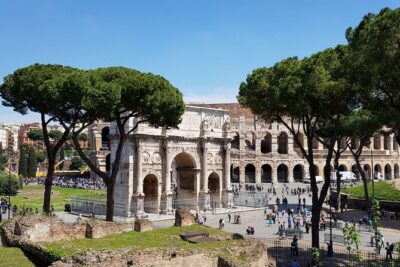
Your day begins near the Arch of Constantine at Piazza del Colosseo. Ending at Palatine Hill keeps the route from backtracking, and it matches how the ancient landscape flows: from major monuments toward the hilltop viewpoint area.
What I like about starting there is the orientation. You get positioned in a zone where you can literally see the scale of the Colosseum relative to the Forum hill region. It helps you understand what you’re about to enter, rather than walking in cold.
If you’re booking the option with a smartphone app for audio, make sure you understand how that works before you arrive. One recurring issue with app-based options is timing and connectivity, so plan to have your phone ready (more on that later).
Entering the Colosseum Without Losing Half Your Day
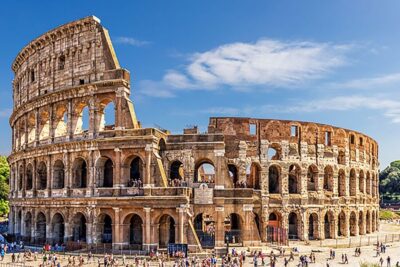
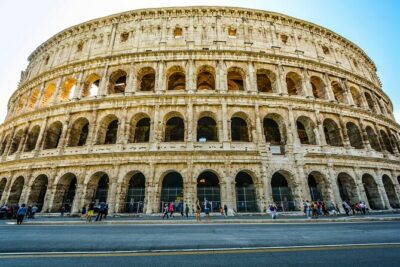
The centerpiece is the Colosseum, where timed entry is included. In plain terms, this is the difference between enjoying the site and spending your energy in a queue.
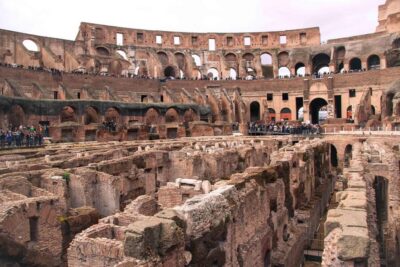
Inside, you’re not just looking at stone. A good guide will connect what you see to the Roman obsession with spectacle—how the space was designed, what sections likely meant, and why this arena became the symbol it is today. You’re also given a structured amount of time so you can actually absorb it, not just speed through for a few photos.
If you choose the Arena Floor access upgrade, you’re buying yourself a closer, more physical connection to the arena. Even if you’re not a history nerd, standing where the action took place in Roman imagination can change how the building feels. It’s a meaningful upgrade, and the price difference is spelled out in the value breakdown.
Two practical notes:
- No large bags are allowed in the venues. Travel light, or plan to store baggage elsewhere before you go.
- If weather causes the Colosseum to close unexpectedly, you won’t just be stuck. The tour provider states you’ll be offered a different date or a full refund. That matters in Rome, where rain can appear fast.
Roman Forum Magic: Via Sacra, Rostra, and the Seats of Power
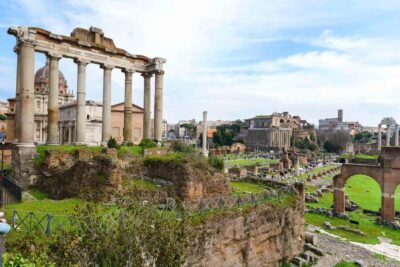
After the Colosseum, you move into the Roman Forum area, the political and public-life core of ancient Rome. What makes the Forum special is that it’s not one building—it’s a whole civic landscape. Ruins here make more sense when you understand their relationships: who met where, what routes led to what ceremonies, and how power displayed itself in stone.
A big highlight in this route is Via Sacra, the main processional road. This street was used for Roman Triumphs—ceremonies tied to victory and state authority. When you walk it as part of a guided sequence, you start seeing the Forum like a stage. The walking itself becomes the explanation.
You also stop at the Rostra, the remains of a platform where speeches were delivered in republican and imperial times. This is one of those moments where a little context goes a long way. With the right explanation, you can almost picture the energy of public speaking and political messaging aimed at a crowd.
Another smart stop is Piazza del Colosseo, a square area named for the Colosseum itself. It also connects you to the nearby Meta Sudans area and the larger-than-life statue presence in the modern landscape. These quick pauses are not filler. They’re there to keep the ancient story readable as you move through modern streets.
The Forum section is built for short, frequent “you’re here” moments. That pacing helps because the Forum can otherwise feel like random ruins.
The In-Between Stops: Arches, Temples, and Forum Streets
This tour also weaves in several major landmarks that help you connect the Roman city beyond the Forum walls.
You’ll see the Arch of Constantine, a triumphal arch placed between the Colosseum and Palatine Hill. It’s a great warm-up because arches are basically ancient billboards. They celebrate victory and send a message that Roman power was permanent.
Later, there’s the Arch of Titus on the northern slopes of Palatine Hill. It commemorates Emperor Titus’s victories, including the Siege of Jerusalem. It’s a reminder that Roman monuments weren’t just decoration—they were political storytelling in stone.
You also visit/stop by sites tied to religious and cultural identity, including the Temple of Venus and Roma on the Velian Hill. This temple was dedicated to Venus Felix and Roma Aeterna. Even if you’re not into theology, this is a key idea: Romans didn’t separate religion from government branding. They treated the state’s identity like sacred truth.
Another stop is the Temple of Antoninus and Faustina, which later became the church of San Lorenzo in Miranda. Seeing how temples transformed over centuries helps you grasp how Rome gets reused again and again, with each era leaving its fingerprints.
Then there’s Via dei Fori Imperiali, the scenic boulevard linking Piazza Venezia toward the Colosseum area. It’s lined with forum remains tied to emperors like Caesar, Augustus, Nerva, and Trajan. In other words: it’s a street where you walk along a timeline.
These “in-between” stops are short, but they do an important job. They prevent the day from turning into one big blur of stones by giving each stretch of walking a specific purpose.
Palatine Hill Views and the Circus Maximus Moment
By the time you reach Palatine Hill, the tour shifts from crowd-level ruins to a hilltop perspective. Palatine was tied to Rome’s origins and later became a place associated with imperial residences. It’s one of the best areas in Rome for getting your bearings.
Expect to spend about 20 minutes up here, including panoramic views. This is where the city’s layout starts to make sense. You can look out and understand how the Forum would fit into everyday Roman life.
One of the most vivid moments is the view of Circus Maximus from Palatine Hill. The tour notes that you only get a view from the hill, but it’s described as spectacular. The idea is that you stand above the space where Romans cheered for chariots, and you can mentally connect the scale to the roar you’d expect from an event that big.
If you’re the type who forgets to look up during busy sightseeing days, Palatine forces you to. And that’s why it’s worth the final stretch.
Small-Group Pacing, Heat, and Why Shaded Stops Matter
This is a walking tour with extended periods of walking and standing, including several staircases and varied, uneven terrain. The tour provider explicitly recommends it for people comfortable with that level of activity.
So here’s my practical advice: treat this like athletic sightseeing, not museum sightseeing. Bring comfortable shoes with grip. Carry water. If you’re traveling in hotter months, plan to slow down mentally too. Even a “short” day can feel long after you stack walking + stairs + ancient stone glare.
What I also like is that several guides are described as managing heat well—using shaded areas when possible and giving photo breaks and even bathroom time. That kind of real-world adjustment matters because the Colosseum and Forum can be unforgiving.
One thing to keep in mind: pacing can vary by guide style and by what the group needs at that moment. That includes whether your group stops frequently to explain and photograph, or spends longer anchored in one spot for a deeper explanation. You’ll have the best experience if you’re flexible and ask questions along the way.
Guided Tours vs. Audioguide App: Choose the Right Fit
This is where people can accidentally book the wrong expectation.
There are options that come with a live guide, where you get headsets to hear your guide clearly. Multiple reviews praise specific guides by name—like Laura, Patrizia, Alberto, Viola, Riccardo, Donatella, Eddy, Aiko, Catalina, Alessandra, and Silvia—for being engaging, knowledgeable, and good at keeping the group comfortable during hot days.
There are also options where you use an audioguide app instead of a live guide. If that’s what you choose, you’ll download the app via a link sent ahead of time (the info says one day prior for the link, and a code can be sent 24 hours before if access is tied to booking). It’s stated you can download for offline use, but you need a smartphone and your own earphones.
A recurring caution from real-world feedback: if you wait to download the app at the meeting point, you might hit slow download time and lose momentum. If you choose the app option, download it before you go, ideally on Wi-Fi, and test your earphones at home.
If you want a back-and-forth conversation, ask questions on the spot, and get a human sense of pacing, go guided. If you want autonomy and you’re comfortable reading and listening without a live instructor, the app can work well.
If Weather Changes Your Plans
The Colosseum can close unexpectedly in inclement weather. The provider states that you’ll be offered a change of date or a full refund if that happens.
It’s also worth paying attention to any messaging about restoration or changes due to the Jubilee, since some monuments may be under restoration. In Rome, sightlines and access can shift, so a quick message check before you leave your hotel is a smart habit.
Who This Tour Suits Best (and Who Should Consider Another Plan)
This tour makes the most sense if you want:
- a structured, time-efficient way to see Colosseum + Forum + Palatine
- expert explanations delivered clearly through headsets (on guided options)
- an efficient route that ends on Palatine Hill for the views
You’ll probably enjoy it most if:
- you’re comfortable walking on uneven ground and managing stairs
- you want history in a guided sequence rather than piecing it together from maps
- you like the idea of optional Arena Floor access for a more intense experience
If you’re visiting with limited mobility or you hate stairs, this may feel like too much. The tour is explicitly described as involving significant walking and stairs, so it’s not a casual stroll.
Should You Book This Colosseum, Forum and Palatine Tour?
I’d book it if you want the smartest use of your limited Rome time and you like the idea of arriving with a timed slot already handled. The price is reasonable for what you get—priority entry plus a guided narrative option with headsets, and a real upgrade path if you want the Arena Floor.
I’d think twice if you’re planning to pick the audioguide/app option and you’re not set up to download it ahead of time. For that version, your phone prep matters as much as your ticket.
If you’re choosing between guided and app: choose guided for context and flexibility. Choose the app only if you’re genuinely comfortable self-exploring through the Colosseum and Forum at your own pace.
In short: for most first-timers, this is a strong bet because it links the big three—Colosseum, Forum, Palatine—into one coherent story instead of three separate scavenger hunts.
FAQ
How long is this Colosseum, Forum and Palatine experience?
It runs about 3 hours.
What does the price include?
It includes timed entry to the Colosseum + Forum & Palatine, plus reservation-related fees. Headsets are included for guided tour options, and Arena Floor access is included only if you select that option at booking.
Is Arena Floor access available?
Yes, it’s optional. If you choose the Arena Floor access option when booking, you get entry to the arena floor.
Where does the tour start and end?
It starts at the Arch of Constantine area near Piazza del Colosseo, and it ends at Palatine Hill (Via di S. Gregorio 30).
Are luggage or large bags allowed?
No. It is not possible to enter the venues with luggage or large bags.
What should I know about the audioguide app option?
If you book the audioguide option, you’ll get a link to download the app in advance and you can use it offline. You’ll need a smartphone and your own earphones.
More Tour Reviews in Rome
- Vatican Museums, Sistine Chapel & St. Peter’s Basilica Tour
★ 4.3 · 73,970 reviews - Vatican Museums, Sistine Chapel & St Peter’s Basilica Guided Tour
★ 4.5 · 39,149 reviews - Rome: Colosseum, Palatine Hill and Roman Forum Guided Tour
★ 4.8 · 32,814 reviews - Rome: Guided Tour of Colosseum, Roman Forum & Palatine Hill
★ 4.7 · 27,897 reviews - Rome: Colosseum & Forum with Audio Guide App -Optional Arena
★ 4.2 · 24,770 reviews - Rome: Colosseum, Roman Forum and Palatine Hill Guided Tour
★ 4.5 · 23,903 reviews
Ancient Rome, Kept Going
- Rome: Colosseum, Palatine Hill and Roman Forum Guided Tour
★ 4.8 · 32,814 reviews - Rome: Guided Tour of Colosseum, Roman Forum & Palatine Hill
★ 4.7 · 27,897 reviews - Rome: Colosseum & Forum with Audio Guide App -Optional Arena
★ 4.2 · 24,770 reviews - Rome: Colosseum, Roman Forum and Palatine Hill Guided Tour
★ 4.5 · 23,903 reviews - Rome: Colosseum Arena Floor, Palatine & Forum Guided Tour
★ 4.5 · 20,180 reviews - Rome: Colosseum Arena, Palatine Hill & Forum Guided Tour
★ 4.7 · 14,510 reviews
Just added to our Rome reviews


Colosseum & Ancient Rome Tours, compared.
 ★ 4.8Colosseum, Palatine Hill and Roman Forum Guided TourFrom $5232,814 reviews
 ★ 4.7Guided Tour of Colosseum, Roman Forum & Palatine HillFrom $5527,897 reviews
 ★ 4.2Colosseum & Forum with Audio Guide App -Optional ArenaFrom $4124,770 reviews
 ★ 4.5Colosseum, Roman Forum and Palatine Hill Guided TourFrom $5923,903 reviews
 ★ 4.5Colosseum Arena Floor, Palatine & Forum Guided TourFrom $4120,180 reviews
 ★ 4.7Colosseum Arena, Palatine Hill & Forum Guided TourFrom $8414,510 reviews
 ★ 4.6Colosseum,Forum & Palatine Tour + Optional Arena FloorFrom $4513,169 reviews
 ★ 4.7Colosseum: Underground and Ancient Rome TourFrom $16012,691 reviews