Reviewed · ROME
The Treasures of Rome
Rome is a lot easier when someone points out what to look at. This morning tour threads you through the Centro Storico and into the Vatican area in one smooth arc. I love how it hits the big names fast: the Pantheon (with Raphael’s tomb) and the baroque drama around Piazza Navona. I also like the small-group feel (max 20) plus the air-conditioned ride that helps you manage the Rome heat.
One real consideration: there’s quite a bit of walking on uneven, cobbled streets even though you’re on a vehicle between stops.
In This Review
- Key Things to Know Before You Go
- Piazza Barberini Start: Where Barberini Pride Shows Up
- Trevi Fountain Stop: The Classic Photo Moment (Without the Fuss)
- Pantheon: Short Visit, Big Payoff (Raphael Included)
- Piazza Navona: Bernini-Style Drama on a Roman Footprint
- St. Peter’s Square Finish: The Vatican Daycap (With Dress Code)
- Price and Value: What $49.26 Buys You in 3 Hours
- Pace, Comfort, and Walking: The Real Trade-Off
- Who This Tour Suits (and Who Might Skip It)
- Should You Book the Treasures of Rome Morning Tour?
- FAQ
- How long is The Treasures of Rome tour?
- What time does the tour start, and where do I meet?
- What are the main stops on the tour?
- Is there a visit inside St. Peter’s Basilica?
- Is there a dress code?
- What’s included in the price?
- Can I cancel for a refund?
Key Things to Know Before You Go
- Piazza Barberini adds a fun warm-up with Bernini’s Triton Fountain (and the Barberini “bees” vibe nearby).
- Trevi Fountain is a free stop designed for quick viewing and photos (including your coin moment).
- Pantheon time is short but worthwhile, especially for the tombs inside, including Raphael and King Umberto I.
- Piazza Navona is timed for the fountains—perfect for appreciating Bernini’s baroque style.
- St. Peter’s Square ends your tour, with the option of St. Peter’s Basilica interior depending on day and ceremonies.
- Small group, mobile ticket and a local guide keep the morning focused and low-stress.
Piazza Barberini Start: Where Barberini Pride Shows Up
You meet in central Rome at Via Giovanni Amendola, 32 (start time 9:00am), then head into the old city. The tour starts with a quick stop at Piazza Barberini, which is a smart “warm up” choice. If Rome feels like a maze at first, this area gives you a clear sense of the map: hills nearby, grand streets, and famous fountains not far from each other.
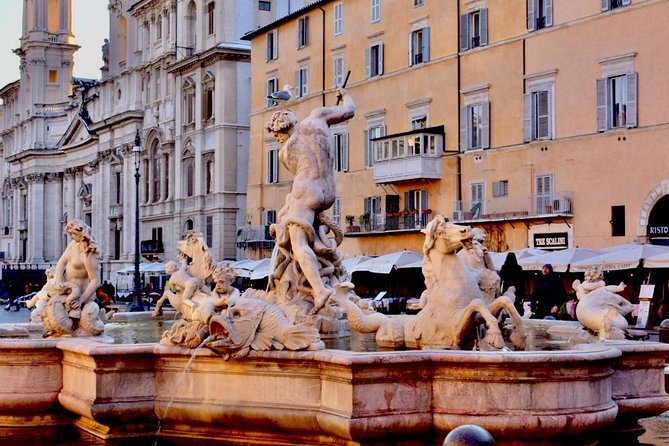
The highlight here is Bernini’s Triton Fountain from 1643, commissioned by Pope Urban VIII Barberini. You’ll spot the travertine design and the Barberini coats of arms worked into the sculpture details. There’s also the Fountain of the Bees nearby—Barberini’s insect symbol—so even if you just casually glance at it, it helps you understand how much of Rome’s art is also political branding.
Practical tip: this first stop is short. Use it to reset your pace and plan your shoes for cobblestones later.
Weighing this one up? Here is how a few Rome favourites compare:
- Vatican Museums, Sistine Chapel & St. Peter’s Basilica Tour
★ 4.3 · 73,970 reviews - Vatican Museums, Sistine Chapel & St Peter’s Basilica Guided Tour
★ 4.5 · 39,149 reviews - Rome: Colosseum, Palatine Hill and Roman Forum Guided Tour
★ 4.8 · 32,814 reviews - Rome: Guided Tour of Colosseum, Roman Forum & Palatine Hill
★ 4.7 · 27,897 reviews
Trevi Fountain Stop: The Classic Photo Moment (Without the Fuss)
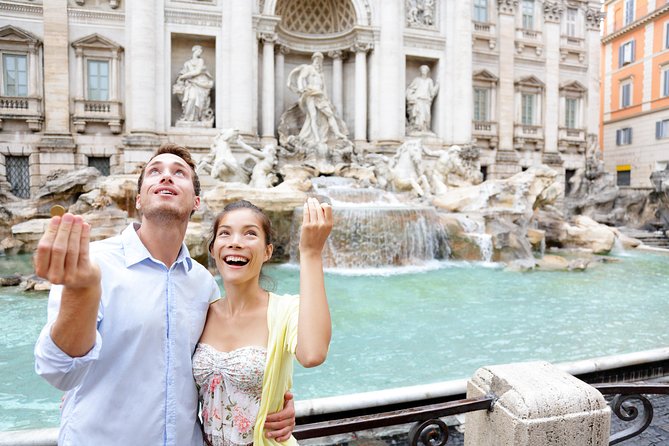
Next comes Trevi Fountain (Fontana di Trevi). It’s free to visit, and that matters because the fountain is the kind of “must-see” that can tempt you into wasting time waiting in a line for something you don’t actually need to pay for. Here, the stop is timed at about 20 minutes, which is enough for a good look and a decent photo if you move with purpose.
What makes Trevi worth it even now is that it’s both theatrical and oddly human. You’re surrounded by tourists, yes, but the fountain itself still reads like a jewel of water and stone—hidden in the historic center until you’re right up against it.
My advice for the most satisfying stop:
- Arrive ready to shoot from a couple angles fast.
- Don’t get stuck inching forward for a perfect shot—enjoy the view, then pivot and take a second perspective.
- If you toss in a coin, do it as part of your quick “final moment,” not at the cost of your whole time slot.
Pantheon: Short Visit, Big Payoff (Raphael Included)
Then the tour hits one of Rome’s most dependable wonders: the Pantheon. Even people who think they’ve seen photos before often get surprised in person. This is one of the best-preserved ancient buildings, originally commissioned by Marcus Agrippa and completed later under Hadrian.
What I really like about this stop is the payoff for such a short schedule. You’re there long enough to understand what you’re looking at—then you get to the special part: the tombs inside, including Renaissance artist Raphael and King Umberto I.
That detail turns the Pantheon from just an impressive dome into something more personal. It’s not a “museum vibe.” It’s a working church that also happens to be one of the most important remnants of ancient Rome.
Two practical notes:
- Expect the area to feel busy; keep your group pace so you don’t lose the guide.
- If you care about details, look up first (the scale hits hard), then slow down for the tombs once you’re inside.
Also good news: admission at the Pantheon is free on the tour’s schedule.
Piazza Navona: Bernini-Style Drama on a Roman Footprint
From the Pantheon, the tour continues to Piazza Navona, scheduled at about 20 minutes. This is one of those places where Rome quietly shows off. The square looks like baroque theater, but it’s built on a much older foundation—on the site of the ancient Stadium of Domitian from the 1st century AD.
You’ll notice how the open space follows the shape of that stadium. That helps the square feel natural instead of “pasted together.” And then you get the fountains designed by baroque master Bernini, which is why Piazza Navona stays popular: the sculptures don’t just sit there. They perform.
How to enjoy this stop:
- Pick a spot and take in the overall layout before you start focusing on individual figures.
- After you’ve looked wide, then zoom in for the water and stone details.
- If you’re traveling with family or friends, agree on a re-group point early—Navona can be a moving target.
St. Peter’s Square Finish: The Vatican Daycap (With Dress Code)
The tour ends at St. Peter’s Square (about 30 minutes), and this is a great “finish line” because the square is open-air and huge. You’ll see the central ancient Egyptian obelisk, and you’ll also get a strong sense of Bernini’s vision for the space, including the massive Doric colonnades.
This is also where the tour makes its final promise: you can explore on your own afterward. For many people, that’s exactly what they want. You don’t feel rushed out of the city—you just get dropped into one of its most iconic areas.
Important reality check: St. Peter’s Basilica interior is included, but it’s not possible on Sundays, religious festivals, and ceremonies. If entry is restricted on the day you go, the itinerary can change. So if St. Peter’s Basilica interior is your top goal, keep your schedule flexible and be prepared for variations.
Dress code is strictly enforced for places of worship and selected museums. That means no shorts or sleeveless tops, and knees and shoulders must be covered for everyone. It’s worth planning your outfit the night before—Rome enforcers don’t do “almost covered.”
Price and Value: What $49.26 Buys You in 3 Hours
At $49.26 per person for about 3 hours, the value comes from grouping the right highlights into one guided route. You’re not paying for a long day. You’re paying for:
- A local guide who connects the “what you’re seeing” to the “why it matters”
- An air-conditioned vehicle to keep the commute comfortable between stops
- Focused stops at Trevi, Pantheon, Piazza Navona, and St. Peter’s Square
- Mobile ticket convenience
- Optional lunch if you select that option
The Pantheon and several of these stops have free admission, so a big part of what you’re buying is time saved and interpretation delivered. That’s often the difference between “I saw it” and “I actually understood it.”
Where you should be honest with yourself: if you hate walking, this may not feel like a great deal even if the sites are top-tier. And if you’re expecting a fully flexible Vatican experience every day, the Basilica interior can be affected by ceremonies.
Pace, Comfort, and Walking: The Real Trade-Off
This tour is built around Rome’s reality: cobblestones, tight lanes, and short sight windows. You’ll likely move through narrow streets in the Centro Storico and do meaningful walking. One review trend (and it matches the structure of the tour) is that people expected less on-foot time.
You can sometimes stay on the coach to reduce walking, but you’ll miss many sights. That’s the trade: energy vs. experiencing the points you paid to see.
A few practical tricks that help:
- Wear proper walking shoes with grip. Trevi and Navona areas can be crowded and uneven.
- Bring water. Even in the morning, Rome can climb fast.
- If you use your phone for navigation or photos, keep your battery charged—your group moves and re-grouping matters.
Audio-wise, there’s mention that audio is available with different languages. If the equipment ever feels weak, bring your own earbuds so you can rely on your devices instead of fighting with volume.
Who This Tour Suits (and Who Might Skip It)
This is a strong choice if you’re:
- Doing Rome for the first time and want a fast, guided hit list
- Short on time and want a morning orientation across classical Rome → baroque Rome → Vatican zone
- The kind of traveler who loves the “walk with context” style—seeing major sights with an explanation attached
It’s less ideal if you:
- Have limited stamina and don’t want uneven cobblestone walking
- Are very sensitive to timing changes around St. Peter’s Basilica interior
- Want a deeply slow, museum-level pace (this is a highlight-and-move tour)
If you’re planning to add more Vatican time later, this morning tour works well as your warm-up. It gets you oriented and in the right mindset for a second visit where you can linger.
Should You Book the Treasures of Rome Morning Tour?
If you want a smart first-day overview that hits the most iconic Rome scenes without turning your whole day into a logistics puzzle, I’d book it. The Pantheon stop—especially with the tombs of Raphael and King Umberto I—is a standout reason on its own. Add in Piazza Navona’s Bernini fountains and the clean finish at St. Peter’s Square, and you’ve got a morning with real payoff.
Before you click confirm, decide two things:
- Are you okay with significant walking on uneven streets?
- Is St. Peter’s Basilica interior essential, or can you handle an exterior-and-square-focused outcome on the day?
If both answers are yes, this tour is a solid way to make Rome feel understandable from day one.
FAQ
How long is The Treasures of Rome tour?
The tour lasts about 3 hours.
What time does the tour start, and where do I meet?
It starts at 9:00am. The meeting point is Via Giovanni Amendola, 32, 00185 Roma RM, Italy.
What are the main stops on the tour?
You’ll see Piazza Barberini, Trevi Fountain, the Pantheon, Piazza Navona, and end at St. Peter’s Square.
Is there a visit inside St. Peter’s Basilica?
Yes, the inside visit of St. Peter’s Basilica is included, but it’s not possible on Sundays, religious festivals, or ceremonies, and the itinerary may change.
Is there a dress code?
Yes. You need to cover knees and shoulders. No shorts or sleeveless tops are allowed, and enforcement is strict.
What’s included in the price?
Included features are a local guide and an air-conditioned vehicle. Lunch is included only if you choose the lunch option.
Can I cancel for a refund?
Yes. The experience offers free cancellation, and you can cancel up to 24 hours in advance for a full refund.
More Tour Reviews in Rome
- Vatican Museums, Sistine Chapel & St. Peter’s Basilica Tour
★ 4.3 · 73,970 reviews - Vatican Museums, Sistine Chapel & St Peter’s Basilica Guided Tour
★ 4.5 · 39,149 reviews - Rome: Colosseum, Palatine Hill and Roman Forum Guided Tour
★ 4.8 · 32,814 reviews - Rome: Guided Tour of Colosseum, Roman Forum & Palatine Hill
★ 4.7 · 27,897 reviews - Rome: Colosseum & Forum with Audio Guide App -Optional Arena
★ 4.2 · 24,770 reviews - Rome: Colosseum, Roman Forum and Palatine Hill Guided Tour
★ 4.5 · 23,903 reviews