
Reviewed · ROME
The Rise of Rome
Roman history feels close here. The Rise of Rome guided walking tour strings together major imperial-era landmarks—Circus Maximus and the Mouth of Truth—into a story you can follow on foot. I also like that you get local tips for Roman cuisine restaurants, viewpoints, and practical ideas for the rest of your trip. One watch-out: timing matters, because there’s at least one unhappy account tied to a late or missing guide, so I’d arrive a bit early and stay flexible.
You meet near Via del Circo Massimo and finish up on Capitoline Hill, and you’ll keep moving through key areas tied to emperors, gladiators, and the way Rome expanded its power. The group stays small (up to 25), which makes it easier to ask questions when the guide connects the ruins to what life might have felt like.
In This Review
- Key Things I’d Focus On Before You Go
- Starting Near Via del Circo Massimo and Ending on Capitoline Hill
- Circus Maximus: Where Roman Spectacle Became Power
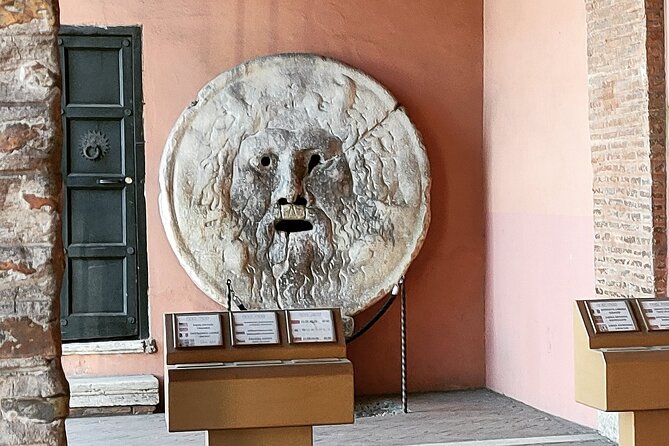
- The Mouth of Truth (Bocca della Verità): A Legend You’ll Still Want to Hear
- Janus and the Idea of Rome’s Beginning and End
- Marcello Theater: When Roman Culture Kept Evolving
- Temple of Hercules and the Tour’s “Gods Becoming Human” Theme
- Tiberina Island and the Jewish Ghetto: Adding Real Texture
- A 25-Person Maximum Makes the Guide Matter
- Price and Value: Why $34 Works for a 2-Hour Story Walk
- Practical Tips So You Get the Full Benefit
- Who This Tour Suits Best
- Should You Book The Rise of Rome?
- FAQ
- What is the duration of The Rise of Rome tour?
- How much does the tour cost?
- Where is the tour meeting point?
- Where does the tour end?
- What time does the tour start?
- Is the ticket mobile?
- How many people are in the group?
- What weather conditions does the tour require?
- Is there free cancellation?
- What landmarks are included?
Key Things I’d Focus On Before You Go
- A tight 2-hour route with big-name ruins, paced so you still get plenty of context
- Circus Maximus + gladiator stories, so the spectacle isn’t just stone and dates
- Bocca della Verità (Mouth of Truth), where legend and Roman civic life overlap
- Janus and the idea of beginnings and endings, a useful lens for understanding imperial Rome
- Jewish Ghetto + Tiberina Island stops, which add real texture beyond the obvious monuments
- A guide who adds liveliness, including a noted friendly, detail-focused style from Claudio
Starting Near Via del Circo Massimo and Ending on Capitoline Hill
This tour has a clear start and finish, and that’s a big deal in Rome. You’ll begin at Via del Circo Massimo, 21 and then work your way toward Capitoline Hill—a natural arc that helps you see Rome’s layers rather than bouncing randomly between far-flung stops.
Because it’s a group walking tour for about 2 hours, the pacing is built for “see it, understand it, move on.” You’re not stuck in one spot waiting for long explanations, and you get enough history to make later sights click. Also, with mobile ticket access, you’re not scrambling with paper in crowded areas.
One practical tip: plan to be at the meeting point a few minutes early. The tour is described as needing good weather, so you want to be ready for a smooth start when conditions are good.
Weighing this one up? Here is how a few Rome favourites compare:
- Vatican Museums, Sistine Chapel & St. Peter’s Basilica Tour
★ 4.3 · 73,970 reviews - Vatican Museums, Sistine Chapel & St Peter’s Basilica Guided Tour
★ 4.5 · 39,149 reviews - Rome: Colosseum, Palatine Hill and Roman Forum Guided Tour
★ 4.8 · 32,814 reviews - Rome: Guided Tour of Colosseum, Roman Forum & Palatine Hill
★ 4.7 · 27,897 reviews
Circus Maximus: Where Roman Spectacle Became Power
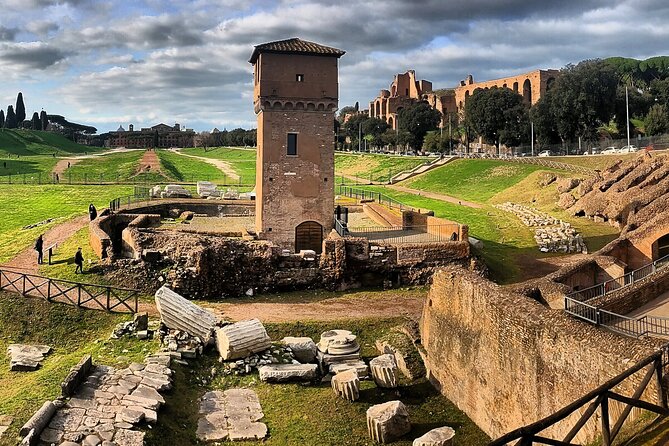
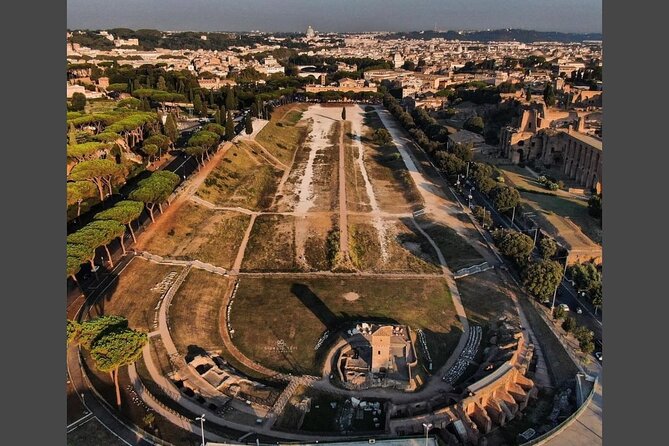
The tour’s opening stop is the Circus Maximus, described as the largest and longest-standing stadium in history. Even if you only see parts of it at street level, the scale is the point. This wasn’t a quiet arena. It was mass entertainment, political theater, and a way for leaders to show they could command attention.
What I like about how the guide frames it is the link between spectacle and authority. Once you hear how emperors used public events to project control, the ruins stop feeling like background scenery. They become a stage.
And yes—gladiators and imperial life come into the conversation here. You’re not getting a dry lecture about seating capacity or construction methods. You’re getting a “why this mattered” storyline that makes later Roman sights easier to interpret.
The Mouth of Truth (Bocca della Verità): A Legend You’ll Still Want to Hear
Next comes the Mouth of Truth, one of Rome’s most famous stops. This is where you get the fun side of Rome—legend tied to place. It’s the kind of site where people expect a quick moment, but the guide’s job is to explain why a myth like this can stick around for centuries.
I love the way this kind of stop works on a walking tour: it breaks up the heavier imperial context without turning the experience into fluff. You get a myth, then you get the surrounding meaning—how ordinary Romans and visitors might have used these symbolic places to make sense of the city.
If you like history with personality, this is the moment where the tour earns its attention. The guide’s framing matters here, because the Mouth of Truth is more interesting when you understand it as part of Roman public life, not just a photo stop.
Janus and the Idea of Rome’s Beginning and End
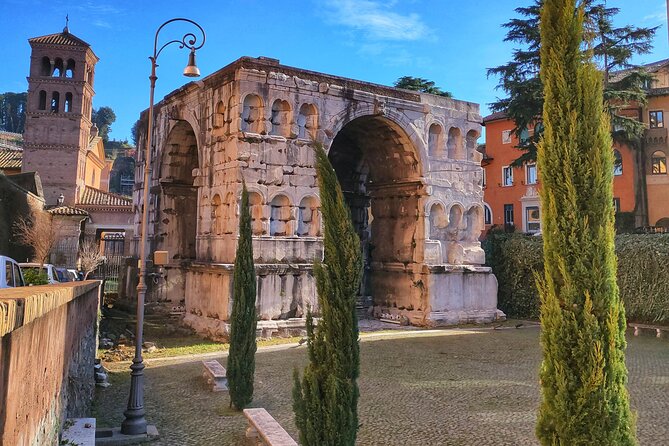
The tour also highlights the Janus Arch and treats it as a way to understand the Roman habit of building meaning into architecture. Janus is often associated with duality—entry and exit, start and finish—and that concept gives you a smart lens for the empire.
Why this is valuable: it helps you connect different eras without memorizing timelines. When the guide explains Rome’s “beginning and end” theme, you start noticing how imperial Rome presented itself as both a continuation and a turning point.
It also pairs well with the rest of the route. When you’ve just walked through the Circus Maximus and then you reach a landmark tied to transitions and direction, your brain starts organizing the city as a sequence, not a checklist.




Marcello Theater: When Roman Culture Kept Evolving
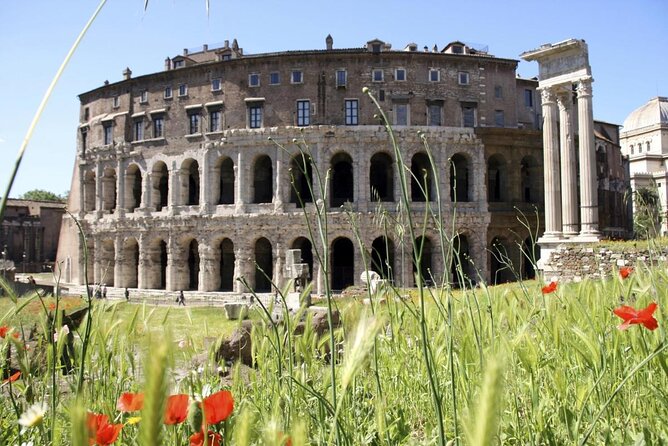
Another stop on the tour’s orbit is the Marcello Theater. Even if you’ve seen Roman theaters before, this is a useful one because it fits the tour’s broader idea: Rome didn’t freeze in time. It adapted, reused, and kept building cultural life into its urban fabric.
On a walking tour, this matters because it’s easy to treat ruins as dead objects. The guide’s job is to connect the theater to what Romans wanted to gather around—performance, public life, and the image of a society that could stage its values.
I also find this stop helps with your long-term sightseeing. If you later visit other theaters, forums, or civic spaces, you’ll have a better sense for how Roman urban design supported public behavior.
Temple of Hercules and the Tour’s “Gods Becoming Human” Theme
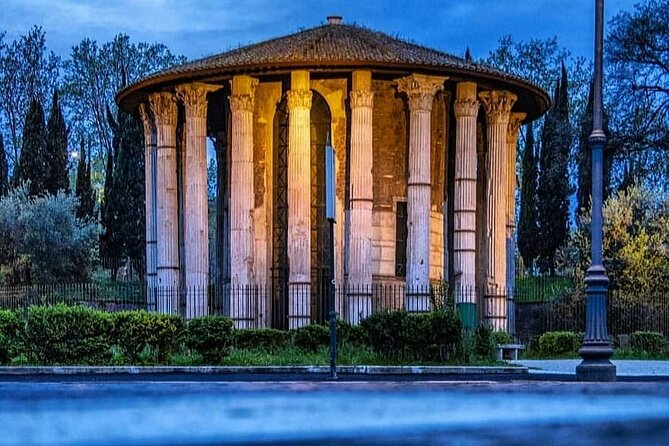
The route includes the Temple of Hercules, and it’s used to support one of the tour’s key narrative themes: where gods become humans. That framing is a strong way to understand Roman religion. Instead of thinking of gods as distant ideas, you start to see how Romans connected them to daily life, civic identity, and the kinds of stories people told about heroes and virtue.
This also supports the tour’s broader focus on heroes and legends. If the Circus Maximus is about spectacle, the Temple of Hercules angle is about belief and storytelling—how Romans turned character into legend and legend into cultural identity.
And because this is a guided walk, you don’t just hear the idea once. The guide ties it back into the city around you, so it stays in your head rather than sliding off after you leave.
Tiberina Island and the Jewish Ghetto: Adding Real Texture
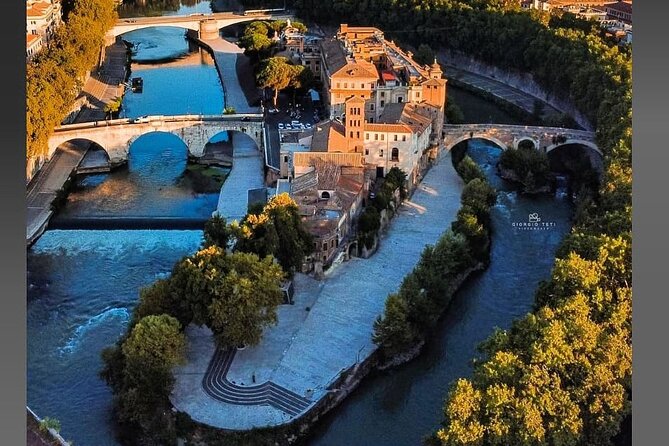
The highlights mention Tiberina Island and the Jewish Ghetto, and I’m glad those areas are included. A lot of Rome tours over-focus on the big-ticket monuments and leave you with a narrow view of the city. Bringing in these stops widens the lens without turning the tour into something unrelated.
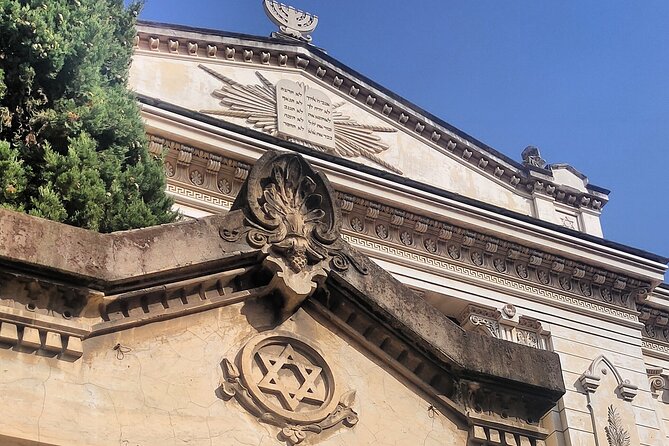
What you’ll get from the guide here is context—how Rome’s story is not only about emperors and armies, but also about neighborhoods, communities, and everyday life. The Jewish Ghetto stop fits the tour’s theme of where family matters, which is a reminder that culture survives through people and places, not just through marble.
Tiberina Island is a helpful way to think about Rome’s relationship to the river—movement, crossing points, and where people naturally gather. Even with limited time, a stop here gives you something different to hold onto later as you explore other bridges and river views on your own.
A 25-Person Maximum Makes the Guide Matter
This tour caps at 25 travelers, and that size changes the feel. In a crowded Rome street, smaller groups are simply easier to manage. It also means the guide can keep control of the pace and respond to questions without the whole group getting lost.
From the feedback, Claudio stands out for a friendly, engaged style and solid historical knowledge, with attention to detail that keeps people feeling secure and included. That’s exactly what you want on a short tour: a guide who can hold the thread of the story while still being present and human.
Price and Value: Why $34 Works for a 2-Hour Story Walk
At $34 for roughly 2 hours, this is priced like a high-impact city orientation. You’re paying for someone local to connect multiple landmarks—Circus Maximus, Marcello Theater, Janus Arch, Temple of Hercules, and the Mouth of Truth—into one coherent route. In Rome, that kind of interpretation can be worth more than another hour of wandering on your own.
You also get extras that matter when you only have a few days: recommendations for Roman cuisine restaurants, viewpoints, and other practical tips. That can save time and help you avoid the most obvious tourist traps, especially if it’s your first visit to the city.
Is it free for everyone? No. But for what you get in guidance, context, and usable follow-up tips, the value feels fair—especially if you show up ready to walk and listen.
Practical Tips So You Get the Full Benefit
- Wear shoes you’d be happy walking in for two hours. The whole point is moving between sites.
- Bring or plan for water. Even with good weather, Rome walks can be sweaty.
- Use your mobile ticket ahead of time. It’s listed as mobile, so have it ready on your phone.
- If you’re sensitive to schedule changes, build in a little buffer. The experience notes good weather requirements, and Rome can change quickly.
If you’re trying to get a grip on imperial Rome without drowning in museum time, this tour is built for you.
Who This Tour Suits Best
This is a great fit if you want:
- a guided overview of Rome’s imperial era and how it shows up in specific locations
- a route that includes legendary sites (like the Mouth of Truth) and civic landmarks
- helpful follow-up ideas for where to eat and where to look out over the city
It may not be ideal if you want a quiet, slow, sit-down experience or if you’re hoping for long stays at each monument. This tour moves, and it’s designed to keep the story flowing.
Also, it notes most travelers can participate, so it’s broadly welcoming, but keep in mind it is still a walking tour.
Should You Book The Rise of Rome?
Yes—if your goal is a short, high-value way to understand how Rome’s imperial heyday shaped the city you’re seeing today. The best argument for booking is the mix: big spectacle (Circus Maximus), iconic legend (Mouth of Truth), symbolic architecture (Janus), and community texture (Tiberina Island and the Jewish Ghetto), all tied together with a guide who can keep the energy up.
If you’re the type who needs ultra-reliable punctuality, do plan to arrive a bit early and keep your morning flexible. Other than that, $34 for a small-group, story-driven walk with practical food and viewpoint tips is a solid use of time in Rome.
FAQ
What is the duration of The Rise of Rome tour?
The tour lasts about 2 hours.
How much does the tour cost?
The price is $34.
Where is the tour meeting point?
The start is at Via del Circo Massimo, 21, 00153 Roma RM, Italy.
Where does the tour end?
The tour ends on Capitoline Hill, 00186 Rome, Metropolitan City of Rome Capital, Italy.
What time does the tour start?
The start time is 10:30 am.
Is the ticket mobile?
Yes, the tour uses a mobile ticket.
How many people are in the group?
The tour has a maximum of 25 travelers.
What weather conditions does the tour require?
It requires good weather. If it’s canceled due to poor weather, you’ll be offered a different date or a full refund.
Is there free cancellation?
Yes. You can cancel up to 24 hours in advance for a full refund.
What landmarks are included?
The tour highlights include Circus Maximus, Marcello Theater, Janus Arch, the Temple of Hercules, the Mouth of Truth, and it also includes areas such as Tiberina Island and the Jewish Ghetto.
If you want, tell me your travel dates and what else you’ve planned that day—I can suggest the best way to pair this with nearby sights so you don’t waste time backtracking.
More Tour Reviews in Rome
- Vatican Museums, Sistine Chapel & St. Peter’s Basilica Tour
★ 4.3 · 73,970 reviews - Vatican Museums, Sistine Chapel & St Peter’s Basilica Guided Tour
★ 4.5 · 39,149 reviews - Rome: Colosseum, Palatine Hill and Roman Forum Guided Tour
★ 4.8 · 32,814 reviews - Rome: Guided Tour of Colosseum, Roman Forum & Palatine Hill
★ 4.7 · 27,897 reviews - Rome: Colosseum & Forum with Audio Guide App -Optional Arena
★ 4.2 · 24,770 reviews - Rome: Colosseum, Roman Forum and Palatine Hill Guided Tour
★ 4.5 · 23,903 reviews




