
Reviewed · TOURS
The ORIGINAL Fiat 500 Tour of Rome’s 7 Hidden Gems
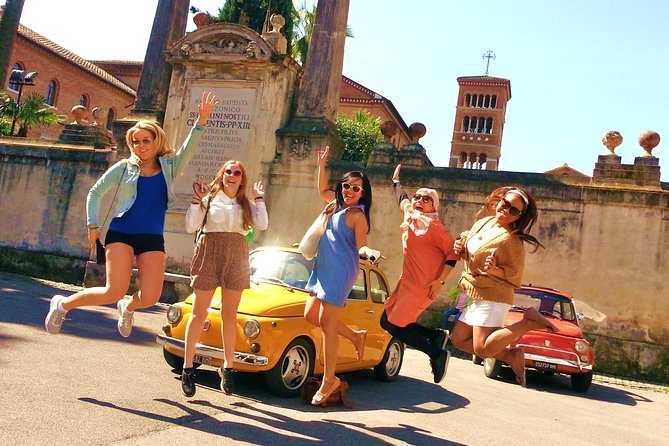
Rome in a tiny car is a whole vibe. This chauffeured Fiat 500 tour strings together Roman highlights and viewpoints you’d miss on your own, with a driver-guide who narrates the city and helps with photos. I love the fast, friendly pace of a small-group convoy, and I love that you get picture-ready stops without feeling stuck behind a ticket line.
Two things I really like: first, the route is built for short moments that still feel meaningful, so you cover a lot in about 3 hours. Second, you’re not just sightseeing—you’re learning why places matter, from the size of the ancient bath complex to the story behind Rome’s famous keyhole view.
One consideration: the car has no safety belts in the back seats and no air bags, and it’s not suitable for passengers over 100 kg. If you’re at all concerned about comfort or getting in and out of a small vintage car, I’d think twice before booking.
In This Review
- Key points before you ride in the Fiat 500
- Riding Rome’s streets in a vintage Fiat 500 (and why it matters)
- Value check: $205.67 for 3 hours, plus photos and light refreshments
- Your route, stop by step: baths, keyholes, viewpoints, and ancient arenas
- Caracalla (ancient baths built like a city)
- Piazza dei Cavalieri di Malta (the St. Peter keyhole trick)
- Parco Savello (Garden of the Oranges and optical illusion views)
- Trastevere (tiny streets you can’t do in a big bus)
- Piazzale Giuseppe Garibaldi (the skyline sweep)
- Circus Maximus (Ben Hur echoes and chariot-race energy)
- Porta San Paolo (a Roman link to an Egyptian pyramid)
- Colosseum (what you can really fit into 20 minutes)
- Via Galvani (the hill made from broken vases)
- Photographs that actually look like Rome
- Who this tour fits best (and who might want a different option)
- Potential hiccups: short stops, traffic rhythm, and car comfort
- Should you book this tour?
- FAQ
- How long is the Fiat 500 tour of Rome?
- Where does the tour start?
- Is the tour offered in English?
- How many people are on the tour?
- Are admission tickets included for the stops?
- Does the tour include photo help?
- Is the tour suitable for everyone?
Key points before you ride in the Fiat 500
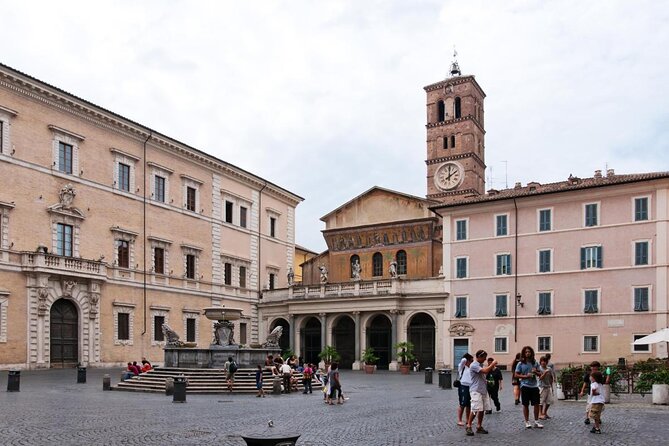
- Vintage Fiat 500 convoy: chauffeured driving through areas big tour buses can’t reach easily
- Small group feel: up to 20 travelers, with your booking capped at 3 people
- Photo time is part of the plan: your driver/guide helps shoot pictures using your phone or camera
- Morning or afternoon departure: pick the time window that fits your day
- Ticket-free add-ons listed: the stops are scheduled with admission ticket free for the time on site
Riding Rome’s streets in a vintage Fiat 500 (and why it matters)
The biggest reason to do this tour is simple: Rome changes when you shrink the vehicle. A vintage Fiat 500 turns the city into something you can actually feel—close street walls, quick turns, and that slightly wild Roman traffic rhythm, but in a controlled, guided way. You’re not parked in one spot for hours. You’re moving through Rome in a format that keeps you alert and curious.
You’ll also get a tour style that feels social, not rigid. The max group size is 20 travelers, so you’re around other people without feeling like you’re in a warehouse of strangers. Most of the time, your driver-guide does the storytelling and also plays photographer. That matters because Rome is all about angles, and the best shots often happen when you’re standing where your car can’t go.
And yes, the car draws attention. That can sound like a gimmick until you realize it helps your stop-and-go routine. You’ll notice people watching as you roll through streets, pause for photos, and step into viewpoints for those short windows. It makes the whole experience feel lighter than a typical bus tour.
Weighing this one up? Here is how a few Rome favourites compare:
- Vatican Museums, Sistine Chapel & St. Peter’s Basilica Tour
★ 4.3 · 73,970 reviews - Vatican Museums, Sistine Chapel & St Peter’s Basilica Guided Tour
★ 4.5 · 39,149 reviews - Rome: Colosseum, Palatine Hill and Roman Forum Guided Tour
★ 4.8 · 32,814 reviews - Rome: Guided Tour of Colosseum, Roman Forum & Palatine Hill
★ 4.7 · 27,897 reviews
Value check: $205.67 for 3 hours, plus photos and light refreshments
At $205.67 per person for about 3 hours, you’re paying for three things: access to areas on tighter streets, a guided narrative, and the photo help. This isn’t a slow museum crawl where you’re paying for entrance tickets and spending all day. Instead, the value is in compression—covering a lot of Rome while someone else handles the routing and explains what you’re seeing.
The tour includes light refreshments and free photo shooting using your cell phone or camera. Those two details sound small, but they reduce friction. You’re less likely to waste time searching for a café or wrestling with a stranger to take a clean photo.
One thing to keep in mind: every stop is listed at roughly 20 minutes. That means you’ll enjoy the location and the viewpoint, but you won’t get a full, inside-only experience at each site. If your dream day is deep, ticketed time inside major monuments, you might want a different format. If your goal is to hit many meaningful stops without exhausting yourself, this format fits.
Your route, stop by step: baths, keyholes, viewpoints, and ancient arenas
This tour is a sequence of “see it, understand it, photograph it” moments. Here’s what each stop offers, and what to watch for.
Caracalla (ancient baths built like a city)
You start with Caracalla, a massive ancient bath complex described as big as 15 football pitches. Think more than soaking pools: it was a major health center with cold and hot baths, plus Greek and Roman libraries, gyms, theatre, seminar rooms, gardens, and fountains. Emperors really went for drama here.
For you, this stop is a great kickoff because it gives you context for Rome’s social life. Romans didn’t just eat and shop; they trained, studied, argued, and relaxed in one place. In about 20 minutes, you can still make the connection between the ruins and the purpose.
Drawback to plan for: ruins take time to “read.” If you’re hoping for a long, detailed walk-through, treat this stop as a strong introduction.
Piazza dei Cavalieri di Malta (the St. Peter keyhole trick)
Next comes a tiny pause that pays off big for photos and curiosity: Piazza dei Cavalieri di Malta. You’ll learn the story behind the famous keyhole view of St. Peter’s church, including the cool detail that the view lines up three countries in a single shot.
This stop is short, but it’s one of those Rome moments where you can feel your brain switch on. You’re not just looking at a landmark; you’re seeing how perspective was used to create a spectacle. If you like selfies, this is tailor-made—your guide’s photo help makes a difference when you’re aiming for the right angle.
What to watch for: plan to position yourself quickly. The magic is in the framing, and the best results come from following your guide’s setup.
Parco Savello (Garden of the Oranges and optical illusion views)
At Parco Savello, you get panoramic city views and the famous vibe of the Garden of the Oranges—plus the romantic nickname, Garden of the Lovers. The highlight here is the optical illusion connection to St. Peter’s church, where the sightline trick makes the moment feel strangely personal.
This is the kind of stop that resets your energy. You go from ancient stone ruins to open-air views that feel like a postcard—but still grounded in real city geography. It’s also a nice breather spot in the middle of the run.
Trastevere (tiny streets you can’t do in a big bus)
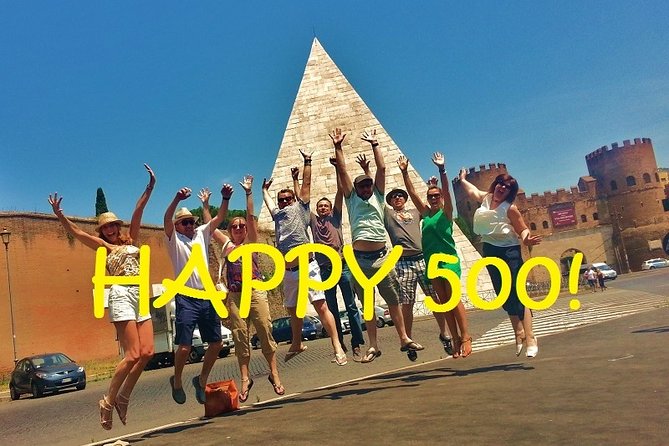
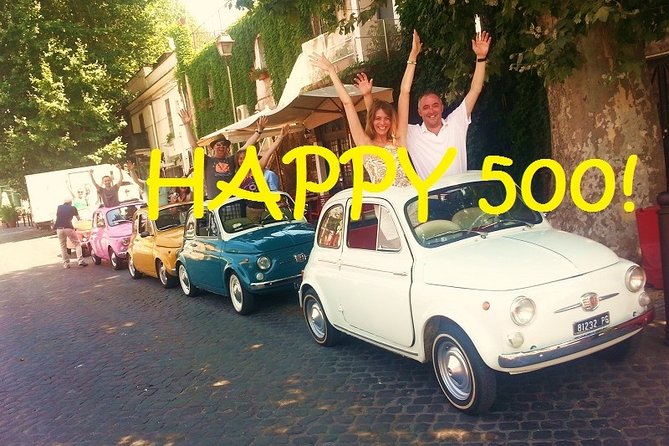
Then it’s off into Trastevere, where the car itself becomes part of the story. Your drive through the narrow streets is the point—something larger vehicles simply can’t replicate. You’ll likely see people pointing their phones at you, because the Fiat 500 turns heads even when you’re not trying.
This stop is also where the tour feels most “street-level.” You’re watching daily Rome life from inside the motion of the city rather than standing in one plaza.
Small planning note: cobblestones and tight streets mean keep an eye on where you step when you hop out briefly.
Piazzale Giuseppe Garibaldi (the skyline sweep)
For views, Piazzale Giuseppe Garibaldi is a standout. You’ll look out over a lineup that includes the Colosseum, the Pantheon, Altare della Patria, and the 100 church domes of Rome (as described on this route). If you want a quick way to understand where things sit relative to each other, this is a smart checkpoint.
This is also a good stop for photos that feel like “Rome as a whole,” not just one monument. The skyline perspective helps you connect the dots between sites you saw earlier.
Circus Maximus (Ben Hur echoes and chariot-race energy)
At Circus Maximus, you’ll get the backstory of a stadium built 400 years before the Colosseum. The tour frames it as a loud, fast Roman spectacle—chariot races with crowds on the order of 250,000 people. You also get a sense of how echoes and scale made these events unforgettable.
And here’s a fun modern thread: the area has been used for rock concerts, with names like Rolling Stones, Roger Waters, and Bruce Springsteen mentioned as performers. That continuity helps you picture how public space keeps getting reused in Rome.
Porta San Paolo (a Roman link to an Egyptian pyramid)
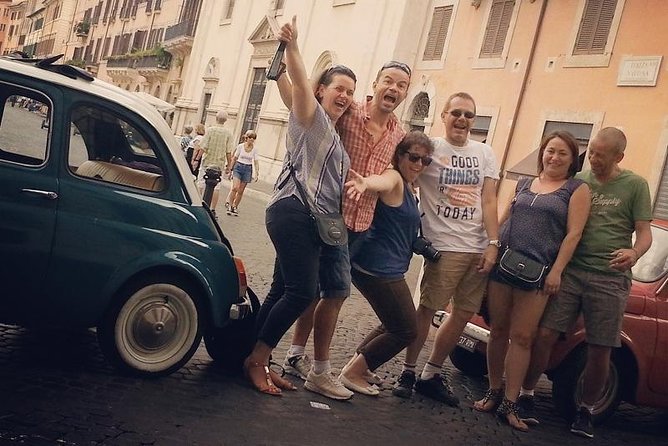
Next is Porta San Paolo, where you’ll hear an Egypt-in-Rome fact that turns heads fast: it’s described as the 4th biggest ancient Egyptian Pyramid in Rome, built in 18 BCE and linked to the tomb of Gaius Cestius. It’s a reminder that Rome wasn’t isolated. Power, culture, and ambition traveled.
This is a great stop if you like surprises—Rome rewards curiosity, and this one is built for it. You’ll also leave with a stronger mental map of how different civilizations show up in Roman architecture.
Colosseum (what you can really fit into 20 minutes)
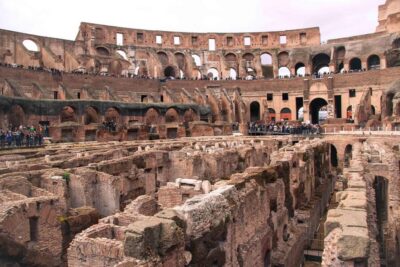
The tour then goes to the Colosseum, described as built around 80 CE and used for gladiator fights, executions, and even naval combat in its early centuries. It’s also described as seeing activity over about 500 years, with figures like 250,000 people mentioned as part of the brutal history.
For practical expectations: the Colosseum stop is scheduled at about 20 minutes. That means you’re not getting a full deep-dive visit. What you can do is get your bearings, hear the key historical threads, and get photos from the right vantage points without spending the whole day in lines or long indoor paths.
If you want to leave with more than a highlight reel, you can use this stop to decide what you want to return for later.
Via Galvani (the hill made from broken vases)
Finally, Via Galvani brings the story down to something oddly specific and wonderfully Roman: the hill of broken vases. Romans created an artificial hill from terracotta pieces used to transport items like olive oil, fish sauce, and wine. Over centuries, a dump became a structure about 40 meters high and 700 meters around, estimated to come from around 50 million vases.
This last stop is a clever way to end. It’s not a “big monument” moment; it’s a reminder that Rome is full of layered leftovers. When you understand how the city’s materials were shaped and reused, you start noticing Rome differently.
Photographs that actually look like Rome
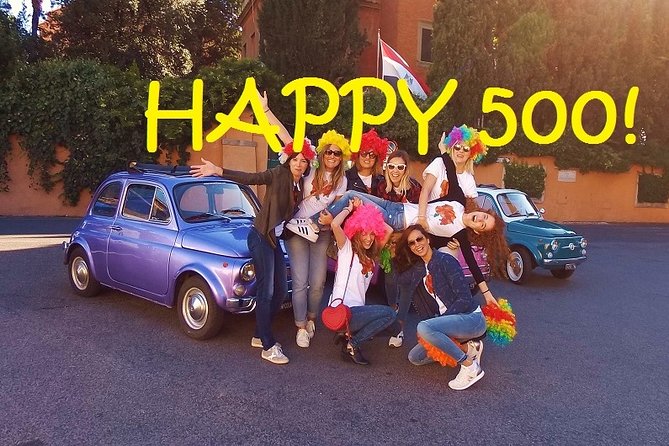
This tour is built for pictures. You don’t just stop and hope someone takes a decent shot. The driver/guide helps with photo shooting using your cellphones/cameras, and the itinerary includes multiple viewpoints where timing and framing matter.
In the names you might see attached to this experience, guides like Francesco, Alexis, Alex, Max, Emmanuelle, Giorgio, Marco, Stephanie, Michael, and Mike show up as examples of the energetic, story-first style that can make the photos look natural rather than staged. Even if you don’t get one of those exact people, the approach tends to stay the same: you get positioned, you get the shot, and you get the explanation that makes the image matter later.
Quick tip for you: bring a charged phone and a strap on your camera if you use one. With several short stops, you’ll want your gear ready fast.
Who this tour fits best (and who might want a different option)
I’d point this tour toward you if you want:
- A compact Rome day that covers big sights plus perspective stops
- A guide who keeps the story moving instead of turning every stop into a long lecture
- A fun first step on your trip, so you know what to return to later
It also seems like a good match for families with teens. If your group gets restless on long indoor tours, the mix of moving drive time and short viewpoint stops can work.
But consider another option if:
- You’re sensitive about vehicle safety or comfort. This car has no safety belts in the back seats and no air bags, and there’s a 100 kg weight limit listed.
- You need long time at major monuments. The tour is designed around short stops (about 20 minutes each), not hours inside.
Potential hiccups: short stops, traffic rhythm, and car comfort
Rome runs on timing, and this tour’s structure is fast by design. The schedule lists about 20 minutes per stop, so you’ll want to treat each location as a “moment” rather than an “all afternoon.” If you’re the type who always wants to read every plaque and take your time, you may feel a bit rushed.
Also, you’re riding in a vintage Fiat 500. That means tight space and a very different entry/exit than a modern car. If you’re traveling with mobility concerns, you’ll want to think hard about whether you’ll feel comfortable getting in and out multiple times.
Finally, language depends on the guide assigned, though the tour is offered in English, and it may be operated by a multilingual guide. If English fluency matters a lot to you, plan to confirm your language setup at booking.
Should you book this tour?

Book it if you want a playful, efficient way to understand Rome—baths, viewpoints, street scenes, and ancient arenas—without spending a whole day stuck in lines. The included photo help and the small-group convoy format can be a big value when you’re trying to see a lot while still enjoying the city.
Skip it if you’re looking for a slow, in-depth monument experience or if the car comfort and safety limits are a dealbreaker. In that case, you’ll likely be happier with a tour that’s built for longer on-site time and modern vehicle comfort.
If you’re torn, my advice is to book based on your travel style: if you like motion, stories, and quick chances at the best angles, this Fiat 500 Rome tour is a very fun way to get your bearings fast.
FAQ
How long is the Fiat 500 tour of Rome?
The tour lasts about 3 hours (approx.).
Where does the tour start?
The meeting point is Via Labicana, 125, 00184 Roma RM, Italy.
Is the tour offered in English?
Yes, the tour is offered in English.
How many people are on the tour?
The tour can have up to 20 travelers. Your booking is also capped at a maximum of 3 people per booking.
Are admission tickets included for the stops?
For the listed stops, admission ticket is marked as free.
Does the tour include photo help?
Yes. There is free photo shooting with your cellphone or camera included.
Is the tour suitable for everyone?
It is not suitable for passengers weighing more than 100 Kg. Also, there are no safety belts installed in the back seats and no air bags in the car.
More Tours in Rome
- Vatican Museums, Sistine Chapel & St. Peter’s Basilica Tour
★ 4.3 · 73,970 reviews - Vatican Museums, Sistine Chapel & St Peter’s Basilica Guided Tour
★ 4.5 · 39,149 reviews - Rome: Colosseum, Palatine Hill and Roman Forum Guided Tour
★ 4.8 · 32,814 reviews - Rome: Guided Tour of Colosseum, Roman Forum & Palatine Hill
★ 4.7 · 27,897 reviews - Rome: Colosseum, Roman Forum and Palatine Hill Guided Tour
★ 4.5 · 23,903 reviews - Rome: Colosseum Arena Floor, Palatine & Forum Guided Tour
★ 4.5 · 20,180 reviews
More Tour Reviews in Rome
- Vatican Museums, Sistine Chapel & St. Peter’s Basilica Tour
★ 4.3 · 73,970 reviews - Vatican Museums, Sistine Chapel & St Peter’s Basilica Guided Tour
★ 4.5 · 39,149 reviews - Rome: Colosseum, Palatine Hill and Roman Forum Guided Tour
★ 4.8 · 32,814 reviews - Rome: Guided Tour of Colosseum, Roman Forum & Palatine Hill
★ 4.7 · 27,897 reviews - Rome: Colosseum & Forum with Audio Guide App -Optional Arena
★ 4.2 · 24,770 reviews - Rome: Colosseum, Roman Forum and Palatine Hill Guided Tour
★ 4.5 · 23,903 reviews
Just added to our Rome reviews





Tours, compared.
 ★ 4.3Vatican Museums, Sistine Chapel & St. Peter’s Basilica TourFrom $7273,970 reviews
 ★ 4.5Vatican Museums, Sistine Chapel & St Peter’s Basilica Guided TourFrom $2239,149 reviews
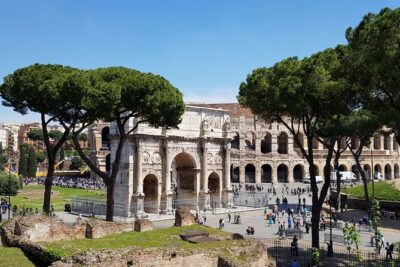 ★ 4.8Colosseum, Palatine Hill and Roman Forum Guided TourFrom $5232,814 reviews
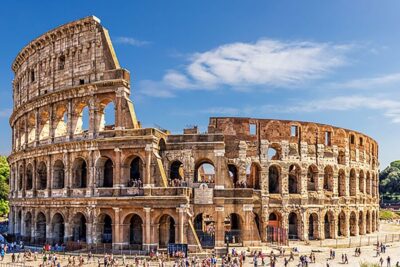 ★ 4.7Guided Tour of Colosseum, Roman Forum & Palatine HillFrom $5527,897 reviews
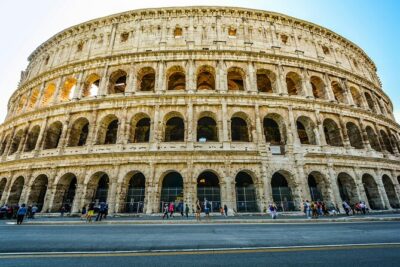 ★ 4.5Colosseum, Roman Forum and Palatine Hill Guided TourFrom $5923,903 reviews
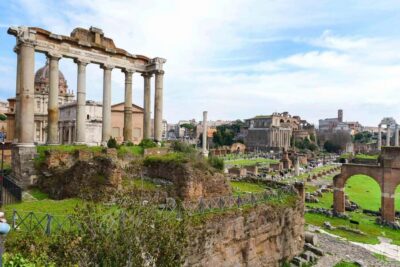 ★ 4.5Colosseum Arena Floor, Palatine & Forum Guided TourFrom $4120,180 reviews
 ★ 4.3Vatican Museums, Sistine Chapel and Basilica TourFrom $7316,039 reviews
 ★ 4.7Colosseum Arena, Palatine Hill & Forum Guided TourFrom $8414,510 reviews