
Reviewed · FOOD
Taste the Best Italian Food & Wine
Two hours in Rome can taste like Italy’s best hits. You’ll bounce between a gourmet shop and a top pizzeria, with 30-year aged balsamic on Parmigiano Reggiano and Pizzarium pizza as the anchors. What I like most is the sheer variety in such a short time, plus the guide’s habit of turning food into stories you can actually use later. One watch-out: the tour is offered in English, so plan on that being your main language for explanations.
This is also a good fit if you want a relaxed pace. With a maximum of 12 travelers and a small-group setup, you’re not stuck watching from the edge while everyone else eats. The wine is part of the experience too, with free-flowing D.O.C.G poured during tastings, but the structure keeps it from turning into a chaotic night.
In This Review
- Key things to know before you go
- Bite-Sized Italy in Rome: What This Tour Really Is
- Start at La Nicchia Café: Aperitivo That Sets Your Taste “Baseline”
- Gourmet Shop Tastings: Balsamic, Truffles, Cheese, and Olive Oil Lessons
- Pizzarium Pizza: Trying More Than One Slice (Without Overthinking It)
- Wine Pairing Without the Chaos: Free-Flowing D.O.C.G
- Guides Make the Difference: Martha, Emma, Pablo, and More
- Duration, Group Size, and Scheduling: Easy to Fit Into Your Day
- Why the Price Can Be a Good Deal in Rome
- Who This Tour Suits Best (and Who Might Want Another Option)
- Should You Book This Rome Italian Food and Wine Tour?
- FAQ
- How long is the tour?
- What is the meeting point and where do we end?
- How much does the tour cost?
- What food and wine tastings are included?
- Is the tour offered in English?
- What group size should I expect?
- What is the cancellation policy?
Key things to know before you go
- A two-stop plan that stays focused: gourmet shop tastings first, then Rome’s pizza at Pizzarium.
- Big-ticket flavors in bite-size form: 30-year balsamic, black truffle spread, truffle honey, and more.
- Wine is built into the tasting, not an afterthought: D.O.C.G pours during the experience.
- Small group size (up to 12): more questions, less waiting.
- Most of the learning is in English: great if you’re comfortable with that pace.
- You’ll get practical Rome food tips: quality cues for Italian products you can look for later.
Bite-Sized Italy in Rome: What This Tour Really Is
This isn’t a bus tour with “a little of everything.” It’s a focused food and wine tasting designed around two places where the quality is already baked in. Your job is simple: show up hungry, pay attention, and ask questions when something sparks your interest.
You’ll start with a curated aperitivo-style tasting in a gourmet setting. Then you move to pizza at Pizzarium, where you try different slices rather than just one plain margherita. That mix is the best part: you get the slow, sensory education of cured meats, cheeses, olive oil, and aged condiments. Then you switch gears to something fast, hot, and street-level—pizza that’s meant to be eaten with your hands.
The duration is about 2 hours, which matters in Rome. In a city where you can easily spend half a day commuting and queueing, this kind of compact schedule helps you keep your other plans intact. And because the group is capped at 12, the tour feels more like an organized tasting night than a factory line.
Worth a look next to this Rome booking:
- Rome: Tuscany & Montepulciano Day Trip with Lunch & Wine Tasting
★ 4.5 · 5,232 reviews - Winner 2025 Rome Twilight Trastevere Food Tour by Eating Europe
★ 5.0 · 5,157 reviews - Rome: Street Food Tour with Local Guide
★ 4.8 · 4,077 reviews - Rome Food Tour: Unlimited Tastings with Fine Wine & Barolo
★ 5.0 · 3,365 reviews
Start at La Nicchia Café: Aperitivo That Sets Your Taste “Baseline”
The meeting point is La Nicchia Cafè on Via Cipro (start time listed as 10:45am). You’ll end back at the same spot. That matters because you don’t waste mental energy figuring out a second meetup or hunting the group afterward.
At the beginning, expect an aperitivo-style introduction: a selection of the best Italian tastings, including cheeses and the kind of flavor boosters that Italians actually shop for. This is where the guide’s role becomes obvious. You’re not just tasting items—you’re learning how to taste them.
Think of it as building a baseline. Once you understand what “good” looks and smells like—freshness, age, balance, ingredient quality—you start noticing the difference when you eat later in Rome. That’s why the opening stop is so important: it trains your palate in real time.
If you’re the type who wants to order better at restaurants, this is the moment to pay attention. The guide often gives you practical tips on spotting quality Italian products, and the tastings give you something concrete to compare.
Gourmet Shop Tastings: Balsamic, Truffles, Cheese, and Olive Oil Lessons
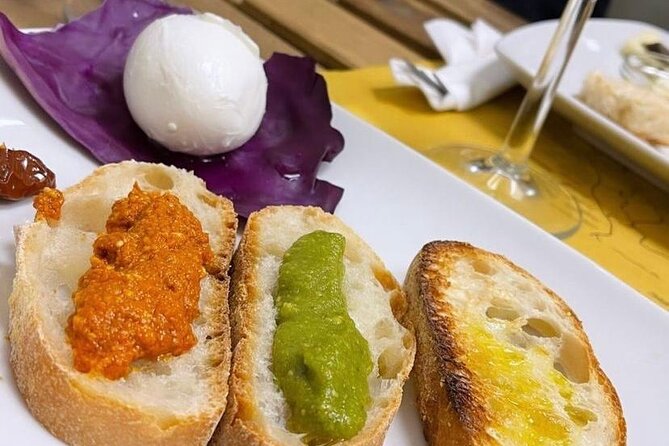
The first stop is the longest flavor education. This is where you’ll sample a spread built around distinct categories of Italian taste: aged condiments, cheeses, spreads, produce, olive oil, and specialty extras.
Here are the standout tastings you should expect:
- 30-year aged balsamic drizzled over Parmigiano Reggiano
This is one of those flavors that changes how you think about balsamic. Younger vinegar can be sharp. An older one tends to feel smoother, darker, and almost syrupy.
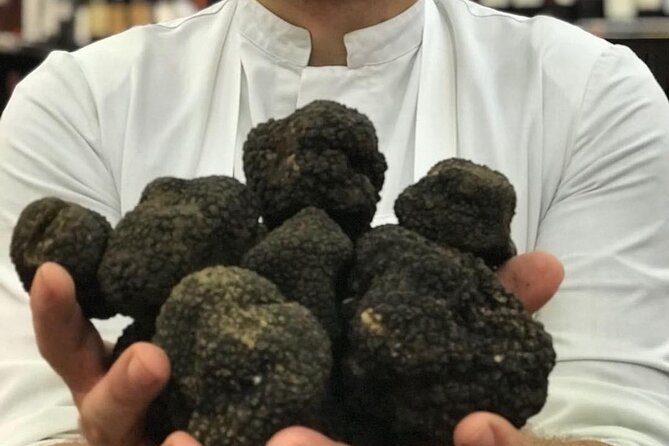
- Black truffle pâté spread over Asiago
Truffle is a tricky ingredient because it can taste perfumey when it’s not done well. A good truffle product tastes earthy and grounded rather than fake or one-note.
- Fresh buffalo mozzarella
This is your freshness check. Look for a creamy texture and a milky aroma. It’s also a contrast to aged or cured items later.
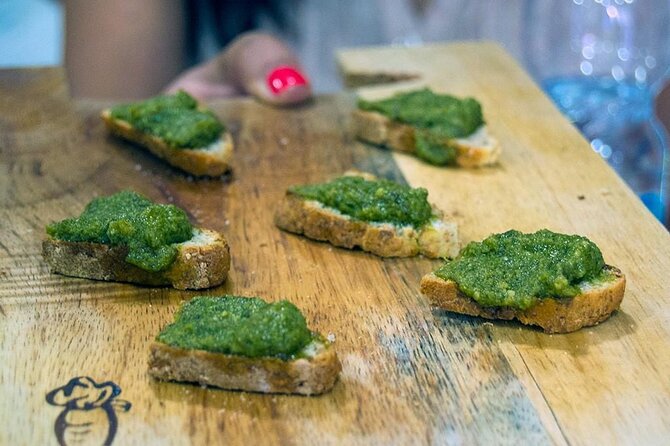
- Sun-dried tomatoes and pesto Genovese
These bring the herbal and savory side of Italian food—especially if the pesto is made with real basil and quality olive oil.
- Finest Italian olive oil
Taste olive oil like you mean it: notice bitterness, peppery bite, and aroma. A good oil doesn’t just taste like fat—it tastes like a plant.
- Truffle-infused honey
Sweet + savory can be hit-or-miss. When it works, it feels like it locks flavors together instead of clashing.
- Additional cheese and cheese-and-bite combinations that turn the tasting into a sequence you can remember.
One reason I like this part of the tour is that it teaches you how Italians build flavor. You’re not only sampling what tastes good—you’re learning what ingredients are used to create depth.
Also, the small details matter here. The guide’s descriptions help you connect each item to a purpose: richness, salt, acidity, aroma, texture. That’s how you avoid turning your future meals into random ordering.
Pizzarium Pizza: Trying More Than One Slice (Without Overthinking It)
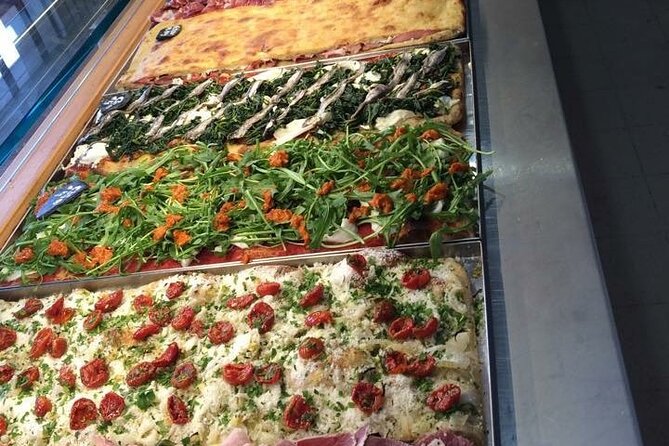
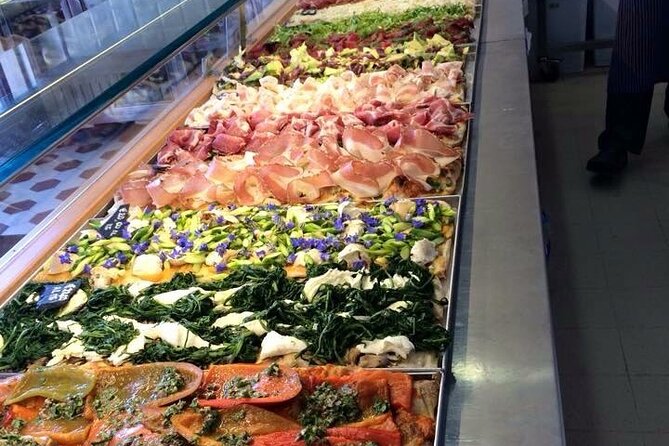
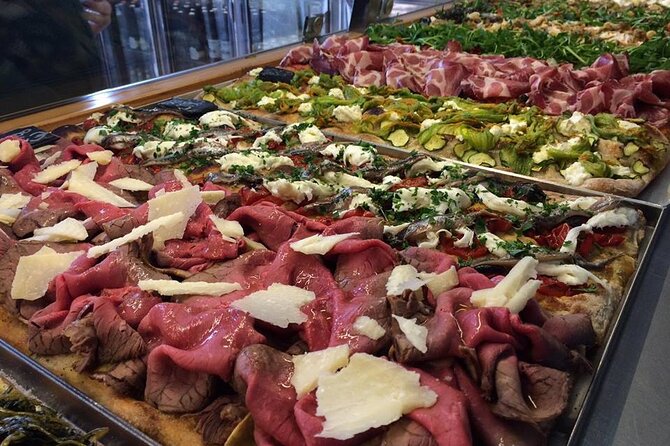
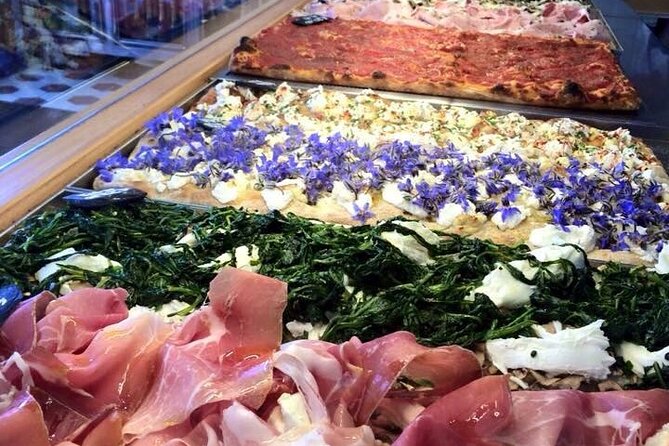
Then you head to Pizzarium for pizza—Rome’s number one pizza experience, in the tour’s framing. This is the switch from careful tasting to hands-on eating.
What you’ll like most is that you get variety. Instead of being stuck with one basic slice, the guide guides the selection so you can sample different styles. Some of the creativity people call out includes topping choices you might not choose on your own—like the asparagus pizza named in one account—so the guide helps you see what’s possible.
Here’s a smart way to approach it if you’re food-curious: take one bite, then ask yourself what you’re tasting first. Is it tomato? Mozzarella? The crust’s chew? The herbs? Then compare. That’s exactly how pizza stops being “just pizza” and becomes a skill you can recognize when you’re ordering next.
You may also hear stories tied to the pizzeria and its people. In at least one account, the guide connected the spot to a figure named Gabriele and even mentioned buzz around a show connection. Even if you don’t catch every pop-culture detail, you’ll still get the real point: this pizza place has a personality, and the guide helps you taste it with context.
Some departures may include a sweet finish like ice cream for dessert. If that’s offered on your date, consider it the best kind of bonus: something cold after hot pizza.
Worth a look next to this Rome booking:
Wine Pairing Without the Chaos: Free-Flowing D.O.C.G
Wine is part of the experience, with free-flowing D.O.C.G during tastings. In practice, that means you’re pairing wine with foods rather than just drinking while you walk.
The guide also uses the wine to teach. You’ll talk about why it works with different textures—cheese’s fat, balsamic’s acidity, truffle’s earthiness, and pesto’s herbal bite. That kind of pairing logic sticks. Later, when you’re choosing a glass with dinner, you’ll have a mental map instead of a guess.
One more practical note: because the wine is free-flowing, pace yourself early. Start with smaller pours at the beginning. You’ll taste more clearly, ask better questions, and still enjoy the later pizza stop without feeling rushed.
If you’re sensitive to alcohol, it’s still possible to participate fully—just sip, don’t chase. (The structure of tastings is built around eating, not speed-drinking.)
Guides Make the Difference: Martha, Emma, Pablo, and More
This kind of tour rises or falls on the guide. Here, the guide team shows up with strong energy and clear explanations, and specific names come up often enough to matter.
Martha is praised for being phenomenal and for adding more than the expected food and wine—like ice cream dessert at the end. Emma is noted for being funny with engaging narration. Pablo is described as both informative and fun. Dori is credited with making the trip, and Alina is highlighted for helpful support.
Even if you don’t know who you’ll get, use the guide as your superpower. Ask about:
- Which ingredients to look for in Rome markets
- What makes a balsamic feel like real aging
- How to recognize quality olive oil and truffle products
That’s where you turn a food crawl into a useful Rome education.
Duration, Group Size, and Scheduling: Easy to Fit Into Your Day
The tour runs for about 2 hours. That timing is a big advantage in Rome, where you can burn time fast with long walks and bottlenecks.
The group size maxes out at 12 travelers. That’s small enough to keep the mood relaxed and to give you a shot at questions without the guide shouting over a crowd.
It’s also offered in English, and one caution from real-world experience: if you prefer explanations beyond English, this may not be your best match. Still, the core experience is food in front of you, and the tastings themselves do a lot of the communication without needing perfect language skills.
And because the tour is booked about 16 days in advance on average, it’s a decent idea to lock it in earlier rather than assuming last-minute availability.
Why the Price Can Be a Good Deal in Rome
At $82.90 per person for roughly two hours, you’re paying for three things:
- Guided tastings of multiple high-end Italian items (aged balsamic, buffalo mozzarella, truffle products).
- Free-flowing wine tied directly to the tasting program.
- A curated pizza experience at Pizzarium, where you’re sampling multiple options rather than ordering blindly.
Rome can make food tours expensive when they’re vague or stop at mediocre places. This one is built around ingredient quality and a guided sequence. You’re not just buying bites; you’re buying interpretation—what to taste, how to compare, and what to seek later.
If you’d normally spend money on a fancy lunch plus wine and still end up guessing on quality, the value can feel clear. The structure keeps you from spending the entire day searching for a good food moment on your own.
Who This Tour Suits Best (and Who Might Want Another Option)
This tour is a great match for you if:
- You want a short food experience that doesn’t derail your schedule
- You love trying multiple Italian flavors in one sitting
- You want wine included, but still want the pacing to feel manageable
- You like learning practical cues for choosing ingredients later
It may be less ideal if:
- You want lots of walking or many different stops (this tour focuses on two main stops)
- You don’t want an English-first experience
If you’re traveling as a couple, a friend group, or even family (one account mentions a family group size of eight), the small group feel helps. Just come ready to eat. This is a tastings-first kind of outing.
Should You Book This Rome Italian Food and Wine Tour?
I think you should book if you’re aiming for a concentrated, high-quality food and wine experience in the middle of a busy Rome trip. The 30-year balsamic lesson, the truffle-and-cheese pairings, and the pizza variety at Pizzarium give you a lot to carry into your own meals after the tour ends.
Book it if you’re comfortable with an English-led explanation and you like the idea of two focused stops over a longer day of scattered scenery. If you want an all-day itinerary or language flexibility, you might prefer a different format.
Either way, do yourself a favor: come hungry, pace your wine early, and ask the guide what you should order when you’re back on your own.
FAQ
How long is the tour?
The experience is listed as about 2 hours.
What is the meeting point and where do we end?
You meet at La Nicchia Cafè, Via Cipro, 4L, 00136 Roma RM, Italy, and the tour ends back at the same meeting point.
How much does the tour cost?
The price is $82.90 per person.
What food and wine tastings are included?
The tastings include items such as 30-year aged balsamic vinegar over Parmigiano Reggiano, black truffle pâté on Asiago, buffalo mozzarella, sun dried tomatoes, pesto Genovese, Italian olive oil, truffle infused honey, and Rome’s number one pizza at Pizzarium. Free-flowing D.O.C.G wine is included.
Is the tour offered in English?
Yes, the tour is offered in English.
What group size should I expect?
The maximum group size is 12 travelers.
What is the cancellation policy?
You can cancel for a full refund if you cancel up to 24 hours in advance of the experience start time. Free cancellation is available.
More Food in Rome
- Winner 2025 Rome Twilight Trastevere Food Tour by Eating Europe
★ 5.0 · 5,157 reviews - Rome: Street Food Tour with Local Guide
★ 4.8 · 4,077 reviews - Rome Food Tour: Unlimited Tastings with Fine Wine & Barolo
★ 5.0 · 3,365 reviews - Rome Food Tour: Campo de’ Fiori, Ghetto, Trastevere Winner 2024
★ 5.0 · 3,205 reviews - Rome: Guided Food Walking Tour with Wine in Trastevere
★ 4.9 · 3,105 reviews - Rome: Trastevere Food tour with Free-Flowing Fine Wine
★ 5.0 · 2,853 reviews
More Food & Drink in Rome
- Rome: Tuscany & Montepulciano Day Trip with Lunch & Wine Tasting
★ 4.5 · 5,232 reviews - Winner 2025 Rome Twilight Trastevere Food Tour by Eating Europe
★ 5.0 · 5,157 reviews - Rome: Street Food Tour with Local Guide
★ 4.8 · 4,077 reviews - Rome Food Tour: Unlimited Tastings with Fine Wine & Barolo
★ 5.0 · 3,365 reviews - Rome Food Tour: Campo de’ Fiori, Ghetto, Trastevere Winner 2024
★ 5.0 · 3,205 reviews - Rome: Guided Food Walking Tour with Wine in Trastevere
★ 4.9 · 3,105 reviews
More Tour Reviews in Rome
- Vatican Museums, Sistine Chapel & St. Peter’s Basilica Tour
★ 4.3 · 73,970 reviews - Vatican Museums, Sistine Chapel & St Peter’s Basilica Guided Tour
★ 4.5 · 39,149 reviews - Rome: Colosseum, Palatine Hill and Roman Forum Guided Tour
★ 4.8 · 32,814 reviews - Rome: Guided Tour of Colosseum, Roman Forum & Palatine Hill
★ 4.7 · 27,897 reviews - Rome: Colosseum & Forum with Audio Guide App -Optional Arena
★ 4.2 · 24,770 reviews - Rome: Colosseum, Roman Forum and Palatine Hill Guided Tour
★ 4.5 · 23,903 reviews
Just added to our Rome reviews





Food, compared.
 ★ 5.0Winner 2025 Rome Twilight Trastevere Food Tour by Eating EuropeFrom $1255,157 reviews
 ★ 4.8Street Food Tour with Local GuideFrom $534,077 reviews
 ★ 5.0Rome Food Tour: Unlimited Tastings with Fine Wine & BaroloFrom $833,365 reviews
 ★ 5.0Rome Food Tour: Campo de’ Fiori, Ghetto, Trastevere Winner 2024From $883,205 reviews
 ★ 4.9Guided Food Walking Tour with Wine in TrastevereFrom $1003,105 reviews
 ★ 5.0Trastevere Food tour with Free-Flowing Fine WineFrom $1022,853 reviews
 ★ 4.9Trastevere & Campo de Fiori Street Food Walking TourFrom $512,768 reviews
★ 5.0Rome Street Food Tour with Local GuideFrom $542,361 reviews
Browse the lists this tour appears in