
Reviewed · ROME
Small groups from Rome: Padre Pio and Grotto of San Michele
Two shrines, one long Rome morning. This small-group day trip is built around the spiritual power of Padre Pio and the UNESCO mystery of the Grotto of San Michele Arcangelo, with hotel pickup and a guided pace. It’s especially good if you want these famous places without switching cities or adding nights on the road.
I love how the schedule gives real time at the big sites: hours at the Sanctuary of Padre Pio, then an hour at San Michele, both with free entry. I also love the team setup reported on the day: guides like Carola help you understand what you’re seeing, while drivers such as Roberto or Max focus on smooth, safe driving.
The main drawback is simple: it’s a 13-hour day with a very early 6:30 am start, and the ride is long.
In This Review
- Key highlights at a glance
- A 6:30 am start for two big pilgrimage stops
- San Giovanni Rotondo: Sanctuary of Padre Pio’s lower church, tomb, and modern upper church
- Lower church: where the devotion focuses
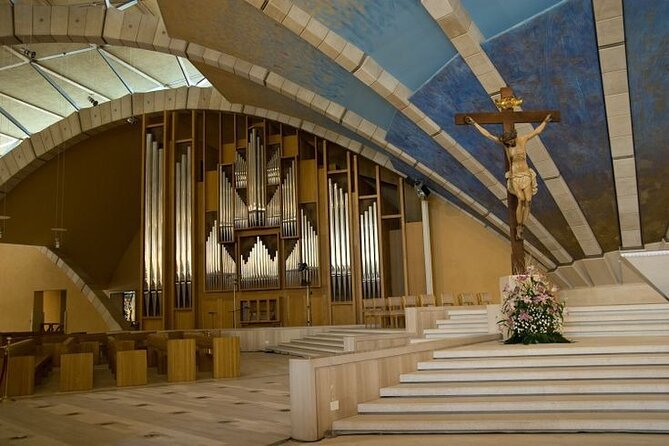
- Upper church: Renzo Piano’s modern structure (inaugurated in 2004)
- Capuchin convent: where St. Pio lived and served
- Monte Sant’Angelo: the UNESCO Grotto of San Michele Arcangelo and its centuries of faith
- Why the grotto matters: apparitions linked to the 5th century
- What you’ll notice inside: altars, statues, inscriptions, and layered testimony
- Gargano views: the setting beyond the cave
- Carola and Roberto: how the guide and driver shape your day
- Timing and logistics that actually matter on this 13-hour trip
- Price check: what $390.46 buys you, and when it’s good value
- Who should book this Padre Pio and San Michele day trip
- Practical tips to make your visit smoother
- Should you book? My take on whether this is the right choice
- FAQ
- What time does the tour start?
- Is pickup and drop-off included?
- How long is the tour?
- How big is the group?
- Is the tour offered in English?
- Are lunch and drinks included?
- Are admission tickets included for the sites?
- What is the cancellation policy for a full refund?
Key highlights at a glance
- Small-group comfort with pickup, drop-off, and an air-conditioned vehicle
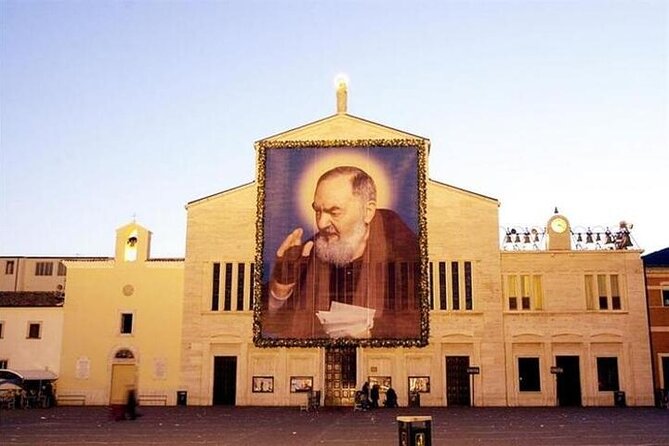
- Padre Pio’s sanctuary, structured for a full visit (lower church tomb + upper church by Renzo Piano)
- San Michele Arcangelo’s UNESCO grotto with historic layers of altars, statues, and inscriptions
- Guided context without rushing (including names you might meet on past days like Carola)
- No lunch included, so plan snacks or a way to eat off-tour
A 6:30 am start for two big pilgrimage stops
This is one of those trips that feels intense on paper: you leave Rome very early, you spend hours in a car, and you return late. But the logic works. You’re packing two of southern Italy’s most meaningful pilgrimage sites into one day trip from Rome, which is tough to beat if you don’t want to overnight in Puglia.
Your day runs on a tight rhythm. Pickup happens from your lobby or outside your apartment or B&B, and you’ll want to be ready about 10 minutes before the agreed time. The tour is in English, and with a maximum group size of 42 travelers, it usually stays manageable for questions and timing.
The trade-off is energy. Expect long-distance travel and plan to be flexible about when you’ll eat. Also, because lunch isn’t included, you’ll want your personal strategy ready before you set off. The upside is that the day is organized around the sites, not around searching for them.
Weighing this one up? Here is how a few Rome favourites compare:
- Vatican Museums, Sistine Chapel & St. Peter’s Basilica Tour
★ 4.3 · 73,970 reviews - Vatican Museums, Sistine Chapel & St Peter’s Basilica Guided Tour
★ 4.5 · 39,149 reviews - Rome: Colosseum, Palatine Hill and Roman Forum Guided Tour
★ 4.8 · 32,814 reviews - Rome: Guided Tour of Colosseum, Roman Forum & Palatine Hill
★ 4.7 · 27,897 reviews
San Giovanni Rotondo: Sanctuary of Padre Pio’s lower church, tomb, and modern upper church
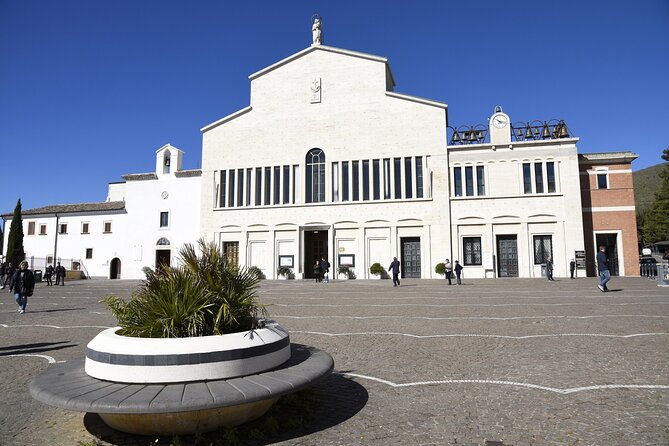
The first stop is the Sanctuary of San Giovanni Rotondo, the major religious center dedicated to San Pio da Pietrelcina. This is where the story lives in real time: St. Pio lived and died there, and the sanctuary has grown into a place visited by pilgrims from around the world.
You get about 4 hours here, which is a gift. It means you’re not forced into a quick look-and-go. Instead, you can move at a prayerful pace and actually take in the layout.
Lower church: where the devotion focuses
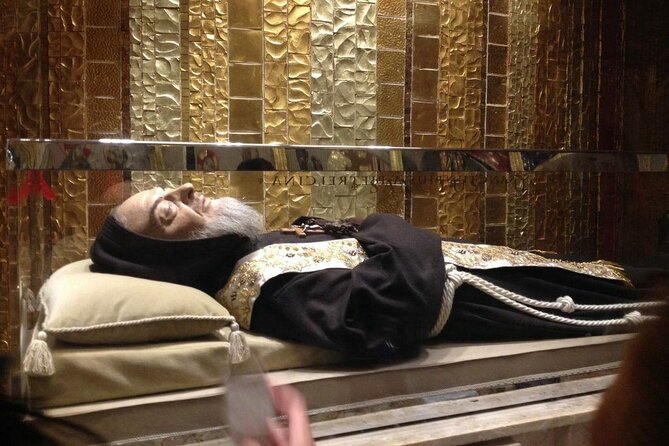
The sanctuary’s lower church is the place many people come for first. It’s where you’ll find the tomb of St. Pio. This is the kind of site where the space itself does the talking: you’ll feel the weight of long-standing devotion simply by standing there and watching the flow of pilgrims.
Even if you’re not a regular religious traveler, the tomb area tends to hit on a human level. It’s not about checking a box. It’s about understanding why so many people feel called to return.
Upper church: Renzo Piano’s modern structure (inaugurated in 2004)
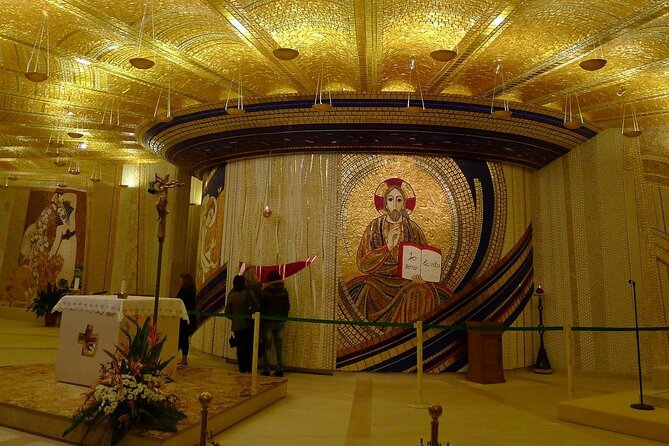
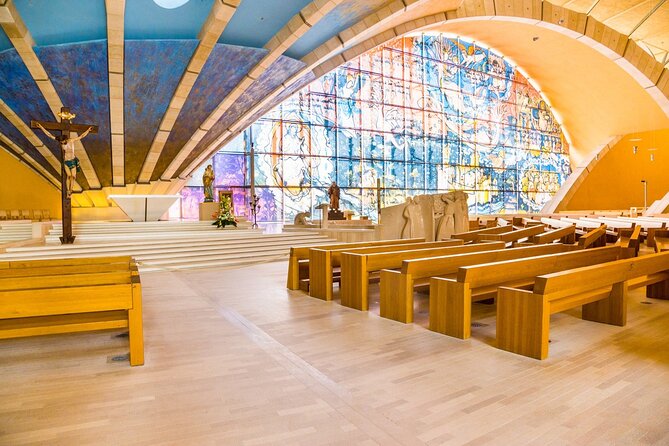
Then you have the upper church, which is a modern design by architect Renzo Piano, inaugurated in 2004. This contrast is striking. You go from a more traditional devotional focus into a large modern structure built for today’s pilgrimages.
It also helps you see how faith sites adapt over time. The spiritual purpose stays, but the architecture meets the reality of huge visitor numbers and the needs of modern worship.
Capuchin convent: where St. Pio lived and served
Next to the churches is the Capuchin convent, the place where St. Pio lived and carried out his life of prayer and service. That neighborhood-of-faith feeling matters because it explains the sanctuary as more than a tourist stop. It’s rooted in a real life setting, not just a monument.
If you like sites with layered meaning, this is where you’ll enjoy the most. The church visit isn’t floating in abstract history. It connects to the rhythms of daily life around the friar.
Monte Sant’Angelo: the UNESCO Grotto of San Michele Arcangelo and its centuries of faith
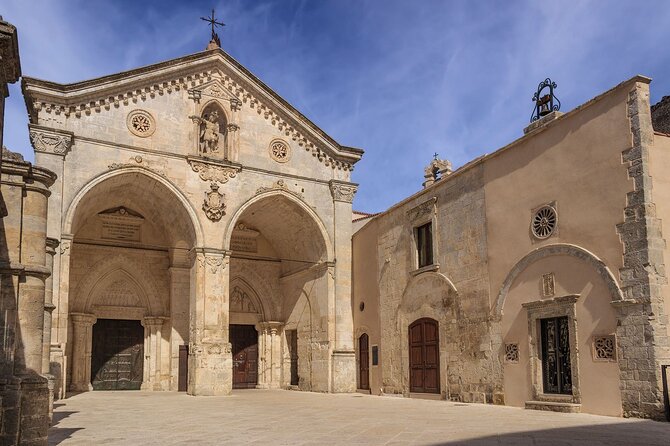
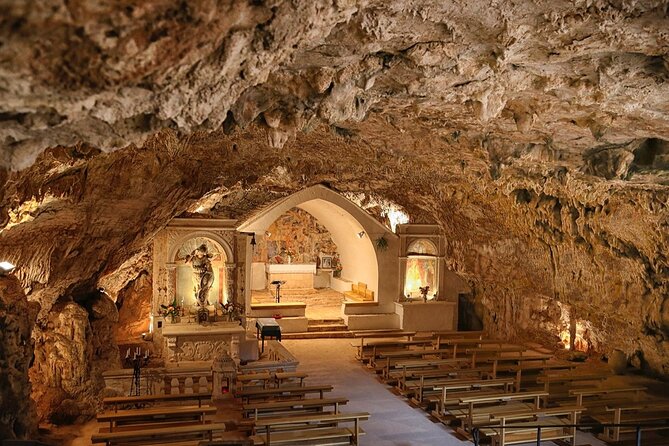
After the long drive, you’ll head to Monte Sant’Angelo for the Grotto of San Michele Arcangelo. This is one of Christianity’s oldest and most venerated pilgrimage places, and it’s listed as a UNESCO World Heritage Site. If you’re interested in how legends, architecture, and devotion get braided together over time, this stop is a big one.
You’ll have about 1 hour at the grotto. That sounds short, but for a cave site, it’s usually the right amount of time. The goal here isn’t to “see everything.” It’s to experience the atmosphere and understand the meaning behind what’s carved, built, and preserved.
Why the grotto matters: apparitions linked to the 5th century
The grotto is tied to a series of apparitions of the Archangel Michael dating back to the fifth century. Those early events helped turn this place into a major pilgrimage destination across Europe, especially during the Middle Ages.
That historical link changes how you look at the space. Instead of treating it like a natural curiosity, you can see it as a location repeatedly reinterpreted through centuries of belief.
What you’ll notice inside: altars, statues, inscriptions, and layered testimony
Inside the grotto, the mood is solemn and spiritual. You’ll also see how devotion left physical traces over time: altars, statues, inscriptions, and testimonies of faith stacked across different periods.
This is where guided interpretation makes a real difference. Without context, you might just notice the objects. With context, you start to understand how each element connects to a period of prayer and pilgrimage.
Gargano views: the setting beyond the cave
The experience also includes the feeling of the surrounding area. You’ll get a view associated with the Gargano, which adds to why this shrine became so important. Pilgrimage sites often have a “place” quality, and this one uses both natural formation and human meaning.
Carola and Roberto: how the guide and driver shape your day
On a trip like this, the guide and driver aren’t extras. They’re part of whether the day feels good or brutal.
In the reviews, guides such as Carola stand out for being engaging and for giving information without rushing. That matters because these are sites where the visitor experience improves when you understand what you’re looking at. It also matters because you’re with the group for hours, and you want your time to feel well spent.
The other half is driving. Long-distance travel can wear you down, so it’s reassuring when you have a driver like Roberto or Max who’s described as safe, friendly, and professional. That’s exactly what you want on a day where you’re leaving early and returning late.
Also, the tour includes a driver and an assistant for the full duration. That kind of support is practical. It helps the day run smoothly, and it gives you someone to turn to if timing gets tricky at a site.
Timing and logistics that actually matter on this 13-hour trip
This itinerary works on a travel reality: Rome to Puglia is far enough that you can’t just “pop over” casually. That’s why the tour uses air-conditioned transport and a structured schedule.
Here’s what you can plan for:
- A very early start at 6:30 am
- Around 13 hours total for the full day
- Long travel time that can feel like roughly half a day on the road
- A site rhythm that gives time at Padre Pio first, then a shorter but focused grotto visit
Because lunch isn’t included, your best move is to handle food strategically. You can bring snacks for the car ride and plan for an eating window that works with the return timing. If you rely only on buying food during stops, you might find yourself stuck improvising.
Comfort-wise, you’ll want shoes you can stand in for a while and layers you can adjust. Churches and shrines often vary in temperature compared to the outside air, and in a full-day outing, that flexibility makes your body happier.
Finally, keep your expectations tuned to what this day is. It’s not trying to be everything. It’s trying to be two very specific places, well timed, with less hassle than doing the same route on your own.
Price check: what $390.46 buys you, and when it’s good value
At $390.46 per person, this tour isn’t cheap. But the value is in the package: pickup and drop-off from Rome, an air-conditioned vehicle, a driver, and an assistant for the whole time, plus guided visits to both major sites.
You’re also paying for time. Doing this route on your own typically means dealing with schedules, transfers, and the stress of logistics. The reviews highlight the appeal of avoiding trains and overnight stays. That’s the core value argument for this kind of day trip: it replaces hassle with structure.
Where you might hesitate is if you hate long driving days. The day can feel long, and you’re giving up flexibility because the schedule is the schedule. If you prefer slow travel and want to linger spontaneously, you might find a multi-day plan better.
But if you’re on a tight Rome itinerary and you want these shrines without extra nights, the cost starts to look more reasonable. You’re buying a straight shot to two UNESCO-level and globally famous pilgrimage destinations.
Who should book this Padre Pio and San Michele day trip
This tour fits best when your travel style matches its strengths.
You’ll likely enjoy it if:
- You want a single-day solution to see Padre Pio and San Michele
- You appreciate guided explanations so the sites make more sense
- You prefer being transported and handled rather than sorting logistics yourself
- You’re okay with a long day and an early start
You might want to skip it if:
- You’re sensitive to long car rides or early mornings
- You want lots of free time to wander without a schedule
- You need lunch included as part of the overall package
Group size stays relatively contained for a day tour (up to 42), so it’s not a huge crowd scenario. Still, it’s not a private tour. If you’re hoping for a quieter, fully custom pace, this may feel a bit structured.
Practical tips to make your visit smoother
A few small moves can make the day feel easier.
First, plan for a long morning and a late finish. Being tired is normal on a schedule like this, so bring a water bottle and simple snacks for the in-between hours since lunch isn’t included.
Second, think about what you want most from the day. If your focus is the emotional impact at Padre Pio, you’ll appreciate the longer stop time there. If your focus is the history and the layered objects inside the grotto, you’ll be glad you’ve got guided help at San Michele.
Third, keep your phone charged. You’ll have a mobile ticket, and you’ll also likely want quick photos where allowed and simple navigation support if you get separated briefly in crowds.
Should you book? My take on whether this is the right choice
If your goal is to see San Giovanni Rotondo and Monte Sant’Angelo in one go, this tour makes a lot of sense. The sites are major, the visit times are thoughtfully assigned (4 hours first, then 1 hour at the grotto), and the logistics are handled for you.
The decision comes down to two things: your tolerance for a long driving day and your comfort with a structured schedule. If you can handle the early 6:30 am start and the long ride, you’re paying for convenience and guided context at two very famous pilgrimage destinations.
If you want a slower pace or more time to linger on your own, consider adding an overnight instead. But if your itinerary leaves no room for that, this is one of the cleaner ways to make the pilgrimage route happen without the extra nights and transfers.
FAQ
What time does the tour start?
The tour starts at 6:30 am.
Is pickup and drop-off included?
Yes. Pick up and drop off are included, and you should wait in the lobby or outside your apartment or B&B about 10 minutes before the agreed time.
How long is the tour?
It’s listed as 13 hours (approx.).
How big is the group?
The tour has a maximum of 42 travelers.
Is the tour offered in English?
Yes, it is offered in English.
Are lunch and drinks included?
No. Lunch is not included.
Are admission tickets included for the sites?
The tour includes visits to the Sanctuary of Padre Pio and the Grotto of San Michele Arcangelo and lists admission as free for both.
What is the cancellation policy for a full refund?
You can cancel for a full refund up to 24 hours in advance of the experience’s start time.
More Tour Reviews in Rome
- Vatican Museums, Sistine Chapel & St. Peter’s Basilica Tour
★ 4.3 · 73,970 reviews - Vatican Museums, Sistine Chapel & St Peter’s Basilica Guided Tour
★ 4.5 · 39,149 reviews - Rome: Colosseum, Palatine Hill and Roman Forum Guided Tour
★ 4.8 · 32,814 reviews - Rome: Guided Tour of Colosseum, Roman Forum & Palatine Hill
★ 4.7 · 27,897 reviews - Rome: Colosseum & Forum with Audio Guide App -Optional Arena
★ 4.2 · 24,770 reviews - Rome: Colosseum, Roman Forum and Palatine Hill Guided Tour
★ 4.5 · 23,903 reviews




